

Journal of Veterinary Health Science(JVHS)
ISSN: 2831-3887 | DOI: 10.33140/JVHS
Impact Factor: 0.762

Research Article - (2022) Volume 3, Issue 3
Determinants of Long-Acting Reversible Contraceptive Methods Utilization Among Married Women of Reproductive Age Group In Ambo Town, Oromia Region, West Ethiopia, 2016: A Case Control Study
2Department of Epidemiology, Institute of Health, Jimma University, Jimma, Ethiopia
Received Date: May 22, 2022 / Accepted Date: May 28, 2022 / Published Date: Aug 22, 2022
Copyright: ©Copyright: ©2022 Dawit Regasa, et al. This is an open-access article distributed under the terms of the Creative Commons Attribution License, which permits unrestricted use, distribution, and reproduction in any medium, provided the original author and source are credited.
Citation: Dawit Regasa, Fasil Tessema, Mamo Nigatu. (2022). Determinants of Long-Acting Reversible Contraceptive Methods Utilization Among Married Women Of Reproductive Age Group In Ambo Town, Oromia Region, West Ethiopia, 2016: A Case Control Study. J Vet Heal Sci, 3(3), 262-274.
Abstract
Background: The contraceptive utilization rate in Ethiopia is approximately 29%. In contrast, only 3.7% of married women in Ethiopia use the most effective and convenient methods, i.e., long-acting contraceptive methods. This rate is approximately 3.2% in the Oromia region, the most populous region in Ethiopia. In regard to this, the current study aimed to identify determinants of long-acting reversible contraceptive method utilization among married women in Ambo town, Ethiopia.
Objective: To identify determinants of long-acting reversible contraceptive method utilization among married women of reproductive age in Ambo town, 2016 Methods: A community-based unmatched case-control study was carried out in Ambo town on 420 married women of reproductive age who were randomly selected. The study population comprised users [case group; n=140] and nonusers [control group; n=280] of one of the longacting reversible methods. Multivariable logistic regression analysis was performed to determine independent predictors. Adjusted odds ratios together with their corresponding 95% CIs were calculated to assess the strength of association and declare statistical significance.
Result: A total of 418 married women participated in the study, with a response rate of 99.45%. Moderate level of knowledge on long-acting reversible contraceptive methods [AOR= 8.73, 95%CI: 3.08 - 24.77], good level of knowledge [AOR=13.99, 95%CI:4.93-39.71], spousal discussion on long-acting reversible contraceptive methods [AOR=2.88, 95%CI:1.3-6.36], positive attitude toward long-acting reversible contraceptive methods [AOR=7.07, 95% CI: 3.77-13.24], women from households in the poorest wealth quintile [AOR= 6.83, 95%CI: 2.68- 17.38], women from households in the medium wealth quintile [AOR=5.83, 95%CI: 2.23- 15.23] were positive determinants, whereas intention to give birth in the future [AOR=0.09, 95% CI: 0.02- 0.36] and women’s expectations of restriction to methods use [AOR=0.2, 95% CI: 0.08- 0.48] were negative determinants of long-acting reversible contraceptive method utilization.
Conclusion: Good knowledge, moderate knowledge, positive attitude, wealth index and spousal discussion were positive determinants, whereas intention to give birth in the future and woman’s expectation of restriction to method use were negative determinants of long-acting reversible contraceptive method utilization. Stakeholders should emphasize behavioral change communication to increase knowledge on long-acting reversible contraceptive methods, strengthen inter-spousal discussion and bring a positive attitude towards long-acting reversible contraceptive methods.
Keywords
Long-Acting Reversible Contraceptive Methods, Married Women of Reproductive Age, Ambo Town
Introduction
Long-acting reversible contraceptives are very efficacious methods to prevent unintended forms of pregnancy. In addition, these methods are suitable and cost-beneficial. Utilization of these methods can lead to the highest attainment of health targets across all levels, in contrast to short acting targets [1].
Long-acting reversible contraceptive methods take two major forms: implants (comprised of Implanon and Jadelle: prevent unintended pregnancy for 3 to 7 years) and intrauterine devices (IUDs): prevent unintended pregnancy for 10 to 12 years [1].
To date, LARC methods have been the most efficacious (approximately >99%) contraceptive methods. For this reason,international and countrywide level family planning programs have been intended to provide more emphasis on LARC methods together with ensuring the women’s right to choose her preference. Throughout a year of appropriate use, LARC methods are 3 to 60 times more efficacious than short-acting methods. The long¬term characteristics of these contraceptive methods do not need everyday action from the users’ side and therefore have higher maintenance and efficacious rates. Apart from this, couples need fewer visits to health service teams, this in turn saves time, effort and money in this regard and the client volume of health care settings also decreases [1].
LARC method utilization helps reduce health service expenditure, which in turn leads to attaining health targets set at national and international levels. Similarly, they play a fundamental role in reducing pregnancy-related maternal mortality and morbidity as well as elective abortions. As per the studies executed across countries: approximately 300,000 abortions were experienced per year in Vietnam, more than 100,000 in Ukraine, and 80,000 in Turkey, which can be halted by the use of these effective methods [2].
Constant rapid population growth in some countries has become a challenge. This might be due to the non-use of effective contraceptive methods. Most of this population growth occurred in third world countries, where the fertility rate is elevated. Africa’s population is currently growing faster than any other main region and is expected to account for approximately 25% of the world population by 2050 [3].
The situation in Ethiopia is still comparable to that of most African countries. The total fertility rate in Ethiopia is 4.8 and 5.6 in the Oromia region, and the national population growth rate is estimated at 2.7% per year, which is still very high when compared with the rest of countries [4].
Although LARC methods have a pivotal role, they have been given in fewer health care settings, remain low in coverage and were missed from most national reproductive health and family planning programs as well. Globally, more than 350 million couples have limited or no access to effective and affordable FP, especially to LAPMs. Well-strengthened family planning programs can provide a complete range of contraceptive methods. In contrast, in many sites, LAPMs are the least available, least utilized and least understood methods by clients [1, 7].
Approximately 25% of women and couples in sub-Saharan Africa who desire either to give births in an interval of two years or limit their births are not using any form of contraception. As per analyzed reports from women in sub-Saharan Africa: they favor having a birth gap of two years and beyond, however, most of them give births in intervals of less than two years [8, 9].
Data from demographic and health surveys of sub-Saharan countries depicted that the number of women recently utilizing LARC methods was too low: due to several factors; such as myths & misconceptions, fear of side effects, opposition of partners, lack of knowledge and the like [10,11].
Only thirteen percent (13%) of married women globally use intrauterine contraceptive devices (IUCDs) as their method of contraception choice [13]. In sub-Saharan Africa, despite its interesting characteristic, IUD remained under-utilized; only two percent of users placed on IUD as a method of contraception [14].
In Ethiopia, the contraceptive prevalence rate (CPR) is only 29%. IUCD, implants and female sterilization are the least used methods of modern contraceptives, accounting for only 0.3%, 3.4% and 0.5%, respectively [4].
Evidence from other countries, including Ethiopia, depicted that factors such as fertility-related reasons, opposition to use, lack of knowledge and method-related reasons were identified as barriers to LARC method utilization [16].
To date, most prior studies conducted on determinants of LARC method utilization have been focused on identifying determinants related to socio-demographic and reproductive health factors, which are not sufficient to illustrate the full description of determinants of LARC method utilization. Attitude, income, and level of knowledge on LARC methods are important determinants that most prior studies did not take them into consideration, however, they were included in the present study.
The findings obtained from this study can help health program managers, various stakeholders and policy makers provide important information to enhance the utilization of long-acting reversible contraceptive methods among married women of reproductive age.
The prevalence of LARC method utilization among married women in Ambo town is low. Most married women in the town are not using LARC methods. Even those utilizing modern contraceptives rely on SAFPMs [18]. Therefore, this study aimed to identify determinants of long-acting reversible contraceptive method utilization among married women of reproductive age in Ambo town, Oromia region, west Ethiopia.
Methods
Study Period and Setting
The study was conducted from May 01-30/2016 in Ambo town, Oromia Regional State, located 110 km to west of Addis Ababa, which is the capital city of the country. The town has six administrative kebeles. The total population of the town for 2016 was estimated to be 79,059 [18].The proportion of women of childbearing age was 22.2% (17,551) of the population. The town has one general hospital, two public health centers, two higher and three medium private clinics that provide LARC methods service as an integral component of other health care services [Fig 1].
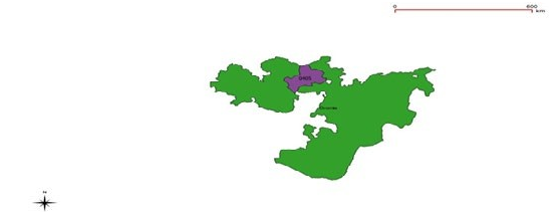
Figure 1: Map showing the Study Area (18)
All these facilities in the study area are providing LARC methods services for free, and the national government is making these methods available.
Study design
A community-based unmatched case-control study design was carried out to identify determinants of long-acting reversible contraceptive method utilization among married women of the reproductive age group in ambo town, Oromia region, west Ethiopia.
Population
Users (cases) were married women who were using one of the long-acting reversible contraceptive methods, and non-users (controls) were married women who were using any of the short-acting contraceptive methods or not at all. Users and non-users who lived for at least six months in the study area were included in the study.
Sampling
The sample size was determined by using Epi-info software version 7.2.2 with the following assumptions; among the determinants considered, partners’ (inter-spousal) discussion on contraceptive use was found to result in the largest sample size.
Based on this, the rate of women who had joint discussion on contraceptive use among LARC non-users (controls) was assumed to be 83%, with an odds ratio of 3.00 taken from a prior study [24].
With a 95% confidence level, 80% power, and control to case ratio of 2:1, the minimum sample size required was estimated at 382 (i.e., 127 cases and 255 controls). Considering a 10% nonresponse rate, the final sample size was 420 (i.e., 140 cases and 280 controls). The study population was selected using the simple random sampling technique via computer-generated randomization out of 172 cases (i.e., users) and 6,321 controls (i.e., non-users), identified by pre-survey enumeration.
All six kebeles (the lowest administrative units in Ambo town) were included in the study. Prior to conducting the actual study, a pilot survey was conducted by the trained UHEW to identify and know the number of existing users and non-users in the six kebeles of Ambo town, and the response rate was 100%. Users were first identified by self-reporting that they were using the LARC method and then asked to bring a service identification card/appointment card to cross-check the service card against the method they were using. Non-users were first identified by self-report and then cross-checked from the UHEW registration book to confirm that they were truly non-users. A total of 172 users and 6,321 non-users were identified during the pilot survey. During the pilot survey, unique identification numbers were given for each user and non-user, which were also written on their residential homes to facilitate the sampling process. A separate sampling frame was prepared for users and non-users. Then, a computer-generated random number method was used to select users and non-users.
Data Collection Procedure and Measurement
Data were collected by the face-to-face interview method (interviewer-administered method). Six twelve grade complete females who could speak the local language (Afan Oromo) were selected, trained and recruited as data collectors. Two diploma nurses were employed as supervisors. The interview was delivered in Afan Oromo language. The data collectors were trained on the contents of the questionnaire, interview approach and confidentiality. The supervisors were trained on the contents of the questionnaire, interview approach and how to support data collectors. One data collector was assigned per kebele and the data were collected by moving from home to home. Supervisors supported data collectors by providing logistics required for data collection, collected the filled questionnaire from each data collector, checked the completeness and consistency of the collected data and submitted it to the principal investigator daily.
The variables included in this study were socio-demographic and economic variables, which comprise age, education, occupation, income; reproductive health-related variables, which comprise the number of parities, number of living children, sex composition of living children, history of stillbirths, history of induced abortion, intention to give birth in the future; individual-related variables, which comprise knowledge of LARC methods, attitude towards LARC methods utilization, inter-spousal discussion, responsible person to limit number of children and source of information; and health facility-related variables, which comprise distance, expectation of availability of method mix and expectation of restriction to method use.
Knowledge of the respondents on LARC methods was measured by the total number of correct answers to 11 items on knowledge questions, with a minimum score of 0 and a maximum of 11. Those who scored 80% and above were declared as having good knowledge, those who scored 50-79% were declared as having moderate knowledge and those who scored less than 50% were declared as having poor knowledge [24].
The attitude of the respondents toward LARC methods was measured by Likert scale type questions. This was measured by the total number of correct answers from fifteen attitude questions toward LARC methods, and the mean score of these answers was computed. Then, respondents were declared as having a positive attitude and a negative attitude. Those who scored above mean to the correct answers from attitude measuring LARC methods questions were considered as having a positive attitude and those who scored mean and below mean to the correct answers from attitude measuring LARC methods questions were considered as having a negative attitude [26].
The wealth index was computed as a composite indicator of living standards based on variables related to ownership of selected household assets, presence of livestock and materials used in the house. Variables used to measure the wealth index at the household level were: piped water source, flush toilet piped to sewer system, electricity, separated room for sleeping, separated room for cooking, refrigerator, mobile phone, fixed phone line, radio, electrically working griddle, own home, cement roof type, vehicle, and livestock. The computation was performed using principal component analysis (PCA), and composite variables were extracted by summing the principal components into three components. The adequacy of the model for PCA was checked by the value of the Kaiser-Meyer-Olkin measure of sample adequacy (KMOSA), which became 0.78, and the sample was adequate. Eigen values were used to decide the number of PCs to be retained. Only PCs with Eigen-values greater than 1.0 were retained. Three components explained the wealth index with an overall cumulative variance percentage of 69.4%. Detection of outliers and inter-item consistency was performed. To check inter-item consistency, Cronbach’s alpha of factor lodgings was computed, and the value was 0.82. Additionally, Quintiles of the wealth index were computed.
Both interviewers and supervisors were trained for three days. The content of the training was interview approach, ways to maintain confidentiality and how to keep the privacy of the study participants. Pretesting of the questionnaire was also done on 21 married women of reproductive age group (7 users and 14 non¬users), i.e. on 5% of the total sample size in Guder town, which is located at a 12 km distance to the west of Ambo town. Finally, the data collection tool was refined based on the findings obtained from the pretest.
Data Processing and Analysis
Data were coded manually and checked for completeness and consistency. Then, data were entered and cleaned by EpiData version 3.1 and exported to SPSS version 21.0, where recoding, computing, and other statistical analyses were performed. Descriptive statistics were computed to explore the frequency distribution, central tendency, variability (dispersion) and distribution of outcome and explanatory variables. Bivariable analysis was performed to identify candidate variables (P-value less than 0.25) for multivariable logistic regression. Finally, multivariable logistic regression was fitted using a standard enter method to identify independent predictors of LARC method utilization. The Hosmer and Lemeshow goodness of fit test was used to assess model fitness (P-value = 0.02). Adjusted odds ratios together with their corresponding 95% CIs were calculated to assess the strength of association and statistical significance.
Ethical Assurance
Ethical clearance and supportive letters to undertake the study were obtained from the Ethical Review Board of the College of Health Science of Jimma University. Permission letters to conduct the research were obtained from the Oromia Regional Health Bureau.
Prior to data collection, the participants were informed about the purpose of the study, their right to refuse participation, discontinue the interview or measurement and their full right to say “no” (opt-out), and it was clearly stated that their decision of “no” will not affect any of their right to health provisions intended for women. Written consent was obtained from study participants greater than 16 years of age. Written informed consent was obtained from a parent or guardian for participants under 16 years old.
Confidentiality and privacy of the study participants were assured and protected by using a unique questionnaire identification number during an interview. Two women; one for IUCD and one for Implant, who needed LARC method utilization, were linked to health facilities where the services are available.
Result
Socio-Demographic Characteristics
Of the sample women, 139 users and 279 non-users were enrolled in the study, giving a response rate of 99.45% in both groups .
The mean age of the overall respondents enrolled in the study was 28.6 years with a standard deviation of 5.7 years, with a minimum age of 15 and a maximum age of 44 years. The mean ages of users and non-users were 28.0 years (SD=6.34 years) and 27.84 years (SD=5.74 years), respectively. The majority of users and non-users were in the age range of 25-34 years [Table 1].
Table 1: Socio-Demographic Characteristics of Married Women in Ambo Town 2016
|
Variables |
Variables |
Variables |
|
|
n (%) |
n (%) |
||
|
Age in years |
15-24 |
21(15.1) |
73(26.2) |
|
25-34 |
97(69.8) |
168(60.2) |
|
|
≥ 35 |
21(15.1) |
38(13.6) |
|
|
Ethnicity |
Oromo |
91(65.5) |
195(69.9) |
|
Amhara |
28(20.1) |
50(17.9) |
|
|
Gurage |
10(7.2 ) |
23(8.3) |
|
|
Others* |
10(7.2) |
11(3.9) |
|
|
Religion |
Orthodox Christian |
82(59.0 ) |
145(52.0) |
|
Protestant |
46(33.1) |
108(38.7) |
|
|
Others** |
11(7.9 ) |
26(9.3) |
|
|
Women’s Educational status |
Primary (grade 1-8) |
20(14.4) |
67(24.0) |
|
Secondary (grade 9-11) |
49(35.2 ) |
101(36.2) |
|
|
Tertiary(College & above) |
57(41.0 ) |
86(30.8 ) |
|
|
Husband’s Educational status |
Informal |
12(8.6) |
20(7.2) |
|
Primary (grade 1-8) |
33(23.7) |
78(28.0) |
|
|
Secondary (grade 9-11) |
35(25.2) |
86(30.8) |
|
|
Tertiary (College& above) |
59(42.5) |
95(34.0) |
|
|
Housewife |
67(48.2) |
125(44.8) |
|
|
Women’s occupation |
Government employee |
38(27.3) |
68(24.4) |
|
Merchant |
21(15.1) |
48(17.2) |
|
|
Others*** |
13(9.4) |
38(13.6) |
|
|
Husband’s occupation |
Government employee |
46(33.0) |
81(29.1) |
|
Merchant |
65(46.8) |
129(46.2) |
|
|
Daily laborers |
15(10.8) |
38(13.6) |
|
|
Others**** |
13(9.4) |
31(11.1) |
|
|
Wealth index |
First quintile (Poorest) |
40(28.8) |
43(15.4) |
|
Second quintile (Poor) |
29(20.9) |
44(15.8) |
|
|
Third quintile (Medium) |
12(8.6) |
81(29.0) |
|
|
Fourth quintile (Rich) |
42(30.2) |
44(15.8) |
|
|
Fifth quintile (Richest) |
16(11.5) |
67(24.0) |
|
Key: Sidama, Tigre, and Kambata Wakefata and PaganDriver & Mechanic Driver & Mechanic
Approximately 91 (65.5%) users and 195 (69.9%) non-users were Oromo by Ethnicity, 82 (59.0) users and 145 (52.0) non-users were Orthodox Christian/Eastern Orthodox by religion [Table 1].
Individual Related Characteristics
Regarding other individual-related characteristics, 87.8% of users and 63.6% of non-users had a discussion with their husbands on long-acting reversible contraceptive use, Based on LARC method knowledge assessment, 77 (55.4%) users and 99 (35.5%) non- users had good knowledge of LARC methods, 54 (38.8%) users and 110 (39.4%) non-users had moderate knowledge of LARC methods [Table 2].
The mean score of an attitude of the respondents was 49.43 (SD=7.8). A total of 106 (76.3%) users and 107 (38.4%) non-users had a positive attitude, whereas the rest of the users and non-users had a negative attitude towards LARC method utilization [Table 2].
Table 2: Individual Related Characteristics of Married Women in Ambo Town 2016
|
Variables |
Users |
Non-users |
|
|
n (%) |
n (%) |
||
|
Have discussion with her husband |
Yes |
122(87.8 ) |
213(63.6) |
|
No |
17(12.2) |
66(23.7) |
|
|
Main source of information about LARC methods |
TV/Radio |
71(51.1) |
115(41.4) |
|
Urban Health extension (UHEW) |
56(40.3) |
132(47.4) |
|
|
Others* |
12(8.6) |
32(11.2) |
|
|
Responsible person to decide to limit number of children |
Wife |
10(7.1) |
13(8.6) |
|
Husband |
15(10.9) |
91(4.7) |
|
|
Joint decision |
114(82.0) |
175(62.7) |
|
|
Attitude toward LARC methods |
Negative |
33(23.7) |
172(61.6) |
|
Positive |
106(76.3) |
107(38.4) |
|
|
Knowledge on LARC methods |
Poor |
8(5.8) |
70(25.1) |
|
Moderate |
54(38.8) |
110(39.4) |
|
|
Good |
77(55.4 ) |
99(35.5) |
|
Key: Indicates health workers other than UHEWs, friends, family
Reproductive Health-Related Factors
The mean age at first marriage was 19.54 years (SD= 1.68 years). Approximately 94 (67.6%) users and 245 (87.8) non-users were in need of more children [Table 3].
Health Facility-Related Factors
Among all respondents, 44 (31.7%) users and 160 (57.3%) nonusers expected that there was a restriction on method use at health facilities, and 49 (35.3%) users and 137 (49.1%) nonusers expected that all LARC methods were not available at health facilities [Table 3].
Table 3: Reproductive Health and Health Facility Related Characteristics of Married Women in Ambo Town 2016
|
Variables |
Users |
Non-users |
|
|
n (%) |
n (%) |
||
|
Ever pregnant |
Yes |
129(92.8) |
210(75.3) |
|
No |
10(7.2) |
69(24.7) |
|
|
Total number of pregnancy |
< 3 |
67(52.3) |
132(52.0) |
|
≥ 3 |
48(18.9) |
66(48.0) |
|
|
Age at first marriage |
<18 years |
28(20.1) |
36(12.9) |
|
≥ 18 years |
111(79.9) |
243(87.1) |
|
|
Age at first pregnancy |
<18 years |
21(15.1) |
31(11.1) |
|
≥ 18 years |
118(84.9) |
248(88.9) |
|
|
Age at first delivery |
<18 years |
19(13.6) |
26(9.3) |
|
≥ 18 years |
120(86.4) |
253(90.7) |
|
|
Experienced still birth |
No |
123(95.3) |
190(90.5) |
|
Yes |
6(4.7) |
20(9.5) |
|
|
Experienced abortion in life time |
No |
118(91.5) |
159(75.7) |
|
Yes |
11(8.5) |
51(24.3) |
|
|
Number of live births |
≤ 2 |
59(45.7) |
159(75.7) |
|
3-4 |
50(38.8) |
35(16.7) |
|
|
≥ 5 |
20(15.5) |
16(7.6) |
|
|
Intention to give birth in the future |
Yes |
94(67.6) |
245(87.8) |
|
No |
45(32.4 ) |
34(12.2) |
|
|
Reason for intention to give birth in the future |
Need more children |
60(63.2 ) |
156(69.6) |
|
Need of son |
22(23.2) |
19(8.5) |
|
|
Others* |
13(13.6) |
49(21.9) |
|
|
Home distance from Health facility in minute (walking hour) |
<30 minute |
62(45.3) |
155(55.6) |
|
≥ 30 minute |
77(54.7) |
124(44.4) |
|
|
Do you expect all LARC methods available at health facility |
Yes |
90(64.7) |
142(50.9) |
|
No |
49(35.3) |
137(49.1) |
|
|
Do you expect restriction to method use at health facility |
Yes |
44(31.7) |
160(57.3) |
|
No |
95(68.3) |
119(42.7) |
|
Key: Indicates No Child Before and Child Death
Bivariable Analysis of Determinants of Long-Acting Reversible Contraceptive Method Utilization
Bivariable logistic regression analysis was performed to identify candidate variables for multivariable logistic regression analysis. Accordingly, age, wealth index, knowledge, attitude and other variables were identified as candidate variables for multivariable logistic regression [Table 4].
Table 4: Candidate Variables for Multivariable Logistic Regression to Assess Determinants of Long Acting Reversible Contraceptive Method Utilization among Married Women in Ambo Town 2016
|
Variables |
Users N(%) 139 |
Non-users N(%)279 |
COR (95% CI) |
P-value |
|
|
Age |
15-24 |
21(15.1) |
73(26.2) |
1 |
|
|
25-34 |
97(69.8) |
168(60.2) |
2.01(1.16,3.47) |
0.012 |
|
|
≥ 35 |
21(15.1) |
38(13.6) |
1.92(0.93,3.95) |
0.76 |
|
|
Wealth index |
First quintile(Poorest) |
40(28.8) |
43(15.4) |
1 |
|
|
Second quintile (Poor) |
29(20.9) |
44(15.8) |
0.71 (0.38,1.34) |
0.289 |
|
|
Third quintile (Medium) |
12(8.6) |
81(29.0) |
0.16 ( 0.08, 0.34) |
≤0.001 |
|
|
Fourth quintile (Rich) |
42(30.2) |
44(15.8) |
1.03 (0.56, 1.88) |
0.933 |
|
|
Fifth quintile (Richest) |
16(11.5) |
67(24.0) |
0.26(0.13,0.51) |
≤0.001 |
|
|
Discussion (spousal communication) |
No |
17(12.2) |
66(23.7) |
1 |
|
|
Yes |
122(87.8) |
213(63.6) |
2.22 (1.25,3.96) |
0.007 |
|
|
Level of knowledge |
Poor |
8(5.8) |
70(25.1) |
1 |
|
|
Moderate |
54(38.8) |
110(39.4) |
4.29(1.29,9.57) |
≤0.001 |
|
|
Good |
77(55.4) |
99(35.5) |
6.81(3.09,14.99) |
≤0.001 |
|
|
Level of attitude |
Negative |
33(23.7) |
171(61.6) |
1 |
|
|
Positive |
106(76.3) |
108(38.4) |
5.16(3.26,8.17) |
≤0.001 |
|
|
Ever pregnant |
No |
10(7.2) |
69(24.7) |
1 |
|
|
Yes |
129(92.8) |
210(75.3) |
4.24(2.11,8.52) |
≤0.001 |
|
|
Intention to give birth in the future |
No |
45(32.4) |
34(12.2) |
1 |
|
|
Yes |
94(67.6) |
245(87.8) |
0.29(0.18,0.48) |
≤0.001 |
|
|
The expectation of women on all LARCs available at HF |
No |
49(35.3) |
137(49.1) |
1 |
|
|
Yes |
90(64.7) |
142(50.9) |
1.77 (1.65, 6.16) |
0.008 |
|
|
The expectation of women on restriction to methods in HF |
No |
95(68.3) |
119(42.7) |
1 |
|
|
Yes |
44(31.7) |
160(57.3) |
0.34(0.22,0.53) |
≤0.001 |
|
|
Women’s education |
Informal |
13(9.4) |
25(9.0) |
1 |
|
|
Primary (grade 1-8) |
20(14.4) |
67(24.0) |
0.57(0.25,1.32 ) |
0.19 |
|
|
Secondary (grade 9-11) |
49(35.2) |
101(36.2) |
0.93(0.44, 1.98) |
0.86 |
|
|
Tertiary(College & above) |
57(41.0) |
86(30.8) |
1.2(0.60, 2.69) |
0.53 |
|
|
Husband’s education |
Informal |
12(8.6) |
20(7.2) |
1 |
|
|
Primary (grade 1-8) |
33(23.7) |
78(28.0) |
0.97 (0.44, 2.12) |
0.93 |
|
|
Secondary (grade 9-11) |
35(25.2) |
86(30.8) |
0.68(0.41, 1.15) |
0.15 |
|
|
Tertiary(College & above) |
59(42.5) |
95(34.0) |
0.66(0.39, 1.09) |
0.104 |
|
|
Women’s occupation |
Housewife |
67(48.2) |
125(44.8) |
1 |
|
|
Government employee |
38(27.3) |
68(24.4) |
1.04(0.64, 1.71) |
0.87 |
|
|
Merchant |
21(15.1) |
48(17.2) |
0.82(0.45, 1.48) |
0.50 |
|
|
Others |
13(9.4) |
38(13.6) |
0.64(0.32, 1.28) |
0.21 |
|
|
Husband’s occupation |
Government employee |
46(33.0) |
81(29.1) |
1 |
|
|
Merchant |
65(46.8) |
129(46.2) |
0.89(0.55, 1.42) |
0.62 |
|
|
Daily laborers |
15(10.8) |
38(13.6) |
0.7(0.35, 1.39) |
0.31 |
|
|
Others |
13(9.4) |
31(11.1) |
0.74(0.35, 1.55) |
0.42 |
|
|
The main source of information about LARC methods |
TV/Radio |
71(51.1) |
115(41.4) |
1 |
|
|
UHEW |
56(40.3) |
113(47.4) |
1.59(0.77, 3.31) |
0.21 |
|
|
Others |
12(8.6) |
32(11.2) |
1.096(0.53, 2.29) |
0.81 |
|
|
Responsible person to decide to limit the number of children |
Wife |
10(7.1) |
13(4.7) |
1 |
|
|
Husband |
15(10.9) |
91(8.6) |
0.33(0.09, 1.17) |
0.09 |
|
|
Joint decision |
114(82.0) |
175(62.7) |
0.19(0.10, 1.035) |
0.08 |
|
|
Experienced still birth |
No |
123(95.3) |
190(90.5) |
1 |
|
|
Yes |
6(4.7) |
20(9.5) |
0.46(0.18, 1.19) |
0.19 |
|
|
Experienced abortion |
No |
118(91.5) |
159(75.7) |
1 |
|
|
Yes |
11(8.5) |
51(24.3) |
0.29(0.15, 0.58) |
0.06 |
|
|
Home distance from HF in minutes |
<30minutes |
62(45.3) |
155(55.6) |
1 |
|
|
≥30minutes |
77(54.7) |
124(44.4) |
1.51(1.02, 2.29) |
0.04 |
Independent Predictors of LARC Method Utilization among Married Women in Ambo Town
The results from multivariable logistic regression showed that wealth index, spousal discussion, level of knowledge, attitude, intention to give birth in the future and expectation of restriction to the method used at the health facility were independent predictors of LARC method utilization.
Spousal discussion was an independent predictor of LARC method utilization. The odds of LARC utilization were approximately three times higher among women who discussed contraceptives with their partners than among women who did not discuss contraceptives with their partners [AOR=2.88, 95% CI: 1.3- 6.36].
The level of knowledge was another independent predictor of LARC method utilization. The odds of LARC utilization were approximately 9 and 14 times higher among women who had moderate and good knowledge on LARC methods than those women who had poor knowledge, respectively [AOR=8.73, 95% CI: 3.08-24.77, and AOR =13.99, 95% CI: 4.93- 39.71].
The positive attitude of the respondent was also another independent predictor of LARC method utilization. The odds of LARC utilization were approximately seven times higher among women who had a positive attitude than those women with a negative attitude [AOR= 7.07, 95% CI: 3.77-13.24].
The intention to give birth in the future was another independent predictor of LARC method utilization. The odds of LARC utilization was approximately 91% less among women who intended to give birth in the future compared to those women who were not intended to give birth [AOR=0.09, 95% CI: 0.02- 0.36].
The wealth index was another independent predictor of LARC method utilization. The odds of LARC utilization were approximately seven times higher among women from households in the poorest wealth quintile than those women from households in the richest wealth quintile [AOR= 6.83, 95%CI 2.68- 17.38]. Similarly, the odds of LARC utilization were approximately six times higher among women from households in the medium wealth quintile than those women from households in the richest wealth quintile [AOR=5.83, 95%CI: 2.23- 15.22].
This study finding also depicted that expectation of restriction to the method used at the health facility was an independent predictor of LARC utilization.
The odds of LARC utilization were approximately 80% less among women who expected restriction to method use at health facilities compared to those women who did not expect. [AOR=0.2, 95% CI: 0.08- 0.48] [Table 5].
Table 5: Factors Independently Associated with LARC Method Utilization among Married Women in Ambo Town 2016
|
Variables |
Users (n=139) |
Non-users (n= 279) |
AOR (95% CI) |
P-value |
|
|
Wealth index |
First quintile |
40 |
43 |
6.83(2.68,17.38) |
≤ 0.001 |
|
Second quintile |
29 |
44 |
0.84(0.31, 2.27) |
0.729 |
|
|
Third quintile |
12 |
81 |
5.83(2.23, 15.29) |
≤ 0.001 |
|
|
Fourth quintile |
42 |
44 |
3.21(1.31,7.85) |
0.011 |
|
|
Fifth quintile |
16 |
67 |
1 |
|
|
|
Discussion(spousal communication) |
No |
17 |
66 |
1 |
|
|
Yes |
122 |
213 |
2.88(1.3,6.36) |
0.009 |
|
|
Knowledge of LARC methods |
Poor |
8 |
70 |
1 |
|
|
Moderate |
54 |
110 |
8.73(3.08,24.77) |
≤ 0.001 |
|
|
Good |
77 |
99 |
13.99(4.93,39.71) |
≤ 0.001 |
|
|
Attitude toward LARC methods |
Negative |
33 |
171 |
1 |
|
|
Positive |
106 |
108 |
7.07(3.77,13.24) |
≤ 0.001 |
|
|
Intention to give birth in the future |
No |
45 |
34 |
1 |
|
|
Yes |
94 |
244 |
0.09 (0.02, 0.36) |
≤ 0.001 |
|
|
The expectation of restriction to method use at HF |
No |
95 |
119 |
1 |
|
|
Yes |
44 |
160 |
0.2(0.08,0.48) |
≤ 0.001 |
|
Discussion
The results from this study showed that wealth index, spousal discussion, knowledge, attitude, intention to give birth in the future and expectation of restriction to the method used at health facilities were independent predictors of LARC method utilization.
Spousal discussion was found to be an independent predictor of LARC method utilization.
The odds of LARC utilization were approximately three times higher among women who discussed contraceptives with their partners than among women who did not discuss contraceptives with their partners. This finding is comparable with the studies carried out in Nekemte town, Debremarikos town, Hosanna town and the study conducted on determinants of long-acting contraceptive use among reproductive-age women in Ethiopia: Evidence from EDHS [19, 20, 24 and 35]. This comparable finding might be due to the resemblance in socio-demographic characteristics.
This study also depicted that knowledge was another independent predictor of LARC method utilization.
The odds of LARC utilization were approximately 9 and 14 times higher among women who had moderate and good knowledge on LARC methods than those women who had poor knowledge, respectively. The findings of this study can be comparable with those of a study conducted in Hossana town, southern Ethiopia and Uganda in the Lubaga division [24, 27].
The attitude of the respondent was another independent predictor of LARC method utilization. The odds of LARC utilization were approximately seven times higher among women who had a positive attitude than among women with a negative attitude. The findings of this study are comparable with those of a study conducted in Mekele town, Northern Ethiopia and Uganda in the Lubaga division [26, 27]. This study finding also depicted that expectation of restriction to the method used at the health facility was an independent predictor of LARC utilization.
The odds of LARC utilization were approximately 80% less among women who expected restriction to method use at health facilities compared to those women who did not expect.
The intention to give birth in the future was another independent predictor of LARC method utilization.
The odds of LARC utilization were approximately 91% less among women who intended to give birth in the future compared to those women who were not intended to give birth.
The findings of this study are comparable with those of a study conducted in Hossana town [24]. The comparability might be due to the similarity in the socio-demographic characteristics of the respondents.
The wealth index was also another independent predictor of LARC method utilization.
The odds of LARC utilization were approximately seven times higher among women from households in the poorest wealth quintile than those women from households in the richest wealth quintile. Similarly, the odds of LARC utilization were about six times higher among women from households in the medium wealth quintile than those women from households in the richest wealth quintile.
The possible justification for this could be that the poorest and medium women in wealth are economically incapable of bringing up another child so that they utilized LARC methods rather than the richest.
The findings identified by this particular study can help program managers, different stakeholders, and policymakers by providing such important information to enhance the utilization of long-acting reversible contraceptive methods among married women of reproductive age group at large.
Additionally, more action must be undertaken to increase women’s knowledge of LARC method utilization by promoting discussion between partners. To change the attitudes of married women towards LARC method utilization, emphasis must be given to improve the norm of partner communication on LARC method utilization and design a scale-up strategy to change myths and misconceptions by the town health office in collaboration with the regional health office and various stakeholders working in this sector.
In this study, variables such as women’s educational status, women’s occupation, number of live children and fertility-related decisions were not independently associated with LARC method utilization, unlike in other studies conducted on determinants of LARC method utilization in Ethiopia. This might be due to variation in socio-demographic factors among the study subjects [36].
The lack of adequate literature, especially on LARC methods with case-control study designs in the Ethiopian context in general and in the Oromia region in particular, limits further elaboration of discussion and comparison.
The study design used for this particular study was a case-control study with an analytical design that was relatively optimal to determine factors that were independently associated with LARC method utilization. Similarly, the selected users and non-users were comparable.
As a limitation of this particular, there might be recall bias as the exposure variables were assessed retrospectively. However,intensive training for data collectors and supervisors was given on the interview approach to overcome and minimize recall bias.
Conclusion
The wealth index, spousal discussion, knowledge, attitude, intention to give birth in the future and woman’s expectation of restriction to LARC methods uses at the health facility were determinants of long-acting reversible contraceptive method utilization.
Stakeholders working in this sector should emphasize behavioral change communication to strengthen knowledge of long-acting reversible contraceptive methods, to strengthen inter-spousal discussion about modern contraceptives and to bring a positive attitude toward long-acting reversible contraceptive methods.
This is, to mean, more actions have to be undertaken to increase women’s knowledge on LARC method utilization by promoting discussion between partners by the town health office in collaboration with regional health offices and various stakeholders working on this sector.
Additionally, more action must be undertaken to bring a positive attitude of married women toward LARC method utilization. Emphasis has to be given to improve the norm of partner communication on LARC method utilization and design a scale-up strategy to change myths and misconceptions by the town health office in collaboration with regional health offices and various stakeholders working on this sector.
Additionally, creating continuous awareness of the benefits and availability of LARC method utilization by town health offices in collaboration with HEWs and NGOs currently working in the study area is paramount.
Moreover, maximum efforts have to be made to establish strong referral linkage among health facilities, HEWs, currently being implemented and incorporated strategies at the grass root level, such as health development armies and one to five networks inclusive of married women together with their partners.
Declarations
Ethics Approval and Consent to Participate
Ethical clearance and supportive letters to undertake the study were obtained from the Institutional Review Board of College of Health Science, Jimma University [Ref. no. RPGC/439/06].
The ethics committee approved the verbal consent procedure.
A permission letter to conduct the research was obtained from the Oromia Regional Health Bureau [Ref. no. BEFO/ AHBTM/18/2112]. Written consent was obtained from study participants greater than 16 years of age. Written informed consent was obtained from a parent or guardian for participants under 16 years old.
Consent to Publish
Not applicable in this section
Availability of Data and Materials
The datasets used and/or analyzed during the current study are available from the corresponding author on reasonable request.
Competing Interests
The authors declare that there are no competing interests.
Funding
The source of funds for this research work was only Jimma University. The funding institution has no role in the design, data collection, data analysis, interpretation and manuscript writing.
Author’s Contributions
DR, FT, and MN made substantial contributions to the conception, design, and data acquisition, and statistical analysis, interpretation of the results and drafting of the manuscript.
All authors have read and approved the manuscript to be published in Journal of veterinary Health science.
Acknowledgments
The authors would like to thank Jimma University for financial support. We would also like to acknowledge west Shoa zonal health department, Ambo town health office, study participants, data collectors, and supervisors.
References
- FHI. USAID. (2007). Addressing the unmet need for family planning in Africa, the case for long-acting and permanent methods, 1(1), 6-9.
- Bradley, S. E., Croft, T., & Rutstein, S. O. (2011). The impact of contraceptive failure on unintended births and induced abortions: estimates and strategies for reduction. Calverton^ eMaryland Maryland: ICF Macro.
- United Nations. (2015). Department of Economic and Social Affairs, Population Division. World’s Population Prospects, 2(2), 44-50.
- Ababa, A., & Calverton, E. (2011). Central statistical agency (Ethiopia) and ICF international. Ethiopia and Calverton, Ethiopia Demographic and Health Survey.
- World Health Organization. (2015). World health statistics 2015. World Health Organization.
- Jacob Stein, R., Bakamjian, L., & Pile, J. M. (2008). Threatened and still greatly needed family planning programs in Sub-Saharan Africa. New York: The ACQUIRE Project/ Engender Health.
- Nancy Y, Stella B. (2011). A Qualitative study on the use of long-acting and permanent methods of Contraception in Cambodia, Malawi, and Nigeria, 30-31.
- USAID. (2006). From the America people. Long-acting and Permanent Methods of Contraception; the Case of meeting clients’ needs, 2(1), 22-23.
- Sonfield, A. (2006). Working to eliminate the world’s unmet need for contraception. Guttmacher Policy Review, 9(1), 10-13.
- Janowitz, B., Gmach, R., & Otterness, C. (2009). The commercial sector’s role in providing long-acting and permanent methods. Bethesda: Private Sector Partnerships one project, Abt Associates inc.
- Bethesda, MD. (2006). Private Sector Partnerships-One Project/Abt Associates Inc. 1(1), 22- 23.
- Ali, M., & Cleland, J. (1999). Determinants of contraceptive discontinuation in six developing countries. Journal of biosocial science, 31(3), 343-360.
- Acquire project. (2008). Acquiring knowledge, applying lessons learned to strengthen family Planning/reproductive health services; New York. 14(1), 38-40
- Ali, M. M., Sadler, R. K., Cleland, J., Ngo, T. D., & Shah, I. H. (2011). Long-term contraceptive protection, discontinuation and switching behaviour. Intrauterine device (IUD) use dynamics in, 14.
- Scott, A., & Glasier, A. (2006). Evidence based contraceptive choices. Best practice & research clinical obstetrics & Gynaecology, 20(5), 665-680.
- Planning and Programming Department. (2010). Ministry of Health of Ethiopia, Health and health -related indicators. Addis Ababa.
- Osei, I., Birungi, H., Addico, G., Askew, I., & Gyapong, J. O. (2005). What happened to the IUD in Ghana? African journal of reproductive health, 76-91.
- Ambo town health office. (2015). Annual Health and health-related reports, 30-45.
- Alemayehu Sh., Abebech A. (2014). Determinants of Long-Acting Contraceptive Use among Reproductive Age Women in Ethiopia, Evidence from EDHS 2011. Journal of Science and Public Health, 3(1), 143-149.
- Melka, A. S., Tekelab, T., & Wirtu, D. (2015). Determinants of long acting and permanent contraceptive methods utilization among married women of reproductive age groups in western Ethiopia: a cross-sectional study. Pan African Medical Journal, 22(1).
- Meskele, M., & Mekonnen, W. (2014). Factors affecting women’s intention to use long acting and permanent contraceptive methods in Wolaita Zone, Southern Ethiopia: A cross-sectional study. BMC women’s health, 14(1), 1-9.
- Sahilemichael A., Temesgen K., Gemechu K. (2015). Determinants of Long-Acting Reversible Contraceptive Use among Child-Bearing Age Women in Dendi District, Western Ethiopia, 4(4), 3-4.
- Tamrie, Y. E., Hanna, E. G., & Argaw, M. D. (2015). Determinants of long acting reversible contraception method use among mothers in extended postpartum period, Durame Town, Southern Ethiopia: a cross sectional community based survey. Health, 7(10), 1315.
- Earsido A., Gebeyehu A., and Kisi T. (2015). Determinants of Long-Acting and Permanent Contraceptive Methods Utilization among Married Women in Hossana Town, Southern Ethiopia, A case-control study, 2(3), 4-6.
- Mutombo, N., & Bakibinga, P. (2014). The effect of joint contraceptive decisions on the use of Injectables, Long-Acting and Permanent Methods (ILAPMs) among married female (15–49) contraceptive users in Zambia: a cross-sectional study. Reproductive health, 11(1), 1-8.
- Alemayehu, M., Belachew, T., & Tilahun, T. (2012). Factors associated with utilization of long acting and permanent contraceptive methods among married women of reproductive age in Mekelle town, Tigray region, north Ethiopia. BMC pregnancy and childbirth, 12(1), 1-9.
- Nigus et al. (2014). Knowledge and attitudes towards the use of long-acting reversible contraceptives among women of reproductive age in Lubaga division, Kampala district, Uganda. BMC Research Notes, 7(1), 153.
- Getinet, S., Abdrahman, M., Kemaw, N., Kansa, T., Getachew, Z., Hailu, D., & Workineh, Y. (2014). Long acting contraceptive method utilization and associated factors among reproductive age women in Arba Minch Town, Ethiopia. Greener journal of Epidemiology and public health, 2(1), 23-31.
- Dwyer, J., & Jezowski, T. (1995). Quality management forfamily planning services: Practical experience from Africa.Cahiers Pratiques de l’AVSC, 7.
- Lewis N. (1998). Determinants of quality of family planning services in Kenya. A case-controlStudy. Findings from situation analysis studies of Afr. Dev. Research and tech ass Project, 2(1), 109-122.
- Loha, E., Asefa, M., Jira, C., & Tesema, F. (2004). Assessment of quality of care in family planning services in Jimma Zone, Southwest Ethiopia. Ethiopian Journal of Health Development, 18(1), 8-18.
- Ross, J., Hardee, K., Mumford, E., & Eid, S. (2002). Contraceptive method choice in developing countries. International family planning perspectives, 32-40.
- Reiss, K., Nantayi, L., Odong, J., & Ngo, T. D. (2012). Providing long-acting and permanent contraceptives through outreach in rural Uganda. London: Marie Stopes International, 2(1), 20-23.
- Tilahun, Y., Mehta, S., Zerihun, H., Lew, C., Brooks, M. I., Nigatu, T., & Adane, G. (2016). Expanding access to the intrauterine device in public health facilities in Ethiopia: a mixed-methods study. Global Health: Science and Practice, 4(1), 16-28.
- Shimelis W., Gudaynhe G., Desalegn T., Zegeye T. (2013). Factors affecting the use of long-acting Reversible contraceptive methods among married women in Debremarkos town. 2(1):8-10.
- Ethiopia Central Statistical Agency. (2014). Ethiopia Mini Demographic and Health Survey, 40-42.