

Advances in Bioengineering and Biomedical Science Research(ABBSR)
ISSN: 2640-4133 | DOI: 10.33140/ABBSR

Impact Factor: 1.7

Research Article - (2020) Volume 3, Issue 2
Detection of Water Purity Levels by Using Biofilm as A Bio-Chip
2Washington State University, United States
3University of Calcutta, India
Received Date: Jul 15, 2020 / Accepted Date: Jul 21, 2020 / Published Date: Jul 31, 2020
Copyright: ©Copyright: ©2020 Arka Mukhopadhyay, et al. This is an open-access article distributed under the terms of the Creative Commons Attribution License, which permits unrestricted use, distribution, and reproduction in any medium, provided the original author and source are credited.
Abstract
Waste water treatment is the process of removing contaminants from wastewater. It includes physical, chemical, and biological processes to remove these contaminants and produce environmentally safe treated wastewater. The present work relates to a microbial technology enabled method in which biofilm, formed by a single psychrophilic bacterial culture, was used as a biochip to detect the water impurities. There was an optimum concentration limit of different metals and organic compounds of drinking water set by ISI and WHO. Here different metals, like Ca2+, Cu2+, Fe3+, Mg2+, Mn2+, Zn2+, Ar2+, Hg2+ and organic compounds, like benzene, toluene, DMSO, Di-Chloro phenol, chloroform were mixed with water at higher concentration than the optimum limit. Now the impurities of that contaminated water was detected by the biofilm destruction method. The change of Biological Oxygen Demand (BOD) and Chemical Oxygen Demand (COD) of different water samples were also detected by the biofilm destruction.
Keywords
Biofilm, BOD-COD, Metal ions, Organic Compounds, Water Impurities.Introduction
Microbial cells enclosed in a self-produced polymeric matrix adhering to a surface. Includes films of cells at a solid/liquid interface and cells that adhere to themselves to form a floc, granule or pellicle. Biofilms can be composed of either single or multiple species. The formation of biofilms is a natural phenomenon through which microorganisms adhere to solid surfaces whenever they are in contact with water. The biofilm can be defined as a combination of microorganisms and extracellular products which adhere to a solid support, forming a voluminous and thick layer, with an external structure that is not completely regular and uniform. Its chemical composition, both inorganic and organic, varies according to the substrate composition [1].
Biofilms are typically comprised of water, microorganisms, extracellular polymeric substances (EPS), retained particles and dissolved and adsorbed substances. Water is the most significant fraction of the total mass of the biofilm, and it can vary from 70 to 95%. Polymeric substances represent around 70 to 95% of the organic material of the dry biofilm mass. The composition determines important properties of the biofilm, such as the adhesion force, elasticity, and adsorption capacity [2].
Common examples of biofilms include slimy and slippery films found on stones and rocks submerged in water streams and deep under the ocean. Recently, unique characteristics such as stickiness and a micro community of functional bacteria trigger the interests for industrial applications. Such application is for glues, supporting materials of cells in a reactor, wastewater treatment, and an enhancer of water quality in natural environments.
Industrially, biofilms are detrimental in many cases and beneficial in many others. For instance, natural biofilms can reduce heat transfer in heat exchangers and cooling towers, foul reverse osmosis membranes, and contaminate food processing equipment [3-5]. Multi-species biofilms are used industrially to achieve several aims including the treatment of wastewater for removal of organics and heavy metals [6, 7]. The presence of multiple species allows for the treatment of waste streams that are diverse in composition and that fluctuate in component concentration.
Immobilized biofilm systems provide stable operating performance, good mechanical stability and biomass/fluid separation, and excellent adsorbing characteristics. In addition, there is the potential for repeated use of the biomass and for mass loading of the pollutant as the biomass is independent of the fluid phase [8]. To be of practical use biofilms must develop rapidly and remain firmly adherent to the support matrix. Various materials were investigated in a model stream operated at different flow rates to determine which offered the best support for the development of tenacious microbial biofilms capable of removing heavy metals from solution over extended periods. The most tenacious biofilms (those attached to ground glass and polystyrene) were then compared to corresponding free- living microbial populations to determine which system was the more efficient in long term metal uptake from both single and bimetallic solutions.
Detection of unhygienic impurities in water is one of the major concerns of human society. The detection of impurity in water is not only important for drinking water but also for water in industrial use. The type of impurity to be detected varies with the variation of the use of water. The fundamental reason for the treatment of wastewater is to circumvent the effect of pollution of water sources and protect public health through the safeguarding of water sources against the spread of diseases. Non trivial purification of water involves removal of toxic ions, organic impurities, microbes and their by-products as well as scooping oil spills. The detection as well as removal of organic contaminants from water is a major industrial concern. Biochemical oxygen demand (BOD) is one of the most widely used measurements of aquatic pollution. For example, the performance of wastewater treatment plants is monitored by measuring the efficiency of BOD removal. The conventional BOD test takes 5 days, which is too long for use in process control. Total organic carbon (TOC) and chemical oxygen demand (COD) assays measure total organic matter but they do not provide a valid measure of biologically degradable organic matter. A method of rapidly measuring bio logically degradable organic matter would be useful in the control biological wastewater treatment processes. An essential feature of the BOD test as a measure of the total biologically degradable organic matter is sequential uptake, starting with labile and ending with refractory compounds. The results of recent studies of biofilms suggest that the oxidation of complex mixtures of organics in fully oxygenated biofilms proceeds sequentially as substrate diffuses into the biofilm, in a manner analogous to uptake in plug-flow activated sludge units or in the conventional BOD test [9].
Our present findings deal with a novel biofilm chip based techniques to detect the impurities of water by the process of biofilm destruction by several metals, organic compounds as well as the change of BOD and COD. A schematic diagram of biofilm formation on glass beads and plastic sheet with time will depict the basis of our study (Figure 1)
Materials and Methods
Materials
For bacterial culture (LB medium), yeast extract, NaCl, Casien were brought from Sigma Aldrich (Germany). For crystal violet (CV) binding assay, CV was purchased from Mark (Germany). For the metal ion substitution (in CV assay) Ca2+, Cu2+, Fe3+, Mg2+, Mn2+, Zn2+, Ar2+and Hg2+ salts are purchased from SRL (India), benzene, toluene, DMSO, Di-Chloro phenol and chloroform were purchased from Mark (Germany). Glass beads and plastics were purchased from local store.
Methodologies
Sample Preparation for CV binding assay
Sterile glass beads of 2 mm diameter and square plastic pieces (1cm X 1cm X 0.02 mm) were incubated in the bacterial culture medium from a single bacterial colony of Bacillus subtilis AKPSYP
at 15°C and 37°C for 24h, 48h and 72h to observe the biofilm formation over the beads and plastic sheets chips. Biofilm formation was determined by crystal violet binding assay (Figure 1) [10, 11].
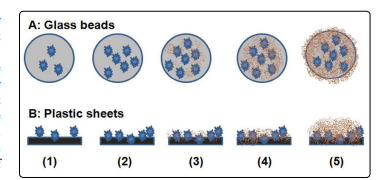
Figure 1: Schematic diagram of biofilm formation on (a): glass beads; (b): plastic sheets.
Initial bacteria (blue) contact the surface of support and adhesion to it (24h); 2. Formation of the basal layers of bacterial micro colonies; 3. Completion of micro colony formation by addition of the upper, mainly mycelium layer and initial formation of extracellular matrix material layer (48h); 4. Mature biofilms contain numerous micro colonies with extracellular matrix material that surrounds both bacterial colonies and mycelium layer.; 5. Mature biofilm consisted of two distinct layers: a thin, basal region of densely packed bacterial cells and an overlying thicker, but more open mycelia layer (72h).
Biofilm Characterizations
The stability of biofilms was characterized for six different parameters, temperature, time, pH, metal ions, organic compounds and BOD/COD.
The CV binding Assay was Done
• At 15°C and 37°C for temperature dependence for 24, 48 and 72h.
• At different pH level from 3-10.
• In presence of Ca2+, Cu2+, Fe3+, Mg2+, Mn2+, Zn2+, Ar2+and Hg2+ of different concentration.
• Ca: 150ppm, Cu: 0.1 ppm, Fe: 0.6ppm, Mg: 60ppm, Mn: 0.2 ppm, Zn: 10 ppm, Ar: 0.1ppm and Hg: 0.002ppm
• In presence of benzene, toluene, DMSO, Di-Chloro phenol and chloroform at concentrations of 0.005 ppm each.
• Of seven different set of water of different BOD and COD.
• Determination of the retention of biofilm in presence of a range of metal ions concentrations (from high to low).
Crystal Violet Binding Assay [11]
Each set of chips was washed 3 times with 5ml of sterile distilled water. The remaining adhered bacteria were fixed with 2.5ml of methanol per chip. Each chip was stained with crystal violet for 15 minutes and then the excess stain washed off under running tap water. After the chip was air dried, the dye bound to the adherent cells was re-solubilized with 2.5ml of 33% glacial acetic acid for each chip. The re-solubilized liquid for each chip was poured into a cuvette. The absorbance (optical density) of each re-solubilized liquid was measured against the optical density of blank reading without inoculation (control) at wavelength of 620nm using a spectrophotometer.
BOD/COD Test
Water samples were collected from different places like, pond, sewages pipe, old water tank etc. The samples were taken to the laboratory and stored in a refrigerator. BOD and COD experiments were conducted on the sampling dates and the other analyses were taken within 48 hours after the arrival of the samples. All the water samples were incubated with biofilm (both glass beads and plastic) for 30 mints. (for metal ion, organic compound and BOD/COD test). BOD/COD were estimated according to the procedure mentioned in standard methods (APHA) [12].
Result and Discussions
Effect of Temperature and Time in Biofilm Formation
It was found that biofilm was formed better on plastic chips than glass beads. With increasing time, the formation of biofilm increased according to the CV binding assay. It was found that CV assay value was higher at 37°C than 15°C. It was observed that in case of glass beads, CV value is 23% 13.4% and 18.7% higher at 15°C compare to 37°C in 24h, 48h and 72h respectively. Almost similar results were observed in case of plastic pieces. Again the value became greater at 72h incubation compare to 24h and 48h (Figure 2). At 15C the CV value after 72h is 25% and 61% higher compare to 48h and 24h respectively.
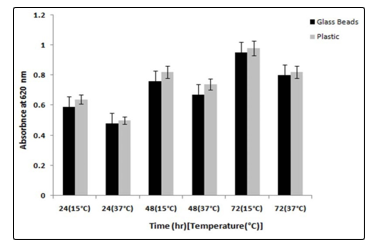
Figure 2: Crystal violet binding assay to determine biofilm formation with the change of temperature and incubation time.
Effect of pH in biofilm formation
The pH of the untreated water was 7. With the change of pH towards acidic and basic range, it was found that a definite change of absorbance of CV till pH 9 (basic range) and pH 4 (acidic range). At pH 3 and 10 there was no change of CV absorbance compare to previous value indicating that maximum loss of biofilm had occurred (Figure 3). In case of glass beads, CV value became 42%, 161%, 13% and 15% lower at pH 9, 4, 8 and 5 respectively, compare to CV value at pH 7. For plastic theobservations were almost similar. Therefore, biofilm (both on glass and plastic) can be used as a chip to determine the minute change of pH of the water to a certain range.
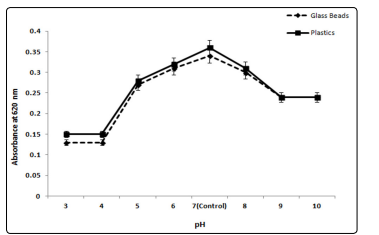
Figure 3: Crystal violet binding assay to determine biofilm formation with the change of pH.
Limit of Metal ion and Organic compounds determination
We know that there were different minerals (to a certain concentration) in drinking water. As per the Indian Standard Specification for drinking water, the optimum concentration of different minerals was, Ca: 75ppm, Cu: 0.05 ppm, Fe: 0.05 ppm, Mg: 30 ppm, Mn: 0.1 ppm, Zn: 5 ppm, Hg: 0.001ppm and phenolic compounds: 0.001 ppm. (Table 1)
|
Metals/Organic compounds |
Optimum Limits (ISI) (mg/l) |
Test (range)(mg/l) |
|
Calcium |
75 |
9.375-450 |
|
Copper |
0.05 |
0.00625-0.5 |
|
Iron |
0.3 |
0.0375-1.8 |
|
Magnesium |
30 |
3.75-180 |
|
Manganese |
0.1 |
0.0125-0.6 |
|
Zinc |
5 |
0.625-50 |
|
Arsenic |
0.05 |
0.00625-0.5 |
|
Mercury |
0.001 |
0.000125-0.01 |
|
Phenolic Compounds |
0.001 |
0.005 |
|
BOD |
30 |
30.9-91.6 |
|
COD |
250 |
73.5-186.3 |
Table 1: Different conc. of metals and organic compounds for biofilm assay
Here with the increase of mineral and organic compounds’ concentrations (to a certain range) of the water, a definite destruction of biofilm (of both glass and plastics) was observed. With the change of Hg2+, Fe3+, Cu2+, Ar2+ and Organic compounds concentration a drastic change of CV absorbance was noticed. (Figure 4a, 4b). It was found that CV value decreased 34%, 35%, 43% and 29% for the shuttle increment of Cu2+, Fe3+, Hg2+ and Ar2+ conc. respectively compares to the control. The change of CV value for Ca2+, Mn2+, Mg2+, Zn2+ conc. change was in around 8-10% compare to control. Again, it was found that CV value decreased 34.6%, 25%, 30.8%, 42.3% and 38.5% for the slight increment of benzene, toluene, DMSO, DCP and chloroform respectively compare to the control.Here with the increase of mineral and organic compounds’ concentrations (to a certain range) of the water, a definite destruction of biofilm (of both glass and plastics) was observed. With the change of Hg2+, Fe3+, Cu2+, Ar2+ and Organic compounds concentration a drastic change of CV absorbance was noticed. (Figure 4a, 4b). It was found that CV value decreased 34%, 35%, 43% and 29% for the shuttle increment of Cu2+, Fe3+, Hg2+ and Ar2+ conc. respectively compares to the control. The change of CV value for Ca2+, Mn2+, Mg2+, Zn2+ conc. change was in around 8-10% compare to control. Again, it was found that CV value decreased 34.6%, 25%, 30.8%, 42.3% and 38.5% for the slight increment of benzene, toluene, DMSO, DCP and chloroform respectively compare to the control.For plastic sheets, the observations were almost identical. Therefore, biofilm (both on glass and plastic) can be used as a chip to determine the minute changes in the concentration of metals and organic compounds in the water over a certain range.
Ground glass and roughened polystyrene model stream beds supported mixed microbial biofilms capable of removing Cu2+, Cd2+ and Pb2+ from running waste waters. Metal uptake by these biofilms was compared to that of similar free living, mixed microbial populations exposed to different metal concentrations and combinations. Metal uptake by the biofilms was on average 17 times better than that by the free-living cultures.
Because of the physico-chemical and biological properties, the biofilm sare highly beneficial for removing organic and inorganic contaminants from the natural environments and in the modulated systems [13]. The microbial biofilms associated with the soil particles help degrade and detoxify the hazardous organic and inorganic agrochemical contaminants. A renegade of microbes entrapped in the biofilms is implicated in detoxification and removal of the heavy metals and other organic contaminants from drinking and sewerage water supplies. Detoxification and removal of the heavy metals from industrial and domestic wastes waters and from terrestrial ecosystems are the function of combined or the individual, microbial and EPS (Extracellular polymeric substances) components of the biofilms. EPS because of the presence of negatively charged functional groups like pyruvate, phosphate, hydroxyl, succinyl and uronic acid binds and transforms the toxic heavy metals into non-toxic insoluble organic or inorganic salts [13].
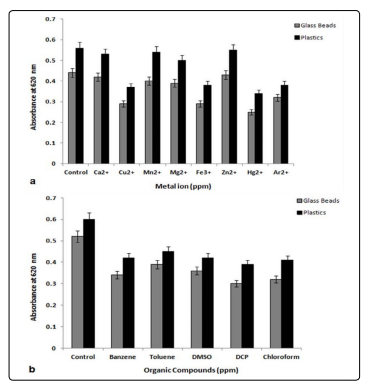
Figure 4: Crystal violet binding assay to determine biofilm formation with the change of (a) Metal ion concentratio;(b) Organic compound concentration.
A wide variety of organic and inorganic contaminants including long-lived petroleum derived aliphatic or aromatic hydrocarbons; chlorinated pesticides, preservatives, and insulators are disseminated in the environment (waste water, soil, drinking water, rivers, etc.) through anthropogenic, agricultural and industrial activities. A substantial portion of the pollutant flux is comprised of the labile substitutes for persistent herbicides and pesticides, including organophosphates, carbamates and triazines. For detoxification of the pollutants, microbial transformations change the form, phase or redox state of the contaminant [14]. A complete degradation of the organic contaminants into CO2 or H2O represents a direct transformation of the pollutant while a sequestration or chelation of the resulting inorganic products with the microbial metabolites is an example of an indirect transformation. Conversely, the organic and inorganic wastewater pollutants are either electron donors or acceptors [15]. The detoxification of these contaminants is therefore, achieved by oxidation-reduction process that allows a specific group of bacteria to grow while inhibiting the growth of the others.
Stability of Biofilm with Change of Metal Ion Concentration
Drinking water was mixed with different metal ions (from lower to higher concentration than the optimum) simultaneously. (Table 1) Biofilm destruction was observed to a certain concentration range (both in the higher and lower side) of metal ions. There was no change of CV absorbance value at very high and low level compare to their previous concentration, which indicated that no more biofilm destruction was possible. For example, in (Figure 5a), it was observed that in case of Ca2+ (75ppm, i.e. optimal), CV absorbance value was 0.44. With increasing conc. of Ca ion, at 225ppm and 300ppm the value became 0.38 and 0.29 respectively. But at more Ca ion concentration (375 and 450ppm) the value became saturated like 0.28. With decreasing conc. of Ca ion, at 37.5-9.75ppm, the value became almost similar to control. Which indicates that, with increasing or decreasing conc. of metallic ion biofilm destruction was observed, but after a certain limit this phenomenon did not happened. Similar results were found in case of other metal ions. For example, in case of Cu ion, the control (0.05ppm) CV value was 0.44, but with increasing conc. of cu2+ the value decreased up to 55- 62% at 0.4-0.5 ppm conc. compare to control. Again with decreasing conc. the value decreased up to 10-14% compare to control set. In case of Hg2+, a similar observation like Cu2+ was found. For Zn2+, Mg2+ and Mn2+, the CV value changes were not that much drastic as Cu2+ and Hg2+, but the average CV value decrement (maximum) was around 25-30% compare to the control in all the cases. Therefore, biofilm can be used as marker chip to detect the metal ion impurities of water to a definite range. (Figure 5a-h).
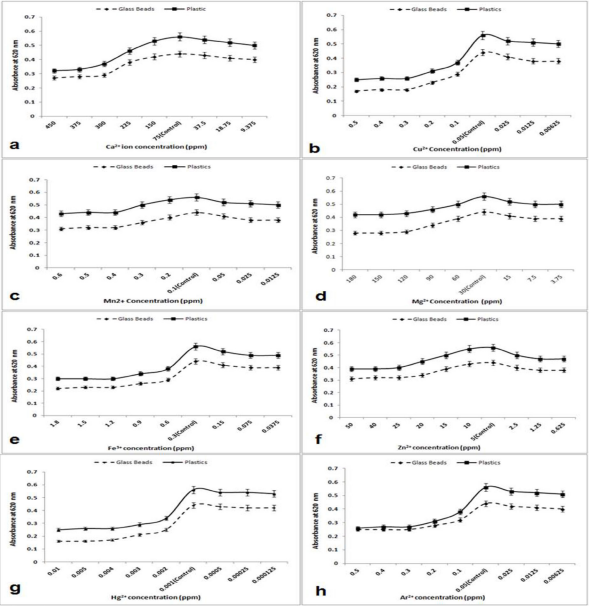
Figure 5: Biofilm destruction measurement with the change of concentration of different metal ions: (a) Ca, (b) Cu, (c) Mn, (d) Mg, (e) Fe, (f) Zn, (g) Hg and (h) Ar.
Stability of Biofilm with The Change of BOD and COD
To understand the biofilm destruction with the change of BOD/ COD, seven different sets of water samples were treated with both glass beads and plastic sheet biofilm. There is a limit of BOD in the drinking water made by ISI, which is 30 mg/l. It was observed that with increasing BOD, compare to the optimum range, biofilm destruction was gradually increased. Compare to control (30mg/l) the CV value decreased up to 77%, 47%, 27% and 6.5% when biofilm (glass beads) were treated with 91.6mg/l, 71.9mg/l, 63.4mg/l and 30.9mg/l BOD valued water respectively. Again, CV value decreased up to 45%, 18.5% and 10% when biofilm (plastic sheets) were treated with 86.4 mg/l, 40.3 mg/ml and 38.9mg/ml BOD valued water respectively. Similarly, with increasing COD value, biofilm destruction was increased gradually. For example, compare to control (50mg/l) the CV value decreased up to 74%, 49%, 25% and 9% when biofilm (glass beads) were treated with 186.3mg/l, 166.7mg/l, 137.3mg/l and 73.5mg/l COD valued water respectively. Again, CV value decreased up to 48%, 16.5% and 8.3% when biofilm (plastic sheets) were treated with 181.4 mg/l, 93.1 mg/l and 78.4mg/l COD valued water respectively. (Figure 6a, b)
It was also observed that biofilm formed for 72h played a better role as a marker for BOD/COD change compare to the 48h and 24h. For the water sample of BOD, 91.6 mg/l and COD, 186.3 mg/l, the CV value of biofilm (formed on glass beads after 72h) became 62% and 40.2% lower compare to 24h and 48h formed biofilm respectively (Figure 7a). Again, the CV value of biofilm (formed on plastic sheets after 72h) became 50% and 32.4% lower compare to 24h and 48h formed biofilm respectively. Similar results were found for a water sample of very little change of BOD, 30.9 mg/l and COD, 73.5 mg/l. The CV value of biofilm (formed on glass beads after 72h) became 55% and 36.6% lower compare to 24h and 48h formed biofilm respectively (Figure 7b). Again, the CV value of biofilm (formed on plastic sheets after 72h) became 47.5% and 31.7% lower compare to 24h and 48h formed biofilm respectively. From these observations we can explain that a very little change as well as a huge change of BOD-COD, can be identified by this biofilm treatment.
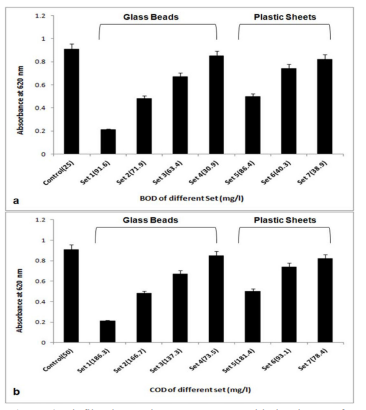
Figure 6: Biofilm destruction measurement with the change of : (a) BOD and (b) COD.
Set 1-4: Biofilm formed on glass beads. Set 5-7: Biofilm formed on plastic sheet.
From table 2 it is clear that with increasing BOD/COD value, biofilm destruction value (CV value) decreased. Moreover, biofilms which was formed for higher time period acted better as a marker compared to the film, which formed after comparatively lesser time of incubation. Therefore, biofilm can surely be used as a chip/ marker to determine the water quality (Table. 2).
Biochemical Oxygen Demand (BOD) and Chemical Oxygen Demand (COD) are used to measure oxygen used and equate it to the amount of organic matter within the water sample. BOD measures the amount of oxygen used by microorganisms, in this case bacterium, to oxidize organic matter present within the water sample [16]. Water with BOD levels 10 mg/L are considered polluted and unsafe. Another study reported La Penitence, Albouystown, Sophia, treated water and the Sophia well had BOD levels >10 mg/L where as Albouystown was the only site to have higher levels of COD. COD is used to measure the oxygen equivalent of organic matter of a sample and uses a chemical oxidant COD values should be <10mg/l at the end of treatment of water.
Degradation of particulate organic matter is carried out by a group of aerobic heterotrophs when oxygen is supplied as electron acceptor, organic matter in this case would be the electron donor. However, under anoxic conditions consortia of fermenting microbes including methane-producing archae bacteria would develop and convert the biochemical oxygen demand (BOD) of the system into CH4, which then will be evolved from the liquid as gas. Because of the importance and usefulness of the microbial biofilms in detoxification of organic and inorganic contaminants in the terrestrial and water ecosystems, rotating biological contractors, fluidized-bed, and packed-bed bioreactors as well as other biofilm and activated sludge systems are fabricated for anaerobic wastewater treatment, bioremediation of the toxic industrial wastes and biological treatment of the drinking water [17, 18]. Aside from these modulated bioreactors, development of biofilms of a variety of microbial consortia capable of degradation and detoxification of the contaminants in the contaminated soils and the ground water is being accomplished by controlled supply and injection of the nutrients and the substrates (required to develop a specific microbial conglomeration) in the water aquifers.
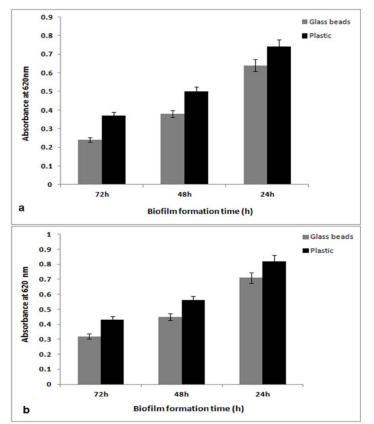
Figure 7: Biofilm destruction measurement for two water sample with the change of biofilm formation time. (a) For the water sample of BOD, 91.6 mg/l and COD, 186.3 mg/l. (b) For the water sample of BOD, 30.9 mg/l and COD, 73.5 mg/l.
Table 2: CV value (Biofilm destruction) change with the change of BOD/COD in various time incubation.
|
Sets |
BOD (mg/l) |
COD (mg/l) |
CV value(Biofilm destruction value)[O.D at 620 nm] |
|||||
|
|
|
|
|
Glass Beads |
|
|
Plastic Sheet |
|
|
Set 1 (+Ve Control: Drinking Water) |
25±1.1 |
50±2.7 |
|
0.9±0.35 |
|
|
0.87±0.28 |
|
|
|
|
24h |
48h |
72h |
24h |
48h |
72h |
|
|
Set 2 |
30.9±1.3 |
73.5±3.1 |
0.84±0.4 |
0.75±0.3 |
0.7±0.26 |
0.83±0.36 |
0.76±0.28 |
0.72±0.3 |
|
Set 3 |
38.9±1.7 |
78.4±3.4 |
0.79±0.3 |
0.73±0.31 |
0.68±0.21 |
0.82±0.31 |
0.72±0.3 |
0.69±0.26 |
|
Set 4 |
40.3±1.9 |
93.1±4.1 |
0.76±0.23 |
0.63±0.24 |
0.55±0.18 |
0.81±0.33 |
0.68±0.31 |
0.59±0.2 |
|
Set 5 |
63.4±3.1 |
137.3±5 |
0.71±0.31 |
0.48±0.13 |
0.31±0.11 |
0.79±0.3 |
0.58±0.22 |
0.44±0.2 |
|
Set 6 |
71.9±3.4 |
166.7±6.3 |
0.65±0.25 |
0.4±0.12 |
0.26±0.06 |
0.72±0.25 |
0.51±0.18 |
0.39±0.15 |
|
Set 7 |
86.4±3.9 |
181.3±7.8 |
0.64±0.3 |
0.38±0.09 |
0.25±0.07 |
0.71±0.32 |
0.47±0.14 |
0.38±0.17 |
|
Set 8 |
91.6±4.1 |
186.3±8.1 |
0.62±0.19 |
0.37±0.13 |
0.23±0.06 |
0.7±0.27 |
0.45±0.15 |
0.37±0.11 |
Application of biofilms in treating dairy industry wash water is another important area. In a recent report, dairy industry wash water was treated using a horizontal flow biofilm reactor system. In this study, a horizontal flow biofilm reactor (HFBR) with step-feed was tested in the laboratory to remove organic carbon and nitrogen from an agricultural strength synthetic wash water. Often there are oil leaks into sea or water Streams that are toxic to marine life or may ultimately reach ground water. To avoid toxicity of such oil leaks, contaminated water or sea water should be treated to degrade toxic chemicals. In a number of studies, removal of oil from sea water has been reported [18]. Established biofilms rich in hydrocarbon degrading bacteria. The biofilms were established on gravel particles and glass plates. The microbial consortia in the biofilms included filamentous cyanobacteria, picoplankton, and diatoms. Hydrocarbon utilizing bacteria Acinetobactor calcoaceticus and nocardioforms were, in part, attached to filaments of cyanobacteria.
Conclusions
From this study it has been cleared that biofilm, made upon glass beads are more effective than biofilm made upon plastic sheets. These biofilm (both on glass beads and plastic sheets) are very much effective to act as a biomarker for detecting several kinds of impurities of water, such as metal ions, organic solvents and BOD-COD level as well. A very cheap process to understand the impurities of water sample. A very minute change of metal ion concentration (to certain range from upper to lower) can be determined by this biomass treatment. Harmful metals like copper, iron, arsenic, mercury etc. and organic compounds like, benzene, toluene, DMSO, Di-Chloro-phenol, chloroform can be detected if their concentrations in the water become higher than the optimum limit of drinking water. Very minute change of BOD and COD can be detected by this process. This biofilm can be sensitive in between a temperature range of 15-37°C, and the pH range of 5-9. This is much cheaper process to determine the water quality compare to several machine based process [19-20].Acknowledgement
This study was supported by the grant from Centre for Research on Nanoscience and Nanotechnology (CRNN) under University of Calcutta and West Bengal DST. The authors are also grateful to the CAS programmer of Department of Biochemistry of University of Calcutta, UGC, FIST.References
- Costerton J W, Lewandowski Z, Caldwell D E, Korber D R, Lappin Scott H M (1995) Microbial biofilms. Annual Reviews in Microbiology 49: 711-745.
- Nielsen P H, Jahn A, Palmgren R (1997) Conceptual model for production and composition of exopolymers in biofilms, Water Science and Technology 36: 11-19.
- Mortensen KP, Conley SN (1994) Film fill fouling in counterflow cooling towers: mechanisms and design. CTI Journal 15: 10-25.
- McDonogh R, Schaule G, Flemming HC (1994) The permeability of biofouling layers on membranes. J Membr Sci 87: 199-217.
- Carpentier B, Cerf O (1993) Biofilm and their consequences with particular reference to hygiene in the food industry. Journal of Applied Bacteriology 75: 499-511.
- Taras M, Hakansson K, Guieysse B (2005) Continuous acetonitrile degradation in packed-bed bioreactor. Applied Microbiology and Biotechnology 66: 567-574.
- Meyer A, Wallis FM (1997) Development of microbial biofilms on various surfaces for the treatment of heavy metal containing effluents. Biotechnology Techniques 11: 859-86.
- Bryers JD (1993) Bacterial biofilms, Current Opinion in Biotechnolpgy 4: 197-204.
- Stuart E, Strand W, Dale A, Carlson L (1984) Rapid BOD measurement for municipal wastewater samples, Journal WPCF 56: 464-467.
- Mukhopadhyay A, Bhattacharya T, Dasgupta A, Chakraborty K (2015) Nanotechnology based activation-immobilization of psychrophilic pectate lyase: a novel approach towards enzyme stabilization and enhanced activity. Journal of Molecular Catalysis B: Enzymatic 119: 54-63.
- Stepanovic CS, Cirkoric ML, Ranin L, Svabicviahocic AL (2004) Biofilm formation by Salmonella spp and Listeria monocytogenes on plastic surface. Applied Microbiology 28: 326-432.
- APHA (2005) Standard methods for the Examination of Water and Wastewater. 21st Edition. American Public Health Association, Washington, D.C.
- Geddie J L, Sutherland (1993) Uptake of metals by bacterial polysaccharides, Journal of Applied Bacteriology 74: 467-472.
- Capone DG, Bauer JM (1992) Environmental Microbiology, Microbial Processes in Coastal Pollution, ed. R. Mitchell, Wiley-Liss, Inc. USA 1992: 191-237.
- Rittmann BE (1992) Environmental Microbiology, Innovations in Biological Processes for Pollution Control, ed. R. Mitchell, Wiley-Liss, Inc. USA 1992: 265-296.
- Nielsen P H, Thomsen TR, Nielsen J L (2003) Bacterial composition of activated sludge-importance for flocculation and sludge properties. Water Science and Technology 10: 51-58.
- Potera C (1996) Biofilms invade microbiology, Science 273:1795-1797
- Al awadhi H, Al hasan R H, Sorkhoh NA, Salamah S, Radwan S (2003) ‘Establishing oil-degrading biofilms on gravel particles and glass plates’, Bioremediasion & Biodegradation 51: 181-185.
- Ford T, Mitchell R (1992) Environmental Microbiology, Microbial Transport of Toxic Metals, ed. R. Mitchell, Wiley-Liss, Inc. USA 1992: 3-101.
- Hall ER (1987) Biofilm reactors in anaerobic wastewater treatment. Biotechnology Advances 5: 257-269.