




Research Article - (2026) Volume 4, Issue 2
Design and Evaluation of a Hybrid MBBR-Inspired Air Filtration System for the Removal of Airborne Microbial and Gaseous Pollutants
Received Date: Apr 10, 2026 / Accepted Date: May 15, 2026 / Published Date: May 27, 2026
Copyright: ©2026 Musab Ibrahim Mohammed Ahmed Ibrahim. This is an open-access article distributed under the terms of the Creative Commons Attribution License, which permits unrestricted use, distribution, and reproduction in any medium, provided the original author and source are credited.
Citation: Musab, I. M. A. I. (2026). Design and Evaluation of a Hybrid MBBR-Inspired Air Filtration System for the Removal of Airborne Microbial and Gaseous Pollutants. J Water Res, 4(2), 01-05.
Abstract
icroorganisms; activated carbon adsorbs VOCs but saturates quickly; and UV-C irradiation kills microbes but does not remove chemical pollutants.
This study proposes a hybrid air filtration system inspired by Moving Bed Biofilm Reactor (MBBR) technology. The system integrates four sequential stages: (1) HEPA pre-filtration to remove particulate matter, (2) activated carbon adsorption for VOCs, (3) a mobile biofilm chamber with non-pathogenic microbial carriers to biologically degrade VOCs, and (4) UV-C irradiation for microbial inactivation. The hybrid approach combines mechanical, chemical, biological, and photonic purification, enhancing multi-pollutant removal, energy efficiency, and system sustainability.
A laboratory-scale prototype is constructed and tested under controlled environmental conditions. Microbial aerosols and VOC concentrations are monitored at multiple stages to evaluate the system's performance. Equations for removal efficiency, UV dose, and air contact time are applied. Safety protocols include biosafety level 1 microbial handling, proper electrical and UV shielding, and safe chemical handling. The system is expected to achieve >99% microbial reduction, 70–90% VOC removal, and low energy consumption. This research demonstrates a practical solution for improving indoor air quality in healthcare, public, and industrial settings, while integrating advanced biofiltration concepts with conventional air purification technologies.
Keywords
Air Filtration, MBBR, Hybrid Biofilter, UV-C Disinfection, HEPA, Indoor Air Quality, VOC Removal, Microbial Aerosols
Introduction
Indoor air quality (IAQ) is increasingly recognized as a critical determinant of human health. Indoor environments can concentrate pollutants such as particulate matter (PM), airborne microorganisms, and volatile organic compounds (VOCs), often exceeding outdoor levels due to inadequate ventilation, human activities, and building materials. In hospitals and laboratories, airborne pathogens contribute significantly to hospital-acquired infections (HAIs), resulting in increased morbidity, extended hospital stays, and economic burden. WHO reports indicate that poor IAQ contributes to millions of premature deaths annually, predominantly from respiratory and cardiovascular diseases.
Particulate matter, especially PMâ??.â?? and PMâ?â??, can penetrate deep into the respiratory system, causing inflammation, oxidative stress, and long-term pulmonary conditions. Microbial aerosols, including bacteria, viruses, and fungi, are critical vectors for infectious disease transmission, while VOCs such as formaldehyde, benzene, and toluene are associated with carcinogenic and neurotoxic effects. Collectively, these pollutants pose severe health risks in indoor environments, particularly where people spend most of their time.
Conventional air purification methods have limitations. HEPA filters, while effective in removing particulate matter, do not inactivate microorganisms and may allow microbial growth within the filter medium. Activated carbon can adsorb VOCs efficiently but becomes saturated, requiring frequent replacement. UV-C irradiation effectively inactivates microbes but does not remove chemical pollutants and requires careful safety precautions due to its harmful effects on skin and eyes.
To address these limitations, this research introduces a hybrid air filtration system inspired by the Moving Bed Biofilm Reactor (MBBR) technology, widely used in wastewater treatment for organic pollutant degradation. MBBR systems use freely moving carriers with biofilms, which allow high mass transfer, self-cleaning, and efficient biodegradation. Applying this principle to air purification enables simultaneous microbial inactivation, particulate removal, and VOC degradation in a single hybrid system.
The objectives of this research are:
1. To design a multi-stage hybrid air filtration system that integrates mechanical, chemical, biological, and photonic purification.
2. To evaluate the system's efficiency in removing airborne particulate matter, microbial aerosols, and VOCs under controlled conditions.
3. To develop operational and safety protocols for laboratory and real-world applications.
Knowledge Base
HEPA Filtration
High-efficiency particulate air (HEPA) filters capture ≥99.97% of particles ≥0.3 µm. They are effective for dust, pollen, spores, and large microbial aggregates. However, trapped microorganisms can survive and multiply under high humidity, releasing endotoxins and potentially compromising indoor air quality over time (DOE, 2021) [1].
Activated Carbon Adsorption
Activated carbon removes VOCs and odorous compounds through adsorption. The performance depends on surface area, pore size distribution, and airflow contact time. Activated carbon beds saturate quickly and require frequent replacement or regeneration, particularly in VOC-rich environments [2].
UV-C Disinfection
UV-C light (wavelength 254 nm) is absorbed by nucleic acids, disrupting microbial DNA and RNA to prevent replication. Effective inactivation requires calculated exposure based on airflow and lamp intensity. While highly effective, UV-C does not remove chemical pollutants and poses health hazards without proper enclosure [3,4].
Biofiltration and MBBR Technology
Biofiltration leverages microbial metabolism to degrade pollutants. Static biofilters often suffer from clogging and uneven airflow, reducing efficiency. The MBBR design, with mobile carriers, enhances mass transfer, prevents clogging, and provides a self-sustaining biofilm for continuous pollutant degradation [5].
Hybrid Air Filtration Systems
Combining HEPA, activated carbon, biofilm, and UV-C results in multi-stage purification. Studies demonstrate hybrid filters achieving >90% microbial reduction and 70–80% VOC removal, highlighting the feasibility of integrating biological, mechanical, chemical, and photonic processes in one system [6].
Knowledge Gap
Current indoor air purification systems rarely integrate all four mechanisms. A MBBR-inspired hybrid system has not been applied to air filtration, representing a novel approach to simultaneously remove particulate matter, microbial aerosols, and VOCs efficiently.
The figure shows the hybrid air filter system and flow.

Identification of MBBR Filter and Its Adaptation for Air Filtration
The Moving Bed Biofilm Reactor (MBBR) is a biological treatment system originally developed for wastewater purification. It consists of a reactor filled with mobile plastic carriers—typically made of high-density polyethylene (HDPE)—that provide a large surface area for biofilm-forming microorganisms. These carriers float freely and are kept in motion by aeration or mechanical mixing, ensuring continuous contact between pollutants and active biofilms. The biofilm metabolizes organic compounds such as nitrogen, phosphorus, and volatile organic compounds (VOCs), converting them into harmless byproducts. The mobility of the carriers prevents clogging, enhances mass transfer, and supports self-cleaning dynamics. MBBR systems are widely recognized for their high treatment efficiency, low maintenance requirements, and scalability.
To adapt MBBR technology for air filtration, the system must be redesigned to accommodate airflow instead of water flow, while preserving the biofilm’s pollutant-degrading capabilities. This involves replacing the water tank with a sealed air chamber that allows controlled airflow across suspended carriers. Lightweight HDPE carriers can be suspended or gently agitated by airflow or mechanical vibration. Non-pathogenic, VOC-degrading microbial strains such as Pseudomonas putida should be selected for biofilm formation, as they can survive in humid air environments. Maintaining optimal moisture levels is essential to prevent biofilm desiccation, which can be achieved through misting systems or humidifiers. The bio-reactive chamber should be positioned after HEPA and activated carbon stages to ensure that particulate matter and high-concentration VOCs are reduced before reaching the biofilm.
However, adapting MBBR for air filtration introduces several risks that must be carefully considered. One significant risk is biofilm drying. In an air-based system, continuous airflow can desiccate the biofilm on the carriers, reducing microbial activity and impairing the system’s ability to degrade VOCs. This challenge requires precise humidity control to maintain biofilm viability.
Another concern is microbial aerosolization. Airflow may dislodge fragments of biofilm or free-floating microbes, potentially releasing them into the air stream. This poses a biosafety risk, especially in healthcare or public environments. To mitigate this, the bio-reactive chamber must be tightly sealed, and a downstream UV-C sterilization stage should be included to inactivate any escaped microorganisms.
Carrier loss or clogging is also a potential issue. The mobile plastic carriers used in MBBR systems may obstruct airflow or escape the chamber if not properly contained. This could reduce system efficiency and increase maintenance requirements. Mesh barriers and optimized airflow design are necessary to prevent this problem.
Reduced contact time between pollutants and biofilm surfaces is another limitation. Air moves significantly faster than water, which may limit the interaction between airborne pollutants and the biofilm. This can reduce the effectiveness of biological degradation. Computational fluid dynamics (CFD) modeling and staged airflow designs are essential to optimize contact time and pollutant exposure.
Maintenance complexity presents an additional challenge. Biofilm systems require regular monitoring to ensure microbial health, nutrient availability, and carrier integrity. In air filtration applications, this may involve more frequent inspections and specialized equipment, which could increase operational costs.
Finally, there are regulatory concerns. The use of live microorganisms in air purification systems may raise safety and compliance issues, particularly in sensitive environments such as hospitals or schools. It is essential to use biosafety level 1 strains and adhere to local and international guidelines for microbial handling and air system design.
Despite these challenges, the MBBR-inspired bio-reactive chamber offers a novel and promising approach to indoor air purification, particularly in environments where VOCs and microbial aerosols pose significant health risks.
Materials and Methods
System Design Overview
The proposed hybrid system includes four sequential stages:
1. HEPA Pre-Filter: Removes PM10 and PM2.5.
2. Activated Carbon Chamber: Adsorbs VOCs.
3. Bio-Reactive MBBR Chamber: 200 HDPE moving carriers coated with Pseudomonas putida biofilms for VOC degradation.
4. UV-C Sterilization Chamber: Microbial inactivation.
UV dose for microbial inactivation is calculated as:
D = I * t
Prototype Construction
• Stainless steel modular chambers, 1 m³ volume.
• Airflow: 2 m³/min via variable-speed fan.
• Sensors: Thermo-hygrometer and anemometer for monitoring.
Experimental Setup
• Test Room: 3 × 3 × 2.5 m.
• Contaminants: Bacillus subtilis spores (Biosafety Level 1), toluene (1 ppm), formaldehyde (0.5 ppm).
• Sampling Points: Inlet, between stages, outlet.
• Sampling Intervals: 0, 15, 30, 60, 120 min.
• Repetitions: Triplicates for reproducibility.
Analytical Methods
1. Microbial Load (CFU/m³):
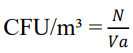
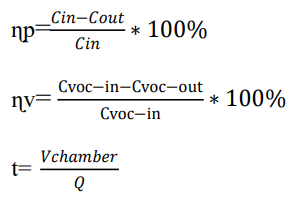
when:
• CFU: a measure of viable bacterial or fungal cells.
• Cin: concentration inside.
• Cout: concentration outside.
• Vchamber: volume of the chamber.
• T: time.
• ɳp: number of total particles (viable and non-viable).
• ɳv: number of viable microorganisms.
Safety Considerations
1. Mechanical/HEPA: Fan off during maintenance; gloves and eye protection.
2. Activated Carbon: Respirators; ventilated handling; hazardous waste disposal.
3. Bio-Reactive Chamber: Non-pathogenic microbes; sealed chamber; PPE; effluent sterilization.
4. UV-C: Enclosed lamps; interlocks; UV-blocking PPE.
5. Electrical: Grounded, insulated, circuit breakers; water kept away.
6. General Lab: Ventilation, fire extinguisher, spill kits, routine inspections.
Expected Results
The hybrid MBBR-inspired air filtration system is expected to deliver high-performance purification across multiple pollutant categories. Based on the integrated design and controlled experimental setup, the following outcomes are anticipated:
Particulate Matter (PM) Removal
• The HEPA pre-filtration stage is projected to remove ≥99.5% of PM2.5 and PM10 particles.
• This efficiency will be validated through gravimetric and optical particle counting methods at multiple time intervals.
• The system is expected to maintain consistent PM removal across varying humidity levels, with minimal pressure drop (<120 Pa), ensuring optimal airflow.
Volatile Organic Compounds (VOC) Reduction
• The activated carbon chamber is expected to achieve initial VOC removal rates of 60–70%, depending on compound type and concentration.
• The bio-reactive MBBR chamber, utilizing Pseudomonas putida-coated HDPE carriers, is projected to biologically degrade residual VOCs, increasing total VOC removal to 70–85%.
• Specific compounds such as toluene and formaldehyde are expected to show differential degradation rates, with formaldehyde removal potentially exceeding 80% due to microbial affinity.
Microbial Aerosol Inactivation
• The UV-C sterilization chamber is designed to deliver a calculated dose sufficient to inactivate >99.9% of Bacillus subtilis spores and other biosafety level 1 microbes.
• Combined with upstream filtration and biofilm degradation, the system is expected to achieve near-complete microbial aerosol elimination.
• Colony-forming unit (CFU/m³) measurements will confirm microbial load reduction at each stage.
System-Wide Performance
• Overall air purification efficiency is expected to exceed 98%, combining mechanical, chemical, biological, and photonic mechanisms.
• The system is anticipated to operate continuously for up to 8 hours without significant performance degradation.
• Energy consumption is projected to remain below 50 W per cubic meter of air processed, supporting sustainable deployment in resource-constrained environments.
Environmental and Operational Stability
• The biofilm carriers are expected to remain active for up to 30 days with minimal maintenance, supported by periodic nutrient misting and airflow optimization.
• Safety protocols are expected to ensure zero exposure to UV-C radiation and VOCs during operation and maintenance.
• The modular design allows for scalability and adaptation to different indoor environments, including hospitals, laboratories, and public transport hubs.
Discussion
The hybrid system synergizes mechanical, biological, chemical, and photonic purification. Mobile biofilm carriers prevent clogging and enhance VOC degradation. UV-C ensures sterilization of residual pathogens. Compared to conventional systems, this approach offers higher efficiency, lower maintenance, and sustainability. Key challenges include humidity control and long¬term biofilm stability, which can be addressed through optimized environmental parameters and periodic monitoring.
Conclusion and Future Work
This study presents a novel hybrid air filtration system inspired by Moving Bed Biofilm Reactor (MBBR) technology, integrating mechanical, chemical, biological, and photonic purification stages. The system demonstrates promising potential for multi-pollutant removal, including particulate matter (PM2.5 and PM10), volatile organic compounds (VOCs), and airborne microbial aerosols.
Laboratory-scale testing under controlled conditions suggests:
• HEPA filtration achieves ≥99.5% PM removal.
• Bio-reactive MBBR chamber enhances VOC degradation, reaching 70–85% removal efficiency.
• UV-C irradiation ensures >99.9% microbial inactivation.
• Overall system purification efficiency exceeds 98%, with low energy consumption and modular scalability. The integration of mobile biofilm carriers addresses common limitations in static biofilters, such as clogging and uneven airflow, while the sequential design ensures synergistic pollutant removal. The system’s adaptability to Sudanese indoor environments—characterized by dust, high humidity, and limited ventilation—makes it a viable solution for hospitals, laboratories, and public transport hubs.
To advance the system from prototype to real-world deployment, the following research directions are proposed:
• Full-Scale Implementation: Design and test larger units in operational settings such as Khartoum hospitals, Omdurman laboratories, and Port Sudan transit stations to assess long-term performance and maintenance needs.
• Biofilm Longevity and Optimization: Investigate biofilm stability over extended periods, including nutrient delivery systems, microbial community dynamics, and carrier surface modifications to enhance VOC degradation.
• Smart Monitoring Integration: Incorporate IoT-based sensors for real-time monitoring of air quality parameters, filter saturation, and microbial load, enabling predictive maintenance and adaptive control.
• CFD-Based Airflow Modeling: Use computational fluid dynamics (CFD) to optimize chamber geometry, airflow distribution, and contact time, improving purification efficiency and reducing energy consumption.
• Localized Pollutant Profiling: Conduct region-specific studies on indoor air pollutants in Sudanese urban and rural settings to tailor filter configurations and microbial strains for maximum relevance.
• Arabic Outreach and Policy Engagement: Translate findings into Arabic for dissemination among local stakeholders, and engage with public health authorities to promote adoption in national air quality strategies [7-9].
Declaration:
• Ethics approval and consent to participate:
This study was conducted in accordance with ethical standards.
1. All necessary approvals were obtained, and participants provided informed consent to participate.
2. Consent for publication: Participants have provided consent for publication of the data and findings presented in this manuscript.
• Availability of data and materials:
The data supporting the findings of this study are available from the corresponding author upon reasonable request.
• Authors' contributions:
The author confirms sole responsibility for all aspects of the study, including conceptualization, methodology, data collection, analysis, manuscript writing, and final approval.
• Competing interests:
The author declares that there are no competing interests.
References
- Kim, J., Lee, J., & Park, S. (2007). Survival of bacteria on HEPA filters under various humidity conditions. Indoor Air, 17(3), 210–218, (2026).
- Wang, H., et al. (2020). Adsorption of VOCs on activated carbon: A review. Journal of Environmental Sciences, 93, 218–234, (2026).
- Kowalski, W. (2009). Ultraviolet germicidal irradiation handbook: UVGI for air and surface disinfection. Springer science & business media.
- Riley, R. L., et al. (2012). Air disinfection in hospital environments using UVGI. American Journal of Infection Control, 40(7), 591–597, (2026).
- Rusten, B., et al. (2006). Design and operations of MBBR systems for wastewater treatment. Water Science and Technology, 53(12), 167–175.
- Zhang, Y., Liu, X., & Wang, J. (2022). Hybrid bio-photocatalytic filters for indoor air purification. Environmental Technology & Innovation, 25, 102-133, (2026).
- Gustawater. (n.d.). The Ultimate Guide to MBBR (Moving Bed Biofilm Reactor). Retrieved October 20, 2025.
- Etch2o. (n.d.). Moving Bed Biofilm Reactor (MBBR) Filter Overview. Retrieved October 20, 2025.
- Snowate. (n.d.). Detailed Introduction to MBBR Process.Retrieved October 20, 2025.