

Advances in Bioengineering and Biomedical Science Research(ABBSR)
ISSN: 2640-4133 | DOI: 10.33140/ABBSR

Impact Factor: 1.7

Research Article - (2020) Volume 3, Issue 3
Comparison of the distribution pattern of metastatic bone disease and Skeletal related events between breast and prostate cancer: A retrospective study in Khartoum Oncology Hospital 2020
2Department of clinical research, Sudanese Medical research association, Sudan
3Faculty of Medicine, Bahri University, Khartoum, Sudan
4Faculty of medicine, Alzaeim Alazhari University, Khartoum north, Sudan
5Faculty of Medicine, Khartoum University, Khartoum, Sudan
Received Date: Aug 21, 2020 / Accepted Date: Aug 31, 2020 / Published Date: Sep 14, 2020
Copyright: ©Copyright: ©2020 Mosab Ahmed Abker Adam, et al. This is an open-access article distributed under the terms of the Creative Commons Attribution License, which permits unrestricted use, distribution, and reproduction in any medium, provided the original author and source are credited.
Abstract
Background: Bone metastasis (BM) and its consequence skeletal-related events (SREs) are the most common cause of cancer pain and disability. In this study, we compare the distribution pattern of BM and SREs in breast cancer (BC) and prostate cancer (PC).
Materials and Method: A Retrospective study in Khartoum oncology hospital of the medical record from 29 September 2019 to March 2020. Demographic and clinical information extracted from the medical records of eligible patients in the last 5 years 2015-2019 included age, sex, social habits, duration of breast and prostate cancer, duration of treatment, site of BM, and SREs if present. Statistical analyses were performed using SPSS, Version 22.0. (IBM, USA).
Results: Out of 3216 patients, medical records 71.8% diagnosed with BC and 28.2% diagnosed with PC.5.6% had to BM the ratio between the breast and prostate is 1:4, Both cancers commonly metastasize to Spinal and pelvic bones. In comparison between BC and PC, the common site for BM according to the affected segment is lumber 48.8%, thoracic 32.9%, and pelvic 32.9% in BC. While in the PC: 56.9%, 50.5%, and 42.2% for lumbar, pelvic, and thoracic vertebrae respectively. SREs occur in 45.7% and 63.3% of BC and PC patients respectively.
Conclusion: Based on high incidence BM in the BC and PC, screening for BM as soon as cancer diagnosed should be done promptly. Skeletal complications signs should always be considered as a matter of priority, as it has an impact on patient quality of life.
Keywords
Prostate cancer, Breast cancer, Bone metastasis, Distribution pattern, Skeletal related events.Introduction
Metastatic bone disease (MBD) is the most common cause of cancer pain and serious skeletal-related events (SREs) reducing the quality of life [1]. It considered the third most common site of metastasis by primary cancer surpassed by liver and lung respectively. Moreover, most patients with bone metastases have their primaries in the breast, lung, or prostate with the prevalence highest in breast and prostate cancers [2-5].
Bone metastasis is much more common than primary bone cancers, although bone pain is a common presenting symptom in these patients, however up to 30 to 50% of these patients may be asymptomatic. So the real incidence of bone metastasis is not possible to report because sometimes bone metastasis is not clinically visible and their demonstration occurs during the autopsy. Although the life expectancy of cancer patients with bone metastases has dramatically improved [5, 6]. Unfortunately, these patients often experience skeletal complications that significantly impair their quality of life which include: cancer-induced bone pain, hypercalcemia, pathological bone fractures, metastatic epidural spinal cord compression, and cancer cachexia.
On average, a patient with metastatic disease will experience a skeletal-related event every 3 to 6 months. However, the occurrence of these morbid events is not regular, with events clustering around periods of progression and becoming more frequent as the disease becomes more extensive and the treatment options reduce [7-9]. Regarding the association between Mortality Rate and SRE, the association was stronger for bone metastasis complicated by SRE than for bone metastasis without SRE and hence lead to poor prognosis [10, 11].
Numbers of studies concerning the comparison between breast and prostate cancer and Distribution pattern of the metastatic lesion have been reported in the literature in the early stage of breast and prostate cancer the metastasis to the thoracic, lumbar, and pelvic bone is much higher and significant in Breast cancer (81.0%) than in the prostate cancer (41.7%) [6-11]. While in the advance disease there is no markedly difference between both Moreover, the metastasis in breast cancer is common in the spine followed by ribs in contrast to prostate cancer the common site for skeletal metastasis is spine (lumbar segment in particular), pelvic bone, followed by ribs [6-10, 12, 13]. While other study reported that pelvis and spine are the commonest sites for BM in prostate cancer, however, the common site in breast cancer are the spine, ribs, and sternum respectively [14, 15].
More than half of the patients with bone metastases develop some form of skeletal complication such as severe pain, fracture, spinal cord compression, marrow failure, or hypercalcemia [16]. All of which can significantly compromise the quality of life and may negatively affect survival. Palliation of pain, prevention of skeletal complications, and maintenance of the quality of life are the primary objectives in managing patients with the metastatic bone disease [17].
Several studies discuss and compare the prevalence, frequent site of bone metastasis in breast and prostate cancer, but a comparative study of spinal metastasis in each part of the skeleton particularly vertebral segment, and the effect of skeletal metastasis in what is known as skeletal-related events (SREs) is not reported yet in Sudan according to our knowledge as inadequate diagnostic facilities and trained health workers and infrastructure, all contribute to lack of cancer reporting [18].
Also, cancer was the third leading cause of death after malaria and viral pneumonia, accounting for 5% of all deaths [19]. So this study is necessary to provide data that can improve the quality of life for the patient. Because symptoms of skeletal complications including ” Pain (back and/or neck pain, arm and/or leg pain), muscle weakness or numbness in the arms or legs, difficulty walking, general loss of sensation, difficulty with urination (incontinence), change in bowel habits (retention), and paralysis to varying degrees” interfere with the patient life causing Disability and low quality of life, also late detection of the cancer is a huge problem in the developing countries as a majority of cancer patients in developing countries are diagnosed at a very late stage of illness, when treatment is no longer effective and we are one of the developing countries facing the same problem.
Material and Method
A health facility-based Retrospective record review was conducted in Khartoum oncology hospital, Khartoum, Sudan from September 2019 to March 2020. We designed a Structured Data-sheet that includes: patient’s demographic information, duration of primary malignancy, treatment method for primary malignancy, Duration of treatment, site of bone metastasis, and skeletal-related event. Clinical datasets were collected from the medical records of 906 patients with Prostate cancer and 2309 patients with breast cancer at Khartoum hospital for Oncology between January 2015 and September 31, 2019. During these 5 years, a total of Patients (3216) who had been initially diagnosed with breast cancer (3%) or Prostate cancer (12.25%) and then later developed the metastatic bone disease were included.
The study design and data collection methods were approved by our institutional review board and ethical approval was obtained by the ministry of health. The targeted patients were:
1. Any cancer patients with a diagnosis of BC.
2. All male patients diagnosed with prostate cancer in the above-stated time frame.
We depend on the result of the bone scan to detect the bone metastasis.
The Exclusion Criteria Were as Follows:
Patient record of other types of cancer, prostate or breast cancer without bone metastasis, record without Demographic information, or with missing data especially Bone scan result. For statistical analysis, the following parameter: age, sex, social habit, site of primary malignancy, and duration of treatment were analyzed for validity as prognostic factors. Statistical significance was defined as P<0.05. analysis was performed using SPSS, version 22.0 (IBM, USA).
Results
Baseline character, a total of 3216 patients had breast or prostatic cancer was involved in this study, identified by the medical records database method in Khartoum Oncology Hospital between 2015 and 2019. 71.8% and 28.2% had breast and prostatic cancer respectively. 5.6% of patients lived with secondary bone metastases, the ratio of secondary bone metastases between breast and prostatic cancer is 1:4. The median age of patients was 58.8 years (prostate 71 years, breast 54 years). As in (Table1) Bone metastases sites, significant correlation (P=0.006) was established between the period of diagnosis and number of bone metastases at a distance, in both cancers, spinal vertebrae followed by pelvic bone are the most common metastatic bony site, in breast cancer (67.1%) and (32.9%) for spinal and pelvic bones respectively, and in prostate cancer (74.8%) and (50.5%) respectively.
Table 1: Shows the baseline characters of prostate and breast cancer and their mean of age.
|
Characteristics |
Values |
|
Total patients with two cancers Breast cancer patient Prostate cancer patients Total patients with two cancers and bone metastases The ratio of metastases between breast: prostate |
3216 71.8% 28.2% 5.6% 1:4 |
|
Total median age Breast median age Prostate median age |
58.8 years 54 years 71 years |
|
Percentages from a total of 3216 cases |
|
For more details, we went far and studied the four parts of spinal vertebrae instead of taking it as a whole unit, in case of breast cancer we found the most common site of bones metastasis is lumbar vertebrae (48.8%), followed by thoracic vertebrae (32.9%), pelvic 141 (32.9%), sternum (27.1%), ribs (25.7%), femur (15.7%), skull (15.7%), clavicle (14.3%), sacral vertebrae (14.3%), cervical vertebrae (12.8%), hummers (11.4%), and tibia (4.3%). in comparison of prostate cancer, the most common is lumbar vertebrae (56.9%), followed by pelvis (50.5%), thoracic vertebrae (42.2%), ribs (39.4%), femur (32.1%), clavicle (27.5%), sternum (27.5%), sacral vertebrae (25.7%), skull (24.8%), cervical vertebrae (20.2%), humerus (16.5%) and tibia (6.4%). as in (Table 2) and (Figure 1) However, even parts of lumbar vertebrae in both cancers show different frequency, (20%) of breast cancer patients had metastases in L3 followed by 15.7%, 15.7%, 14.3% and 2.9% for L4, L5, L2, and L1 respectively in comparison of 35.8%, 34%, 30.2%, 26.4% and 17% for L4, L5, L3, L2, and L1 respectively in prostate cancer metastases. as in (Table 3) Skeletal related complications and events, skeletal events occur in 45.7% and 63.3% of breast and prostate cancer patients respectively. Bone pain is the commonest skeletal event that occurs in more than 50% of both metastatic cancers patients. Spinal cord compressions symptoms (back pain, lower limb numbness, and decrease power in lower limbs or loss of sphincter control) found in 31.5% and 21.4% of breast and prostate cancer patients respectively. Details of the skeletal event are shown in (Table 4) and (Figure 2)
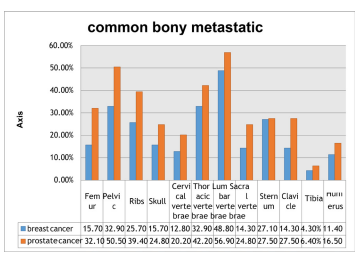
Figure 1: Compares the most frequently bone metastasis sites secondary to prostate and breast cancer
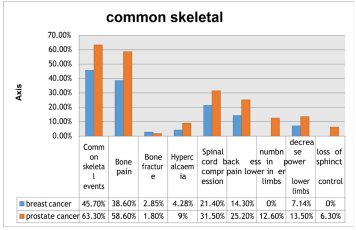
Figure 2: Shows the common skeletal events related to breast and prostate cancer, pain considered to be the commonest event in both cancers
Table 2: Compares the common bone site affected by prostate and breast cancer, the table shows lumbar vertebrae are the common sites for metastases followed by pelvis in both cancers.
|
Sites of secondary metastases |
Cancer Types |
|
|
|
Breast cancer |
Prostate cancer |
|
Femur |
15.7% |
32.1% |
|
Pelvic |
32.9% |
50.5% |
|
Ribs |
25.7% |
39.4% |
|
Skull |
15.7% |
24.8% |
|
Cervical vertebrae |
12.8% |
20.2% |
|
Thoracic vertebrae |
32.9% |
42.2% |
|
Lumbar vertebrae |
48.8% |
56.9% |
|
Sacral vertebrae |
14.3% |
24.8% |
|
Sternum |
27.1% |
27.5% |
|
Clavicle |
14.3% |
27.5% |
|
Tibia |
4.3% |
6.4% |
|
Humerus |
11.4% |
16.5% |
Table 3: Compares the common vertebral site affected by prostate and breast cancer, lumbar vertebrae are affected more frequently than other vertebral bones, especially L4 and L5 in both cancers.
|
Spinal vertebrae metastases sites |
Cancer Types |
|
|
|
Breast cancer |
Prostate cancer |
|
C1 |
0.0% |
0.0% |
|
C2 |
0.0% |
1.9% |
|
C3 |
1.4% |
0.0% |
|
C4 |
2.6% |
5.7%) |
|
C5 |
2.6% |
7.5% |
|
C6 |
4.3% |
7.5% |
|
C7 |
5.7% |
22.6% |
|
T1 |
2.6% |
3.8% |
|
T2 |
2.6% |
9.4% |
|
T3 |
10% |
7.5% |
|
T4 |
5.7% |
3.8% |
|
T5 |
4.3% |
13.2% |
|
T6 |
5.7% |
9.4% |
|
T7 |
7.1% |
13.2% |
|
T8 |
10.0% |
17% |
|
T9 |
8.6% |
18.9% |
|
T10 |
7.1% |
15.1% |
|
T11 |
11.4% |
11.3% |
|
T12 |
8.6% |
15.1% |
|
L1 |
2.6% |
17% |
|
L2 |
14.3% |
26.4% |
|
L3 |
20.0% |
30.2% |
|
L4 |
15.7% |
35.8% |
|
L5 |
15.7% |
34% |
Table 4: Compares the common skeletal events related to prostate and breast cancer, pain considered to be the commonest event and mainly affects the back in both cancers.
|
|
Breast cancer |
Prostate cancer |
|
Common skeletal events:- |
32 (45.7%) |
70 (63.3%) |
|
Bone pain |
27 (38.6%) |
65 (58.6%) |
|
Bone fracture |
2 (2.85%) |
2 (1.8%) |
|
Hypercalcaemia |
3 (4.28%) |
10 (9.0%) |
|
Spinal cord compression:- |
15 (21.4%) |
35 (31.5%) |
|
back pain |
10 (14.3%) |
28 (25.2%) |
|
numbness in lower limbs |
0 |
14 (12.6%) |
|
decrease power in lower limbs |
5 (7.14%) |
16 (13.5%) |
|
loss of sphincter control |
0 |
7 (6.3%) |
|
Percentages from total breast or prostate cases with bone metastases |
||
Discussion
Cancer is the world’s leading cause of death, responsible for an unprecedented 9, 6 million deaths in 2018. Lung cancer and colorectal cancer are the common cancers that both men and women develop. Even so, the most common form of cancer varies in each sex; prostate cancer and breast cancer are the most prevalent in both men and women respectively [20].
A lot of studies emphasized that each of breast and prostate cancer tend to metastases to the bone as a common bone site like R.E. Coleman and R.D. Rubens study in England in early 1987s of patients who die with breast cancer between 1979 and 1984, and in 1998 R.D. Rubens conducted a study about Bone Metastases The Clinical Problem, as well as a study conducted in University of Montreal Health Centre in Canada of Metastatic Sites in Patients with Prostate Cancer, in our study the prevalence of bone metastases in both breast and prostate cancer are 3.03% and 12.25% respectively. Prostatic cancer appears to metastasis 4 times more than breast cancer, we can relay this on [21-23]:
First: screening test of breast cancer is performed in women between 50 and 70 years old, and highly recommended to any women in childbearing age if she notices any abnormal changes or masses in her breast, but prostate screening is not routinely done to elderly high- risk man.
Second: mammogram is the most common useful screening test to detect breast cancer early and lowering the risk of dying. but in prostate cancer PSA (prostate-specific antigen) is the most current screening test, and there is no evidence that PSA screening test of prostate cancer has the same effect of mammogram in lowering mortality rate caused by this cancer [24].
Third: the median survival time of breast cancer since diagnosis was 9.6 years and 3.5 years for prostate cancer in the same period [25].
A study in 2019 found that patients with primary tumors above the diaphragm were tented to metastases to the cervical spine or thoracic bones more common than those below the diaphragm, and patients with pelvic tumors had a higher incidence of pelvis bone metastasis than other patients, prostate cancer’s distribution in our study found to be metastasis to the bony part under the diaphragm (lumbar vertebrae and pelvic bones) more frequently as previous study result. However, breast cancer in our study metastasis to the bony area under the diaphragm (lumbar vertebrae and pelvic bones) more than the bony area above it (skull and cervical vertebrae), with the same frequency between thoracic vertebrae (above the diaphragm) and pelvic (under diaphragm) [26].
When we compared metastases sites between breast and prostate cancer we noted that the three most common sites and the three least common sites between these two cancers are same, three most common are (lumbar vertebrae, thoracic vertebrae and pelvic) and three least commons are (cervical vertebrae, humerus, and tibia). the percentages of metastases between the common bone sites (first common in the breast with the first common in the prostate, second common in the breast with the second common in the prostate.) show that percentages of prostate metastasis to bone sites is always higher than their equivalent in breast groups.
In general, skeletal-related complications and events of prostate cancer is more than the same complications and events of breast cancer, except pathological fracture is more prominent in breast cancer. Distinct clinical events are associated with Different sites of bone metastases. Approximately 60% and 40% of breast cancer patients with pain had lumbar vertebrae and pelvic metastases respectively in comparison of 55.4% and 54% in prostate cancer patients. All patients of breast cancer with pathological fracture had femur, pelvic, skull, and sternum metastases in comparison to thoracic vertebrae metastases in prostate cancer patients. Two third of breast cancer patients with hypercalcemia had thoracic and lumbar metastasis in comparison to 50% and 40% of prostate cancer patients had thoracic and lumbar metastasis respectively. Spinal cord compression is more common in prostate cancer patients than breast one. 80%, 30%, and 30% of breast cancer patients with back pain had lumbar vertebrae, thoracic vertebrae, and pelvic respectively in comparison of 35.7%, 39.3%, and 46.4% in prostate cancer patients. 80%, 60% and 40% of breast cancer patients with decrease power in lower limbs had lumbar vertebrae, pelvic and sacral metastases respectively in comparison of 50%, 50% and 37.5% of prostatic cancer patients with the same decrease of power had thoracic vertebrae, pelvic and lumbar vertebrae respectively. In our study patients with breast cancer did not experience lower limb numbness or loss of sphincter control, however, 57.1% and 42.9% of prostate cancer patients with lower limb numbness had lumbar and thoracic vertebrae metastases respectively and 57.1%, 57.1% and 42.9% of them had thoracic, pelvic and sacral metastases respectively.
This study conducted in Khartoum Oncology Hospital which supported by Sudan government and offers free therapeutic sessions for those suffering from cancers, this can consider as strength point facing the single database nature limitation, Another limitation was lacking data from a previous study on comparing the BM between breast and prostate cancer regarding the common vertebral metastatic sites and how several distant metastases correlate with durations of cancer and other metastatic patterns
Conclusion
Based on the high incidence of bone metastases as a site of the first recurrence in patients with non-metastatic breast and prostate cancer, screening for bone metastases as soon as cancer diagnosis should be done promptly. However, the majority of breast and prostate cancer patients with metastases experience bone location, particularly the spine, followed by pelvic bones and thoracic cage. These findings might be helpful when planning diagnostic imaging procedures in patients with advanced breast and prostate cancer. Skeletal complications signs should always take as harmful signs, investigated and handled as a matter of priority, and treated as soon as possible.Acknowledgement
To Khartoum oncology hospital for their support to conduct this reportReferences
- Pockett RD, Castellano D, Mcewan P, Oglesby A, Barber BL, et al. (2010) The hospital burden of disease associated with bone metastases and skeletal-related events in patients with breast cancer, lung cancer, or prostate cancer in Spain. 19: 755-760.
- P Sutcliffe, M Connock, D Shyangdan, R Court, NB Kandala, et al. (2013) A systematic review of evidence on malignant spinal metastases: natural history and technologies for identifying patients at high risk of vertebral fracture and spinal cord compression 17: 1-274.
- Lote K, Walløe A, Bjersand A (2009) Acta Radiologica: Oncology Bone Metastasis Prognosis, Diagnosis and Treatment 2009
- Aycan A, Çelik S, Kuyumcu F, Akyol ME, Arslan M, et al. (2017) Spinal metastasis of unknown primary accompanied by neurological deficit or vertebral instability. World Neurosurg.
- Mingyu Z, Xin L, Yuan Q, Silong H, Yingjian Z, et al. (2019) Bone metastasis pattern of cancer patients with bone metastasis but no visceral metastasis 15: 1-5.
- Maccauro G, Spinelli MS, Mauro S, Perisano C, Graci C, et al. (2011) Physiopathology of Spine Metastasis.
- Shunsuke Tsuzuki, Sun Hee Park, Matthew R Eber, Christopher M Peters, Yusuke Shiozawa (2017) Skeletal complications in cancer patients with 265 bone metastases 23: 825-382.
- Tsuya A, Kurata T, Tamura K, Fukuoka M (2007) Skeletal metastases in non-small cell lung cancer: a retrospective study 57: 229-232.
- Coleman RE (2006) Clinical Features of Metastatic Bone Disease and Risk of Skeletal Morbidity 12: 6243-6250.
- Sathia kumar N, Delzell E, Morrisey MA, Falkson C, Brill I, et al. (2012) Mortality following bone metastasis and skeletal-related events among women with breast cancer: a population-based analysis of U. S. Medicare beneficiaries, 1999-2006 131: 231-238.
- Yong M, Østergaard A. Survival in breast cancer patients with bone metastases and skeletal-related events: a population-based cohort study in Denmark (1999-2007). 2011;495–503.
- Afzal MS, Akhtar MS, Shahid A, Imran MB, Irfanullah J, et al. (2009) Pattern of Distribution of Metastatic Lesions within Skeleton in Patients with Breast Carcinoma of Faisalabad and its Vicinity 3: 13-8.
- Wang C, Wu G, Shen M, Cui K, Shen Y (2013) Comparison of distribution characteristics of metastatic bone lesions between breast and prostate carcinomas 5: 391-397.
- Oncol R, Tawfik EA, Zytoon AA, Gohar SF (2016) Original article Study of distribution of bone metastases in metastatic breast cancer patients compared to other major cancers 12: 20-27.
- Reza V, Kakhki D, Anvari K (2013) Pattern and distribution of bone metastases in common malignant tumors 16: 66-69.
- Huang C (2015) Prostate Cancer with Bone Metastases: A Clinical Profile Prostate Cancer with Bone Metastases: A Clinical Profile.
- Falkson G, Gelman RS, Leone L, Falkson CI (1990) Survival of premenopausal women with metastatic breast cancer. Long-term follow-up of Eastern Cooperative Group and Cancer and Leukemia Group B studies. Cancer 66: 1621-1629.
- Ahmed HG, Eltom FM, Doumi MA, Eltybe MM, Mahmoud TA, et al. (2014) Provided for non-commercial research and education use. Not for reproduction, distribution or commercial use. Burden of Cancer in North Sudan: A community-based 294 Survey.
- Saeed MEM, Cao J, Fadul B, Kadioglu O, Khalid HE (2016) A Five-year Survey of Cancer Prevalence in Sudan 286: 279-826.
- Ntekim AO, Asuzu CC, Osiki JO, Ntekim AI, Zhong X, et al. (2020) Selected Personal Factors as Predictors of Quality of Life of Cancer Patients in Southwestern Nigeria. Journal of Cancer Treatment and Research 8: 29.
- Coleman R, Rubens R (1987) The clinical course of bone metastases from breast cancer. British journal of cancer 55: 61.
- Rubens R (1998) Bone metastases-the clinical problem. European Journal of Cancer 34: 210-213.
- Brennan Krohn T, Ozonoff A, Sandora TJ (2018) Adherence to guidelines for testing and treatment of children with pharyngitis: A retrospective study. BMC Pediatr. BMC Pediatrics 18:1-7.
- Influence of Screening Methods on the Mortality Rate of Breast and Prostate Cancers. [online]. Available from: https:// nursinganswers.net/essays/influence-of-screening-methods-on-the-mortality-rate-of-breast-and-prostate-cancers.php
- Devane C (2016) Living after diagnosis: Median cancer survival times. Macmillan Cancer Support as accessed on: https://www.macmillan.org.uk/documents/aboutus/ newsroom/livingaftercancermediancancersurvivaltimes.pdf
- Zhu M, Liu X, Qu Y, Hu S, Zhang Y, et al. (2019) Bone metastasis pattern of cancer patients with bone metastasis but no visceral metastasis. Journal of bone oncology 15: 100219.