

Journal of Gastroenterology & Digestive Systems(JGDS)
ISSN: 2640-7477 | DOI: 10.33140/JGDS
Impact Factor: 1.13


Research Article - (2025) Volume 9, Issue 1
Characteristic of Autoimmune Hepatitis in Mukalla-Hadhramount a Five-Year Retrospective Study from Resources-Limited Setting
2Professor of Medicine, Department of Medicine and Health Sciences - Hadhramout University- Mukalla, Yemen
3Master of Family Medicine, Family Medicine Department, Hadhramout University, Yemen
4M.Sc. Department of Pharmacy, Wenzhou Medical University, China
Received Date: Apr 05, 2025 / Accepted Date: May 28, 2025 / Published Date: Jun 10, 2025
Copyright: ©2025 Ahmed Mubarak Daakeek, et al. This is an open-access article distributed under the terms of the Creative Commons Attribution License, which permits unrestricted use, distribution, and reproduction in any medium, provided the original author and source are credited.
Citation: Musean, N. S., Daakeek, A. M., Webair, H., Al-Zaazaai, A. A. (2025). Characteristic of Autoimmune Hepatitis in Mukalla-Hadhramount a Five-Year Retrospective Study from Resources-Limited Setting. J Gastro & Digestive Systems, 9(1), 01- 07.
Abstract
Background & Aim: Autoimmune hepatitis (AIH) is an immune-mediated liver disease prevalent in young adults, predominantly affecting women. This study aimed to investigate the clinical characteristics of AIH in Hadhramout Governorate, Yemen, where data on this condition is limited.
Methods: This retrospective analysis examined medical records of patients diagnosed at Al-Amal Medical Center in Mukalla, Hadhramout, between 2019 and 2013. Diagnosis of AIH based on specific criteria according to our resources based on interna- tional AIH criteria. Data collected included demographics, clinical presentation, laboratory findings, radiological results, and social habits, particularly khat chewing. Patients were classified into AIH types 1 and 2, and treatment responses were assessed.
Results: Twenty-five of the 27 diagnosed AIH patients were included in the study. The mean age of the patients was 25.76 ±3.018 years, with a male predominance of 92%. Ninety percent of the patients were khat chewers. Acute hepatitis and jaundice were the most frequent presentations, observed in 88% of cases. Type 1 AIH was diagnosed in 76% of patients.
Discussion: Prednisolone treatment resulted in complete remission in 88% of patients. However, patients with advanced disease showed poorer treatment outcomes (p=0.00). Three patients experienced a relapse of the disease, and two patients died from liver cirrhosis.
Conclusion: In Hadhramout, AIH primarily affects young khat-chewing males, contrasting global trends. While most patients responded well to treatment, those with advanced disease had poorer outcomes.
Keywords
Autoimmune Hepatitis, Khat Chewing, Presentation, Hadhramout
Introduction
Autoimmune hepatitis (AIH) is a chronic liver disease characterized by immune-mediated inflammation and destruction of hepatocytes [1]. This pathophysiology involves the aberrant activation of the immune system, leading to the production of autoantibodies directed against liver antigens [2]. The clinical spectrum of AIH is diverse, ranging from asymptomatic elevations in liver enzymes to severe manifestations such as acute hepatitis, progressive chronic liver disease culminating in cirrhosis and hepatocellular carcinoma (HCC), or even fulminant hepatic failure [3]. The pathogenesis of AIH is complex and multifactorial. It likely involves a combination of genetic susceptibility, environmentaltriggers, and deregulation of immune tolerance mechanisms [4]. Notably, AIH exhibits a strong association with other autoimmune disorders, including type 1 diabetes mellitus, autoimmune thyroiditis, inflammatory bowel diseases (e.g., ulcerative colitis, Crohn's disease, celiac disease), and systemic lupus erythematosus [5]. AIH affects individuals of all ages and ethnicities, although its prevalence varies globally. The estimated annual incidence of AIH ranges from 0.7 to 2.0 cases per 100,000 individuals, with a global prevalence estimated to be between 4 and 25 cases per 100,000 [6]. While AIH can affect both sexes, it demonstrates a significant female predominance, with women accounting for approximately 75- 80% of cases [7]. The diagnosis of AIH relies on a combination of clinical, serological, and histological findings. The presence of specific autoantibodies, such as antinuclear antibodies (ANAs) and anti-smooth muscle antibodies (SMAs), is highly suggestive of AIH [8]. Type 1 AIH, the most prevalent subtype, is typically characterized by the presence of ANAs and SMAs. In contrast, Type 2 AIH is associated with liver-kidney microsomal antibodies (LKM) or anti-liver cytosol type 1 antibodies (LC) [9]. While the presence of antimitochondrial antibodies (AMAs) usually indicates primary biliary cholangitis (PBC), overlap syndromes between AIH and PBC can occur. Furthermore, a subset of AIH patients may not exhibit detectable autoantibodies, a condition referred to as seronegative AIH [10,11].
Treatment for AIH typically involves immunosuppressive therapy, with glucocorticoids being the cornerstone of initial management. Other immunosuppressive agents, such as azathioprine or mycophenolate mofetil, may be used as adjunctive or alternative therapies [12]. Despite its often-insidious onset, AIH responds well to immunosuppressive therapy in most cases [13]. In regions of Asia and the Middle East, the diagnosis of AIH can be challenging due to the high prevalence of viral hepatitis infections, such as hepatitis B and C. This can lead to underdiagnosis and underreporting of AIH in these regions [14]. In Yemen, AIH has been recognized as a significant contributor to liver disease [15]. Khat chewing, a widely practiced stimulant use in Yemen, has been associated with an increased risk of developing hepatitis and has been shown to have adverse effects on the immune system. Notably, AIH appears to occur more frequently among Yemeni patients with a history of prolonged Khat chewing, particularly those who have chewed Khat for more than 10 years [16,17]. However, the precise relationship between Khat chewing and the development of AIH remains to be fully elucidated, as some studies have not found a consistent association between Khat chewing and the presence of ANAs and SMAs [18]. In the Hadhramaut region and other eastern governorates of Yemen, comprehensive studies specifically investigating the prevalence, clinical presentation, and outcomes of AIH are currently lacking. This study aims to address this critical knowledge gap by thoroughly assessing the clinical features, biochemical profiles, and treatment responses of patients diagnosed with AIH in the Hadhramaut region.
Materials and Methods
Study Design
This retrospective study included adult patients diagnosed with autoimmune hepatitis (AIH), at internal medicine outpatient clinic in Al-Amal medical center in Mukalla city, Capital of Hadhramout- Yemen, between January 2019 and June 2023. AIH is diagnosed according to the following parameters modified from international group of autoimmune hepatitis according to our facilities:
• Evidence of liver injury by liver function test
• The alkaline phosphatase (ALP) to alanine-aminotransferase (ALT) ratio more than 1.5
• Presence of antinuclear antibodies (ANA), smooth muscle antibodies (SMA) or liver kidney microsomal antibodies type 1 (anti-LKM-1) more than 1:80
• Absence of hepatitis viral markers, illicit drug use alcohol abuse, or metabolic and hereditary diseases [19].
Inclusion Criteria
Adult patients ( ≥ 18 years old), with completed clinical and serological parameters of AIH.
Exclusion Criteria
• Insufficiently documented AIH diagnosis
• Incomplete medical records due to poor follow-up
• Coexisting liver diseases (e.g., nonalcoholic fatty liver disease, hepatitis B or C, alcoholic and drugs induced liver injury)
Data Collection
For Each Patient, The Following Data Were Collected:
• Demographics Age, sex, address.
• Social Habits: Khat chewing habits
• Clinical Presentation: Symptoms at diagnosis (e.g., fever, jaundice, right upper abdominal pain), clinical manifestations of cirrhosis (e.g., ascites, variceal bleeding, hepatic encephalopathy, bacterial peritonitis)
• Laboratory Investigations
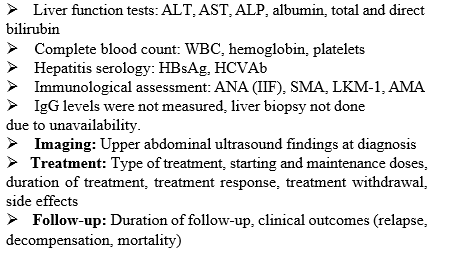
AIH Subtyping
Patients were categorized into two groups:
• Type 1 AIH Presence of ANA and/or SMA
• Type 2 AIH Presence of LKM antibodies
Treatment Response Assessment
• Complete response: Return of ALT levels to normal range within 6 months of starting therapy, with normalization of bilirubin if elevated.
• Incomplete response: Failure to achieve a complete biochemical response within 6 months.
• Non-responder: Less than 50% reduction in serum transaminases within 4 weeks of initiating treatment.
Statistical Analysis
Data were analyzed using SPSS for Windows version 23. Descriptive statistics (mean, standard deviation, frequencies) were calculated. The chi-square test was used to compare categorical variables. A p-value of less than 0.05 was considered statistically significant.
Results
A retrospective chart review of 14,683 patient records at Al-Amal Medical Center outpatient clinic between January 2019 and June 2023 identified 27 cases of autoimmune hepatitis (AIH). The prevalence of AIH during this study period was calculated to be 184 per 100,000 patients. Of the 27 identified cases, 25 were included in the analysis, while two were excluded due to insufficient data. Geographic distribution revealed a significant proportion of patients originating from Hadhramaut Governorate (56%), with the remaining cases from Shabwa and Mahara Governorates. The mean age at presentation was 25.76 years with a standard deviation of 3.018 years (range: 22-32 years).The study cohort comprised 25 participants, with a male predominance (92%, n=23) and a low female representation (8%, n=2). A high prevalence of khat chewing was observed in 20 out of 23 male participants, constituting approximately 90% of the male cases, while none of the female cases reported khat consumption. Table 1.
|
Variable |
Description |
|
Total cases |
25 patients |
|
Age |
Mean and SD (25.76 ±3.018 years) Range (22-32years) |
|
Sex |
Male (23 cases, 92%) Female (2 cases, 8%) |
|
Address |
Hadhramout (14 cases, 56%) Shabowa (6 cases, 24%) Mahra (5 cases, 20%) |
|
Khat chewing habit |
Chewing Khat (20 cases, 90 %) Non-chewing (5cases, 10%) |
Table 1: Demographic Features of Autoimmune Hepatitis in Mulalla-Hadhramout
Of the 25 included patients, 23 (88%) presented with acute hepatitis, with jaundice being the most frequent presenting symptom. Three patients (12%) exhibited clinical manifestations suggestive of liver cirrhosis. Type 1 AIH was the most prevalent subtype, observed in 19 out of 25 patients (76 %), followed by Type 2 AIH in six patients (24%). Table 2 Data regarding overlap syndromes or other associated autoimmune diseases was not collected.
|
Clinical presentation |
NO & % |
|
Juandice |
25, 100% |
|
Fatigue |
22, 88% |
|
Itching |
3, 12% |
|
Fever |
5, 20% |
|
Hepatomegaly |
3, 12% |
|
Splenomegaly |
2, 8% |
|
ascites |
2, 8% |
|
Liver cirrhosis |
3, 12% |
|
Type 1 AIH |
19, 76% |
|
Type 2 AIH |
6, 24% |
|
AIH: Autoimmune Hepatitis |
|
Table 2: Presentation of AIH in Mukalla -Hadhramout
Liver function tests demonstrated significant elevations in alanine aminotransferase (ALT), aspartate aminotransferase (AST), and total bilirubin levels. Patients with acute hepatitis exhibited slightly higher levels of conjugated (direct) bilirubin compared to those with cirrhosis. All patients displayed an alkaline phosphatase (ALP): AST (or ALT) ratio of less than 1.5. Notably, all cases of acute hepatitis maintained normal serum albumin levels. Prothrombin time (PT) was prolonged in 56% of patients, while nine patients (36%) exhibited normal PT. Two patients had no available PT data. Serum IgG levels were not assessed due to unavailability in the clinical setting Table 3. Among the 25 patients, antinuclear antibodies (ANA) were available for 21 (84%), with titers exceeding 1:40. Smooth muscle antibodies (SMA) were assessed in 13 patients (52%), with nine testing negatives. Data for SMA was unavailable for the remaining three. Anti-liver kidney microsomal antibody 1 (LKM-1) positivity was observed in six patients (24%). Anti-mitochondrial antibodies (AMA) were not recorded in the patient files Table 3.
|
Variable |
Median, range and % N=25 |
|
Total Bilirubin (mg/dl) |
13, 6-28 |
|
Direct Bilirubin (mg/dl) |
9, 4-17 |
|
Indirect Bilirubin (mg/dl) |
6, 2-12 |
|
ALT(U/L) |
900, 83-2310 |
|
AST(U/L) |
1200, 95-2700 |
|
ALP : ALT ratio |
0.5, 0.09 -1.3 |
|
Serum albumin (g/dl) |
3.8, 2.6 - 4.4 |
|
PT(seconds) |
14.00 , 12.5-32.00 |
|
ANA |
21, 84 % |
|
SMA |
13, 52% |
|
Anti-LKM |
6, 24% |
|
ALT: Alanine Aminotransferase, AST: Aspartate Aminotransferase, ALP: Alkaline Phosphatase, PT: Prothrombin Time, ANA: Antinuclear Antibodies, SMA: Smooth Muscle Antibodies, Anti-LKM: Liver Kidney Microsomal Antibodies |
|
Table 3: Biochemical and Serological Features of AIH Cases in Mukalla-Hadhramout
Serological tests for hepatitis B virus (HBV), hepatitis C virus (HCV), and hepatitis A virus (HAV) were negative in all patients. Abdominal ultrasound revealed normal findings in 22 patients. One patient exhibited cirrhosis without ascites, while two displayed advanced cirrhosis with ascites. All patients-initiated treatment with prednisolone at a starting dose of 10-20 mg/day, followed by a maintenance dose of 5-10 mg/day. Azathioprine (AZA) was added as a steroid-sparing agent in 9 patients (36%) after demonstrating a response to prednisolone. The starting and maintenance dose of AZA was 50 mg/day. A total of 22 patients (88%) achieved a complete response to treatment, while three patients (including two with cirrhosis) exhibited an incomplete response. The time to achieve a complete response ranged from one to ten months. Patients with cirrhosis demonstrated a significantly lower response rate to treatment (p-value: 0.00). Two patients with cirrhosis who did not respond to treatment succumbed to the disease within five months. Five patients discontinued treatment on multiple occasions, and three of these experienced frequent relapses. Table 4 Hyperglycemia and weight gain were the most common adverse effects, observed in approximately five cases (20%). Table 4 Eighty percent of patients were followed for more than two year.
|
Variable |
NO & % |
|
Treatment response |
|
|
Complete |
22, 88% |
|
response |
3, 12% |
|
Unresponsive |
3, 12% |
|
relapse |
2, 8% |
|
Died |
2, 8% |
|
Treatment side effect |
|
|
None |
16, 64% |
|
Diabetes |
5, 20% |
|
Weight gain |
5, 20% |
|
Infection |
2, 8% |
|
Acne |
1, 4% |
Table 4: Treatment Response and Side Effect of Cases
Discussion
This study aimed to characterize the clinical, biochemical, and serological profiles of patients with autoimmune hepatitis (AIH) in Mukalla, the capital of Hadhramaut Governorate, and the eastern governorates of South Yemen, including Shabwa, Mahra, and Socotra, for the first time. Our observed prevalence of AIH was approximately 184 cases per 100,000 individuals. This is notably higher than the global prevalence, which ranges from 4 to 25 cases per 100,000 individuals, highlighting the rarity of this condition worldwide. (This study was conducted at a single clinic and may not fully represent the true prevalence of AIH in the entire Hadhramaut region). Furthermore, our findings contrast with previous studies in the Middle East. A retrospective study in Jeddah, Saudi Arabia, identified only 41 AIH cases over 15 years [20]. Similarly, Jordan reported 30 cases over six years, and Egypt documented approximately 15 cases in a single year [21,22]. These comparisons emphasize the potential for a higher AIH prevalence in Hadhramaut, although further research with broader population-based data is crucial to confirm this observation. This study revealed a significant male predominance in AIH, with males accounting for 92% of patients. This finding is consistent with a prior study conducted in Sanaa that observed a male predominance (75%) [17]. However, it diverges from another study undertaken in Sanaa, Yemen, which reported equal representation of males and females [15]. This observation also differs from the typical female predominance reported in most literature from other countries, including Saudi Arabia (76%), Jordan (83.3%), Egypt (73.7%), the US and UK (77%), Italy (88%), Japan (79%), and Brazil (75%) [20-27]. The observed male predominance in our study may be linked to khat chewing, a widespread social practice in Yemen. Notably, 90% of cases in our study involved exclusively male khat chewers. This finding aligns with a 2017 study from Sana'a University in Yemen. Investigating 68 khat-chewing patients with acute autoimmune hepatitis (AIH), the researchers observed a male predominance with a 4:1 ratio. They concluded that khat consumption might act as a trigger for developing clinical and serological features resembling idiopathic AIH, particularly in males [28]. While other studies conducted in Sana'a, Yemen, have also suggested a possible link between khat chewing and AIH, the precise nature of this association and its impact on immunological markers remain uncertain [16-18]. Furthermore, the lower incidence of AIH in females in eastern governorates of the country may be due to lower khat consumption among females compared to Sanaa and northern governorates. In this study, the mean age at AIH diagnosis was 26.93 years, which is younger compared to findings from other studies. These studies reported mean ages of 28.5 years in Sanaa, Yemen; 32 and 33.8 years in Saudi Arabia; 44 years in Jordan; and 34.63 years in Egypt [17,20,22-29].
In contrast, studies from the United States and Ueda city, Japan, found an older mean age of 65 years among autoimmune hepatitis (AIH) patients [23,26]. In our study, 80% of patients presented with acute hepatitis. This has become the most frequent presentation pattern worldwide, not only in adults but also in children and adolescents [30]. This finding aligns with studies conducted in Jordan and Sweden, which also reported high rates of acute presentation [21-31].
In contrast, the rate of acute presentation was significantly lower in Saudi Arabia (34.2%, 36.4%), with comparable rates observed in North America and Europe (26% to 40%), and a markedly lower rate in India (13%) [20,29,32-34]. Jaundice was the most common symptom, observed in all AIH cases in this study. Fatigue was the second most common symptom, reported in 75% of patients. This finding contrasts with some studies where fatigue is the predominant symptom and jaundice is less frequent [35]. Our results align with findings from Saudi Arabia (jaundice 55.5%, fatigue 6.06%) and Brazil (jaundice 47.5%), where jaundice was also more prevalent than fatigue [20,27]. Among the 25 patients with complete serological testing, 76% were diagnosed with Type 1 Autoimmune Hepatitis (AIH), while 24% had Type 2 AIH. This finding is noteworthy, as Type 2 AIH, characterized by the presence of anti-liver kidney microsomal (LKM) antibodies, is typically more prevalent in pediatric populations and less common in adults. Previous studies have reported a prevalence of Type 2 AIH in adults of 2.9% in Saudi Arabia, 8.7% in Jordan, 6.7% in Egypt, and approximately 11.2% in India [20-22,36]. Response to treatment was excellent with a complete response of 80% of adults [30]. Monotherapy with prednisolone or therapy with prednisolone/azathioprine are common regimen initiated for AIH management [37]. Our study shows that 84% of patients were induced into remission by predominantly by 6 months. Later on, 36 % of patients were maintained on a combination of steroids and azathioprine. Three patients (12 %) experienced incomplete response most of them with liver cirrhosis. Our response rate higher than that in Saudi Arabia (54.8%), Jordan (66.7%), and global remission rate of 65% [20, 21, 33]. Liver cirrhosis responded to treatment in our study was similar to Saudi study especially in uncompensated cases [20].
Relapse after treatment withdrawal has been reported to occur in 50–87% of adults; in our study was found in about 20% of cases due to drug interruption, which was a similar finding in a Saudi study [20,35]. Furthermore, the side effect can lead to stopping of treatment, with the weight gain and elevated glucose were the most common side effect of prednisolone usage in about 20% of patients, this is higher than Saudi study where diabetes occurs in 12.1% , and in Jordanian study weight gain is 13.3%, and glucose intolerance was 10% , and hypertension was the most common side effect of treatment [20,21]. This study has several limitations. Firstly, it was conducted at a single center in Mukalla city, limiting the generalizability of the findings to other regions and healthcare settings. Secondly, the sample size was relatively small, potentially affecting the statistical power of the study. Thirdly, the unavailability of IgG assays and liver histopathological studies in all cases limited the comprehensive assessment of disease etiology and severity. Furthermore, the retrospective design of the study relied on existing medical records, which may have inherent limitations in terms of data completeness and accuracy. Despite these limitations, this study provides preliminary insights into theprevalence and characteristics of autoimmune hepatitis in Mukalla city. Future studies will be crucial for a better understanding of autoimmune hepatitis in this region, particularly in the context of differentiating it from other causes of acute hepatitis
Conclusion
This study sheds light on the clinical and immunological features of (AIH) in Hadhramout, Yemen. It revealed a notable predominance in younger males, particularly among khat chewers, and a higher proportion of patients presenting with acute disease. Encouragingly, a positive treatment response was observed. These findings suggest potential regional variations in the clinical and serological profile of AIH, prompting further investigation into the underlying factors contributing to these observed differences.
References
- Cardon, A., Conchon, S., & Renand, A. (2021). Mechanisms of autoimmune hepatitis. Current Opinion in Gastroenterology, 37(2), 79-85.
- Liberal, R., Vergani, D., & Mieli-Vergani, G. (2015). Update on autoimmune hepatitis. Journal of clinical and translational hepatology, 3(1), 42.
- Wang, Q., Yang, F., Miao, Q., Krawitt, E. L., Gershwin,M. E., & Ma, X. (2016). The clinical phenotypes of autoimmune hepatitis: A comprehensive review. Journal of autoimmunity, 66, 98-107.
- Grant, C. R., & Liberal, R. (2017). Liver immunology: How to reconcile tolerance with autoimmunity. Clinics and research in hepatology and gastroenterology, 41(1), 6-16.
- Teufel, A., Weinmann, A., Kahaly, G. J., Centner, C., Piendl, A., Wörns, M., ... & Kanzler, S. (2010). Concurrent autoimmune diseases in patients with autoimmune hepatitis. Journal of clinical gastroenterology, 44(3), 208-213.
- Beretta-Piccoli, B. T., Mieli-Vergani, G., & Vergani, D. (2024). Autoimmune hepatitis. The Rose and Mackay Textbook of Autoimmune Diseases, 869-904.
- Guy, J., & Peters, M. G. (2013). Liver disease in women: the influence of gender on epidemiology, natural history, and patient outcomes. Gastroenterology & hepatology, 9(10), 633.
- Lemoinne, S., Heurgue, A., Bouzbib, C., Hanslik, B., Gournay, J., Nguyen-Khac, E., ... & Bourlière, M. (2022). Non-invasive diagnosis and follow-up of autoimmune hepatitis. Clinics and Research in Hepatology and Gastroenterology, 46(1), 101772.
- Sebode, M., Weiler-Normann, C., Liwinski, T., & Schramm,C. (2018). Autoantibodies in autoimmune liver disease— clinical and diagnostic relevance. Frontiers in immunology, 9, 609.
- Komori, A. (2020). Recent updates on the management of autoimmune hepatitis. Clinical and molecular hepatology, 27(1), 58.
- Aizawa, Y., & Hokari, A. (2017). Autoimmune hepatitis: current challenges and future prospects. Clinical and experimental gastroenterology, 9-18.
- Gleeson, D. (2019). Longâ?Term outcomes of autoimmunehepatitis. Clinical Liver Disease, 14(1), 24-28.
- Beretta-Piccoli, B. T., Mieli-Vergani, G., & Vergani, D.(2017). Autoimmune hepatitis: standard treatment and systematic review of alternative treatments. World journal of gastroenterology, 23(33), 6030.
- Athamneh, R. Y., Arıkan, A., Sayan, M., Mahafzah, A., & Sallam, M. (2021). Variable proportions of phylogenetic clustering and low levels of antiviral drug resistance among the major hbv sub-genotypes in the middle east and North Africa. Pathogens, 10(10), 1333.
- Mutahar, D. A. J. A., Al-Khamesy, K. S. A., Al-Moyed, K.K. A., Al-Shamahy, H. A., & Al-Shehari, M. M. (2022). PATTERN OF LIVER DISEASE ADMISSIONS AT A TERTIARY GOVERNMENT HOSPITAL IN SANA’A,YEMEN. Universal Journal of Pharmaceutical Research.
- Al-Nahary, M. A. (2022). Autoimmune hepatitis have higher frequencies in Yemen's patient's who chewing khat. Al- Andalus Journal for Applied Sciences, 9(15).
- Al-Haj, A. Y., Salem, A. K., Alazy, Y., Alwazeer, A. H., & Abdulrab. (2020). An Effect of Khat chewing on patients with autoimmune hepatitis. Observational study military hospitals Sanaa, 9(4), 1792-1804.
- Othman, A. M., Hamzah, E. A., Almughales, J. A., & Al- Mikhlafy, A. (2017). Serum positivity of ana and asma among khat and nonkhat chewers as markers for autoimmune hepatitis type 1. Universal Journal of Pharmaceutical Research.
- Papamichalis, P. A., Zachou, K., Koukoulis, G. K., Veloni, A., Karacosta, E. G., Kypri, L., ... & Dalekos, G. N. (2007). The revised international autoimmune hepatitis score in chronic liver diseases including autoimmune hepatitis/overlap syndromes and autoimmune hepatitis with concurrent other liver disorders. Journal of autoimmune diseases, 4, 1-12.
- Fallatah, H. I., Akbar, H. O., & Qari, Y. A. (2010). Autoimmune hepatitis: Single-center experience of clinical presentation, response to treatment and prognosis in Saudi Arabia. Saudi Journal of Gastroenterology, 16(2), 95-99.
- Tamimi, T. A., Sallam, M., Rayyan, D., Farah, R., Alkhulaifat, D., Al-Ani, A., ... & Rayyan, Y. (2023). Clinical characteristics of autoimmune hepatitis in a Middle Eastern population: a tertiary care center experience. Journal of Clinical Medicine, 12(2), 629.
- Alhaddad, O. K. M., Gamel, K., Elsabaawy, M. M., Gomaa,I., & Samir, T. Clinical study of autoimmune hepatitis: A single center study at National Liver Institute. International journal of health sciences, 7(S1), 3064-3071.
- Tunio, N. A., Mansoor, E., Sheriff, M. Z., Cooper, G. S., Sclair,S. N., & Cohen, S. M. (2021). Epidemiology of autoimmune hepatitis (AIH) in the United States between 2014 and 2019: a population-based national study. Journal of clinical gastroenterology, 55(10), 903-910.
- Webb, G. J., Ryan, R. P., Marshall, T. P., & Hirschfield, G. M. (2021). The epidemiology of UK autoimmune liver disease varies with geographic latitude. Clinical Gastroenterology and Hepatology, 19(12), 2587-2596.
- Muratori, P., Czaja, A. J., Muratori, L., Pappas, G., Maccariello, S., Cassani, F., ... & Bianchi, F. B. (2005). Genetic distinctions between autoimmune hepatitis in Italy and North America. World journal of gastroenterology:WJG, 11(12), 1862.
- Yoshizawa, K., Joshita, S., Matsumoto, A., Umemura, T., Tanaka, E., Morita, S., ... & Ota, M. (2016). Incidence and prevalence of autoimmune hepatitis in the Ueda area, Japan. Hepatology Research, 46(9), 878-883.
- Fedrizzi, R. S., Coral, G. P., MATTOS, A. A. D., MATTOS,Â. Z. D., & Tovo, C. V. (2020). Evaluation of patients with autoimmune hepatitis in a specialized outpatient clinic in Southern Brazil. Arquivos de Gastroenterologia, 57(04), 361- 365.
- Alkaff Hamed, O., Alrabeei Jamila, A. and Al-kaf Ali Gamal. (2017). Trends of khat- related autoimmune hepatitis in Yemen. International Journal of Current Research. 9(06): 53084-53087
- Aljumah, A. A., Al-Ashgar, H., Fallatah, H., & Albenmousa,(2019). Acute onset autoimmune hepatitis: Clinical presentation and treatment outcomes. Annals of Hepatology, 18(3), 439-444.
- Muratori, L., Lohse, A. W., & Lenzi, M. (2023). Diagnosis and management of autoimmune hepatitis. Bmj, 380.
- Werner, M., Prytz, H., Ohlsson, B., Almer, S., Björnsson, E., Bergquist, A., ... & Danielsson, Å. (2008). Epidemiology andthe initial presentation of autoimmune hepatitis in Sweden: a nationwide study. Scandinavian journal of gastroenterology, 43(10), 1232-1240.
- Ferrari, R., Pappas, G., Agostinelli, D., Muratori, P., Muratori, L., Lenzi, M., ... & Bianchi, F. B. (2004). Type 1 autoimmune hepatitis: patterns of clinical presentation and differential diagnosis of the ‘acute’type. Qjm, 97(7), 407-412.
- Czaja, A. J., & Freese, D. K. (2002). Diagnosis and treatment of autoimmune hepatitis. Hepatology, 36(2), 479-497
- Choudhuri, G., Somani, S. K., Baba, C. S., & Alexander,G. (2005). Autoimmune hepatitis in India: profile of anuncommon disease. BMC gastroenterology, 5, 1-8.
- Mercado, L. A., Gil-Lopez, F., Chirila, R. M., & Harnois, D.M. (2024). Autoimmune hepatitis: a diagnostic and therapeutic overview. Diagnostics, 14(4), 382.
- Amarapurkar, D., Dharod, M., & Amarapurkar, A. (2015). Autoimmune hepatitis in India: single tertiary referral centre experience. Tropical Gastroenterology, 36(1), 36-45.
- Wang, Q. X., Yan, L., & Ma, X. (2017). Autoimmune hepatitis in the Asia-Pacific area. Journal of Clinical and Translational Hepatology, 6(1), 48