

Journal of Veterinary Health Science(JVHS)
ISSN: 2831-3887 | DOI: 10.33140/JVHS
Impact Factor: 0.762

Research Article - (2023) Volume 4, Issue 1
Challenges and Opportunities of Small-Scale Poultry Farming in Nekemte City of Eastern Wollega, Ethiopia
2Wollega University, School of Veterinary Medicine, Nekemte, Ethiopia
Received Date: Feb 04, 2023 / Accepted Date: Apr 17, 2023 / Published Date: May 03, 2023
Copyright: ©©2023 Sultan Abda Neja, et al. This is an open-access article distributed under the terms of the Creative Commons Attribution License, which permits unrestricted use, distribution, and reproduction in any medium, provided the original author and source are credited.
Citation: Neja, S. A., Bussa, W. M. (2023). Challenges and Opportunities of Small-Scale Poultry Farming in Nekemte City of Eastern Wollega, Ethiopia. J Vet Heal Sci, 4(1), 35-45.
Abstract
The study was conducted to assess the challenges and opportunities of small-scale poultry farming in Nekemte city of East Wollega Zone Oromia regional state, Ethiopia. The study involved 110 smallholder poultry farmers who were purposely selected. Data were collected via pre-tested structured questionnaires and analyzed using descriptive sta- tistics in SPSS version 16. The major challenges identified in the survey were poultry disease, lack of poultry multi- plication centers, commercial feed, vaccine and vaccination activities, chemical disinfectants, and poultry production equipment. Small-scale farmers may not be able to afford poultry vaccines as they are often sold in large vials. The availability of day-old chickens of improved poultry breeds is also a challenge, and the price of vaccinated layer pullets is very high. Additionally, the production performance of improved layer breeds is dependent on the quality of feed, which is not readily available in the area. Most of the required production inputs are concentrated around the capital, resulting in high transportation and production costs for farmers in Nekemte. Opportunities for poultry production in the area include access to a market, available manpower for raising poultry, raw materials for con- structing poultry houses, and affordable cereal grains and agricultural by-products for use as poultry feed. However, farmers have a low perception of how to take advantage of these opportunities to reduce production costs or address the challenges they face. This suggests that poultry improvement and healthcare programs are inefficient or absent in the city. Similar constraints are likely to affect poultry producers throughout Ethiopia, except in Bishoftu, a known chicken production focus area. Therefore, the poultry improvement program should address these constraints while also adopting alternative technologies and extension packages to exploit potential opportunities, thereby improving food security and meeting the demand for protein in rural and urban settings.
Keywords
Small-scale, Poultry, Production, Challenges, Opportunities, Nekemte, Wollega, Ethiopia
Introduction
Ethiopia has a large population of chickens, estimated to be 49 million in 2011, with more than 96% being indigenous breeds [1,2]. The predominant production system is a backyard production with an average flock size of 4.1 characterized by low performances, little production input but providing high-quality protein food to rural smallholder families in Ethiopia [3-5]. A small proportion of poultry production involves cross-bred and exotic breeds that are kept under smallholder semi-intensive and intensive management systems [6].
Poultry production in Ethiopia is practiced across the country and its economic, nutritional and socio-cultural roles in the livelihoods of rural households have not reached potential and there is increasing consumer demands for poultry products[7-9]. There have been different poultry extension packages introduced by the Ministry of Agriculture as well as Ethiopian Institutes of Agricultural research since 1996 [10]. The first program includes giving short-term training on improved poultry production management and distributing exotic cocks, pullets or cross-bred layer chickens to rural farmers but this package was not successful due to many factors among which included low-input delivery to local farmers [11,12].
Over the last 20+ years, Ethiopia adopted a policy of Agricultural-led transformation to alleviate poverty via the production of sustained food supply as well as to achieve accelerated development. The poultry package in this program includes opening poultry multiplication and distribution centers, giving adequate training, disseminating 100 exotic day-old broiler and layer chicken, and/or pullets to be kept under semi-intensive management [13]. There was also follow-up extension service and involvement of micro-entrepreneurs, large-scale commercial farms and private investors, particularly in urban and peri-urban areas of the country [14]. Even though few studies conducted on the impact of the later package was better for the few commercial farmer the package has faced numerous poultry production obstacles and health challenges that limit the success and profitability of both backyard and semi-intensive producers [15-18]. Nevertheless, these studies were conducted around Bishoftu, near Addis Ababa where most commercial feed, poultry vaccine, re-stocking breeds and other poultry farming-associated facilities are concentrated. Hence, assessment of the impacts of such intervention, associated challenges and opportunities in a distant place far from the focus area is very important to monitor the recent development activities across the country. The present study was thus aimed to investigate the challenges and opportunities of small-scale extensive and semi-intensive poultry farming in Nekemte city of East Wollega Zone located in the western region of Ethiopia, which is 375km far from Bishoftu.
Materials and Methods
Study Area
The study was conducted at Nekemte city, East Wollega zone of the Oromia regional state which is found 331 km west of Addis Ababa in western Ethiopia. It is located at latitude and longitude of 9.5°N 36.33°E/ 9.083°N 36.55°E, respectively, and an elevation of 2,088 meters above sea level. The area is highland and conducive for animal production. The annual average rainfall is 1800 mm. The annual minimum and maximum temperatures are 15-27°C [19]. Urban and peri-urban agriculture is common particularly, coffee, maize and sorghum are widely produced, whereas livestock constitutes the primary sources of income for the community. This city was purposely selected for the study because it was not the focus area of extension service on chicken production and health in Ethiopia.
Study Population
The study population included individuals who practice small scale extensive often called backyard as well as semi-intensive poultry farming in Nekemte city. From the total of eight sub-city administration units, seven sub-city adminstarion units were randomly selected and 110 small scale poultry farm owners of various ages, genders, occupations, marital, socio-economic status were porposily selected based on the accesiblity of the site to the car use and individuals voluntariness for interview. The study participant list and site accessibility were determined in consultation with the local Animal Resource, Development and Veterinary Agency of the town.
Study Design
A structured questionnaire survey was conducted to assess the challenges and opportunities of the backyard (small-scale extensive) and semi-intensive poultry farming in Nekemte city of Eastern Wollega, Ethiopia. The questionnaire was pretested on the 5% of the estimates sample size to check for clarity, consisten and cultural acceptability on related farmers where the actual study did not take place. The survey covers the sociodemographic characteristics of the farmers, characterization of the production system, assessment of the challenges and opportunities prevailing, or associated with the poultry farming practices along the value chain of poultry farming in the city.
Ethical Considerations
Ethical clearance was obtained from Wollega University Ethical and Research Committee. Eastern Wollega Zone Animal Resource, Development and Veterinary Agency were consulted for permission to conduct the survey in the area. The objective of the study was explained to the participants and informed consent was obtained before interviewing each farmer.
Data Collection and Analysis
First, the concerned bodies from Nekemte District Animal Resource, Development and Veterinary Agency were consulted to identify the peasant association (kebeles), small scale semi-intensive poultry farmers and micro-entrepreneurs working on the poultry sector in the city. Representative farm owners for each selected kebeles were interviewed. Data were collected using pre¬tested structured questionnaire. Trained individuals who were fluent in speaking and writing the local languages participated in the data collection. The collected data were entered into Microsoft Excel spreadsheets and analyzed by descriptive statistics using SPSS version 16. The effects of different factors (challenges and opportunities) that influence the performance of the farms were analysed and presented in cross-tabulation. P-value < 0.05 were used for degree of significance.
Results and Discussion
Poultry production sector in Ethiopia has been considered one of the ventures through which Agricultural-led transformation policy is implemented to achieve fast development for the way out of poverty. From the perspectives of policymakers, there has been an oversimplified perception as a sector whereby little technology intervention potentially come-up with big impacts and one of the fertile areas of investment with huge demand for the introduction of improved poultry packages at large.
Although several but unsuccessful poultry production improvement programs have been implemented for the last several years, the attempt to evaluate the challenges and impact of these programs at the national level is very limited [20]. Unfortunately, such discrete poultry production improvement package often adopted at the peri-urban and commercial farms around Bishoftu town continued to be used as the best practice of poultry extension. Little research was done on the challenges and opportunities of the adopted poultry improvement package in most parts of the country [21,22].
Socio-Demographic Characteristics of the Respondents
The survey was conducted in Nekemte city, Eastern Wollega Zone of the Oromia Regional State, Ethiopia. The target groups were 110 voluntary individuals who were involved in small scale extensive and semi-intensive poultry farming found in the city. The socio-demographic characteristic of respondents (Table 1) shows the involvement of residents of both genders, various age groups, occupation, marital and socio-economic status. The result also showed women including housewives were also involved in the house-hold poultry farmering.
Table 1: The Socio-Demographic Characteristics of Respondents
|
Factors |
Category |
Frequency |
Percent |
|
Kebele |
Kebele 01 |
11 |
10 |
|
Kebele 02 |
16 |
14.5 |
|
|
Kebele 03 |
15 |
13.6 |
|
|
Kebele 04 |
24 |
21.8 |
|
|
Kebele 05 |
10 |
9.1 |
|
|
Kebele 06 |
10 |
9.1 |
|
|
Kebele 07 |
24 |
21.8 |
|
|
Total |
110 |
100 |
|
|
Gender |
Male |
44 |
40 |
|
Female |
66 |
60 |
|
|
Total |
110 |
100 |
|
|
Age |
Less than 20 years |
18 |
16.4 |
|
20 to 40 years |
51 |
46.4 |
|
|
More than 40 years |
41 |
37.3 |
|
|
Total |
110 |
100 |
|
|
Ethnicity |
Oromo |
96 |
87.3 |
|
Amhara |
14 |
12.7 |
|
|
Others |
0 |
0 |
|
|
Total |
110 |
100 |
|
|
Religion |
Muslim |
15 |
13.6 |
|
Orthodox |
32 |
29.1 |
|
|
Protestant |
63 |
57.3 |
|
|
Total |
110 |
100 |
|
|
Marital Status |
Married |
84 |
76.4 |
|
Single |
20 |
18.2 |
|
|
Divorce |
6 |
5.5 |
|
|
Total |
110 |
100 |
|
|
Education status |
Illiterate |
4 |
3.6 |
|
Write and Read |
30 |
27.3 |
|
|
Primary school |
37 |
33.6 |
|
|
Secondary school |
15 |
13.6 |
|
|
College or University |
24 |
21.8 |
|
|
Total |
110 |
100 |
|
|
Occupation |
Farmer |
2 |
1.8 |
|
Merchant |
22 |
20 |
|
|
Daily laborer |
25 |
22.7 |
|
|
Government employee |
26 |
23.6 |
|
|
House wife |
35 |
31.8 |
|
|
Total |
110 |
100 |
Characteristics of the Production System
The production system is mainly small scale extensive production in which an average of only 35 chickens are raised per head by family members. The types of poultry breeds are mainly local breeds (65.5%) for mixed purposes while the remaining are exotic layer breeds raised for egg production. The feeding system is also mainly free scavenging with an additional supplement of cereals/ grain feed available in the area. About 99% of the farmers keep their chicken in a traditional housing type with day shelter outside (freely roaming outside) during the day time, during the night-time, 90 % of them kept inside the house and 8.2% kept roosting outside on the trees (Table 2). Compared to the local chicken owners, exotic breed owners practice feeding mixed grain feeds. From 110 interviewed chicken owners, only 4 were organized into microenterprise (Table 2).
Table 2: The Characteristics of the Poultry Production System
|
Factors |
Category |
Frequency |
Percent (%) |
|
House shared with animal |
Yes |
10 |
9.1 |
|
No |
100 |
90.9 |
|
|
Total |
110 |
100 |
|
|
Housing type |
Traditionally kept |
109 |
99.1 |
|
Kept in a special house |
1 |
0.9 |
|
|
Total |
110 |
100 |
|
|
House cleaning frequency |
Daily |
97 |
88.2 |
|
Weekly |
13 |
11.8 |
|
|
Total |
110 |
100 |
|
|
Night shelter |
Inside house |
100 |
90.9 |
|
Outside the house |
1 |
0.9 |
|
|
On the tree |
9 |
8.2 |
|
|
Total |
110 |
100 |
|
|
Day shelter |
Inside house |
11 |
10 |
|
Outside house |
99 |
90 |
|
|
Total |
110 |
100 |
|
|
Feeding |
Yes |
107 |
97.3 |
|
No |
3 |
2.7 |
|
|
Total |
110 |
100 |
|
|
Breed owned |
Local breed |
72 |
65.5 |
|
Exotic breed |
38 |
34.5 |
|
|
Total |
110 |
100 |
|
|
Egg production purpose |
For hatching |
16 |
14.5 |
|
For sale |
5 |
4.5 |
|
|
Home consumption |
12 |
10.9 |
|
|
Mixed purpose |
77 |
70 |
|
|
Total |
110 |
100 |
|
|
Farm owner |
By individual |
23 |
20.9 |
|
By family |
83 |
75.5 |
|
|
Microenterprise |
4 |
3.6 |
|
|
Total |
110 |
100 |
The present survey was thus conducted in the far western part of Ethiopia (Nekemte city) as a reflection of most parts of the country that exist in distant and rural provinces. The study shows poultry production is still traditionally practiced mainly by women with lower occupational status. This finding is in line with the previous study conducted in other parts of the country [23,24]. Local chickens were raised freely in the backyard at the family level for the mixed purpose of production whereas few exotic layer breeds are raised in small-scale semi-intensive farming systems mainly by individuals. There was low perception of the chicken owners about the improvement packages that reflects low implementation of the adopted poultry package by the agricultural extension service. Overall, the production system in the city were not under the virtue of improvement, requiring a lot of attention.
According to the present results, many constraints hinder the poultry production in this area. As listed in figure 1A, the key challenges in the traditional backyard production system include low performance of local chicken, presence of endemic diseases and predators (both wild and domestic). A similar finding has been reported in a far rural area of the northern and eastern part of the country [25-27]. This indicates that the training on the poultry extension package and healthcare service implemented so far in the area were not successful. If there was persistent extension training service, these constraints could be avoided or at least reduced by improving the poultry production management and biosecurity measures. The constraint encountered varies with the level of production and the types of chicken breed reared. For instance, exotic layer breed owners practice keeping chicken indoor with grain feed supplement. That is why they did not complain about low performance or predator as a major constraint but challenged with the absence of commercial feed, absence of poultry multiplication center for restocking breed and market to obtain vaccine and other production equipment. For instance, restocking cost of the exotic breed is very high and they also need commercial feeds which are expensive and found far away near Bishoftu [13] incurring high cost of transportation thereby significantly increasing production cost. As a result, 73.6% of farmers are limited to use the low performing local chicken. Although the presence of poultry disease is a common constraint irrespective of breeds and production types, making fence and house construction can improve farm biosecurity and health while preparation of poultry feed by mixing locally available cereal/grain can reduce the production costs.
Challenges of Small-Scale Poultry Farming in the Study Area
The main challenges of poultry farming in the study area are indicated in Figure 1. These challenges vary from the types of chicken reared or the scale of production. The challenges of an farmers differed depending on the types of breed they owned. The main challenges faced by local chicken owners were low performance, followed by disease and predators while the exotic chicken owners had the challenge of obtaining restocking breed, availability of commercial feed and loss of chicken due to disease (Figure 1).

Figure 1: Major challenges of small-scale poultry farming in the city. a) challenges confronting local chicken owners. b) challenges confronting exotic chicken owners. the pie-chart was made from the percent of respondents in each group.
According to the respondents, one of the major problems in poultry farming is the loss of chicken (Figure 2A), with the main causes being diseases and predators (Figure 2B). Due to lack of veterinary service, extension and training services, and lack of education and consultantion, the knowledge of farmers about animal disease is very low and hence more than half of the animal owners do nothing with regard to disease control measures (Table 3). On top of the high cost of commercial feed, no continuous supply of exotic day-old chicks from poultry multiplication centers. Day-old chicks are rarely obtained from the government owned poutry enterprises and have a lower survival rate (only 50.1% of exotic day old chicks survive). As a result of this, 73.6% of the sources of chicks were local farmers (Table 3). Irrespective of the breed type, the average estimation of chicken loss per farm was 37.9% (Figure 2A).
Table 3: Other Factors or Source of Problems
|
Factors |
Category |
Frequency |
Percent (%) |
|
Chicken source |
Government |
28 |
25.5 |
|
NGO |
1 |
0.9 |
|
|
Local Farmers |
81 |
73.6 |
|
|
Total |
110 |
100 |
|
|
Food price |
Cheap |
12 |
10.9 |
|
Affordable |
26 |
23.6 |
|
|
Very costly |
72 |
65.5 |
|
|
Total |
110 |
100 |
|
|
Control measure taken |
Culling |
16 |
14.5 |
|
Traditional medication |
20 |
18.2 |
|
|
Vaccination |
15 |
13.6 |
|
|
Do nothing |
59 |
53.6 |
|
|
Total |
110 |
100 |
|
|
Consultant available |
Yes |
14 |
12.7 |
|
|
No |
96 |
87.3 |
|
|
Total |
110 |
100 |
|
Multiplication center available |
Yes |
0 |
0 |
|
No |
110 |
100 |
|
|
Total |
110 |
100 |
|
|
Manual availability |
Yes |
9 |
8.2 |
|
No |
101 |
91.8 |
|
|
Total |
110 |
100 |
|
|
Knowledge of poultry disease |
Yes |
2 |
1.8 |
|
No |
108 |
98.2 |
|
|
Total |
110 |
100 |
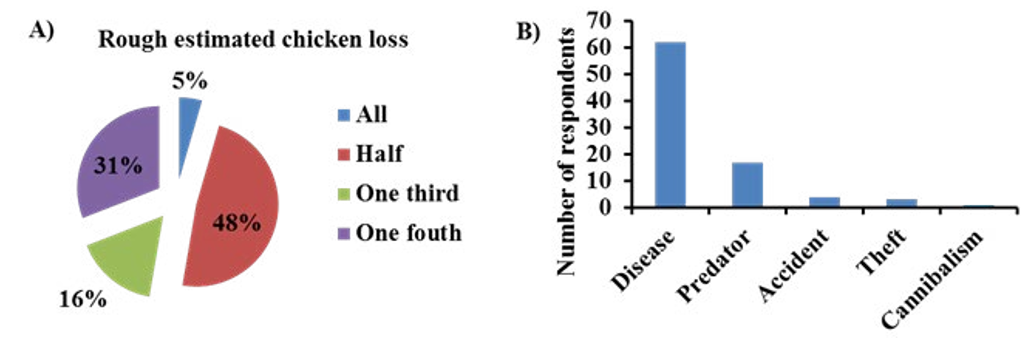
Figure 2: Challenges associated with the loss of chicken. A) Rough estimation of overall loss of chicken. B) Major reasons for the chicken loss. The bar graph was made based on information from the respondentson the current cause of loss of their chicken.
Another key factor affecting the profitability of these small-scale extensive as well as semi-intensive farms is the loss of chicken. The main cause of the loss of chicken is disease outbreaks. For instance, more than half the loss of the introduced day-old chicks of exotic layer breeds were merely due to lack of vaccines and vaccination services and poultry biosecurity measures. Concomitant to our finding, earlier reports by indicated that disease has been ranked as the top constraint limiting the success and profitability of both backyard and semi-intensive production. One of the factors in this study is the absence of the vaccine and vaccination servies [28,29]. For instance, the poultry vaccine for the common endemic disease is available only at National Veterinary Institute at Bishoftu which is far away from Nekemte city exposing the farmers to high transportation costs and vaccination services are totally absent for small scale poultry producers. The vaccines produced by this institution were supplied in 100-200 dose vials, resulting in cost-inflation for farmers with smaller flock sizes, consistent with reports by Moges et al. [30]. Similarly, chemical disinfectant and poultry farm equipment (brooder, feeding, and drinking trough) are found far away at main cities like Addis Ababa where inputs and sevices are accessible. On top of this, the losses of chicken were also due to accidents and theft which could be avoided by proper management of the farm.
Opportunities For Small-Scale Poultry Farming in the Study Area
In this study, the opportunities associated with poultry farming in the urban setting were also investigated. Among opportunities that avail for the poultry farmers include the availability of space for rearing chicken, good climatic condition and the presence of enough manpower (Figure 3).

Figure 3: Major opportunities for small-scale poultry farming in the city
Another encouraging opportunity for poultry farming in this area is the availability of the market to sell poultry and poultry products. There is a high market demand for poultry products. Figure 4 shows when poultry is marketed at Nekemte city in which farmers are using a modified cart horse to sell their chicken. On top of this, according to the respondents who raised local chicken, poultry house construction is easy and cheaper and the environment is conducive to grow chicken (Table 4). It was noticed that the raw material to prepare poultry feed from the available cereal grains and other production inputs were available at an affordable cost although farmers lacked the knowledge of how to prepare and efficiently utilize them. Overall, farmers still believe that poultry farming in Nekemte is profitable.
Table 4: Perception and Resource Opportunities
|
Factors |
Category |
Frequency |
Percent (%) |
|
Poultry house construction |
Easy and cheap |
69 |
62.7 |
|
|
Difficult and expensive |
22 |
20 |
|
|
Medium and affordable |
19 |
17.3 |
|
|
Total |
110 |
100 |
|
Drug source |
Government Vet Clinic |
45 |
40.9 |
|
|
Private veterinary service |
56 |
50.9 |
|
|
Traditional healers |
2 |
1.8 |
|
|
Other source |
7 |
6.4 |
|
|
Total |
110 |
100 |
|
Profitable |
Yes |
110 |
100 |
|
No |
0 |
0 |
|
|
Total |
110 |
100 |
|
|
Nice environment |
Yes |
105 |
95.5 |
|
No |
5 |
4.5 |
|
|
Total |
110 |
100 |
|
|
Other animal owned |
Cattle |
9 |
8.2 |
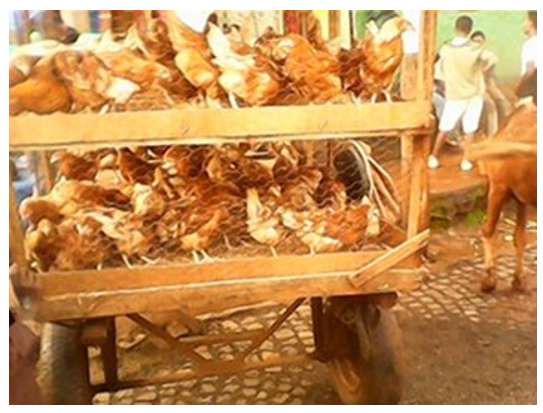
Figure 4: Poultry Market in Nekemte City.
It is also important to underscore that most of the farmers’ perception or awareness of these available opportunities and technical skills to exploit it is very low. For instance, the perception and practice of farmers on disease control and prevention were very poor to the level that 98% of the farmers do not know or characterize poultry disease and more than half of respondents did’t have knowledge on how to treatand care when chickens get sick. The low perception about poultry disease in a larger population is expected, as reported [31]. Contrary to this, the knowledge of chicken diseases and disease risk factors among the farmers found around Bishoftu was far better as they were able to name and provide accurate clinical signs for numerous diseases and syndromes. Further cross-tabulation analysis for risk factors associated with the challenges indicates that farm site, sources of chichen, separate keeping of chicken, supplementary feeding are the important factors to be considered to reduce the farm challenges (Table 5). Similar factors have been reported in previous studies. In the present study, all of the 110 interviewed farmers said there was neither consultation nor guideline manuals available to them. This indicates that the backyard chicken producers as well as those farmers in Nekemte city who practice semi-intensive poultry farming either as individuals or entrepreneurs did not get enough poultry health and extension service from NGOs or government agents engaged in development related activities in the study area. In the presence of such gaps, abrupt introduction of poultry package adopted somewhere else into different agro-ecological, social settings often cannot succeed. If one poultry improvement program fails due to such reason, it also significantly affects the acceptability and success of other poultry improvement programs to be introduced in the future.
Table 5: Crosstabulation of Fisk Factors Associated with the Major Poultry Farm Challenges
|
Variables |
Factors |
Major Challenges |
Total |
P-value |
|||||
|
Commercial feed |
Restocking breed |
Market |
Disease |
Drug and vaccine |
Mixture of Above |
||||
|
Kebele |
Kebele 01 |
1 |
2 |
0 |
0 |
0 |
8 |
11 |
0.001 |
|
Kebele 02 |
2 |
7 |
0 |
2 |
1 |
4 |
16 |
|
|
|
Kebele 03 |
5 |
7 |
0 |
3 |
0 |
0 |
15 |
|
|
|
Kebele 04 |
9 |
8 |
0 |
5 |
0 |
2 |
24 |
|
|
|
Kebele 05 |
4 |
2 |
0 |
4 |
0 |
0 |
10 |
|
|
|
Kebele 06 |
2 |
1 |
0 |
1 |
1 |
5 |
10 |
|
|
|
Kebele 07 |
6 |
11 |
1 |
6 |
0 |
0 |
24 |
|
|
|
Total |
29 |
38 |
1 |
21 |
2 |
19 |
110 |
|
|
|
Educational Status |
Illiterate |
1 |
0 |
0 |
2 |
0 |
1 |
4 |
0.63 |
|
Write and Read |
6 |
12 |
0 |
6 |
0 |
6 |
30 |
|
|
|
Primary School |
9 |
15 |
0 |
5 |
1 |
7 |
37 |
|
|
|
Secondary School |
5 |
6 |
0 |
1 |
1 |
2 |
15 |
|
|
|
College or University |
8 |
5 |
1 |
7 |
0 |
3 |
24 |
|
|
|
Total |
29 |
38 |
1 |
21 |
2 |
19 |
110 |
|
|
|
Feeding |
yes |
29 |
36 |
1 |
21 |
1 |
19 |
107 |
0.001 |
|
N0 |
0 |
1 |
0 |
0 |
1 |
0 |
2 |
|
|
|
Total |
29 |
38 |
1 |
21 |
2 |
19 |
110 |
|
|
|
Other Animal Owned |
Cattle |
2 |
4 |
0 |
0 |
1 |
2 |
9 |
0.02 |
|
Sheep and Goat |
1 |
4 |
1 |
4 |
0 |
1 |
11 |
|
|
|
Equines |
1 |
0 |
0 |
0 |
1 |
1 |
3 |
|
|
|
Cat and Dog |
6 |
7 |
0 |
5 |
0 |
2 |
20 |
|
|
|
Mixture of Above Animals |
2 |
2 |
0 |
2 |
0 |
2 |
8 |
|
|
|
Only Chicken |
17 |
21 |
0 |
10 |
0 |
11 |
59 |
|
|
|
Total |
29 |
38 |
1 |
21 |
2 |
19 |
110 |
|
|
|
Chicken Source |
Government |
12 |
4 |
0 |
6 |
2 |
4 |
28 |
0.053 |
|
NGO |
1 |
0 |
0 |
0 |
0 |
0 |
1 |
|
|
|
Local Farmers |
16 |
34 |
1 |
15 |
0 |
15 |
81 |
|
|
|
Total |
29 |
38 |
1 |
21 |
2 |
19 |
110 |
|
|
|
Food Price |
Cheap |
0 |
8 |
1 |
3 |
0 |
0 |
12 |
0.001 |
|
Affordable |
2 |
8 |
0 |
6 |
1 |
9 |
26 |
|
|
|
Costly |
27 |
22 |
0 |
12 |
1 |
10 |
72 |
|
|
|
Total |
29 |
38 |
1 |
21 |
2 |
19 |
110 |
|
|
Despite these challenges, the study also investigated the potential opportunities farmers have while still practicing in these challenging situations. According to the farmers’ response, the opportunities that drive the farming system are the conducive climatic conditions (in a sense low input requirement and relative disease resistance of the local breed), enough space and manpower to rear them. As many farmers have other livestock species as a mixed livelihood poultry farming is considered as it as profitable job but subordinate activity for income generation. Farmers also believe that poultries are managed mainly by the housewives in an easily constructed house, fed with cereal grain and its by-products. Farmers engaged in small-scale semi-intensive farming also have good market opportunities to sell the eggs they produce, access to private veterinary drug inputs on top of the availability of raw materials to construct poultry houses or home-made poultry feeds. As most farmers still have a positive attitude on the profitability of poultry farming, it calls for the need for training and awareness creation on how to exploit the potential resource and the available opportunities to transform and scale-up poultry production in this area [32,33].
Conclusion
The study conducted in Nekemte city indicates that the poultry production system in this area is characterized by backyard and small scale semi-intensive production. The main challenges are loss of chicken due to diseases, absence of poultry multiplication center that could continuously supply improved poultry breeds, absence of commercial feed, vaccine and vaccination services, chemical disinfectants, high price of poultry production equipment as well as unavailability at the locality incurring high transportation cost. On top of this, poultry improvement and health care service is not efficient. This can be explained by the low perception of farmers on how to exploit the available opportunities or alternative options that could decrease the production input and concomitantly increase the profitability of the farm. In this regard farmers' training on how to prepare balanced poultry feed from the available grain and concentrate raw materials, adoption of crossbred chicken than a pure line, and developing poultry production value chain are among the worthy mentioning strategies. Poultry production and improvement programs across the country may face such constraints except around chicken production focus areas like in Bishoftu where there is access to production and veterinary expertise and materials than anywhere else in the country. In conclusion, to improve poultry production in this area or perhaps across the country where similar challenges are common, the identified challenges should be resolved. The potential opportunities, resources, alternative technologies of poultry extension packages should be exploited along the value chain of poultry production.
Acknowledgements
The authors acknowledge Wollega University for thematic research funding, and Hawassa University for internet facility and materials used to write-up this manuscript. We thank Mr. Damessa Negessu, Nekemte district animal resource, development and veterinary agency team members, and the study participants for their time and assistance.
Competiting Interest
The authors have no conflict of interest to declare.
Authors Contribution
Sultan Abda Neja designed the project and analyzed and drafted the manuscript. Mezene Woyessa Bussa participated in data collection and critical evaluation of the manuscript. Finally, both authors read and approved the final manuscript.
Funding Statement
Wollega University thematic research funding.
Data Availability Statement
The corresponding author can be reached for any data enquiry.
Ethical Approval and Consent to Participate
Ethical clearance was obtained from Wollega University Ethical and Research Committee and informed consent (Annex 1) was made for each participant.
References
- Leta, S., & Mesele, F. (2014). Spatial analysis of cattle and shoat population in Ethiopia: growth trend, distribution and market access. SpringerPlus, 3(1), 1-10.
- Alemu, D., Degefe, T., Ferede, S., Nzietchueng, S., & Roy, D. (2008). Overview and background paper on Ethiopia’s poultry sector: Relevance for HPAI research in Ethiopia. HPAI Africa/ Indonesia Team Working Paper.
- Leta, S., & Mesele, F. (2014). Spatial analysis of cattle and shoat population in Ethiopia: growth trend, distribution and market access. SpringerPlus, 3(1), 1-10.
- Dessie, T., & Ogle, B. (2001). Village poultry production systems in the central highlands of Ethiopia. Tropical Animal health and production, 33, 521-537.
- Abda, S., Mamo, G., Worku, A., & Ameni, G. (2015). Preliminary study on avian tuberculosis and associated risks in domestic chickens at Shashemene district, Ethiopia. Journal of Biology and Medical Sciences, 3, 13-23.
- Tadelle, D., Kijora, C., & Peters, K. J. (2003). Indigenous chicken ecotypes in Ethiopia: growth and feed utilization potentials. International Journal of Poultry Science, 2(2), 144-152.
- Fentie, T., Abebe, B., & Kassa, T. (2013). Small-scale family poultry production in north Gondar: characteristics, productivity and constraints. Livestock Research for Rural Development, 25(9).
- Markos, S., Belay, B., & Dessie, T. (2014). Village chicken production constraints and opportunities in Western Zone of Tigray, Northern Ethiopia. Journal of Biology and Agricultural Health, 4(27), 2224-3208.
- Mengesha, M., & Abda, S. (2010). Fed Selected Energy Source Feeds. Research Journal of poultry sciences, 3(3), 54-57.
- Demeke, S. (1996). Study on egg production of White Leghorn under intensive, semi-intensive and rural household conditions in Ethiopia. Livestock research for rural development, 8(2), 1-7.
- Dessie, T., & Jobre, Y. (2004). A review of the importance and control of Newcastle disease in Ethiopia.
- Dinka, H., Chala, R., Dawo, F., Bekana, E., & Leta, S. (2010). Major constraints and health management of village poultry production in Rift Valley of Oromia, Ethiopia. Am Eurasian J Agric Environ Sci, 9(5), 529-33.
- Mengesha, M. (2012). The issue of feed-food competition and chicken production for the demands of foods of animal origin. Asian Journal of Poultry Science, 6(3), 31-43.
- Wolde, S., Negesse, T., & Melesse, A. (2011). The effect of dietary protein concentration on nutrient utilization of Rhode Island Red chicken in Wolaita (Southern Ethiopia). Tropical and subtropical Agroecosystems, 14(1), 271-278.
- Dana, N., Van der Waaij, L. H., Dessie, T., & van Arendonk,J. A. (2010). Production objectives and trait preferences of village poultry producers of Ethiopia: implications for designing breeding schemes utilizing indigenous chicken genetic resources. Tropical animal health and production, 42, 1519-1529.
- S Sambo, E., Bettridge, J., Dessie, T., Amare, A., Habte, T., Wigley, P., & Christley, R. M. (2015). Participatory evaluation of chicken health and production constraints in Ethiopia. Preventive veterinary medicine, 118(1), 117-127.
- Birol, E., Asare-Marfo, D., Ayele, G., Mensah-Bonsu, A., Ndirangu, L. K., Okpukpara, B., ... & Yakhshilikov, Y. (2010). Investigating the role of poultry in livelihoods and the impact of HPAI on livelihoods outcomes in Africa: evidence from Ethiopia, Ghana, Kenya and Nigeria (No. 308-2016-5105).
- Mazengia, H. (2012). Review on major viral diseases ofchickens reported in Ethiopia. J Infect Dis Immun, 4(1), 1-9.
- Tadesse, B., & Sultan, A. (2014). Prevalence and distribution of tick infestation on cattle at FitcheSelale, North Shewa, Ethiopia. Livestock Research for Rural Development, 26(8).
- M., M., Chicken production scenarios and the headway options for improvement in Ethiopia. . World's Poultry Science Journal, 2012. 68(2): p. 299-305.
- Mohamed, A., Hailemariam, S., Gebremedhin, G., & Gebeyew, K. (2016). Challenges and opportunities of small scale poultry production system in Jigjiga Zone, Somali regional state, Ethiopia. Pou. Fish Wildl. Sci, 4(1), 144.
- Hinsemu, F., Hagos, Y., Tamiru, Y., & Kebede, A. (2018). Review on challenges and opportunities of poultry breeds. J. Dairy Vet. Sci, 7, 1-9.
- Aklilu, H. A., Almekinders, C. J. M., Udo, H. M. J., & Van der Zijpp, A. J. (2007). Village poultry consumption and marketing in relation to gender, religious festivals and market access. Tropical Animal Health and Production, 39, 165-177.
- Halima, H. F. W. C., Neser, F. W. C., Van Marle-Koster, E., & De Kock, A. (2007). Village-based indigenous chickenproduction system in north-west Ethiopia. Tropical animal health and production, 39, 189-197.
- Gebremedhin, D. (2020). CHARACTERIZATION OF BEEKEEPING PRACTICES AND HONEY QUALITY IN CHENA DISTRICT, KAFFA ZONE, SOUTHERN NATION, NATIONALITIES AND PEOPLES REGION, ETHIOPIA.
- Abera, B., & Geta, T. (2014). Study on challenges and opportunities of village chicken production in Haramaya District, Eastern Ethiopia. International Journal of Scientific and Research Publications, 4(12), 2250-3153.
- Mohamed, A., Hailemariam, S., Gebremedhin, G., & Gebeyew, K. (2016). Challenges and opportunities of small scale poultry production system in Jigjiga Zone, Somali regional state, Ethiopia. Pou. Fish Wildl. Sci, 4(1), 144.
- Wossene, A. (2006). Poultry bio-security study in Ethiopia. A consultancy report for food and Agriculture Organization of the United Nations.
- Woldemariam, S., & Wossene, A. (2007). Infectious bursal disease (Gumboro Disease): case report at Andasa poultry farm, Amhara region. Ethiop Vet J, 11(1), 151-155.
- Moges, F., & Dessie, T. (2010). Characterization of village chicken and egg marketing systems of Bure district, North-West Ethiopia. Livestock Research for Rural Development.
- Sambo, E., Bettridge, J., Dessie, T., Amare, A., Habte, T., Wigley, P., & Christley, R. M. (2015). Participatory evaluation of chicken health and production constraints in Ethiopia. Preventive veterinary medicine, 118(1), 117-127.
- Bluffstone, R., Yesuf, M., Bushie, B., & Damite, D. (2008). Rural livelihoods, poverty, and the millennium development goals: evidence from Ethiopian survey data (No. dp-08-07-efd).
- Sambo, E., Bettridge, J., Dessie, T., Amare, A., Habte, T., Wigley, P., & Christley, R. M. (2015). Participatory evaluation of chicken health and production constraints in Ethiopia. Preventive veterinary medicine, 118(1), 117-127.