

Journal of Agriculture and Horticulture Research(JAHR)
ISSN: 2643-671X | DOI: 10.33140/JAHR
Impact Factor: 1.12

Research Article - (2025) Volume 8, Issue 2
Cassava in Sub-Saharan Africa: Origin, Agronomy, Disease Management and Future Priorities
2University of Zimbabwe, P.O. Box MP 167 Mt. Pleasant. Harare, Zimbabwe
3Chiredzi Research Station, P. O. Box 97, Chiredzi, Zimbabwe
Received Date: Sep 26, 2025 / Accepted Date: Oct 27, 2025 / Published Date: Nov 07, 2025
Copyright: ©Â©2025 Tapiwa Nyakauru, et al. This is an open-access article distributed under the terms of the Creative Commons Attribution License, which permits unrestricted use, distribution, and reproduction in any medium, provided the original author and source are credited.
Citation: Nyakauru, T., Mtetwa, G., Chimidzi, R., Marangwana, T. (2025). Cassava in Sub-Saharan Africa: Origin, Agronomy, Disease Management and Future Priorities. J Agri Horti Res, 8(2), 01-16.
Abstract
Cassava (Manihot esculenta Crantz) is a foundational staple for millions of people in sub-Saharan Africa. Cassava is valued for its caloric density, drought tolerance, and flexibility across marginal environments. African production of cassava has expanded markedly since the year 2000. Nigeria, the Democratic Republic of Congo (DRC), Ghana, and Tanzania have been among leading producers. However, the production of cassava is heavily affected by various diseases such as cassava mosaic disease (CMD) and cassava brown streak disease (CBSD), and by structural challenges in seed systems, markets, and processing. This review focuses on current knowledge on the origin of cassava and domestication, ecophysiology and agronomy, climatic tolerances, the epidemiology and management of diseases, progress in genetic improvement, food safety, issues around cyanogenic glycosides, and priorities for the next decade. We highlight advances from IITA/CGIAR breeding programs, expanding surveillance including the use of AI-enabled tools, and integrated seed systems. We conclude with a forward-looking agenda spanning durable resistance pyramids, whitefly-vector ecology, climate-smart agronomy, and consumer-preferred quality traits.
Keywords
Cassava, Cassava Diseases, Climate-Smart Agronomy, Cassava Seed Systems, Genetic Resistance
Introduction
Cassava Domestication and Growth
Cassava is the third largest source of dietary carbohydrates in the tropics and a daily staple for >500 million people. Africa accounts for roughly half of global output, with Nigeria consistently the top producer of cassava, ≈60–63 Mt, followed by DRC and Tanzania among others [1-3]. Cassava was first domesticated in lowland South America from Manihot esculenta ssp. flabellifolia, likely in south-western Amazonia, within the last 10,000 years, placing it among the younger Neotropical domesticates [4-6]. Domestication of cassava involved careful selection for enlarged starchy storage roots with reduced cyanogenic toxicity that are palatable and suitable for human consumption [7]. Following domestication, cassava spread throughout the American continent, with evidence of cultivation in the Caribbean and central America, prior to European continent. In the 16th century, Portuguese traders introduced cassava to Africa, where it rapidly became integrated into local food systems, particularly along the West African coast [4,8].
Cassava exhibits optimal growth and photosynthesis at 25-35 °C, with mean temperatures of 25-29 °C being most favourable, while physiological activity declines below this range [9]. Growth becomes inhibited at temperatures lower than 17 °C, primarily due to reduced photosynthetic efficiency and metabolic processes. Conversely, exposure to high temperatures above 37-40 °C leads to heat stress, causing impaired enzymatic activity, accelerated respiration, and potential leaf damage, which together reduce biomass accumulation and tuber formation [9,10]. Cassava is often cultivated in marginal environments, but the best performance of the crop is observed in well-drained, light-textured soils of moderate fertility [11-12]. Its root system is highly sensitive to waterlogging, making drainage essential for optimal root development. Furthermore, cassava demonstrates considerable tolerance to acidity, thriving across a pH spectrum of approximately 5.5-7.5 [11-13]. Growth is possible even at pH values as low as 4.5, although nutrient availability and uptake efficiency are enhanced within the slightly acidic to neutral range [11].
Cassava is generally drought tolerance, and this characteristic allows it to persist in environments receiving as little as 500 mm of annual rainfall. Cassava can also perform well under higher rainfall regions of up to 1500 mm per year, provided drainage is adequate [13-15]. Drought tolerance in cassava is due to its unique physiological mechanism traits, which is one of the primary reasons it has become a food security crop across much of sub- Saharan Africa [16,17]. These traits include rapid stomatal closure under both atmospheric and edaphic stress , maintenance of leaf water potential through osmotic adjustment, and slow depletion of soil moisture via an extensive but conservative root system [18- 21].
At the physiological level, cassava exhibits delayed leaf senescence during drought, followed by rapid recovery once rains resume, which helps sustain photosynthetic capacity over long growing cycles [22,23]. Proteomic and transcriptomic studies under long- term water stress have revealed shifts in osmoprotective proteins such as dehydrins and Late Embryogenesis Abundant (LEA) proteins, enhanced reactive oxygen species (ROS) scavenging mechanisms, and reprogramming of carbohydrate metabolism, including increased mobilisation of stored starch to sustain root bulking [24-27]. These characteristics combine to confer high water-use efficiency and yield stability even in environments where annual rainfall falls below expected or where prolonged mid-season dry spells are common.
The Strategic Role of Cassava in Food Security
Global cassava production was reported at approximately 315–330 Mt in 2021–2022, with Africa’s share increasing in response to growing demand for fresh roots, gari, fufu, flours, and industrial starch [28]. Cassava’s importance in sub-Saharan Africa stems from multiple agronomic and socioeconomic advantages. It produces reliable yields on marginal, low-fertility, and acidic soils where other cereals often fail, making it a dependable crop for smallholder farmers [29,30]. A study by which aimed to assess how climate change will affect cassava compared to other staple crops in Africa showed that cassava can experience neutral to positive changes in climate suitability across much of Africa (–3.7% to +17.5%), whereas other staples like beans, potato, banana, and sorghum can face significant declines [31]. Its flexible harvest window, ranging from 6 to 24 months, allows farmers to stagger harvests according to food needs, market demand, or labour availability, effectively acting as a food security buffer for many Africans [32].
In addition, cassava exhibits notable tolerance to drought and suboptimal rainfall, maintaining photosynthetic activity under water stress and recovering quickly after dry periods. In Thailand, a 60-day dry spell imposed early in the season reduced photosynthesis and starch accumulation, yet plants resumed growth and achieved substantial yields once rains returned, highlighting strong recovery capacity [33]. Similarly, multi-year trials in Kenya with 37 genotypes found that although drought reduced yields by up to 59% overall, certain lines maintained relatively high productivity (7.1 t/ha under drought) compared to susceptible ones (3.3 t/ha), confirming genetic variability in resilience and the cassava’s notable tolerance to water stress [21]. Together, these findings reinforce cassava’s potential as a drought-resilient crop capable of recovering quickly after dry periods.
Additionally, cassava’s versatility extends across both food and industrial value chains. Cassava roots are consumed fresh, processed into traditional staples such as gari and fufu, or transformed into flours and starch [29,34]. Cassava leaves are rich in protein, vitamins, and minerals contributing to household nutrition and providing a valuable feed source for livestock [35,36]. On a dry matter basis, cassava leaves typically contain about 20–30% crude protein, with concentrates reaching nearly 49% [37,38]. Mineral analyses across hundreds of genotypes report calcium levels of 3,600-17,600 mg/kg, potassium 3,100- 27,000 mg/kg, and iron 43-660 mg/kg [39]. These attributes make cassava a valuable supplement for household nutrition and protein source for livestock. In Industry, cassava starch can be processed into ethanol, providing a renewable biofuel alternative to fossil fuels [40,41]. Thailand operates 47 licensed bioethanol plants with a combined capacity of approximately 12.3 million litres per day, totalling about 3.7 billion litre per year. Cassava-based ethanol accounts for roughly one-third of this output, amounting to approximately 435 million litres annually [42]. Cassava starch is also increasingly used in the manufacture of biodegradable plastics, adhesives, paper, and packaging materials [44-46]. This offers environmentally friendly alternatives to petroleum-based products. These multifaceted uses enhance cassava’s economic and nutritional value, making it an attractive crop.
Cyanogenic Glycosides in Cassava: Challenges and Solutions for Safe Consumption
Cassava tissues contain the cyanogenic glycosides (CGs) linamarin and lotaustralin, which, upon tissue disruption, undergo enzymatic hydrolysis by linamarase to release acetone cyanohydrin and ultimately hydrogen cyanide (HCN) [47,48]. Bitter varieties generally accumulate much higher levels of CGs than sweet types, with reported fresh root concentrations ranging from <20 mg CN⻠kg⻹ FW in sweet cassava to >300 mg CN⻠kg⻹ FW in bitter landraces [49]. Regulatory authorities, including Codex Alimentarius and FAO/WHO, recommend a maximum limit of 10 mg CN⻠kg⻹ in edible cassava flour, while the acute reference dose is approximately 0.09 mg kg⻹ body weight (cyanide equivalents) [50]. Exceeding these thresholds can pose serious health risks.
Acute cyanide intoxication manifests as dizziness, vomiting, and, in severe cases, respiratory failure, while chronic low-level exposure has been linked to an irreversible spastic paraparesis in eastern and central Africa [51,52].
Traditional African processing methods such as peeling, grating, pressing, fermenting, drying, and roasting are highly effective at reducing cyanogens by 80-95%, with some well-optimized systems achieving near-complete detoxification [53,54]. For example, gari production in Nigeria and Ghana involves fermentation and roasting that significantly lower residual HCN, while fufu production relies on wet fermentation that further enhances detoxification [55,56]. However, poorly executed or shortened processing steps such as inadequate fermentation time or insufficient drying can leave high cyanide residues, particularly in food sold in informal markets, and this will cause health implications to the consumers and may result in death [50,55,57]. Various concentrations of CN have been observed in processed cassava and are presented in Table 1.
|
Product |
Residual HCN (mg/kg) |
% reduction vs fresh root |
Reference |
|
Fresh root (bitter) |
100–400 |
– |
(JECFA, 2021.) |
|
Gari |
2–20 |
90–98% |
(Padmaja & Steinkraus, 1995) |
|
Fufu |
5–25 |
85–95% |
(Njankouo Ndam et al., 2019b) |
|
Attiéké |
3–10 |
90–97% |
(Bouatenin et al., 2021) |
|
Flour (well-processed) |
<10 |
>95% |
(Zhong et al., 2021) |
Table 1: Cyanogenic Glycoside Content in Cassava Products Compared with Fresh Roots
It is important to note that routine monitoring of cyanide levels in cassava products is uncommon in most cassava producing countries because laboratory capacity is often limited, and smallholder farmers typically lack awareness of the health risks associated with inadequate processing [58-63]. Breeding programs aimed at developing low-cyanide cassava varieties have made significant progress in enhancing food safety [64,65]. However, these efforts often encounter trade-offs, particularly concerning root bitterness and agronomic performance. Studies have shown that while low-cyanide cassava cultivars are essential for reducing health risks associated with cyanide toxicity, they may result in higher susceptibility to diseases, or reduced drought tolerance, further complicating breeding strategies. Therefore, breeding programs must carefully consider these trade-offs to develop cassava varieties that are both safe for consumption and acceptable to consumers [51,66,67].
Cassava Diseases: Mechanisms, Transmission, and Conse- quences
Cassava production in Africa is constrained by both viral and non-viral diseases. The diseases reduce yields, compromise root quality, and the generational ailments limit the availability of healthy planting materials like seeds and stalks for vegetative propagation [68]. The prevalence and severity of the diseases vary across regions, and their impact consistently affects yield potential, farmer income, and food security. The major diseases affecting cassava in Africa are summarized in Table ii and their effects are shown in Figure 1.
|
Disease |
Pathogen |
Vecto |
Epidemiology |
Yield Loss |
Reference |
|
Cassava mosaic disease (CMD) |
Begomoviruses (e.g., ACMV, EACMV) |
Bemisia tabaci |
West, East, Central Africa |
70–100% in severe epidemics |
(J. P. Legg et al., 2011) Combala et al. (2024) |
|
Cassava brown streak disease (CBSD) |
Ipomoviruses (CBSV, UCBSV) |
Bemisia tabaci |
East & Southern Africa |
30–100% (root necrosis) |
(Tomlinson et al., 2018) |
|
Bacterial blight |
Xanthomonas axonopodis pv. manihotis |
Rain splash, contaminated cuttings |
Central & West Africa |
10–30% |
(Fanou et al., 2018) |
|
Anthracnose |
Colletotrichum gloeosporioides |
Wind, rain splash |
Humid tropics |
<20% |
(Wydra & Verdier, 2002)) |
Table 2: Major Cassava Diseases in Africa
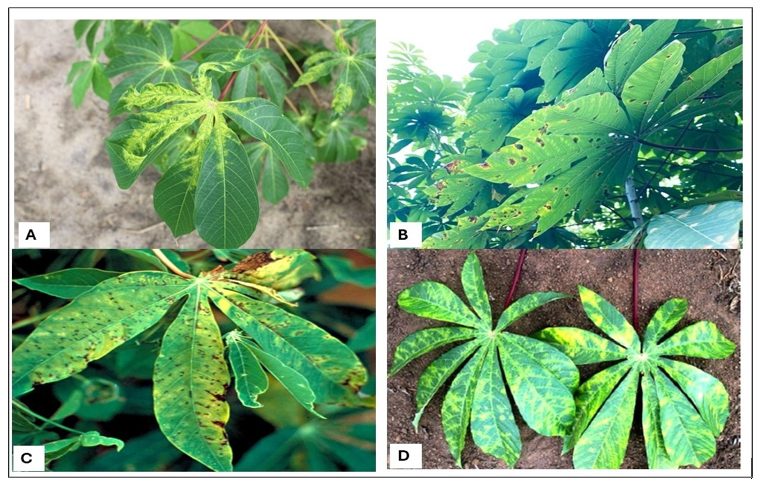
Figure 1: Symptoms of Major Cassava Diseases. (A) Cassava Mosaic Disease Symptoms [73]. (B) Cassava Anthracnose Disease Symptoms (C) Cassava Bacterial Blight Symptoms [74,75]. (D) Cassava Brown Streak Disease Symptoms [69-72,76
Cassava Mosaic Disease
Cassava mosaic disease (CMD) is one of the most important viral diseases affecting cassava production in sub-Saharan Africa [68]. CMD is caused by several species of Begomoviruses of the family Geminiviridae, including African cassava mosaic virus (ACMV) and East African cassava mosaic virus (EACMV) [77]. The disease is primarily transmitted by the whitefly vector, Bemisia tabaci in a persistent, circulative manner. In addition, it can also spread efficiently through infected stem cuttings used for vegetative propagation [78].
The symptoms of CMV infection includes a mosaic or mottled yellow-green discoloration of leaves, leaf distortion, and overall stunted growth of the plant [79]. In susceptible cultivars, yield losses can range between 50% and 90% under conditions of high disease pressure. In Nigeria, yield loss assessments have shown that infection by CMV can cause reductions of up to 70 %, depending on cultivar susceptibility, infection timing, and viral strain [80,81]. In extreme cases, especially when infection occurs early in plant growth or when mixed infections of ACMV and EACMV are present, losses may approach 100% [69,82]. Similar trends have been reported across other cassava-producing countries in sub-Saharan Africa. In Uganda, severe CMD outbreaks involving mixed infections of ACMV and EACMV-UG have led to root yield losses of up to 82%, whereas single infections caused smaller but still substantial reductions (42–68 %) [83,84]. In Tanzania, field evaluations reported yield losses ranging between 72% and 100% for susceptible landraces under heavy disease pressure [85]. Furthermore, surveys in Kenya and Benin revealed that CMD, often in combination with cassava brown streak disease (CBSD), reduced yields by 25-95 %, depending on cultivar and agroecological zone [83,86]. More recently, coinfection of various CMV strains such as ACMV, SACMV, and EACMV have been observed in cassava plants in Zimbabwe [87].
The magnitude of yield loss due to CMV infection depends on multiple factors, including the strain involved, the host cultivar’s genetic resistance, the time of infection, vector population dynamics, and environmental conditions. Early infections, mixed infections, and the cultivation of susceptible varieties exacerbate losses, whereas the use of resistant cultivars and virus-free planting materials remain the most effective management strategies [81,85]. The loss of yield due to CMV pose a serious threat to food security and livelihoods of smallholder farmers who rely heavily on cassava as a staple crop, and continuous monitoring and deployment of CMD-resistant genotypes are essential to sustain cassava productivity in sub-Saharan regions.
Management of CMD involves an integrated approach that includes the use of resistant or tolerant cassava varieties, phytosanitation practices such as removing and destroying diseased plants, and vector management [90,91]. Regional efforts, including breeding programs and community-based clean seed systems, are critical in reducing the impact of CMD in countries such as Kenya, Malawi, Mozambique, Tanzania and Uganda.
Cassava Brown Streak Disease
Cassava brown streak disease (CBSD) is caused by two closely related Ipomovirus species Cassava brown streak virus (CBSV) and Ugandan cassava brown streak virus (UCBSV) within the family Potyviridae. Both viruses are transmitted semi-persistently by the whitefly vector B. tabaci [72,92]. In addition, cuttings can accelerate the spreading of the disease by planting diseased stalks, allowing CBSD to persist and expand rapidly through vegetative planting materials [93].
Historically, CBSD was first reported in Tanzania in the 1930s along the coastal belt near the Indian Ocean [94]. For several decades, it was largely confined to low-altitude coastal regions of Tanzania, Kenya, and Mozambique. However, since the early 2000s, the disease has undergone a major geographical expansion into inland East Africa, including the Lake Zone of Tanzania, Uganda, Rwanda, Burundi, Malawi, and parts of Democratic Republic of Congo [95,96,71]. This expansion coincided with the spread of B. tabaci super-abundant whitefly populations and the widespread exchange of infected cassava planting materials.
In Uganda, CBSD was first detected around 2004 in coastal districts bordering Lake Victoria, but by 2010 it had spread to nearly all major cassava-growing regions [7,79]. Similarly, in Tanzania, severe epidemics have been recorded across the Lake Victoria basin, where the disease co-occurs with CMD, leading to devastating yield losses [98]. In Kenya, CBSD spread from coastal areas to the central and western highlands during the 2000s, with incidences exceeding 60% in some districts [99]. The disease has also been confirmed in Rwanda, Burundi, and Malawi, where surveys reported incidences between 20% and 70% in newly affected zones [100,101]. More recently, CBSD has been reported in Mozambique and Zambia, marking its southernmost distribution [98,102-104].
While foliar symptoms of CBSD are often variable and may include chlorotic mottling, vein yellowing, and leaf distortion, the most economically devastating symptom occurs in the storage roots. Infected roots develop necrotic, corky brown lesions that render them unmarketable and unsuitable for consumption or industrial use [93,72]. This root necrosis often occurs even in plants showing mild or no leaf symptoms, making the disease particularly insidious. Yield loss estimates vary depending on cultivar susceptibility, viral strain, and infection timing but can be extremely high up to 100% [95,98].
Both CBSV and UCBSV contribute to the disease, although CBSV is typically associated with more severe symptoms and greater yield losses [95]. Mixed infections of CBSV and UCBSV are frequently observed, compounding disease severity. Genetic diversity studies have shown that CBSV tends to dominate in lowland and coastal regions, while UCBSV is more prevalent in higher-altitude inland areas [105]. Management of CBSD remains a major challenge because resistant varieties are limited and the disease can be transmitted through symptomless cuttings. The International Institute of Tropical Agriculture (IITA) and national breeding programs in Tanzania, Uganda, and Kenya have developed moderately resistant cultivars (e.g., NAROCASS 1-4 and Kiroba), but resistance is often incomplete and can break down under high inoculum pressure [91]. Integrated disease management strategies emphasizing clean seed systems, vector control, and community phytosanitation are therefore critical to curbing CBSD spread [71,98].
CBSD now poses a continental threat, with its expansion into southern and central Africa raising major concerns for regional food security. Unless effective management and resistant cultivars are widely deployed, the combined effects of CBSD and CMD could severely undermine cassava production across sub-Saharan Africa in the coming decades [85].
Cassava Bacterial Blight
Cassava bacterial blight (CBB) is caused primarily by the bacterium Xanthomonas axonopodis pv. manihotis (Xam), a gram-negative, rod-shaped pathogen that infects the vascular tissues of cassava. CBB has been reported throughout cassava-growing regions of Africa, South America, and parts of Asia, with some of the most severe epidemics recorded in West and Central Africa. The disease can cause catastrophic yield losses, reaching up to total crop failure under conducive environmental conditions, particularly in areas with high humidity and rainfall [73,106].
The disease typically begins with angular, water-soaked lesions on young cassava leaves. These lesions are restricted by the veins and gradually enlarge, becoming necrotic and dark brown, usually bordered by yellow or chlorotic halos [106]. As infection progresses, the lesions coalesce, forming large, blighted areas that lead to premature leaf drop. A characteristic feature of the disease is the exudation of a sticky, amber or creamy-white bacterial gum from infected leaf veins, petioles, and stems, especially during humid weather [73]. In later stages, the infection spreads through the petioles and into the stem, causing vascular browning, wilting, and dieback. In advanced cases, systemic infection reaches the vascular tissues of roots and cuttings, leading to complete wilting and plant death. When infected cuttings are used for propagation, the disease spreads rapidly within and between fields [73,107].
In Nigeria, CBB has long been recognized as a major constraint to cassava production, particularly in humid agroecological zones of the southwest and southeast. Historical reports indicate that epidemics in the 1970s and 1980s led to yield losses of 75- 100% in susceptible cultivars, wiping out entire fields in wet years [74,108]. More recent field surveys have shown that disease incidence remains high, ranging from 35-70% in states such as Oyo, Ondo, and Enugu, with severity influenced by variety, environmental conditions, and poor planting material hygiene [109]. The continued reliance on infected cuttings and the lack of widespread adoption of resistant varieties have contributed to the persistence of CBB in Nigeria.
Similarly, in Uganda and Rwanda, epidemics have caused significant yield losses exceeding 70% in traditional landraces. The disease tends to intensify during rainy seasons when high humidity promotes bacterial multiplication and spread [110]. In the DRC, CBB is also widespread, particularly in regions such as Kisangani and Bas-Congo, where conditions favour disease development. Reports from these regions have documented yield losses of 60- 100%, with severe epidemics causing total field destruction [106].
The epidemiology of CBB is closely linked to environmental and agronomic factors. The bacterium spreads mainly through rain splash, insects, wind-driven rain, and most importantly, through the use of infected stem cuttings as planting material. Warm and humid conditions, dense crop canopies, and poor drainage significantly enhance disease development. Once introduced into a field, the pathogen can survive for extended periods in plant debris and on alternative host species, serving as reservoirs for subsequent infections [74,106]
Management of CBB relies primarily on integrated control strategies rather than chemical treatments, which are largely ineffective against systemic bacterial infections in cassava. The use of resistant varieties is considered the most sustainable approach. In Nigeria, improved cultivars such as TMS 30572, TMS 92/0326, and NR 8082 have shown moderate resistance to CBB [111,112]. Other critical practices include phytosanitation, where farmers are encouraged to rogue infected plants and use certified disease-free planting materials. Crop rotation and fallowing are also recommended to reduce inoculum levels in the soil. Recent advances in molecular genetics and pathogenomics have enhanced understanding of the pathogen’s virulence mechanisms and have facilitated the breeding of cassava varieties with broad-spectrum and durable resistance [82,113].
Despite ongoing research and management efforts, cassava bacterial blight continues to pose a serious threat to cassava production, particularly in Nigeria, Uganda, and the DRC, where cassava is a key food and industrial crop. The disease’s ability to spread through vegetative propagation, its wide host range, and the emergence of new virulent strains complicate control efforts. Strengthening farmer awareness, implementing clean seed systems, and expanding resistant breeding programs remain essential strategies for mitigating the impact of CBB on cassava production and food security across Africa and beyond.
Cassava Anthracnose Disease (CAD)
Cassava anthracnose disease (CAD) is caused primarily by Colletotrichum gloeosporioides (Penz.) Penz. & Sacc., although other Colletotrichum species such as C. truncatum and C. dematium have occasionally been reported in association with the disease in some regions [114,115]. The disease affects all above-ground parts of the cassava plant, including stems, petioles, and leaves, and is recognized as one of the most important fungal diseases limiting cassava production in tropical Africa. The disease reduces both root yield and starch content, directly impacting food and industrial starch supply chains. CAD is favoured by warm and humid conditions, making it particularly destructive in areas of high rainfall and dense canopy cover, such as those found in West and Central Africa [116].
Symptoms of anthracnose usually begin as small, dark-brown necrotic lesions on tender stems, petioles, and young leaves, often developing after mechanical injury or insect damage. As infection progresses, the lesions expand and may girdle the stem, leading to dieback, shoot wilting, and defoliation. In severe cases, the affected stems break at the lesion site resulting in the death of the entire shoot. Under moist conditions, pink to orange masses of fungal spores appear on the lesion surfaces, which serve as inoculum for further disease spread [117,118]. The pathogen can also survive on infected planting material, crop residues, and wild cassava relatives, serving as sources of secondary infection.
In Nigeria, studies in southwestern and southeastern Nigeria have shown disease incidences ranging from 25% to 70%, depending on environmental conditions and cultivar susceptibility [117,119]. Yield reductions of at least 30% have been reported in highly susceptible varieties such as TMS 30572 under severe outbreaks [120].In Ghana, cassava anthracnose is also widespread, especially in humid regions such as the Ashanti and Eastern Regions, where rainfall exceeds 1,500 mm annually. Yield losses in these regions range between 20% and 50%, depending on the severity of infection [121,122]. In Benin and Cameroon, anthracnose epidemics have been reported during periods of heavy rainfall, where poor field sanitation and the use of infected cuttings exacerbate disease spread [73,121]. Similarly, outbreaks in Sierra Leone and Côte d’Ivoire have been linked to the introduction of highly susceptible cassava varieties and the lack of awareness among smallholder farmers about the disease’s management [123].
The impact of cassava anthracnose extends beyond yield reduction to the quality and availability of planting material. Since the disease primarily attacks stems and petioles, it compromises the health and viability of stem cuttings used for propagation. This results in a shortage of clean planting materials, slowing down the re-establishment of crops after harvest. In areas where cassava leaves are consumed as leafy vegetables or used as livestock feed, anthracnose infection also reduces the nutritional value and palatability of foliage, indirectly affecting household nutrition and animal production [124,125]. Repeated severe epidemics can thus lead to food shortages and income decline, especially among subsistence farmers who rely on cassava as their main staple and source of livelihood.
The economic and social consequences of anthracnose are especially severe in smallholder systems where cassava serves multiple purposes. In regions where cassava is central to rural economies, recurring anthracnose outbreaks have contributed to economic vulnerability and household poverty. Losses in root yield and quality translate into reduced marketable output, while damaged stems limit access to quality planting material for the next production cycle. Consequently, the disease undermines food security and agricultural resilience across cassava-growing regions of Africa [111].
The persistence of anthracnose in Africa is largely due to poor management practices, limited farmer awareness, and inadequate adoption of resistant varieties. Most smallholder farmers continue to plant infected cuttings and lack access to extension services that promote integrated pest and disease management. Effective control strategies include the use of resistant or tolerant varieties, such as TMS 92/0326 and TMS 92/0057 in Nigeria, combined with field sanitation, crop rotation, and timely removal of infected debris to minimize inoculum build-up [111,112]. Research has also shown that fungal antagonists such as Trichoderma harzianum and biological control agents can help suppress Colletotrichum populations in the soil and on plant surfaces [126,127]. However, large-scale adoption of these practices remains limited, highlighting the need for increased farmer training, improved access to resistant planting materials, and regional surveillance programs.
Integrated Disease Management
Integrated Disease Management (IDM) represents the most sustainable framework for controlling cassava diseases because it reduces reliance on any single method and targets multiple mechanisms involved in cassava infection [128]. Effective IDM for cassava combines the use of genetically resistant or tolerant varieties, pathogen-free seeds, agronomic and phytosanitary practices, targeted vector management, and community-level coordination to achieve area-wide suppression of disease [129- 131]. By integrating these complementary strategies, IDM improves efficacy, delays resistance breakdown, and enhances resilience of smallholder production systems.
Host Resistance and Varietal Improvement
Conventional breeding has delivered cultivars with partial to strong resistance to a range of cassava diseases, while genomic tools such as MAS, genomic prediction, and gene editing are accelerating trait discovery and trait deployment, including editing susceptibility genes and stacking resistance loci to broaden durability [132,133]. Introgression of resistance genes from Manihot glaziovii into African germplasm led to the release of CMD-resistant cultivars widely adopted in Nigeria, Uganda, and Tanzania [134]. These gene-editing advances offer opportunities to reduce viral replication, lower vector acquisition, and improve tolerance to bacterial pathogens. However, MAS is most effective for traits controlled by one or a few genes with a major effect, like resistance to certain cassava mosaic disease (CMD) strains. For complex, quantitative traits like yield and drought tolerance, MAS is less effective because these traits are governed by many genes with small, cumulative effects [133,135,136].
Clean Seed Systems
Clean seed systems for cassava involve producing and distributing disease-free, high-quality planting material, often using improved varieties and structured methods like rapid multiplication techniques and isolation fields to control pests and diseases [137,138]. However, because cassava is clonally propagated, dissemination of disease-free planting material is critical. Vegetative cuttings can easily harbour latent infections of CMD, CBSD, and bacterial blight, facilitating long-distance spread [139-140]. Clean seed initiatives, such as the IITA’s community phytosanitation program and national clean seed systems in Uganda and Nigeria, combine tissue culture, rapid multiplication, and farmer training to ensure access to certified disease-free planting material. However, scaling remains limited by infrastructure and farmer awareness, highlighting the need for public-private partnerships [182,138].
Cultural Practices and Crop Management
Cultural practices are the activities involved in the cultivation of cassava from the decision to plant it, site selection, and right up to the harvesting and post harvesting operations. Traditional agronomic practices, when integrated with modern innovations, can significantly reduce disease pressure [142,143]. Timely rouging of infected plants , rotation with non-host crops , optimal planting densities , and synchronization of planting dates reduce inoculum build-up and vector colonization. Intercropping cassava with legumes has been shown to decrease whitefly abundance, while improving soil fertility and yields . Nonetheless, these strategies require collective adoption at the community level to be effective, as isolated implementation at single farms offers limited protection [128,142-146].
Vector Management
The whitefly vector poses a persistent challenge, not only transmitting CMD and CBSD but also damaging crops directly through sap feeding and honeydew deposition [147]. Chemical insecticides have limited utility due to environmental and cost constraints, coupled with the rapid increase in resistance that has been observed recently [148]. Integrated vector management emphasizes the deployment of biological control agents (e.g., parasitoid wasps), resistant crop varieties, and ecological approaches such as habitat diversification that reduce vector colonization [149]. Advances in whitefly population genomics are also informing targeted strategies for managing superabundant haplotypes associated with disease outbreaks [150]. A combination of tissue culture, chemotherapy, and thermotherapy can be used to clean cassava plants from viral infections that cause mosaic and brown streak disease [151].
Community-Based Surveillance and Digital Tools
Early detection of disease symptoms, coupled with information sharing across farmer networks, allows for coordinated responses and reduces the risk of epidemic spread. There are different types of digital tools for cassava surveillance which include AI powered mobile apps, satellite and drone imagery, Geospatial data platform, Web-based and SMS services, and molecular diagnostics and sequencing [152-154]. These will assist in early detection of diseases, and reduce cost and time, improve response and coordination, enhanced data collection, and empowering farmers in disease detection.
Policy and Institutional Support
Technical interventions alone cannot achieve sustainable disease management without an enabling policy and institutional environment. Effective implementation of IDM strategies requires coherent national policies, strong institutional coordination, and long-term investment. National cassava development programs should prioritise disease surveillance, variety dissemination, and capacity building through well-structured extension systems [155]. Regional initiatives such as the West African Virus Epidemiology (WAVE) project demonstrate the importance of coordinated disease monitoring, early-warning systems, and data sharing across borders. Likewise, international collaborations involving organizations such as the International Institute of Tropical Agriculture (IITA), CGIAR, and the Food and Agriculture Organization (FAO) play a pivotal role in integrating research outputs, harmonizing phytosanitary standards, and supporting the development of resilient seed systems [155,156]. Sustained policy commitment, adequate funding, and inclusive stakeholder engagement from researchers and extension agents to farmers and policymakers are essential for scaling IDM innovations and ensuring long-term resilience of cassava production, particularly within resource-constrained smallholder systems [157,158].
Critical Reflections
While IDM has proven conceptually effective, practical implementation remains uneven. Many smallholders lack consistent access to clean seed, improved varieties, or extension services. Reliance on community compliance for practices like rouging or synchronized planting can falter in heterogeneous farming landscapes [159]. Furthermore, emerging threats such as climate change, new virus strains, and insecticide-resistant whiteflies threaten to undermine progress. Future IDM strategies must therefore integrate biotechnological innovations including CRISPR-based virus resistance, RNA interference for vector suppression, and genomic prediction with strong social and institutional frameworks [160]. Without simultaneous attention to both biological and socioeconomic dimensions, IDM risks becoming a fragmented rather than transformative approach.
Breeding Program in Africa
The International Institute of Tropical Agriculture (IITA) and national partners working within the Consultative Group on International Agricultural Research (CGIAR) Roots, Tubers and Bananas (RTB) program have delivered large numbers of improved cassava clones such as TME419 which is widely adopted for its CMD resistance, high dry-matter content, and good pounding quality, and TMS- 30572 and TMS-980505 that are used extensively as sources of CMD resistance and high yield (Table iii) [136,161]. Modern cassava breeding technologies in Africa have evolved into highly integrated systems that combine several complementary approaches to accelerate genetic gain and deliver improved varieties to farmers. Marker-assisted selection is widely used to introgress major disease resistance loci, particularly those conferring durable resistance to CMD and CBSD, ensuring that new varieties retain robust protection against viral threats [162,163]. Genomic selection technology predicts the breeding value of cassava varieties based on genome-wide marker data and this information will be used to improve complex quantitative traits such as fresh root yield, dry- matter content, and provitamin A carotenoids [164-166]. This allows cassava breeders to make informed decisions earlier, based on genomic estimated breeding values rather than waiting for full field evaluations [165,166]. Additionally, to ensure that selected clones perform reliably across diverse agroecological zones, breeders implement multi-environment trials and apply genotype- by-environment analyses to identify varieties that combine high productivity with tolerance to diseases or abiotic stresses [167,168]. The efficiency of varietal delivery is enhanced through tissue culture approaches, enabling large-scale production of improved clones to supply to the farmers [127,169]. Together, these strategies represent a modernized cassava breeding framework that balances molecular tools, field-based evaluation, and seed system innovations to shorten breeding cycles and ensure that improved varieties reach smallholder farmers more rapidly. CRISPR/Cas approaches are being actively developed in cassava to broaden disease resistance and to improve key quality traits that impact both food safety and industrial utility [168]. With regard to viral infections, several research groups have applied CRISPR/Cas-based strategies aimed at either knocking out host susceptibility genes, directly disrupting viral genomes, or engineering immune signaling pathways. In CMD, CRISPR- mediated targeting of ACMV has demonstrated a reduction in viral accumulation, highlighting the potential of direct antiviral editing [170-172]. However, challenges remain, including the risk of viral escape mutations, which necessitate multiplexed targeting strategies and careful evaluation of field-level durability. In CBSD, recent genome-wide association and molecular studies are beginning to identify host loci associated with root necrosis and viral load. These discoveries are now informing candidate targets for editing, although the development of stable, broad-spectrum resistance to CBSD continues to be complicated by viral diversity and the complexity of host–pathogen interactions [173,174] A major constraint to cassava utilisation is its accumulation of cyanogenic glycosides, which must be carefully removed during processing to prevent cyanide poisoning. CRISPR/Cas knockouts of the CYP79D1 and CYP79D2 genes, which catalyse the first step in linamarin biosynthesis, have been shown to significantly reduce cyanide content in both leaves and storage roots [175,176]. Multiple independent studies confirm that disruption of these paralogs attenuates cyanogen production, providing a clear and practical path toward developing low-cyanide cassava varieties. These innovations could directly enhance food safety, particularly in regions where cassava is a dietary staple. The composition and structural properties of starch is essential in cassava. Traits such as the amylose-to-amylopectin ratio and chain-length distribution strongly influence its performance in food, feed, and industrial applications [177,178]. Genome editing has successfully targeted key starch biosynthetic genes, including GBSS (Waxy), PTST1, and soluble starch synthases, to produce amylose-free or modified starch types [179-181]. Such modifications have the potential to improve food texture, expand industrial processing options, and enhance cassava’s role as a biofuel feedstock. By tailoring starch properties, genome editing is opening new opportunities for both nutritional improvement and commercial diversification of cassava products. Overall, the application of CRISPR/Cas technologies in cassava demonstrates remarkable progress in disease resistance, food safety, and starch quality. While technical challenges such as transformation efficiency and field-level validation remain, the advances made to date shows the transformative potential of genome editing for cassava improvement. By integrating these approaches with conventional breeding and ensuring robust biosafety evaluation, genome editing can play a pivotal role in delivering cassava varieties that are more resilient, safer, and better suited for diverse uses, ultimately benefiting both farmers and consumers worldwide.
|
Variety |
Country |
CMD Resistance |
CBSD Tolerance |
Dry Matter (%) |
Carotenoid content |
Reference |
|
TMS 30572 |
Nigeria |
Resistant |
Susceptible |
34 |
White |
(Ossai et al., 2025) |
|
Narocass 1 |
Uganda |
Resistant |
Moderate tolerance |
33 |
White |
(Mukiibi et al., 2019) |
|
Kiroba |
Tanzania |
Resistant |
Tolerant |
32 |
White |
(Shirima et al., 2019) |
|
TMS 01/1368 |
Nigeria |
Resistant |
Susceptible |
35 |
Yellow (provit. A) |
(Ossai et al., 2025) |
Table 3: CMD- and CBSD-Resistant Cassava Varieties Released in Africa
Future Research and Development in Cassava
Research should focus on integrating durable disease resistance, climate resilience, and improved quality traits into farmer- preferred varieties [182-184]. Achieving durable resistance will require pyramiding CMD genes with multi-locus CBSD resistance or tolerance, alongside whitefly-resilient plant architecture to minimize resistance erosion under climate extremes. Understanding whitefly ecology and deploying landscape-level integrated pest management, including host mosaics, synchronized planting, and biological control can reduce dependence on insecticides. Scaling genomic selection across African breeding programs will accelerate progress on key traits such as cooking quality, dry matter content, cyanogenic potential, and virus resistance while shortening breeding cycles. Overcoming transformation and gene-editing delivery bottlenecks in elite cultivars, coupled with evaluation of field durability and regulatory pathways, will expand the practical impact of precision breeding.
Climate-smart agronomic practices, including optimized planting windows, soil cover, nutrient management, and crop model- informed advisories, will help farmers adapt to drier conditions. Food safety can be mainstreamed by embedding Codex HCN limits, using simple test kits in small-scale processing, and standardizing fermentation and pressing protocols with appropriate training. Digital surveillance and extension, leveraging AI-enabled diagnostics and participatory monitoring, can shorten response times to CMD and CBSD outbreaks. Finally, aligning breeding programs with gendered preferences and urban market traits such as peelability, colour, and texture while linking production to starch and ethanol industries, will ensure inclusive markets and stable demand for improved cassava varieties.
Conclusions
Cassava’s centrality to African food systems is critical, and its productivity, quality and safety must improve in tandem. The past two decades have shown an improvement in CMD-resistant varieties, SOPs for clean seed, and a maturing genomics toolkit. The next decade will be defined by whether Africa can (i) deploy disease-resilient, high-quality varieties at scale; (ii) manage whitefly and viral pressures amid climate volatility; (iii) mainstream safe, standardized processing; and (iv) connect producers to higher- value markets. Strategic investment in breeding (including GS and gene editing), seed enterprises, climate-smart agronomy, and digital surveillance offer a credible pathway to durable impact.
Authors’ contribution: Tapiwa Nyakauru: Conceptualization, investigation, writing original draft, review and editing.
Ruvimbo Chimidzi: reviewing draft and editing. Godwin Mtetwa: Obtained images from farms, reviewing draft and editing. Thomas Marangwana: Reviewing draft and editing.
Statements and Declarations
Competing Interests:
There are non-financial interests that are directly or indirectly related to this work.
Funding:
Not applicable
Conflict of interest:
The authors declare that they have no known conflict of interest
Ethics declaration:
Not applicable.
Consent to Publish declaration:
Not applicable
References
- Adebayo, W. G. (2023). Cassava production in africa: A panel analysis of the drivers and trends. Heliyon, 9(9), e19939.
- Borku, A. W. (2025). Cassava (Manihot esculenta Crantz): its nutritional composition insights for future research and development in Ethiopia. Discover Sustainability, 6(1), 404.
- Ikuemonisan, E. S., Mafimisebi, T. E., Ajibefun, I., & Adenegan, K. (2020). Cassava production in Nigeria: trends, instability and decomposition analysis (1970–2018). Heliyon, 6(10), e05089.
- Allem, A. C. (2002). The Origins and Taxonomy of Cassava.
- Olsen, K. M., & Schaal, B. A. (1999). Evidence on the origin of cassava: Phylogeography of Manihot esculenta. Proceedings of the National Academy of Sciences, 96(10), 5586–5591.
- Simon, M. F., Mendoza Flores, J. M., Liu, H., Martins, M.L. L., Drovetski, S. V., Przelomska, N. A. S., Loiselle, H., Cavalcanti, T. B., Inglis, P. W., Mueller, N. G., Allaby, R. G., Freitas, F. de O., & Kistler, L. (2022). Phylogenomic analysis points to a South American origin of Manihot and illuminates the primary gene pool of cassava. New Phytologist, 233(1), 534–545.
- Carvalho, L. J. C. B., Anderson, J. V., Chen, S., Mba, C., & DoÄ?ramaci, M. (2018). Domestication Syndrome in Cassava (Manihot esculenta Crantz): Assessing Morphological Traits and Differentially Expressed Genes Associated with Genetic Diversity of Storage Root. In Cassava. InTech.
- Mohidin, S. R. N. S. P., Moshawih, S., Hermansyah, A., Asmuni, M. I., Shafqat, N., & Ming, L. C. (2023). Cassava ( Manihot esculenta Crantz): A Systematic Review for the Pharmacological Activities, Traditional Uses, Nutritional Values, and Phytochemistry. Journal of Evidence-Based Integrative Medicine, 28.
- Santanoo, S., Vongcharoen, K., Banterng, P., Vorasoot, N., Jogloy, S., Roytrakul, S., & Theerakulpisut, P. (2022).Physiological and Proteomic Responses of Cassava to Short- Term Extreme Cool and Hot Temperature. Plants, 11(17), 2307.
- Phanthanong, P., Promnikorn, K., Kongsil, P., Kraichak, E., Jenweerawat, S., Vuttipongchaikij, S., & Kittipadakul, P. (2025). Variety-specific responses to climatic and edaphic factors in cassava productivity. Frontiers in Agronomy, 7.
- Adjei, E. O., Ayamba, B. E., Buri, M. M., Biney, N., & Appiah, K. (2023). Soil quality and fertility dynamics under a continuous cassava-maize rotation in the semi-deciduous forest agro-ecological zone of Ghana. Frontiers in Sustainable Food Systems, 7.
- Howeler, R. H. (2017). Cassava cultivation and soil productivity (Clair. Hershey, Ed.; Vol. 2).
- CARDI. (2021). Growing Cassava Soil Testing.
- Antwi, B. O., Asante, S. K., & Yeboah, J. (2016). Drought Assessment for Reduced Climate Impact on Cassava Production. Journal of Applied Sciences, 17(1), 12–21.
- Okogbenin, E., Setter, T. L., Ferguson, M., Mutegi, R., Ceballos, H., Olasanmi, B., & Fregene, M. (2013). Phenotypic approaches to drought in cassava: review. Frontiers in Physiology, 4.
- Koundinya, A. V. V., Nisha, A., & Ajeesh, B. R. (2024). Early vigour: A key to drought tolerance in cassava based on physiological and biochemical traits including inherent non- enzymatic antioxidant activity. Scientia Horticulturae, 331, 113110.
- Sakadzo, N., Kugedera, A. T., Ranganai, N., & Kokerai, L. K. (2025). Cassava: practices and technologies to improve food security in sub-Saharan Africa. Cogent Food & Agriculture, 11(1).
- Lopes, M. S., Araus, J. L., van Heerden, P. D. R., & Foyer, C.H. (2011). Enhancing drought tolerance in C4 crops. Journal of Experimental Botany, 62(9), 3135–3153.
- Tardieu, F. (2012). Any trait or trait-related allele can confer drought tolerance: just design the right drought scenario. Journal of Experimental Botany, 63(1), 25–31.
- Turyagyenda, L. F., Kizito, E. B., Ferguson, M., Baguma, Y., Agaba, M., Harvey, J. J. W., & Osiru, D. S. O. (2013). Physiological and molecular characterization of drought responses and identification of candidate tolerance genes in cassava. AoB Plants, 5(0), plt007–plt007.
- Orek, C., Gruissem, W., Ferguson, M., & Vanderschuren,H. (2020). Morpho-physiological and molecular evaluation of drought tolerance in cassava (Manihot esculenta Crantz). Field Crops Research, 255, 107861.
- Pereira, L. F. M., Santos, H. L., Zanetti, S., Brito, I. A. de O., Tozin, L. R. dos S., Rodrigues, T. M., & Silva, M. de A. (2022). Morphology, biochemistry, and yield of cassava as functions of growth stage and water regime. South African Journal of Botany, 149, 222–239.
- Charles, O. (2024). A review of drought-stress responsive genes and their applications for drought stress tolerance in cassava (Manihot esculenta Crantz). Discover Biotechnology, 1(1), 5.
- Ding, Z., Fu, L., Tie, W., Yan, Y., Wu, C., Hu, W., & Zhang, J.(2019). Extensive Post-Transcriptional Regulation Revealed by Transcriptomic and Proteomic Integrative Analysis in Cassava under Drought. Journal of Agricultural and Food Chemistry, 67(12), 3521–3534.
- Shan, Z., Luo, X., Wei, M., Huang, T., Khan, A., & Zhu, Y. (2018). Physiological and proteomic analysis on long-term drought resistance of cassava (Manihot esculenta Crantz). Scientific Reports, 8(1), 17982.
- Wu, C., Hu, W., Yan, Y., Tie, W., Ding, Z., Guo, J., & He,G. (2018). The Late Embryogenesis Abundant Protein Family in Cassava (Manihot esculenta Crantz): Genome- Wide Characterization and Expression during Abiotic Stress. Molecules, 23(5), 1196.
- Sheela Immanuel, D., Jaganathan, P., Prakash P, & Sethuraman Sivakumar. (2024). Cassava for Food Security, Poverty Reduction and Climate Resilience: A Review. Indian Journal of Ecology.
- Borku, A. W., Tora, T. T., & Masha, M. (2025). Cassava in focus: A comprehensive literature review, its production, processing landscape, and multi-dimensional benefits to society. Food Chemistry Advances, 7, 100945.
- El-Sharkawy, M. A. (2012). Stress-Tolerant Cassava: The Role of Integrative Ecophysiology-Breeding Research in Crop Improvement. Open Journal of Soil Science, 02(02), 162–186.
- Jarvis, A., Ramirez-Villegas, J., Herrera Campo, B. V., & Navarro-Racines, C. (2012). Is Cassava the Answer to African Climate Change Adaptation? Tropical Plant Biology, 5(1), 9–29.
- Mtunguja, M., Beckles, D., Laswai, H., Ndunguru, J., & Sinha, N. (2019). Opportunities to Commercialize Cassava Production for Poverty Alleviation and Improved Food Security in Tanzania. African Journal of Food, Agriculture, Nutrition and Development, 19(01), 13928–13946.
- Santanoo, S., Ittipong, P., Banterng, P., Vorasoot, N., Jogloy, S., Vongcharoen, K., & Theerakulpisut, P. (2024). Photosynthetic Performance, Carbohydrate Partitioning, Growth, and Yield among Cassava Genotypes under Full Irrigation and Early Drought Treatment in a Tropical Savanna Climate. Plants, 13(15), 2049.
- Chijioke, U., Madu, T., Okoye, B., Ogunka, A. P., Ejechi, M., Ofoeze, M., Ogbete, C., Njoku, D., Ewuziem, J., Kalu, C., Onyemauwa, N., Ukeje, B., Achonwa, O., Forsythe, L., Fliedel, G., & Egesi, C. (2021). Quality attributes of fufu in Southâ?East Nigeria: guide for cassava breeders. International Journal of Food Science & Technology, 56(3), 1247–1257.
- Hossain, M. D., Yan, Q., Zhou, Z., Zhang, X., Wittayakun, S., Napasirth, V., Napasirth, P., Lukuyu, B. A., & Tan, Z. (2025). Cassava as a feedstuff for ruminant feeding system in Belt and Road countries: innovations, benefits and challenges. Journal of Agriculture and Food Research, 21, 101874.
- Makieu, P., Kanu, M. S., Sillah, A., & Sheriff, A. (2025). Nutritional values of cassava leaves in three districts, Kenema, Kailahun, and Bo, Sierra Leone. Food and Humanity, 4, 100592.
- Amare, T. A., Storebakken, T., Mørkøre, T., Nurfeta, A., &Ahlstrøm, Ø. (2024). Potency of cassava leaf as protein source for Nile tilapia (Oreochromis niloticus). Aquaculture International, 32(7), 10197–10214.
- Oresegun, A., Fagbenro, O. A., Ilona, P., & Bernard, E. (2016). Nutritional and anti-nutritional composition of cassava leaf protein concentrate from six cassava varieties for use in aqua feed. Cogent Food & Agriculture, 2(1).
- Alamu, E. O., Dixon, A., Eyinla, T. E., & Maziya-Dixon,B. (2022). Characterization of macro and micro-minerals in cassava leaves from genotypes planted in three different agroecological locations in Nigeria. Heliyon, 8(11), e11618.
- Agu, R., Amadi, O., Nwagu, T., Moneke, A., & Okolo, B. (2024). Grades of cassava starch (flours) as sustainable substrates for use in neutral spirit and biofuel production— Industry approach. Food Chemistry Advances, 4, 100726.
- Do, T. X., & Vu, T. A. (2024). Enhancing sustainable ethanol fuel production from cassava in Vietnam. Energy and Climate Change, 5, 100136.
- Ponnarong, P., & Mariya, R. (2024). THIS REPORT CONTAINS ASSESSMENTS OF COMMODITY AND TRADE ISSUES MADE BY USDA STAFF AND NOT NECESSARILY STATEMENTS OF OFFICIAL U.S. GOVERNMENT POLICY.
- Ezeoha, S. L. (2013). Production of Biodegradable Plastic Packaging Film from Cassava Starch. IOSR Journal of Engineering, 3(10), 14–20.
- Shittu, T. A., Alimi, B. A., Wahab, B., Sanni, L. O., & Abass, A.B. (2016). Cassava Flour and Starch: Processing Technology and Utilization. In Tropical Roots and Tubers (pp. 415–450). Wiley.
- Silveira, Y. D. O., Franca, A. S., & Oliveira, L. S. (2025). Cassava Waste Starch as a Source of Bioplastics: Development of a Polymeric Film with Antimicrobial Properties. Foods, 14(1), 113.
- Jørgensen, K., Bak, S., Busk, P. K., Sørensen, C., Olsen, C. E., Puonti-Kaerlas, J., & Møller, B. L. (2005). Cassava Plants with a Depleted Cyanogenic Glucoside Content in Leaves and Tubers. Distribution of Cyanogenic Glucosides, Their Site of Synthesis and Transport, and Blockage of the Biosynthesis by RNA Interference Technology. Plant Physiology, 139(1), 363–374.
- Ndubuisi, N. D., & Chidiebere, A. C. U. (2018). Cyanide in Cassava: A Review. International Journal of Genomics and Data Mining, 3(1).
- Chiwonaâ?Karltun, L., Brimer, L., Kalenga Saka, J. D., Mhone,A. R., Mkumbira, J., Johansson, L., Bokanga, M., Mahungu,N. M., & Rosling, H. (2004). Bitter taste in cassava roots correlates with cyanogenic glucoside levels. Journal of the Science of Food and Agriculture, 84(6), 581–590.
- Forkum, A. T., Wung, A. E., Kelese, M. T., Ndum, C. M., Lontum, A., Kamga, E. B., Nsaikila, M. N., & Okwen, P.M. (2025). Safety of cassava and cassava-based products: a systematic review. Frontiers in Sustainable Food Systems, 9.
- Osman, G., Maleta, W., Masamba, K., Ng’ong’ola-Manani, T., & Kalimbira, A. A. (2025). Cyanide in cassava: unveiling health risks in the lens of unsustainable food systems in Sub-Saharan Africa – a systematic review. Frontiers in Sustainable Food Systems, 9.
- Tshalaâ?Katumbay, D. D., Ngombe, N. N., Okitundu, D., David, L., Westaway, S. K., Boivin, M. J., Mumba, N. D., & Banea, J. (2016). Cyanide and the human brain: perspectives from a model of food (cassava) poisoning. Annals of the New York Academy of Sciences, 1378(1), 50–57.
- Amsalu Nebiyu. (2011). Soaking and drying of cassava roots reduced cyanogenic potential of three cassava varieties at Jimma, Southwest Ethiopia. African Journal of Biotechnology, 10(62).
- Scaria, S. S., Balasubramanian, B., Meyyazhagan,A., Gangwar, J., Jaison, J. P., Kurian, J. T., Pushparaj, K., Pappuswamy, M., Park, S., & Joseph, K. S. (2024). Cassava (Manihot esculenta Crantz)—A potential source of phytochemicals, food, and nutrition—An updated review. EFood, 5(1).
- Chikezie, P., & Ojiako, O. (2013). Cyanide and aflatoxin loads of processed cassava (Manihot esculenta) tubers (Garri) in Njaba, Imo state, Nigeria. Toxicology International, 20(3), 261.
- Njankouo Ndam, Y., Mounjouenpou, P., Kansci, G., Kenfack,M. J., Fotso Meguia, M. P., Natacha Ngono Eyenga, N. S., Mikhaïl Akhobakoh, M., & Nyegue, A. (2019a). Influence of cultivars and processing methods on the cyanide contents of cassava (Manihot esculenta Crantz) and its traditional food products. Scientific African, 5, e00119.
- Orhe OG, Ebereghwa EM, Emuoghenerue EO, & Anyanwu EB. (2022). The challenges of cassava fermentation for Garri production: A case report of a woman with muscle twitching possibly due to cyanide poisoning from poor cassava fermentation. World Journal of Advanced Pharmaceutical and Medical Research, 3(2), 038–042.
- JECFA. (n.d.). Agenda Item 14 CX/CF 21/14/12 March 2021 JOINT FAO/WHO FOOD STANDARDS PROGRAMME CODEX COMMITTEE ON CONTAMINANTS IN FOODS14 th Session (virtual) 3-7 and 13 May 2021 DISCUSSION PAPER ON HYDROCYANIC ACID AND MYCOTOXIN CONTAMINATION IN CASSAVA AND CASSAVA-BASED PRODUCTS.
- Padmaja, G., & Steinkraus, K. H. (1995). Cyanide detoxification in cassava for food and feed uses. Critical Reviews in Food Science and Nutrition, 35(4), 299–339.
- Njankouo Ndam, Y., Mounjouenpou, P., Kansci, G., Kenfack,M. J., Fotso Meguia, M. P., Natacha Ngono Eyenga, N. S., Mikhaïl Akhobakoh, M., & Nyegue, A. (2019b). Influence of cultivars and processing methods on the cyanide contents of cassava (Manihot esculenta Crantz) and its traditional food products. Scientific African, 5, e00119.
- Bouatenin, K. M. J.-P., Kouame, K. A., Djeni, N. T., Koffi,N. G., & Dje, K. M. (2021). Production of Attieke by the Technique of Drying of Cassava Ferment. Journal of Food Quality, 2021, 1–7.
- Zhong, Y., Xu, T., Wu, X., Li, K., Zhang, P., Ji, S., Li, S.,Zheng, L., & Lu, B. (2021). Dietary exposure and risk assessment of cyanide via cassava consumption in Chinese population. Food Chemistry, 354, 129405.
- Dhas, P., Chitra, P., Jayakumar, S., & Mary, A. (2011). Study of the effects of hydrogen cyanide exposure in Cassava workers. Indian Journal of Occupational and Environmental Medicine, 15(3), 133.
- Alamu, E. O., Dixon, G. A., Adesokan, M., & Maziya- Dixon, B. (2023). Correlate the cyanogenic potential and dry matter content of cassava roots and leaves grown in different environments. Scientific Reports, 13(1), 15382.
- Kanaabi, M., Settumba, M. B., Nuwamanya, E., Muhumuza, N., Iragaba, P., Ozimati, A., Namakula, F. B., Kayondo, I. S., Baguma, J. K., Nanyonjo, A. R., Esuma, W., & Kawuki, R.S. (2024). Genetic Variation and Heritability for Hydrogen Cyanide in Fresh Cassava Roots: Implications for Low- Cyanide Cassava Breeding. Plants, 13(9), 1186.
- Apil, J., Mulugo, L., Atekyereza, P., & Obaa, B. (2025). Cassava cyanide knowledge, risk perception, and adoption of preventive measures in Northwestern Uganda: a moderated mediation perspective. Frontiers in Sustainable Food Systems, 9.
- Burns, A., Gleadow, R., Cliff, J., Zacarias, A., & Cavagnaro,T. (2010). Cassava: The Drought, War and Famine Crop in a Changing World. Sustainability, 2(11), 3572–3607.
- Gmakouba, T., Dzidzienyo, D. K., Koussao, S., Tongoona, P., & Asante, I. K. (2025). Identifying cassava production constraints, farmers preferences, and cassava mosaic disease perceptions in Togo: insights for a participatory breeding approach. Agriculture & Food Security, 13(1), 63.
- Legg, J. P., Jeremiah, S. C., Obiero, H. M., Maruthi, M. N., Ndyetabula, I., Okao-Okuja, G., Bouwmeester, H., Bigirimana, S., Tata-Hangy, W., Gashaka, G., Mkamilo, G., Alicai, T., & Lava Kumar, P. (2011). Comparing the regional epidemiology of the cassava mosaic and cassava brown streak virus pandemics in Africa. Virus Research, 159(2), 161–170.
- Tomlinson, K. R., Bailey, A. M., Alicai, T., Seal, S., & Foster,G. D. (2018). Cassava brown streak disease: historical timeline, current knowledge and future prospects. Molecular Plant Pathology, 19(5), 1282–1294.
- Fanou, A. A., Zinsou, V. A., & Wydra, K. (2018). Cassava Bacterial Blight: A Devastating Disease of Cassava. In Cassava. InTech.
- Wydra, K., & Verdier, V. (2002). Occurrence of cassava diseases in relation to environmental, agronomic and plant characteristics. Agriculture, Ecosystems & Environment, 93(1–3), 211–226.
- Hormes, H. (2007). https://www.flickr.com/ photos/129099219@N03/32638164343/in/photolist-RJ88ar-TAZ1CH-nfsGJs-88VdGX-RJ88o2-cqiaZ9-81L8yB-Tpxydv-2dPfti-adke4r-SjpWxC-TpxxFZ-UbgMz3-TAZ1jr- dWUT2E-SjpWqo-fuhYHs-dWUK3j-TAYZG4-T1ZHcC-Tpxy1g-TpxxP4-fuigZA-fu49Gp-fu16Ug-SjpVUo-fu47wi-xmsw9-c15D8s-dWPbfc-dWPcz2-fuhvz3-fuhD7G-fuivAL-dWUFNq-fu3g3V-fu1Te8-fu2kjP-fugGrf-fu2aZ2-ftZXi- F-fu19Kt-fuhFNu-dWPffp-fuhPiq-fuhJLh-fu3vXD-fufErA- ftZVLD-fu1fA6.
- Aumentado, H. D. R., & Balendres, M. A. O. (2025). Three Colletotrichum species associated with cassava anthracnosein the Philippines. Journal of Plant Pathology, 107(3), 1537– 1547.
- APS. (2019). https://www.plantdiseases.org/bacterial-leaf- spot-bacterial-necrosis-cassava.
- Ndunguru, J., Sseruwagi, P., Tairo, F., Stomeo, F., Maina, S., Djinkeng, A., Kehoe, M., & Boykin, L. M. (2015). Analyses of Twelve New Whole Genome Sequences of Cassava Brown Streak Viruses and Ugandan Cassava Brown Streak Viruses from East Africa: Diversity, Supercomputing and Evidence for Further Speciation. PLOS ONE, 10(10), e0139321.
- Patil, B. L., & Fauquet, C. M. (2009). Cassava mosaic geminiviruses: actual knowledge and perspectives. Molecular Plant Pathology, 10(5), 685–701.
- Du, H., Wang, Y.-M., & Wang, X.-W. (2025). Begomovirus Transmission by the Insect Vector, the Whitefly Bemisia tabaci (pp. 35–47).
- Chikoti, P. C., Mulenga, R. M., Tembo, M., & Sseruwagi,P. (2019). Cassava mosaic disease: a review of a threat to cassava production in Zambia. Journal of Plant Pathology, 101(3), 467–477.
- Adjéi, E. A., Traoré, K., Sawadogo-Compaore, E. M. F. W., Kouakou, B. S. M., Séka, J. S. S., Ahoya, D. K. D., Kouassi,K. M., Kouassi, N. K., & Pita, J. S. (2025). Enhancing Farmers’ Capacity for Sustainable Management of Cassava Mosaic Disease in Côte d’Ivoire. Agriculture, 15(12), 1277.
- Eni, A. O., Efekemo, O. P., Onileâ?ere, O. A., & Pita, J. S. (2021). South West and North Central Nigeria: Assessment of cassava mosaic disease and field status of African cassava mosaic virus and East African cassava mosaic virus. Annals of Applied Biology, 178(3), 466–479.
- Bisimwa, E., Walangululu, J., & Bragard, & C. (2015). Cassava Mosaic Disease Yield Loss Assessment under Various Altitude Agro¬ ecosystems in the Sud¬Kivu Region, Democratic Republic of Congo. In TROPICULTURA (Vol. 33).
- Legg, J. P., Lava Kumar, P., Makeshkumar, T., Tripathi, L., Ferguson, M., Kanju, E., Ntawuruhunga, P., & Cuellar, W. (2015). Cassava Virus Diseases: Biology, epidemiology, and management (pp. 85–142).
- Saffa, M. D., Samura, A. E., Bah, M. A., Eni, A. O., Tibiri,E. B., Sagnon, A., Tiendrébéogo, F., Pita, J. S., Norman, P. E., & Johnson, R. A. B. (2025). Detection of Cassava Mosaic Disease and Assessment of Selected Agronomic Traits of Cassava (Manihot esculenta). Horticulturae, 11(6), 618.
- Shirima, R. R., Legg, J. P., Maeda, D. G., Tumwegamire, S., Mkamilo, G., Mtunda, K., Kulembeka, H., Ndyetabula, I., Kimata, B. P., Matondo, D. G., Ceasar, G., Mushi, E., Sichalwe, K., & Kanju, E. (2020). Genotype by environment cultivar evaluation for cassava brown streak disease resistance in Tanzania. Virus Research, 286, 198017.
- Musopole, H. T., Mtonga, A. P., Pankomera, P., & Maruthi,M. N. (2024). Survey of cassava mosaic and brown streak diseases and their vector whiteflies in Malawi. Discover Agriculture, 2(1), 113.
- Nyakauru, T., & Robertson, F. (2025). Unveiling Cassava Mosaic Virus Diversity in Zimbabwe: A Nanopore Sequencing Approach.
- Alonso Chavez, V., Milne, A. E., van den Bosch, F., Pita, J., & McQuaid, C. F. (2022a). Modelling cassava production and pest management under biotic and abiotic constraints. Plant Molecular Biology, 109(3), 325–349.
- Maruthi, M. N., Whitfield, E. C., Otti, G., Tumwegamire, S., Kanju, E., Legg, J. P., Mkamilo, G., Kawuki, R., Benesi, I., Zacarias, A., Munga, T., Mwatuni, F., & Mbugua, E. (2019a). A method for generating virus-free cassava plants to combat viral disease epidemics in Africa. Physiological and Molecular Plant Pathology, 105, 77–87.
- Mulenga, R. M., Boykin, L. M., Chikoti, P. C., Sichilima, S., Ng’uni, D., & Alabi, O. J. (2018). Cassava Brown Streak Disease and Ugandan cassava brown streak virus Reported for the First Time in Zambia. Plant Disease, 102(7), 1410–1418.
- Hillocks, R. J., & Thresh, J. M. (2000). Cassava Mosaic and Cassava Brown Streak Virus Diseases inAfrica:AComparative Guide to Symptoms and Etiologies. 7(December), 1–8.
- Storey, H. ,. (1939). Report of the Plant Pathologist. . Annual Report East African Agricultural Research.
- Alicai, T., Omongo, C. A., Maruthi, M. N., Hillocks, R. J.,Baguma, Y., Kawuki, R., Bua, A., Otim-Nape, G. W., & Colvin, J. (2007). Re-emergence of Cassava Brown Streak Disease in Uganda. Plant Disease, 91(1), 24–29.
- Munguti, F. M., Nyaboga, E. N., Kilalo, D. C., Yegon, H. K., Macharia, I., & Mwango’mbe, A. W. (2023). Survey of cassava brown streak disease and association of factors influencing its epidemics in smallholder cassava cropping systems of coastal Kenya. Frontiers in Sustainable Food Systems, 6.
- Kaweesi, T., Kawuki, R., Kyaligonza, V., Baguma, Y., Tusiime, G., & Ferguson, M. E. (2014). Field evaluation of selected cassava genotypes for cassava brown streak disease based on symptom expression and virus load. Virology Journal, 11(1), 216.
- Shirima, R. R., Wosula, E. N., Hamza, A. A., Mohammed,N. A., Mouigni, H., Nouhou, S., Mchinda, N. M., Ceasar, G., Amour, M., Njukwe, E., & Legg, J. P. (2022a). Epidemiological Analysis of Cassava Mosaic and Brown Streak Diseases, and Bemisia tabaci in the Comoros Islands. Viruses, 14(10), 2165.
- Mware, Benard., Ateka, Elijah., Songa, Josephine., Narla, Rama., Olubayo, Florence., & Amata, R. U. (2009). Transmission and distribution of cassava brown streak virus disease in cassava growing areas of Kenya.
- Nyirakanani, C. (2023). Analysis of Cassava Brown Streak Disease in Rwanda: Incidence, Dissemination, Genetic Diversity, and Innovative Mitigation Strategies.
- Robson, F., Hird, D. L., & Boa, E. (2024). Cassava brown streak: A deadly virus on the move. Plant Pathology, 73(2), 221–241.
- Ano, C. U., Ochwo-Ssemakula, M., Ibanda, A., Ozimati, A., Gibson, P., Onyeka, J., Njoku, D., Egesi, C., & S. Kawuki,R. (2021). Cassava Brown Streak Disease Response and Association With Agronomic Traits in Elite Nigerian Cassava Cultivars. Frontiers in Plant Science, 12.
- Chikoti, P. C., & Tembo, M. (2022a). Expansion and impact of cassava brown streak and cassava mosaic diseases in Africa: Areview. Frontiers in Sustainable Food Systems, 6.
- Toko, M., Hanna, R., Legg, J. P., Andrade, M. I., Jone, A., Agboton, B., Otema, M. A., Okao-Okuja, G., Obonyo, R., & Mambo, E. (2007). Distribution, incidence and severity of cassava diseases and pests in Mozambique. In Proceedings of the 9th ISTRC-AB Symposium.
- Nandudu, L., Sheat, S., Winter, S., Ogbonna, A., Kawuki, R., & Jannink, J.-L. (2024). Genetic complexity of cassava brown streak disease: insights from qPCR-based viral titer analysis and genome-wide association studies. Frontiers in Plant Science, 15.
- Zárateâ?Chaves, C. A., Gómez de la Cruz, D., Verdier, V., López, C. E., Bernal, A., & Szurek, B. (2021). Cassava diseases caused by Xanthomonas phaseoli manihotis and Xanthomonas cassava. Molecular Plant Pathology, 22(12), 1520–1537.
- Popoola, A. R., & Olanloye, O. A. (2012). Rapid screenhouse assessment of bacterial blight in cassava genotypes in Nigeria. Archives Of Phytopathology And Plant Protection, 45(5), 574–584
- Okechukwu, R. U. (2004). Distribution and current status of bacterial blight and fungal diseases of cassava in Nigeria.
- Chukwuka, K. , Okechukwu, R., & Azorji, J. (2013). Farmer perceptions of cassava bacterial blight disease in Oyo State , southwest, Nigeria. African Journal of Root and Tuber Crops, 10(1).
- Night, G., Asiimwe, P., Gashaka, G., Nkezabahizi, D., Legg, J. P., Okao-Okuja, G., Obonyo, R., Nyirahorana, C., Mukakanyana, C., Mukase, F., Munyabarenzi, I., & Mutumwinka, M. (2011). Occurrence and distribution of cassava pests and diseases in Rwanda. Agriculture, Ecosystems & Environment, 140(3–4), 492–497.
- López, C. E., & Bernal, A. J. (2012). Cassava Bacterial Blight: Using Genomics for the Elucidation and Management of an Old Problem. Tropical Plant Biology, 5(1), 117–126.
- Ntui, V. O., Tripathi, J. N., Kariuki, S. M., & Tripathi, L. (2024a). Cassava molecular genetics and genomics for enhanced resistance to diseases and pests. Molecular Plant Pathology, 25(1).
- Cucu, M. A., Choudhary, R., Trkulja, V., Garg, S., & MatiÄ?,S. (2025). Utilizing Environmentally Friendly Techniques for the Sustainable Control of Plant Pathogens: A Review. Agronomy, 15(7), 1551.
- Dahniya, M. T. (1994). An overview of cassava in africa.African Crop Science Journal.
- de Oliveira, S. A. S., da Silva, L. L., Nascimento, D. de S., Diamantino, M. S. A. S., Ferreira, C. F., & de Oliveira, T. A.S. (2020). Colletotrichum species causing cassava (Manihot esculenta Crantz) anthracnose in different eco-zones within the Recôncavo Region of Bahia, Brazil. Journal of Plant Diseases and Protection, 127(3), 411–416.
- Sangpueak, R., Phansak, P., & Buensanteai, N. (2018). Morphological and molecular identification of Colletotrichum species associated with cassava anthracnose in Thailand. Journal of Phytopathology, 166(2), 129–142.
- Fokunang, C. N., Ikotun, T., Dixon, A. G. O., & Akem, C.N. (1997). First Report of Colletotrichum gloeosporioides manihotis, Cause of Cassava Anthracnose Disease, Being Seed-borne and Seed-Transmitted in Cassava. Plant Disease, 81(6), 695–695.
- Moses, E., & Woode, R. (2014). Anthracnose disease of cassava-Ghana. In PlantwisePlus Knowledge Bank.
- Fokunang, C. N., Dixon, A. G. O., Ikotun, T., Asiedu, R. T.-F. E. A., & Akem, C. N. (2002). In vitro, greenhouse, and field assessment of cassava lines for resistance to anthracnose disease caused by colletotrichum gloeosporiodes f. sp. Manihotis. Mycopathologia, 154.
- Dimkpa, S. O. N., Lawson, T. S., & Ukoima, H. N. (2021). Growth Performance of Eleven Improved Cassava Varieties and their susceptibility to Some Insect Pests and Diseases in Humid Tropics, Rivers State,. SSRN Electronic Journal.
- Appiah-Kubi, Z., Apetorgbor, A. K., Moses, E., & Appiah- Kubi, D. (2015). Farmers Knowledge of Anthracnose Disease of Cassava and Yam in Four Ecological Zones in Ghana. Greener Journal of Agricultural Sciences, 5(6), 204–209.
- Moses, E., Asafu-Agyei, J. N., Adubofour, K., & Adusei, A. (2007). Guide to identification and control of cassava diseases.
- Samura, A., Kebbie, J., Amara, V., Quee, D., & Musa, J. (2025). Incidence, Severity, and Distribution of Cassava Bacteria Blight Disease in Sierra Leone. American Journal ofPlant Biology, 10(1), 1–9.
- Legg, J., & Alvarez, E. (2017). Diseases affecting cassava (pp. 213–244).
- Obilo, O. P., Ikotun, B., Ihejirika, G. O., Ibeawuchi, I. I., & Oben, T. T. (2010). The effect of the incidence of cassava anthracnose disease (CAD) on the performance and yield of cassava cultivars. Crop Protection, 29(5), 482–486.
- Khuong, N. Q., Duy, L. B., Thuan, V. M., Ngan, N. T., Hiep,P. C., Quang, L. T., Trong, N. D., Thu, H. N., Xuan, D. T.,Thu, L. T. M., Nguyen, T. T. K., Xuan, L. N. T., & Phong,N. T. (2025). Application of Trichoderma spp. to Control Colletotrichum sp. and Pseudopestalotiopsis spp., Causing Agents of Fruit Rot in Pomelo (Citrus maxima (Burm.) Merr.). Applied Microbiology, 5(3), 66.
- Yao, X., Guo, H., Zhang, K., Zhao, M., Ruan, J., & Chen, J. (2023). Trichoderma and its role in biological control of plant fungal and nematode disease. Frontiers in Microbiology, 14.
- Alonso Chavez, V., Milne, A. E., van den Bosch, F., Pita, J., & McQuaid, C. F. (2022b). Modelling cassava production and pest management under biotic and abiotic constraints. Plant Molecular Biology, 109(3), 325–349.
- Ntui, V. O., Tripathi, J. N., Kariuki, S. M., & Tripathi, L. (2024b). Cassava molecular genetics and genomics for enhanced resistance to diseases and pests. Molecular Plant Pathology, 25(1).
- Otun, S., Escrich, A., Achilonu, I., Rauwane, M., Lerma- Escalera, J. A., Morones-Ramírez, J. R., & Rios-Solis, L. (2023). The future of cassava in the era of biotechnology in Southern Africa. Critical Reviews in Biotechnology, 43(4), 594–612.
- Tankam Chedjou, I., Donnelly, R., & Gilligan, C. A. (2025). Optimizing crop varietal mixtures for viral disease management: A case study on cassava virus epidemics. PLOS Computational Biology, 21(9), e1012842.
- Bizimana, J. P., Ngapout, Y., Nyirakanani, C., Shakir, S., Kanju, E., Legg, J. P., Rukundo, P., Shimelis, H., Nduwumuremyi, A., & Vanderschuren, H. (2024). Breeding strategies for mitigating cassava brown streak disease in Africa. Tropical Plants, 3(1), 0–0.
- Ceballos, H., Kawuki, R. S., Gracen, V. E., Yencho, G. C., & Hershey, C. H. (2015). Conventional breeding, marker- assisted selection, genomic selection and inbreeding in clonally propagated crops: a case study for cassava. Theoretical and Applied Genetics, 128(9), 1647–1667.
- Fondong, V. N. (2017). The Search for Resistance to Cassava Mosaic Geminiviruses: How Much We Have Accomplished, and What Lies Ahead. Frontiers in Plant Science, 8.
- Blair, M. W., Fregene, M. a, Beebe, S. E., & Ceballos, H. (2007). Marker-assisted selection in common beans and cassava. Marker-Assisted Selection: Current Status and Future Perspectives in Crops, Livestock, Forestry and Fish, 81–115.
- Hasan, N., Choudhary, S., Naaz, N., Sharma, N., & Laskar, R.(2021). Recent advancements in molecular marker-assisted selection and applications in plant breeding programmes. Journal of Genetic Engineering and Biotechnology, 19(1), 128.
- Kwibuka, Y., Nyirakanani, C., Bizimana, J. P., Bisimwa, E., Brostaux, Y., Lassois, L., Vanderschuren, H., & Massart, S. (2022). Risk factors associated with cassava brown streak disease dissemination through seed pathways in Eastern D.R. Congo. Frontiers in Plant Science, 13.
- Legg, J. P., Diebiru-Ojo, E., Eagle, D., Friedmann, M., Kanju, E., Kapinga, R., Kumar, P. L., Lateef, S., Magige, S., Mtunda, K., Thiele, G., Yabeja, J., & Nitturkar, H. (2022). Commercially Sustainable Cassava Seed Systems in Africa. In Root, Tuber and Banana Food System Innovations (pp. 453–482). Springer International Publishing.
- Chikoti, P. C., & Tembo, M. (2022b). Expansion and impact of cassava brown streak and cassava mosaic diseases in Africa: A review. Frontiers in Sustainable Food Systems, 6.
- Shirima, R. R., Wosula, E. N., Hamza, A. A., Mohammed,N. A., Mouigni, H., Nouhou, S., Mchinda, N. M., Ceasar, G., Amour, M., Njukwe, E., & Legg, J. P. (2022b). Epidemiological Analysis of Cassava Mosaic and Brown Streak Diseases, and Bemisia tabaci in the Comoros Islands. Viruses, 14(10), 2165.
- de Boef, W. S., Agbara, C., Bello, Z., Ali, H., Ezekiel Aladele, S., Chibuzor Iloh, A., Ignatius Angarawai, I., Osabuohien Omoigui, L., Osho-Lagunju, B., & Thijssen, M. H. (2025). Farmer- and community-managed seed systems: inputs for a Nigerian agenda.
- Kidasi, P. C., Chao, D. K., Obudho, E. O., & Mwang’ombe,W. (2021). Farmers’ Sources and Varieties of Cassava Planting Materials in Coastal Kenya. Frontiers in Sustainable Food Systems, 5.
- Olusola Sanusi, R., Lordbanjou, D.-T., Olalekan Ibrahim, A., Babakatcha Abubakar, M., & Olalekan Oke, O. (2023). Cassava Production Enterprise in the Tropics. In Tropical Plant Species and Technological Interventions for Improvement.IntechOpen.
- Chen, H., Ruan, L., Cao, S., He, W., Yang, H., Liang, Z., Li, H., Wei, W., Huang, Z., & Lan, X. (2025). Cassava–soybean intercropping alleviates continuous cassava cropping obstacles by improving its rhizosphere microecology. Frontiers in Microbiology, 16.
- Zou, Y., Liu, Z., Chen, Y., Wang, Y., & Feng, S. (2024). Crop Rotation and Diversification in China: Enhancing Sustainable Agriculture and Resilience. Agriculture, 14(9), 1465.
- Onasanya, O. O., Hauser, S., Necpalova, M., Salako, F. K., Kreye, C., Tariku, M., Six, J., & Pypers, P. (2021). On-farm assessment of cassava root yield response to tillage, plant density, weed control and fertilizer application in southwestern Nigeria. Field Crops Research, 262, 108038.
- Silva, R. B., Santos Neto, A. L. dos, Santos, W. M. dos, Teodoro, I., Barros, A. C., Santos, V. R. dos, Souza, A.de, Martins, G. M. C., Costa, B. R. dos S., Souza, J.W. G. de, & Silva, D. M. R. (2025). Cassava growth and productive performance at different planting times in the Agreste of Alagoas, Northeastern Brazil. Revista Brasileira de Engenharia Agrícola e Ambiental, 29(6).
- Uzokwe, V. N. E., Mlay, D. P., Masunga, H. R., Kanju, E., Odeh, I. O. A., & Onyeka, J. (2016). Combating viral mosaic disease of cassava in the Lake Zone of Tanzania by intercropping with legumes. Crop Protection, 84, 69–80.
- Naveed, H., Islam, W., Jafir, M., Andoh, V., Chen, L., & Chen, K. (2023). A Review of Interactions between Plants and Whitefly-Transmitted Begomoviruses. Plants, 12(21), 3677.
- Ntui, V. O., Tripathi, J. N., Kariuki, S. M., & Tripathi, L. (2024c). Cassava molecular genetics and genomics for enhanced resistance to diseases and pests. Molecular Plant Pathology, 25(1).
- Lizzi, K. M., Qualls, W. A., Brown, S. C., & Beier, J. C. (2014). Expanding Integrated Vector Management to promote healthy environments. Trends in Parasitology, 30(8), 394–400.
- Yang, K., Li, H., Guo, D., Sun, Z., Li, F., & Chu, D. (2025).Spatiotemporal Population Genomics of the Invasive Whitefly Bemisia tabaci MED in China: Implications for Surveillance and Sustainable Control. Insects, 16(9), 975.
- Maruthi, M. N., Whitfield, E. C., Otti, G., Tumwegamire, S., Kanju, E., Legg, J. P., Mkamilo, G., Kawuki, R., Benesi, I., Zacarias, A., Munga, T., Mwatuni, F., & Mbugua, E. (2019b). A method for generating virus-free cassava plants to combat viral disease epidemics in Africa. Physiological and Molecular Plant Pathology, 105, 77–87.
- Ferris, A. C., Stutt, R. O. J. H., Godding, D., & Gilligan, C.(2020). Computational models to improve surveillance for cassava brown streak disease and minimize yield loss. PLOS Computational Biology, 16(7), e1007823.
- Mrisho, L. M., Mbilinyi, N. A., Ndalahwa, M., Ramcharan,M., Kehs, A. K., McCloskey, P. C., Murithi, H., Hughes,D. P., & Legg, J. P. (2020). Accuracy of a Smartphone-Based Object Detection Model, PlantVillage Nuru, in Identifying the Foliar Symptoms of the Viral Diseases of Cassava–CMD and CBSD. Frontiers in Plant Science, 11.
- Sawadogo, S., Tiendrebeogo, F., Tibiri, E. B., Name, P. E., Djigma, F., Traoré, L., Pita, J. S., & Eni, A. O. (2025). Artificial intelligence tool for cassava viral diseases diagnosis using participatory surveillance in Burkina Faso. Frontiers in Sustainable Food Systems, 9.
- Zhou, W., Arcot, Y., Medina, R. F., Bernal, J., Cisneros- Zevallos, L., & Akbulut, M. E. S. (2024). Integrated Pest Management: An Update on the Sustainability Approach to Crop Protection. ACS Omega, 9(40), 41130–41147.
- Krisdiana, R., Noerwiyati, K., Mejaya, I. M. J., Ismu Wisnubroto, E., & Ngoc Huu, N. (2023). Policies and Models of Agribusiness Development of Cassava in North Sumatera. E3S Web of Conferences, 432, 00033.
- King, N. R. (2011). Royal Government of Cambodia National Strategic Plan. March.
- Zhang, X., & Whitney, E. (2004). Policy Options to Strengthen the Cassava and Rice Supply Chains. 32.
- Beach, R. H., Milliken, C., Franzen, K., & Lapidus, D. (2025). Meta-analysis of the impacts of digital information interventions on agricultural development. Global Food Security, 45, 100866.
- Yuan, J., Chen, D., Ren, Y., Zhang, X., & Zhao, J. (2008). Characteristic and Expression Analysis of a Metallothionein Gene, OsMT2b, Down-Regulated by Cytokinin Suggests Functions in Root Development and Seed Embryo Germination of Rice. Plant Physiology, 146(4), 1637.
- Wossen, T., Abdoulaye, T., Alene, A., Feleke, S., Rabbi, I., Asumugha, G., Kulakow, P., & Manyong, V. (2017). Impact of improved cassava varieties in Nigeria. November, 1–45.
- Olasanmi, B., Kyallo, M., & Yao, N. (2021). Marker-assisted selection complements phenotypic screening at seedling stage to identify cassava mosaic disease-resistant genotypes in African cassava populations. Scientific Reports, 11(1), 2850.
- Tokunaga, H., Nhan, P. T., Huong, P. T., Anh, N. H., Huong,L. T. M., Hoa, T. M., Trang, N. T. H., Tung, N. B., Thuy, C. T.Le, Zhang, X., Seki, M., & Ham, L. H. (2025). Development of DNA markers for assisted selection of cassava resistant to cassava mosaic disease (CMD). Breeding Science, 75(2), 24046.
- de Andrade, L. R. B., Sousa, M. B. e, Wolfe, M., Jannink, J.-L., de Resende, M. D. V., Azevedo, C. F., & de Oliveira,E. J. (2022). Increasing cassava root yield: Additive-dominant genetic models for selection of parents and clones. Frontiers in Plant Science, 13.
- Esuma, W., Ozimati, A., Kulakow, P., Gore, M. A., Wolfe,M. D., Nuwamanya, E., Egesi, C., & Kawuki, R. S. (2021). Effectiveness of genomic selection for improving provitamin A carotenoid content and associated traits in cassava. G3 Genes|Genomes|Genetics, 11(9).
- Wolfe, M. D., Del Carpio, D. P., Alabi, O., Ezenwaka, L. C., Ikeogu, U. N., Kayondo, I. S., Lozano, R., Okeke, U.G., Ozimati, A. A., Williams, E., Egesi, C., Kawuki, R. S., Kulakow, P., Rabbi, I. Y., & Jannink, J. (2017). Prospects for Genomic Selection in Cassava Breeding. The Plant Genome, 10(3).
- Argaw, T., Fenta, B. A., Zegeye, H., Azmach, G., & Funga, A. (2025). Multi-environment trials data analysis: linear mixedmodel-based approaches using spatial and factor analytic models. Frontiers in Research Metrics and Analytics, 10.
- Sampaio Filho, J. S., Olivoto, T., Campos, M. de S., & Oliveira,E. J. de. (2023). Multi-trait selection in multi-environments for performance and stability in cassava genotypes. Frontiers in Plant Science, 14.
- Chavarriaga-Aguirre, P., Brand, A., Medina, A., Prías, M., Escobar, R., Martinez, J., Díaz, P., López, C., Roca, W. M., & Tohme, J. (2016). The potential of using biotechnology to improve cassava: a review. In Vitro Cellular & Developmental Biology - Plant, 52(5), 461–478.
- Divya, K., Thangaraj, M., & Krishna Radhika, N. (2024). CRISPR/Cas9: an advanced platform for root and tuber crops improvement. Frontiers in Genome Editing, 5.
- Ma, Q., Tong, W., Cheng, L., Zhang, Y., Wang, Y., Wang,X., Feng, Y., Li, R., Lu, X., Yan, W., & Zhang, P. (2025).Advancing cassava molecular breeding through genome editing: a promising pathway. Tropical Plants, 4(1), 0–0.
- Talakayala, A., Ankanagari, S., & Garladinne, M. (2022). CRISPR-Cas genome editing system: A versatile tool for developing disease resistant crops. Plant Stress, 3, 100056.
- Gomez, M. A., Lin, Z. D., Moll, T., Chauhan, R. D., Hayden, L., Renninger, K., Beyene, G., Taylor, N. J., Carrington, J. C., Staskawicz, B. J., & Bart, R. S. (2019). Simultaneous CRISPR/ Cas9â?mediated editing of cassava eIF4E isoforms nCBPâ?1 and nCBPâ?2 reduces cassava brown streak disease symptom severity and incidence. Plant Biotechnology Journal, 17(2), 421–434.
- Tripathi, J. N., Muiruri, S., & Tripathi, L. (2024). Advancements and challenges in gene editing for improvement of vegetatively propagated crops. Current Opinion in Plant Biology, 82, 102653.
- Gomez, M. A., Berkoff, K. C., Gill, B. K., Iavarone, A. T., Lieberman, S. E., Ma, J. M., Schultink, A., Karavolias, N. G., Wyman, S. K., Chauhan, R. D., Taylor, N. J., Staskawicz, B. J., Cho, M.-J., Rokhsar, D. S., & Lyons, J. B. (2023). CRISPR-Cas9-mediated knockout of CYP79D1 and CYP79D2 in cassava attenuates toxic cyanogen production. Frontiers inPlant Science, 13.
- Juma, B. S., Mukami, A., Mweu, C., Ngugi, M. P., & Mbinda,W. (2022). Targeted mutagenesis of the CYP79D1 gene via CRISPR/Cas9-mediated genome editing results in lower levels of cyanide in cassava. Frontiers in Plant Science, 13.
- Chamorro, A. F., Palencia, M., & Lerma, T. A. (2025). Physicochemical Characterization and Properties of Cassava Starch: A Review. Polymers, 17(12), 1663.
- Wang, Y., Ou, X., Al-Maqtari, Q. A., He, H.-J., & Othman,N. (2024). Evaluation of amylose content: Structural and functional properties, analytical techniques, and future prospects. Food Chemistry: X, 24, 101830.
- Bull, S. E., Seung, D., Chanez, C., Mehta, D., Kuon, J.-E., Truernit, E., Hochmuth, A., Zurkirchen, I., Zeeman, S. C., Gruissem, W., & Vanderschuren, H. (2018). Accelerated ex situ breeding of GBSS - and PTST1 -edited cassava for modified starch. Science Advances, 4(9).
- Chen, J., Hawkins, E., & Seung, D. (2021). Towards targeted starch modification in plants. Current Opinion in Plant Biology, 60, 102013.
- Zhou, W., Zhao, S., He, S., Ma, Q., Lu, X., Hao, X., Wang, H.,Yang, J., & Zhang, P. (2020). Production of veryâ?highâ?amylose cassava by postâ?transcriptional silencing of branching enzyme genes. Journal of Integrative Plant Biology, 62(6), 832–846.
- Ossai, C. O., Ojobor, S. A., Ogwuche, T. O., Akpeji, S. C., Alama, I. S., & Diebiru-Ojo, E. M. (2025). Performance of four newly released cassava varieties in a fallowed land over two farming seasons.
- Mukiibi, D. R., Alicai, T., Kawuki, R., Okao-Okuja, G., Tairo, F., Sseruwagi, P., Ndunguru, J., & Ateka, E. M. (2019). Resistance of advanced cassava breeding clones to infection by major viruses in Uganda. Crop Protection, 115, 104–112.
- Shirima, R. R., Maeda, D. G., Kanju, E. E., Tumwegamire, S., Ceasar, G., Mushi, E., Sichalwe, C., Mtunda, K., Mkamilo, G., & Legg, J. P. (2019). Assessing the Degeneration of Cassava Under High-Virus Inoculum Conditions in Coastal Tanzania. Plant Disease, 103(10), 2652–2664.