

Advances in Bioengineering and Biomedical Science Research(ABBSR)
ISSN: 2640-4133 | DOI: 10.33140/ABBSR

Impact Factor: 1.7

Research Article - (2022) Volume 5, Issue 1
Caprini Thrombosis Risk Assessment Scale in Evaluating the Effect of Thrombosis Risk in Patients with Malignant Tumors and the Value of Clinical Treatment Guidances
Received Date: Mar 02, 2022 / Accepted Date: Mar 07, 2022 / Published Date: Mar 22, 2022
Copyright: ©Copyright: ©2022 XiaoHua Tang. This is an open-access article distributed under the terms of the Creative Commons Attribution License, which permits unrestricted use, distribution, and reproduction in any medium, provided the original author and source are credited.
Citation: XiaoHua Tang, Yin Zhang .(2022). Caprini Thrombosis Risk Assessment Scale in Evaluating the Effect of Thrombosis Risk in Patients with Malignant Tumors and the Value of Clinical Treatment Guidances. Adv Bioeng Biomed Sci Res, 5(1), 55-58
Abstract
Objective: To explore the effect of Caprini Thrombosis Risk Assessment Scale in evaluating the risk of thrombosis in patients with malignant tumors and the value of clinical treatment guidances.
Methods: 78 patients with malignant tumor thrombosis from April 2018 to February 2020 were selected as the observation group; 67 non-thrombotic patients with malignant tumors treated in the same period were selected as the control group. After the two groups were admitted to the hospital, the relevant examinations were improved, and the Caprini Thrombosis Risk Assessment Scale was used to assess the risk of thrombosis in the patients, and the possible influencing factors were analyzed by single factor and correlation analysis; ROC curve was drawn to analyze the Caprini Thrombosis Risk Assessment Scale The efficacy of treatment guidances in the risk of thrombosis in patients with malignant tumors.
Results: The univariate results showed that the incidence of thrombosis in patients with malignant tumors was not statistically significant with gender, age, white blood cell count, platelet count, combined chronic diseases and mortality during hospitalization (P>0.05); it was statistically significant with hematocrit and length of hospitalization (P<0.05); 15 cases of low-medium risk, 21 high-risk, 42 extremely high-risk, the results showed: the higher the Caprini Thrombosis Risk Assessment Scale score, the higher the incidence of DVT (P<0.05); ROC curve results It shows that the Caprini Thrombosis Risk Assessment Scale has an AUC value of 0.867, a treatment guidance sensitivity of 0.871%, and a specificity of 0.636% in the thrombosis risk of patients with malignant tumors.
Conclusion: The Caprini Thrombosis Risk Assessment Scale has a certain predictive value in the thrombosis risk of patients with malignant tumors. It can obtain high sensitivity for treatment guidance and is worthy of popularization and application.
Keywords
Caprini Thrombosis Risk Assessment Scale; Malignant Tumor; Thrombosis Risk; Predictive Value; ROC Curve
Deep vein thrombosis (DVT) is a blood return disorder that oc-curs in the deep veins of the lower extremities. It is one of the common complications of patients with malignant tumors. Its pathogenic factors include: slow blood flow, high coagulation State and vein wall damage, only a small number of patients can ablate on their own after the onset of the disease, and most patients recover to the entire trunk of the deep veins, which will not only prolong the hospital stay, but also aggravate the devel¬opment of the disease [1]. Epidemiological survey results show that [2-3]: The incidence of thrombosis in patients with malig¬nant tumors is 4-6 times that of patients with non-malignant tu¬mors, especially in hospitalized patients. Previous studies have shown that: Patients with malignant tumors actively taking ef- fective measures to prevent and intervene can reduce the relative risk of DVT by 50.0%-60.0% [4]. Therefore, strengthening the recognition and prediction of DVT in patients with malignant tu¬mors is of great significance for improving the prognosis of pa¬tients [5]. The Caprini Thrombosis Risk Assessment Scale is one of the clinically widely used thrombosis prediction scales, and it is mostly used in the evaluation of thrombosis risk after surgery [6]. Since the Caprini Thrombosis Risk Assessment Scale is a comprehensive thrombosis prediction scale, and the incidence of malignant tumors is increasing.it is controversial whether the scale is applicable to patients with malignant tumors [7-8]. This study focused on patients with malignant tumors and malignant tumors with thrombosis, and explored the evaluation effect of the Caprini Thrombosis Risk Assessment Scale in the evaluation of thrombosis risk in patients with malignant tumors and the val-ue of clinical treatment guidances. The reports are as follows
Information and Methods
Clinical Data
Select 78 patients with malignant tumor thrombosis from April 2018 to February 2020 as the object, set as the observation group, 47 males and 31 females, age (32-78) years, average (54.59±6.71) years; course of disease (1-7) months, average (3.69±0.61) months; tumor types: 21 cases of multiple myeloma, 16 cases of brain malignant tumor, 9 cases of ovarian cancer, 13 cases of lung cancer, 19 cases of colorectal cancer. 67 non-throm-botic patients with malignant tumors selected for treatment at the same time were set as the control group, with 38 males and 29 females, aged (31-79) years old, average (55.11±6.75) years old; disease course (1-8) months, average (3.72±0.65) months; tumor types: 17 cases of multiple myeloma, 12 cases of brain malignant tumor, 8 cases of ovarian cancer, 13 cases of lung cancer, 17 cases of colorectal cancer.
Inclusion and Exclusion Criteria
Inclusion Criteria: (1) Meet the diagnostic criteria for malig-nant tumors, all diagnosed by pathological tissue examination [9]; (2) Venous thrombosis meets the vascular surgery diagno-sis and treatment guidelines of the Chinese Medical Association Surgery Branch, all through ultrasound and venography Check to confirm the diagnosis; (3) The baseline information is com-plete and the Caprini Thrombosis Risk Assessment Scale can be completed.
Exclusion Criteria: (1) Patients with mental disorders, cogni-tive dysfunction, or blood system diseases; (2) Those with a his¬tory of venous thrombosis and severe coagulation dysfunction; (3) Those who have received anticoagulation therapy or physical preventive measures.
Methods
(1) Caprini Thrombosis Risk Assessment Scale. After the two groups were admitted to the hospital, the relevant examinations were improved, and the Caprini Thrombosis Risk Assessment Scale was used to assess the risk of thrombosis in the patients. The 2010 Caprini Thrombosis Risk Assessment Model was used to score the DVT risk and determine the risk level of patients with malignant tumors. The scale involved 40 VTD risk factors, and each risk factor is assigned a score of 1-5, and is divided into low and medium risk (total score ≤ 2 points), high risk (total score 3-4 points), and very high risk (total score ≥ 5) Points) Three different levels, according to different levels to give corre¬sponding measures to prevent and treat [10]. (2) Factors affect¬ing thrombosis. Check the case data of the two groups, count the gender, age, laboratory tests (hematocrit, white blood cell count, platelets, comorbidities, length of hospitalization, and deaths in hospital) of the two groups, conduct single factors for possible influencing factors, and determine the incidence of DVT Carry out correlation analysis; (3) Draw ROC curve, analyze Caprini Thrombosis Risk Assessment Scale’s treatment guidance effi¬cacy in the thrombosis risk of patients with malignant tumors, including: sensitivity and specificity.
Statistical Analysis
The SPSS 18.0 software was used to process the count data by χ2 test, which was expressed by n (%), and the measurement data was expressed by t test, which was expressed by ,The dif¬ference was statistically significant at P<0.05
Results
Single Factor Analysis of Thrombosis in Patients with Ma-lignant Tumors The univariate results showed that the incidence of thrombosis in patients with malignant tumors was not statistically significant with gender, age, white blood cell count, platelet count, combined chronic diseases, and mortality during hospitalization (P>0.05); it was statistically significant with hematocrit and hos¬pitalization time (P>0.05). <0.05), see Table 1.
Table 1 Single factor analysis of thrombosis in patients with malignant tumors
|
Single factor |
|
Observation group |
Control group |
χ2/t |
p |
|
(n=78) |
(n=67) |
||||
|
Gender |
male |
47(60.26) |
38(56.72) |
1.693 |
0.328 |
|
|
female |
31(39.74) |
29(43.28) |
|
|
|
Age(Years) |
|
54.59±6.71 |
55.11±6.75 |
1.221 |
0.4782 |
|
Hematokrit(%) |
|
35.63±5.42 |
38.51±5.45 |
7.392 |
0.000 |
|
WBC(×109/L) |
|
7.73±0.69 |
7.74±0.71 |
1.213 |
0.891 |
|
Platelet count (×109/L) |
|
223.29±21.53 |
224.11±21.54 |
0.987 |
0.647 |
|
Diabetes |
|
7(8.97) |
5(7.46) |
1.453 |
0.592 |
|
Hypertension |
|
4(5.13) |
3(4.48) |
0.775 |
0.883 |
|
Chronic disease |
|
6(7.69) |
5(7.46) |
0.891 |
0.439 |
|
Hospitalization time |
|
19.68±1.42 |
11.54±1.05 |
0.943 |
0.655 |
|
Mortality during hospitalization |
|
5(6.41) |
4(5.97) |
1.314 |
0.748 |
Correlation between the Caprini Thrombosis Risk Assessment Scale and the Incidence of DVT
Thrombosis patients in the observation group completed the Caprini Thrombosis Risk Assessment Scale assessment. There were 15 low-medium-risk patients, 21 high-risk cases, and 42 extremely high-risk patients. The results showed that the higher the Caprini Thrombosis Risk Assessment Scale score, the higher the incidence of DVT ( P<0.05), see Table 2.
Table 2 Correlation between the Caprini Thrombosis Risk Assessment Scale and the incidence of DVT
|
Multiple factor |
case |
β |
S.E |
Wald |
P |
OR |
95%CI |
|
low-medium risk (score≤2) |
15 |
1.215 |
0.321 |
8.336 |
0.000 |
1.102 |
0.591-2.392 |
|
high-risk (score3-4) |
21 |
1.573 |
0.036 |
9.437 |
0.000 |
3.591 |
2.491-6.324 |
|
extremely high-risk (score≥5) |
42 |
0.048 |
0.124 |
1.491 |
0.000 |
6.413 |
5.691-8.461 |
The Efficacy of the Caprini Thrombosis Risk Assessment Scale in the Treatment of Patients with Malignant Tumors
The ROC curve results show that the Caprini Thrombosis Risk Assessment Scale has an AUC value of 0.867, a treatment guidance sensitivity of 0.871%, and a specificity of 0.636% in the thrombosis risk of patients with malignant tumors, as shown in Figure 1.
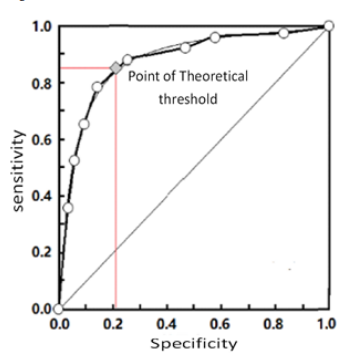
Figure 1 The ROC curve of Caprini Thrombosis Risk Assess-ment Scale for the treatment of patients with malignant tumors.
Risk Assessment Scale has a certain predictive value in the thrombosis risk of patients with malignant tumors, and can ob-tain high sensitivity for treatment guidance, and it is worthy of popularization and application.
Discussion
Malignant tumors are common clinical diseases with high mor-bidity, high mortality, and low cure rate. They have become an important disease threatening the health of Chinese residents [11-12]. Thrombosis is a common complication in patients with malignant tumors. It is mainly European-style. The incidence of thrombosis can be increased due to the compression of the vas- cular cavity by surgery, tumors, and the patient’s long-term bed rest, as well as the toxic reaction and loss of vascular endothelial cells caused by chemotherapy [13]. In this study, the univariate results showed that the incidence of thrombosis in patients with malignant tumors was not statistically significant with gender, age, white blood cell count, platelet count, combined chronic diseases, and mortality during hospitalization (P>0.05); it was related to hematocrit and length of hospitalization. The statis¬tical significance (P<0.05) indicates that there are many factors affecting the incidence of thrombosis in patients with malignant tumors, and different factors can interact and influence each other, which will not only affect the prognosis of patients, but also increase the clinical mortality rate. (1) Hematocrit. It refers to the ratio of sinking red blood cells to the volume of whole blood measured after a certain amount of anticoagulated whole blood is centrifuged, which can indirectly reflect the number and volume of red blood cells [14-15]. For patients with malignant tumors, after the hematocrit level is reduced, it will cause blood deposition, leading to patient limb dysfunction, and increasing the incidence of thrombosis; (2) length of stay in hospital. It is an independent risk factor for patients with thrombosis [16]. Generally speaking, the longer the hospital stay, the higher the incidence of thrombosis [17]. Therefore, strengthening the eval¬uation of thrombus in patients with malignant tumors is of great significance to improve the prognosis of patients.
The DVT risk assessment scale is an individual assessment tool. The risk factors of DVT are weighted and copied according to various risk factors, and the patient’s risk level is evaluated ac¬cording to the total score [18]. The Caprini Thrombosis Risk Assessment Scale has the advantages of simplicity, convenience, and reliability. It is the most extensive scale in the world, in¬cluding obesity, surgery, malignant tumors, age and other risk factors. Therefore, the Caprini Thrombosis Risk Assessment Scale can understand the risk of malignant tumors and make corresponding predictions [19]. In this study, 15 patients were at low-medium risk, 21 were at high-risk, and 42 were at very high-risk. The results showed that the higher the score of Caprini Thrombosis Risk Assessment Scale, the higher the incidence of DVT (P<0.05), suggesting thrombosis in patients with malignant tumors. The risk factors are different, and the higher the patient predictive scale score, the higher the incidence. ROC is a comprehensive and effective method to evaluate diagnostic experiments, and the AUC value can reflect the value of the experiment. In this study, the ROC curve results show that the Caprini Thrombosis Risk Assessment Scale has an AUC value of 0.867 in patients with malignant tumors, a treatment guidance sensitivity of 0.871%, and a specificity of 0.636%. This further verifies that the Caprini Thrombosis Risk Assessment Scale is in malignant tumors. High predictive sensitivity can be obtained in the risk of thrombosis in tumor patients. Clinically, for patients
References
- Qin Qindan, Wang Chunxiu, Li Fen, et al .(2019). Application study of three risk assessment scales for predicting the occurrence of venous thromboembolism in hospitalized patients with tumor. Northwest National Defense Medical Journal, 40(11), 712-717.
- Zhou Yating, Shi Yanmei, Bai Lin, et al .(2018). Study on the predictive value of two thrombosis risk assessment models in inpatients with deep vein thrombosis. Chinese Journal of Nursing, 35(4), 27-31.
- Huang, Y., Liu, X., Chen, F., Zhou, W., Li, H., Long, Z., ... & Han, B. (2019). Prediction of thrombosis risk in patients with paroxysmal nocturnal hemoglobinuria. Annals of He-matology, 98(10), 2283-2291.
- Xu Yuan, Ma Yufen, Chen Yaping, et al .(2018). The effect of action research on improving the accuracy of the Caprini Venous Thrombosis Risk Assessment Scale. Chinese Journal of Modern Nursing, 24 (29), 3484-3489.
- Tong Tong, Gao Hong, Sun Tao .(2018). A comparative study on the predictive value of four common risk assessment models for postoperative venous thromboembolism in patients with gynecological malignant tumors. Practical Journal of Cardio-Cerebral Pneumal and Vascular Disease, 26(7), 94-98.
- Xiong Yinhuan, Xu Hongmei .( 2019). Application of Caprini Thrombosis Assessment Scale in ICU non-surgical patients with high-risk thrombosis risk prediction. Journal of Nursing Science 34(3): 20-23.
- Koo, C. M., Vissapragada, R., Sharp, R., Nguyen, P., Ung, T., Solanki, C., & Esterman, A. (2018). ABO blood group related venous thrombosis risk in patients with peripherally inserted central catheters. The British Journal of Radiology, 91(1082), 20170560.
- Sun Li’e .(2020). Evaluation of the risk of venous thromboembolism in patients with lung cancer after thoracoscopic lobectomy based on the Caprini model. Chinese Journal of Modern Nursing, 26(6), 801-805.
- Qi, Y., Hu, X., Chen, J., Ying, X., & Shi, Y. (2020). TheRisk Factors of VTE and Survival Prognosis of Patients With Malignant Cancer: Implication for Nursing and Treatment. Clinical and Applied Thrombosis/Hemostasis, 26, 1076029620971053.
- Ji Zexuan, Wang Yanfu, Zhao Jianqing, et al .(2019). The value of red blood cell distribution width in the early deathrisk stratification of pulmonary thromboembolism. Journal of Dalian Medical University, 41(1), 55-58.
- Sachdev, V., Gu, Y., Nichols, J., Li, W., Sidenko, S., Allen, D., ... & Thein, S. L. (2019). A Machine Learning Algorithm to Improve Risk Assessment for Patients with Sickle Cell Disease. Blood, 134, 893.
- Zhou Jianxi, Dai Junli, & Song Ji. (2020). Effectiveness of Caprini thrombosis risk assessment model in predicting the risk of deep vein thrombosis in lung cancer patients. Journal of Dalian Medical University, 42 (1), 21-26.
- Wang Xindan, Huang Jing, Zhao Bingbing, et al .(2018). Comparison of the predictive value of different risk assessment models for gynecological malignant tumor-related deep vein thrombosis. Advances in Modern Obstetrics and Gynecology, 27(6), 409-413.
- Chen Wei, Fan Jing, Ai Jiao, et al .(2019). Risk factors for pulmonary embolism in patients with acute exacerbation of chronic obstructive pulmonary disease and the predictive value of Caprini Thrombosis Risk Assessment Scale [J]. Journal of Jiangsu University (Medical Edition), 29(2), 142-146.
- Vermersch, P., Martinelli, V., Pfleger, C., Rieckmann, P., Alonso-Magdalena, L., Galazka, A., ... & Phillips, L. (2019). Benefit-risk assessment of cladribine using multi-criteria decision analysis (MCDA) for patients with relapsing-remitting multiple sclerosis. Clinical therapeutics, 41(2), 249-260.
- Yang Ting, Tian Sijuan, Zhao Juan, et al .(2019). Evaluation of risk factors for venous thromboembolism in patients undergoing gynecological surgery and verification of the validity of the scoring summary. Journal of Practical Obstetrics and Gynecology, 35(5), 368-371.
- Zhang Meijun, Zhao Gang, Yu Wenhui, et al .(2019). Clinical observation of argatroban in the treatment of venous thrombosis after PICC catheterization in patients with malignant tumor chemotherapy. Journal of Medical Research, 48 (8), 119- 122.
- Jin Jin, Tan Zheng, Qiao Lisong, et al .(2019). Clinical characteristics and prognosis of patients with venous thromboembolism after malignant tumor surgery. International Journal of Respiration, 39(3), 201-206.
- Khorana, A. A., Soff, G. A., Kakkar, A. K., Vadhan-Raj, S.,Riess, H., Wun, T., ... & Lyman, G. H. (2019). Rivaroxaban for thromboprophylaxis in high-risk ambulatory patients with cancer. New England Journal of Medicine, 380(8), 720-728.
- Khorana, A. A., Soff, G. A., Kakkar, A. K., Vadhan-Raj, S.,Riess, H., Wun, T., ... & Lyman, G. H. (2019). Rivaroxaban for thromboprophylaxis in high-risk ambulatory patients with cancer. New England Journal of Medicine, 380(8), 720-728.