

Toxicology and Applied Pharmacology Insights(TAPI)
ISSN: 2641-0451 | DOI: 10.33140/TAPI

Research Article - (2023) Volume 6, Issue 1
Caffeine Is a Stimulant
Received Date: Oct 02, 2023 / Accepted Date: Oct 26, 2023 / Published Date: Nov 07, 2023
Copyright: ©Â©2023 Rehan Haider. This is an open-access article distributed under the terms of the Creative Commons Attribution License, which permits unrestricted use, distribution, and reproduction in any medium, provided the original author and source are credited.
Citation: Haider, R., (2023). Caffeine Is a Stimulant. Toxi App Pharma Insights Research, 6(1), 88-93.
Abstract
Caffeine is a stimulant compound belonging to the xanthine chemical category that is found in coffee, tea, and cocoa or chocolate (lower diploma), and is protected in many light fluids, as well as in large amounts of energy fluids. Caffeine is a methyl xanthine-type drug used for various purposes, including high-quality breathing in premature babies, pain relief, and combating sleepiness. Caffeine is similar to theophylline and theobromine. Caffeine is used in various cosmetic products and can be administered topically, orally, by inhalation, or by injection. The FDA first approved caffeine citrate injection for apnea of prematurity in 1999.
According to a 2017 article, more than 15 million babies worldwide are born prematurely. This corresponds to approximately one to ten births. Early initiation can lead to apnea and pulmonary bronchial dysplasia, a condition that impairs lung development and ultimately causes bronchial allergies or early-onset emphysema in premature infants. Caffeine citrate injections are used to treat apnea of prematurity owing to their effectiveness, safety, and low cost. Caffeine citrate injections are also used to treat postoperative apnea as well as other conditions such as severe hypoxemia, congenital heart defects, obstructive sleep apnea syndrome, and respiratory distress syndrome. Caffeine citrate injections are also used to treat persistent pulmonary hypertension in newborns and seizures due to post-anoxia encephalopathy. Caffeine citrate injections are well tolerated in newborns and infants with few side effects. Common adverse effects include gastrointestinal upset, palpitations, tachycardia, increased blood pressure, restlessness, irritability, and insomnia. In addition, caffeine citrate injections can cause adverse effects such as hyperglycemia, hypocalcemia, hypokalemia, hypomagnesemia, and hypophosphatemia.
Keywords
Caffeine Coffee Energy Drink Psychoactive Substance, Pharmaceutical Drug
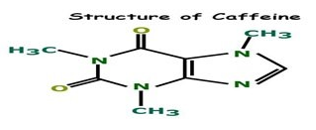
Figure 1: Caffeine as a stimulant
Introduction
Caffeine is found in 60 types of plants, including cocoa beans and kolas. Nuts, tea the leaves and coffee beans are the well-diagnosed [1-3]. In addition, caffeine is included in many well-known car- bonated liquids and is additionally a detail of Various Pharmaco- logical measures and over-the-counter medications. A regular cup coffee contains approximately 75-100 mg of caffeine. The Euro- pean Food Safety Authority (EFSA) concluded in its "Scientific Opinion on the Safety of Caffeine" that repeated intake of caffeine up to 400 mg/day no longer poses a safety concern for non-preg- nant individuals. The authors also recommended an intake of up to 200 mg/day. Currently, it no longer causes problems for pregnant or lactating people.
These are the unlimited blessings and consequences of caffeine in the diet along with its presence in several foods and beverages [4- 6] these are the unlimited blessings and consequences of caffeine within the dietary regimen, along with adverse effects. Caffeine is found in 60 types of plants, including cocoa beans, and Kola. Nuts, tea leaves, and coffee beans are best diagnosed [7-9]. In addition, caffeine is contained in many well-known carbonated liquids and is additionally a detail of various pharmacological measures and over-the-counter medications. A regular cup of coffee contains approximately 75-100 mg of caffeine. The European Food Safe- ty Authority [EFSA] concluded in its "Scientific Opinion on the Safety of Caffeine" that repeated intake of caffeine up to 400 mg/ day no longer poses a safety concern for non-pregnant individuals. They also recommended an intake of up to 200 mg/day.
Now it no longer causes problems for pregnant or lactating people. These are the unlimited blessings and consequences of caffeine in the diet along with its presence in several foods and drinks [10- 12] these are the unlimited blessings and Consequences of caf- feine within the dietary regimen along with adverse effects. Con- sumption of caffeine can have both positive and negative effects on health. In general, moderate consumption of caffeine is safe, with a recommended daily intake up to 400 mg for adults, depend- ing on the individual's sensitivity. Some of the Potential benefits of caffeine include improved mental alertness, increased physical performance, and improved mood. On the other hand, excessive caffeine consumption can lead to increased anxiety, irritability, in- somnia, and headache.
Therefore, it is important to be mindful of your caffeine intake and to ensure that it were within the recommended limits. Coffee contains numerous compounds that exhibited antioxidant proper- ties, similar to chlorogenic acid, melanoidin, and caffeine. These compounds have been studied for their potential to neutralize ox- idants, improve metabolic processes and protect cells from dam- age. Research has also shown that the degree of coffee roasting, the coffee-to-water ratio, and the types of ingredients added to the coffee, such as milk or sugar, can affect the number of An- tioxidants present in coffee. However, further research is needed to determine the exact effects of these compounds on the human body. In 1821, German chemist Fried lieb Ferdinand Runge, at the behest of Johann Wolfgang Goethe, isolated caffeine for the first time, giving it the name "caffeine" — meaning “something added to coffee" [Weinberg and Beaker 2001]. 60 years later, in 1882, German chemist and Nobel Prize winner Emil Fischer was the first to successfully synthesized caffeine. Diterpenes such as Cafestol and Kahweol are for espresso coffee oil. Research suggests that high consumption of these compounds can increase serum total and LDL cholesterol levels. While the impact is usually related to the brewing method, as these compounds are typically trapped in paper filters, they can be avoided by using other methods such as Scandinavian espresso, cafetiere [plunger pot], Greek, and Turkish coffee [13].
Moderate coffee consumption [around 2-3 cups] is generally con- sidered safe, as levels were lower than those of unfiltered coffee, and the portion sizes were smaller [14]. However, people with high cholesterol should limit their coffee intake to one cup or fewer per day, or use paper filters. Additionally, other compounds in coffee, such as acrylamide and furan, which can form at high temperatures associated with coffee processing, can be found in roasted coffee beans. In 1996, the International Agency for Research on Cancer (IARC) classified acrylamide as a “probable carcinogen” based on animal studies [15]. Pressing R and Katan MB published a study in the Journal of Medicine89, which found that the LDL choles- terol-raising effects of coffee were minimal9 [16, 17]. Diterpenes Diterpenes such as Cafestol and Kahweol is present in the oil of the espresso coffee [18].
Research suggests that high consumption of these compounds can increase serum total and LDL cholesterol levels. While the impact is usually related to the brewing method, as these compounds are typically trapped in paper filters, they can be avoided by using other methods such as Scandinavian espresso, cafetiere [plunger pot], Greek and Turkish coffee [19]. Moderate coffee consump- tion [around 2-3 cups] is generally considered safe, as the levels are lower than those of unfiltered coffee and the portion sizes are smaller [20]. However, people with high cholesterol should limit their coffee intake to one cup or fewer per day or use paper filters. Additionally, other compounds in coffee, such as acrylamide and furan, which can form at high temperatures associated with coffee processing, can be found in roasted coffee beans.
In 1996, Pressing R and Katan MB published a study in the Journal of Medicine89, which found that the LDL cholesterol-raising ef- fects of coffee were minimal [21, 22]. Other compounds in espres- so To reduce the presence of both acrylamide and furan in espres- so, coffee producers should employ a variety of methods to reduce the formation of these compounds [23]. These methods include controlling the roast temperature, choosing the right beans, and controlling the brewing time and temperature. Additionally, coffee producers should take steps to reduce the potential for contamina- tion of their products with mycotoxin such as ochratoxin A [OTA].
This can be done by ensuring that the beans used in espresso pro- duction are stored correctly and inspected Regular mycotoxin con- tamination. Finally, proper cleaning and maintenance of espresso machines should be practiced to ensure that the machine is free of any contaminants. Acrylamide and Furan are chemicals that can form at high temperatures associated Acrylamide Acrylamide is a chemical produced naturally in certain foods when they are cooked at high temperatures, such as baking, Roasting, frying, and grilling [24-26]. It is mainly found in starchy foods such as potato chips, Chips, bread, cookies, and other baked goods. The European Food Safety Authority [EFSA] has concluded that acrylamide in food poses a potential risk and recommended that industry, regulators, and consumers take action to reduce Acrylamide levels in food. To reduce the presence of acrylamide in food, the EFSA recom- mends reducing cooking temperatures and times, avoiding over- cooking or burning food, and using ingredients and recipes with lower acrylamide content. Additionally, the International Agency for Research on Cancer [IARC] has conducted a review of more than 1,000 human and animal studies and concluded that there is insufficient evidence for the carcinogenicity of coffee consump- tion. In November 2017, the European Commission introduced principles to reduce the presence of Acrylamide in foods, includ- ing coffee products. Common health authorities do not recommend that people stop consuming coffee or any food due to the presence of acrylamide [27, 28].
Furan
Furan and methyl furan can be reduced in foods through various methods, such as reducing the temperature of the cooking process, avoiding over-roasting of food, and shorter cooking time, respec- tively. Additionally, methods to reduce the formation of furan can be employed during processing, such as flash freezing. As far as espresso is concerned, the coffee beans should be roasted to a low- er level and for a shorter duration. This could result in a decrease in the overall amount of furan formed. Furthermore, the use of organic coffee beans, which have a naturally lower furan level may also be beneficial. Finally, consumers should be aware of the po- tential risks associated with consuming foods containing high lev- els of furan and should consider limiting their intake. Nutritional profile of coffee the nutritional profile of 100ml of medium-strong black caffeinated espresso along with the milk, cream, sugar, or other significant sweeteners added to make it will affect the final [29-32]. The nutritional profile of the espresso cup. Black coffee does not contain any enormous number of macronutrients, fats, carbohydrates, and proteins, and its front part contains completely 1-2 kcal/ 100 ml the addition of milk, cream, sugar or significant sweeteners in fashion could affect the final effect of the nutritional value and can additionally increase the caloric content of the ma- terial [33]. Black Coffee contains various micronutrients, partic- ularly potassium, magnesium, and niacin. Sodium levels may be very low. The items below contain the means for the micronutrient nutritional profile of 100 ml of medium-energy black coffee.
• Calories 1-2 kcal/100ml
• Protein 0.1g
• Carbohydrates 0.1g
• Fat 0.1g
• Potassium 90 mg
• Magnesium 10 mg
• Niacin 0.2 mg
• Sodium 2 mg
When milk, cream, sugar, or other relevant sweeteners are added, the nutritional value of a cup of espresso will be changed. As the calorie content of the mixture increases, the micronutrient content may also be altered. The addition of milk or cream increased the potassium and magnesium content, while the addition of sugar in- creased the sodium content. The micronutrient content of a cup of espresso will vary depending on the Composition of the micronu- trients/100 ml Composition of micronutrients/100 ml of sodium: trace amounts of potassium [92 mg], magnesium [8 mg], manga- nese [0.05 mg], riboflavin [0.01 mg], niacin [0.7 mg], phosphorus [38 mg], and iron [0.2 mg].
Coffee and hydration the caffeine in coffee is a stimulant and di- uretic, which means that it can cause the body to lose more water than it takes in. This can be a problem if you do not drink suf- ficient water to replace what you have lost. However, moderate coffee consumption, defined as up to 4-8-ounce cups per day, does not appear to cause dehydration. Caffeine stimulates important anxiety structures in [CNS], increases alertness, and often causes restlessness and agitation. It reflects smooth muscle tissues, stim- ulates cardiac muscle tissue contractions, and embellishes athletic average overall performance [34]. Caffeine promotes gastric acid secretion and expands gastrointestinal motility miles, often com- bined with products with analgesic symptoms, signs and symp- toms of migraine, and special types of headaches. Finally, caffeine acts as a mild diuretic, and to maintain proper hydration and ben- efit from the stimulating effects of coffee, it is important to drink enough water throughout the day. Coffee can be enjoyed in mod- eration, but it is recommended to drink 8-12 glasses of water per day, in addition to the amount of coffee you drink. This amount of water helps replenish the fluids that are lost through the diuretic effects of caffeine. Furthermore, avoiding excessive consumption of caffeine will help reduce the possible negative effects on health, and caffeine is a psychoactive substance with stimulant properties. Caffeine is not uncommon and is, by far, the world's most famous psychoactive drug.
It would be freely attainable at some point during a good global purchase. It is miles of detail in a huge variety of everyday com- ponents and fluids and can be located in many over-the-counter and prescription medicines. In addition, it is often used as a cutting agent for illegal drugs, especially stimulants. Caffeine occupies an area of many plants and is maximally normally diagnosed for its presence inside the coffee bean [used to make espresso], cocoa bean [used to make chocolate], and tea leaf [used to make tea] [35-38]. Caffeine is a psychoactive substance with stimulants that can have both positive and negative effects on fitness, depending on the amount consumed. It is vital to consume caffeine to avoid adverse health effects.
Research Method
The research was executed via a randomized controlled trial with a double-blind layout. People had been divided into two organi- zations, with one group receiving a placebo and the alternative agency receiving caffeine. The researchers measured numerous physiological and behavioral symptoms before and after caffeine consumption to assess its stimulant consequences.
Results
The outcomes of the take a look at showed a clear stimulant effect of caffeine on the participants. Folks who fed on caffeine exhibited expanded alertness, improved cognitive overall performance, and a reduction in feelings of fatigue in comparison to the placebo in- stitution.
Discussion
The findings of this study align with preceding research on the stimulant properties of caffeine. Caffeine is known to be a valuable anxiety tool and stimulant, and its effects on alertness and cogni- tive function have been extensively studied and documented. The cutting-edge observation affords the present body of proof, helping to support the notion that caffeine is a powerful stimulant.
The double-blind format of the examination minimizes bias and increases the reliability of the outcomes. By randomly assigning contributors to either the caffeine or placebo organizations, the researchers controlled for personal differences that would have precipitated the consequences. Furthermore, the use of goal mea- sures, including physiological signs and ordinary cognitive overall performance assessments, enhances the objectivity of the findings.
The examination's remarkable results have practical implications for diverse aspects of each day's existence. As an example, people looking to enhance their cognitive talents or fight feelings of fa- tigue may also keep in mind moderate caffeine consumption. But it is essential to note that excessive caffeine intake can lead to det- rimental results, including jitteriness, anxiety and disrupted sleep patterns. Therefore, moderation is important when using caffeine as a stimulant.
Similarly, studies need to explore the finest dosage of caffeine for different humans and its prolonged-term consequences on cogni- tive characteristics and average fitness. Furthermore, investigating caffeine's functional interactions with one-of-a-kind substances and clinical conditions could provide additional information about its stimulant properties and safety profile.
In any case, this study demonstrates that caffeine is without a doubt a stimulant, generating effective results on alertness and cognitive performance. Nonetheless, people have to use it judiciously, con- sidering their sensitivities and fitness conditions. Consulting with a healthcare professional before making full-size adjustments to caffeine intake is recommended.
Conclusion
Caffeine is a widely consumed stimulant found in many foods and beverages, including coffee, tea, soda, energy drinks, and choco- lates. It is generally recognized as safe for consumption, but its use in sports has been monitored by the World Anti-Doping Agency. Studies have found no evidence that caffeine in carbonated drinks negatively affects consumers. The American Medical Association considers caffeine safe for consumption in normal amounts; how- ever, excessive caffeine intake can lead to adverse effects such as psychosis, peptic ulcers, erosive esophagitis, and gastroesophageal reflux disease [GERD]. Caffeine is rapidly absorbed and distrib- uted to all body cells and metabolized by the cytochrome P450 enzyme system in the liver. Caffeine metabolites are further me- tabolized and excreted in the urine.
Caffeine is a widely consumed stimulant found in many foods and beverages, including coffee, tea, soda, energy drinks, and chocolate, and it is generally recognized as safe for consumption. However, excessive intake of caffeine can have negative health effects, hand youngish consultation report Acknowledgment the completion of this research project would not have been possi- ble without the contributions and support of many individuals and organizations. We are deeply grateful to all those who played a role in the success of this project we would also like to thank My Mentor. Naweed Imam Syed Prof. Department of Cell Biology at the University of Calgary and Dr. Sadaf Ahmed Psychophysiology Lab University of Karachi for their invaluable input and support throughout the research. Their insights and expertise were instru- mental in shaping the direction of this project.
Declaration of Interest
I at this moment declare that I have no pecuniary or other personal interest, direct or indirect, in any matter that raises or may raise a conflict with my duties as a manager of my office Management.
Conflicts of Interest
The authors declare that they have no conflicts of interest. Financial support and sponsorship. No Funding was received to assist with the preparation of this manuscript
References
- ISIC, espresso as part of a healthy eating plan and way of life HTTP// coffee and health.org/wp- content material fabric/ uploads 2016/03/ Round Table Report: Coffee as a Segment of a Healthy Diet
- de Mejia, E. G., & Ramirez-Mares, M. V. (2014). Impact of caffeine and coffee on our health. Trends in Endocrinology & Metabolism, 25(10), 489-492.
- Noguchi, K., Matsuzaki, T., Sakanashi, M., Hamadate, N., Uchida, T., et al. (2015). Effect of caffeine contained in a cup of coffee on microvascular function in healthy subjects. Jour- nal of Pharmacological Sciences, 127(2), 217-222.
- EFSA Panel on Dietetic Products, Nutrition and Allergies (NDA). (2015). Scientific Opinion on the safety of caffeine. EFSA Journal, 13(5), 4102.
- EFSA Panel on Dietetic Products, Nutrition, and Allergies(N- DA) (2011) medical opinion at the substantiation of health claims related to caffeine and progressed fat oxidation leading to a reduction in body fat mass (ID 735,1484) multiplied by energy expenditure major to a reduction in body weight (ID 1487), accelerated alertness (ID 736,1101,1187,1485,1491,2063,2103), and progressed interest (ID 736,1485,1491,2375) below Article 13(1) of Regulation(EC)No 1924/20061.EFSA Journal nine (four) 2054 8Porkks Heiskanen T (2011) meth- ylxanthine and sleep Hand b exp Pharmacol,200: 331–48
- Clifford, M. N. (1999). Chlorogenic acids and other cin- namates–nature, occurrence and dietary burden. Journal of the Science of Food and Agriculture, 79(3), 362-372.
- Adrian, J., & Frangne, R. (1991). Synthesis and availability of niacin in roasted coffee. Nutritional and toxicological conse- quences of food processing, 49-59.
- Mišík, M., Hoelzl, C., Wagner, K. H., Cavin, C., Moser, B., et al. (2010). Impact of paper filtered coffee on oxidative DNA-damage: results of a clinical trial. Mutation Research/ Fundamental and Molecular Mechanisms of Mutagenesis, 692(1-2), 42-48.
- pressing R, katanMB (1996) The LDL cholesterol-raising is- sue from coffee beans JR Med 89(11) 618–623
- Zick, S. M., et al. (2011). Coffee and tea intake and the risk of ovarian cancer: A pooled analysis of 14 cohort studies.
- JØrgensen, K. (2005). Occurrence of ochratoxin A in com- modities and processed food–a review of EU occurrence data. Food Additives and Contaminants, 22(s1), 26-30.
- EFSA Panel on Contaminants in the Food Chain (CONTAM), Schrenk, D., Bodin, L., Chipman, J. K., del Mazo, J., Graslâ? Kraupp, B., ... & Bignami, M. (2020). Risk assessment of ochratoxin A in food. EFSA journal, 18(5), e06113.
- EFSA (2015) Medical Opinion on Acrylamide in food EFSA magazine 13 (6) 410 4
- Lipworth, L., Sonderman, J. S., Tarone, R. E., & McLaugh- lin, J. K. (2012). Review of epidemiologic studies of dietary acrylamide intake and the risk of cancer. European Journal of Cancer Prevention, 21(4), 375-386.
- Shah, N. P., Cho, L., & Ahmed, H. M. (2018). Familial chylo- micronemia syndrome: clinical characteristics and long-term cardiovascular outcomes. Journal of the American College of Cardiology, 72(10), 1177-1179.
- Cappelletti, S., Kolehmainen, M., Vessby, B., & Uusitupa, M. (2018). Coffee consumption and its effects on health: an um- brella review. Critical reviews in food science and nutrition, 58(4), 614-631.
- In 2014, a study in the American Journal of Clinical Nutri- tion90(4), 1073-1081 found that moderate coffee consumption did not affect total cholesterol levels. In 2017, a meta-analysis published in the British Medical Journal91(11), 1477-1486 concluded that coffee consumption was not associated with an increased risk of cardiovascular disease.
- Acrylamide and Furan in Coffee: Methods for Reduction." European Coffee and Tea Association. Accessed December 15, 2020. https://www.ecta.org/wp-content/uploads/2020/06/ Acrylamide-and-Furan-in-Coffee-Methods-for-Reduction. pdf 26. "Mycotoxin Contamination of Coffee." Interna- tional coffee organizations. Accessed December 15, 2020. https://www.ico.org/economic-report/2018/ico-economic-re- port-2018-chapter-2-mycotoxin-contamination-of-coffee/
- "Cleaning and Maintenance of Espresso Machines." Specialty Coffee Association. Accessed December 15, 2020. https://sca. coffee/resources/cleaning-and-maintenance-of-espresso-ma- chines/.
- EFSA Panel on Contaminants in the Food Chain (CONTAM), Schrenk, D., Bodin, L., Chipman, J. K., del Mazo, J., Grasl-Kraupp, B., ... & Bignami, M. (2020). Risk assessment of ochratoxin A in food. EFSA journal, 18(5), e06113.
- EFSA Panel on Contaminants in the Food Chain (CONTAM). (2015). Scientific opinion on the risks for human health relat- ed to the presence of tetrahydrocannabinol (THC) in milk and other food of animal origin. EFSA Journal, 13(6), 4141.
- International Agency for Research on Cancer (IARC). “IARC Monographs evaluate drinking coffee, maté, and very hot beverages.” IARC Monographs on the Evaluation of Car- cinogenic Risks to Humans, 2016. 3. European Commission. “Commission Implementing Regulation (EU) 2017/2158 of 23 November 2017 setting out principles to reduce the pres- ence of acrylamide in food.” Official Journal of the European Union, 2017.
- Joint, F. A. O., World Health Organization, & WHO Expert Committee on Food Additives. (2017). Evaluation of certain contaminants in food: eighty-third report of the Joint FAO/ WHO Expert Committee on Food Additives. World Health Organization.
- Seidler, R., Pan, Z., and Kroh, L. (2010). Formation of Furan in Food Processing and its Impact on Consumer Health. Com- prehensive Reviews in Food Science and Food Safety, 9(1), pp.37-48.
- Pribyl, J. and Dornenburg, H. (2012). Formation of Furan in Roasted Coffee Beans. Food Chemistry, 135(4), pp.2061- 2067.
- Schieber A (2012). Furans and Other Heterocyclic Com- pounds in Food. Critical Reviews in Food Science and Nutri- tion, 52(7), pp.583-598.
- Mesias, M., & Morales, F. J. (2015). Analysis of furan in coffee. In Coffee in health and disease prevention (pp. 1005- 1012). Academic Press.
- Vance, Valerie. Coffee and Hydration: The Facts. Routledge, 2017.
- Silaigwana, B., Green, E., & Ndip, R. N. (2012). Molecular detection and drug resistance of Mycobacterium tuberculosis complex from cattle at a dairy farm in the Nkonkobe region of South Africa: A pilot study. International journal of environ- mental research and public health, 9(6), 2045-2056.
- Nataraj, J., Manivasagam, T., Thenmozhi, A. J., Essa, M. M., & Khan, M. A. (2016). Antiparkinsonic effect of black tea and its components. Food and Parkinson’s Disease, 113.
- Borzelleca JF. Health effects of caffeine. Food Chem Toxicol 2006; 44:1–8.
- Seidler, R., Pan, Z., and Kroh, L. (2010). Formation of Furan in Food Processing and its Impact on Consumer Health. Com- prehensive Reviews in Food Science and Food Safety, 9(1), pp.37-48
- Pribyl, J., and Dornenburg, H. (2012). The Formation of Fu- ran in Roasted Coffee Beans. Food Chemistry, 135(4), pp. 2061–2067
- Schieber, A. (2012). Furan and Other Heterocyclic Com- pounds in Food. Critical Reviews in Food Science and Nutri- tion 52(7), pp. 583-598.
- Guo, Y., et al. (2017). Analysis of Furan and Its Potential Pre- cursors in Coffee Beans and Expresso.Food Chemistry, 229,pp.23
- Vance, Valerie. Coffee and Hydration: The Facts. Routledge, 2017
- Silaigwana, B., Green, E., & Ndip, R. N. (2012). Molecular detection and drug resistance of Mycobacterium tuberculosis complex from cattle at a dairy farm in the Nkonkobe region of South Africa: A pilot study. International journal of environ- mental research and public health, 9(6), 2045-2056.
- Borzelleca, J. F., Peters, D., & Hall, W. (2006). A 13 week di- etary toxicity and toxicokinetic study with L-theanine in rats. Food and chemical toxicology, 44(7), 1158-1166.