




Research Article - (2023) Volume 8, Issue 3
Breaking the Constriction: Successful Pericardiectomy Outcomes in Ethiopian Patients with Constrictive Pericarditis
Received Date: Aug 25, 2023 / Accepted Date: Sep 14, 2023 / Published Date: Sep 18, 2023
Copyright: ©Â©2023 Seyoum Kassa Merine, et al. This is an open-access article distributed under the terms of the Creative Commons Attribution License, which permits unrestricted use, distribution, and reproduction in any medium, provided the original author and source are credited.
Citation: Bekele, A., Bezabih, A., Gullilat, D., Kassa, S. (2023). Breaking the Constriction: Successful Pericardiectomy Outcomes in Ethiopian Patients with Constrictive Pericarditis. Cardio Open, 8(3), 58-65.
Abstract
Background: Constrictive pericarditis is a serious disease that can result in significant morbidity and mortality. Pericardiectomy is a surgical procedure that can effectively treat constrictive pericarditis and improve patient outcomes. However, data on clinical characteristics, surgical outcomes, and perioperative complications of Pericardiectomy in Ethiopia are limited.
Methods: This retrospective study evaluated the outcomes of Pericardiectomy for constrictive pericarditis in 65 patients who underwent the procedure between 2014 and 2022 at a tertiary care hospital in Ethiopia. Demographic and clinical data, imaging findings, surgical details, and postoperative outcomes were collected from medical records and analyzed. The primary outcomes of interest were mortality and complications within 30 days of surgery.
Results: The study included predominantly male patients (84.6%) with a median age of 27 years. Tuberculosis was the most common illness (13.8%), and infectious conditions accounted for 83.1% of cases. Pericardiectomy was performed through a median sternotomy in all patients, with a mean duration of operation of 3.3 ± 0.6 hours. The majority of patients showed improvement in symptoms, functional status, and imaging findings postoperatively, with a low incidence of perioperative complications and mortality.
Conclusion: Pericardiectomy is an effective treatment option for patients with constrictive pericarditis in Ethiopia, with good clinical outcomes and low perioperative complications and mortality. Careful patient selection and management are crucial to achieve successful outcomes, and long-term follow-up is essential to monitor for late complications and optimize patient outcomes.
Keywords
Constrictive pericarditis, Pericardiectomy, Ethiopia, Tuberculosis, Surgical Outcome
Introduction
Constrictive pericarditis (CP) is a medical condition character- ized by the thickening and fibrosis of the pericardium, leading to impaired diastolic filling and hemodynamic compromise. The exact etiology of CP is unknown, but viral infections, previous cardiac operations, and mediastinal radiation considered predis- posing factors in developed countries [1]. In underdeveloped nations, tuberculosis (TB) is the most common cause of pericar- ditis and is frequently accompanied by concurrent human im- munodeficiency virus (HIV) infection, accounting for 22-91% of cases [1,2]. It is estimated that up to 5% of patients presenting with chest discomfort are diagnosed with pericarditis, with only a smaller percentage progressing to chronic disease [3]. Among those diagnosed with CP, it is estimated that 20% will eventually require Pericardiectomy [1]. Pericardiectomy is the preferred treatment option for symptom- atic CP, providing significant benefits such as symptom relief, improved survival rates, and reduced risk of disease progression [4-6]. However, the procedure carries a high risk of morbidity and mortality, with perioperative mortality rates ranging from 5-10% and late mortality rates ranging from 15-70%, depending on various factors [7-9]. Despite the consensus that Pericardiec- tomy is necessary, previous studies have reported varying early and long-term survival rates after the procedure due to signif- icant variations in preoperative and intraoperative risk factors [4,7,10].
Several surgical techniques have been used for Pericardiecto- my, including left anterior thoracotomy, bilateral thoracotomy, and median sternotomy. The latter technique usually offers the best exposure [5]. Medical and surgical treatments are utilized to manage constrictive pericarditis. Diuretics may be considered for patients who have no or minimal symptoms while avoiding the inherent risks associated with surgical intervention [6,11].
Previous studies have reported perioperative mortality rates ranging from 2-15% and 4.2%-5.6% for pericardial effusion and constriction, respectively [1,4]. However, few studies have identified risk factors for poor outcomes following CP surgery, and end-organ dysfunction, particularly of the liver, kidney, and lungs, has been recognized as a separate risk factor for mortality [10]. Therefore, the current study aims to assess the outcomes and determinants of Pericardiectomy at a tertiary teaching hos- pital in Ethiopia over an eight-year period, contributing to the evolving knowledge on Pericardiectomy outcomes in develop- ing countries [12].
Statement of the Problem
The real prevalence of pericarditis in the general population is unknown because it can be subtle and painless, making it dif- ficult to detect; nonetheless, conventional estimates show that about 6% of autopsies reveal signs of pericarditis, which ac- counts for about 1/1000 of hospital admissions [3]. Up to 5% of patients with chest discomfort have pericarditis diagnosed, and only a smaller percentage becomes chronic. 20% of peo- ple who are diagnosed with CP are thought to eventually need pericardiectomy. Although a history of viral infections, previous cardiac operations, and mediastinal radiation are thought to be predisposing factors in developed nations, the exact origin of pericarditis is unknown [1]. In actuality, 0.2-0.4% of heart surgi- cal procedures result in CP within the first two years. The most common cause of pericarditis in underdeveloped nations is tu- berculosis (TB), which is frequently accompanied by concurrent human immunodeficiency virus (HIV) infection and is thought to be the cause in between 22 and 91% of cases [1]. in the De- veloped Nations, Idiopathic causes made up 46.4% of CP cases, followed by post-cardiac surgery (19.6%), post-mediastinal ra- diation (9.3%), and other causes (autoimmune, TB, rheumatic, or mixed) making up 24.7% of cases [2].
Medical treatment and surgical procedures are used to treat con- strictive pericarditis. Diuretics may be beneficial for patients who have minimal or no symptoms while avoiding the dangers associated with surgical treatment. In all other cases, surgical pericardiectomy is the preferred course of action and relieves the patient's symptoms. However, depending on a variety of cir- cumstances, the operational risk and late mortality range from 5 to 10% and 15 to 70%, respectively [10]. In the US, 21% of CP patients who are hospitalized ultimately get a pericardiectomy [1]. With varying long-term outcomes, perioperative mortality following Pericardiectomy has been relatively high, ranging from 2 to 15% [1,2]. Pericardial effusion and constriction had surgical mortality rates of 4.2% and 5.6%, respectively [4]. Most patients who undergo pericardiectomy have significant comor- bidities, which makes it challenging to interpret the findings. Only a small number of papers have so far outlined the risk fac- tors for unsuccessful outcomes following CP surgery. End-organ dysfunction particularly that of the liver, kidney, and lungs, is frequently recognized in these investigations as a separate risk factor for mortality. Additionally, some researchers claim that throughout time, the pathology and operational risk factors have changed [5].
Justification
The objective of this study is to evaluate the risk factors and postoperative outcomes of patients who underwent pericardiec- tomy at our facility over an eight-year period [1]. Pericardiec- tomy offers several key benefits, including improved survival rates, relief of symptoms, and reduced risk of disease progres- sion [5]. However, despite the consensus on the necessity of the procedure, there remains a significant risk of morbidity associ- ated with it. Previous studies have reported varying early and long-term survival rates after pericardiectomy, likely due to the considerable variability in preoperative and intraoperative risk factors [5]. Therefore, the aim of this current study is to com- prehensively assess the outcomes and determinants of pericar- diectomy at a Tertiary Teaching Hospital in Ethiopia through an eight-year review.
Significance of the Study
The significance of this study lies in its aim to review the peri- cardiectomy procedures conducted on patients with constrictive pericarditis at Tikur Anbessa Hospital within the period of No- vember 2014 to December 2022.
Objectives
To comprehensively evaluate the outcomes of Pericardiectomy in patients with constrictive pericarditis at Tikur Anbessa Spe- cialized Hospital.
• Assess changes in symptomatology, functional status, quality of life, and survival post-Pericardiectomy.
• Document the clinical outcomes of the procedure. To determine the factors influencing the outcomes of Pericar- diectomy in patients with constrictive pericarditis.
• Analyze demographic factors (age, gender) and clinical char- acteristics (etiology, comorbidities) as determinants of outcome.
• Evaluate the impact of preoperative functional status on post-Pericardiectomy outcomes.
• Explore associations between laboratory parameters and pro- cedure outcomes. To assess the safety and feasibility of Pericardiectomy in pa- tients with constrictive pericarditis.
• Investigate the incidence of perioperative complications and adverse events.
• Evaluate the overall safety profile of the procedure in this pa- tient population.
Material and methods
Study Setting and Period
The study was conducted at Tikur Anbessa Specialized Hospi- tal (TASH), a tertiary teaching hospital located in Addis Ababa, Ethiopia, from February 15, 2023, to March 30, 2023. Estab- lished in 1972 as the teaching hospital of Addis Ababa Universi- ty, College of Health Sciences, TASH serves as the largest refer- ral hospital in the country, providing care with its 700 in-patient beds. Within the hospital, the Cardiothoracic Surgery Unit oper- ates with 15-20 in-patient beds and performs an average of 400 cases per year, excluding emergency procedures.
Study Design
This study utilized a retrospective record review design to an- alyze data from patients with constrictive pericarditis who un- derwent surgery at the hospital between November 2014 and December 2022.
Source and Study Population
Source Population
The source population consisted of all patients with constrictive pericarditis who received medical care at TASH from November 2014 to December 2022.
Study Population
The study population included all patients with constrictive peri- carditis who underwent surgery at the hospital from November 2014 to December 2022.
All eligible cases identified during the observation period were included in the study.
Inclusion Criteria: The study included adult patients who un- derwent pericardiectomy surgery for constrictive pericarditis at the hospital during the observation period.
Exclusion Criteria: Patients with missing information on out- comes or major exposure variables in their medical records, and cases for which the required missing information cannot be obtained from secondary data sources, were excluded from the study.
Sampling Technique
A total of 69 cases underwent surgery at the hospital during the observation period. Out of these cases, 65 fulfilled the eligibility criteria and were included in the study.
• Study variables
• Outcome variable
• Pericardiectomy outcome: Measurement as improvement in NYHA stage and class and post-operative outcome
• NYHA clinical Improvement
• No heart failure • Stage A- presence of heart failure risk factors but no heart disease and no symptoms
• Stage B- heart disease is present but there are no symp- toms… structural changes in the heart before symptom oc- cur
• Stage C-structural heart disease is present and symptoms have occurred
• Stage D- presence of advanced heart disease with continued heart failure symptoms requiring aggressive medical ther- apy • Class 1- no limitation of physical activity
• Class 2- slight limitation of physical activity
• Class 3- marked limitation of physical activity
• Class 4- unable to carry out any physical activity without discomfort
• Post-operative outcome
• Recovery
• Death • Hospital mortality (at 30days)
• Long-term mortality (at 1 year)
• Exposure variables
• Socio-demographic characteristics
• Age, sex, place of residence, educational status
• Preoperative parameters
• Baseline clinical characteristics
• History: Duration and presenting symptoms, etiology (id- iopathic, infectious, post-surgical, post-radiation, and mis- cellaneous), comorbidities and Cigarette smoking.
• Physical examination findings JVP (CVP) status, pericar- dial friction rub, pulsus paraduxus, cardiac rhythm status, hemodynamic parameter (pulmonary, systemic, and intrac- ardiac pressure, left-right ventricular function).
• Laboratory parameters
• Serum electrolytes, OFT,
• Imaging findings
• ECG, CXR, Echocardiography, chest CT scan and MRI.
• Intraoperative parameters
• Intraoperative monitoring (invasive or non-invasive)
• Operative status (elective or emergency)
• Completeness/types of pericardiectomy
• Duration of operation
• Rhythm status
• Etiologic evidence of pericarditis
• Postoperative parameters
• Prolonged intubation
• Postop bleeding
• Post-op follow-up duration
• Rhythm status/ECG, CXR, echocardiography
• Complications post-op pneumonia, postop organ failure
• Postop NYHA class functional status
Operational Definitions
Pericardiectomy Types
• Total: Refers to the complete removal of all anterior peri- cardium, extending from the phrenic nerve to the superior part of the great vessels, including the surface of the dia- phragm.
• Subtotal: Involves the removal of a portion of the anterior pericardium, which is less than the total extent.
• Completion: Describes the surgical procedure performed to finalize an incomplete pericardiectomy, typically done for recurrent constrictive pericarditis.]
• Delayed Extubation: This term is defined as the require- ment for mechanical ventilation for a period exceeding 48 hours following the surgical procedure.
• Perioperative mortality/Hospital mortality: Refers to the occurrence of death during the initial hospitalization or within 30 days following the surgical procedure. Data Col- lection procedures and quality assurance.
Data was gathered from the patients' medical records using a comprehensive data abstraction tool that includes all the relevant variables. The recorded data encompasses socio-demographic characteristics, preoperative details, and intraoperative factors,all of which are extracted from the medical records, including both charts and electronic databases. Post-operative endpoints are documented based on the follow-up progress notes. To en- sure accuracy, a pretest was conducted on a randomly selected 5% of medical charts, and subsequent revisions were made to the data collection tool based on the test results.
The principal investigator provided a one-day training session to four general practitioners and one supervisor, focusing on the fundamentals of the data abstraction form and its appropriate usage. Data collection took place from February 15, 2023, to March 30, 2023. Prior to any attempts at coding and analysis, the collected data underwent careful scrutiny to ensure consistency and completeness. All data management and analysis procedures were performed using STATA software version 14.0. Data man- agement and analysis.
The data was summarized by calculating frequencies and per- centages for categorical variables. For numerical variables, a test for normality, specifically the Kolmogorov Smirnov test, was performed. A p-value of less than 0.05 indicated a skewed distri- bution. In such cases, the data was summarized using the mean ± standard deviation (SD) for variables with a normal distribution, and the median with Inter Quartile Range (IQR) for variables with a skewed distribution.
To measure the incidence rate of perioperative mortality and complications, an incidence density approach was employed. Person time was calculated by determining the total number of hospital days from the post-operation period until discharge, complication, or death for each group. The incidence rate was then reported as the number of occurrences per 1000 person-days (PD) of observation. Additionally, the 95% confidence interval (CI) for the calculated incidence density was provided.
Ethical Considerations
This study was conducted following the acquisition of ethical clearance from the Department of Surgery Research Commit- tee and the Institutional Review Board (IRB) of the College of Health Sciences, Addis Ababa University. As part of the stan- dard procedure, all patients scheduled for major surgery in the hospital provided both oral and written informed consent, which explicitly stated that intraoperative findings and samples may be used for academic and research purposes as needed. Therefore, consent was already obtained and ensured During the data collection process, medical record numbers were used, and personal identifiers of the patients were not included in the research report. Only the principal investigator had access to the collected information, and strict confidentiality measures were implemented throughout the project to safeguard patient privacy.
Results
Sociodemographic and Preoperative Parameters
A total of 65 patients were included in this study. The majority of patients were in their 20s (53.8%), (Table) and were male (84.6%) (Figure 1). The patients were primarily from Oromia (40.0%), Amhara (26.2%), and Addis Ababa (18.5%). Shortness of breath (SOB) was the most common presenting symptom (100%), followed by fatigability (96.9%) and cough (66.2%) (Figure 2). The median duration of symptoms upon admission was 12.3 months (IQR, 7.0-25.5). Tuberculosis (TB) was the most common illness identified, present in 9 (13.8%) patients, and none of the patients had a history of past or current smok- ing. Infectious conditions were the primary etiology, accounting for 54 (83.1%) cases, while 11 (16.9%) cases were idiopathic (Figure 3).
|
Age Group |
Percentage |
|
12-19 |
10(15,4%) |
|
20-29 |
35(53,8%) |
|
30-39 |
10(15,4%) |
|
40-60 |
10(15,4%) |
Table: Age Distribution
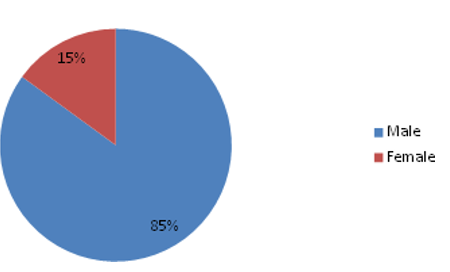
Figure 1: Gender Distribution

Figure 2: Clinical Presentation
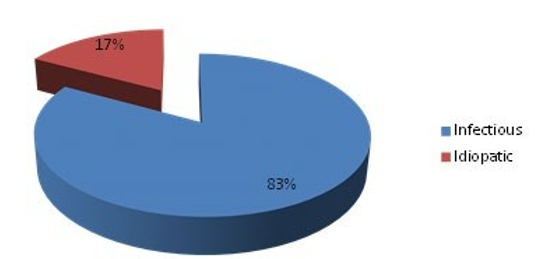
Figure 3: Etiology
Elevated jugular venous pressure (JVP) was present in 38 (58.5%) cases. Pericardial friction rub and pulsus paradoxus were recorded in 6 (9.2%) and 2 (3.1%) patients, respective- ly. Preoperative cardiac rhythm was normal in all patients. The mean systemic systolic and diastolic blood pressures were 105.8 ± 10.8 mmHg and 69.5 ± 8.7 mmHg, respectively. Left ventric- ular ejection fraction (LVEF) and right ventricular (RV) function assessments showed a median of 60.0% (IQR=55.0-65.0%) and 19.0 mm (IQR=18.0-20.0), respectively.
The most frequently reported abnormal findings on electro- cardiogram (ECG) and chest X-ray (CXR) were left atrial en- largement in 5 (7.7%) and cardiomegaly in 28 (43.1%) cases, respectively. Echocardiography showed features of effusive and calcified constrictive pericarditis in 7 and 4 patients, respective- ly, while chest computed tomography (CT) scan showed dis- seminated tuberculosis in 3 patients.
The preoperative functional status of the patients showed that the majority of patients were classified as NYHA Class III (64.6%) and 100% were ACC/AHA Stage.
Intraoperative and Postoperative Parameters
During the intraoperative period, invasive monitoring was used in 61 (93.8%) of the patients, while chest surface electrocar- diogram (ECG) was used in all patients for non-invasive mon- itoring. Sternotomy was used in 100% of patients for surgical approach, and all surgeries were elective. Total Pericardiecto- my was performed in 64 (98.5%) of the patients, while subtotal Pericardiectomy was performed in 1 (1.5%) of the patients. The mean duration of the operation was 3.3 ± 0.6 hours. Intraoper- ative rhythm status was abnormal in only one patient, who had atrial fibrillation. The majority of patients (83.1%) had etiologic evidence of pericarditis, and 41 patients were treated for tuber- culosis. Of these 41 patients, 13 had evidence of TB pericarditis on biopsy.
In 16 (24.6%) patients, extubation was delayed. Postoperative abnormal rhythm status was recorded in one patient, who had atrial fibrillation. Postoperative chest X-ray and echocardiogra- phy showed an improvement in the majority of cases, 46 (70.8%) and 60 (92.3%), respectively. The postoperative functional sta- tus of the patients showed that the majority of the patients were classified as NYHA Class I (47.7%) and Class II (43.1%). In ad- dition, 52 (80.0%) were classified as ACC/AHA Stage B. There was no major post-operative bleeding in any of the patients.
Incidence Rate of Perioperative Mortality and Complication
Of the 65 patients who underwent Pericardiectomy, 57 recov- ered and were discharged alive, 3 had complications, and 5 died. Among the 57 recovered cases, 47 had improvement in both NYHA Class and Stage, 6 had improvement in NYHA Class only, 2 had improvement in NYHA Stage only, and 2 were dis- charged in the same condition as their preoperative status (with NYHA Class II and Stage C state). The three complicated cases were due to hypocalcemia, atrial fibrillation, and acute kidney injury. The 5 deaths were mainly due to cardiac and respiratory arrest and intractable cardiac shock (Figure 4).

Figure 4: Post Pericadiectomy Outcome
The 65 patients were followed for a median inpatient follow-up duration of 9.0 days (IQR, 7.0-12.0). The incidence rate (IR) of perioperative mortality was 7.9 per 1000 person-days (PD) of observation (94% CI = 3.3 – 19.2). The incidence rate of com- plication was 4.8 per 1000 PD (95% CI = 1.5 - 14.9).
Discussion
The study included 65 patients who underwent Pericardiectomy between 2014 and 2022 at Tikur Anbessa Hospital. The major- ity of the patients were young adults with the mean age of 28,4 years. In young adults in the developing world, tuberculosis is a major cause of constrictive pericarditis. According to a review of the literature, tuberculosis accounts for up to 90% of cases of constrictive pericarditis in some developing countries [13]. Tuberculosis is a common infectious disease in the developing world, with an estimated 10 million cases per year [14]. In ad- dition to causing pulmonary tuberculosis, the bacterium Myco- bacterium tuberculosis can also infect the pericardium, leading to chronic inflammation and thickening of the pericardium [2].
Other factors that may contribute to the development of con- strictive pericarditis in young adults in the developing world in- clude poor living conditions, inadequate healthcare, and limited access to medical care. For example, individuals living in pov- erty may be more likely to be exposed to infectious agents and may be less likely to receive prompt medical care for infections, which can increase the risk of developing complications such as constrictive pericarditis.
In terms of the literature, several studies have investigated the prevalence and causes of constrictive pericarditis in the devel- oping world. For example, a retrospective study of 60 patients with constrictive pericarditis in India found that 80% of the cas- es were caused by tuberculosis [15]. Similarly, a study from Pa- kistan found that tuberculosis was the most common cause of constrictive pericarditis, accounting for 68% of cases [16].
In terms of the male predominance in constrictive pericarditis, several studies have suggested that it may be related to differ- ences in the prevalence and severity of the underlying causes of the condition between men and women. For example, tuber- culosis, which is a common cause of constrictive pericarditis in many parts of the world, has been shown to be more common and more severe in men than in women [17]. Similarly, autoim- mune diseases, which can cause chronic pericarditis, have been found to be more prevalent in women than in men, but men may be more likely to develop constrictive pericarditis as a compli- cation [18].
Another possible explanation for the male predominance in con-strictive pericarditis is related to differences in the anatomy and physiology of the pericardium between men and women. For example, some studies have suggested that men may have a larg- er pericardial space than women, which could make them more susceptible to the development of constrictive pericarditis [19]. In terms of the literature, there have been several studies inves- tigating the male predominance in constrictive pericarditis. For example, a retrospective study of 45 patients with constrictive pericarditis found that 71% of the patients were male [20]. Sim- ilarly, a retrospective study of 50 patients with constrictive peri- carditis secondary to tuberculosis found that 80% of the patients were male [21].
Overall, while the exact explanation for the male predominance in constrictive pericarditis is not fully understood, it is likely related to a combination of factors, including differences in the prevalence and severity of the underlying causes of the condition between men and women, as well as differences in the anatomy and physiology of the pericardium. Further research is needed to fully elucidate the underlying mechanisms and to develop more effective treatments for this condition.
The clinical presentation of patients with constrictive pericardi- tis can vary depending on the underlying cause of the condition. Our study showed shortness of breath was the most common presenting symptom, followed by fatigability and cough. This is consistent with previous studies that have reported dyspnea as a common symptom in patients with constrictive pericardi- tis, as well as fatigue and weakness due to the impaired cardiac function [1,22].
In terms of the duration of symptoms, the median duration upon admission was 12.3 months, which is consistent with previous studies that have reported a chronic and insidious onset of symp- toms in patients with constrictive pericarditis [18,19].
The clinical and radiological findings reported in the study are consistent with what has been previously reported in the litera- ture for constrictive pericarditis. Elevated jugular venous pres- sure (JVP) is a common finding in constrictive pericarditis and was present in over half of the cases in the study. This is con- sistent with previous studies that have reported JVP elevation in up to 90% of cases [1,18]. Pericardial friction rub and pulsus paradoxus were less commonly observed in the study, but are recognized clinical features of constrictive pericarditis [21]. The mean systemic systolic and diastolic blood pressures report- ed in the study were within the normal range, which is consistent with previous studies that have not found significant differences in blood pressure between patients with constrictive pericarditis and controls [22].
The echocardiography findings of effusive and calcified con- strictive pericarditis reported in the study are consistent with what has been previously reported in the literature. Effusive con- strictive pericarditis is characterized by the presence of pericar- dial effusion in addition to the thickened and stiff pericardium, while calcified constrictive pericarditis is characterized by the presence of calcification within the pericardium [13]. Similarly, chest computed tomography (CT) scan showing disseminated tuberculosis is consistent with previous studies that have report- ed tuberculosis as a major cause of constrictive pericarditis in the developing world [16].
The echocardiography and chest X-ray findings reported in the study are also consistent with what has been previously reported in the literature. Left atrial enlargement and cardiomegaly are commonly observed in patients with constrictive pericarditis [23,24]. Intraoperative monitoring was used in most patients, and all surgeries were elective with a mean duration of 3.3 hours. Total Pericardiectomy was performed in the majority of patients, and the majority of patients had improved functional status post- operatively, with most patients classified as NYHA Class I or II and ACC/AHA Stage B [4,25].
The incidence rate of perioperative mortality reported in this study is slightly high, but relatively comparable to previous studies. A systematic review of Pericardiectomy outcomes re- ported a perioperative mortality rate of 6.4%, which is lower than the 7.9% reported in this study [26]. This difference may be due to the small sample size and the limited resource and facili- ty, as well as the lack of high-level multidisciplinary care in the Ethiopian setting. The incidence rate of complications reported in this study is also slightly high compared to previous studies, which reported a complication rate of 2.4% in a systematic re- view of Pericardiectomy outcomes [26].
The majority of patients in this study had improved functional status postoperatively, with most patients classified as NYHA Class I or II and ACC/AHA Stage B. This finding is consistent with a systematic review of Pericardiectomy outcomes, which reported that most patients had improved functional status post- operatively [12]. However, the study did not report long-term outcomes, which are important for evaluating the effectiveness of Pericardiectomy in the end.
Conclusion
Pericardiectomy is an effective treatment for constrictive peri- carditis, with acceptable outcomes and a low mortality rate. The decision to perform Pericardiectomy should be based on a careful evaluation of the patient's clinical and imaging find- ings, and the procedure should be performed by an experienced cardio-thoracic surgeon. Further studies are needed to optimize patient selection and management and to improve long-term out- comes after Pericardiectomy. In conclusion, this study provides valuable insights into the clinical characteristics, surgical out- comes and perioperative complications of patients undergoing Pericardiectomy for constrictive pericarditis. The study high- lights that constrictive pericarditis is a serious disease, with a high proportion of infectious etiologies, particularly tuberculo- sis, in the Ethiopian population.
References
- Imazio, M., Gaita, F., & LeWinter, M. (2015). Evaluation and treatment of pericarditis: a systematic review. Jama, 314(14), 1498-1506.
- Mayosi, B. M., Burgess, L. J., & Doubell, A. F. (2005). Tu-berculous pericarditis. Circulation, 112(23), 3608-3616.
- Adler, Y., Charron, P., Imazio, M., Badano, L., Barón-Es- quivias, G., Bogaert, J., ... & Tomkowski, W. (2016). 2015 esc guidelines for the diagnosis and management of pericar- dial diseases: The task force for the management of infective endocarditis of the european society of cardiology (ESC): Endorsed by: European association for cardio-thoracic sur- gery (EACTS). ROSSIJSKIJ KARDIOLOGICESKIJ ZU- RNAL, 133(5), 117-162.
- Imazio, M., Brucato, A., Maestroni, S., Cumetti, D., Belli, R., Trinchero, R., & Adler, Y. (2011). Risk of constrictive pericarditis after acute pericarditis. Circulation, 124(11), 1270-1275.
- Ling, L. H., Oh, J. K., Schaff, H. V., Danielson, G. K., Ma-honey, D. W., Seward, J. B., & Tajik, A. J. (1999). Con- strictive pericarditis in the modern era: evolving clinical spectrum and impact on outcome after pericardiectomy. Circulation, 100(13), 1380-1386.
- Talreja, D. R., Edwards, W. D., Danielson, G. K., Schaff, H. V., Tajik, A. J., Tazelaar, H. D., ... & Oh, J. K. (2003). Con- strictive pericarditis in 26 patients with histologically nor- mal pericardial thickness. Circulation, 108(15), 1852-1857.
- Sagristà-Sauleda, J., Angel, J., Permanyer-Miralda, G., & Soler-Soler, J. (1999). Long-term follow-up of idiopathic chronic pericardial effusion. New England Journal of Med- icine, 341(27), 2054-2059.
- Davidoff, R., Palacios, I., Southern, J., Fallon, J. T., Newell, J., Dec, G. W. (1993). Constrictive pericarditis presenting as restrictive cardiomyopathy: diagnosis and management. Am Heart J, 126(3 Pt 1), 740-745.
- Kusumoto, F. M., Schoenfeld, M. H., Barrett, C., Edgerton,J. R., Ellenbogen, K. A., Gold, M. R., ... & Varosy, P. D. (2019). 2018 ACC/AHA/HRS guideline on the evaluation and management of patients with bradycardia and cardi- ac conduction delay: executive summary: a report of the American College of Cardiology/American Heart Associ- ation Task Force on Clinical Practice Guidelines, and the Heart Rhythm Society. Journal of the American College of Cardiology, 74(7), 932-987.
- Cho, Y. H., Schaff, H. V., Dearani, J. A., et al. (2013). Ear- ly and late outcomes after primary and redo pericardiecto- my in the pediatric population. J Thorac Cardiovasc Surg, 146(6), 1372-1377.
- Tsang, T. S., Oh, J. K., Seward, J. B., & Tajik, A. J. (2000).Diagnostic value of echocardiography in cardiac tampon-ade. Herz, 25, 734-740.
- Sagristà-Sauleda, J., Mercé, A. S., & Soler-Soler, J. (2011). Diagnosis and management of pericardial effusion. World journal of cardiology, 3(5), 135-143.
- Maisch, B., SeferoviÄ?, P. M., RistiÄ?, A. D., Erbel, R., Rien-müller, R., Adler, Y., ... & Spodick, D. H. (2004). Guidelines on the diagnosis and management of pericardial diseases executive summary: the Task Force on the Diagnosis and Management of Pericardial Diseases of the European Soci- ety of Cardiology. European heart journal, 25(7), 587-610.
- World Health Organization. Tuberculosis.
- Talwar, K. K., Chopra, P., Tomar, A. S., Kumar, S., Venugo- pal, P. (1983). Constrictive pericarditis in the tropics: etiolo- gy and clinical features. Jpn Heart J, 24(5), 727-733.
- Aslam, S., Haque, S. A., Bilal, M., Khan, M. A., Samad, A. (2010). Etiology and outcome of constrictive pericarditis in Rawalpindi, Pakistan. J Ayub Med Coll Abbottabad, 22(4), 44-47.
- Sharma, S. K., & Mohan, A. (2004). Extrapulmonary tuber-culosis. Indian Journal of Medical Research, 120(4), 316.
- Imazio, M., Adler, Y. (2013). Management of pericardial diseases. Eur Heart J, 34(16), 1186-1197.
- Khandaker, M. H., Espinosa, R. E., Nishimura, R. A., Sinak,L. J., Hayes, S. N., Melduni, R. M., & Oh, J. K. (2010).Pericardial disease: diagnosis and management. In MayoClinic Proceedings, 85(6), 572-593.
- Oh, J. K., Hatle, L. K., Seward, J. B., Danielson, G. K.,Schaff, H. V., Reeder, G. S., & Tajik, A. J. (1994). Diag- nostic role of Doppler echocardiography in constrictive pericarditis. Journal of the American College of Cardiology, 23(1), 154-162.
- Sagristà-Sauleda, J., Barrabés, J. A., Permanyer-Miralda, G., & Soler-Soler, J. (1993). Purulent pericarditis: review of a 20-year experience in a general hospital. Journal of the American College of Cardiology, 22(6), 1661-1665.
- Bashi, V. V., John, S., Ravikumar, E., et al. (1988). Blood pressure in constrictive pericarditis and restrictive cardio- myopathy. Am J Cardiol, 61(1), 75-78.
- Imazio, M., Brucato, A., Barbieri, A., Ferroni, F., Maestroni, S., Ligabue, G., ... & Belli, R. (2013). Good prognosis for pericarditis with and without myocardial involvement: re- sults from a multicenter, prospective cohort study. Circula- tion, 128(1), 42-49.
- Sagristà-Sauleda, J., Angel, J., Sambola, A., & Per- manyer-Miralda, G. (2008). Hemodynamic effects of vol- ume expansion in patients with cardiac tamponade. Circula- tion, 117(12), 1545-1549.
- Imazio, M., Brucato, A., Forno, D., Ferro, S., Belli, R., Trin- chero, R., & Adler, Y. (2012). Efficacy and safety of col- chicine for pericarditis prevention. Systematic review and meta-analysis. Heart, 98(14), 1078-1082.
- Imazio, M., Gaita, F. (2010). Diagnosis, Treatment, and Follow-Up of Acute Pericarditis. Circulation, 121(24), 784- 791.