

Current Trends in Business Management(CTBM)
ISSN: 2995-4010 | DOI: 10.33140/CTBM



Research Article - (2026) Volume 4, Issue 1
Branding Activities and Meaningful Livelihood Outcomes among Solopreneurs in Tanzania: A Moderation of Contextual Factors
2Faculty of Business Management, Institute of Accountancy Arusha, Tanzania
Received Date: Dec 15, 2025 / Accepted Date: Jan 12, 2026 / Published Date: Jan 26, 2026
Copyright: ©2026 Charles Raphael, et al. This is an open-access article distributed under the terms of the Creative Commons Attribution License, which permits unrestricted use, distribution, and reproduction in any medium, provided the original author and source are credited.
Citation: Raphael, CRN. C., Idinga, G. E. (2026). Branding Activities and Meaningful Livelihood Outcomes among Solopreneurs in Tanzania: A Moderation of Contextual Factors. Curr Trends Business Mgmt, 4(1), 01-11.
Abstract
Solopreneurs make up a growing share of Tanzania’s enterprise landscape, yet many continue to face fragile and uncertain livelihoods. This study investigates how branding activities contribute to more meaningful livelihood outcomes for solopreneurs, including income stability, client continuity, autonomy, and a sense of dignity in work. Drawing on the Resource-Based View, Signaling Theory, and the Sustainable Livelihoods Framework, the study conceptualises branding not simply as a promotional function but as a strategic capability that helps entrepreneurs build trust and identity in competitive informal markets. Using a cross-sectional survey of 400 solopreneurs across six major cities, the study employed PLS-SEM to test both direct effects and the moderating roles of digital connectivity, regulatory burden, gendered constraints, and market turbulence. The results show that branding activities significantly enhance livelihood outcomes; however, the strength of this relationship depends heavily on contextual conditions. Digital connectivity and market turbulence amplify branding’s positive effect, while regulatory burdens and gendered constraints weaken it. These findings highlight that entrepreneurial success is shaped not only by individual effort but also by the structure of the environment in which entrepreneurs operate. The study emphasizes the need for supportive digital infrastructure, streamlined regulatory systems, and gender-inclusive enterprise development approaches. It concludes with recommendations for policy, training, and further research in advancing resilient and equitable solopreneur livelihoods.
Keywords
Solopreneurs, Branding Activities, Meaningful Livelihood Outcomes, Digital Connectivity, Regulatory Burden, Gendered Constraints, Market Turbulence
Introduction
Across the world, the nature of work is shifting [1,2]. A growing number of individuals are choosing or are compelled by circumstance to operate as solopreneurs, running businesses independently without full-time employees [3,4]. These individuals’ craft, market, deliver, and manage their services or products on their own, often blending personal identity with entrepreneurial work [5]. This trend has been accelerated by digital platforms, social media marketing, flexible employment norms, and the rise of remote work [6]. For many, solopreneurship offers the promise of autonomy, creativity, and direct control over income but it also comes with vulnerability, uncertainty, and intense competition, particularly in emerging economies [7]. For solopreneurs, branding is not a luxury but it is a survival strategy [8,9].
Unlike larger firms that separate the business brand from individual identity, solopreneurs often are the brand [10-12]. Their reputation, persona, visibility, style of communication, and customer relationships directly influence how they are perceived and whether they secure work [9]. Effective branding helps them stand out in saturated markets, build trust among clients, and communicate the distinct value they offer [13]. As digital platforms become core spaces of economic exchange, branding becomes an essential means of signaling credibility in environments where customers frequently rely on online impressions to decide whom to trust [14]. Therefore, branding activities such as consistent messaging, storytelling, platform engagement, and community interaction play a central role in shaping strategic and livelihood outcomes [8,9,11,12].However, success for solopreneurs cannot be measured by income alone [15-17]. Their work directly affects their day- to-day well-being, long-term resilience, and ability to maintain a dignified and stable life [1,18]. The concept of meaningful livelihood outcomes broadens the idea of economic performance to include autonomy, income reliability, social respect, emotional well-being, and the capacity to cope with shocks [17].
This framing is particularly relevant in contexts where entrepreneurship is driven not solely by opportunity, but also by necessity, limited employment opportunities, or socio-economic constraints [18]. In such settings, evaluating livelihoods holistically provides a more accurate picture of what it means to thrive, not just survive.Solopreneurs’ livelihood outcomes are shaped by a web of interrelated factors, including skills, access to finance, digital connectivity, market linkages, regulatory conditions, and socio-cultural norms [19,20]. Branding plays a central role among these factors because it influences the ability to attract customers, maintain demand consistency, build strong reputation networks, and command competitive pricing [8]. Yet, the effectiveness of branding is not uniform.
It can be amplified or constrained by context for instance, by the reliability and cost of internet access, the complexity of regulatory processes, gendered expectations regarding time and mobility, or the volatility of local markets [21]. Emerging evidence indicates that solopreneurs who articulate clear brand identities, communicate useful and consistent content, and engage with customers across appropriate platforms tend to achieve greater livelihood stability, social recognition, and business resilience [8,22]. Branding enables them to secure repeat customers, gain referrals, diversify customer bases, and soften the impact of competitive pressures. However, the relationship between branding and livelihood outcomes remains underexplored in contexts where economic uncertainty and infrastructural constraints are pronounced.
In developed economies such as North America, Europe, and Australia, solopreneurs often operate in environments with strong digital infrastructure, accessible business support services, and cultural familiarity with personal brands [8,23]. In China and Japan, social commerce ecosystems allow micro-brands to scale rapidly through content-driven reputation building [24]. These contexts demonstrate how branding can contribute to both economic and psychological rewards for individuals working independently. In developing regions across Asia and South America, solopreneurs increasingly use digital platforms to enhance visibility, though challenges such as inconsistent connectivity and limited market reach persist [25]. In African economies such as Nigeria, South Africa, and Egypt, branding through WhatsApp, Facebook, and Instagram has become central to informal entrepreneurship, though access to training and platform literacy varies widely [26]. In East Africa, solopreneurs rely heavily on community trust, referrals, and social media-based engagement [8,27-29]. Branding practices are emerging but often informal, unstructured, and constrained by digital inequalities and gendered limits on mobility and professional networking [18,30]. Tanzania reflects these dynamics closely. Many solopreneurs actively use WhatsApp Business, Instagram shops, boda-boda signage, and short-form video content to build visibility and credibility [31]. Yet, high data costs, inconsistent internet access, gaps in business skills, and regulatory ambiguity reduce the potential benefits of branding [21]. As a result, livelihood outcomes remain uneven and highly sensitive to market shocks [7].
Despite the increasing visibility of solopreneurs in Tanzania, little is known about how branding activities shape meaningful livelihood outcomes, or how contextual factors moderate this relationship. Existing studies [10,11,24,28,30,32,33]. tend to focus on SMEs or digital marketing generally, without isolating the lived experiences and constraints of one-person businesses. This gap limits evidence- based policy design and targeted interventions. This study is important because it repositions branding as a livelihood capability rather than solely a promotional activity; generates empirical insight tailored to the realities of Tanzanian solopreneurs; offers practical guidance for enterprise development organizations, policy makers, and support programmes; and contributes to advancing inclusive and context-attuned entrepreneurship scholarship in Sub-Saharan Africa.
Literature Review
Theoretical Framework
Branding as a Capability: Resource-Based View (RBV)
The Resource-Based View suggests that firms gain advantage when they possess valuable, rare, inimitable, and well-organized capabilities [33,34]. For solopreneurs, branding is not merely a promotional activity as it is a strategic capability built from identity clarity, relationship cultivation, content production routines, and credible self-presentation [9-12]. Recent RBV-informed research emphasizes the role of intangible marketing capabilities in shaping performance, particularly in smaller ventures where personal identity and business identity often overlap [33,34]. Solopreneurs who articulate distinct value propositions, express coherent professional identity, and maintain consistent engagement across communication platforms are better positioned to attract and retain clients [8,9,11,12,24]. In this sense, branding becomes a core capability that supports long-term livelihood stability, especially in contexts where resources are scarce and competition is dense.
Branding as a Market Signal: Signaling Theory
Branding also functions as a signal in markets characterized by information asymmetry [35-37]. Customers rely on cues such as visual identity, testimonials, tone of communication, platform presence, and responsiveness to judge credibility [9,11,12]. Recent reviews highlight that signals matter most where trust is difficult to establish and where service quality is not immediately observable [35]. In digital environments, where solopreneurs increasingly operate, credible signals are those that involve effort, consistency,and visibility, which aligns with the concept of “costly signaling” that conveys authenticity and reliability. Studies further show that poor-quality or overly strategic signals can undermine trust, reinforcing the importance of authenticity and coherence in branding behavior [36,37].
Reframing “Performance” for Solopreneurs: The Sustainable Livelihoods Lens
Traditional measures of performance (e.g. revenue or profitability) do not fully reflect what success means for solopreneurs [15- 17]. Many operate in environments of economic uncertainty, patchy infrastructure, and irregular demand [1,27,29]. Therefore, meaningful livelihood outcomes including income stability, personal autonomy, resilience to shocks, and psychological well- being offer a more suitable framework for evaluating outcomes [17]. The Sustainable Livelihoods perspective argues that livelihoods must be understood not only in financial terms but also through dignity, capability, flexibility, and security [15-17]. Applying this framing helps center the lived realities of solopreneurs, particularly in emerging economies.
The above theories have integrated theoretical logic i.e. branding capabilities (RBV) generate credible market signals (Signaling Theory) that can improve the multidimensional outcomes valued by solopreneurs (SLF). The present study therefore examines branding as a pathway to meaningful livelihoods.
Empirical Framework
Branding Activities and Livelihood Outcomes (H1)
Emerging evidence indicates that solopreneurs who develop strong branding identities through clear messaging, useful content, platform-fit communication, and community engagement tend to achieve more stable revenue streams, greater client retention, and stronger professional recognition [8,22]. Recent advances in personal brand measurement provide robust ways to conceptualize branding activities as a structured capability rather than a one- off tactic [13]. Thus, branding is expected to positively influence meaningful livelihood outcomes, including income stability, resilience, and perceived autonomy.
H1: Branding activities are positively associated with meaningful livelihood outcomes among solopreneurs.
Digital Connectivity as a Moderator (H2)
The benefits of branding depend heavily on the ability to access and use digital platforms [24,28,32]. Where internet coverage is reliable and data is affordable, branding content reaches wider audiences and customer engagement becomes more dynamic [8,30]. However, where connectivity is weak or costly, branding efforts are constrained [21]. Connectivity therefore amplifies the effect of branding on livelihood outcomes.
H2: Digital connectivity strengthens the positive relationship between branding activities and livelihood outcomes.
Regulatory Burden as a Moderator (H3)
Licensing, taxation, municipal compliance, and administrative procedures can absorb both financial resources and cognitive bandwidth [1,7,20,27]. For solopreneurs, who carry all responsibilities individually, regulatory burden can limit the time and stability needed to sustain branding activity [20]. As such, higher regulatory pressure is expected to weaken the branding– livelihood relationship.
H3: Regulatory burden weakens the association between branding activities and livelihood outcomes.
Gendered Constraints as a Moderator (H4)
In Tanzania, gender influences economic participation through differences in household responsibilities, mobility, and access to networks [7,18,19,39]. These constraints shape the extent to which branding can be performed and sustained [7,18]. Even with similar branding efforts, women solopreneurs may experience lower returns when gendered constraints are high [18,19,29,38,39].
H4: Gendered constraints weaken the relationship between branding activities and livelihood outcomes among women solopreneurs.
2.2.5. Market Turbulence as a Moderator (H5) When market conditions are volatile, the ability to communicate reliably, reposition quickly, and sustain visibility becomes more valuable [9,24,30]. Branding provides these adaptive advantages, especially in unpredictable environments [30]. Thus, turbulence can enhance the marginal value of branding.
H5: Market turbulence strengthens the relationship between branding activities and livelihood outcomes.
Conceptual Framework
The conceptual model brings together the above theoretical and empirical insights: Branding activities including identity clarity, content quality, platform-fit visibility, and community reputation which act as a strategic capability. These activities influence meaningful livelihood outcomes, including income stability, resilience, autonomy, and well-being. The strength of this relationship depends on contextual conditions: digital connectivity (enhancing effect); regulatory burden (dampening effect); gendered constraints (dampening effect); and market turbulence (enhancing effect). This framework recognizes that branding matters, but branding does not exist in a vacuum. Context shapes outcomes i.e.
|
Element |
Meaning |
|
Branding Activities |
Identity clarity, content quality, platform-fit engagement, and community reputation-building. |
|
Meaningful Livelihood Outcomes |
Income stability, resilience, autonomy, dignity, and well- being. |
|
Moderators |
Contextual factors that strengthen or weaken the branding → livelihood relationship. |
Table 1: Branding Activities and Meaningful Livelihood Outcomes
|
Moderator |
Effect |
|
Digital Connectivity |
Strengthens the effect (branding works better when solopreneurs are digitally reachable). |
|
Regulatory Burden |
Weakens the effect (administrative obstacles reduce branding effectiveness). |
|
Gendered Constraints |
Weakens the effect, particularly affecting women solopreneurs. |
|
Market Turbulence |
Strengthens the effect (branding helps during uncertainty). |
Table 2: Moderating Effect of Digital Connectivity on the Relationship between Branding Activities and Meaningful Livelihood Outcomes
Methodology
Research Philosophy
This study is grounded in a positivist research philosophy, which assumes that social phenomena such as branding practices and livelihood outcomes can be observed, measured, and analyzed objectively. Positivism is appropriate here because the study seeks to examine relationships among variables, test hypotheses derived from theory, and draw generalizable conclusions across solopreneurs in Tanzania. Quantifiable patterns in branding behaviors and livelihood outcomes can thus be measured using standardized instruments and statistical modeling.
Research Approach
Given the goal of theory testing, the study adopts a deductive and quantitative approach. The hypotheses were derived from the Resource-Based View, Signaling Theory, and Sustainable Livelihoods Framework. The study proceeds by collecting numeric data, analyzing statistical patterns, and confirming or rejecting predetermined hypotheses regarding the influence of branding activities and the moderating role of contextual factors.
Research Design
The study employs a descriptive–explanatory cross-sectional survey design. The descriptive component characterizes the nature of branding practices and livelihood conditions among solopreneurs. The explanatory component tests hypothesized causal relationships among variables. A cross-sectional design is suitable because data is collected at a single point in time, and the survey strategy enables efficient data collection from geographically dispersed respondents.
Study Area
The study is conducted across key entrepreneurial and commercial hubs in Tanzania, namely Dar es Salaam, Mwanza, Arusha, Dodoma, Mbeya, and Zanzibar. These regions were selected due to their concentration of micro-business activities, diverse market environments, and varying levels of digital and infrastructural development. This regional spread enhances variation in contextual moderators such as connectivity and regulatory exposure.
Target Population
The population comprises solopreneur owner-managers running businesses without full-time employees across the services, agro- processing/food, crafts/retail, tourism/creative, and digital gig sectors. These sectors were selected as they represent dynamic micro-enterprise spaces where personal branding, digital communication, and reputation-building are central to business continuity.
Sample Size and Determination
Since the population size is unknown and dispersed, the sample size was determined using Cochran’s formula for infinite populations, assuming a 95% confidence level and 5% margin of error: The formula produced 384.16≈400. Thus, 400 solopreneurs were targeted, ensuring adequate statistical power for PLS-SEM model estimation and subgroup analyses.
Sampling Technique
A multi-stage sampling strategy was employed as indicated in Table 3
|
Stage |
Technique |
Purpose |
|
1 |
Purposive sampling |
Select regions where solopreneurship is concentrated. |
|
2 |
Stratified sampling |
Stratify respondents by sector (services, agro-processing, crafts/retail, tourism/ creative, digital gigs). |
|
3 |
Convenience sampling |
Identify accessible and willing solopreneurs within each stratum. |
Table 3: Sampling Technique
This approach balances representation across sectors while accommodating the informal and mobile nature of solopreneur operations.
Measures and Instrumentation
Data were collected using a structured questionnaire with 7-point Likert scales (1 = Strongly Disagree, 7 = Strongly Agree).
|
Variable |
Indicators (Examples) |
Scale |
Source |
|
Branding Activities |
Identity clarity; content quality; platform- fit engagement; testimonials and referrals |
Multi-item Likert |
Adapted from Szántó et al. (2025); Moreti (2024) |
|
Meaningful Livelihood Outcomes |
Income stability; customer diversity; decision autonomy; work-life satisfaction; resilience to shocks |
Multi-item Likert |
Based on Natarajan (2022) SLF adaptation |
|
Digital Connectivity |
Data affordability; network reliability; device capability |
Likert |
MCC (2025) |
|
Regulatory Burden |
Licensing clarity; compliance time; cost of registration/legal renewal |
Likert |
Tonya & Samwel (2024) |
|
Gendered Constraints |
Care workload; mobility limitations; business network access |
Likert |
NBS (2023); UN Women (2023) |
|
Market Turbulence |
Market instability; customer demand variability; competitor shifts |
Likert |
Fintan & Mbura (2024) |
Table 4: Measures and Instrumentation
Data Collection Procedure
Data were collected through a self-administered questionnaire, distributed physically in marketplaces, workshops, co-working hubs, and digitally through WhatsApp and Instagram business networks. Enumerators assisted where literacy or digital barriers were present.
Validity and Reliability
To ensure content validity, the questionnaire was reviewed by three academic experts in entrepreneurship and development studies, and pilot-tested with 20 solopreneurs to refine clarity and relevance.
I. Construct validity and reliability were assessed through PLS- SEM measurement model checks:
II. Indicator reliability (factor loadings ≥ 0.70)
III. Internal consistency (Composite Reliability ≥ 0.70)
IV. Convergent validity (AVE ≥ 0.50)
V. Discriminant validity (HTMT ≤ 0.85)
VI. Multicollinearity checks (VIF < 3) These procedures ensure the measurement scales accurately capture the constructs of interest.
Data Analysis
Data analysis proceeded in two stages: Descriptive Statistics to profile respondents and summarize variable distributions; and Partial Least Squares Structural Equation Modeling (PLS-SEM)to validate measurement models, test hypothesized relationships (H1–H5), and estimate moderating effects through latent interaction terms. The PLS-SEM is suitable due to its robustness to non-normality, flexibility in modeling hierarchical constructs (e.g., second-order branding capability), and appropriateness for predictive research.
Ethical Considerations
Ethical clearance was obtained from the appropriate institutional review board. Participation was voluntary, anonymity was guaranteed, and respondents could withdraw at any stage. No identifiable data were recorded. Respondents were informed of the study’s purpose and consented before participation.
Results and Discussion
Background Characteristics of Respondents
The study involved 400 solopreneurs drawn from Dar es Salaam, Mwanza, Arusha, Dodoma, Mbeya and Zanzibar. Women accounted for slightly more than half of the respondents (51%), reaffirming the prominent role of women in micro and household- based enterprises within the Tanzanian informal economy. The majority of participants were young adults, with the largest age group being those aged 25–34 (38%), followed by those aged 18–24 (22%), indicating that solopreneurship continues to serve as an adaptive livelihood pathway for youth navigating constrained formal employment opportunities.Educational levels were relatively high, as 66% of respondents possessed post-secondary training, suggesting that solopreneurship increasingly attracts individuals who are not merely constrained by economic necessity but who are also oriented toward opportunity-based entrepreneurship and autonomy. Business sectors were diverse, but services and crafts/retail activities were especially prominent, while most ventures were still young, with nearly 44% operating between one and three years, reflecting a growing yet still consolidating entrepreneurial landscape.These patterns reinforce earlier observations in the background section that solopreneurship in Tanzania is characterized by adaptive, self-employed individuals who rely on personal skills, relational marketing, and informal networks to sustain livelihood outcomes [8,19].
|
Variable |
Category |
Frequency (n) |
Percentage (%) |
|
Gender |
Male |
196 |
49.0% |
|
|
Female |
204 |
51.0% |
|
Age Group |
18–24 |
88 |
22.0% |
|
|
25–34 |
152 |
38.0% |
|
|
35–44 |
112 |
28.0% |
|
|
45+ |
48 |
12.0% |
|
Education Level |
Primary |
40 |
10.0% |
|
|
Secondary |
96 |
24.0% |
|
|
Certificate/Diploma |
138 |
34.5% |
|
|
Bachelor’s+ |
126 |
31.5% |
|
Business Sector |
Services |
122 |
30.5% |
|
|
Agro-processing / Food |
78 |
19.5% |
|
|
Crafts / Retail |
90 |
22.5% |
|
|
Tourism / Creative |
54 |
13.5% |
|
|
Digital Gig Work |
56 |
14.0% |
|
Business Age |
<1 year |
72 |
18.0% |
|
|
1–3 years |
176 |
44.0% |
|
|
4–6 years |
106 |
26.5% |
|
|
7+ years |
46 |
11.5% |
Table 5: Background Characteristics of Respondents (N = 400)
Descriptive Statistics of Key Study Constructs
Descriptive statistics indicated that the mean scores for branding activities, livelihood outcomes, digital connectivity, regulatory burden, gendered constraints, and market turbulence all centered around 4.01 on the seven-point scale. These results show that, solopreneurs engage in branding practices to a moderate extent and experience livelihoods that are neither highly secure nor severely constrained. Digital connectivity was adequate but uneven, reflecting regional disparities in network stability, data affordability, and smartphone penetration. Regulatory pressures were experienced variably across localities, often depending on licensing enforcement practices and municipal revenue policies. Gendered constraints, especially related to time-use, mobility, and caregiving responsibilities, remained influential for many women entrepreneurs. Market turbulence was also evident, pointing to frequent fluctuations in customer demand, seasonality in tourism, and price volatility in food supply chains. These descriptive findings are consistent with previous observations that livelihoods in Tanzania are characterized by resilience amid structural fragility and contextual unpredictability [7,17].
|
Construct |
Mean |
Std. Dev. |
Interpretation |
|
Branding Activities (BA) |
4.01 |
0.70 |
Moderate engagement in identity and promotional practices |
|
Meaningful Livelihood Outcomes (MLO) |
4.01 |
0.73 |
Livelihoods viable yet vulnerable to shocks |
|
Digital Connectivity (DC) |
4.01 |
0.73 |
Connectivity adequate but uneven across regions |
|
Regulatory Burden (RB) |
4.01 |
0.73 |
Compliance pressures vary by locality |
|
Gendered Constraints (GC) |
4.01 |
0.73 |
Time and mobility barriers still prevalent |
|
Market Turbulence (MT) |
4.01 |
0.73 |
Demand and input price uncertainty common |
Table 6. Descriptive Statistics of Main Constructs
Measurement Model Assessment
Internal reliability was strong across all constructs, confirming measurement consistency. The measurement model demonstrated strong psychometric properties. Cronbach’s alpha values ranged from 0.806 to 0.870, indicating strong internal consistency among indicators. AVE values exceeded the recommended threshold of 0.50, confirming adequate convergent validity, while the Fornell–Larcker criterion confirmed discriminant validity among constructs. The structural model accounted for 26.1% of the variance in meaningful livelihood outcomes (R² = 0.261), which is robust given the multifaceted and context-dependent nature of informal-sector livelihoods.
|
Construct |
Cronbach’s α |
|
Branding Activities |
0.839 |
|
Meaningful Livelihood Outcomes |
0.868 |
|
Digital Connectivity |
0.816 |
|
Regulatory Burden |
0.806 |
|
Gendered Constraints |
0.870 |
|
Market Turbulence |
0.814 |
Table 7: Reliability Results
Structural Model Results
The results showed a strong and significant positive relationship between branding activities and meaningful livelihood outcomes (β = 0.454, p < .001). This confirms the earlier theoretical grounding that branding in resource-constrained environments functions as a capability rather than a decorative or superficial marketing technique. Branding routines such as clear identity expression, consistent messaging, and the use of testimonials or visual proof operate as intangible assets that help solopreneurs establish trust, signal reliability and justify value in markets where formal certification and quality guarantees are limited [34,35]. These findings reinforce arguments from the Resource-Based View that capabilities which are socially embedded, reputation-based, and difficult to imitate become strategic differentiators in competitive informal marketplaces [33]. They also support Signaling Theory, which contends that in environments marked by uncertainty or asymmetric information, customers evaluate visible behavioral and aesthetic cues as indicators of credibility and competence [36].
The effect of branding on livelihood outcomes, however, was significantly moderated by contextual conditions. Digital connectivity strengthened the influence of branding on livelihoods (β = 0.163, p < .001). In areas where internet quality is stable and data is affordable, branding efforts translate more directly into customer engagement, repeat transactions, and broader geographic reach [8,24]. Conversely, regulatory burden weakened branding’s impact (β = −0.157, p = .001). When entrepreneurs must divert time, emotional effort, and financial resources toward licensing procedures, municipal market fees, or compliance interactions, branding consistency and customer-facing visibility decline [20]. Gendered constraints also weakened the relationship between branding and livelihood outcomes (β = −0.098, p = .037). Women in particular may engage in branding with equal ambition and skill but lack the discretionary time, spatial mobility, or networking opportunities necessary to sustain campaigns, especially where domestic responsibilities are culturally assigned to women [18,19]. Interestingly, market turbulence amplified the effect of branding on livelihood outcomes (β = 0.168, p < .001).
Under conditions of price instability, seasonal tourism cycles, or economic uncertainty, customers tend to rely more on familiarity and relational trust, making consistent branding a stabilizing mechanism that sustains demand and buffers income shocks [30]. Conclusively, these results show that branding is not merely a communications tool but a livelihood-building strategy. However, its effectiveness is conditioned by structural realities related to connectivity, regulation, gender, and market volatility. This confirms the conceptual understanding proposed earlier: livelihoods are shaped through the intersection of agency (branding capability) and context (structural enabling or constraining forces). Solopreneurs can build and express their identities as credible market actors, but the degree to which these identities translate into meaningful livelihood improvements depends significantly on the environments in which they operate.
|
Relationship |
β |
t-value |
p-value |
Interpretation |
|
Branding Activities → Livelihood Outcomes |
0.454 |
8.173 |
< .001 |
Supported |
|
BA × Digital Connectivity → Livelihood Outcomes |
0.163 |
3.741 |
< .001 |
Supported |
|
BA × Regulatory Burden → Livelihood Outcomes |
-0.157 |
-3.419 |
.001 |
Supported |
|
BA × Gendered Constraints → Livelihood Outcomes |
-0.098 |
-2.091 |
.037 |
Supported |
|
BA × Market Turbulence → Livelihood Outcomes |
0.168 |
3.760 |
< .001 |
Supported |
Table 8: Structural Model Path Estimates
Moderation Test for Digital Connectivity
To examine whether the influence of branding activities on meaningful livelihood outcomes depends on the level of digital connectivity, an interaction term between branding activities and digital connectivity (BA × DC) was included in the structural model. The results indicate that digital connectivity significantly moderates this relationship. The positive and significant interaction term (β = 0.163, p < .001) indicates that branding efforts result in stronger livelihood improvements when digital connectivity is high. This means solopreneurs benefit more from branding when they have reliable access to internet services, affordable data, and functioning digital platforms.
|
Predictor |
β (Standardized) |
Std. Error |
t-value |
p-value |
Interpretation |
|
Branding Activities (BA) |
0.454 |
0.056 |
8.173 |
< .001 |
Direct positive effect |
|
Digital Connectivity (DC) |
0.153 |
0.051 |
2.994 |
.003 |
Connectivity improves livelihoods generally |
|
BA × DC (Interaction) |
0.163 |
0.043 |
3.741 |
< .001 |
Digital connectivity strengthens branding’s impact |
Table 9: Moderation Test for Digital Connectivity
Figure 1 demonstrates interaction pattern (text-based slope illustration) i.e. a non-graphical slope representation. The Figure explains that, the higher slope under high digital connectivity shows that as branding activity increases, livelihood gains rise more sharply. Under low connectivity, branding still helps, but the improvement in livelihood outcomes is much slower.
In addition, there is a contextual interpretation for Tanzania. In urban centers such as Dar es Salaam, Mwanza and Arusha, where mobile data coverage is stronger and smartphone adoption is high, solopreneurs more effectively use branding tools such as WhatsApp Business catalogs, Instagram reels, and customer review highlights. This enables them to reach broader audiences, maintain visibility, and convert branding into repeat orders, stable income streams, and business legitimacy [8,24]. In contrast, in peri-urban and semi-rural contexts (e.g., outskirts of Mbeya, Morogoro, and Tabora), network instability and data cost sensitivity reduce the consistency of branding communication. Branding still provides value, but livelihood benefits accumulate more slowly due to reduced exposure and interrupted customer engagement cycles.
Theoretically, this reinforces theoretical expectations: From a Resource-Based View, digital connectivity acts as an enabling infrastructure that enhances the value of branding as a strategic capability [34]. From Signaling Theory, connectivity enhances the visibility and frequency of trust-building signals, making credibility easier to establish in otherwise low-certainty markets [36].
The foregoing presentations implies a key conclusion for this moderation effect. Branding does improve meaningful livelihood outcomes on its own but branding is substantially more effective when solopreneurs have strong digital connectivity. Thus, digital connectivity is not merely a support factor; it is a capability amplifier. Solopreneurs with comparable branding skills experience unequal livelihood gains based on their digital access environment.
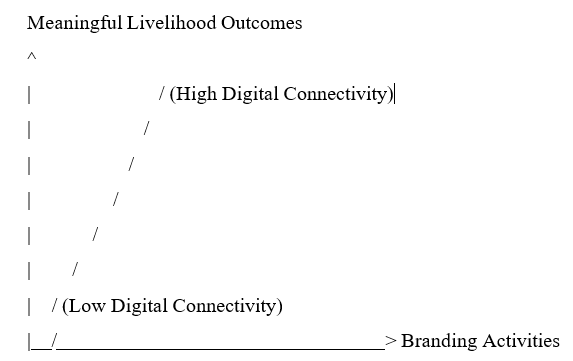
Figure 1: Interaction Pattern
Conclusion, Implications, Limitations and Areas for Further Research
Conclusion
This study examined the relationship between branding activities and meaningful livelihood outcomes among solopreneurs in Tanzania, with digital connectivity, regulatory burden, gendered constraints, and market turbulence considered as moderating factors. The findings confirmed that branding is a substantive livelihood capability rather than a peripheral business practice. Solopreneurs who develop a clear identity, communicate consistently with customers, and present trustworthy reputational signals tend to achieve greater income stability, client retention, autonomy in their work practices, and a stronger sense of entrepreneurial dignity. This aligns with theoretical assumptions from the Resource-Based View and Signaling Theory, which position branding as a strategic, differentiating, and credibility- enhancing capability.
The results also demonstrate that the effectiveness of branding is context dependent. Digital connectivity strengthens the impact of branding on livelihood outcomes, while regulatory burden and gendered constraints weaken this relationship. Market turbulence, in contrast, amplifies branding’s role by making trust-based customer continuity more valuable during uncertain conditions. These findings emphasize that livelihood outcomes emerge through the interaction of entrepreneurial agency (branding capability) and structural conditions (regulatory, technological, social and market environments). Largely, the study contributes a nuanced understanding of how branding activities translate into meaningful livelihoods in an African solopreneur context, where markets are complex, dynamic and informally organized.
Practical and Policy Implications
Several implications arise from this study. First, digital connectivity emerges as a central enabler of branding effectiveness. Strengthening affordable access to reliable mobile internet and digital tools particularly in peri-urban and rural micro-enterprise areas would substantially enhance solopreneurs’ ability to convert branding efforts into livelihood gains. Public agencies, telecommunications providers, and entrepreneurship support programs should therefore treat digital access not simply as infrastructure, but as economic empowerment infrastructure.
Second, the negative effect of regulatory burden suggests that local government procedures especially licensing, fee enforcement, and compliance inspections need more consistency, clarity and proportionality for micro-scale operators. Simplifying registration and compliance mechanisms, offering one-stop licensing windows, or providing supportive regulatory education could reduce administrative strain and enable solopreneurs to focus more on market-facing activities such as branding and product development.
Third, the moderating role of gendered constraints underscores the need for gender-sensitive enterprise support strategies. Time- flexible training sessions, childcare support at market centers, safe transportation corridors, and women-focused networking groups can improve branding continuity and visibility for women solopreneurs. Strengthening collective accountability for unpaid care work at household and community levels is also essential.
Finally, because branding plays a stabilizing role under market turbulence, entrepreneurship development organizations should integrate branding capability training into business development services. Rather than focusing only on financial management or product skills, such support should include storytelling, customer communication design, portfolio presentation, and digital relationship-building.
Limitations
While the study offers valuable insights, several limitations must be acknowledged. The use of self-reported measures may introduce social desirability bias, as respondents may overstate branding engagement or livelihood stability. The cross-sectional research design also limits the ability to draw definitive causal conclusions, particularly as both branding practices and livelihood conditions may evolve over time. Furthermore, although the sample covered diverse regions and sectors, the study remains situated within the Tanzanian context and may not fully generalize to solopreneur ecosystems with significantly different institutional conditions. Finally, despite moderating variables being included, other contextual factors such as cultural identity, competition density, and platform algorithm dynamics were not examined and may play meaningful roles.
Areas for Further Research
Future research could adopt longitudinal designs to track how branding practices evolve and how livelihood outcomes respond over time, particularly in response to market shocks, technological change, or regulatory reforms. Comparative research across African and Asian informal economy contexts would also deepen understanding of how cultural and institutional environments shape the value of branding as a livelihood capability. Further studies could explore the micro-dynamics of branding work among women solopreneurs, focusing on how identity, mobility, and household dynamics influence branding expression. Finally, incorporating digital trace data (e.g. platform engagement analytics, customer review patterns) alongside survey responses would allow for a richer and more objective assessment of how branding is practiced and rewarded in real transactional environments.
References
- International Labour Organization (ILO). (2022). World Employment and Social Outlook 2022: The future of work in a changing world. ILO.
- Eurofound. (2021). Non-standard forms of employment: Recent trends and future prospects. Publications Office of the European Union.
- Sorgner, A., Fritsch, M., & Kritikos, A. S. (2022). Entrepreneurial careers: The role of individual and institutional factors. Small Business Economics, 58(2), 829–852.
- Kuhn, M., Milasi, S., & Yoon, S. (2023). The rise of platform work and solo self-employment: Evidence from OECD economies. OECD Employment Working Papers, No. 279.
- Farr, M., & Hockerts, K. (2023). Solopreneurship and identity work in digital economies. International Journal of Entrepreneurial Behavior & Research, 29(3), 451–470.
- Gandini, A. (2022). The reputation economy: Managing work and identity on digital platforms. Journal of Cultural Economy, 15(2), 164–182.
- National Bureau of Statistics (NBS). (2023). Gender dimensions of Tanzania’s labour market (2020/21). Dodoma: NBS.
- Mushi, H. M. (2024). Social media branding and market access among Tanzanian micro-entrepreneurs. Tanzania Journal of Business, 19(2), 55–76.
- Moreti, P. R. G. (2024). Personal branding: Diagnostic model and step-by-step approach. RECIMA21, 5(4), 1–19.
- Khedher, M. (2022). Personal branding in entrepreneurship: Crafting and communicating identity in solo business ownership. Journal of Business and Entrepreneurship, 34(1), 45–62.
- Parmentier, M.-A., & Fischer, E. (2022). Becoming who you are: Personal branding among independent professionals. Journal of Marketing Theory and Practice, 30(2), 189–204.
- Labrecque, L. I., Markos, E., & Milne, G. R. (2021). Consumer perceptions of personal brands: The role of digital expression and authenticity. Journal of Interactive Marketing, 53, 45–60.
- Szántó, P., Papp-Váry, Á., & Radácsi, L. (2025). Measuring personal brand equity: A standardized conceptual and analytical framework. Administrative Sciences, 15(4), 148.
- Zohri, A. (2024). The evolution of personal branding: A systematic review. Revue Marocaine des Sciences Économiques et de Statistique, 9(1), 1–25.
- Chen, M. (2021). Supporting informal workers to build sustainable livelihoods. International Labour Review, 160(2), 207–230.
- Scoones, I. (2021). Livelihoods perspectives and rural development. The Journal of Peasant Studies, 48(1), 1–18.
- Natarajan, N. (2022). A sustainable livelihoods framework for contemporary economies. World Development, 158, 105995.
- UN Women. (2023). Gender profile: Tanzania Mainland(2023 update). UN Women Africa.
- Nziku, D. M. (2021). Women entrepreneurs and contextual barriers in Tanzania. Journal of Entrepreneurship and Public Policy, 10(1), 38–61.
- Tonya, E. M., & Samwel, E. (2024). Challenges facing the growth of SMEs in Tanzania: Evidence from Mwanjelwa Market, Mbeya. African Journal of Accounting and Social Science Studies, 6(2), 157–174.
- MCC (Millennium Challenge Corporation). (2025). Tanzania constraints analysis report. Washington, DC: MCC.
- Cullen, M. (2024). The use of social media for personal branding. International Business Conference Proceedings.
- Thompson, L., & Richards, A. (2022). Solopreneurship in Australia: Digital work, co-working, and lifestyle enterprise. Australian Journal of Entrepreneurship, 8(2), 78–101.
- Li, X., & Zhang, L. (2023). Digital micro-brands and social commerce in China: A new model of entrepreneurial branding. Asia Pacific Business Review, 29(4), 621–639.
- Silva, A., & Romani, L. (2023). Micro-entrepreneurial branding practices in South America: A cultural perspective. Journal of Small Business and Enterprise Development, 30(5), 1121–1140.
- Okonkwo, U. (2024). Social commerce and informal entrepreneurship in Nigeria: Digital visibility and livelihood strategies. African Journal of Management, 10(1), 78–96.
- Kinyua, A. (2022). Social capital and microenterprise performance in Kenya. Journal of African Business, 23(1), 87–109.
- Abubakar, A., & Shabani, A. (2022). Social media usage and small business performance in Tanzania. African Journal of Management, 8(3), 255–274.
- Chimucheka, T. (2023). The role of trust and informalnetworks in microenterprise survival in Sub-Saharan Africa. Journal of Entrepreneurship in Emerging Economies, 15(4), 743–762.
- Fintan, H. M., & Mbura, O. K. (2024). Entrepreneurial marketing and SME performance in Tanzania’s agro- processing industry. ORSEA Journal, 13(1), 1–23.
- Moshi, H. M. (2024). Digital marketing strategies and SMEs’ performance in Tanzania. Cogent Business & Management, 11(1), 2415533.
- Adeola, O., & Evans, O. (2021). Digital transformation and SME marketing capabilities in emerging markets. Journal of Business Research, 129, 118–128.
- Ofori-Baafi, P. K. (2025). Resource-based view factors driving SME growth: A systematic review. International Journal of Management and Organizational Studies, 15(3), 55–72.
- Sipos, N. (2025). Predictors of marketing innovation in SMEs: A resource-based view. Journal of Innovation and Entrepreneurship, 14(1), 1–19.
- Bafera, J., Silva, A., & Romani, L. (2023). Signaling theory in entrepreneurship research: A systematic review and research agenda. Entrepreneurship Theory and Practice, 47(6), 2419– 2464.
- Steigenberger, N. (2024). Deceptive signalling: Causes, consequences and remedies. Journal of Business Research, 180, 113–128.
- Steigenberger, N. (2025). Signaling theory in entrepreneurial fundraising. Public Money & Management, 45(3), 178–186.
- Mollel, E., & Mwageni, A. (2024). Gendered patterns of entrepreneurship participation in Tanzania: Household roles, mobility constraints, and access to enterprise networks. Tanzania Journal of Development Studies, 22(1), 45–63.
- Brixiová, Z., Ncube, M., & Bicaba, Z. (2021). Women’s entrepreneurship in Africa: Growth and gender gaps. Journal of African Economies, 30(1), 33–60.