



Research Article - (2025) Volume 10, Issue 4
Between Biological Sex and Lived Gender: Considerations for The Interpretation of Laboratory Tests in Transgender Patients
2PhD in Biotechnology, Fametro University Center, Manaus, Amazonas, Brazil
3Teacher at Fametro University Center, Manaus, Amazonas, Brazil
4Master’s student in Surgery, Federal University of Amazonas, Manaus, Amazonas, Brazil
Received Date: Nov 01, 2025 / Accepted Date: Nov 28, 2025 / Published Date: Dec 05, 2025
Copyright: ©©2025 Gabrielle Araújo de Melo, et al. This is an open-access article distributed under the terms of the Creative Commons Attribution License, which permits unrestricted use, distribution, and reproduction in any medium, provided the original author and source are credited.
Citation: Sampaio, G. Q., Pinto, A. C. D. S., Martins, S. C. G. D. M., Martins, E. D. C., Melo, G. A. D. (2025). Between Biological Sex and Lived Gender: Considerations for The Interpretation of Laboratory Tests in Transgender Patients. J Nur Healthcare, 10(4), 01-08
Abstract
The interpretation of laboratory tests in transgender patients requires a critical understanding of the interactions between biological sex, lived gender, and gender-affirming therapies. Natural and treatment-induced hormonal variations can alter laboratory parameters in a way that compromises diagnoses if conventional criteria based on natal sex are applied without adjustment. The overall objective is to understand how biological sex, gender identity, and medical-hormonal interventions influence laboratory results, proposing interpretative guidelines for clinical practice. This study is an integrative literature review of the Google Scholar, SciELO, and LILACS databases, covering the period from 2020 to 2025. Original studies, reviews, and undergraduate theses in Portuguese that addressed biochemical, hematological, and hormonal alterations in transgender individuals, with or without hormonal therapies, were included. Inclusion criteria considered methodological quality and clinical relevance; data selection and extraction followed a systematic process with double reading. The results indicate significant changes in lipid profiles, liver markers, hemoglobin, and sex hormones after estrogen or androgenic therapies. Conventional reference ranges often do not reflect the variability observed in transgender individuals, especially during transitional phases. Studies highlight the need to record legal sex, birth sex, type, and duration of hormone therapy for contextualized interpretation. Given the above, it is recommended that laboratory practices be adopted that incorporate hormonal history and gender identity, specific reference ranges be developed, and continuing education for professionals be provided. Longitudinal research and methodological standardization are urgently needed to reduce diagnostic biases and promote safe and inclusive care and participation of the transgender community.
Keywords
Gender Identity; Laboratory Tests; Hormone TherapiesIntroduction
According to Monteiro and Egito (2024), the interpretation of laboratory tests is a central tool in clinical practice, being essential for accurate diagnoses, therapeutic monitoring, and medical decision-making. However, this interpretation traditionally relies on reference intervals stratified by biological sex, without considering individual factors such as gender identity or hormonal therapies [1]. In transgender patients, these approaches may be inadequate, as hormonal changes induced by gender affirmation treatments can modify hematological, biochemical, and endocrine parameters, leading to potential diagnostic errors [2,3]. Benedito (2023) defines transgender people as those whose gender identity does not correspond to the biological sex assigned at birth, a situation commonly referred to as gender dysphoria. To affirm their lived gender, some individuals resort to a set of medical and therapeutic interventions aimed at promoting phenotypic changes consistent with their identity. The topic becomes even more relevant as access to affirmative healthcare for transgender people grows and awareness of the diversity of bodies and experiences increases.
Recent studies highlight that simply categorizing sex at birth does not reflect the physiological variations observed during and after hormonal therapies, such as estrogen, testosterone, or hormone blockers. Furthermore, the absence of specific laboratory protocols contributes to clinical biases, underdiagnosis, and stigmatization, reinforcing the need for evidence-based practices that are sensitive to gender identity [4]. The complexity of the topic involves not only biological aspects, but also social, psychological, and ethical ones, since inclusive care depends on the recognition of gender identity and the individualization of clinical follow-up. Healthcare professionals must be attentive to the particularities of the trans population, ensuring that the interpretation of laboratory tests is safe, accurate, and respectful, promoting equity in medical care [5,6]. The central problem addressed in this study concerns the difficulty in correctly interpreting laboratory tests in transgender individuals when conventional reference ranges, based solely on biological sex, are applied indiscriminately. This limitation can result in incorrect diagnoses, inadequate monitoring of clinical conditions, and suboptimal therapeutic decisions, highlighting the existing gap in the literature and clinical practice.
Accurate interpretation of laboratory tests in the transgender population requires the integration of four domains of knowledge, which interact dynamically and non-linearly. The illustration in figure 1 aims to describe these interactions to provide a coherent basis for clinical practice.
1. Biology: Forms the basis of measurable parameters. Biology defines the sex assigned at birth (e.g., karyotype, anatomy).
2. Endocrinology: Governs the physiological processes mediated by hormones (e.g., testosterone, estradiol). These are the processes that are altered by hormone therapy.
3. Laboratory Medicine: Is the discipline of measurement and reference. It is responsible for the precise measurement of biological markers and the application of reference ranges. Its central challenge is that these ranges are traditionally derived from cisgender populations, creating a mismatch with transgender physiology.
4. Gender Studies: Provides the lens for contextual interpretation. Introduces the concepts of gender identity (internal experience) and gender assigned at birth, questioning the direct applicability of binary norms to health. This domain asserts that laboratory data are not absolute but must be interpreted in light of the patient’s identity.

Figure 1: Conceptual Framework for the Interpretation of Laboratory Tests Transgender Patients Organization: Authors (2025).
The overall objective of this study is to understand how biological sex, gender identity, and medical-hormonal interventions influence laboratory results, proposing interpretative guidelines that can support safe, inclusive, and evidence-based clinical practices. It also seeks to: a) Investigate how hormonal therapies and the gender transition process can influence laboratory test results; b) Identify the main difficulties encountered by professionals and laboratories in interpreting tests of transgender individuals, especially given the lack of adequate references for this population; c) Suggest guidelines to help healthcare professionals interpret laboratory tests in a more sensitive, safe, and inclusive way, respecting the particularities of each patient.The methodology adopted consists of an integrative review of the literature published between 2020 and 2025 in the Google Scholar, SciELO, and LILACS databases. Studies addressing laboratory changes in transgender individuals, with or without hormone therapy, were included, encompassing original research, reviews, clinical guidelines, and consensus reports. The selection process included screening of titles and abstracts, analysis of full texts, and systematic data extraction, ensuring scientific rigor and transparency.
Literature Review
Influences of Hormone Therapies and the Transition Process on Laboratory Results
Cross-sex hormone therapy is one of the main medical interventions used in the gender affirmation process. Its goal is to promote physical characteristics consistent with the gender identity of the transgender person, through the administration of exogenous sex hormones, such as testosterone, estrogen, and androgen blockers. However, these interventions produce significant repercussions on laboratory results, requiring a technical interpretation that goes beyond traditional binary parameters. Thus, Table 1 presents 9 (nine) analyzed works that address the first specific objective of investigating how hormone therapies and the gender transition process can influence the results of laboratory tests;
|
Author(s) |
Year |
Conceptions about the influences of hormone therapies |
|
Costa et al. |
2020 |
They highlight the role of hormone therapy in the redistribution of body mass and variations in metabolic markers, such as blood glucose and lipid profile. |
|
Teixeira, Ribas |
2021 |
They emphasize the importance of interpreting laboratory tests considering the transition time, type of hormone used, and the patient’s lived gender. |
|
Alvares |
2022 |
Estrogen therapy in transgender women reduces hemoglobin levels from an average of ~14-15 g/dL (male range) to ~12-13 g/dL (female range) in 3-6 months. Serum creatinine may fall from ~0.9-1.0 mg/dL to ~0.7-0.8 mg/dL. |
|
Cardoso |
2024 |
|
|
Matos |
2023 |
Prolonged testosterone use in transgender men raises hemoglobin from ~12-13 g/dL to ~14-15 g/dL, with hematocrit frequently reaching values between 42% and 47%, exceeding the upper limit of the female reference range (~44%) and entering the male reference range [7]. |
|
Reis |
2024 |
|
|
Iala |
2022 |
Androgen blockade and estrogen therapy in transfemale individuals are associated with an increase in HDL cholesterol of approximately 5-10 mg/dL, while testosterone therapy in trans men can reduce HDL by 5-15 mg/dL. |
|
Cardoso |
2024 |
|
|
Bender |
2024 |
Studies indicate that the use of estrogens above physiological levels may increase the risk of breast cancer in transgender women, although to a lesser extent than that observed in cisgender women. |
|
Nascimento et al. |
2024 |
|
Table 1: Conceptions about the Influences of Hormone Therapies on Laboratory Results of Transgender People (2020–2024)
Organization: Authors (2025).
The studies analyzed show that hormone therapies used in the gender affirmation process produce consistent laboratory effects, which need to be interpreted with sensitivity and attention to the particularities of each patient [8]. Costa et al. (2020) emphasize that hormone therapy influences the redistribution of body mass and metabolic variations, impacting markers such as glycemia, cholesterol, and triglycerides, which reinforces the importance of an integrated analysis between laboratory results, lifestyle habits, and clinical evolution.
In addition, Teixeira and Ribas (2021) reinforce that the interpretation of laboratory tests should always take into account the transition time, the type of hormone administered, and the gender experienced by the patient [9]. This broader and more empathetic clinical perspective translates into a medical practice that is not only technical but also ethical, capable of recognizing the trans body in its uniqueness and legitimacy [10]. According to Alvares (2022), in trans women, estrogen use tends to reduce serum creatinine and hemoglobin levels, which can lead to misinterpretations of renal and hematological function when compared to male reference ranges. This finding reinforces the need to interpret laboratory results considering the type of hormone used and the stage of the transition process.
On the other hand, Matos (2023) describes that trans men on prolonged testosterone use present increased hemoglobin and hematocrit, approaching typically male values, without this representing a pathological condition [11]. These results highlight the importance of reviewing fixed laboratory parameters and developing more appropriate reference ranges for people on hormone therapy, in order to avoid incorrect diagnoses [12]. The studies by Iala (2022) and Cardoso (2024) add that androgen blockade and increased estrogen in transfeminine individuals are associated with elevations in prolactin and HDL levels, requiring periodic monitoring to track possible metabolic effects. Although these changes are expected, monitoring them is essential to prevent long-term complications such as hyperprolactinemia and lipid disorders.
Another relevant point is discussed by Bender (2024) and Nascimento et al. (2024), who point out that prolonged exposure to high levels of estrogen may increase the risk of breast cancer in transgender women, although this risk remains lower than that of cisgender women [13,14]. This finding suggests the need for screening protocols adapted to the transgender population, considering the duration of hormonal exposure, age, family history, and other individual risk factors. Quantifying these changes is crucial for clinical practice. For example, a hemoglobin result of 13.5 g/dL in a transgender woman would be normal in the context of hormone therapy (reflecting testosterone suppression), while the same value in a cisgender man could raise suspicions. Without this contextual numerical data, the professional lacks a reference point to distinguish an expected change from a genuine warning sign. In summary, the evidence suggests that hormone therapies, when properly monitored, are safe and effective, but require a contextualized interpretation of laboratory results. More than simply adjusting numerical values, it is essential that the professional perspective adapts to human diversity, understanding that each result reflects a body in transformation, a body that expresses, through science and care, the right to exist fully in its identity.
Challenges Faced by Professionals and Laboratories
The interpretation of laboratory tests in transgender individuals still represents a significant challenge for healthcare professionals and diagnostic services. This difficulty stems mainly from the absence of specific laboratory reference ranges that consider biological sex, gender identity, and the duration of hormone therapy use. Most laboratory systems operate with binary parameters (male/ female), which generates uncertainty and risk of diagnostic errors when dealing with transgender patients [15]. Therefore, Table 2 presents six studies that aim to identify the main difficulties encountered by professionals and laboratories in interpreting tests from transgender individuals, especially given the lack of adequate references for this population.
|
Author(s) |
Year |
Key concepts regarding the difficulties faced |
|
Nascimento |
2020 |
They highlight that the scarcity of population-based studies on reference values in transgender people compromises the standardization of clinical reports. |
|
Silva |
2021 |
They emphasize that laboratory systems still operate with binary categories, making it impossible to properly record lived gender and biological sex. |
|
Lages, Gomes |
2024 |
They highlight the absence of specific reference ranges for transgender people, making it difficult to interpret hormonal and metabolic parameters. |
|
Nascimento |
2024 |
They point out that the lack of technical and theoretical training among healthcare professionals leads to uncertainty and misinterpretation of laboratory results. |
|
Schlüter |
2024 |
They argue that a lack of knowledge about the effects of hormone therapies contributes to diagnostic errors and reinforces inequalities in laboratory services. |
|
Reis |
2025 |
They advocate for the creation of training protocols and inclusive laboratory systems, aiming for evidence-based clinical practice and respect for diversity. |
Table 2: Difficulties Faced by Professionals and Laboratories in Interpreting Laboratory Tests in Transgender People (2020– 2025)
Organization: Authors (2025).
The studies analyzed show that the interpretation of laboratory tests in transgender people still faces significant challenges [5]. Nascimento (2020) points out that the scarcity of population studies on specific reference values for trans people compromises the standardization of clinical reports, hindering accurate medical decisions. Complementarily, Silva (2021) emphasizes that many laboratory systems still operate with binary sex categories, making it impossible to simultaneously record lived gender and biological sex, which can lead to decontextualized or misinterpreted results [16]. The absence of adequate reference intervals is reinforced by Lages and Gomes (2024), who highlight how this gap hinders the evaluation of hormonal and metabolic parameters, making laboratory practice more complex. Furthermore, Nascimento (2024) shows that the lack of technical and theoretical preparation of healthcare professionals increases insecurity and favors the underinterpretation of results, while Schlüter (2024) warns that the lack of knowledge about the effects of hormonal therapies contributes to diagnostic errors and widens inequalities in laboratory care [15-17].
Given these limitations, Reis (2025) advocates for the creation of continuous training protocols and inclusive laboratory systems capable of guiding evidence-based clinical practice that respects gender diversity [18]. These proposals highlight the need for an interdisciplinary and humanized approach that combines technical knowledge, ethical sensitivity, and constant scientific updating.
Given the above, the difficulties identified go beyond technical issues: they reflect the urgent need for adequate professional training, adaptation of laboratory systems, and the development of inclusive protocols. Only in this way is it possible to guarantee safe, ethical, and contextualized care that respects the patient’s gender identity and promotes confidence and quality in laboratory results.
Methodology
This work constitutes an integrative literature review, a strategy chosen based on Gil (2019) because it allows for the synthesis of information from different types of studies, including original research, systematic reviews, clinical guidelines, and consensus reports [19]. This methodological design enables the construction of a broad and critical view on the interpretation of laboratory tests in transgender patients, encompassing biological, hormonal, and social aspects that influence laboratory results. The study was based on the following question: How do biological sex, gender identity, and medical interventions, including hormonal and surgical therapies, influence the interpretation of laboratory tests in transgender people? This formulation guided the selection of studies and the extraction of relevant information, ensuring focus and consistency in the analysis.
Eligibility Criteria
Initially, 40 studies in Portuguese, published between 2020 and 2025, addressing general aspects and concepts on the topic were tracked. Following this, a thorough reading was conducted of works related to alterations in laboratory tests of transgender individuals, with or without hormonal or surgical therapies. Thus, the study population included individuals of all ages and gender identities. The following were considered relevant:
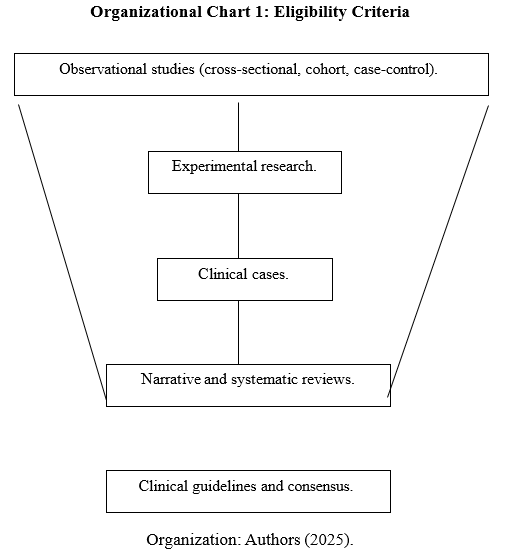
Articles containing empirical data, isolated case reports, literature without scientific review, and publications that did not directly address laboratory interpretation, as well as duplicates, were excluded. Therefore, the final compilation for results and discussion includes 20 works that were included after analytical reading.
Search Strategy
The search was conducted in the Google Scholar, SciELO, and LILACS databases, encompassing publications in Portuguese. Combinations of controlled and free terms were used, such as “transgender,” “gender identity,” “laboratory tests,” “reference values,” “sex hormones,” and their linguistic variations. Whenever relevant, the “snowballing” technique was applied, consulting references from selected studies to broaden the coverage.
Study Selection Process
The selection process occurred in three stages: a) Removal of duplicates; b) Screening of titles and abstracts, carried out independently by two reviewers; c) Full reading of the selected texts, with a record of reasons for exclusion and resolution of disagreements by consensus or by a third reviewer. Thus, Google Scholar, SciELO, and LILACS were used.
Data Synthesis
Given the expected heterogeneity among the studies (design, population, laboratory parameters), the synthesis was narrative, organized into categories of tests: hematological, biochemical, lipid, and hormonal. Whenever possible, the results were analyzed considering the time and type of hormone therapy, gender identity, and clinical history, allowing for a contextualized and humanized interpretation.
Ethical and Scientific Integrity Considerations
Although ethics committee approval was not required, the study strictly adhered to the principles of academic integrity, including proper citation of sources, methodological transparency, and discussion of limitations identified in the included studies.
Results and Discussion or Data Analysis
Given the laboratory changes resulting from hormone therapies and the difficulties faced by professionals, several authors have proposed strategies and guidelines aimed at promoting safer, more ethical, and inclusive clinical practice for transgender people. These recommendations include the contextualized interpretation of laboratory results, the adaptation of reference intervals, the continuous monitoring of hormonal and metabolic markers, and the training of professionals to deal with gender diversity. Table 3 summarizes the main studies published between 2020 and 2025 that aim to suggest guidelines to help healthcare professionals interpret laboratory tests in a more sensitive, safe, and inclusive way, respecting the particularities of each patient.
|
Author(s) |
Year |
Proposals and concepts regarding inclusive practices. |
|
Oliveira |
2020 |
They emphasize the integration of science and humanization in laboratory care, valuing respect for gender identity and clinical safety [19]. |
|
Dornelas, VV Ribeiro, M Behlau |
2023 |
|
|
Machado |
2023 |
They suggest considering the duration of hormone therapy use and gender identity to adjust the interpretation of laboratory tests. |
|
Lages, Gomes |
2024 |
|
|
Benedito |
2023 |
They propose ongoing training for healthcare professionals on gender diversity and updates to laboratory protocols. |
|
Santos |
2023 |
|
|
Cardoso |
2024 |
They recommend the use of hybrid reference intervals for patients undergoing hormonal transition, avoiding misinterpretations. |
|
Lages, Gomes |
2024 |
They highlight the importance of personalized reports that indicate the type of hormonal treatment and contextualize the results [21]. |
|
Marques |
2025 |
|
|
Bender |
2024 |
They advocate for the creation of screening protocols for breast cancer and other hormone-dependent conditions in transgender women. This includes preventive protocols and adapted screenings (such as mammograms or breast ultrasounds in patients who use estrogen for extended periods). |
|
Nascimento et al. |
2024 |
|
|
Pelegrini |
2025 |
Table 3: Proposals for Inclusive Interpretive Guidelines and Laboratory Practices (2020–2025)
Organization: Authors (2025).
Building inclusive and safe laboratory practices for transgender people requires integrating scientific evidence, professional ethics, and human sensitivity. Given the difficulties observed, several authors have proposed guidelines aimed at improving the interpretation of laboratory tests, respecting the particularities of each patient and recognizing the influence of hormone therapies on the body. The studies analyzed converge on the defense of laboratory practices that combine scientific rigor and human sensitivity, recognizing that the interpretation of tests must consider the diversity of experiences and trajectories of transgender people. Oliveira (2020) emphasizes that the integration between science and humanization is essential in laboratory care, highlighting that respect for gender identity must go hand in hand with clinical safety and the technical precision of results [22]. This vision reinforces the need to transform the laboratory space into an environment of welcoming, trust, and ethics.
Among the practical guidelines, Machado (2023) and Lages and Gomes (2024) suggest that the duration of hormone therapy use and lived gender should be considered in the interpretation of tests, since these factors directly influence biochemical and hormonal markers [15,23] . This perspective proposes a shift from a purely biological viewpoint to a contextualized and individualized approach, recognizing the transition process as a legitimate clinical variable. In the context of professional training, Benedito (2023) and Santos (2023) advocate for the continuous training of health professionals in gender diversity, accompanied by the updating of laboratory protocols [24]. This training is seen as an indispensable condition for reducing interpretive biases, avoiding embarrassment in care, and strengthening a culture of respect and inclusion within health institutions.
Cardoso (2024) introduces the proposal of hybrid reference intervals, aimed at patients in the hormonal transition phase, allowing for interpretations more consistent with the intermediate physiology observed during this period. Lages and Gomes (2024) expand on this perspective by highlighting the importance of personalized reports that indicate the type of hormonal therapy used and contextualize the results in a clear and understandable way. These practices promote more transparent communication between the laboratory, physician, and patient. Finally, Bender (2024) and Pelegrini (2025) reinforce the need to develop specific screening protocols for hormone-dependent conditions, such as breast cancer in transgender women [25]. These measures represent an advance in preventive medicine and demonstrate a commitment to equity in healthcare.
Corroborating the study by Nascimento et al. (2024), which makes a significant contribution by highlighting the increased risk of breast malignancy in transgender women undergoing prolonged use of estrogen therapies, this finding reinforces the need for preventive screening protocols adapted to the reality of this population, including examinations such as mammograms and breast ultrasounds according to the duration of hormonal exposure and the patient’s family history. Unlike cisgender women, whose vulnerability to breast cancer is widely studied and supported by consolidated guidelines, transgender women remain in a zone of scientific uncertainty, where risk parameters and screening frequency are not yet well established.
The inadequacy of binary reference ranges goes beyond a simple lack of categorization. It lies in three main conceptual flaws:
1. Physiological failure: The body of a transgender person undergoing hormone therapy does not perfectly match that of a cisgender man or woman. For example, the muscle mass and glomerular filtration rate of a trans man after testosterone therapy may approach male values, but his original bone structure or markers may occupy a physiological “third space” not captured by traditional intervals.
2. Temporal failure: Current ranges are static, ignoring the dynamics of the transition. Significant changes in parameters such as hemoglobin or LDL cholesterol occur in the first months of therapy, creating a gray area where the outcome is not typically male or female, increasing the risk of a transition value being erroneously flagged as pathological.
3. Validation failure: Reference ranges are established through rigorous population studies that have historically excluded transgender individuals. Therefore, applying a range validated for cisgender men to a transgender man is, from a methodological point of view, an unvalidated extrapolation, compromising diagnostic accuracy.
In summary, the results demonstrate that inclusive laboratory practice is not limited to technique, but involves empathy, scientific updating, and ethical commitment. Adopting these guidelines increases diagnostic safety, strengthens trust between patient and professional, and contributes to a truly humanized healthcare model, based on evidence and full recognition of human diversity.
Conclusion/Final Considerations
This study successfully achieved its objective of understanding how biological sex, gender identity, and medical-hormonal interventions influence laboratory results, demonstrating that the interpretation of tests in transgender individuals requires a technical, ethical, and humanized approach. It was observed that hormonal therapies, while promoting important physiological adjustments during the gender affirmation process, generate significant laboratory alterations that need to be understood within the individual clinical context of each patient, avoiding misinterpretations or undue pathologization. Regarding the second objective, it was possible to identify the main difficulties faced by professionals and laboratories, highlighting the lack of specific reference intervals, the lack of technical training on gender diversity, and the limitations of laboratory systems that still operate under binary standards. These factors reinforce the urgent need for institutional policies focused on scientific updating, continuous training, and the construction of truly inclusive laboratory environments.
Regarding the third objective, interpretative guidelines and inclusive practices were presented that aim to promote greater clinical safety and respect for patients’ gender identity. Among these, the use of hybrid reference intervals, the creation of personalized reports, the implementation of preventive screening protocols, and the strengthening of empathetic communication between the laboratory team and the patient stand out. These proposals represent a significant advance towards more equitable and person-centered medicine. In summary, this work contributes to the debate on the humanization of laboratory practice, highlighting that care for transgender people goes beyond technique: it involves sensitivity, scientific knowledge, and ethical commitment. Adapting laboratory procedures to the specific needs of this population is an essential step to ensure equity, safety, and dignity in healthcare.
Finally, it is recommended that longitudinal and multicenter studies continue to deepen the analysis of hormonal influences on laboratory parameters, expand the database on specific reference values, and support the creation of national guidelines aimed at the trans population. Investing in research and continuous training is the way to consolidate clinical practices that are truly based on evidence and respect for human diversity.
References
- de França Monteiro, G., & do Egito, E. M. N. (2024). Importância da Fase Pré–Analítica e seus Impactos nos Exames Laboratoriais. Brazilian Journal of Biological Sciences, 11(25), e100-e100.
- Cardoso, F. (2024). Atendimento A. Ginecologia Ambulatorial: Guia para o cuidado da saúde ao longo do ciclo vital
- Benedito, G. D. S. M. (2023). Conhecimentos e atitudes sobre o atendimento ao paciente transgênero em laboratórios de patologia clínica. 19 f. Universidade Estadual Paulista (Unesp). Botucatu.
- Nascimento, E. M. D. (2024). Acesso aos serviços de saúde e suas interfaces com as violências: perspectivas das mulheres transgênero e travestis.
- Nascimento, G. S. (2020). Por que ginecologia é para a mulher né?!: a experiência de homens trans no atendimento ginecológico. 103 f. Dissertação (Mestrado em Ciências Sociais) - Instituto de Ciências Sociais, Universidade do Estado do Rio de Janeiro, Rio de Janeiro, 2020.
- Cruz, L. E. D. M. P. (2024). Tornar-se homem transexual: as fronteiras do gênero e a performatividade no processo transexualizador. Universidade Federal da Bahia, Repositório Institucional da UFBA, Salvador, Brasil.
- Reis, E. T. S. D. (2024). Efeito da testosterona nos marcadores de coagulação sanguínea em homens transexuais (Doctoral dissertation, Universidade de São Paulo).
- Costa, J. A. N., Silva, G. A. S., Nunes, E. F. C., & Nobre,A. H. (2020). Terapia hormonal na composição corporal, perfil lipídico, função pulmonar e densidade óssea de homens transgêneros. Revista Brasileira de Saúde Funcional, 8(1), 49-49.
- Teixeira, S. L., & Ribas, J. L. C. (2021). A importância dos exames laboratoriais no auxílio do tratamento de distúrbios estéticos. Saúde e Desenvolvimento, 10(18), 38-51.
- fisiológicas ao esforço físico em mulheres transgênero em terapia estrogênica de longa duração e em mulheres e homens cisgênero (Doctoral dissertation, Universidade de São Paulo).
- Matos, T. P. D. A. (2023). Estudo de caso: hormonização em homem transgênero.
- Iala, T. J. (2022). Efeitos adversos relacionados ao uso de hormônio em pessoas transexuais: revisão integrativa.
- Bender, M. S. (2024). Hormonioterapia e o Câncer de Mama em Pessoas Trans: uma Revisão Sistemática. Almanaque Multidisciplinar de Pesquisa, 12(2).
- Nascimento, J. L., Lúcio, R. F. O, Coutinho, W. L., & Sá, L. L. C.B. (2024). Influência da terapia hormonal no desenvolvimento de câncer de mama em mulheres transexuais: Uma revisão de literatura. Research, Society and Development, 13(1), e6513144701-e6513144701.
- Lages, M. A. M. D. S., & Gomes, D. M. L. V. (2024)Complicações associadas à Terapêutica Hormonal deAfirmação de Género.
- Silva, A. W. L. D. (2021). Identidades legitimamente diversas: um estudo pela visibilidade inclusiva da não-binariedade de gênero (Doctoral dissertation, Universidade de São Paulo).
- Schlüter, K. (2024). Aspectos subjetivos do atendimento clínico de pessoas transgênero (Doctoral dissertation, [sn]).
- Reis, E. T. S. D. (2024). Efeito da testosterona nos marcadores de coagulação sanguínea em homens transexuais (Doctoral dissertation, Universidade de São Paulo).
- Gil, A. C. (2019). Métodos e técnicas de pesquisa social. 7ª ed. Atlas.
- Dornelas, R., Ribeiro, V. V., & Behlau, M. (2023). Identidade Comunicativa: Pessoas Trans, Travestis e Não Binárias. Thieme Revinter.
- Marques, T. V. C. (2025). VOZES TRANS: a percepção da humanização do acolhimento das pessoas trans no SUS (Doctoral dissertation, Universidade de São Paulo).
- Oliveira, B. S. (2020). O processo transgenitalizador realizado pelo SUS em face do direito fundamental à saúde de pessoas trans: entre a patologização e a garantia.
- Machado, R. (2023). Avaliação dos intervalos de referência para indivíduos transgêneros ou com diversidade de gênero: uma revisão narrativa da literatura. 39 f. Trabalho de Conclusão de Curso submetido ao curso de Farmácia do Centro de Ciências da Saúde da Universidade Federal de Santa Catarina.
- Santos, A. S. N. D. (2023). O mundo está mudando rápido demais? Gênero e sexualidade no currículo médico: a perspectiva de professores de um curso de graduação em medicina no Estado de São Paulo (Doctoral dissertation, Universidade de São Paulo).
- Pelegrini, G. (2025). Cuidado integral de pessoas transgênero na atenção primária à saúde: o papel de um Serviço Nacional de Telessaúde no apoio à tomada de decisões clínicas.