


Research Article - (2026) Volume 11, Issue 2
Awareness and Preventive Practices of Chronic Kidney Disease Among the Youth in DROBO, Ghana
Received Date: Feb 24, 2026 / Accepted Date: Mar 30, 2026 / Published Date: Apr 20, 2026
Copyright: ©2026 Irene Korkoi Aboh, et al. This is an open-access article distributed under the terms of the Creative Commons Attribution License, which permits unrestricted use, distribution, and reproduction in any medium, provided the original author and source are credited.
Citation: Agyapong, I. D., Aboh, I. K., Asiedu, C. (2026). Awareness and Preventive Practices of Chronic Kidney Disease Among the Youth in DROBO, Ghana. J Nur Healthcare, 11(2), 01-08.
Abstract
Background: Chronic kidney disease is a global health problem with serious adverse effects, including kidney failure, cardiovascular disease, and premature death. Objective The study sought to assess the knowledge, awareness and preventive practices of chronic kidney disease (CKD) among the youth. Participant and Setting: The study was carried out among the youth in the Drobo Community in Ghana, Methods: A descriptive cross-sectional survey, along with a quantitative data collection approach, was conducted to assess the knowledge, awareness and preventive practices of chronic kidney disease (CKD) among the youth, with a population of about 12,753, from September 2020 to April 2021. Data was collected using a self-developed questionnaire with the use of a convenience sampling method. Result: Data was statistically analysed and summarised using both descriptive and inferential statistical methods. The general knowledge and awareness of CKD among research participants was poor (mean = 1.92), as the participants were either not sure or did not know the description of CKD. Most of the participants did not know that hypertension and diabetes were causes of CKD, with 97.8% disagreeing. However, 66.4% of participants accepted that they indulge in regular physical exercise as a preventive practice (mean, 2.18) for CKD and the majority did not indulge in regular kidney checkup (mean, 3.86) and regular diabetes screening (mean, 3.45) as a preventive measure for CKD. Conclusion: The overall knowledge and awareness of the participants about CKD is low. Instead, myths and misconceptions prevailed, including the belief that CKD could be cured with herbs and NSAIDs.
Keywords
Awareness, Preventive Practices, Chronic Kidney Disease, Youth
Background
The burden of chronic kidney disease (CKD) globally has been significant over the years. It moved from the 36th cause of death in 1990 to the 19th cause in 2013 [1]. About 850 million people do have some form of kidney disease, with the CKD prevalence standing at almost 11% and accounting for nearly 2.4 million mortalities [2]. CKD is the final common pathway for many infections and noncommunicable diseases and is an independent risk factor for death from cardiovascular causes, leading to growing concern regarding increases in the estimated global prevalence, ranging from 8% to 16% [3]. CKD is no longer limited to the elderly as it is increasingly affecting younger populations. According to recent analyses of the Global Burden of Disease (GBD) 2021 data, mortality, disability-adjusted life years (DALYs), and prevalence among people aged 15 to 39 years have all increased steadily between 1990 and 2021 [4].
This early onset of CKD is concerning, as it not only heightens the lifetime risk of cardiovascular diseases but also increases susceptibility to acute kidney injuries (AKIs) [5]. Young adults are disproportionately impacted in sub-Saharan Africa, and the main causes include HIV-associated nephropathy, hypertension, chronic glomerulonephritis and CKD of unknown origin (CKDu) [6,7]. CKD is prevalent in Africa and the sub-Saharan Africa (SSA) region, with prevalence rates of 15.8% and 17.7%, respectively, in the general population [6,8]. The high-risk populations such as patients who suffer from diabetes mellitus, high blood pressure and HIV, were highly vulnerable, with the prevalence of 32.3% of CKD [9].
Chronic kidney disease of unknown origin (CKDu) is a form of CKD that arises in individuals who lack traditional risk factors such as hypertension or diabetes. Recent studies, particularly from agricultural and mining communities in Africa, indicate that CKDu may be a significant yet often overlooked contributor to the CKD epidemic in rural populations. The aetiology of CKDu remains unclear, with multifactorial hypotheses including environmental toxins, heat stress, dehydration, agrochemicals, heavy metals, and genetic susceptibility cited as potential causes [10-12]. Additionally, the high prevalence of Apolipoprotein L1 (APOL1) gene variants G1 and G2 among West African populations, including those in Ghana, has been associated with an increased risk of CKD. This highlights the importance of genetic factors in understanding the epidemiology of this condition in the region [13,14].
In Ghana, CKD has been seen as a growing public health concern [15]. A study by highlights that 46.9% of hypertensive outpatients in Accra had evidence of CKD, with the highest prevalence found among individuals aged 30 to 39 years. Some hospital-based studies indicate CKD rates of 36–46% among high-risk patients with hypertension and diabetes, with prevalence between 26% and 29%.16.1 CKD incidence is similar in rural and urban Ghana (12–13%), with a significant proportion of cases occurring in people below the age of 40 years. Urban areas may have slightly higher rates, likely attributed to the high prevalence of hypertension and diabetes [17,18].
Adolescents with CKD and ESKD experience the physical and psychological demands of puberty while having to learn to self-manage their comorbidities. Adolescents and young adults encounter unique and complex physical, psychological, and family challenges. Despite improvements in care for chronic kidney disease (CKD) and end-stage kidney disease (ESKD), long-term mortality for children, adolescents, and young adults with CKD remains substantially higher than their healthy counterparts [19].
While specific studies for Drobo on CKD are not currently published, the town’s socioeconomic and health profiles closely mirror those of other rural communities in Ghana, indicating that the burden of CKD may be significant yet underreported. This gap underscores the importance of local studies on CKD awareness and prevention. Objective: The study sought to assess the knowledge, awareness and preventive practices of chronic kidney disease (CKD) among the youth in Drobo, Ghana.
Methods And Materials
This research was carried out using a descriptive cross-sectional survey along with a quantitative data collection approach. In a cross-sectional survey a there is measurement of the outcome and the exposures in the study participants by the investigator at the same time, and a snapshot of the data collection.20 Using this research design it enabled the collection of information on the knowledge, awareness, and preventive practices of CKD among the youth in Drobo.
Study Area
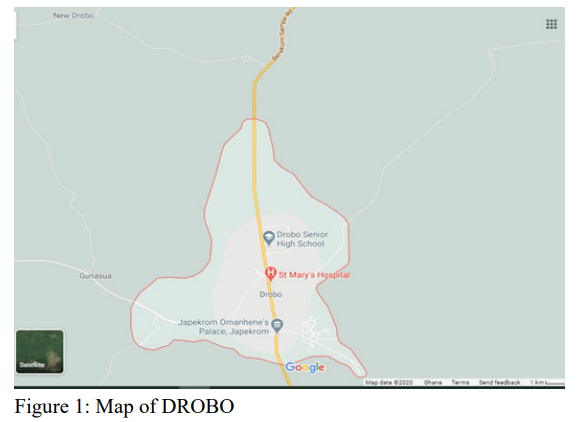
The study was conducted in Drobo, a town located in the Jaman South municipality, which is one of the twelve administrative districts in Bono Region of Ghana. Drobo its shares borders with the Jaman North District in the north, Berekum Municipal in the south-east, Dormaa Central Municipal in the south-west and La Cote d’Ivoire in the west. Drobo being the largest town in the municipality has a population of about 12, 753, and 1,647 houses. It is mainly a rural community with most of its populace being farmers and students. Cashew and cocoa are part of the common crops the people of Drobo farm. The town is served with a hospital, a polyclinic, a nursing training college, a senior high school and a number of junior high and primary schools.
Population
The target population for this study was the youth of Drobo community. Drobo has a population of about 12, 753 with the youth making about 30% of that number, making the estimated population of the youth of Drobo being about 3,826.21 Data was gathered from persons both male and female, aged 18 years to 39 years in Drobo. And this was the inclusion criteria for the study. Sample size determination and sampling procedure Yamane 1967 formula for sample size estimation was used; 3826 gave n=362. The sample size was therefore 362. A convenience sampling method was employed in this study in the selection of respondents. Convenience sampling involves the selection of the most readily available persons as participants in a study.
Data Collection Instruments
A self-developed closed-ended questionnaire was used for the collection of data. The questionnaire was based on the research objectives and the literature reviewed. The questionnaire had 4 sections with 40 items. The reliability of the questionnaire was assessed by conducting a pilot study, by pretesting using 20 respondents to ensure it was eligible and to avoid any confusion regarding the understanding of the questions. The questionnaire was later modified based on feedback from the pilot study. Content and construct validity were assessed by submitting the questionnaire to my supervisor for review. Cronbach’s alpha was used to assess the internal consistency of the questionnaire, and the coefficient from the 20 instruments was 0.700.
Data Collection Procedures
Data collection was carried out through the administration of the questionnaires to the participants with the use of a convenience sampling method. The purpose of the study was made known to the respondents after an introduction. Consent of the respondents was also sought, with confidentiality and anonymity being assured. Further explanation and clarification were made to those who found it difficult to comprehend. Respondents were made aware of the type of questions to expect from the questionnaire. The questionnaire was first prepared in English and then translated into the local language for respondents who could not read and write English. Answering the questionnaire took approximately 15 minutes. Collection of data started on 30th December, 2020 and ended on 29th March, 2021. Questionnaires were taken back from respondents instantly or later, depending on when the respondent deemed to have completed answering it. More so, respondents were informed of the option to opt out of the study whenever they wished.
Ethical Consideration
Ethical approval was sought from the University of Cape Coast Ethical Review Board through an introductory letter. Approval was also sought from the Jaman South municipal assembly. Consent of the respondents was sought, with confidentiality and anonymity being assured verbally.
Data Processing and Analysis
The results were analysed in accordance with the research questions. Data collected from participants were cleaned, coded, entered, and then statistically cleaned and analysed using the Statistical Package for the Social Sciences (SPSS) version 25.0. Data was summarised using both descriptive and inferential statistical methods.
Results
Socio-Demographic Information
Out of 362 respondents, 140 (38.8%) were male and 222 (61.2%) were female. Age was categorised into five groups: 68 (18.7%) were 16–20 years, 235 (64.9%) were 21–25 years, 40 (11.2%) were 26–30 years, 11 (3.0%) were 31–35 years, and 8 (2.2%) were 36–39 years. With respect to marital status, 327 (90.3%) were single and 35 (9.7%) were married. In terms of education, 33 (9.0%) had no formal education, 33 (9.0%) had primary education, 86 (23.9%) had secondary education, and 210 (58.2%) had tertiary education. Regarding occupation, 24 (6.7%) were unemployed, 214 (59.0%) were students, 72 (20.1%) were traders or in business, and 52 (14.2%) were government employees. For religion, 308 (85.1%) identified as Christians, 52 (14.2%) as Muslims, and 2 (0.7%) reported other religions.
|
Variable |
Frequency |
Percentage (%) |
|
Gender |
||
|
Male |
140 |
38.8 |
|
Female |
222 |
61.2 |
|
Age |
||
|
16-20 |
68 |
18.7 |
|
21-25 |
235 |
64.9 |
|
26-30 |
40 |
11.2 |
|
31-35 |
11 |
3.0 |
|
36-39 |
8 |
2.2 |
|
Marital status |
||
|
Single |
327 |
90.3 |
|
Married |
35 |
9.7 |
|
Educational level |
||
|
No formal education |
33 |
9.0 |
|
Primary |
33 |
9.0 |
|
Secondary |
86 |
23.9 |
|
Tertiary |
210 |
58.2 |
|
Occupation |
||
|
Unemployed |
24 |
6.7 |
|
Schooling |
214 |
59.0 |
|
Trading/Business |
72 |
20.1 |
|
Government employee |
52 |
14.2 |
|
Religion |
||
|
Christianity |
308 |
85.1 |
|
Islam |
52 |
14.2 |
|
Other |
2 |
0.7 |
Table 1: Socio-Demographic Characteristics of Respondents
Knowledge and Awareness of CKD
Majority of 92 respondents (25.4%) indicated that CKD describes kidney damage lasting three months or more, 143 (39.6%) answered false, and 122 (33.6%) were not sure, with a mean score of 2.08. A total of 200 respondents (55.2%) indicated that a person can tell if they have CKD by the colour, quality, or smell of urine, while 84 (23.1%) disagreed and 73 (20.1%) were not sure, yielding a mean score of 1.64. For the belief that CKD can be cured with herbs, 151 respondents (41.8%) agreed, 127 (35.1%) disagreed, and 81 (22.4%) were not sure, with a mean score of 1.80. With respect to dialysis as a treatment for the final stage of CKD, 92 respondents (25.4%) agreed, 116 (32.1%) disagreed, and 149 (41.0%) were not sure, giving a mean score of 2.16. The overall mean score for knowledge and awareness was 1.92.
|
Statement |
False |
True |
Not sure |
Total |
% of Total False |
% of Total True |
% of Total Not sure |
Mean Score |
|
Chronic Kidney Disease describes kidney damage lasting 3 or more months |
143 |
92 |
122 |
357 |
39.6 |
25.4 |
33.6 |
2.08 |
|
A person can tell if he/she has CKD just by the color, quality or smell of urine |
84 |
200 |
73 |
357 |
23.1 |
55.2 |
20.1 |
1.64 |
|
Chronic kidney disease can be cured with the use of herbs |
127 |
151 |
81 |
359 |
35.1 |
41.8 |
22.4 |
1.8 |
|
Dialysis is a form of treatment for the final stage of chronic kidney disease |
116 |
92 |
149 |
357 |
32.1 |
25.4 |
41.0 |
2.16 |
Knowledge of the Causes and Risk Factors of CKD
Sixteen (4.5%) strongly agreed and 62 (17.2%) agreed that hypertension is a cause/risk factor for CKD, while 214 (59.0%) disagreed or strongly disagreed; the mean score was 2.67. A total of 130 (35.9%) agreed or strongly agreed that diabetes is a cause/ risk factor, whereas 189 (52.3%) disagreed or strongly disagreed; the mean score was 3.14. For excessive intake of painkillers, 149 (41.0%) agreed or strongly agreed, 73 (20.1%) were neutral, and 138 (38.1%) disagreed or strongly disagreed; the mean score was 2.86. Regarding living with a person with CKD, 49 (13.5%) agreed or strongly agreed, 62 (17.2%) were neutral, and 249 (68.7%) disagreed or strongly disagreed; the mean score was 3.89. Family history of CKD was recognised by 146 (40.3%) respondents as a risk factor, 57 (15.7%) were neutral, and 157 (43.3%) disagreed or strongly disagreed; the mean score was 3.09. For obesity, 122 (33.6%) agreed or strongly agreed, 103 (28.4%) were neutral, and 135 (37.3%) disagreed or strongly disagreed; the mean score was 3.01. Cigarette smoking was identified as a risk factor by 284 (78.3%) who agreed or strongly agreed, 13 (3.7%) were neutral, and 62 (17.2%) disagreed or strongly disagreed; the mean score was 1.85. Excessive alcohol intake was identified by 303 (83.6%) who agreed or strongly agreed, 22 (6.0%) were neutral, and 35 (9.7%) disagreed or strongly disagreed; the mean score was 1.72. For herbal ingestion, 99 (27.6%) agreed or strongly agreed, 105 (29.1%) were neutral, and 154 (42.5%) disagreed or strongly disagreed; the mean score was 3.14. Poor diet (e.g., high salt intake) was identified by 245 (67.2%) who agreed or strongly agreed, 65 (17.9%) were neutral, and 52 (14.2%) disagreed or strongly disagreed; the mean score was 2.21.
|
Statement |
SA n (%) |
A n (%) |
N n (%) |
D n (%) |
SD n (%) |
Mean Score |
|
Perceived causes/risk factors of CKD |
||||||
|
Hypertension |
16 (4.5) |
62 (17.2) |
68 (18.7) |
181(50.0) |
33 (9.0) |
2.67 |
|
Diabetes |
22 (6.0) |
108 (29.9) |
41 (11.2) |
173(47.8) |
16 (4.5) |
3.14 |
|
Excessive intake of pain killers (e.g. Ibuprufen) |
65 (17.9) |
84 (23.1) |
73 (20.1) |
111 (30.6) |
27 (7.5) |
2.86 |
|
Living with a person with CKD |
16 (4.5) |
33 (9.0) |
62 (17.2) |
111 (30.6) |
138 (38.1) |
3.89 |
|
Family history of CKD |
49 (13.4) |
97 (26.9) |
57 (15.7) |
87 (23.9) |
70 (19.4) |
3.09 |
|
Obesity |
54 (14.9) |
68 (18.7) |
103 (28.4) |
92 (25.4) |
43 (11.9) |
3.01 |
|
Cigarette smoking |
219 (60.4) |
65 (17.9) |
13 (3.7) |
35 (9.7) |
27 (7.5) |
1.85 |
|
Excessive alcohol intake |
211 (58.2) |
92 (25.4) |
22 (6.0) |
16 (4.5) |
19 (5.2) |
1.72 |
|
Herbal ingestion |
35 (9.7) |
64 (17.9) |
105 (29.1) |
124(34.3) |
30 (8.2) |
3.14 |
|
Poor diet (e.g., high salt intake) |
98 (26.9) |
147 (40.3) |
65 (17.9) |
46 (12.7) |
6 (1.5) |
2.21 |
Table 3: Knowledge of the Causes and Risk Factors of CKD
Preventive Practices of CKD
Majority of 136 (37.3%) strongly agreed and 106 (29.1%) agreed that they engaged in regular physical exercise, while 41 (11.2%) disagreed and 22 (6.0%) strongly disagreed; 54 (14.9%) were neutral; the mean score was 2.18. 22 (6.0%) agreed and 26 (6.7%) strongly agreed that they undertook regular kidney check-ups, while 238 (65.7%) disagreed and 72 (19.4%) strongly disagreed; 3 (0.7%) were neutral; the mean score was 3.86. 50 (13.4%) agreed and 28 (7.5%) strongly agreed that they participated in regular diabetes screening, while 233 (64.2%) disagreed and 17 (4.5%) strongly disagreed; 34 (9.0%) were neutral; the mean score was 3.45. 33 (9.0%) agreed and 17 (4.5%) strongly agreed that they consumed foods with high fat content, while 111 (30.6%) disagreed and 138 (38.1%) strongly disagreed; 63 (17.2%) were neutral; the mean score was 3.77.
|
Statement |
SA |
|
|
|
|
|
|
Preventive practices of CKD |
||||||
|
Regular physical exercise |
136 (37.3) |
106 (29.1) |
54 (14.9) |
41 (11.2) |
22 (6.0) |
2.18 |
|
Regular kidney check-up |
26 (6.7) |
22 (6.0) |
3 (0.7) |
238 (65.7) |
72 (19.4) |
3.86 |
|
Regular diabetes screening |
28 (7.5) |
50 (13.4) |
34 (9.0) |
233 (64.2) |
17 (4.5) |
3.45 |
|
Eating foods with high fat content |
17 (4.5) |
33 (9.0) |
63 (17.2) |
111 (30.6) |
138 (38.1) |
3.77 |
Table 4: Preventive Practices of CKD
Correlation between Preventive Practices of CKD and Educational Level
A statistical correlation between preventive practices of CKD and educational level revealed that regular physical exercise had a positive correlation coefficient of 0.42 and a p-value of 0.63. Regular kidney check-up had a correlation coefficient of 0.06 and a p-value of 0.51. Regular diabetes screening had a correlation coefficient of -0.14 and p-value of 0.11. Eating foods with high fat content had 0.01 and 0.91 as correlation coefficient and p-value respectively.
|
Preventive practices of CKD |
Correlation coefficient (r*) |
p-value |
|
Regular physical exercise |
0.42 |
0.63 |
|
Regular kidney check-up |
0.06 |
0.51 |
|
Regular diabetes screening |
-0.14 |
0.11 |
|
Eating foods with high fat content |
0.01 |
0.91 |
Table 5: Correlation between Preventive Practices of CKD and Educational Level
Summary of Key Findings
This research assessed the knowledge, awareness and preventive practices of chronic kidney disease among the youth of Drobo. The results of this research indicated that the majority of the participants did not know what chronic kidney disease was. They also did not know that a person could not just tell if he/she has CKD just by the colour, quality or smell of urine. Most participants indicated that CKD could be cured by herbs. Also, a greater percentage of participants did not know or were not sure if dialysis is a treatment for the final stage of CKD.
Pertaining to the causes/risk factors for CKD, most of the participants were not privy to the fact hypertension and diabetes are causes of CKD. 30.6% of the participants also disagreed that excessive intake of pain killers (e.g. ibuprufen) was a risk factor to CKD. Herbal ingestion was also not seen as a risk factor CKD. However, majority of the participants indicated that cigarette smoking and excessive alcohol intake are risk factors for CKD. The same with “Poor diet (e.g., high salt intake)” as 40.3% of them agreed that it is a risk factor for CKD. Majority of the participants indicated that they take regular physical exercise as a preventive practice for CKD, however, most of them did not indulge in regular kidney check-up and regular diabetes screening for prevention of CKD.
Discussion
It could be identified in the literature review that22 defines CKD as abnormalities of kidney structure or function, present for more than 3 months, with implication for health. This current research finding is lower than a study carried out in Malaysia by23 which 69.5% of the participants had heard of CKD at least once before. The study also revealed that respondents who have heard of CKD before were more likely to have better knowledge on CKD. Knowing about CKD from the newspaper, internet, medical personnel or health campaigns were associated with better knowledge of CKD. However, it was realized in24 study that knowing about CKD from family or friends was not associated with better knowledge score of CKD. Another study by25 revealed that majority of the participants (61.5%), responded that they heard of CKD at least once before, and this is in contrast to findings of this current research.
The percentages from respondents who answered on the cure of CKD with herbs were opposite to a study carried out in Ethiopia by26 in which a lower number of the study respondents (22.6 %) believed that herbal supplements can be useful in treating CKD. However, this finding is similar a study by27 which indicated that only 23.4% knew that herbal supplements are not effective in treating CKD with most of the respondents supporting herbal supplements are effective in treating CKD.
From the results it could be deduced that participants did not know what the word “dialysis” is or had not heard about it before. This is consistent with a study conducted by28 which cited that most, 221 (66.6%) of the respondents did not know that the final stage of CKD needs dialysis as a lifelong treatment. As represented by the graph above, the majority of the respondents for this research were in support that they indulge in regular physical exercise as a preventive measure for chronic kidney disease This is contrary to research findings by25 which 92.6% of the study participants did not exercise regularly.
In a study by29, it was revealed that when participants were asked “How often do you counsel with your doctor/healthcare provider to have a renal function test?” The most common answers were “more than every 2 years” (44.1%), “Do not know/remember” (18.9%) and “every 2 years” (17.5%). Also, a cross-sectional survey of Australian adults by27 showed that even amongst subgroups of cohorts with the greatest risk of CKD, the recall of kidney function testing was limited.
As presented in the graph above, a greater percentage of this study did not support that they have regular diabetes screening as a preventive practice for chronic kidney disease. This is consistent with a study by25 as 360 (82.9%) of the participants of the study did not visit health institutions for diagnosis of other disease comorbidities (e.g. Diabetes).
In a study conducted by30 confirmed that their respondents had good practices towards the risk of CKD. A different finding was indicated in another study by31 when they found that majority of their respondents (58.8%) had poor practices with regards to CKD. Despite the differences in these findings, the variances may reveal the existence of different barriers faced by the patients in different geographic regions or countries. For example, in some countries, the patient needs to pay high amounts for the physicians’ services and diagnostic tests. Some of them have different levels of patient-provider interactions which may affect their practices towards certain diseases.
Low public awareness of hypertension as a cause of kidney damage has been demonstrated in other international surveys. Hypertension is one of the leading causes of chronic kidney disease, and as a result, the participants’ inability to know this is a major CKD knowledge deficit. This is consistent with researches carried out by 32,33,29, which all concluded that the public is poorly informed about CKD in which less than half of the respondents knew that hypertension can cause kidney disease.
Findings about diabetes being a risk factor for CKD is similar to Chow et al. (2014) study in which their findings indicated that less than half of the participants identified diabetes (44.0%) as risk factors of kidney disease. In contrast, a study carried out by27 concluded that many participants identified diabetes (60.6%) as a cause of chronic kidney disease. Similar to hypertension, the rising worldwide prevalence of diabetes and the lack of knowledge about its relationship with chronic kidney disease are of great concern. This research finding on the knowledge about excessive intake of NSAIDs being a risk factor/cause for CKD is similar to25 study which concluded that only 155 (35.7%) of the research’s participants were aware of the effect of drug (NSAID) overdose on the kidney’s health.
Results for smoking as a risk factor for CKD were presented in the above table. This is consistent with a study by29 which found that when respondents were asked, “Choose two of the following diseases/conditions that you think are very likely to result in CKD” they most frequently selected “smoking”.
Conclusion
This study assessed the knowledge, awareness, and preventive practices of CKD among young adults in Drobo, Ghana. Findings revealed poor knowledge of CKD, with many participants unable to correctly identify its description, dialysis as a treatment option, or the role of hypertension and diabetes as major causes. Instead, myths and misconceptions prevailed, including the belief that CKD could be cured with herbs and a limited recognition of the dangers of NSAIDs. In terms of preventive practices, while most respondents reported engaging in regular physical exercise, participation in routine kidney check-ups and diabetes screening was very low. This gap reflects the limited awareness of key risk factors and may contribute to late diagnosis in this population. Overall, these findings highlight that CKD awareness among youth in this community is both limited and misinformed. This presents an urgent need for targeted educational interventions and community-based awareness campaigns to address myths, promote risk factor recognition, and encourage preventive practices.
Declaration of generative AI use - Authors have declare that in the preparation process upon submission of the paper, they did not use generative AI in the development of the manuscript.
Acknowledgements
Our appreciation goes to the community members who supported by answering the questions for the study. We are grateful to the community assemblyman and opinion leaders for allowing data to be collected and colleagues for their invaluable contribution to the work.
Funding - The study has not received any funding, and there was no sponsorship.
Authors’ Contributions – Isaac conceptualised the study, drafted the proposal, collected and analysed data, made the first draft of the manuscript, and Christiana supervised the work from its inception to the end and edited the manuscript for its logical and content validity. Irene completed the drafted manuscript and is the corresponding author.
Competing Interests - The authors declare that they have no competing interests
Ethical Statement - Ethical approval for this study was obtained from the School of Nursing and Midwifery through an introductory letter to the community heads involved with gatekeeping.
References
- Abd ElHafeez, S., Bolignano, D., D’Arrigo, G., Dounousi,E., Tripepi, G., & Zoccali, C. (2018). Prevalence and burden of chronic kidney disease among the general population and high-risk groups in Africa: a systematic review. BMJ open, 8(1), e015069.
- Peng, S., He, J., Huang, J., Tan, J., Liu, M., Liu, X., & Wu, Y. (2019). A chronic kidney disease patient awareness questionnaire: Development and validation. PLoS One, 14(5), e0216391.
- George, J. A., Brandenburg, J. T., Fabian, J., Crowther, N. J., Agongo, G., Alberts, M., ... & Ramsay, M. (2019). Kidney damage and associated risk factors in rural and urban sub-Saharan Africa (AWI-Gen): a cross-sectional population study. The Lancet Global Health, 7(12), e1632-e1643.
- Ngendahayo, F., Mukamana, D., Ndateba, I., Nkurunziza, A., Adejumo, O., & Chironda, G. (2019). Chronic kidney disease (CKD): knowledge of risk factors and preventive practices of CKD among students at a University in Rwanda. Rwanda Journal of Medicine and Health Sciences, 2(2), 185-193.
- Paidi, G., Jayarathna, A. I. I., Salibindla, D. B. A. M. R., Amirthalingam, J., Karpinska-Leydier, K., Alshowaikh, K., & Ergin, H. E. (2021). Chronic kidney disease of unknown origin: a mysterious epidemic. Cureus, 13(8).
- Nast, C. C. (2023). Chronic kidney disease with unknown cause across the global spectrum. Current Opinion in Nephrology and Hypertension, 32(3), 223-231.
- Sowah, S. O., Amaama, L. A., Okyere, P., Adoba, P., Afrifa, J., Donkor, I., ... & Ephraim, R. K. (2023). The dilemma of chronic kidney disease of unknown origin. Integrated Health Research Journal, 1(2), 54-63.
- Gbadegesin, R. A., Ulasi, I., Ajayi, S., Raji, Y., Olanrewaju, T., Osafo, C., ... & Ojo, A. (2025). APOL1 bi-and monoallelic variants and chronic kidney disease in West Africans. New England Journal of Medicine, 392(3), 228-238.
- Martinelli, E., Westland, R., Olabisi, O. A., & Sanna-Cherchi,S. (2025). Prevalence and impact of APOL1 kidney risk variants in West africa: insights for global kidney disease assessment and treatment. Journal of the American Society of Nephrology, 36(3), 525-528.
- Osafo, C., Mate-Kole, M., Affram, K., & Adu, D. (2011). Prevalence of chronic kidney disease in hypertensive patients in Ghana. Renal failure, 33(4), 388-392.
- Tannor, E. K., Sarfo, F. S., Mobula, L. M., Sarfoâ?Kantanka, O., Aduâ?Gyamfi, R., & Plangeâ?Rhule, J. (2019). Prevalence and predictors of chronic kidney disease among Ghanaian patients with hypertension and diabetes mellitus: A multicenter crossâ?sectional study. The journal of clinical Hypertension, 21(10), 1542-1550.
- Mungamba, M. M., Chilunga, F. P., van der Linden, E. L., Beune, E., Godwill, E. A., Hayfron-Benjamin, C. F., ... & Agyemang, C. (2025). Incidence, long-term predictors and progression of chronic kidney disease among African migrants and non-migrants: the transcontinental population-based prospective RODAM cohort study. BMJ Global Health, 10(1).
- Adjei, D. N., Stronks, K., Adu, D., Beune, E., Meeks, K., Smeeth, L., ... & Agyemang, C. (2018). Chronic kidney disease burden among African migrants in three European countries and in urban and rural Ghana: the RODAM cross-sectional study. Nephrology Dialysis Transplantation, 33(10), 1812-1822.
- Ferris, M. E., Miles, J. A., & Seamon, M. L. (2016). Adolescents and young adults with chronic or end-stage kidney disease. Blood purification, 41(1-3), 205-210.
- Setia, M. S. (2016). Methodology series module 3: Cross-sectional studies. Indian journal of dermatology, 61(3), 261-264.
- Dzansi, J., Lagakos, D., Otoo, I., Telli, H., & Zindam, C. (2018). Manufacturing capabilities in Ghana’s districts: A guidebook for One District One Factory. Accra.
- Ng, C. Y., Lee, Z. S., & Goh, K. S. (2016). Cross-sectional study on knowledge of chronic kidney disease among medical outpatient clinic patients. Med J Malaysia, 71(3), 99-104.
- Ephraim, R. K., Biekpe, S., Sakyi, S. A., Adoba, P., Agbodjakey, H., & Antoh, E. O. (2015). Prevalence of chronic kidney disease among the high risk population in South-Western Ghana; a cross sectional study. Canadian journal of kidney health and disease, 2, 76.
- Asmelash, D., Chane, E., Desalegn, G., Assefa, S., Aynalem,G. L., & Fasil, A. (2020). Knowledge and practices towards prevention and early detection of chronic kidney disease and associated factors among hypertensive patients in Gondar town, north west Ethiopia. International journal of hypertension, 2020(1), 2860143.
- AB, Y., Haile, K., Belay, Y., & Tegegn, H. (2021). Public Knowledge of Chronic Kidney Disease in a Resource-Limited Setting: A Cross-Sectional Study.
- Gheewala, P. A., Peterson, G. M., Zaidi, S. T. R., Jose, M. D., & Castelino, R. L. (2018). Public knowledge of chronic kidney disease evaluated using a validated questionnaire: a cross-sectional study. BMC Public Health, 18(1), 371.
- Roomizadeh, P., Taheri, D., Abedini, A., Mortazavi, M., Larry, M., Mehdikhani, B., ... & Nakhjavani, M. (2014). Limited knowledge of chronic kidney disease and its main risk factors among Iranian community: an appeal for promoting national public health education programs. International journal of health policy and management, 2(4), 161.
- Amoako, Y. A., Laryea, D. O., Bedu-Addo, G., Andoh, H., & Awuku, Y. A. (2014). Clinical and demographic characteristics of chronic kidney disease patients in a tertiary facility in Ghana. The Pan African Medical Journal, 18, 274.
- Chow, K. M., Szeto, C. C., Kwan, B. C., Leung, C. B., & Li, P.K. (2014). Public lacks knowledge on chronic kidney disease: telephone survey. Hong Kong Medical Journal, 20(2), 139.
- White, S. L., Polkinghorne, K. R., Cass, A., Shaw, J., Atkins,R. C., & Chadban, S. J. (2008). Limited knowledge of kidney disease in a survey of AusDiab study participants. Medical Journal of Australia, 188(4), 204-208.