

Journal of Economic Research & Reviews(JERR)
ISSN: 2771-7763 | DOI: 10.33140/JERR

Impact Factor: 1.3


Review Article - (2025) Volume 5, Issue 3
Asymmetric price Transmission of the Groundnut market in Ethiopia. A NARDL Approach
2Dilla University, Ethiopia
Received Date: Sep 02, 2025 / Accepted Date: Oct 17, 2025 / Published Date: Oct 27, 2025
Copyright: ©©2025 Alihasen Yacob, et al. This is an open-access article distributed under the terms of the Creative Commons Attribution License, which permits unrestricted use, distribution, and reproduction in any medium, provided the original author and source are credited.
Citation: Alihasen, Y., Negussie, Z. (2025). Asymmetric price Transmission of the Groundnut market in Ethiopia. A NARDL Approach, J Eco Res & Rev, 5(3), 01-15.
Abstract
Assessing market integration is essential for understanding the impacts of market expansion and liberalization initiatives. This research aims to analyze the spatial price transmission and market integration of significant groundnut markets in Ethiopia, utilizing monthly retail price data from September 2000 to August 2022. A combination of descriptive and econometric methods was employed for the analysis. The descriptive statistics indicated that consumption areas exhibited the highest nominal mean prices, with Dire Dawa and Addis Ababa reporting ETB29.89 and ETB28.69 per kilogram, respectively, whereas the producing regions showed the lowest average prices for groundnuts. The Augmented-Dickey Fuller test was used to test for the stationarity of individual price series and was confirmed by the KPSS test. All the price series data that were used tested for Unit Root. They were found to be non-stationary at levels but stationary after first difference at 1%, 5% and 10% significant levels. Johansen Co-integration test was used to test for long- run relationships between the market pair. It was found that all six market pairs were cointegrated at 5% level of significance. The Non- linear Auto Regressive Distributed Lag Model shows asymmetric price transmission in two market pairs, indicating quicker adjustments to price increases than decreases. The study implys the influence of geographical differences, distance, and production volume on market integration. This study provides significant contributions to the formulation of agricultural marketing policies and deepens our comprehension of market dynamics in Ethiopia.
Keywords
Groundnut, Market Integration Non-autoregressive distributed lag model, Price Transmission
Introduction
In countries where agriculture is the primary economic activity, particularly in the majority of sub-Saharan Africa, the agricultural sector and its related industries play a crucial role in fostering economic development and alleviating widespread poverty and food insecurity. In sub-Saharan African countries, among the crop types produced, groundnuts (Arachis hypogeas L.) are an essential crop, and the fifth most widely cultivated crop in sub-Saharan Africa, following maize, sorghum, millet, and cassava FAO (2010) holds significant importance within the agricultural landscape of Ethiopia. Although it ranks as the second-most essential oilseed crop after sesame (Amare et al., 2017), its primary production is concentrated in the eastern regions of the country. The 2020 cropping season witnessed an estimated production of 205,069 tons from approximately 113,515 hectares, with a productivity of 1.8 tons per hectare [1].
Strong connections to markets are being increasingly acknowl-edged for their role in poverty alleviation, food security, and rural community advancement within the agricultural sector. Organiza¬tions and development experts prioritize market interaction as a means to enhance agricultural output, foster economic growth, and diminish poverty and hunger among rural producers. This empha¬sis on market connections impacts food security, income levels, and overall productivity, creating a positive feedback loop that motivates small producers to invest in their businesses, enhance output quality, and diversify product lines [2].
Agricultural markets and access to market information are crucial for the effective engagement of smallholder farmers in agricultural markets [3]. Smallholder farmers, particularly those involved in groundnut production, encounter challenges in accessing vital market information, such as commodity pricing in local markets [4]. This limitation significantly impacts the farmers’ ability to make informed and profitable trading decisions, inhibiting their capacity to exploit seasonal and spatial arbitrage opportunities. The absence of accurate market price information often compels smallholder farmers to accept the prices offered by buyers, thus compromising their marketing decisions.
In integrated markets, food commodities flow from surplus to deficit areas. Deficit areas, typically associated with high prices, create an incentive for traders to transport food from surplus to deficit areas [5]. Rational traders enter the market and capitalize on these arbitrage opportunities by increasing demand for the commodity in surplus areas while simultaneously boosting the supply of the commodity in deficit areas. This process continues until prices in both markets reach an equilibrium level, rendering trade unprofitable [6].
This study analyzes the process characterized as asymmetric, where the transmission of price changes varies depending on whether prices are rising or falling. It is frequently claimed that traders leverage their market power to implement pricing strategies that facilitate a swift and comprehensive pass-through of cost increases, while the transmission of cost reductions occurs more slowly and is less complete [7].
Asymmetry in Price Transmission
When the response of market at one level responds differently to a decrease and increase in price at a different level, then asymmetry exist. Asymmetry could exist in the magnitude or the speed of adjustment or both. In the former, short-run elasticities of price transmission differ according to the sign of the initial change while in the latter, long-run elasticity differ [8]. Asymmetry can also be classified as positive (when one price responds fully or quickly to an increase in another price as to a decrease, thus price movement that squeezes the margin is transmitted more rapidly and/or completely as the movement that stretches the margin). Otherwise, negative (when one price responds fully or quickly to a decrease in another price than to an increase; thus rapid and/or complete transmission to price movements that stretch the margin). This determines the direction of welfare transfer [9]. Asymmetry can also be considered to be vertical if determined along the food supply chain (e.g. from farm level to wholesale level) or spatial when determined between two geographically separated markets.
Asymmetric price transmission has long been associated with agricultural prices with the idea starting from Tweeten and Quance (1969) that used dummy variable to split input prices into increasing and decreasing input prices [10]. Following this, studies such as Acharjee et al., (2023) suggest that the price transmission pattern is symmetric in the short run but could be a mixture of symmetric and asymmetric in the long run [11]. This asymmetric price behavior indicates that changes in retail prices do not get reflected fully at both farmgate and wholesale prices, and the transmitted prices may vary according to the retail prices based on their rising or falling pattern.
These studies, however, predated the development of cointegration and did not consider the problems related to nonstationary series [12]. Granger and Lee (1989) therefore incorporated the variable splitting technique into the error correction representation to correct for the problem of nonstationarity [13]. Since then, variants of this approach have been used extensively in applied work [14].
Other studies Abdulai (2000); Enders and Granger (1998) and Enders and Siklos (2001) also have captured asymmetry using threshold models, where price movements above or below certain thresholds trigger different response [15,16,17]. A number of potential causes but limited have been attributed to asymmetries in price transmission. Among studies addressing this issue include [8,14,18].
Some of the potential causes of asymmetry discussed in literature include market power. Market power refers to the ability of an enterprise or a group of enterprises to raise and maintain price above or below a competitive level [19]. In non-competitive market structure where there is considerable degree of market power, market agents react quickly and/ or more completely to shocks that squeeze their marketing margin than to corresponding shocks that stretches them, resulting in positive asymmetry. Positive asymmetry is, however, not the only resulting effect of market power. Ward (1982) indicates that oligopolists can be reluctant to increase market prices for the risk of losing market share [20]. The positive asymmetry appears to be reasonable in pure monopoly while both positive and negative asymmetries are conceivable in the more common oligopolistic context [9].
Frey and Manera (2005) also present a comparable argument regarding tacit collusion in oligopolistic markets [18]. In this scenario, when wholesale prices rise, firms promptly raise their selling prices as a signal to their competitors, indicating their compliance with the tacit agreement. Conversely, when wholesale prices decrease, firms are cautious in adjusting their prices, as doing so may risk signaling a reduction in their profit margins and deviating from the agreement.
Adjustment/menu costs are another factor that contributes to the presence of asymmetry. These costs are incurred by firms when they decide to alter the quantities and/or prices of their inputs and/or outputs. When these costs are specifically related to price adjustments, they are referred to as menu costs [9]. Menu costs encompass various expenses such as the cost of modifying nominal prices, printing catalogues, dealing with inflation-related costs, and disseminating information regarding price changes. It is worth noting that these costs may exhibit asymmetry in relation to price increases and decreases.
Methodology
Study area and data sources
The Study was primarily examined four specific areas in Ethiopia: Oromia (Jima), Benishangul-Gumuz (Asosa), Amhara (Este), Central Ethiopia Regional State (Sawla), Diredawa, and Addis Ababa. These regions are part of the Twelve Regions of Ethiopia, with Addis Ababa serving as the nation's capital and Diredawa as a municipality. While Addis Ababa and Diredawa are considered consumption hubs, the four regions mentioned are recognized as significant groundnut production zones. Among them, Oromia Region stands as the largest groundnut producer, followed by Benishangul-Gumuz, according to the [21].
The markets that are studied in the Oromia region was Jima, while in the Amhara region was Este, BenishengulGumuz region was Asosa and SNNPR regions, Sawla markets was studied. These markets were surplus markets, and markets in deficit areas that were studied include the Diredawa market and the Addis Ababa market. The criterion for selecting these markets is based on net market positions (surplus and deficit), geographical distribution, data availability and the volume of trade or the importance of the market to the national Groundnut trade flow
Source of Data
The study used secondary time series data that was collected from the Ethiopian Statistical Service (ESA) of Ethiopia, covering the period September 2000 -August 2022. The monthly retail prices that are deflated and seasonally adjusted to cater for inflation during the period of study were used.
Econometric Model
The examination of time series data involves several critical procedures, one of which is the verification of the stationarity of research variables, ensuring that none exhibit integration beyond the second order. Consequently, it is essential to analyze the unit root properties of the variables utilized in the study. The presence of multiple orders of integration within a variable can lead to misleading results. To assess the order of integration of the variables, we employed the Augmented Dickey–Fuller (ADF) and Phillips–Perron (PP) unit root tests prior to the application of the time series econometric model. Additionally, before investigating causality, it is crucial to evaluate the cointegrating relationships among the variables. We implemented the Bounds cointegration test to determine whether any cointegration exists between the variables.
The Nardl Model
The study employed the NARDL approach to examine the asymmetric price transmission between markets experiencing surplus and those in deficit, specifically focusing on the relationship concerning groundnut prices.
The Non-linear ARDL model recently developed by Shin et al., (2014) uses positive and negative partial sum decompositions allowing detecting the asymmetric effects in the long and the short-term [22]. Compared to the classical cointegration models, NARDL models present some other advantages. Firstly, they perform better for determining cointegration relations in small samples [23]. Secondly, they can be applied irrespective of whether the regressors are stationary at level or at the first difference (i.e. I(0) or I(1)). They cannot be applied however if the regressors are I(2). Therefore, the asymmetric NARDL framework of Greenwood-Nimmo and Shin, (2013) is particularly suitable for our research problem as it allows us not only to gauge the short- and long-run asymmetries, but also to detect hidden cointegration

ECT+t-1 + ECT -t-1= ECT, the standard symmetric VECM is nested in the AVECM and the F-test to test the null hypothesis of symmetry H0 : ß2+ = ß2−. If this is rejected then price transmission process among the market is asymmetric [24].
The F-statistic value for the non-linear ARDL falls between the upper and lower bounds, it implies that the relationship between Change in price and its determinants is inconclusive. However, for the asymmetric NARDL, bounds test result shows that there is evidence of cointegration among Diredawa-Este, Diredawa-Jima, Diredawa-Sawla, Diredawa-Asosa, Addis ababa-Este, Addis ababa-Jima, Aaddisababa-Sawla and Adis ababa-Asosa Market.
Results and Discussion
|
Markets |
Mean |
Min |
Max |
CV (%) |
Std. Dev. |
Skewness |
Observations |
|
lnEste |
22.83 |
2.36 |
113 |
91.02 |
20.87 |
1.49 |
276 |
|
lnJima |
24.20 |
1.71 |
130 |
93.05 |
22.52 |
1.57 |
276 |
|
lnAsosa |
13.49 |
1.39 |
77.91 |
85.84 |
11.58 |
1.91 |
276 |
|
lnDiredw |
29.89 |
3.94 |
222.2 |
121.34 |
36.27 |
2.79 |
276 |
|
lnSawla |
23.23 |
2.5 |
127.8 |
94.85 |
22.12 |
1.69 |
276 |
|
lnAdisababa |
28.69 |
4.5 |
140 |
85.46 |
24.52 |
1.25 |
276 |
|
Source: Own computation from price data (2000-2022). |
|||||||
Table 1: Nominal monthly groundnuts prices from 2000 to 2022, (ETB/kg)
Understanding price behavior in various markets has been closely linked to the concept of price variability. This variability can be attributed to a range of factors, including natural influences like weather fluctuations, as well as economic factors such as transportation expenses, market participants, and alterations in market structure. According to Table 1, Diredawa and Addisababa exhibited the highest nominal mean prices at 29.89 and 28.69 ETB per Kg respectively, whereas Asosa and Este showed the lowest mean prices at 13.49 and 22.83 ETB respectively. The high prices in both Diredawa and Addisababa were as a result of urban demand of groundnuts that outpaced supply [25]. The low prices recorded in Asosa, Sawla and Este can be attributed to the fact that the markets are located in the main groundnut growing regions across the country.
The variations in nominal groundnut prices in regions with both shortages and excesses are depicted in Figures (1) and (2) below. Prices in Diredawa and Addisababa were notably higher compared to those in the areas where groundnuts are produced, leading to a more distinct graphical representation. Overall, a consistent price pattern has been observed in all six markets, indicating that groundnut prices have moved in the same direction throughout the years. These findings support the conclusions of Lupiya, (2018) who demonstrated a national upward trend in groundnut prices. Upon visual examination, it is evident that prices have continuously increased, suggesting a potential spatial integration of markets in regions with both shortages and excesses.

Figure 1: Groundnuts, nominal prices in deficit areas, 2000 to 2022, (Birr/KG)
Source: Own computation from price data
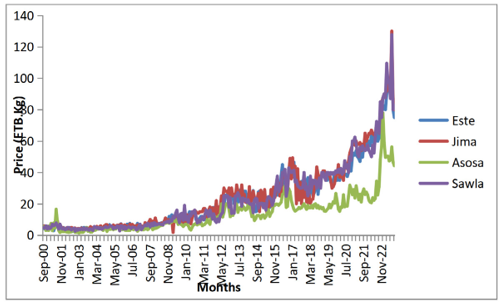
Figure 2: Groundnuts, nominal prices in surplus areas, 2000 to 2022, (Birr/KG)
Source: Own computation from Retail price data (2000-2022).
|
Price Series |
ADF |
KPSS |
|
|
|
|
Level |
First Difference |
Level |
First Difference |
|
lnAddisAbaba |
-0.22 |
-14.61*** |
1.90 |
0.23*** |
|
lnDiredawa |
- 0.23 |
-14.17*** |
1.85 |
0.25*** |
|
lnEste |
-1.46 |
-15.27*** |
1.904 |
0.22*** |
|
lnJima |
-0.42 |
-15.25*** |
1.88 |
0.28*** |
|
lnAsosa |
-1.35 |
-22.36*** |
1.79 |
0.09*** |
|
lnSawla |
-0.30 |
-17.21*** |
1.901 |
0.228*** |
|
Source: Own computation from Retail price data (2000-2022) |
||||
Stationarity Test Results
|
Price Series |
ADF |
KPSS |
|
|
|
|
Level |
First Difference |
Level |
First Difference |
|
lnAddisAbaba |
-0.22 |
-14.61*** |
1.90 |
0.23*** |
|
lnDiredawa |
- 0.23 |
-14.17*** |
1.85 |
0.25*** |
|
lnEste |
-1.46 |
-15.27*** |
1.904 |
0.22*** |
|
lnJima |
-0.42 |
-15.25*** |
1.88 |
0.28*** |
|
lnAsosa |
-1.35 |
-22.36*** |
1.79 |
0.09*** |
|
lnSawla |
-0.30 |
-17.21*** |
1.901 |
0.228*** |
|
Source: Own computation from Retail price data (2000-2022) |
||||
Table 2: Unit Root Test for Retail Price (Birr/ Kg) of Selected Groundnut Market in Ethiopia at level and first difference result for the period 2000 to 2022
Note: For the ADF test; triple, double and single asterisks indicate statistical significance at 1, 5 and 10 percent level. On the other hand, triple, double and single asterisks for the KPSS show significance at all levels, two levels and one level respectively. The critical values for the ADF at 1, 5 and 10 percent levels are -3.465, -2.877 and -2.575 respectively. The critical values for the KPSS are 0.739, 0.463 and 0.347 at 1, 5 and 10 percent respectively.
Prices at the six markets were all stationary after the first difference. Since all variables were stationary after first difference, meaning that they were integrated of order1, that is to say I (1). This is one of the conditions for testing co-integration that depicts the existence of a long-run relationship among the six groundnuts markets. Similarly, Kwiatkowski Philips Schmidt Shin (KPSS) found the same results with ADF tests. That is since the value of KPSS test statistics for the first difference of all market price series is smaller than the critical value at the 0.01 level of significance. We fail to reject the null hypotheses of stationarity at the 1% level of significance. This implies that the first differenced series of the all market are stationary.
Assymetric cointegration test for Diredawa- Este market
F bound test
Upon verifying the order of integration, the next step involves examining the cointegrating properties of the variables. We employed the Bounds cointegration tests, utilizing both F statistics and t statistics, to determine the presence of cointegration among the variables. The methodology of the tests is contingent upon the established upper and lower critical bounds. Specifically, if the empirical values of the F and t statistics surpass the upper bound, the null hypothesis is rejected, indicating that the variables are cointegrated. Conversely, if the values fall below the lower bound, it suggests a lack of cointegration among the variables. In cases where the values reside between the critical bounds, the results of the test remain inconclusive.
The estimated coefficient of the NARDL model will be spurious if variables are not cointegrated. This asymmetric cointegration technique under the nonlinear ARDL model has been proposed by [22]. They have recommended applying the joint null hypothesis of level variables and evaluating the bound test's critical values proposed by [26]. If the estimated value of F-statistics is obtained as more significant than the upper critical value, it confirms cointegration. If the F-value is closer to zero than the lower critical value, then there is no cointegration. If the F-value falls between the upper and lower critical values, then no conclusion can be drawn.
|
F-Bounds Test |
Null Hypothesis: No levels relationship |
|||
|
Test Statistic |
Value |
Signif. |
I(0) |
I(1) |
|
F-statistic |
5.386920*** |
10% |
2.63 |
3.35 |
|
K |
2 |
5% |
3.1 |
3.87 |
|
|
|
2.5% |
3.55 |
4.38 |
|
|
|
1% |
4.13 |
5 |
|
Notes: *** significant at 1% level. Source: Own computation from groundnut retail price data (2000-2022) |
||||
Table 3: Results of Bounds Test for Diredawa- Este Market
Table above shows that the value of F-statistics is 5.386, which is greater than the critical value for 1%. The null hypothesis of no cointegration is rejected, which means the variables are cointegrating in the long term among the selected variables.
Assymetry test for Diredawa- Este market
From the Wald t test below the probability value is not significant so, we fail to reject the null hyphothesis Null hypothesis: there is no asymmetry Alternative: there is asymmetry
|
Wald Test: |
|||
|
Test Statistic |
Value |
Df |
Probability |
|
t-statistic |
-1.124695 |
260 |
0.2618 |
|
F-statistic |
1.264939 |
(1, 260) |
0.2618 |
|
Chi-square |
1.264939 |
1 |
0.2607 |
|
Restrictions are linear in coefficients Source: Own computation from groundnut retail price data (2000-2022) |
|||
Table 4: Testing the presence of asymmetry for Diredawa - Este market
From the Wald t test above the probability value is not significant so, we fail to reject the null hypothesis. There is No asymmetry between this markets.
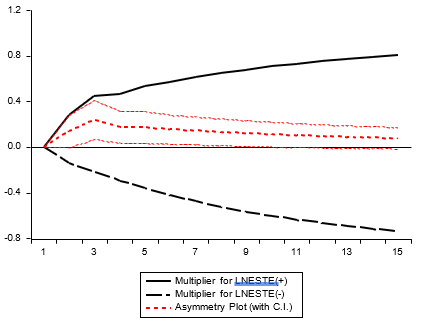
Figure 3: Shocks of asymmetric dynamic multipliers of Estet on Diredawat, using multiplier and the asymmetry identified with the NARDL model.
From The Figure above we can easily understand that:
1. The continuous dark line tells how Diredawa market corrects due to a positive change in Este market, and the dashed black line shows the adjustment of the dependent variable Diredawa over the horizon to a negative shock in Este.
2. The dashed line is the asymmetric plot, and it shows the difference between the dynamic multiplier of positive and negative changes in the regressor.
3. The asymmetry line lies within the upper and lower bands of the 95% confidence intervals. The zero line falls below the lower boundary of the 95% confidence intervals, indicating that their asymmetry is statically significant.
4. We can easily see that the dependent variable responds positively to a positive change and negatively to an adverse change in the regressor. Also, we can see the response of Diredawa.
Getting positive or negative changes is more evident in the long run than in the short run, where it is virtually operating simultaneously. Furthermore, the scale of an increase resulting from a positive change is larger than the scale of decrease because of a negative change, and that variation is suggestive of the observed asymmetry already established in the Wald Test. So, there is no asymmetric relationship between Diredawa market and Este Market.
Assymetric Cointegration test for Diredawa-Jima Market
The Longrun Cointegration is presented in table below
|
F-Bounds Test |
Null Hypothesis: No levels relationship |
|||
|
Test Statistic |
Value |
Signif. |
I(0) |
I(1) |
|
F-statistic |
12.1796*** |
10% |
2.63 |
3.35 |
|
K |
2 |
5% |
3.1 |
3.87 |
|
Notes: *** significant at 5% level. Source: Own computation from groundnut retail price data (2000-2022) |
||||
Table 5: The bound test for Longrun cointegration of Diredawa-Jima Market
Table above shows that the value of F-statistics is 12.32693, which is greater than the critical value for 1%. The null hypothesis of no cointegration is rejected, which means the variables are cointegrating in the long term among the selected variable.
|
Wald Test: |
|||
|
Test Statistic |
Value |
Df |
Probability |
|
t-statistic |
0.820218 |
266 |
0.4128 |
|
F-statistic |
0.672757 |
(1, 266) |
0.4128 |
|
Chi-square |
0.672757 |
1 |
0.4121 |
|
Restrictions are linear in coefficients Source: Own computation from groundnut retail price data (2000-2022) |
|||
Table 6: Testing the presence of asymmetry for Diredawa-Jima market
From the Wald t test above the probability value is not significant so, we fail to reject the null hyphothesis. There is No asymmetry between this markets.
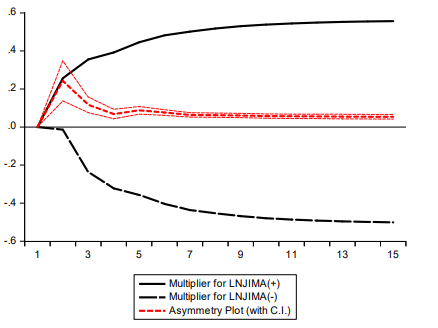
Figure 4: Shocks of asymmetric dynamic multipliers of Jimat on Diredawat, using multiplier and the asymmetry identified with the NARDL model.
From the figure above we can conclude the following points.
1. The continuous dark line tells how Diredawa market corrects due to a positive change in lnJima market, and the dashed black line shows the adjustment of the dependent variable lnDiredawa Market over the horizon to a negative shock in lnJima market.
2. The dashed line is the asymmetric plot, and it shows the difference between the dynamic multiplier of positive and negative changes in the regressor.
3. The asymmetry line lies within the upper and lower bands of the 95% confidence intervals. The zero line falls below the lower boundary of the 95% confidence intervals, indicating that their asymmetry is statically significant.
4. We can easily see that the dependent variable responds positively to a positive change and negatively to an adverse change in the regressor. Also, we can see the response of Diredawa.
Getting positive or negative changes is more evident in the long run than in the short run, where it is virtually operating simultaneously. Furthermore, the scale of an increase resulting from a positive change is larger than the scale of decrease because of a negative change, and that variation is suggestive of the observed asymmetry already established in the Wald Test. So, there is no asymmetric relationship between Diredawa market and Jima Market
Assymetry Cointegration Test for Diredawa-Sawla Market
|
F-Bounds Test |
Null Hypothesis: No levels relationship |
|||
|
Test Statistic |
Value |
Signif. |
I(0) |
I(1) |
|
F-statistic |
9.266*** |
10% |
2.63 |
3.35 |
|
K |
2 |
5% 2.5% |
3.1 3.55 |
3.87 4.38 |
|
Notes: *** significant at 5% level. Source: Own computation from groundnut retail price data (2000-2022) |
||||
Table 7: Bounds test for nonlinear cointegration for Diredawa-Sawla Market
The cointegration test (Table 22) shows that the value of F-statistics is 9.266, which is greater than the critical value for 1%. The null hypothesis of no cointegration is rejected, which means the variables are cointegrating in the long term among the selected variables. Therefore, we can investigate Sawla market fluctuations in the NARDL cointegrating framework.
|
Wald Test: |
|||
|
Test Statistic |
Value |
Df |
Probability |
|
t-statistic |
-0.442352 |
265 |
0.6586 |
|
F-statistic |
0.195675 |
(1, 265) |
0.6586 |
|
Chi-square |
0.195675 |
1 |
0.6582 |
|
Restrictions are linear in coefficients Source: Own computation from groundnut retail price data (2000-2022). |
|||
Table 8: Testing the presence of asymmetry for Diredawa-Sawla market
From the Wald t test table above the probability value is greater than 5% which is not significant so, we fail to reject the null hyphothesis. There is No asymmetry between this markets.
Assymetric Cointegration test for Diredawa-Asosa Market
|
F-Bounds Test |
Null Hypothesis: No levels relationship |
|||
|
Test Statistic |
Value |
Signif. |
I(0) |
I(1) |
|
F-statistic |
6.24542*** |
10% |
2.63 |
3.35 |
|
K |
2 |
5% 2.5% 1% |
3.1 3.55 4.13 |
3.87 4.38 5 |
|
Notes: *** significant at 1% level. Source: Own computation from groundnut retail price data (2000-2022). |
||||
Table 9: Bounds test for nonlinear cointegration for Diredawa-Asosa Market
The cointegration test (Table 24) shows that the value of F-statistics is 6.245425, which is greater than the critical value for 1%. The null hypothesis of no cointegration is rejected
|
Wald Test: |
|||
|
Test Statistic |
Value |
Df |
Probability |
|
t-statistic |
-1.855311 |
258 |
0.8853 |
|
F-statistic |
0.020834 |
(1, 258) |
0.8853 |
|
Chi-square |
0.020834 |
1 |
0.8852 |
|
Restrictions are linear in coefficients Source: Own computation from groundnut retail price data (2000-2022). |
|||
Table 10: Testing the presence of asymmetry for Diredawa-Asosa market
From the wald test tableabove the probability value is greater than the 5% significance we fail to reject the null hypothesis of no asymmetry and we conclude there is no asymmetry between the two markets.
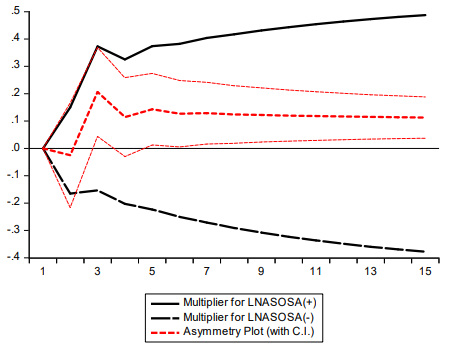
Figure 5: Shocks of asymmetric dynamic multipliers of Asosat on Diredawat, using multiplier and the asymmetry identified with the NARDL model
From The Figure above we can easily understand that:
1. The continuous dark line tells how Diredawa market corrects due to a positive change in Este market, and the dashed black line shows the adjustment of the dependent variable Diredawa over the horizon to a negative shock in Este.
2. The dashed line is the asymmetric plot, and it shows the difference between the dynamic multiplier of positive and negative changes in the regressor.
3. The asymmetry line lies within the upper and lower bands of the 95% confidence intervals. The zero line falls below the lower boundary of the 95% confidence intervals, indicating that their asymmetry is statically significant.
4. We can easily see that the dependent variable responds positively to a positive change and negatively to an adverse change in the regressor. Also, we can see the response of Diredawa.
Getting positive or negative changes is more evident in the long run than in the short run, where it is virtually operating simultaneously. Furthermore, the scale of an increase resulting from a positive change is larger than the scale of decrease because of a negative change, and that variation is suggestive of the observed asymmetry already established in the Wald Test. So, there is no asymmetric relationship between Diredawa market and Asosa Market.
Assymetry Cointegration Test for Addisababa-Este Market
|
F-Bounds Test |
Null Hypothesis: No levels relationship |
|||
|
Test Statistic |
Value |
Signif. |
I(0) |
I(1) |
|
F-statistic |
14.57028*** |
10% |
2.63 |
3.35 |
|
K |
2 |
5% |
3.1 |
3.87 |
|
|
|
2.5% |
3.55 |
4.38 |
|
|
|
1% |
4.13 |
5 |
|
Notes: *** significant at 1% level. Source: Own computation from groundnut retail price data (2000-2022) |
||||
Table 11: Bounds test for nonlinear cointegration for Addisababa-Este Market.
The cointegration test (Table 26) shows that the value of F-statistics is 14.57028, which is greater than the critical value for 1%. The null hypothesis of no cointegration is rejected.
|
Wald Test: |
|||
|
Test Statistic |
Value |
Df |
Probability |
|
t-statistic |
1.401188 |
265 |
0.1623 |
|
F-statistic |
1.963328 |
(1, 265) |
0.1623 |
|
Chi-square |
1.963328 |
1 |
0.1623 |
|
Restrictions are linear in coefficients Source: Own computation from groundnut retail price data (2000-2022) |
|||
Table 12: Testing the presence of asymmetry for Addisababa-Este market
From the wald test table above the probability value is greater than the 5% significance we fail to reject the null hypothesis of no asymmetry and we conclude there is no asymmetry between the two markets.
Assymetry Cointegration Test for Addisababa-Jima Market
|
F-Bounds Test |
Null Hypothesis: No levels relationship |
|||
|
Test Statistic |
Value |
Signif. |
I(0) |
I(1) |
|
F-statistic |
10.27831*** |
10% |
2.63 |
3.35 |
|
K |
2 |
5% |
3.1 |
3.87 |
|
|
|
2.5% |
3.55 |
4.38 |
|
|
|
1% |
4.13 |
5 |
|
Notes: *** significant at 1% level. Source: Own computation from groundnut retail price data (2000-2022) |
||||
Table 13: Bounds test for nonlinear cointegration for Addisababa-Jima Market
The cointegration test (Table 28) shows that the value of F-statistics is 10.27831, which is greater than the critical value for 1%. The null hypothesis of no cointegration is rejected.
|
Wald Test: |
|||
|
Test Statistic |
Value |
Df |
Probability |
|
t-statistic |
3.705808 |
266 |
0.0003 |
|
F-statistic |
13.73301 |
((1, 266) |
0.0003 |
|
Chi-square |
13.73301 |
1 |
0.0002 |
|
Restrictions are linear in coefficients Source: Own computation from groundnut retail price data (2000-2022) |
|||
Table 14: Testing the presence of asymmetry for Addisababa-Jima market.
From the table above the wald test table the probability value is less than the 5% significance we reject. The null hypothesis of no asymmetry and there is assymmetry between the two markets.
Assymetry Cointegration Test for Addisababa- Sawla Market
|
F-Bounds Test |
Null Hypothesis: No levels relationship |
|||
|
Test Statistic |
Value |
Signif. |
I(0) |
I(1) |
|
F-statistic |
22.670*** |
10% |
2.63 |
3.35 |
|
K |
2 |
5% |
3.1 |
3.87 |
|
|
|
2.5% |
3.55 |
4.38 |
|
|
|
1% |
4.13 |
5 |
|
Notes: *** significant at 1% level. Source: Own computation from groundnut retail price data (2000-2022) |
||||
Table 15: Bounds test for nonlinear cointegration for Addisababa- Sawla Market
The cointegration test (Table 30) shows that the value of F-statistics is 22.67000, which is greater than the critical value for 1%. The null hypothesis of no cointegration is rejected.
|
Wald Test: |
|||
|
Test Statistic |
Value |
Df |
Probability |
|
t-statistic |
4.063520 |
269 |
0.0001 |
|
F-statistic |
16.51219 |
((1, 266) |
0.0001 |
|
Chi-square |
16.51219 |
1 |
0.0000 |
|
Restrictions are linear in coefficients Source: Own computation from groundnut retail price data (2000-2022) |
|||
Table 16: Testing the presence of asymmetry for Addisababa- Sawla market
From the table above the wald test table the probability value is less than the 5% significance we reject. The null hypothesis of no asymmetry and there is asymmetry between the two markets. These results are similar to those of Asymmetric effect of financial development and energy consumption on environmental degradation in South Asia New evidence from non-linear ARDL analysis [27]. Also, found long- and short-run asymmetric relationships between producer milk price and most retailer dairy product prices in Hungary [28].
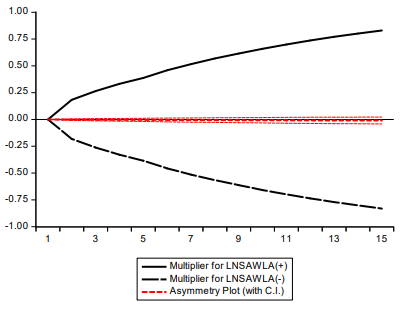
Figure 6: Shocks of asymmetric dynamic multipliers of Sawlat on Addisababat, using multiplier and the asymmetry identified with the NARDL model
From the above figure the red broken line (Assymetry plot) is on the zero line so, it clearly indicate the existence of asymmetry between the two market.
Assymetry Cointegration Test for Addisababa- Asosa Market
|
F-Bounds Test |
Null Hypothesis: No levels relationship |
|||
|
Test Statistic |
Value |
Signif. |
I(0) |
I(1) |
|
F-statistic |
11.0055*** |
10% |
2.63 |
3.35 |
|
K |
2 |
5% |
3.1 |
3.87 |
|
|
|
2.5% |
3.55 |
4.38 |
|
|
|
1% |
4.13 |
5 |
|
Notes: *** significant at 1% level. Source: Own computation from groundnut retail price data (2000-2022) |
||||
Table 17: Bounds test for nonlinear cointegration for Addisababa- Asosa Market
The cointegration test (Table16shows that the value of F-statistics is 11.0055, which is greater than the critical value for 1%. The null hypothesis of no cointegration is rejected
|
Wald Test: |
|||
|
Test Statistic |
Value |
Df |
Probability |
|
t-statistic |
-0.578827 |
269 |
0.5632 |
|
F-statistic |
0.335041 |
((1, 266) |
0.5632 |
|
Chi-square |
0.335041 |
1 |
0.5627 |
|
Restrictions are linear in coefficients Source: Own computation from groundnut retail price data (2000-2022) |
|||
Table 18: Testing the presence of asymmetry for Addisababa- Asosa market
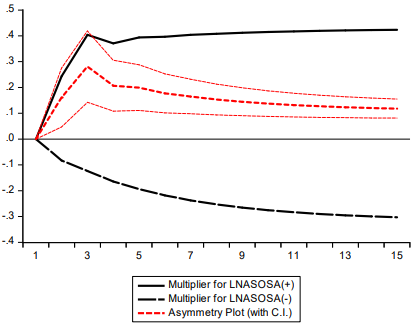
Figure 7: Shocks of asymmetric dynamic multipliers of Asosat on Addisababat, using multiplier and the asymmetry identified with the NARDL model.
From the asymmetric Dynamic Multiplier Graphs above the following conclusion was made.
1. The continuous dark line tells how Addisababa market corrects due to a positive change in Asosa market, and the dashed black line shows the adjustment of the dependent variable lnAddisababa over the horizon to a negative shock in Asosa.
2. The dashed line is the asymmetric plot, and it shows the difference between the dynamic multiplier of positive and negative changes in the regressor.
Asymmetric Dynamic Multipliers
In order to explore whether the estimated coefficients are stable in the short and long term Das et al., (2023) the Cumulative Sum of Error Forecast (CUSUM) test is applied to verify stability (Pesaran et al., 2001) [29]. The results are shown in Figure11 with a 5% confidence band, and all the values in the sample are identified considering the Price transmission of the Different market for 2022. The stability of the parameters of NARDL model is examined using CUSUM and CUSUMSQ stability approach introduced by [30]. If the blue lines cross upper or lower bounds, it implies that parameters are not stable in the model. Since the blue lines in both graphs are within lower and upper bounds, we can infer that parameters of the estimated model are stable.
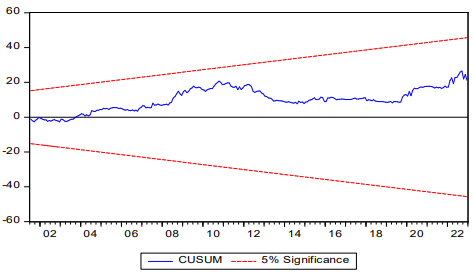
Figure 8: The Cumulative Sum of Error Forecast (CUSUM) test to estimate the Stability of NARDL model
From the above fig, It indicates that it doesnot cross the determined bounds. It demonstrates the stability of the estimated coefficient because CUSUM is at a significance level of 5% in determining bounds.
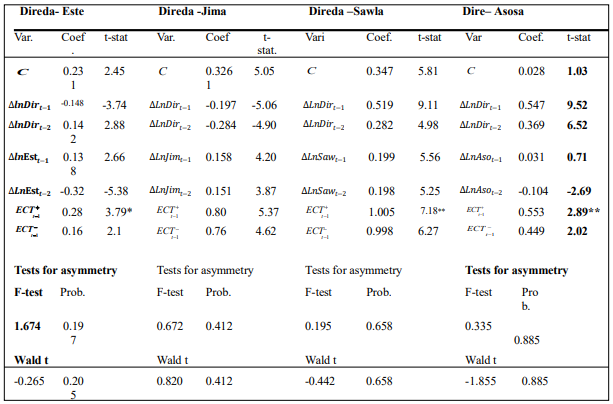
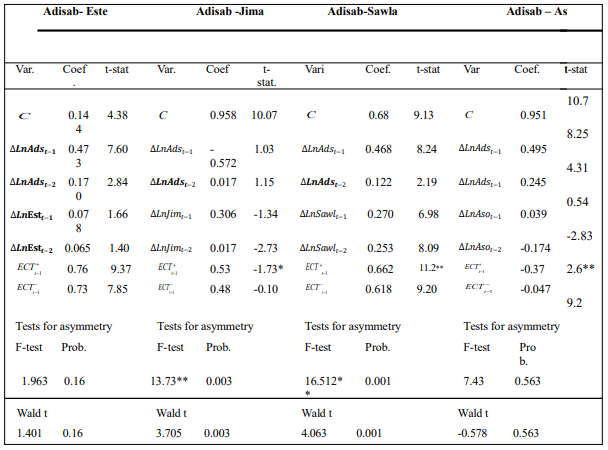
Table 18: Results of Asymmetry Vector Error Correction Model
ECT+t-1 and ECT-t-1measures adjustment to positive shocks and negative shocks respectively. Positive shocks are events that increase price of Groundnut in the surplus and deficit markets while negative shocks are events that decrease the price of groundnut in the deficit and surplus markets. Wald test was conducted to test the existence of asymmetry.
Conclusion
It is undeniable that comprehending the behavior of agricultural prices is crucial for the development of a viable Agricultural Development Plan and a sustainable food security policy. Throughout the years, numerous governments have endeavored to attain market efficiency by implementing diverse agricultural sector policies and programs. Their ultimate objective has been to ensure the availability of food from surplus to deficit areas, while also aiming to achieve positive welfare impacts from policy initiatives and address the disparities between deprived and affluent regions that arise from ecological variations and other factors. Despite such efforts, agricultural development policies in Ethiopia have concentrated much attention on increasing agricultural productivity while research on market price analysis has been relegated to the background. The purported ability of the market participants to influence the conduct of the market resulting in a full and faster transmission of cost increases to consumers than the contrary cost decreases makes it necessary to study the nature of market price linkages in Ethiopia.
The study sought to acquire knowledge about the state of Groundnut markets in Ethiopia in the last decade. Using monthly Retail Groundnut prices data between 2000 to 2022 the study examined: the variation and trends within Groundnut prices in Six markets under study, price linkages among Surplus and deficit markets in Ethiopia between 2000 to 2022, whether price transmission between Surplus and deficit markets are symmetric or asymmetric and the extent to which Groundnut markets in Ethiopia are spatially integrated.
A descriptive analysis of the data shows that the market with the highest average values for monthly Retail prices was Diredawa while the lowest value was Asosa. The variability in Groundnut market prices as determined by the coefficient of variation was on the average approximately 95.6 percent. The high fluctuations in mean Retail prices indicate that Groundnut prices were unstable. Also, the seasonal variation indicates that prices generally decline rapidly in the four months after the new crop harvest which comes in May for the all parts of the Ethiopia. A trend analysis in all the six markets shows that prices were lowest in May and highest in April. The annual trend also shows a general increase in price of groundnut over the years with a cyclical pattern in every six years that is 2017, 2018, 2019.2020, 2021 and 2012.
All the price series showed econometric integration of the order I (1) meaning that similar stochastic processes generated these series. The test for cointegration using the Johansen Maximum Likelihood tests reveals that all the six market parings were cointegrated. The market pairs examined showed that their prices series do not diverge at equilibrium thus exhibiting spatial price linkage. The results complement earlier studies of market integration in the Ethiopian market, which potentially can be attributed to the non-interventionist role of the government, improvement in communication infrastructure and the different degrees of self- sufficiency that create arbitrage between the maize markets.
The adjustment mechanism between the Groundnut markets after a shock was characterized by asymmetry where traders responded faster to shocks that squeezed their marketing margin than those that stretched them. Two out of the six markets pairs, lnAddisababa-lnJima and lnAddisababa-lnSawla, market exhibited positive asymmetry in price transmission even though the remaining markets show faster adjustment to price increases compared to price decreases, they are not statistically significant [31].
References
- Debele, S., Fininsa, C., Dejene, M., & Tana, T. (2023). Distribution of groundnut (Arachis hypogaea L.) root rot complex and associated pathogens in eastern Ethiopia. African Journal of Plant Science, 17(3), 18-29.
- Livingston, G., Schonberger, S., & Delaney, S. (2011, January). Sub-Saharan Africa: The state of smallholders in agriculture. In IFAD conference on new directions for smallholder agriculture (Vol. 24, p. 25). Rome: IFAD HQ.
- Magesa, M. M., Michael, K., & Ko, J. (2014). Agricultural market information services in developing countries: A review.
- Ross, S., & de Klerk, M. (2012). Groundnut value chain and marketing assessment in Eastern Province, Zambia. Lusaka, Zambia: Prepared for the conservation farming unit, 1-44.
- Abay, K. A., Abdelfattah, L., Breisinger, C., & Siddig, K. (2023). Evaluating cereal market (dis) integration in less developed and fragile markets: The case of Sudan. Food Policy, 114, 102399.
- Lupiya, P. (2018). Spatial market integration and price transmission of selected groundnuts markets in Zambia (Doctoral dissertation, Egerton University).
- Kinnucan, H. W., & Forker, O. D. (1987). Asymmetry in farm-retail price transmission for major dairy products. American journal of agricultural economics, 69(2), 285-292.
- Cramon-Taubadel, S. V. (1998). Estimating asymmetric price transmission with the error correction representation: An application to the German pork market. European review of agricultural economics, 25(1), 1-18.
- Meyer, J., & von Cramon-Taubadel, S. (2004). Asymmetric price transmission: a survey. Journal of agricultural economics, 55(3), 581-611.
- Tweeten, L. G., & Quance, C. L. (1969). Positivistic measures of aggregate supply elasticities: Some new approaches. The American Economic Review, 59(2), 175-183.
- Acharjee, D. C., Gosh, K., Alam, G. M., Haque, A. M. M., Sayem, S. M., & Hossain, M. I. (2023). Price transmission asymmetry of selected fishes in Bangladesh: An econometric and value chain analysis. Aquaculture Economics & Management, 27(4), 638-665.
- Hassouneh, I., von Cramon-Taubadel, S., Serra, T., & Gil, J.M. (2012). Recent developments in the econometric analysis of price transmission. TRANSFOP (Transparency of Food Pricing) Working Paper, 2.
- Granger, C. W., & Lee, T. H. (1989). Investigation of production, sales and inventory relationships using multicointegration and non-symmetric error correction models. Journal of applied econometrics, 4(S1), S145-S159.
- Cramon-Taubadel, S. V., & Loy, J. P. (1996). Price asymmetry in the international wheat market: comment.
- Abdulai, A. (2000). Spatial price transmission and asymmetry in the Ghanaian maize market. Journal of development economics, 63(2), 327-349.
- Enders, W., & Granger, C. W. J. (1998). Unit-root tests and asymmetric adjustment with an example using the term structure of interest rates. Journal of Business & Economic Statistics, 16(3), 304-311.
- Enders, W., & Siklos, P. L. (2001). Cointegration and threshold adjustment. Journal of Business & Economic Statistics, 19(2), 166-176.
- Frey, G., & Manera, M. (2007). Econometric models of asymmetric price transmission. Journal of Economic surveys, 21(2), 349-415.
- Amonde, T., McDonald, L., & Barrett, K. (2009). An economic enquiry into the causes of the perceived asymmetric price transmission in markets for specific consumer goods in Jamaica. The Fair Trading Commission (FTC) of Jamaica, April.
- Ward, R. W. (1982). Asymmetry in retail, wholesale, and shipping point pricing for fresh vegetables. American journal of agricultural economics, 64(2), 205-212.
- Sendekie, Y. (2023). Review on; Groundnut and its Production Status in Ethiopia. 14 (1000), 1–6.
- Shin, Y., Yu, B., & Greenwood-Nimmo, M. (2014). Modelling asymmetric cointegration and dynamic multipliers in a nonlinear ARDL framework. In Festschrift in honor of Peter Schmidt: Econometric methods and applications (pp. 281-314). New York, NY: Springer New York.
- Romilly, P., Song, H., & Liu, X. (2001). Car ownership and use in Britain: a comparison of the empirical results of alternative cointegration estimation methods and forecasts. Applied economics, 33(14), 1803-1818.
- Greenwood-Nimmo, M., & Shin, Y. (2013). Taxation and the asymmetric adjustment of selected retail energy prices in the UK. Economics Letters, 121(3), 411-416.
- Bayata, A. N., & Nega, T. A. (2020). Market Chain Analysis of Peanut in Bambasi District; Benishangul Gumuz Region, Western Ethiopia. American Journal of Plant Biology, 5(3), 50-59.
- Pesaran, M. H., Shin, Y., & Smith, R. J. (2001). Bounds testing approaches to the analysis of level relationships. Journal of applied econometrics, 16(3), 289-326.
- Khan, Z., Sisi, Z., & Siqun, Y. (2019). Environmental regulations an option: Asymmetry effect of environmental regulations on carbon emissions using non-linear ARDL. Energy Sources, Part A: Recovery, Utilization, and Environmental Effects, 41(2), 137-155.
- Ben Abdallah, M., Fekete Farkas, M., & Lakner, Z. (2020). Analysis of dairy product price transmission in Hungary: A nonlinear ARDL model. Agriculture, 10(6), 217.
- Das, D., Dutta, A., Jana, R. K., & Ghosh, I. (2023). The asymmetric impact of oil price uncertainty on emerging market financial stress: A quantile regression approach. International Journal of Finance & Economics, 28(4), 4299-4323.
- Brown, R. L., Durbin, J., & Evans, J. M. (1975). Techniques for testing the constancy of regression relationships over time. Journal of the Royal Statistical Society Series B: Statistical Methodology, 37(2), 149-163.
- Kebede, A., Abady, S., Endale, D., Abdulahi, J., Getahun, A., Robsa, A., & Petros, Y. (2017). Registration of ‘babile-1’,‘babile-2’, and ‘babile-3’groundnut varieties. East African Journal of Sciences, 11(1), 59-64.