

Journal of Democracy Research(JDR)
ISSN: 3070-4006 | DOI: 10.33140/JDR


Research Article - (2025) Volume 1, Issue 1
Assessing the Relationship Between Farmer’s Perception to Agricultural Practices, Risk Management and Sustainability
Received Date: Oct 10, 2025 / Accepted Date: Nov 03, 2025 / Published Date: Nov 12, 2025
Copyright: © 2026 This is an open-access article distributed under the terms of the Creative Commons Attribution License, which permits unrestricted use, distribution, and reproduction in any medium, provided the original author and source are credited.
Citation: Ama, N. A. (2025). Assessing the Relationship Between Farmer
Abstract
The study investigates the relationship between farmers' perceptions of agricultural practices, risk management strategies, and sustainability outcomes in Catublian Hinunangan, Southern Leyte. Utilizing a quantitative, correlational research design, data were collected through structured questionnaires from 50 farmers selected via purposive sampling. The results reveal that farmers predominantly rely on traditional knowledge (Mean=4.0), with a positive perception towards modern agricultural practices and government support (both with Mean=4.0). However, they generally disagree about using organic fertilizers (Mean=2.0). Correlation analysis shows a negligible and insignificant relationship between agricultural practices and risk management (r=0.035, p=0.808), suggesting no direct influence. Conversely, there is a significant negative moderate relationship between agricultural practices and sustainability (r=-0.511, p=0.001), indicating that increased agricultural practices may decrease sustainability, potentially due to the use of practices like chemical fertilizers that harm soil health. Additionally, there is a weak, non-significant negative correlation between risk management and sustainability (r=-0.100, p=0.490). These findings imply that perceptions significantly influence adoption behaviors, but their direct impact on sustainability and risk management is limited. Farmers’ reliance on experience over scientific research impacts their adoption of modern technologies, with financial constraints posing barriers to implementation.
Keywords
Agricultural Practices, Risk Management, Sustainability, Farmers
Introduction
Agriculture plays a crucial role in society by providing food, raw materials and employment, while also contributing to econom-ic development and food security. It supports livelihoods, builds strong economies through trade, and has a significant impact on various aspects of life, including nutrition and poverty reduction.
Farmers are cornerstone of agricultural systems, playing a vital role in ensuring food production, maintaining rural economies, and stewardship natural resources. Their work extends beyond more cultivation, farmers make critical decisions regarding land use, crop selection, pest management, soil conservation, which collectively influence agricultural activity and environmental sus-tainability [1]. However, most farmers in the local regions particu- larly Hinunangan Southern Leyte relied on traditional knowledge and practices in terms of agricultural activities. Traditional farm¬ing is a primitive method of farming, which is still being used by half of the world’s farming population. It involves the application of indigenous knowledge, traditional tools, natural resources, or¬ganic fertilizers, and cultural beliefs of the farmers [2].
While centuries passed by, the advancements in modern agricul¬ture have been developed. For instance, agricultural technolo¬gies influenced how agricultural development plays a crucial role nowadays. According to, the agricultural industry is getting more data-centric and requires precise, more advanced data and tech¬nologies than before, despite being familiar with agricultural pro¬cesses [3]. The agriculture industry is being advanced by various information and advanced communication technologies, such as the Internet of Things (IoT) including precision farming.
In recent years, modern agricultural practices have significantly transformed how farming is carried out, shifting from manual la-bor-intensive methods to a more efficient and technology-driven system. According to, mechanization, the use of genetically im-proved crops varieties, precision farming, and the application of digital tools such as drones, sensors, and satellite imaging have enhanced productivity and sustainability [4]. It has become piv-otal in modern horticulture, transforming agricultural practices to enhance productivity and efficiency. The urgent imperatives driv¬ing the adoption of mechanical methods include the need to boost labor productivity, increase production, and promote sustainable agricultural practices. These innovations help optimize pest and disease management. In areas like Catublian Hinunangan South¬ern Leyte, the gradual integration of moder techniques alongside traditional methods presents a promising approach to increasing food security and economic resilience. In addition, mechanization contributes to the sustainable intensification of agricultural pro¬duction system by enhancing productivity, reducing post-harvest losses, and improving the efficient use of inputs such as seeds, fer¬tilizers, and waters.
Small-scale agriculture faces several challenges which are further exacerbated by climate change, water scarcity, and soil degrada-tion [5]. Agriculture has seen a lot of technological advancements in the last few decades. However, despite the potential benefits of modernization to farmers especially Catublian Hinunangan Southern Leyte, they often face barriers in adopting these modern agricultural techniques due to limited access of capital and lack of technical knowledge. The cost of modern equipment and tech¬nology can be one of issues that smallholder farmers face where they cannot afford in buying or rent it for a sustainable farming. According to the study of, in terms of challenges, farmers were hampered mainly by lack of capital to acquire new technologies and lack of access to information, credit facilities and markets [6]. In terms of support, in addition to capital and issues of access, farmers preferred to be actively involved in defining problems and developing solutions, technologies and innovations.
Capacity building programs such as extension services, and farmer education are critical in bridging the gap between traditional and modern agriculture. Through these initiatives’ farmers will be able to gain knowledge and skills to better adapt technological innova¬tions along with modern agricultural techniques to promote sus¬tainability. In a study of, participatory approaches in agricultural extension have revolutionized knowledge dissemination by foster¬ing collaborative learning, farmer empowerment, and the co-cre-ation of context-specific innovations [7]. Unlike traditional top-down extension models, participatory methodologies emphasize mutual learning, where farmers, researchers, and extension agents engage in dynamic exchanges to develop adaptive and sustainable agricultural practices. These approaches have proven effective in promoting climate-smart agriculture, integrated pest management, soil and water conservation, and agroecological transitions, ensur- ing resilience in the face of environmental and socio-economic challenges.
This study aims to assess the relationship between farmers percep¬tions to agricultural practices, risk management to allow farmers cope up with external factors and sustainability methods employed by the farming operations to improve productivity, yield and qual¬ity of agricultural produce. This study seeks to understand how farmers beliefs and attitudes toward modern and traditional agri¬cultural methods influence their strategies to manage the risk, and how these in turn, impact sustainability of their farms. The find¬ings provide insights that can inform the development of policies and interventions to better support farmers and improve overall productivity, resilience and sustainability of their farms. Lastly, further studies, potentially involving a larger sample size or alter¬native methodological approaches, may be necessary to draw more accurate and reliable outcomes as well as to have a more definitive conclusion.
Literature Review
Agriculture remains a cornerstone of economic and food security, particularly rural areas. Farmers play a crucial role in sustaining food supply to ensure communities have access to their farm produce. Knowing and understanding farmers’ perceptions to their agricultural practices, risk management mitigation and ensuring long-term sustainability is important in the decision making. While some farmers may rely in their experience and knowledge to agricultural practices, they can also adopt modern agricultural techniques in farming. When farmers perceive modern agricultural techniques as beneficial such as good or high yield, reduced costs or for improving soil health, they can adopt these trends to improve their farming productivity and efficiency.
Agriculture in Philippines
Agriculture in Philippines played a crucial role in Philippine economy as a primary source of livelihood for millions of Fili-pinos. The Philippines is primarily an agricultural country with a large portion of Filipinos living in rural areas and supporting themselves through agricultural activities. Preliminary figures for 2022 reported about a quarter of employed Filipinos work in the agricultural sector which is made up of four sub-sectors: farming, fisheries, livestock, and forestry. In the same year, the sector gen¬erated a gross value added (GVA) of about 1.78 trillion Philip¬pine pesos, equivalent to about 8.9 percent of the country’s gross GDP from Statista. Philippine agricultural system remains reliant on traditional methods of farming particularly smallholder farmers in Catublian Hinunangan, Southern Leyte [8]. Most farms in the country use manual labor and have limited access to agricultural inputs resulting to lower yield levels and produce compared to oth¬er neighbors such as Thailand and Vietnam.
Philippines is prone to natural disasters affecting livelihoods of most Filipinos. Climate Change can be a threat to the country’s agriculture. Like Vietnam, Philippines is also abundant in rice pro¬duction making it a major rice-producing nation globally. Howev¬er, a study of states that it has experienced significant impacts on rice production due to a series of natural disasters [9]. Typhoons, floods, droughts, sea level rise, and saline intrusion are among the various natural disasters that affect rice production. Moreover, global warming has intensified water circulation, leading to more frequent and severe extreme weather events such as floods and droughts in this country.
Despite disaster’s damage to Philippine Agricultural system, it continued to establish sustainable practices that farmers can em-ploy like the push for modernization such as digital agriculture, mechanization and the use of climate-resilient technologies. The International Rice Research Institute (IRRI) and smart agriculture technology leader XAG are set to accelerate agricultural automa¬tion and innovation in the Philippines through digital agriculture and precision farming using drone technology [10]. However, the adoption rate of these modernization in Agriculture remains low due to its high costs and smallholder farmers cannot afford to im¬prove small-scale livelihoods.
Farmers Perception and Agricultural Practices
In modern agriculture, more farmers are adopting high-yield crop varieties and implementing crop rotation and intercropping tech-niques. Farmers can achieve higher yields by optimizing land use and reducing the need for deforestation or land expansion. This approach helps them meet the raising food demand and conserves natural ecosystems [11]. For instance, farmers perceived that they are willing to adopt to new and best management practices if they found it can maximize profits, if a new technology or practices where it can improve crop yields, the farmers are more inclined to adopt as it directly correlates with better income and efficiency [12].
While farmers experience external factors affecting farm produc-tion. Support from the government is essential to break even the loss due to these factors. Therefore, agriculture subsidies played a crucial role in stabilizing farm income during periods of market volatility and adverse weather conditions. Direct income support and price support subsidies were particularly effective in provid-ing a safety net for farmers, enabling them to withstand economic uncertainties and invest in their farming operations. Additionally, input subsidies significantly contributed to increased productivity by reducing the financial burden on farmers and facilitating access to essential resources such as fertilizers and improve seeds [13]. These subsidies not only encouraged the adoption of modern farm¬ing techniques but also improved farmers’ confidence in investing more in their agricultural activity. In the result, there was a signif¬icant improvement in both crop quality and quantity, in order to increase income and better livelihood for the beneficiaries.
Risk Management in Agriculture
Risk management in agriculture is the process of identifying as-sessing and controlling threats to an organization’s capital, earn-ings and operations. These risks stem from a variety of sources, in-cluding financial uncertainties, legal liabilities, technology issues, strategies management errors accidents and natural disaster [14]. Risk management is important in agriculture to ensure sustainable growth for farming operation. It plays a role in helping the farmers considering that agriculture is prone to the unpredictable challeng¬es. These uncertainties include extreme weather events, pest infes¬tations, disease outbreak, and market price volatility, all of which have become increasingly frequent and severe in recent years [15].
Risk in agriculture includes various types of risk, like production risk (e.g., pests and disease) and market risk (e.g., sudden drops in crop prices due to oversupplied), which can significantly affect a farmer’s income; financial risk (e.g., the possibility of losing mon¬ey or facing cash flow problems due to unexpected financial pres¬sure); and weather-related risks (e.g., droughts, floods, and heavy rains). According to a study of, farmers’ management response to risks is influenced by their perceptions of the risk concerned. Based on how they perceive risks, farmers implement a wide range of strategies to limit the impacts of agricultural risk therefore farm¬ers employ strategies including informal mechanisms at the farm level (crop and animal diversification and advanced technology applications) to formal mechanisms like insurance and contract¬ing [16]. Mitigation to agricultural risks plays a significant role to improve farming efficiency. For instance, in pests and disease risk, it is essential to employ IPM as a multifaceted approach to pest control that emphasizes the integration of various strategies to mitigate pest impacts while minimizing reliance on chemical pesticides. By incorporating cultural practices, biological controls, and targeted pesticide applications, growers can effectively man¬age pest populations while preserving ecosystem balance and min¬imizing harm to beneficial insects [17]. In addition, the study of states it is important for the farmers to employ various strategies to mitigate market risks in order to ensure financial stability and ensure sustainability to farming operations [18].
Diversification, future contracts and hedging, cooperative market¬ing, crop insurance, market research information and direct mar¬keting, through this strategies farmer can effectively manage ex¬posure to market risks and enhance resilience especially economic uncertainties in the agricultural sector. Climate-resilient practices and value chain integration further enhance risk management by addressing environmental impacts and supply chain disruptions [19].
Subsequently, financial risk includes all risks that threaten the fi¬nancial health and stability of the agricultural business. At a fun¬damental level, it relates to any financial activity such as covering expenses, lending and borrowing, used of personal savings and planning for investment. More formally, financial risk is associ¬ated with the management of capital (properties, vehicles, ma¬chinery etc.) that the agricultural business owners, as well as the management of money used to finance operation, which can be obtained from own funds (savings) from the formal institutions (banks loans, mortgages, credit cards) and from unofficial lenders (family loans, angel investors, cooperatives, etc.)[20].
Weather related issues such as drought, climate change, floods and heavy rains are also of the major issues that farmers experience in farming operations. A study of highlights the severity widespread nature of weather-related risk, which at times lead to extensive damage across various sectors particularly in agriculture. Agricul-ture relies heavily on weather conditions, making it highly sus-ceptible to weather-related risk. Insurance is widely used to hedge weather risk by providing farmers with a means to protect against extreme and systematic weather conditions, enhancing the suit of tools available for effective risk mitigation in agriculture [21,22].
Sustainability and Environmental Awareness
Sustainability is integration of environmental health, social equity and economic vitality in order to create thriving, healthy, diverse and resilient communities for this generation and generations to come. The practice of sustainability recognizes how these issues are interconnected and requires a systems approach and an ac¬knowledgement of complexity [23]. Environmental awareness has an understanding of the environment, the impacts of human behaviors on it, and the importance of its protection. Environ¬mental awareness is an integral part of the movement’s success. By spreading awareness to others that the physical environment is fragile and indispensable, we can begin fixing the issues that threaten it.
The role of sustainability is to ensure that there is a relationship between human developed and the environment. Sustainability is the guide to using the natural resources to meet that needs for the future; it involves practices that protect ecosystems, save energy, and reduce waste. While the environmental awareness helps the people to understand the effect of their actions on the environment. It involves behavior change, decision making, and policies to pro¬tect our planet. Sustainable agriculture includes planting diverse crops rotation that can help preserve soil productivity and lessen the need for agriculture chemicals for fertilization and pest control [24]. Sustainable farming practices- like sowing a diverse range of crops, soil health maintenance, and water conservation help farm¬ers regulate risks like unpredictable weather, pest, and unpredict- able markets.
Meanwhile, land-rebuilding practices, smart pest management practices, and renewable energy resources make the economy and the environment stable in the long run. Farmers are able to culti¬vate food for an extended period of time without consuming nat¬ural resources. If you really think about it, sustaining the way of things is risk management itself. It makes farmers more adaptable to unforeseen setbacks while guaranteeing a constant supply of food for generations to come.
Methodology
Location
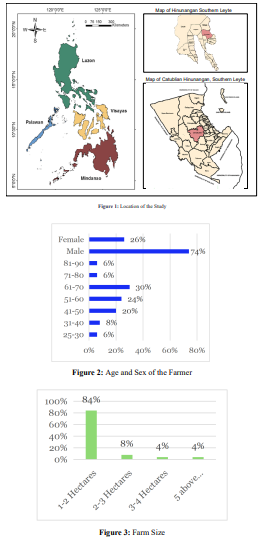
The data for this study were collected from the barangay of Catublian Hinunangan Southern Leyte (Figure 1) with 50 farmers selected using appropriate sampling. Structured or close-ended questions are meant to save the respondents time and get definite answers.
Sampling
Respondents are selected through a purposive sampling to gather necessary data. According to, purposive sampling refers to a group of non-probability sampling techniques in which units are select¬ed because they have characteristics that you need in your sam¬ple. In other words, units are selected “on purpose” in purposive sampling. This sampling allowed researchers to select participants which provided relevant data aligned with the research objectives. By focusing on information with a relevant data, a purposive sam¬pling improves the trustworthiness of the study’s findings which ensures that data collected are both pertinent and insightful.
The researchers selected respondents based on the utilized purpo¬sive sampling to assess the relationship between farmer’s percep¬tions to agricultural practices, risk management and sustainability. The table below shows the various criteria for purposive sampling.
|
Criteria for Purposive Sampling |
Sampling |
|
Farmers with farms (e.g. crops, livestock, mixed) |
Researchers prioritized farmers who only have the following farms to obtain insightful information about the current situations of their farms. |
|
Farmers with experience in farming |
Researchers also select farmers with experience in farming for a more accurate data |
Statistical Analysis
The data was analyzed using Jamovi 2.6.44 software. The indi-cators used in using the appropriate tests are the variable used, the type of data and the objectives. Descriptive statistics such as frequencies and percentages are used for demographic profile of the farmers. The median and qualitative descriptions are used to determine the farmers’ perceptions to agricultural practices, risk management and sustainability in Catublian Hinunangan South-ern Leyte. The Correlation Matrix (Pearson r) was used to de-termine the relationship between Agricultural Practices to Risk Management, Agricultural Practices to Sustainability and Risk Management to Sustainability. Likert Scale Data are used with 5 options, 1-Strongly Disagree, 2-Disagree, 3-Neutral, 4-Agree and 5-Strongly Agree.
Results and Discussions
This section will present the results and discussions, interpretations based on the collected data.
Demographic profile of the Farmers
Figure 2 shows the Age and sex of the Farmers in Catublian Hi¬nunangan Southern Leyte. Based on the results, the majority are older farmers with 30% between the age of 61-70 years. This is followed by 24% in the ages between 51-60 years old and 20% in the 41-50 years range. It suggests that farming in the study area is predominantly practiced by middle-aged to elderly farmers. On the other hand, only 6% practiced farming at the age ranging between 25-30 years old, 71-80, and 81-90 years old while 8% of the re¬spondents fall within the range of age 31-40 years old. Moreover, majority of the farmers are Male with 74% of the population and 26% for Female farmers.
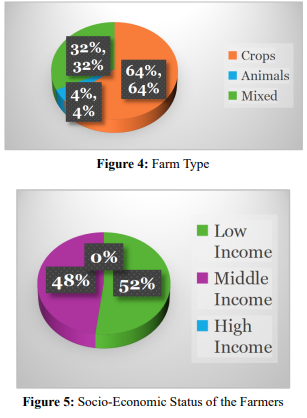
Conversely, 84% of the Farmers operate on relatively small farms measuring 1-2 hectares. Only a small farmers manage larger farms with 8% having 2-3 hectares, 44% of the farmers having 3-4 hect¬ares and another 4% cultivate farmers that are larger than 5 hect¬ares (Figure 3). These results show that farming in Catublian is large small-scale farming. Furthermore, in terms of the farm ac¬tivities, there are 64% focus primarily on crop production, par¬ticularly rice, while 32% practiced a mixed type of farming (both crops and animals), only 4% of the farmers are engaged solely in animal husbandry (Figure 4). Lastly, 50% of the farmers belong to the low-income group, 48% fall under the middle-income cate¬gory and 0% of the farmers were classified as high-income earners (Figure 5). These highlights the modest economic conditions of farmers in the study area, suggesting possible financial vulnerabil¬ities that could impact their farms.
Perceptions of the Farmers in Agricultural Practices
Table 1 shows the farmers’ perceptions to agricultural practices. Based on the results, farmers in Catublian Hinunangan Southern Leyte agree (M=4) they have access to quality seeds, fertilizers, feeds and farming equipment, this was provided by the Depart-ment of Agriculture based on the survey conducted. According to, The Department of Agriculture (DA) will distribute seeds and fertilizers for free to rice farmers starting the 2020 wet cropping season to further boost the country’s rice production. Achieving high productivity in rice entails an integrated system of crop man¬agement [25]. The fastest-moving interventions that could provide quick results are the use of quality seeds and appropriate fertil¬izers. Moreover, farmers also agree (M=4) that adopting modern farming techniques has improved their farm productivity. The ad¬vent of modern farming techniques has significantly reshaped the agricultural landscape, introducing a range of new technologies and practices like mechanization, a key aspect of modern agricul¬ture, has transformed traditional farming methods enhancing effi¬ciency and productivity [26].
Furthermore, farmers agreed (M=4) that they rely more on experi¬ence and traditional knowledge on faming than scientific re-search. A study of states that smallholder farmer continues to rely on their day-to-day agricultural activities [27]. They believe is more accu¬rate and simpler to understand as opposed to the complex nature of scientific SAPs that require formal education and training [28]. Meanwhile, farmers in Catublian Hinunangan Southern Leyte Dis¬agree (M=2) about using organic fertilizer in their farms, studies found that large farmers do not often apply organic fertilizers and instead use inorganic fertilizers like chemical fertilizer application in the farms.
On the other hand, government support programs have helped farmers implement better farming practices in which farmers agree on it (M=4). According to, government support can also be given to develop environmentally and socially responsible initiatives [29]. In the agriculture sector, government support involves providing early-warning information from meteorological monitoring, policies to encourage companies and citizens to engage in sustainable behavior, and the organization of disaster relief activities. Farmers also agree (M=4) that they struggle to afford the latest farming technologies and inputs. Farmers need capital to get their businesses off the ground and grow them into successful operations. However, they often have little access to credit or financing because lenders don’t understand their unique needs. The lack of financial resources affects not only productivity but also affects the quality of agricultural produce. Farmers in some de¬veloping countries do not have access to adequate funds to invest in better technologies, machinery and equipment which results in poor-quality agricultural produce [30]. Overall farmers in Catublian Hinunangan Southern Leyte agreed (M=4) that they employ various agricultural practices to have a good yield, quality and improve their overall farming efficiency and productivity.
Perceptions of the Farmers in Risk Management
Table 2 shows the perception of the farmers on how they manage risk in farms. Based on the results, farmers agree (M=4) that they are ready to bad weather like storms or floods. A study of regarding farmers’ risk perceptions towards three common extreme weather events (floods, cold spells, and heat waves) and to explore their intended responses to cope with future impacts, it was found that while farmers are being ready to extreme weather conditions, their intended common adaptation strategies include changes in farm management, seeking off-farm employment, emergency man¬agement planning, purchasing crop insurance, and the raising of awareness. Moreover, farmers strongly agree (M=5) that they ex¬perience crop failure due to weather conditions and it is a major concern in their farming activities [31]. Farmers confront a del¬uge of agricultural issues. Along with fighting the problems of soil degradation and biodiversity loss, they need to figure out how to adapt to more extreme weather events and changing growing con¬ditions brought on to agriculture by climate change.
Consequently, farmers disagree (M=2) of having or taking any insurance to protect them from farm losses. Based on the recent survey conducted by the researchers, only a few farmers were able to get insurance because they need to work on necessary require-ments. However, for some farmers, insurance protect against yield or revenue losses or from multiple sources of risk on their own farms [32].
In terms of government support programs in supporting farms to recover from like Typhoon, Drought and Flood, farmers responded neutral (M=3). For instance, government subsidies are enough to cushion them from the effects of natural disasters like typhoons and floods [33]. Farmers Agree/Strongly Agree (M=4.5) that unpredictable market prices make it difficult to earn a stable income from farming. According to, price instability leads farmers to respond by increasing their production and the area has sown, as they aim to ensure a minimum level of income necessary for survival [34]. Lastly, farmers agree (M=4) to managing risks in their farms, this is important because their survival depends on the farms they are managing with.
Perceptions of the Farmers to Sustainability
Table 3 shows farmers’ perceptions to sustainability methods. Based on the results, farmers in Catublian Hinunangan Southern Leyte agree (M=4) that sustainable farming benefits both their farm and the environment. They adopt modern agricultural tech¬niques such as technologies to improve farm productivity and ap¬plication of inputs particularly when it is provided by the DA. Ac¬cording to, sustainability standards help poor farmers to improve their production and livelihoods [35]. Conservation tillage, crop rotation, reduction of fertilizers, pesticides and fungicides, rota¬tional grazing and landscape preservation are examples of such sustainable practices [36]. Furthermore, farmers responded neu¬tral/agree (M=3.5) in planting different crops each year. Based on the survey, farmers perceived that they plant various crops each year while few of them plant different varieties of crops per year. Crop rotation is the most important cropping system that can help to minimize the application of fertilizers and herbicides, thereby decreased food contamination with agrochemical residue and in- crease structure of soil microbial communities [37]. Farmers also agree that they find it difficult to shift to sustainable farming due to high cost and lack of support. According to, adopting sustainable agricultural practices induces both upfront investments and main¬tenance costs [38]. During the transition period, farmers benefit from reduced input costs but might be faced with yield uncertainty and an increase in labor costs. The financial impacts during the transition itself are less known, although it seems that there are significant economic barriers to change: implementing sustainable practices can at first decrease profitability and require investments which farmers often struggle to finance due to limited resources or difficulties in securing grants and loans.
In addition, they strongly agree (M=5) on climate change signifi-cantly impacting farming activities. Agricultural production is under threat due to climate change in food insecure regions, es- pecially in Asian countries. Various climate-driven extremes, i.e., drought, heat waves, erratic and intense rainfall patterns, storms, floods, and emerging insect pests have adversely affected the live¬lihood of the farmers [39]. Government and private institutions should provide more incentives for sustainable farming responded by the farmers as neutral (M=3). Farmers do really need incentives and subsidies as a support from the government to improve their farming activities especially when they want to adopt sustainable farming, farmers often face financial concerns since most of them are low-income status and they are struggling in the accessibility of sustainable methods which could affect their farm operations which has the potential to decrease their livelihoods since most of the farmers in Catublian Hinunangan Southern Leyte are relying on agricultural produce as a food security. Overall, farmers agree (M=4) that they adopted sustainability methods for their farm in order to improve their overall farming production.
|
VARIABLES |
Strongly Disagree |
Disagree |
Neutral |
Agree |
Strongly Agree |
MEDIAN |
Qualitative Description |
|
1. I have access to quality seeds, fertilizers, feeds, and farming equipment. |
7 |
5 |
4 |
31 |
3 |
4 |
Agree |
|
2. Adopting modern farming techniques has improved my productivity. |
1 |
5 |
6 |
24 |
14 |
4 |
Agree |
|
3. I rely more on experience and traditional knowledge than scientific research. |
0 |
1 |
3 |
31 |
15 |
4 |
Agree |
|
4. I use organic fertilizers. |
18 |
15 |
4 |
13 |
0 |
2 |
Disagree |
|
5. Government support programs have helped me implement better farming practices. |
2 |
2 |
10 |
27 |
9 |
4 |
Agree |
|
6. I struggle to afford the latest farming technologies and inputs. |
1 |
4 |
6 |
26 |
13 |
4 |
Agree |
|
OVERALL |
0 |
1 |
5 |
38 |
6 |
4 |
Agree |
Table 1: Farmers Perception to Agricultural Practices
|
VARIABLES |
Strongly Disagree |
Disagree |
Neutral |
Agree |
Strongly Agree |
MEDIAN |
Qualitative Description |
|
7. I am ready to bad weather like storms or floods. |
1 |
3 |
5 |
24 |
17 |
4 |
Agree |
|
8. I experience Crop failure due to weather conditions, and it is a major concern in my farming activities. |
0 |
0 |
2 |
18 |
30 |
5 |
Strongly Agree |
|
9. I have insurance to protect my farm from financial losses. |
20 |
16 |
0 |
12 |
2 |
2 |
Disagree |
|
10. Government support programs help me recover from risk like (Typhoon, Drought, Flood) |
7 |
17 |
7 |
16 |
3 |
3 |
Neutral |
|
11. Unpredictable market prices make it difficult to earn a stable income from farming. |
0 |
1 |
2 |
22 |
25 |
4.5 |
Agree/ Strongly Agree |
|
OVERALL |
0 |
2 |
6 |
30 |
12 |
4 |
Agree |
Table 2: Farmers Perception to Risk Management
|
VARIABLES |
Strongly Disagree |
Disagree |
Neutral |
Agree |
Strongly Agree |
MEDIAN |
Qualitative Description |
|
12. Sustainable farming practices benefit both my farm and the environment. |
0 |
2 |
12 |
28 |
8 |
4 |
Agree |
|
13. I plant different crops each year. |
0 |
21 |
4 |
20 |
5 |
3.5 |
Neutral/Agree |
|
14. I find it difficult to shift to sustainable farming due to high costs and lack of support. |
0 |
3 |
7 |
29 |
11 |
4 |
Agree |
|
15. Climate change has significantly impacted on my farming activities. |
0 |
0 |
0 |
15 |
35 |
5 |
Strongly Agree |
|
16. Government and private institutions should provide more incentives for sustainable farming. |
2 |
9 |
18 |
20 |
1 |
3 |
Neutral |
|
OVERALL |
0 |
0 |
9 |
37 |
4 |
4 |
Agree |
Table 3: Farmers Perception to Sustainability
Correlation Test for Agricultural Practices, Risk Management and Sustainability
Table 4 presents the correlation test between agricultural practices and risk management. Based on the data gathered (n=50), there is a moderate negative relationship (Pearson’s r=-0.511, p=0.808) between agricultural practices and sustainability suggesting that as agricultural practice by the farmers increase, sustainability tends to be decreased. Although both variables appear to increase slightly together, the connection between them is minimal. The p-value also exceeds the conventional significance threshold of 0.05. This suggests that the observed relationship is not statistically signifi¬cant at the 5% level. Therefore, the data indicates a weak and sta¬tistically insignificant relationship between agricultural practices and risk management. Consequently, we cannot confidently con¬clude that there is an influence between these two variables based on the current data. On the other hand, there is a moderate negative relationship (Pearson’s r=-0.511, p<.001) between agricultural practices and sustainability suggesting that as agricultural practice by the farmers increase, sustainability tends to be decreased (Table 5). The p-value is highly significant at 1% significance level, it means that the observed relationship is unlikely to have occurred by chance, and we are confident that the relationship is really based on the data. For instance, the more use of fertilizers, pesticides as agricultural practices can reduce sustainability by harming the soil. According to, the agricultural practices around the world are de¬pendent upon extensive use of fertilizers and pesticides [40]. Fer- tilizers and pesticides are also considered as critical farmland tools for food security. On the other hand, the inorganic fertilizers and pesticides have many undesirable aspects which cannot be over¬looked. They have properties to remain in soil and environment for a long time and affect various biotic and abiotic factors. They have adverse effects on soil, microflora, other organisms, environment, and human health thereby affecting sustainability of the farm.
Lastly, Table 6 reveals that there is a negative weak relationship between risk management and sustainability (Pearson r=-0.100, p=.490). The p-value is greater than the conventional threshold of 0.05. This suggests that the observed relationship is not statistical¬ly significant at 5% level of significance. It indicates that there is no meaningful relationship between the risk management and sus¬tainability of the farmers. In addition, further investigation must be necessary to generate a more accurate and reliable data analysis.
Conclusion and Recommendation
The study aims to assess the relationship between farmers’ percep¬tions to agricultural practices, risk management and sustainability. The findings revealed the farmers’ perceptions to agricultural prac¬tices. Farmers agree that they use modern agricultural practices to improve farm productivity, farmers also agree to managing risk in their farms, government support has helped them recover from risks associated with agriculture. Farmers also agree to adopt sus¬tainability methods in the farm; this is perceived by participants to improve livelihoods in the community of Catublian Hinunangan Southern Leyte. Furthermore, the correlation test results state that Agricultural practices and risk management indicate an extremely weak or negligible relationship between agricultural practices and risk management and it is not significant, consequently, through agricultural practices increase, and risk management increase as well, we cannot confidently conclude that there is an influence be¬tween these two variables based on the current data.
|
Variables |
Pearson’s r |
Relationship |
P-value |
Significance |
|
Agricultural practices |
0.035 |
Little if any positive |
0.808 |
Not significant |
|
Risk management |
|
|
|
|
|
Legend: p<0.05(Significant), p<0.01(Highly Significant); (±)0-0.30 = little if any, 0.30-0.50 low positive, 0.50-0.70 moderate, 0.70-0.90 high, 0.90-1.00 very high. |
||||
Table 4: Relationship Between Agricultural Practices to Risk Management.
|
Variables |
Pearson’s r |
Relationship |
P-value |
Significance |
|
Agricultural practices |
-0.511 |
Moderate negative |
0.001 |
Highly significant |
|
Sustainability |
|
|
|
|
|
Legend: p<0.05(Significant), p<0.01(Highly Significant); (±)0-0.30 = little if any, 0.30-0.50 low positive, 0.50-0.70 moderate, 0.70-0.90 high, 0.90-1.00 very high. |
||||
Table 5: Relationship Between Agricultural Practices to Sustainability.
|
Variables |
Pearson’s r |
Relationship |
P-value |
Significance |
|
Risk management |
-0.100 |
Little if any negative |
0.490 |
Not significant |
|
Sustainability |
|
|
|
|
|
Legend: p<0.05(Significant), p<0.01(Highly Significant); (±)0-0.30 = little if any, 0.30-0.50 low positive, 0.50-0.70 moderate, 0.70-0.90 high, 0.90-1.00 very high. |
||||
Table 6: Relationship Between Risk Management to Sustainability.
In addition, for agricultural practices and sustainability, there is negative moderate relationship, this indicates that as agricultural increases, the sustainability decreases, further seen in many factors affecting sustainability of their farms, it also means that the ob¬served relationship is unlikely to have occurred by chance, and we are confident that the relationship is really based on the data. This was validated by some studies where fertilizers and pesticides can decrease sustainability damaging soil health. Lastly, there is a nega¬tive weak relationship between risk management and sustainability, and it is not significant suggesting no definite influence between them. Further research, potentially involving a larger sample size or alternative methodological approaches, may be necessary to draw more definitive conclusions.
It is recommended that farms should adopt modern agricultural practices because it is scientifically studied and does really improve farming operations, the need for immediate actions and decisions is to be necessary for farmers to adopt to unpredictable weathers, purchasing or joining insurance program offered by the government will help them recover from disaster losses. Adopting sustainability methods helps farming operation easily managed. The study also recommends other for a generalizable outcomes and set-up for data analysis.
Acknowledgement
The authors thank Ma’am Edelyn P. Nuñez (M.Sc., Statistician and LPT) of Southern Leyte State University Hinunangan Campus, Faculty of the Department of Agribusiness our Research Adviser for guiding us throughout the process and analysis of this study.
Author contributions
Conceptualization, Nathan Andrie Ama; methodology, Mikka Joy Degorio, Rom Louie Apdo, Eunice Kate Baclayon, Jay Boctot, Rose Jane Jason, Mary Rose Lacbanes, Kirs Malaki, software, Nathan Andrie Ama; formal analysis, Nathan Andrie Ama. All authors have agreed to the published version of this manuscript.
References
- FAO, (2024). (n.d.). FAOHome.
- Hamadani, H., Rashid, S. M., Parrah, J. D., Khan, A. A.,Dar, K. A., Ganie, A. A., ... & Ali, A. (2021). Traditional farming practices and its consequences. In Microbiota and Biofertilizers, Vol 2: Ecofriendly Tools for Reclamation of Degraded Soil Environs (pp. 119-128). Cham: Springer International Publishing.
- Khan, N., Ray, R. L., Sargani, G. R., Ihtisham, M., Khayyam, M., & Ismail, S. (2021). Current progress and future prospects of agriculture technology: Gateway to sustainable agriculture. Sustainability, 13(9), 4883.
- Yadav, E. S., Chandravanshi, A. K., & Shukla, E. P. (2024). Mechanized Horticulture: Transformative Advances and Sustainable Practices. RECENT ADVANCES ANDINNOVATIONS IN AGRICULTURAL MACHINERY.
- Dhillon, R., & Moncur, Q. (2023). Small-Scale Farming: A Review of Challenges and Potential Opportunities Offered by Technological Advancements. Sustainability 2023, 15, 15478. Publisher Full Text| Reference Source.
- Masere, T. P., & Worth, S. H. (2022). Factors influencing adoption, innovation of new technology and decision-making by small-scale resource constrained farmers: The perspective of farmers in lower Gweru, Zimbabwe. African Journal of Food, Agriculture, Nutrition and Development, 22(3), 20013-20035.
- Prajapati, C. S., Priya, N. K., Bishnoi, S., Vishwakarma, S. K., Buvaneswari, K., Shastri, S., ... & Jadhav, A. (2025). The role of participatory approaches in modern agricultural extension: bridging knowledge gaps for sustainable farming practices. Journal of Experimental Agriculture International, 47(2), 204-222.
- Balita, C. Topic: Agriculture in the Philippines. (2025c, April 22). Statista.
- Cao, T. M., Lee, S. H., & Lee, J. Y. (2023). The impact of natural disasters and pest infestations on technical efficiency in rice production: a study in Vietnam. Sustainability, 15(15), 11633.
- IRRI and smart agriculture technology leader XAG collaborate to. (2025, January 21). International Rice Research Institute.
- Morrison, R. (2025, April 8). 11 Ways Farmers are Adapting to climate Change. Earth.Org.
- Liu, T., Bruins, R. J., & Heberling, M. T. (2018). Factors influencing farmers’ adoption of best management practices: A review and synthesis. Sustainability, 10(2), 432.
- Madhu, P. (2022). IMPACT OF AGRICULTURAL SUBSIDIES ON FARM INCOME AND PRODUCTIVITY:A CASE STUDY. In International Journal of Research and Analytical Reviews (IJRAR), (Vol. 9, Issue 2, pp. 282–284).
- Tucci, L., & Stedman, C. (2024, October 7). What is risk management? Importance, benefits and guide. Search Security.
- European Food Safety Authority (EFSA), Maggiore, A., Afonso, A., Barrucci, F., & Sanctis, G. D. (2020). Climate change as a driver of emerging risks for food and feed safety, plant, animal health and nutritional quality. EFSA Supporting Publications, 17(6), 1881E.
- Duong, T. T., Brewer, T., Luck, J., & Zander, K. (2019). A global review of farmers’ perceptions of agricultural risks and risk management strategies. Agriculture, 9(1), 10.
- Stinchfield, T. (2025). Crop Protection: Pest and Disease Management Best Practices. Komarek, A. M., De Pinto, A., & Smith, V. H. (2020). A review of types of risks in agriculture: What we know and what we need to know. Agricultural systems, 178, 102738.
- Komarek, A. M., De Pinto, A., & Smith, V. H. (2020). A review of types of risks in agriculture: What we know and what we need to know. Agricultural systems, 178, 102738.
- Doggalli, G. (2024). Risk management strategies for agricultural enterprises. Emerging trends in agricultural economics agribusiness: An edited anthology, 413-427.
- Bampasidou, M., Goldgaber, D., Gentimis, T., & Mandalika,A. (2024). Overcoming ‘Digital Divides’: Leveraging higher education to develop next generation digital agriculture professionals. Computers and Electronics in Agriculture, 224,109181.
- Nordhaus, W. (2019). Climate change: The ultimate challenge for economics. American Economic Review, 109(6), 1991-2014.
- Hong, H. G., Karolyi, G. A., & Scheinkman, J. (2020). Climate finance. Review of Financial Studies, 33(3), 1011–1023.
- UCLA, (2020) Sustainability. (n.d.). UCLA Sustainability.
- Dubey, & Anna. (2025, April 21). Sustainable agriculture| Definition, Practices, Methods, Examples, & Facts.Encyclopedia Britannica.
- [DA Press Office. (2020). Rice farmers to receive free seeds,fertilizers for May 2020 main season.
- Sekhar, M., Rastogi, M., Rajesh, C. M., Saikanth, D. R. K., Rout, S., Kumar, S., & Patel, A. K. (2024). Exploring traditional agricultural techniques integrated with modern farming for a sustainable future: A review. Journal of Scientific Research and Reports, 30(3), 185-198.
- File, D. J. M. B., & Nhamo, G. (2023). Farmers’ choice for indigenous practices and implications for climate-smart agriculture in northern Ghana. Heliyon, 9(11).
- Myeni, L., Moeletsi, M., Thavhana, M., Randela, M., & Mokoena, L. (2019). Barriers affecting sustainable agricultural productivity of smallholder farmers in the Eastern Free State of South Africa. Sustainability, 11(11), 3003.
- Barbosa, M. W. (2024). Government support mechanisms for sustainable agriculture: A systematic literature review and future research agenda. Sustainability, 16(5), 2185.
- JIVA. (2025). What are the most common problems and challenges that farmers face? (n.d.).
- Budhathoki, N. K., Paton, D., Lassa, J. A., Bhatta, G. D., & Zander, K. K. (2020). Heat, cold, and floods: exploring farmers’ motivations to adapt to extreme weather events in the Terai region of Nepal. Natural Hazards, 103(3), 3213-3237.
- Smith, V. H., & Watts, M. (2019). Index based agricultural insurance in developing countries: Feasibility, scalability and sustainability. Gates Open Res, 3(65), 65.
- Rola, A. C. C. (2021). A comparative study of farmers' disaster coping capacities and the impacts of agricultural insurance: a case from Gifu Prefecture, Japan, and Laguna Province, Republic of the Philippines (Doctoral dissertation, Doshisha University).
- Assouto, A. B., Houensou, D. A., & Semedo, G. (2020). Price risk and farmers’ decisions: A case study from Benin. Scientific African, 8, e00311.
- Meemken, E. M. (2020). Do smallholder farmers benefit from sustainability standards? A systematic review and meta-analysis. Global Food Security, 26, 100373.
- Dessart, F. J., Barreiro-Hurlé, J., & Van Bavel, R. (2019). Behavioural factors affecting the adoption of sustainable farming practices: a policy-oriented review. European Review of Agricultural Economics, 46(3), 417-471.
- Selim, M. (2019). A review of advantages, disadvantages and challenges of crop rotations. Egyptian Journal of Agronomy, 41(1), 1-10.
- Moret-Bailly, S., & Muro, M. (2024). The costs and benefits of transitioning to sustainable agriculture in the EU. Institute of European Environmental Policy.
- Habib-ur-Rahman, M., Ahmad, A., Raza, A., Hasnain, M. U.,Alharby, H. F., Alzahrani, Y. M., ... & El Sabagh, A. (2022). Impact of climate change on agricultural production; Issues, challenges, and opportunities in Asia. Frontiers in PlantScience, 13, 925548.
- Baweja, P., Kumar, S., & Kumar, G. (2020). Fertilizers and pesticides: Their impact on soil health and environment. In Soil health (pp. 265-285). Cham: Springer International Publishing.