

AI and Intelligent Systems: Engineering, Medicine & Society(AIISEMS)
ISSN: 3068-9503 | DOI: 10.33140/AIISEMS


Research Article - (2025) Volume 1, Issue 1
Artificial Intelligence for Computer Vision: Bibliometric Analysis
2Computer Information Systems Research and Technology Centre, Turkey
Received Date: May 19, 2025 / Accepted Date: Jun 20, 2025 / Published Date: Jun 27, 2025
Copyright: ©Ã?©2025 Oke Oluwafemi Ayotunde, et al. This is an open-access article distributed under the terms of the Creative Commons Attribution License, which permits unrestricted use, distribution, and reproduction in any medium, provided the original author and source are credited.
Citation: Ayotunde, O. O., Cavus, N. (2025). Artificial Intelligence for Computer Vision: Bibliometric Analysis. AI Intell Sys Eng Med Society, 1(1), 01-23.
Abstract
Computer Vision (CV) is a prominent area of focus in Artificial Intelligence (AI) research, with applications ranging from self- driving cars to medical imaging. A bibliometric analysis is presented in this study for the latest research in AI for CV, focusing on advancements in CV models, their evaluation, and their use in various applications from 1981 to 2023 using Web of Science Clarivate Core Collection database and a dataset of 1857 retrieved publication. VOS viewer and CiteSpace software were implemented to perform science mappings and bibliometric analysis techniques in the study. Hence, analysing citation networks, publication output, and collaboration patterns in the field to identify influential research publications, researchers, and institutions. The analysis reveals the top publications and researchers in the field, as well as the most common research topics and their relative importance. This study finds that deep learning techniques, such as convolutional neural networks (CNNs), are the dominant approach in CV research, with applications in object detection, feature extraction, and image analysis. Also, it found that USA has a wide partnership and collaborative range amongst making it the most productive country. This study also discussed few of the challenges and opportunities in AI for CV, including U-Net not generating more precise segmentation in biomedical image segmentation. The recommendation of this study for future research direction is the need for more interdisciplinary collaboration, the development of new evaluation techniques, and the exploration of novel applications of AI for CV. The bibliometric analysis results will be of interest to researchers, practitioners, and policymakers interested in AI, CV, and related fields, as well as anyone interested in the latest advancements in this exciting and rapidly evolving field.
Keywords
Artificial Intelligence, Bibliometric Analysis, Computer Vision, Data Analysis, Visualization
Introduction
Artificial intelligence (AI) and its applications have developed rapidly in recent years, with computer vision (CV) being a key area It has become an important technology transforming the way we live, work and interact with our environment [1]. One of the most exciting applications of AI is CV, which has grown exponentially in recent years. Computer vision (CV) is a field of research that focuses on machine learning to understand and interpret information from their environment. This study is implementing, in AI-Applications, Medical Reflections, etc., as well as in research and development, advances achieved [2]. In this study, bibliometric analysis of the AI for CV landscape provides a valuable resource tool for research and in the understanding of state-of-the-art advancements. To explore the latest developments in CV models, their analysis, and applications in areas such as self- driving vehicles, monitoring systems, and medical imaging.
Exploring literature sources, such as citation networks, source literature, and collaborative models, to identify challenges and gain insights into key research trends and directions in the field. Through this review, this review aims to identify influential publications, researchers and organizations to provide insights into key trends, challenges and opportunities in the field. Overall, the research data can guide future research in this exciting and rapidly growing field and help researchers and practitioners identify high- impact projects, collaborate with leading experts, and develop AI edge new and innovative CV applications. The review stems from the critical importance of AI for CV and the need to write a comprehensive essay on the current state of research A review CV will provide a comprehensive understanding of research developments in AI, with the most influential research publications and researchers and leading institutional stakeholders including the field.
This finding will be of interest to clinicians and policymakers. There have been recent developments in AI and CV (AICV), and significant growth has occurred in various sectors including transportation, health and safety [1]. Self-driving cars are becoming a reality, and medical imaging techniques are advancing rapidly, providing more accurate and efficient diagnoses [2-4]. However, with these advancements come challenges, such as ensuring the safety and reliability of AI-based systems and addressing ethical concerns related to their use [5,6]. This study paper objective is to perform an analysis of research, on AICV. It aims to explore the existing publications in this field and present an overview. Firstly, it analyzes publications based on their performance including characteristics such, as publication types, citations, research areas and annual trends.
Secondly, identification of impactful and productive matrices such as authors, countries and institutions in the research with detailed study of their collaborative associations. Thirdly, the bibliometric analysis using Burst detection on the authors, countries, institutions, journals and references to highlight the cutting-edge research over a period of time. Fourthly, describing various research hotspots, cutting edge, and growth trends in the AICV as well as the identification of research topics from keywords perspective. Lastly, a discussion on state-of-the-art issues, challenges, limitations, future trends and recommendations are presented. In summary, this bibliometric analysis of AI for CV aims to provide insights into the latest research trends and their potential impact on AI applications in self-driving cars, surveillance systems, medical imaging, and other areas.
Computer Vison Approaches and Issues Relating to it
Having undergone a transformative journey, CV has been largely transformed the by AI advancements, particularly deep learning techniques. In the same vein, convolutional neural networks (CNNs) has become a key player when it comes to carrying out CV research. CNNs performs well when it comes to tasks like semantic segmentation, object detection and image classification as a result of their ability to automatically work on raw pixel data by hierarchical representations learning and extraction [4,7,8]. However, despite their performance, some limitations do exist with CNNs. One of which is in precise segmentation achievement in areas such as biomedical imaging where there is need for an accurate definition of anatomical structures [9]. For instance, U-Net architecture despite being known to produce effective results, it may decline when it comes to producing satisfactory segmentation results on complex biomedical images with structures intricate and variations subtle in intensity [10].
According to, beyond algorithmic complexities, practical challenges related to data quality, model interpretability, and scalability pose challenges to researchers in the field of CV [9]. Also, in term of deep learning model, it effectiveness performance solely relies heavily on the available high-quality annotated datasets, which are most times expensive, and time consuming in data gathering [11]. Moreover, due to the intrinsic black- box nature of deep neural networks, there exists challenges in understanding how the models arrive at their final decisions, and this raises trustworthiness and transparency concerns, especially in development of applications like autonomous vehicles [9]. Additionally, while significant advancements in CV have been made possible by deep learning models, scalability happens to be a concern with regards to resource-constrained environments where the deployment of computationally intensive models may not be feasible [1].
Addressing these challenges involves a whole new approach that combines the collaboration of different expertise, spanning across diverse disciplines such as computer science, medicine, and engineering [12]. Similarly, interdisciplinary collaboration has potential to ensure the deployment ethics of AI-driven CV systems and not limited only developing robust algorithms [13]. Based on a research study by, in order to build trust and acceptance among end-users and stakeholders, efforts need to be made to improve the interpretations of AI models [11]. Similarly, current research focus is on investigating novel methodologies, such as domain adaptation and transfer learning which can be used to manage issues relating to data scarcity thereby also improving the CV models’ capabilities in applications and across various domains [14]. The proper management of these issues coupled with the adoption of interdisciplinary collaboration in the field of AICV has great potential towards a better understanding of intelligent machines and their applications [13].
AICV Research Trend
Based on the dynamic and multifaceted research application of AICV, it has birth various methodologies, applications, and collaborative networks. And through a comprehensive bibliometric analysis in this study, AICV key trends and patterns are discovered, as they provide a better understating of its development cycle from its embryonic stages to its most current state of development. One key trend is an increase in deep learning techniques application, particularly convolutional neural networks (CNNs), which have transformed the field of CV with high performance accuracy in image recognition, scene understanding, and object detection [15]. This key trend rapid growth and acceptance amongst researchers can be seen in the number of publications focusing on deep learning-based approaches, with emphasis on the significant role played by neural network architectures towards driving CV innovation.
In addition to methodological advancements key trends, research in AICV is characterized by collaborative efforts that spans across institutions, countries, and research fields. Collaboration play a vital role in promoting knowledge and ideas exchange, facilitating interdisciplinary collaborations, and leading to progress in addressing AICV challenges [16]. Further analysis on the geographical distribution of AICV research ecosystem shows the top countries with significant contributions in the research area with the likes of China and the United States. Furthermore, ow common than ever is the existence of interdisciplinary collaborations amongst academia and industry experts in conjunction with governmental agencies.
With the recent AICV growth, there would be a change in the research focus and trends which would change the future focus of the field. One of such trend is the integration of AI techniques with existing CV traditional approaches to leverage the strengths of both approaches in providing effective solution to real-world challenges [17]. In addition, regarding the development of AI-based CV systems, there has been an increase in public interest based on societal, ethical, and regulatory point of view. This encompasses efforts to control and reduce the negative preconceived notion on AI models and algorithms, transparency, accountability, and ensuing a justifiable right to using the technology [12,18-20].
Impact on AI Applications in Self Driving Cars
The advent of AICV technology in the automotive industry has led to an innovative especially with the development of self-driving cars [8]. AICV play a vital role in the progress of autonomous vehicles by fitting vehicles with sensors which makes them perceive and interpret their surroundings, thus enabling them make split-second navigation decisions on the road [2]. Some common use of CV in autonomous vehicles comprise but not limited to the following; lane detection, object detection, pedestrian detection, and traffic sign recognition among others [2,3,8,21]. These application uses all leverage deep learning algorithms such as convolutional neural networks (CNNs) for data analysis from insights provided by the sensors (e.g. cameras, radar, and LiDAR systems) for the facilitation of dynamically adaptive driving [23].
Based on a study, the influence of AI applications in self-driving cars is analysed such that it is shown to extend beyond technology and innovation alone but encompasses and puts into consideration some societal factors like mobility, traffic efficiency, road safety improvements, and so on [23]. In context, driving mistakes by humans have been a primary cause of automobile accidents and this can be properly managed by adoption dn integration of AICV autonomous vehicles as they have impeccable potentials in reducing human error, thus saving lives [2]. Similarly, another study by, shows how the adoption of self-driving cars, with focus on electric vehicles plays a major role in the reduction of carbon emissions with abilities for route optimization [24]. However, the adoption of AI-driven autonomous vehicles also raises crucial regulatory, ethical, legal considerations, relating to privacy, cybersecurity, and liability concerns [18].
Impact on AI Applications in Surveillance Systems
In the same light, AICV technology has revolutionized the area of surveillance systems, by enhancing the of detection, monitoring, and analysis capabilities of various security applications [6]. AI-driven CV systems facilitate real-time video analytics, which makes the automatic tracking and detection of anomalies, activities, and objects in surveillance footage possible [4]. Significant applications of surveillance systems comprise of crowd monitoring, facial recognition, perimeter security, behavioural analysis, among others [3,7,15,25,]. These applications adopts AI learning algorithms like deep neural networks for the extraction of meaningful insights from visual data which aids proactive threat detection and response in security [18].
Further studies by, explains AICV impact in surveillance systems such that beyond traditional security surveillance, it spans across over to other areas of society-related concerns like ethics, privacy, and civil rights [26]. However, the establishment of AICV surveillance have potential for improving public security and safety. Regardless, there are some challenges with regards to unauthorized/ authorized personal data collection, storage, and use [1]. In addition, other data related issues like facial recognition accuracy, algorithm biasness, and potential for mass surveillance are major concerns against individual privacy rights [11]. That being said, there is a pressing need for governmental regulatory intervention in terms of construction and setting frameworks and policies in place to enable transparency and accountability of surveillance systems operation.
Medical Imaging
The field of diagnostic imaging have been revolutionized by the integration of AI with medical imaging which has led to a significance in enhanced diagnoses and treatments accuracy and efficiency in medicine [27]. AI-driven CV systems in medical imaging leverage advanced learning algorithms for the analysis of complex medical images like X-ray, CT, and MRI scans, which provide information about internal working of a patient to clinicians thus aiding in disease segmentation, detection, and classification tasks [4]. The integration of these technologies lead to an automated interpretation of image data by the provision of quantitative assessments and predictive insights which would be helpful to clinicians in decision-making [26]. Key applications of AICV in medical imaging include prediction and early detection of cardiovascular conditions, diseases such as cancer, neurological disorders, as well as treatment planning monitoring processes and optimization [9,20,28,29]. Hence, this integration makes high levels of diagnostic accuracy and precision achievable to medical practitioners which in turn leads to an overall improved patient care [27].
According to, the impact of AI applications in medical imaging extends beyond just diagnosis abilities as it extends to incorporate larger healthcare areas with patient-based results [12]. AI-based image systems have potential to reduce workflow processes by reduction in interpretation times, while still maintaining an enhanced overall efficiency [19]. In addition, these AI technologies help provides patients with personalized medicine by giving them treatment plans based on their individual health profiles. This results in an optimized health outcome and with zero or low risk adverse effects [26]. However, there also exists AICV challenges in medical imaging which requires the need for a regulatory and robust validation to ensure the reliability, effectiveness, and safety of AI-driven diagnosis [2]. Likewise, data security, model algorithm transparency, and patient privacy ethical considerations must be adhered to so as to build trust and acceptance among healthcare providers and patients.
Frameworks for an Understanding of the Complex Issues Surrounding AICV
Further to the explanation on interdisciplinary collaborations, there is need for efforts that can address existing AICV complex issues which is an ongoing discussion in parliaments and among stakeholders such as industry leaders and policymakers [13]. The inclusion for a transparent communication and engagement amongst stakeholder is necessary for collaboration in understanding existing AICV opportunities and challenges [12]. Thus, by an proposing and adopting effective decision-making processes, stakeholders can collectively transform the build and development of AICV systems in an ethically inclined manner [2]. Finally, factors such as stakeholder change input, implementation of interdisciplinary collaboration, and transparent governance in AICV, can help to achieve and harness the full potential of AI- driven CV technologies.
Methodology
The purpose of this study is to give a comprehensive bibliometric analysis of research in AICV. Firstly, publications relevant to the study are extracted from a high-quality database by using a retrieval strategy. Next, is the analysis and description of important features of the publications such as annual indicators, citation index of publications, publications research type and areas. Furthermore, the implementation of complementary bibliometric methods and tools are used to find out highly productive and impactful authors, countries, institutions, and the collaborative relationships between them in the study [30]. In addition, hotspots, future trends and research frontiers are also identified. Lastly, the study discusses the present-day topical issues, prospective trends, challenges and limitations. Figure 1 shows the research framework
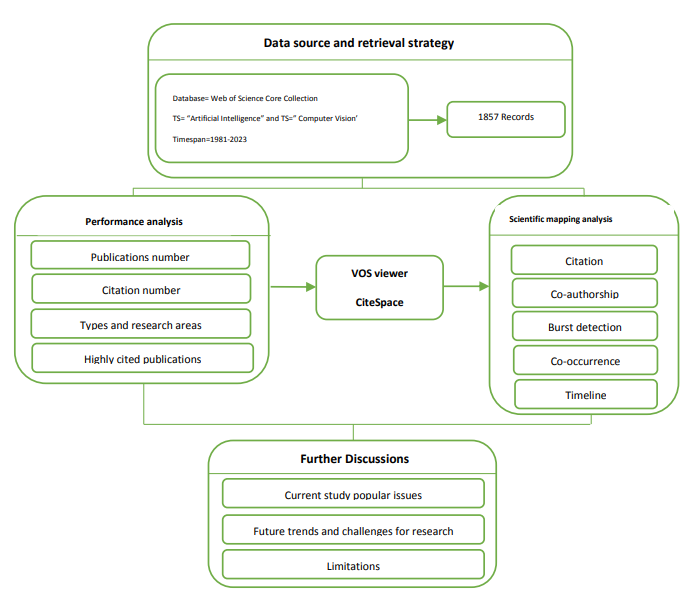
Figure 1: Research Methodology Framework
Retrieval Strategy and Data Source
In this study, records were gotten from Web of Science (WoS) Clarivate Core Collection database which is an academic database. The database provides reliable and high-quality academic information to researchers and ranks amongst the top databases and one of the mainstreams of bibliometric analysis data source in academia [31]. For the reliable retrieval and collection of records used in the study, different search keywords in the study were coined to generate the following search query: ((“Artificial Intelligence” or " machine learning” OR “deep learning”) AND (“Computer Vision” or “machine vision” OR “vision”) AND (“Application” OR “self-driving cars” OR “surveillance systems” OR “medical imaging”)). TS = “Artificial Intelligence” and TS = “Computer Vision”, Database = Web of Science Core Collection, Timespan= 1981-2023, from January 1981 till 7th April, 2023. As of April 2023, a total of 1857 records were retrieved, screened and included in the study with the first record published in 1981. After which relevant information such as titles, abstracts, keywords were extracted for bibliometric analysis with an updated number of 416 records in the study.
Bibliometric Methods
According to, the field of bibliometric belongs to scientometrics discipline implemented to assess scientific events of research publications and a structural approach of its attributes and primary characteristics [24,32]. In this study, the bibliometric analysis focuses on scientific mapping and performance analysis to show AICV research development. According to, performance analysis focuses on the use of activity indicators to measure publications influence and productivity using item analysis such as author, country, institution etc. further explained that the performance analysis characteristics rudiments can be derived using some bibliometric accepted indicators such as citations, number of publications, and average number of publication citations [33,34]. Similarly, scientific mapping analysis according to is used to show the structural knowledge and dynamic layout of a particular journal or research area [35]. It entails burst detection analysis, citation, co-authorship, co-occurrence analysis and timeline analysis [16]. Two visualization software namely; CiteSpace, and VOS viewer, were adopted and implemented in this study for the purpose of data extraction and analysis [36,37]. They were selected based on their independent strength and functions. CiteSpace is used for the search of emergent patterns and trends in publications while VOS viewer provides both visualization and network for scientific mapping [24,38].
Results
Based on the tools and methodology implemented in the study for data extraction, some AICV bibliometric analysis results are obtainable and can be shown through four sections.
Performance Analysis
Analysis of publication performance using factors such as types, annual indicators, citation frequency of the publications, research areas, etc. are discussed in this section.
Annual Indicators of Publications
The yearly AICV research citation and publication combined and displayed in Figure 2. From Figure 2, the first record on AICV, “IMAGE-ANALYSIS AND COMPUTER VISION IN MEDICINE” is an article that was published in 1994. The second publication was in 1995 withtwo records “OPTICAL-FLOW FROM 1-D CORRELATION - APPLICATION TO A SIMPLE TIME- TO-CRASH DETECTOR” and “VISUAL SURVEILLANCE IN A DYNAMIC AND UNCERTAIN WORLD”. The publication visualization however shows an upward trend, with no more than 50 yearly publications before 2017, AICV has spiked the interest of researchers and has seen a rapid growth becoming a popular research niche since 2018. The interest rate however skyrocketed in 2022. With rapid publication growth since 1995 to 2022, it shows that researchers are interested in the field and judging from the rapid upward trend, the publications number in 2023 will not be lesser than 2022. Similarly, in terms of citations, the first citation occurred in 1995 and it grew really slowly before 2013. However, since 2014, the citation numbers have also seen a rapid increase from less than 500 in 2014 to over 16000 in 2022. Making it evident that in recent years, AICV has received wide attention from scholars. It is the first quarter of the year 2023 and so far, it’s been almost ¼ of 2022 total performance.

Figure 2: Number of Publications and Citations
Types and Research Areas of Publications
From WoS database, every publication has different category types. Some records however, belong to two category types which made the total number summation of documents higher than the retrieved documents. The publication category types are shown in Table 1. Six (6) publication category types were extracted with Articles taking the lead for the largest share at 1596 records which is 85.945% of the 1857 retrieved records. This is followed by Review Articles category with 261 number of records accounting for 14.055% of the total retrieved records. Early Access is next with 44 records making up 2.369%. Processing paper with 29 records and 1.562%. Data Paper with 3 records and 0.162%. finally, Book Chapters with 2 records and a percentage of 0.108%.
|
Document Types |
Record Count |
% of 1,857 |
|
Article |
1596 |
85.945 |
|
Review Article |
261 |
14.055 |
|
Early Access |
44 |
2.369 |
|
Proceeding Paper |
29 |
1.562 |
|
Data Paper |
3 |
0.162 |
|
Book Chapters |
2 |
0.108 |
Table 1: AICV Document Types
Figure 3 however give insight on the top 10 most popular research areas which are Engineering (862), Computer Science (719), Chemistry (299), Telecommunications (252), Physics (178), Instruments Instrumentation (177), material science (176), Science Technology Other Topics (108), Environmental Science Ecology (96), Imaging Science Photographic technology (86).

Figure 3: Top 10 Research Areas
Publications that are Highly Cited
A recognized document that is mentioned and referred to by researchers describes this section of highly cited publications. This recognition citation is important in determining the impact and influence a research publication has. Table 2 displays the top 10 highly cited publication alongside information such as the Journal name, article type, year of publication, citation numbers, and number of citations per year. All in a descending order. The most cited publication is an Article category type record published in 2019 in the Journal of Big Data. Titled “A survey on Image Data Augmentation for Deep Learning”. After its publication in 20219, the record has accumulated 2791 citations in total and 558.20 citations yearly. Also, as at the time of conducting this bibliometric analysis research, the least cited publication from the top 10 range of cited publication is titled, “A survey of the recent architectures of deep convolutional neural networks”. So far, it has gathered 772 citations and it accumulates 193 citations yearly since its publication in 2020. The top 10 highly cited articles were published between 2016-2019. And all the published articles except one were of Article type which could imply that they are novel researches. The exception however was a review type of record, published in 2018. Additionally, these publications primarily focus on image processing, computer vision, and big data. Interestingly, a reason for the high publication rate could be as a result of collaboration amongst authors, institutions and countries. This further suggests collaboration to being a factor to making significant research contribution which would cause a positive movement in the direction of strengthening the field of AICV in terms of countries/regions collaboration.
|
Rank |
Title |
Source |
Type |
Year |
Citation |
Yearly Citation |
|
1. |
A survey on Image Data Augmentation for Deep Learning |
Journal of Big Data |
Article |
2019 |
2791 |
558.20 |
|
2. |
Fully Convolutional Networks for Semantic Segmentation |
IEEE Transactions on Pattern Analysis and Machine Intelligence |
Article |
2017 |
2160 |
308.57 |
|
3. |
Efficient Processing of Deep Neural Networks: A Tutorial and Survey |
Proceedings of the IEEE |
Article |
2017 |
1556 |
222.29 |
|
4. |
Convolutional neural networks: an overview and application in radiology |
Insights Into Imaging |
Review |
2018 |
1035 |
172.50 |
|
5. |
A survey of the recent architectures of deep convolutional neural networks |
Artificial Intelligence Review |
Article |
2020 |
772 |
193.00 |
|
6. |
EEGNet: a compact convolutional neural network for EEG-based brain-computer interfaces |
Journal of Neural Engineering |
Article |
2018 |
727 |
121.17 |
|
7. |
Threat of Adversarial Attacks on Deep Learning in Computer Vision: A Survey |
IEEE Access |
Article |
2018 |
707 |
117.83 |
|
8. |
Lung Pattern Classification for Interstitial Lung Diseases Using a Deep Convolutional Neural Network |
IEEE Transactions on Medical Imaging |
Article |
2016 |
706 |
88.25 |
|
9. |
Survey on deep learning with class imbalance |
Journal of Big Data |
Article |
2019 |
699 |
139.80 |
|
10. |
Reading Text in the Wild with Convolutional Neural Networks |
International Journal of Computer Vision |
Article |
2016 |
637 |
79.63 |
Table 2: 10 Highly Cited Top Publications
Journals are one of the most common research publishing sources. By integrating WoS text data file into VOS Viewer visualization software, a bibliographic coupling function to process individual journals, merge them and generate a relationship association between them. The generated association shows their collaboration which is depicted using cluster as shown in Figure 4. It visually displays sources and their level of citation using clusters trajectories. Also, with respect to the highly cited publication, it can be seen from Figure 4 that some of the journals are major stakeholders in the clusters for the other journals. IEEE Access can be seen to appear both on the bibliographic clustering and for highly cited publications as shown in Figure4 and Table 2 respectively. Each major cluster shows the association it has with other journals.

Figure 4: Bibliographic Coupling of Journals
Additionally, asides the bibliographic coupling of the journals and high citation of the publications, Table 3 shows the top 10 journals with theory record count. The record count can be seen depicted in Figure 4 during the bibliographic coupling analysis. IEEE Access has 187 occurrences being the highest number with a 10% of the total records. Making it rank as the most performing journal in this study. Next is Sensors (156 and 8%) of occurrences and percentage respectively. Followed by Applied Sciences Basel (119 and 6.408%), Remote Sensing (46 and 2.477%), Electronics (36 and 1.939%), Computational Intelligence and Neuroscience (33 and 1.777%), CMC Computers Materials Continua (27 and 1.454%), IEEE Transactions on Medical Imaging (27 and 1.454%), IEEE Transactions on Pattern Analysis and Machine Intelligence (19 and 1.023%), and Mathematics (17 and 0.915%). Amongst the top 10 journals, IEEE had the highest number of occurrences which implies how impactful the Journal is as a whole to the research of artificial intelligence and computer vision.
|
Publication Titles |
Record Count |
% of 1,857 |
|
IEEE Access |
187 |
10.070 |
|
Sensors |
156 |
8.401 |
|
Applied Sciences Basel |
119 |
6.408 |
|
Remote Sensing |
46 |
2.477 |
|
Electronics |
36 |
1.939 |
|
Computational Intelligence and Neuroscience |
33 |
1.777 |
|
CMC Computers Materials Continua |
27 |
1.454 |
|
IEEE Transactions on Medical Imaging |
27 |
1.454 |
|
IEEE Transactions on Pattern Analysis and Machine Intelligence |
19 |
1.023 |
|
Mathematics |
17 |
0.915 |
Table 3: Top 10 Journals Journal
Countries, Institutions, and Authors Analysis
This segment analyzes publications utilizing three points of view: Authors, institutions, and countries. The analysis is done using the following points; the most productive countries, institutions and based on the cooperation of authors. Utilizing VOS Watcher 1.6.19, the reference investigation analyzes the most influential authors, countries and institutions.
Citation Analysis
The top 10 citations in terms of countries, authors publications and institutions along with their related statistics are listed in Table 4. The sorting of the table is done using the number of citations for the authors, countries and institutions in descending order. Firstly, form the authors analysis, Niyato Dusit rank first with 790 citations. This is followed by Muhammad khan with 418 citations. The top 5 authors (Niyato Dusit, Muhammad Khan, Ting Daniel S.W, Khan Muhammed Attique, and Yang Jing) have over 100 citations while the remaining 5 (Fuentes Sigfredo, Viejo Claudia Gonzalez, Kadry Seifedine, Wang Peng, Yang Jie) have < 100 citations. However, the lowest citation from the top 10 list is 28 citations from Yang Jie. In terms of countries, USA has the largest citation count for its publications at 21409. The USA topped the chart with a wide margin in AICV research.
This is followed by Peoples Republic of China (8582 and England (5408) had over 5000 citations. 70% of the top 10 country list (Australia 3897, Spain 2857, South Korea 2650, Germany 2562, Italy 2325, India 1321, and Saudi Arabia 1085 have over 100 citations and less than 5000 citations to their name. From an institutional perspective, Nanyang Technology University in Singapore ranks first in citation rankings with 1324 citations. It is a national research university in Singapore and the second oldest autonomous university in the country. Next is the Chinese Academy of Sciences with 1320 citations, which is a close call to the top ranked institution. Situated in China, the institution is the national academy of the People's Republic of China for natural sciences. This is followed by John Hopkins University in Baltimore, Maryland with 966 citations, University of Michigan in Ann Arbor, Michigan with 836 citations, Tsinghua University in in Beijing, China with 580 citations. Out of the top 10 institutions, seven (7) are from Asia continent and three (3) are from the North America continent. Four (4) universities are located in China, three (3) universities are located in the United States, one (1) university from Singapore, South Korea and Saudi Arabia respectively.
|
Rank |
Author |
Citation |
|
Countries |
Citation |
|
Institution |
Citation |
|
1. |
Niyato Dusit |
790 |
|
USA |
21409 |
|
Nanyang Technology University |
1324 |
|
2. |
Muhammad khan |
418 |
|
Peoples R china |
8582 |
|
Chinese Academy of Sciences |
1320 |
|
3. |
Ting Daniel S.W |
332 |
|
England |
5408 |
|
John Hopkins University |
966 |
|
4. |
Khan Muhammed Attique |
260 |
|
Australia |
3897 |
|
University of Michigan |
836 |
|
5. |
Yang Jing |
153 |
|
Spain |
2857 |
|
Tsinghua University |
580 |
|
6. |
Fuentes Sigfredo |
82 |
|
South Korea |
2650 |
|
Sejong University |
495 |
|
7. |
Viejo Claudia Gonzalez |
79 |
|
Germany |
2562 |
|
University of Florida |
415 |
|
8. |
Kadry Seifedine |
76 |
|
Italy |
2325 |
|
King Abdulaziz University |
192 |
|
9. |
Wang Peng |
66 |
|
India |
1321 |
|
University Chinese Academy Science |
172 |
|
10. |
Yang Jie |
28 |
|
Saudi Arabia |
1085 |
|
Zhejiang University |
100 |
Table 4: Top 10 Cited Countries/Institutions/Authors Publications
Countries/Regions that are Most Productive
Publication numbers has been shown to be directly reflect the productivity and impact a country has regarding a research topic. As shown in Table 5, the top most productive country with the highest number of publications is Peoples Republic of China with 566 publications making up 30.479 of the extracted 1857 records. Peoples Republic of China, USA, England, South Korea, Spain, Italy and India all have over 100 publications in total making up 82.929% of the total 1,857 records. In general, publications in this study are geographical dispersed and not concentrated in a particular region or continent.
|
Countries/Regions |
Record Count |
% of 1,857 |
|
Peoples R China |
566 |
30.479 |
|
USA |
345 |
18.578 |
|
England |
167 |
8.993 |
|
South Korea |
137 |
7.377 |
|
Spain |
122 |
6.570 |
|
Italy |
103 |
5.547 |
|
India |
100 |
5.385 |
|
Australia |
95 |
5.116 |
|
Germany |
94 |
5.062 |
|
Saudi Arabia |
88 |
4.739 |
Table 5: The top 10 Productive Countries
Furthermore, Figure 5 shows both the collaboration of countries as well as their citation indexes of the 88 countries that participated in the study using CiteSpace and VOS software respectively. The network of countries that collaborated shown in Fig. 5a are visually represented on CiteSpace software for visualization via the use of nodes and links. Each node represents a country and a link between any two nodes indicates publication collaboration between the countries. Hence, a large node indicates that a country has relevant published literatures. Also, if a link is wide, it indicates closeness and cooperation between the two countries. For the countries and their collaboration in this study, there are 88 nodes and 415314 total strength links of all the countries in the study. However, for the top 10 countries, there is a 45 strength link between them as shown in Figure 5a.

Figure 5a: Collaborative Countries
Similarly, Figure 5b shows the countries citation indexes using VOS Viewer software that depicts and visualizes countries section of Table 5 thereby showing the collaboration of countries in terms of citation between them. From citation perspective, USA is the most productive with highest influence in terms of citation indexing with 21,409 citations. USA is identified with the colour red and the red colour effects can be seen spread across other countries. This spread to other countries shows the area of individual countries that cited the USA.

Figure 5b: Countries Based on Citation: USA
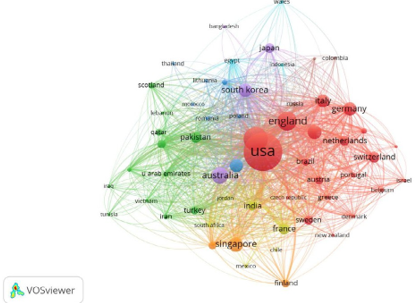
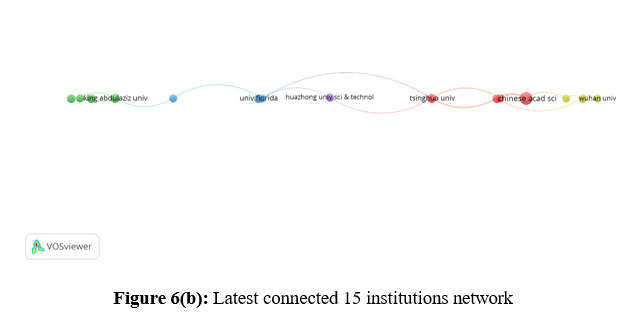
Figure 6(a): The Bibliographic Coupling of Institutions
|
Organization |
Doc |
|
Organization |
Cite |
|
Organization |
Link |
|
Chinese Academy of Science |
38 |
|
Nanyang Technology university |
1324 |
|
Chinese Academy of Science |
2485 |
|
Zhejiang University |
20 |
|
Chinese Academy of Science |
1320 |
|
University of Chinese Academy Science |
1495 |
|
King Abdulaziz University |
17 |
|
John Hopkins University |
966 |
|
Nanyang Technology university |
1177 |
|
Tsinghua University |
16 |
|
University of Michigan |
836 |
|
Zhejiang University |
1093 |
|
University of Chinese Academy Science |
15 |
|
Tsinghua University |
580 |
|
John Hopkins University |
1051 |
|
Nanyang Technology university |
15 |
|
Sejong University |
495 |
|
Tsinghua University |
803 |
|
John Hopkins University |
15 |
|
University of Florida |
415 |
|
University of Florida |
802 |
|
University of Florida |
15 |
|
King Abdulaziz University |
192 |
|
University of Michigan |
644 |
|
University of Michigan |
15 |
|
University of Chinese Academy Science |
172 |
|
Sejong University |
478 |
|
Sejong University |
14 |
|
Zhejiang University |
100 |
|
King Abdulaziz University |
408 |
Table 6: The most Productive Institutions
The Analysis of the Authors Cooperation
A representation of connections among researchers in the field of AICV is displayed visually using the collaborative network of authors. From data analysis using VOS viewer, 8367 authors have at least one publication document in the topic area of AICV. To analyse the top authors, a streamline of the authors was needed to get the top 10 authors. Hence, the least amount of documents published by an author was set to 5. Having done that 12 authors met the threshold. The top 10 authors were given in Table 7. Khan Muhammad Attique top the chart with 9 documents to his name. Every author in the top 10 all have a minimum of 5 documents.
|
Rank |
Author |
Document |
|
Author |
Strength Link |
|
1. |
Khan Muhammad Attique |
9 |
|
Fuentes Sigfredo |
318 |
|
2. |
Wang Seifedine |
7 |
|
Viejo Claudia Gonzalez |
318 |
|
3. |
Wang Peng |
7 |
|
Khan Muhammad Attique |
302 |
|
4. |
Fuentes Sigfredo |
6 |
|
Kadry Seifedine |
269 |
|
5. |
Yang Jing |
5 |
|
Wang Hao |
126 |
|
6. |
Viejo Claudia Gonzalez |
5 |
|
Yang Jing |
122 |
|
7. |
Wang Hao |
5 |
|
Yang Jie |
121 |
|
8. |
Yang Jie |
5 |
|
Wang Peng |
97 |
|
9. |
Niyato Dusit |
5 |
|
Niyato Dusit |
82 |
|
10. |
Ting Daniel S.W |
5 |
|
Ting Daniel S.W |
74 |
Table 7: Authors Documents and Strength Links
However, to get the cooperation and link strength of the authors, it was calculated based on the number of documents the authors have and their collaborations rate with other authors. Fuentes Sigfredo, an Associate Professor in Digital Agriculture, Food and Wine Sciences at the University of Melbourne and Viejo Claudia Gonzalez, a Postdoctoral research fellow at University of Melbourne both top the chart with 318 strength links in the area of AICV. This shows that not only are the top authors collaborating with other externally, they also have internal collaborations amongst themselves in the University of Melbourne. Furthermore, Figure 7a shows a visualization all the 8367 authors and the collaborative network that exists between them. The collaborative network shows a cluster of 88 Authors who collaborated together amongst the total authors in the research of AICV.

Figure 7a: The Collaborative Network with 88 Authors
Regarding the citation of authors, Table 4 lists the top 10 cited authors in the research area of AICV. Niyato Dusit tops the charts with 790 citations. However, other authors too have contributed immensely to the research area. For the visualization of the collaborative citation authors, a visualization model criteria were put in place with two (2) being the minimum number of documents for each author. Out of the 8367 authors, 538 met the threshold and out of the 538 that met the threshold, 219 authors were connected together as shown in Figure 7b. Figure 7b shows the citation collaborative network of some of authors. It depicts how the authors collaborated and which authors collaborated more. The colour assignation is used to depict the authors that made contributions by collaborating together on the research areas. In addition, Figure 7c shows more cluster details on the authors collaboration by showing the visualization density of their collaboration in years. The citation collaborative years of the authors are represented by the shade of the node colour and shown bottom-right in the year- range bar. It can be seen that between 2020 and 2022, there has been more collaborations between authors compared to the years before.

Figure 7b: The Collaborative Citation Network of Authors
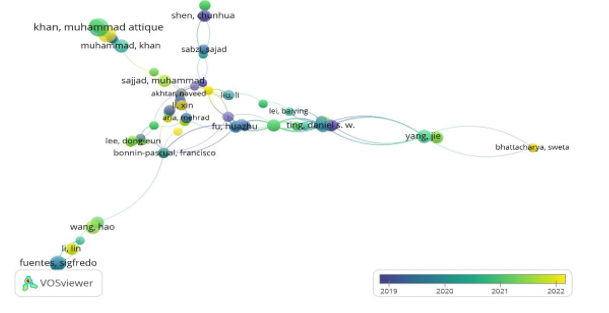
Figure 7c: Authors Overlay Citation Contribution
Authors, References, Sources, Countries, and Institutions Burst Detection Analysis
For a much understanding of the performance improvements over a period of time in an area, a burst detection analysis of certain factors such as publications, authors, institutions, journals (sources) etc. is essential. CiteSpace software is the software used to derive burst detection analyses on the factors. As shown in Tables 8 to 11 respectively. Table 8 lists the top 10 strongest citation bursts of cited authors from 2005 to 2020. From the table, an unknown author from 2005 tops the chart with a citation burst run from 2005 till 2017. The impact of the author spanned through 12 years in the research of AICV. Although, the authors identity is unknown according to CiteSpace software, it could be said that the unknown author could be a corporate body that decided to stay anonymous. The strength impact of the unknown author however is 8.03. This is followed by another author, Lowe DG whose first burst occurred in 2012 up until 2018 with a strength of 8.48. Also, from the top 10 table, the author with the highest strength is Krizhevsky A. who is the third on the list with an impact strength of 17.32, spanning for two (2) years from 2016 up until 2018. The authors strengths indicate that that these authors ae publications that strongly impact the field of AICV and are frequently referenced and cited by scholars. In the AICV research are, three authors each in 2005, 2012 and 2019 respectively had citation burst run, two authors have citation burst in 2016, in 2017, 3 authors, and in 2018, two authors. Finally, the end of the individual authors citation burst run implies a period of fast advancements in the research which is an indication that recent accomplishments in years are recent and of a high level.
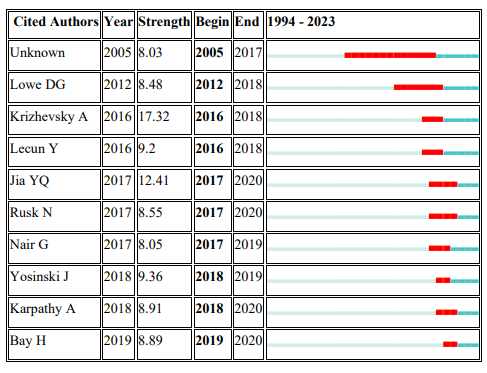
Table 8: Top 10 Cited Authors with the Strongest Citation Bursts
Table 9 shows the top 10 Strongest Citation References Bursts. From Table 9, the citations burst is seen to start after 2013 which shows the interest rate period. On the average, the references with strongest citation burst span over a period of three years and all the publications from 2017 had a burst for three years straight up until 2020. The end of the most recent burst is in 2020.
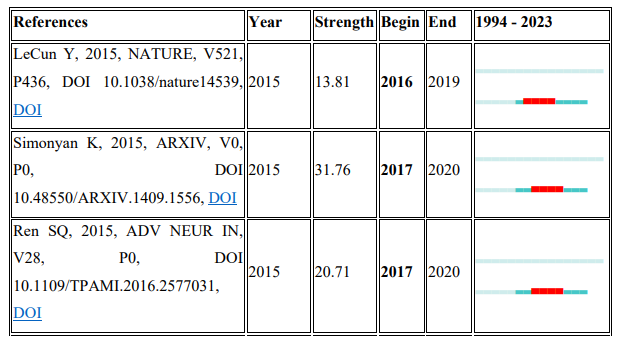
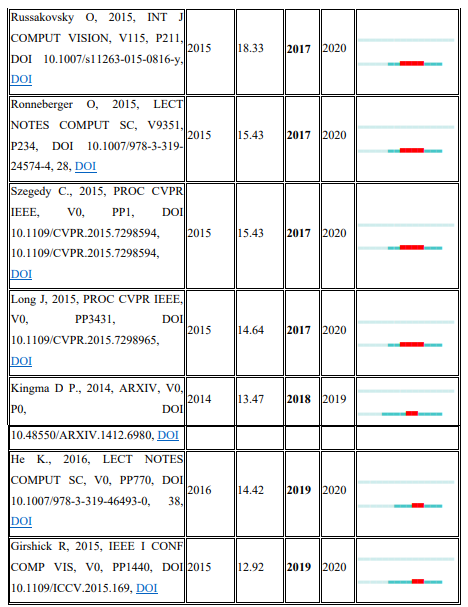
Table 9: Top 10 References with the Strongest Citation Bursts
Table 10 shows the top 10 Cited Journals with the Strongest Citation Bursts. As earlier stated that the IEEE is a strong household in the area of research especially in the area of AICV as seen from Table 2 and Figure 4 respectively. However, from Table 10, it shows the run IEEE (Transactions on Pattern Analysis and Machine Intelligence) not only had the oldest citation burst start year in 1995, but it lasted from 1995 up till 2018 in the area of AICV. Making it the journal with the largest citation burst span and burst strength at 27.91. The start and end year of the citation runs for all the journal were from 1995-2018 and 2018-2020 respectively.
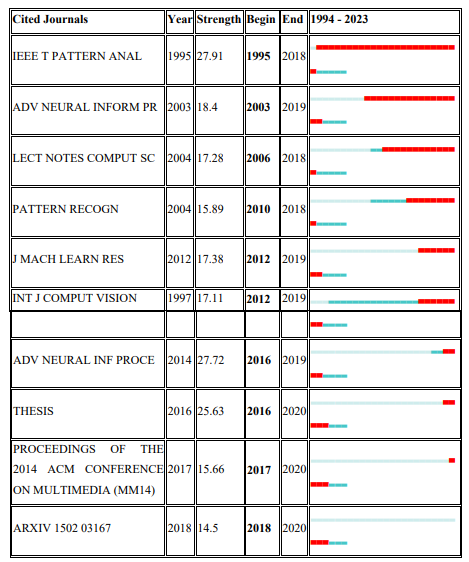
Table 10: Top 10 Cited Journals with the Strongest Citation Bursts
From Table 11 and 12, the strongest five top countries and two of the top institutions having citation bursts from 1994-2023. From the countries table Switzerland has the longest citation burst run for 24 years, from 1994 till 2018 and a burst strength of 5.49. Followed by USA from 1995 till 2007 and a strength of 4.98. the country with the highest strength however is Singapore with a strength of 9.02 and it spans for two years from 2018-2020.the most recent country with a citation burst is Pakistan which started its run in 2016 up until the time of this research (2023). It has accumulated impressive strength of 5.16 so far. These data show the influence these countries have in the research and development of the field of AICV. In addition, from Table 12, two universities with citation bursts were detected. These universities are also from the countries with strongest citation bursts. Massachusetts Institute of Technology (MIT) from the USA and National University of Singapore from Singapore. In the research are of AICV, MIT had a run from 1995 up until 2017 and a strength of 3,78 while National University of Singapore started its run after MIT in 2019 till 2021 with a strength of 4.13 which is greater strength of the two.
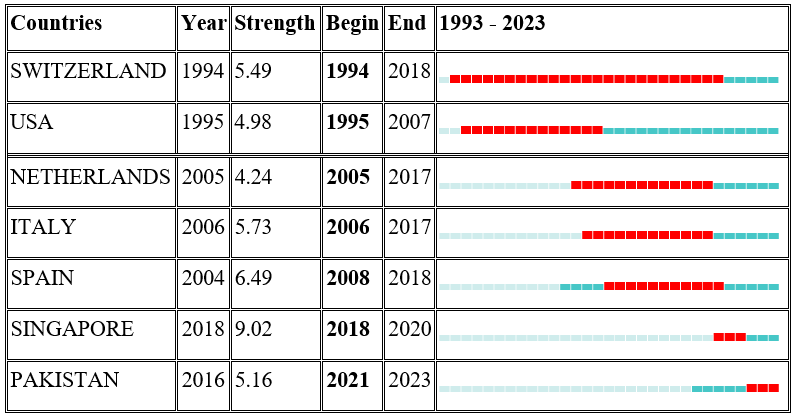
Table 11: Top 7 Countries Citation with the Strongest Bursts
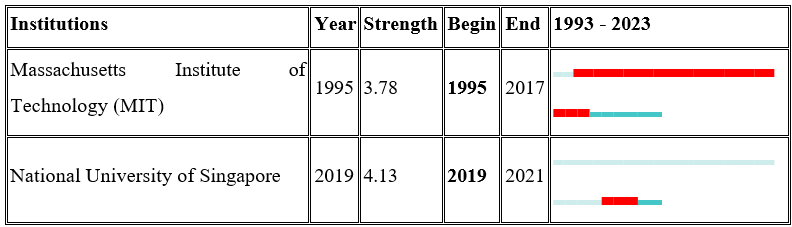
Table 12: Top 2 Institutions with the Strongest Citation Bursts
Analysis of Keyword
Keyword analysis adds to the topics identification and show key areas in a particular field. This section performs different analysis to identify research hotspots, frontiers, and trends on the keywords. The analysis includes, co-occurrence analysis, burst detection analysis, and timeline visualization. Two visualization tools, VOS viewer and CiteSpace are implemented to process the analysis.
Analysis of Co-Occurrence
Concurrent keyword analysis provides a better understanding of hot research areas in a field. Using VOS viewer, this section performs keyword co-occurrence analysis in literature. The total number of keywords in the research area of AICV since 1981 up until 7th April, 2023 is 7465 keywords. For the co-occurrence analysis, the minimum number of occurrence of any particular keyword is set to 5. Thus, after setting the minimum number of occurrence, out of the 7465 keywords, 407 keywords meet the threshold. The co- occurrence network of keywords is shown in Figure 8a. each node in the figure represent keywords, and in the case where two or more nodes are connected together simply means that the keywords in that node appear all appear in the same publication. Also, the size of a node implies the frequency of a keyword. Hence, the larger the node, the more frequently the keyword appears. The 407 keywords are divided into clusters that can be identified by different distinct colours. Furthermore, the keywords overlay co-occurrences are shown in Figure 8b, and just like Figure 8a,it also shows the clusters distribution of the keywords but with additional information in the bottom-right which is the publication year range with the keyword representing its colour shade. Hence, darker colour depicts an earlier published keyword. The research directions from 2019 to 2022 are dispersed, with “deep learning”, “machine learning” and “artificial intelligence” keywords as the centre of research from 2020- beginning of 2022. Additionally, largest occurrences keywords are “deep learning”, “machine learning”, “artificial intelligence”, “object detection” and “feature extraction”. Hence, it is evident that the hotspots in AICV research area are directly proportional correlated with these keywords.

Figure 8a: The Co-Occurence Network of Keywords
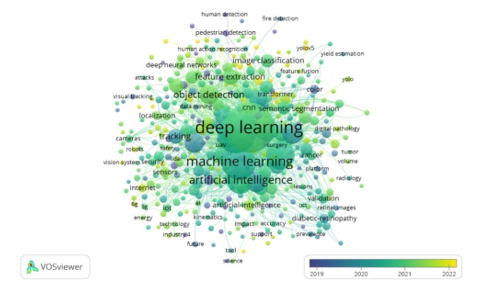
Figure 8b: The Co-Occurrence Overlay of Keywords
Keywords of Burst Detection Analysis
For further keywords progression analysis overtime, CiteSpace is implemented for burst detection analysis of the keywords in all the extracted records with the following burst settings; time slice = 1 year, g-index = 18, and the TOP Number = top 10 of most cited keywords. Table 13 lists the top 3 keywords with the strongest citation bursts. With a 6-year run burst and a wide range attention from scholars, the keyword “features” was the earliest frequently cited keyword from 2012 till 2018. It has a citation strength of 3.46 and holds the record for the longest duration for Keyword citation burst. The remaining keywords burst duration was 3 and 2 years for image analysis and vehicle detection respectively. And with a citation strength of 4.12 and 4.09 respectively. At the end of “image analysis” burst, “vehicle detection” burst began, making it the most recently used keyword which is an indication that it is gradually becoming a research cutting edge in AICV field which is in relation to smart cars.
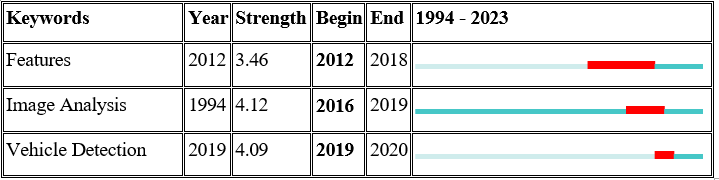
Table 13: Top 3 Citation Strongest Bursts Keywords
Timeline Visualization
Asides the co-occurrences and citation bursts of keywords, the evolution of a field over a period of time can be determined using keywords. From January 1994 to April 2023, the timeline analysis of keywords using CiteSpace visualization software are shown in this section. The time slice for this analysis is set to 1-year with the g-index at 18 and the selection set to top 10 levels of most cited keywords. Hence, the timeline review of keywords is shown in Figure 9 and Table 14. There is division of keywords into 12 clusters with respective clusters labelled using a log-likelihood ratio (LLR). The sequence of appearance of each keyword from individual clusters is determined by timeline order. From Table 14, connected curves represents the mutual and reciprocal keywords relationship. From the first cluster (#0) “machine learning”, its publications range spans from 1994 up to 2022. Six (6) of the 12 cluster have recent publications on them as they span up till recently (2023). They are, internet of things, computational modelling, mask R-CNN, object detection, image processing and 3d point clouds. The shortest duration of the 12 clusters however is Cluster #14 which started and ended in 2014.

Figure 9: The Timeline Review of Keywords
|
Cluster |
Year |
Ranked Keyword by LLR |
|
#0 |
2009 |
Machine Learning |
|
|
|
learning; vision; computer; deep; estimation machine; artificial; intelligence; model; digital |
|
#1 |
2016 |
Internet of Things |
|
|
|
detection; anomaly; extraction; diagnostic; traffic adversarial; generative; application; unsupervised; skin |
|
#2 |
2015 |
Fruit Detection |
|
|
|
system; video; analytics; surveillance; anomaly edge; smart; recognition; obstacle; green |
|
#3 |
2018 |
Computational Modelling |
|
|
|
segmentation; modelling; brain; tumors; diagnostic recognition; emotion; speech; synthesis; generators |
|
#4 |
2017 |
Mask R-CNN |
|
|
|
detection; environment; change; traits; time video; re-identification; person; plane; modality |
|
#5 |
2017 |
Object Detection |
|
|
|
learning; detection; deep; computer; vision object; network; neural; convolutional; defect |
|
#6 |
1995 |
Image Processing |
|
|
|
data; measure; automatic; symbolic; association dataset; character; bengali; handwritten; ekush |
|
#7 |
2016 |
Convolutional Neural Network |
|
|
|
learning; deep; retinopathy; diabetic; information network; neural; imaging; tomography; computed |
|
#8 |
1994 |
3D Point Clouds |
|
|
|
imaging; explainable; neuroimaging; interpretability; bottleneckcsp character; plate; license; licenses; optical |
|
#9 |
2016 |
Deep Learning |
|
|
|
learning; deep; machine; computer; system network; neural; convolutional; artificial; model |
|
#10 |
2019 |
Self-Supervised Learning |
|
|
|
image; vision; unsupervised; registration; segmentation representation; speech; hidden; training; Markov |
|
#14 |
2014 |
Marine Protected Areas |
|
|
|
monitoring; marine protected areas; coral reefs; conservation evaluation; benthos; climate change; urban development; fishing |
Table 14: Cluster Information Summary List of Keywords
Discussion
Bibliometric results in the past have shown several relevant and trending issues. The research advancements and progress of AICV is shown on the dual-map overlay implies. AICV top-edge research results spans a set of fields which includes detection, science etc. Also, analysis of keyword in terms of hotspots shows that AICV research centers on “deep learning”, “machine learning”, ‘‘artificial intelligence’’, “object detection “, and “feature extraction”. Additionally, the timeline review clusters show the occurrences to some extent.
Topical Current Issues
Present-day AICV research is tailored on the use of AI-related technologies for solving issues related to integrating CV with vehicle detection and its systems. study focused on the implementation of deep learning applications for object detection and scene perception in autonomous vehicles [2]. Furthermore, the integration of deep learning can be used to optimize the sensing data volume which in correlation to minimizing costs of data storage and also solve Vehicle Routing Problems (VRP) [39].
Imminent Trends and Challenges
Applications of AI-related technologies have been used to solve issues related to object detection, image detection and processing as well as features extraction in the detected and processed images. However, there are also some bottlenecks. For instance, according to in biomedical image segmentation, most recent proposed deep networks are developed based on U-Net. However, while remarkable success has been achieved from it, it’s bottleneck prevents it from generating more precise segmentation [40]. The author further explained giving reasons such as limitation in its receptive field due to fixed kernel size, and presence of noise and irrelevant information after capturing spatial information using shallower layer. In another study, by, the limitations of manual and visual damage detection methods that are costly and time consuming are discussed in Surface Damage identification for Heritage Site Protection [25]. The use of AI with the right matrices, and right combination of models can lead to an improved computer vision application.
According to a study, there exists future plans to build an interactive recommendation tool for the purpose of exploring articles thereby providing recommendations in terms of visualization techniques, automated algorithms, tools and datasets, while keeping in view the task requirements. Also, according to, AI can assist to make treatment recommendations based on specific characteristics of each individual patient’s tumor and monitor patients over time in the area of haematology and oncology [1,26]. The adoption of Neural Networks by companies such as Amazon, Microsoft, Facebook and Google has led to the following advancements; power recommendation engine, translation purpose, facial detection and recognition and Gmail spam filter in the companies respectively [3]. In the field of computer vision and image processing, future research can be conducted in; the development of data-driven algorithms will allow logistics planners to anticipate adequately on future events in the medium- and long-term, including a combination of both tacit human experiences and machine learning mechanisms [41].
How to potentially detect a broad range of yogic postures performed by multiple persons and generalizing the method for use in the real world in Yogic Posture Recognition [20]. The possibility of testing techniques capable of separating an image from its background automatically using instance segmentation (Mask-RCNN) or classifying with superpixels [42]. In addition, according to, for a better classification rate when features are merged together in the diagnosis of arthritis, both clinical symptoms and radiographic assessments need to be considered to develop a detection method [43]. Facilitation of solution for issues related to integrating computer vision with features extraction, image analysis, processing and detection will be achievable as AI- related technologies improves.
Limitations
With regards to AICV research, an in-depth knowledge review for researchers through the implementation of bibliometric analysis is provided in this study. However, limitations in this study is the use of a single sourced database. Furthermore, some retrieval settings of extracted records from the analysis software may lead to an oversight of some publications. In the future, other high-quality databases will be put into consideration as well as some of the undefined terms will get included in future study for collection of data. Also, this study centres on an extensive outlook of the AICV field and not a detailed specific analysis. Recommendations to future researchers however, is to integrate more databases and can make analysis and compares based on databases standpoints.
Researchers from top countries should also be encouraged to engage in intercountry collaborations to make developing countries meet up with the technological trend and also to increase the strong teamwork and quality of the research field. In addition, more advanced analytical methods such as text mining can be adopted and implemented in AICV research. Despite these limitations, this bibliometric analysis provides researchers and stakeholders with a better understanding of the field's evolution by giving a comprehensive overview of the current research landscape in AI for CV, identifying key trends, challenges, and opportunities and presenting the growth of AICV from various standpoints.
Conclusion
The research in this study covers a bibliometric analysis of germane literatures in AICV from multiple viewpoints, with results on vital physiognomies, structural knowledge, hotspots, and progressive trends. Based on the result analysis, a wrap up is as follows:
1) The analysis performance in publication numbers and citations shows an upward overall trend with AICV receiving attention from researchers in recent years. The publications comprised mainly of 85.945% Articles, with the two prevalent research areas being Engineering and Computer Science. The top publication with great citation impact was earned for their paper on “A survey on Image Data Augmentation for Deep Learning” with 2791 citations. From the bibliographic coupling of the journals, research in AICV is headed towards a direction which is multidisciplinary with IEEE Access, Sensors and Applied Sciences Basel being the three (n=3) most productive journals [44].
2) From the conducted AICV research, the most influential country is USA, with an extensive series of collaboration. Nanyang Technology University is the most productive institution, while Chinese Academy of Science is he institution with highest publication. Overall, institutions are coming together and collaborating to advance research in the field. the most influential authors in terms of citation, publication, and collaboration are Niyato Dusit, Khan Muhammad Attique, and Fuentes Sigfredo respectively.
3) From the burst detection analysis, a corporate author presumably takes the lead of influence and impact for 12 years. LeCun (2015), Simonyan (2015), and Ren (2015) are highly referenced reputable authors in the field. In terms of Journals, IEEE Transactions On Pattern Analysis and Machine Intelligence was the most cited journal by researchers for 23 years. Additionally, Switzerland and Massachusetts Institute of Technology (MIT) are respectively the country and institution with an impact in the field over a long period of time.
4) Keyword analysis hotspots of AICV shows emphasis on “deep learning”, “machine learning”, ‘‘artificial intelligence”, “object detection” and “feature extraction”. However, two keywords, “image analysis” and “vehicle detection” have become the latest direction research in AICV is steered to. In addition, from the timeline analysis, the identified keyword cluster of 12 can be regarded as the core and current direction of AICV research.
5) having obtained the results from the various analyses, current issues, trends, limitations, challenges and recommendation for future research by authors have also been discussed. This AICV research paper presents a publications comprehensive analysis from 1981 to 2023 but with obtainable records starting from 1994. The analysis results would be helpful to prospective researchers interested in AICV research to have a better understanding of the growth and progress of the field from multiple standpoints. The benefits of this bibliometric analysis to researchers, automobile companies, and individuals or industries interested in carrying out projects in AI or CV as it shows the current technological development and gaps in the field of AICV.
Declarations
Ethical Approval
Not Applicable
Availability of Supporting Data
Not Applicable
Competing Interests
No competing interests
Funding
Not Applicable
Authors' Contributions
O.O prepared the literature review and wrote the research methodology N.C. oversaw the article writing, interpreted the results, supervised the work, and ensured that grammar, similarity, and originality were achieved.
Acknowledgments
Not Applicable
References
- Afzal, S., Ghani, S., Hittawe, M. M., Rashid, S. F., Knio,O. M., Hadwiger, M., & Hoteit, I. (2023). Visualization and visual analytics approaches for image and video datasets: A survey. ACM Transactions on Interactive Intelligent Systems, 13(1), 1-41.
- Gupta, A., Anpalagan, A., Guan, L., & Khwaja, A. S. (2021). Deep learning for object detection and scene perception in self-driving cars: Survey, challenges, and open issues. Array, 10, 100057.
- Khan, A. A., Laghari, A. A., & Awan, S. A. (2021). Machine learning in computer vision: A review. EAI Endorsed Transactions on Scalable Information Systems, 8(32).
- Kshatri, S. S., & Singh, D. (2023). Convolutional neural network in medical image analysis: a review. Archives of Computational Methods in Engineering, 30(4), 2793-2810.
- Sundaram, S., & Zeid, A. (2023). Artificial intelligence-based smart quality inspection for manufacturing. Micromachines, 14(3), 570.
- Okinda, C., Nyalala, I., Korohou, T., Okinda, C., Wang, J., Achieng, T., ... & Shen, M. (2020). A review on computer vision systems in monitoring of poultry: A welfare perspective. Artificial Intelligence in Agriculture, 4, 184-208.
- Dhanya, V. G., Subeesh, A., Kushwaha, N. L., Vishwakarma,D. K., Kumar, T. N., Ritika, G., & Singh, A. N. (2022). Deep learning based computer vision approaches for smart agricultural applications. Artificial Intelligence in Agriculture, 6, 211-229.
- LeCun, Y., Bengio, Y., & Hinton, G. (2015). Deep learning.nature, 521(7553), 436-444.
- Van der Velden, B. H., Kuijf, H. J., Gilhuijs, K. G., & Viergever,M. A. (2022). Explainable artificial intelligence (XAI) in deep learning-based medical image analysis. Medical Image Analysis, 79, 102470.
- Su, S., Fanara, L., Xiao, H., Hauber, E., & Oberst, J. (2023). Detection of detached ice-fragments at martian polar scarps using a convolutional neural network. IEEE Journal of Selected Topics in Applied Earth Observations and Remote Sensing, 16, 1728-1739.
- Chai, J., Zeng, H., Li, A., & Ngai, E. W. (2021). Deep learning in computer vision: A critical review of emerging techniques and application scenarios. Machine Learning with Applications, 6, 100134.
- Zajac, H. D., Li, D., Dai, X., Carlsen, J. F., Kensing, F., & Andersen, T. O. (2023). Clinician-facing AI in the Wild: Taking Stock of the Sociotechnical Challenges and Opportunities for HCI. ACM Transactions on Computer-Human Interaction, 30(2), 1-39.
- Breuer, S., Braun, M., Tigard, D., Buyx, A., & Müller, R. (2023). How engineers’ imaginaries of healthcare shape design and user engagement: A case study of a robotics initiative for geriatric healthcare AI applications. ACM Transactions on Computer-Human Interaction, 30(2), 1-33.
- Singhal, P., Walambe, R., Ramanna, S., & Kotecha, K. (2023). Domain adaptation: challenges, methods, datasets, and applications. IEEE access, 11, 6973-7020.
- Kakani, V., Nguyen, V. H., Kumar, B. P., Kim, H., & Pasupuleti, V. R. (2020). A critical review on computer vision and artificial intelligence in food industry. Journal of Agriculture and Food Research, 2, 100033.
- Zhou, W., Chen, J., & Huang, Y. (2019). Co-citation analysis and burst detection on financial bubbles with scientometrics approach. Economic research-Ekonomska istrazivanja, 32(1), 2310-2328.
- Bezrucav, S. O., Mandischer, N., & Corves, B. (2023). Artificial intelligence task planning of cooperating low-cost mobile manipulators: A case study on a fully autonomous manufacturing application. Procedia Computer Science, 217, 306-315.
- Apruzzese, G., Laskov, P., Montes de Oca, E., Mallouli, W., Brdalo Rapa, L., Grammatopoulos, A. V., & Di Franco, F. (2023). The role of machine learning in cybersecurity. Digital Threats: Research and Practice, 4(1), 1-38.
- Cabrera, Á. A., Tulio Ribeiro, M., Lee, B., Deline, R., Perer, A., & Drucker, S. M. (2023). What did my AI learn? How data scientists make sense of model behavior. ACM Transactionson Computer-Human Interaction, 30(1), 1-27.
- Rajendran, A. K., & Sethuraman, S. C. (2023). A survey on yogic posture recognition. IEEE Access, 11, 11183-11223.
- Khan, A. I., & Al-Habsi, S. (2020). Machine learning in computer vision. Procedia Computer Science, 167, 1444- 1451.
- Nouriani, A., McGovern, R., & Rajamani, R. (2023). Activity recognition using a combination of high gain observer and deep learning computer vision algorithms. Intelligent Systems with Applications, 18, 200213.
- Li, F., Feng, J., Yan, H., Jin, G., Yang, F., Sun, F., ... & Li, Y.(2023). Dynamic graph convolutional recurrent network for traffic prediction: Benchmark and solution. ACM Transactions on Knowledge Discovery from Data, 17(1), 1-21.
- Ling, J., Li, X., & Lin, M. (2021). Medical Waste Treatment Station Selection Based on Linguistic q-Rung Orthopair Fuzzy Numbers. Cmes-Computer Modeling in Engineering & Sciences, 129(1).
- Meklati, S., Boussora, K., Abdi, M. E. H., & Berrani, S.A. (2023). Surface damage identification for heritage site protection: A mobile crowd-sensing solution based on deep learning. ACM Journal on Computing and Cultural Heritage, 16(2), 1-24.
- Rösler, W., Altenbuchinger, M., Baeßler, B., Beissbarth, T., Beutel, G., Bock, R., ... & Kather, J. N. (2023). An overview and a roadmap for artificial intelligence in hematology and oncology. Journal of cancer research and clinical oncology, 149(10), 7997-8006.
- Liu, F., Tang, J., Ma, J., Wang, C., Ha, Q., Yu, Y., & Zhou,Z. (2021). The application of artificial intelligence to chest medical image analysis. Intelligent Medicine, 1(3), 104-117.
- Mustaqim, T., Fatichah, C., & Suciati, N. (2023). Deep learning for the detection of acute lymphoblastic leukemia subtypes on microscopic images: A systematic literature review. IEEE Access, 11, 16108-16127.
- Reifs, D., Casanova-Lozano, L., Reig-Bolaño, R., & Grau- Carrion, S. (2023). Clinical validation of computer vision and artificial intelligence algorithms for wound measurement and tissue classification in wound care. Informatics in Medicine Unlocked, 37, 101185.
- Tranfield, D., Denyer, D., & Smart, P. (2003). Towards a methodology for developing evidence-informed management knowledge by means of systematic review. British journal of management, 14(3), 207-222.
- Zhang, K., & Liang, Q. M. (2020). Recent progress of cooperation on climate mitigation: A bibliometric analysis. Journal of Cleaner Production, 277, 123495.
- Mourao, P. R., & Martinho, V. D. (2021). Choosing the best socioeconomic nutrients for the best trees: a discussion about the distribution of Portuguese Trees of Public Interest. Environment, Development and Sustainability, 23(4), 5985-6001.
- Cobo, M. J., Martínez, M. A., Gutiérrez-Salcedo, M., Fujita, H., & Herrera-Viedma, E. (2015). 25 years at knowledge- based systems: a bibliometric analysis. Knowledge-based systems, 80, 3-13.
- Mingers, J., & Leydesdorff, L. (2015). A review of theory and practice in scientometrics. European journal of operational research, 246(1), 1-19.
- Iwami, S., Ojala, A., Watanabe, C., & Neittaanmäki, P. (2020). A bibliometric approach to finding fields that co-evolved with information technology. Scientometrics, 122(1), 3-21.
- Chen, C. (2006). CiteSpace II: Detecting and visualizing emerging trends and transient patterns in scientific literature. Journal of the American Society for information Science and Technology, 57(3), 359-377.
- Van Eck, N., & Waltman, L. (2010). Software survey: VOSviewer, a computer program for bibliometric mapping. scientometrics, 84(2), 523-538.
- Chen, Y., Lin, M., & Zhuang, D. (2022). Wastewater treatment and emerging contaminants: Bibliometric analysis. Chemosphere, 297, 133932.
- Kalkha, H., Khiat, A., Bahnasse, A., & Ouajji, H. (2023). The rising trends of smart e-commerce logistics. IEEE Access, 11, 33839-33857.
- Wu, H., Wang, Z., Li, Z., Wen, Z., & Qin, J. (2023). Context prior guided semantic modeling for biomedical image segmentation. ACM Transactions on Multimedia Computing, Communications and Applications, 19(2s), 1-19.
- Di Capua, M., Ciaramella, A., & De Prisco, A. (2023). Machine learning and computer vision for the automation of processes in advanced logistics: The integrated logistic platform (ILP)4.0. Procedia Computer Science, 217, 326-338.
- Sant’Ana, D. A., Pache, M. C. B., Martins, J., Soares, W. P., deMelo, S. L. N., Garcia, V., ... & Pistori, H. (2021). Weighing live sheep using computer vision techniques and regression machine learning. Machine Learning with Applications, 5, 100076.
- Imtiaz, M., Shah, S. A. A., & ur Rehman, Z. (2022). A review of arthritis diagnosis techniques in artificial intelligence era: Current trends and research challenges. Neuroscience Informatics, 2(4), 100079.
- Shorten, C., & Khoshgoftaar, T. M. (2019). A survey on image data augmentation for deep learning. Journal of big data, 6(1), 1-48.