

World Journal of Forest Research(WJFR)
ISSN: 2994-5569 | DOI: 10.33140/WJFR



Research Article - (2025) Volume 4, Issue 1
Approach to ‘Climate Change’ Sustainability Project, for ‘Our Common Future’
Received Date: Mar 03, 2025 / Accepted Date: Apr 03, 2025 / Published Date: Apr 24, 2025
Copyright: ©Â©2025 Robert Kempton. This is an open-access article distributed under the terms of the Creative Commons Attribution License, which permits unrestricted use, distribution, and reproduction in any medium, provided the original author and source are credited.
Citation: Kempton, R. (2025). Approach to
Abstract
‘Sustainable development must meet the needs of the present without compromising the ability of future generations to meet their own needs’. A ‘Global Environmental Structure Plan Model’ is urgently required, to combat ‘climate change’ and other serious anthropological effects, which cause serious harm to the Environment. New International Laws must lead this approach to tackle climate change. Man’s present ever evolving legal systems comprise a mix of multiple cultures, embracing religious extremes, and results from an erroneous patchwork of divisive boundaries that denotes fragmented environmental legislature. Present uncertain Environmental Principles need to be addressed, as the foundation to a balanced set of Anthropogenic Principles for mankind. A structured framework is necessary which must identify important limbs, to enable a co-ordinated ‘Global Structure Plan’, namely, Environment/ International Legislative regulatory powers/ Total Renewable Energy. The three branches to embrace ‘identified harm’ to water pollution including rivers, air pollution, plastic pollution, and Renewable Green Energy related matters. Long term sustainability needs to be established through a new Global Organization, undertaken for peaceful purposes, based on Continents and a single anthropogenic culture. for the protection, care and maintenance of our planet earth.
Keywords
Sustainability, Legal Services Regulations, Climate Change, Incompleteness, Environmental Impact Assessment, Advanced Project Management Solutions (APMS), Renewable Energy
Introduction
“The UN Climate Change Conference (COP 29) closed on 24 November 2024, with a compromise on climate financing for a new financial goal to help least developed countries (LDCs) protect their people and economies against climate disasters and share in benefits of the clean energy boom.” UN Climate Change Executive, Simon Stiell, referred to it as “an insurance policy for humanity”.
A restructured master plan framework towards ‘Climate Change’ is now required to address the incompleteness of the present anthropogenic systems. An updated approach for the protection of the planet to embrace an integrated co-ordinated global programme strategy is required, and which to date has evolved as a fragmented strategy, with some success, but major ‘slippage failure’ to the Anthropological ‘Climate Change’ targets.
The Montreal Protocol is a global agreement to protect Earth’s stratospheric Ozone layer, by phasing out the production and consumption of ozone depleting substances (ODS). Mankind’s first real strategy with Environmental Laws and regulations was a major success.
“United Nations Convention on Environment and Development”, known as the 2nd Earth Summit, Rio de Janeiro, Brazil, 1992 embraced the ‘UN Framework Convention on Climate Change’ to stabilize the greenhouse gas emissions and to protect from the threat of climate change but the present approach for a net Zero target has already failed.
Article 21adopted the principle of Sustainability, though a master structure plan has not yet been developed and remains incomplete.
Total ‘Renewable Energy resources’ are necessary for earth’s ‘long-term sustainability’ target. ‘Vast kinetic energy resources are available for mankind, once additional methodologies have been developed for near future projects. In addition, there are huge quantities of tidal energy linked to the present two main methods, which are conspicuously omitted from the present British Energy Security Strategy, indicating incompleteness.
A major Environmental Impact Assessment (EIA) Analysis to the “Anthropological Climate Change Project” now demands a structured approach, adopting latest ‘project management services solutions’ (APMS) Reference Addendum: Environmental Attachments, for the approach towards ‘substantial completeness’ to climate change for planet earth.
A Global Organization is required to be able to achieve long- term sustainability for the planet. A restructured master plan framework towards ‘Climate Change’ is identified to address the incompleteness of the present anthropogenic systems. An updated approach for the protection of the planet to embrace an integrated co-ordinated global programme strategy is sought, and which to date has evolved as a fragmented strategy, with some success, but with major ‘slippage failure’ to the Anthropological ‘Climate Change’ targets.
Our Environment
Definition(s)
The broad definition for ‘Our common environment’ refers to ‘surroundings’, generally understood to include air, land and water, and to the natural habitats and ecology, within those surroundings. Legal definitions of environment conventionally take dictionaries as their starting point, which define environment as ‘the objects or the region surrounding anything’.
The definition of the environment is a central, but problematic term, in Environmental Law, and is considered to have no singular definition. The legal definition covers the balanced environment, and specifically, to the ‘harm’ caused by ‘pollution’, as under the Environmental Protection Act 1990.
The environment is our perception of ‘everything we see and understand’. See Figure 1 for other good examples of the definition of Environment.
Under the 1974 Nordic Convention, ‘environmentally harmful activities’ are those that result in discharges to water courses, lakes and the sea….’, while the 1991 ‘Antarctic Environmental Protocol’ protects the climate and weather patterns; air and water quality: atmospheric, terrestrial (including aquatic), glacial or marine environments; and areas of biological, scientific, historic, and aesthetic or wilderness significance.
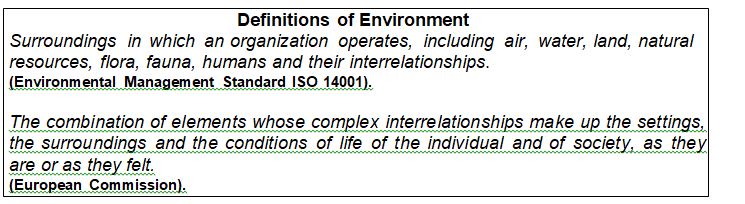
Figure 1
Environmental Principles
International Environment Law adopts the concept of ‘Environmental Principles’ to formulate the approach to tackle environmental problems relating to social and cultural perspectives and have been formulated throughout the history of Environmental Conferences and Protocols. Environmental Principles are taken as a general guide to legal action and not as detailed explicit rules. See figure 2 (Environmental Principles).
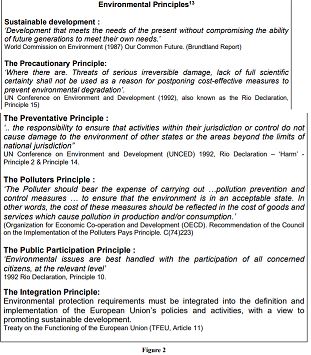
Common but Differential Responsibilitie
It is formalised in the UNFCCC 1992 and has mention in article 3 paragraph 1, and article 4 paragraph 1.
Paris Agreement 2015, ‘recognizing the specific needs and special circumstances of developing country Parties, especially those that are particularly vulnerable to the adverse effects of climate change, as provided for in the Convention’. Mentioned in Article 2.2 ‘to reflect equity and the principle of “common but differentiated responsibilities and respective capabilities”, in the light of different national circumstances.’
This has yet to be ratified as a recognised Environmental Principle, yet it is likely to become a top priority Principle for the future.
Environmental Review
A summary review of International Environmental Law ‘International Environmental Law’ is a gradual evolving process, lacking any form of structure plan and inherited from various sources, loosely based on Environmental Principles established at global conferences over the last 60 years. As such it is fragmented, based on uncertain definitions and sets of planning regulations, which require numerous changes and amendments to enable it to remain fit for that purpose. It remains for the present an incomplete process, that requires a legalised structure plan framework. Reference: Addendum: Environmental Attachments. History of Climate Change Chart.
There can be little doubt that the concept of ‘sustainable development’ has entered the corpus of international customary law, requiring different streams of international law to be treated in an integrated manner. [Sands P, International Courts and the application of the concept of sustainable development, 3 Year of UN Law 389, (1999)].
In the ‘Gabcikova-Nagymanaros’ (Hungary/Slovakia) case, the ICJ invoked the concept in relation to the future regime to be established by the Parties, The ICJ said: By invoking the concept of sustainable development, the ICJ indicated that the term has a legal function.
The Montreal Protocol is a global agreement and entered into force in1989 to protect Earth’s stratospheric Ozone layer, by phasing out the production and consumption of ozone depleting substances (ODS). Mankind’s first real strategy with Environmental Laws and regulations was a major success. Former UN Secretary General Kofi Annan stated, “Perhaps the single most successful international agreement to date has been the Montral Protocol”.
Protocol on Environmental Protection to the Antarctic Treaty – 1991
The Antarctic Treaty was signed in Washington, 1st December 1959. Its main purpose was to demilitarize Antarctica, to establish it as a zone free of nuclear tests and the disposal of radioactive waste, and to ensure that it is used for peaceful purposes only; to promote international scientific cooperation in Antarctica; to set aside disputes over territorial sovereignty.
It remains one of the most successful Protocols in force today and may be classified as a ‘long-term sustainability’ legalized document.
The United Nations Conference on Environment and Development (UNCED), known as the 2nd ‘Earth Summit’, held in Rio de Janeiro in June 1992, acknowledged the change in Earth’s Climate was a real concern of humankind, recognised concerns for developing countries and the determination to protect the climate system for present and future generations.
The main outputs of UNCED were:
The Rio Declaration, covering 27 environmental principles, / Agenda 21, 40-chapter action plan comprising recommendations to governments, to establish a Sustainability Development Commission to monitor progress, / A Declaration on Forests... / A Convention on Biological Diversity, / A Framework Convention on Climate Change.
“The big failure at Rio was a failure of political leadership, commitment and vision.” The United States signed the Climate Change Convention, but it was substantially watered down at the insistence of the United States.
Michael Wines, American journalist reported: “last month (May 1992) President Bush successfully wielded a threat to boycott the Earth Summit to win concessions from most of the world’s nations on a global warming treaty…”.
This year, 2024, ‘the Global average temperature reached at about 1.55OC above pre-industrial levels’, demonstrating the present climate change strategy has failed.
Both follow up conferences, the Kyoto Protocol and the Paris Agreement have failed to meet their main targets.
Environmental Management Tools
It is Important to review various international operating Strategic EIA Processes, and the development of modern Project Management Services for planning major Infrastructure Projects.
‘Impact Analysis’ was recognised as a realistic tool towards implementing International Law Principles in the first Earth Summit in Stockholm 1972. It recognised the importance for proper planning to be applied for integrating development with environmental needs, with the aim to avoid adverse effects on the environment and obtain important social and economic benefits for anthropogenic projects. In the second Earth Summit in Rio, Principle 17 sought for a mandatory EIA to be included in national law for any activities that are likely to have a significant adverse effect on the environmental surroundings, while Agenda 21, called on all countries to assess environmental surroundings for all development projects through EIA prior to any decisions.
In the ‘Pulp Mills of the River Uruguay Case’ (Argentina v Uruguay) [2006], it involved international treaties and the disagreement surrounding the Statute of the River Uruguay (1975). Part of the judgement explicitly recognised EIA as an important practice in International Law. The findings were criticised and supported by several judges, though Judge Keith did not agree. This demonstrates that judicial assessment of complex, technical and scientific matters in many international environmental cases, pose significant challenges.
The approach towards a restructured management plan for anthropogenic projects has also to consider and embrace those projects which have been completed to a satisfactory performance level in the UK, and Internationally, and carried out under Contract Law procedures with the use of ‘modern advanced project management solutions’ (APMS), and in line with and supported by fiscal government policy. “Advanced Project Management Solutions ‘APMS’ are an integrated set of project management tools which have been used in an integrated and co- ordinated way, and proven on several major Projects, to achieve good performance standards over several years”. Reference – Addendum: Explanatory Note – Environmental Attachments.
In the UK the Salford Quays Project covered the reclamation and redevelopment of a redundant inner city brownfield site including contaminated land. Once Salford City Council (SCC) had presented a comprehensive ‘Project Co-ordinate Programme’ to the ‘Department of the Environment’ (DoE), ‘derelict land grant funding’ was released to carry out the five-year programme of works and attract EU and other support funding packages. The full project embraced over 100 No. Infrastructure Contracts and attracted over 20 separate development projects and was completed within the 5-year programme without any major claims. All major Contracts in the UK use the structured Institution of Civil Engineers (ICE) model form of General Conditions of Contract and were used with proven management services tools and procedures. The ‘project co-ordinate programme’is one such integrated APMS tool which achieved proven performance over a 4-year period by the City Council (SCC) and the Department of the Environment (DoE).
The International Islamabad Sewage Treatment Plant Project covered the construction of an integrated Sewage Treatment Plant carried out under a French Soft Loan for the Capital Development Authority (CDA), Islamabad, and the Whole of the Works went into Commercial Operation in accordance with the time programme on 18th August 2007, despite the major Earthquake in the region in early October 2005. APMS tools included ‘critical path analysis monitoring/control’ procedures and are used to trace accurate critical path records through a ‘project co-ordinate programme’ embracing all Contracts, including the ‘On-Shore’ and ‘Off-shore’ Contracts. Such performance indicates the
advantages for specialised Environmental Courts to embrace such procedures to ensure correct decisions are achieved, thus avoiding major extensions of time, and avoiding major delay and additional project costs.
Environmental Harm, Embracing Climate Change
Air Pollution
UK Air pollution legislation has evolved over the last 30 years with Part 1 of the EPA 1990 seeking prevention of Air pollution through permit-based control, leading to the Environmental Permitting Regulations for England and Wales and progressive amendments. This was followed by the Clean Air Act 1993 to address vehicle emissions. The Environment Act 1995 created the establishment and operation for ‘GHG’ emissions trading scheme, embracing the importance of transboundary effects around the globe. After Brexit the Environment Act 2021 recalled the importance of Air Quality and smoke control regulations in England and Wales.
Pollutants causing concern are carbon monoxide, nitrogen oxide and ozone. Fine particles in vehicle emissions, each less than 10 micrometres across, ‘PM10’, cause respiration problems by entry of chemicals into the lungs. Ozone at ground or at tropospheric levels is a highly corrosive pollution, based on reaction between sunlight / NO2 / volatile organic compounds (VOCs) causing summer problems in cities, and ‘photochemical smog’, comprising micro particles of VOCs/ NOx.
The Secretary of State’s Guidance Note 6/9 (04) issued conditions for emissions into the air and guidance on Best Available Techniques (BAT) not entailing excessive cost.
Defra’s ‘Air Pollution in the UK 2019’ was issued in September 2020, as the UK was required to report air quality data on an annual basis under various EU Directives. The Report provides background information on pollutants covered by various EU Directives and UK’s Air Quality Strategy: covering the sources
/ effects / monitoring networks / UKs modelling methodology. The pollutants covered in the report are SO2 / NO/ NO2 /PM10 & PM2.5 particles/ Benzene/ 1,3-Butadiene CO / Metals/ PAH/ O3.
Sulphur dioxide is another major pollutant produced by chemical plants and not effectively controlled under earlier legislation of the 1950s. The method of control was to discharge at height over the surroundings which dispersed over a wide area and fell as acid rain harming freshwater and terrestrial ecosystems in UK and beyond into Europe indicating incompleteness.
The Earth’s Wind Pattern Forces change, North / South, at 30o and 60o latitudes along ‘fronts’, while rotational deflections travel great distances around East / West hemispheres in what is called the ‘Coriolis’ effect over the surface, spreading man’s pollution. Careful global organization from all cultures is now urgently required.
The fragmented progress of UK Air Pollution legislation has lacked structure and remains incomplete, also lacking any unified co-ordinated directive from the global stage. It is now essential to restructure an intelligent approach towards setting out a UK structured framework for ‘air pollution’ controls based upon ‘common but differential responsibility’.
Water Pollution
The EU ‘Water Framework Directive’ (WFD) is a complex and particularly elaborate measure which is unusually difficult to understand’. In the case C-461/13 Bund fur Umwelt und Naturschutz Deutschland, Advocate General Jaaskinen said ‘The WFD is a complex and particularly elaborate measure which is unusually difficult to understand’.
However, the EU WFD does cover all the main aspects relating to Water Pollution control.
In the UK, the Water Framework Directive (WFD) regulatory controls was transposed in 2003 and updated in 2017. It focuses target performance (for member states) to undertake to achieve ‘good status’, whereas regulatory controls based on specification standards to harness nutrient controls appears to be the preferred choice for ‘protecting the water, soil and air.
Agricultural Pollution
After Brexit there is an opportunity for UK policy and regulatory control to give greater emphasis to specification and process standards, followed by performance targets, through a clearer programme of measures for ‘River Basin Management Plans’ (RBMP) for nutrient control defined standard levels.
A comprehensive updated co-ordinated planned framework is required to embrace the ‘UK Implementation of the Nitrates Directive in England’. This, with the follow up ‘Explanatory Memorandum’ of NPPR 2008[ The Nitrate Pollution Prevention Regulations 2008 No. 2349] and ‘Consultation Guidance’, together with ‘several important Nitrate Pollution Regulations' (NPPR 2016, RPADPR 2018, FW (EU Exit) R 2019).
Following exit from the EU, an approach to reference these important pieces of legislation in a ‘reference Chart for environmental legislation for agricultural nutrient controls chart’ would be a useful tool, Reference, Addendum: Environmental Attachments. This coordinated structure plan approach requires as a starting point a particular ‘environmental impact analysis tool mechanism for managing UK Water Pollution’ which would embrace a UK Common Agricultural Policy (CAPUK), good agricultural and environmental conditions for UK farms (GAECUK).
Plastics Pollution
The ‘Resolution adopted by the United Nations Environment Assembly’ on 2 March 2022, to ‘End plastic pollution’, recalled the United Nations Environment Assembly resolutions 1/6, 2/11, 3/7, 4/6, 4/7 and 4/9.
They affirmed the urgent need to strengthen global coordination, cooperation and governance to take immediate action towards the long-term elimination of plastic pollution in marine and other environments, and to avoid detriment from plastic pollution to ecosystems and the human activities dependent on them.
“The Intergovernmental Negotiating Committee to develop an internationally legally binding instrument on plastic pollution, including in the marine environment”, noted with concern the high and rapidly increasing levels of plastic pollution, including in the marine environment.
The draft ‘Chair’s Text’, stated, in December 2024, the objective of this Convention is to protect human health and the environment from plastic pollution.
Major quantities of plastic accumulate in our Oceans, particularly in huge subtropical oceanic areas called gyres. – these are massive circular currents that trap floating debris for decades. See, Addendum: File Note- Environmental Attachments.
Climate Change
Over a decade ago, the UK put into force the Climate Change Act (CCA) 2008, setting targets for a reduction of Greenhouse Gases by 2050, to provide for a system of carbon budgeting for the purpose of limiting GHG from the atmosphere. The Act established ‘The Committee on Climate Change’ (CCC) to assist in ‘carbon management’, to monitor, advise and report with ‘carbon budgets’ and on ‘monitoring / control’ procedures towards the ‘2050 target’ for reduction of GHG.
Under general ancillary powers the committee may exercise its duties to take action to ensure it carries out its functions under the guidance of National Authorities and the Secretary of State. The British Standards Institute (BSI) fast tracked their Specification for ‘Carbon management in Infrastructure’ in May 2016, to enable accuracy, transparency, consistency, relevance and completeness of carbon management and GHG emissions quantification. The scope of PAS 2080 is about Carbon management as part of wider climate change mitigation; it is not about wider environmental or sustainability issues.
Under the specification the management of ‘whole life carbon’ in UK infrastructure is defined as embracing the ‘transport’, ‘energy’, ‘water’, ‘waste’’and ‘communication’sectors, and the management services covers the assessment, removal and reduction of GHG emissions measured as ‘carbon dioxide equivalent’, which relates and covers for the 6 gases quoted in the Kyoto protocol.
The methodology control procedures for the ‘practitioner’ calculating Infrastructure GHG emissions, is covered in the specification, which were responsible for over half of the UK’s GHG consumption in 2010 emissions, a total: 981 million tonnes Mt CO2e and a programmed emissions target of 178 Mt CO2e in 2050. CO2e is a unit for comparing the radiative forcing of a greenhouse gas to carbon dioxide and is calculated using the mass of a given GHG multiplied by its global warming potential. ‘GWP’ which is the factor describing the radiative forcing impact of one mass-based unit of a given greenhouse gas relative to an equivalent unit of CO2 over a given period. In 2019 the Climate Change Committee (CCC) Report, ‘Net Zero - The UK’s contribution to stopping global warming’, led to the (CCC) committing the UK Government by law to reduce greenhouse gas emissions by at least 100% of 1990 levels by 2050, which relates to ‘net zero’.
The ‘Office of Environmental Protection’ (OEP) is responsible for Environmental governance, including environmental targets, environmental improvement plans, environmental monitoring and importantly to embrace compliance with the five main environmental principles recorded in the Environment Act 2021.
Following Brexit, and the one-year transition period, the ECJ responsibility as the supreme court in UK ceased. This is now the opportunity for the UK to set out a new structure plan framework for climate change, based on CCA 2008 and augmented to include relevant latest global ‘climate change’ targets all as set out under the UNFCCC on climate change. It is important to ensure comprehensive environmental analysis on climate change is included in a suite of EIA handbooks.
Renewable Energy
After Brexit the UK government published its new strategy for renewable energy, “The British Energy Security Strategy”, is aimed at a faster decarbonization with the approach towards earlier energy security and independence. This early strategy so soon after Brexit had been triggered, because of Russia’s special operations in Ukraine, together with UK’s increasing reliance on foreign sources, and its principal target is to secure clean and affordable British energy for the long term. The energy renewables targets included offshore & onshore wind power, solar and related technologies, Nuclear and Hydrogen, though with coastal tidal power conspicuously omitted. The European Commission issued the 2nd Report on ‘Mapping and Assessment of Ecosystems and their Services - Biodiversity Strategy to 2020’ in February 2014, which solely concentrates on mapping the land mass and was based on river basins for their UK state at that time.
Following Brexit, the UK has once again become an Island State, and located at the northern end of the Atlantic gulf stream has massive potential for large renewable energy projects around the irregular shaped coastline and smaller Islands.
While it remains premature to consider major marine opportunities for the Irish and North Seas at this time, the estuaries and jagged coastlines are already being discussed and legislation should now be in place.
The High Seas in Perpetual Motion: It is beyond the scope of this paper to cover ‘World energy and power consumption’, except to mention the vast kinetic energy resources that are available, once additional methodologies have been developed to harness earth’s natural energy sources, as it will provide a longer-term sustainability for all mankind, once the World’s legislation has been ratified and brought into force. At present over 2/3rd of the world is beyond jurisdiction.
The 'Agreement under the United Nations Convention on the Law of the Sea on the Conservation and Sustainable Use of Marine Biological Diversity of Areas beyond National Jurisdiction' (BBNJ Agreement) was adopted on 19 June 2023. It is not yet in force.
The objective of this agreement is to ensure the conservation and sustainable use of marine biological diversity of areas beyond normal jurisdiction, for the present and in the long term…….
The BBNJ will “enter into force” when at least 60 countries ratify it. The agreement was opened for signature on September 20, 2023. It will be closed on September 20, 2025. This means countries have given their consent to be bound to it.
Legality status for this important piece of legislation may be checked through the High Seas Ratification Tracker, relating to the 106 duly signed Countries.
Long-Term Sustainability
A new approach towards the protection, care and maintenance for Earth must be led by a global framework structure of Environmental Laws, integrated to the concept of ‘long-term sustainability’. Throughout history mankind’s ever evolving fragmented legal systems has only embraced the land masses, approximately just over a third of the planet surface.
Oceans, Beyond Normal Jurisdiction: Under the ‘United Nations Convention on the Law of the Sea on the Conservation and Sustainable use of Marine Biological Diversity’, man at last, in 2023, addressed Laws for the major areas of Earth’s surface beyond normal jurisdiction. The Agreement is targeted to be brought into force by September 2025, with ‘the objective to ensure the conservation and sustainable use of marine biological diversity of areas beyond national jurisdiction for the present and in the long term.’
Total Renewable Energy: Long-term sustainable energy is better achieved with a permanent (24/7) total supply of green renewable energy, harnessed from the planet’s natural energy forces. Over 70% of the surface of this earth is permanently covered by water in perpetual motion. Once Man has finally grasped the knowledge to develop his additional methodologies to harness the kinetic energy of the seas, and their huge tidal energies around the coastal areas, long term sustainability will be achieved.
In UK, now again an independent Island state, massive tidal energy sources are available because of its unique position, at the head of the north Atlantic gulf stream, along the edge of the western European continent flow current, and between two major masses of water, the Artic and Atlantic Oceans.
Coastal Management: In 2017, the United Nations estimated that around 40% of the world’s population, 2.4 billion people, live withing 100 km of the coast, and 10%, 600 million people live at or below 10 masl. In 2019, and beyond, extreme wildfires, droughts, floods, and extreme rainfall events occurred worldwide, affecting many cities and settlements close to the coastlines.
Damaging and worsening anthropogenic conditions in coastal areas, coupled with the requirement to adapt to climate change, demands a Master Plan for a Global ‘Coastal Management’ framework embracing the main Continents. The Coastal footprint must include the beaches, continental shelves, their slopes and margins, and the contiguous regional high seas. Environmental Impact Analysis tools, based on strategy plans and programmes, must target longer term stability over the next 100 years, to be linked to ‘climate change’.
New Global Organization: A Global Organization must be Structured to replace Man’s present fragmented and ever evolving systems, which are presently cluttered with a mix of multiple cultures, religious extremes and comprising an erroneous patch work of divisive boundaries, denoting nations territories around the world. Population growth and uncertain environmental principles are further driving mankind’s intention away from true singular Anthropogenic principles. The Global Organization Structure Plan to be developed under 5 main Continents, embracing Antarctica.
The Protocol on Environmental Protection to the Antarctic Treaty to be considered as a suitable Model. The treaty of 1991 was used for peaceful purposes only, to promote international scientific cooperation, and to set aside disputes over territorial sovereignty. It remains one of the most successful Protocols in force today and may be classified as a long-term sustainability legalised document.
Conclusion
A Global Environmental Structure Plan must now be set out and established for our common future, to enable near future anthropology Projects to be built, as the bridge for future generations to achieve successful long-term sustainability.
A structured framework of integrated Environmental Laws must lead the way to meet the challenge of ‘climate change’ and all other adverse conditions harmful to our environment. The approach to be through a new specialised World Body Environmental Court, to be exempt from the influences of present religious and cultural ideals.
A Comprehensive Management Structure system to be set out, to co-ordinate and develop all anthropogenic Projects. Integrated Strategic Plans and Programmes to be adopted, together with proven ‘advanced project management solutions’.
A comprehensive Suite of Handbooks to be developed to manage the strategic ‘Environmental Impact Assessment’ (EIA) process, to tackle climate change and other adverse harmful effects on the environment.
A lead Tier Global Organization to be set out and developed for the care, maintenance and protection of Earth. To be developed based on five main Continents, for peaceful purposes, without religious / cultural influences.
A new structured ‘Coastal Management Master Plan’ to be developed for all continents, to tackle pollution, together with embracing the boundary conditions for the vast total green renewable energy supplies available in, on and under the ‘High Seas’ and Oceans. ‘Long-term sustainability’ to be the principal target.
For the UK, as an Island State, a ‘Total Renewable Green Energy Plan’ to be developed to include Tidal Energy, and to be embraced within the present ‘British Energy Security Strategy’.
Present Water Pollution policy in the UK needs to address and include for improvement to present Agricultural Legislation Control procedures, as present run-off control procedures within the Rivers Basins areas requires major change,
Addendum: Environmental Attachments
6.1. Chart: History of Climate Change Chart
6.2. Chart: UK Agricultural legislation controls reference Chart.
6.3. File Note – Plastics Pollution
6.4. Explanatory Note – APMS – Advanced Project Management Services.
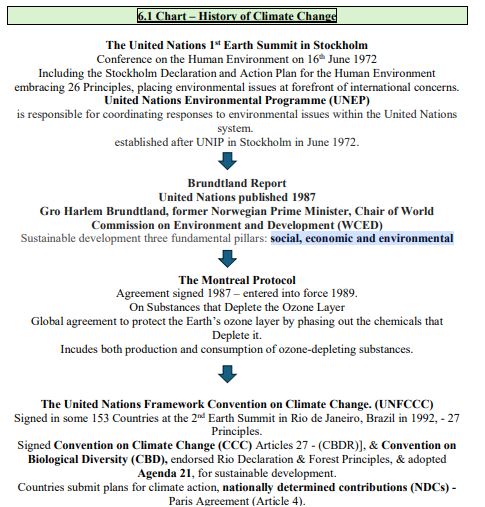
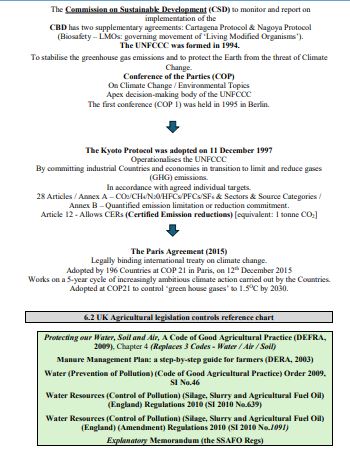
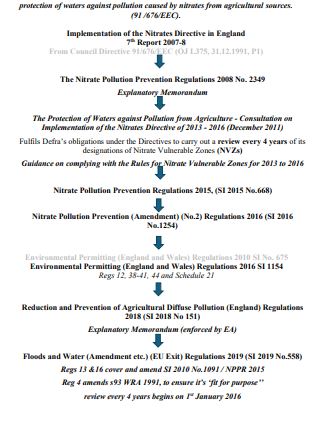
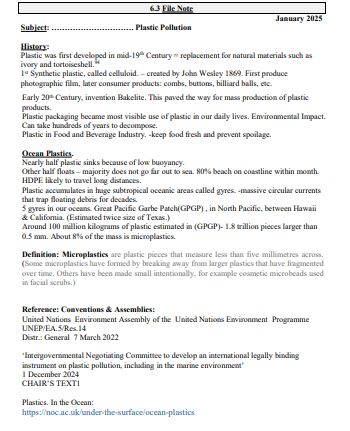
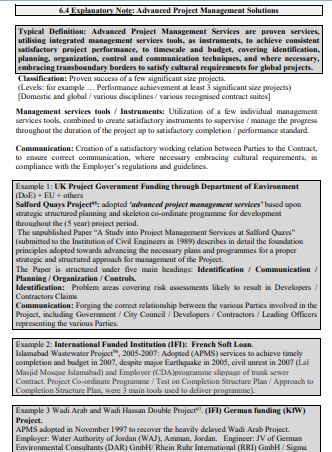
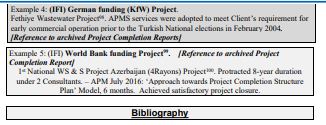
Table of Cases
Gabcikovo-Nagymaros Project (Hungary/Slovakia) ICJ Rep 7 (80) Pulp Mills of the River Uruguay Case (Argentina v Uruguay) [2006] ICJ C-461/13 Bund fur Umwelt und Naturschutz Deutschland
Table of Legislation / Conventions
1. World Commission on Environment and Development (WCED), Brundtland Report, 1987
2. 2nd Earth Summit United Nations Framework Convention on Climate Change (UNFCCC), Rio de Janeiro, June 1992, comprising 27 Articles and Principles
3. 1st Earth Summit, Stockholm 1972
4. AGENDA 21: United Nations Conference on Environment & Development Rio de Janeiro, Brazil, 3 to 14 June 1992
5. Environmental Protection Act 1990, (EPA 1990) UK Public General Acts . 1990 c 43
6. United Nations Conference on Environment and Development (UNWED), Rio de Janeiro, 3-14 June 1992
7. Clean Air Act 1993, UK Public General Acts, 1993, c 11
8. Environment Act 2021, UK Public General Acts, 2021 c 30
9. Water Environment (Water Framework Directive) (England and Wales) Regulations 2003, SI 2003 No. 3242
10. Water Environment (Water Framework Directive) (England and Wales) Regulations 2017, SI 2017, No. 407
11. Implementation of the Nitrates Directive in England, 7th Report 2007-8
12. Council Directive 91/676/EEC (OJ L375, 31.12.1991, P1)
13. The Nitrate Pollution Prevention Regulations 2008 No. 2349
14. Reduction and Prevention of Agricultural Diffuse Pollution (England) Regulations 2018 (SI 2018 No. 151)
15. Floods and Water (Amendment etc.) (EU Exit) Regulations 2019 (SI 2019 No. 558)
16. Climate Change Act 2008, UK Public General Acts, 2008, c 27
17. Environment Act 2021, UK Public General Acts, 2021, c 30
18. UNFCCC, United Nations, FCCC/INFORMAL/84, GE.05- 622200 (E) 200705
19. Agreement under the United Nations Convention on the Law of the Sea on the Conservation and Sustainable use of marine biological diversity of areas beyond National Jurisdiction (BBNJ), New York, 20 September 2023. Presented to UK Parliament October 2023. [This Agreement is not in force]
References
1. “The Earth Summit: What went wrong at Rio?” Sir Geoffrey Palmer, Washington University Law Quarterly, Volume 70, Number 4, 1992,
2. 1st NWSSP(National Water Supply & Sanitation Project)- 4 Rayons Project 2008 - 2016, Employer; National Water Supply and Sanitation Authority (AZERSU), Baku Azerbaijan, Engineer: JV p2m berlin GmbH – GMR
3. B. R. Hindle, D. T. Johnstone, R.C. Kempton, J. H. Morgan, Institution of Civil Engineers, Proceedings, Part 1, Design and Construction, December 1989, Volume 86, Salford docks urban renewal: design, construction and management of civil engineering works
4. British Energy Security Strategy, HM Government, April 2022
5. Contract conditions produced by the UK Institution of Civil Engineers ;
6. Cross-Compliance under the Common Agricultural Policy: A Possible Mechanism for Stronger Standards
7. David Hughes, Tim Jewell, Jason Lowther, Neil Parpworth, Paula de Prez, fourth edition.
8. Department of Environment food and rural affairs (defra), Code of Good Agriculture Practice, 1st published 2009 ISBN 978 0 11 243284 5
9. Department of Environment, Food and Rural Affairs, ‘Air Pollution in the UK 2019’Directive 2008/50/EC
10. Editors K.N. White, E.G. Bellinger, A.J. Saul, M. Symes and K Hendry, Urban Waterside Regeneration, problems and prospects, 1993.
11. End plastic pollution: recalling UNEA resolutions
12. European Commission, Mapping and Assessment of Ecosystems and their Services, Indicators for ecosystem assessments and their services, 2nd Report - Final 2014
13. Fourth Daughter Directive (2004/107/EC)
14. French funded project: “Improvement/Refurbishing of Sewage Treatment Plant Phase-I, II, Rehabilitation of Sewage Treatment Plant Phase - III, and Construction of Sewage Treatment Plant Phase-IV, Islamabad, 2005 - 2007 (the Project)
15. Greater Irbid Sewerage and Sanitation Double Project, for Greater Irbid, Jordan, 1996-2001
16. Improvement / Refurbishment of Sewage Treatment Plant Phase-Ι,ΙΙ, Rehabilitation of Sewage Treatment Phase-ΙΙΙ and construction of new integrated Sewage Treatment Plant Phase- ΙV, 2004-2007; Employer: Capital Development Authority, Islamabad, Consultant: BCEOM International, Montpellier, France.
17. Intergovernmental Negotiating Committee to develop an international legally binding instrument on plastic pollution, including in the marine environment, 1 December 2024, Chair’s Text
18. Manchester University – Andrew Aveyard – Business Development Executive for Energy Montreal Protocol
19. National Geographic, Learn with us. The Coriolis Effect: Earth’s Rotation and Its Effects on Weather https://www. nationalgeographic.org/encyclopedia/coriolis-effect/
20. PAS 2080:2016, British Standard Institute Publicly Available Specification, Carbon Management in infrastructure, Construction Leadership Council, The Green Construction Board, 31 May 2016
21. Philippe Sands and Jacqueline Peel, with Adriana Fabra and Ruth MacKenzie, Principles of International Environmental Laws, 4th Edition,
22. Process Guidance Note 6/9 (04), Crown copyright 2004, defra, Scottish Executive, Welsh Assembly Government; (BATNEEC)
23. Reference: The Institution of Civil Engineers Proceedings, Part 1, Design and Construction, December 1989, pages 1067-1087, Paper: “Salford Docks urban renewal: design, construction and management of civil engineering works”,
B.R. Hindle, D.T. Johnson, R.C. Kempton, J.H. Morgan
24. Research Gate November 2022, https://www.researchgate.net/ post/Looking_back_why_did_the_1997_Kyoto_protocol_ actually_failed
25. Robert Kempton, “Approach Towards a Total UK Environmental Energy Master Plan for Clean Renewable Energy, Reviewing the Incompleteness of the British Energy Security Strategy after Brexit, and Embracing Tidal Waters and other Innovative Sources”, June 2024, Addendum A, Information Sheet, Energy: Information – Organization – Regulations. // 5.0 Identify Research into various methodologies to harness tidal energy.
26. Addendum C, Statistics – Power Consumption,
27. Robert Kempton, Restructuring of the Environmental Impact Process (EIA) after Brexit, for Incompleteness’, November 2023.
28. Sam Boyle, The Case for Regulation of Agricultural Water Pollution.
29. Stuart Bell, Donald McGillivray, Ole W. Pedersen, Emma
Lees, Elen Stokes, Environmental Law, Ninth edition
30. The Fruits of Rio, – Sir Geoffrey Palmer P.C., K.C.M.G. A.C., formerly Minister for the Environment and Prime Minister of New Zealand, 1991
31. The Hague Justice Portal, Dr. Panos Merkouris, ‘Case concerning Pulp Mills on the River Uruguay: Of Environmental Impacts Assessments and Phantom Experts’
32. UN Environment Assembly of the United Nations Environment Programme, 7 March 2022, UNEEP/EA.5/Res.14, Resolution adopted by the United Nations Assembly on 2 March 2022.
33. United States Institute of Peace, 9 May 2024
34. Wastewater Collection & Treatment Facilities for Fethiye, 2002-2004, Employer: Fethiye Municipality (FESKI) Turkey. Engineer: JV of MVV CWE GmbH / DAR GmbH / TÇT
35. Weather, Government Webpage, Flight Environment, Prevailing Winds, Hemispheric Prevailing Winds.
36. Welcome to the United Nations, Percentage of Total Population Living in Coastal Areas,
37. Wolf and Stanley on environmental law, Susan Wolf and Neil Stanley, sixth edition. 2014
38. World Meteorological Organization – 25 November 2024