

International Journal of Media and Networks(IJMN)
ISSN: 2995-3286 | DOI: 10.33140/IJMN
Impact Factor: 1.02



Research Article - (2024) Volume 2, Issue 9
Appraisal of the Application of Gable Roof in Tropical Climates
Received Date: Aug 19, 2024 / Accepted Date: Sep 10, 2024 / Published Date: Sep 20, 2024
Copyright: ©Â©2024 Chidinma Ije Nduka-Kalu, et al. This is an open-access article distributed under the terms of the Creative Commons Attribution License, which permits unrestricted use, distribution, and reproduction in any medium, provided the original author and source are credited.
Citation: Babalola, O. D., Nduka-Kalu, C. I., Ugah, U. K. (2024). Appraisal of the Application of Gable Roof in Tropical Climates. Int J Med Net, 2(9), 01-04.
Abstract
The roof, walls, windows, doors, structural details, and ground surfaces make up the building envelope, which is an essential part of any building since it protects the occupants and controls the inside atmosphere. This paper relied on the appraisal of the application of gable roof in tropical climate. A few publicly available documents were examined. Information gathered from a few of the publication was thoroughly examined and organized thematically. The research investigates on the insight on the application of gable roof which can be implemented in the design of building envelope and environments in tropical climate. This paper provide insights on the classification and benefits on gable roof, which further help to promote some of the 17 Sustainable Development Goals, which are focused on the design for health, climate adaptation and rethinking resources, which can be subdivided into good health, renewable energy, sustainable cities and communities, climate action and life on land. Students studying architecture and building design, researchers and academics can all learn from this work, surrounding the application of the use of gable roof in tropical climate environment.
Keywords
Gable Roof, Methods, Classification, Benefits, Challenges, Sustainability, Tropical Climate
Introduction
Many countries that are near to the equator have tropical climates. The primary characteristics of tropical climates are modest daily temperature changes and high humidity levels throughout the year [1]. The majority of Asian nations that have tropical climate are developing quickly. In recent year, this has resulted in an increase in the energy demand for thermal comfort and mobility. The use of air conditioning is progressively becoming more commonplace to minimize the discomfort caused by heat in constructed environments since it is more affordable as a result of higher economic standards and lower air conditioner capital costs [2].
Building envelope responding to the needs of heating, chilling, ventilating and indoor lighting, it may be considered as an optimized pathway for a building to respond to climate conditions. Several objectives may be included in the design of an envelope for passive construction strategies within tropical climates, that is, to ensure a minimum amount of daylight and minimal heat gain as well as maximum reflection from outside [3].
The most exposed to the solar radiation is usually the roof of the house. For this reason, it is important to select a roof suitable for the tropical climate of your house in order to minimize heat loss. A roof is essential part of a house or building. Without windows, doors, walls or eve a floor in the tropics, there are places of refuge that can escape. In order to provide shade from the sun and to protect from the rain, however, a roof is essential [4].
By absorbing the radiation energy, a building surface (roof) exposed to solar radiation gets heated. Due to the materials ability to store thermal energy, some of the thermal energy that is absorbed is retained there, while the remainder is lost to the outside through convection and thermal emission [5]. The remainder is carried out inside the structure. By reflecting more solar radiation throughout the day and releasing the heat that is trapped in opaque materials outside when the sky is clear, it is possible to minimize the amount of heat that enters the building [6].
Based on this idea, the use of gable roof offers passive cooling due to the significant thermal significant. tropical climates experience ample precipitation and elevated humidity, along with frequent fluctuations in temperature. The typical atmospheric condition temperature remains above 18 degrees Celsius (64 degrees Fahrenheit), and there are noticeable variables temperature changes in the surrounding area based on how frequently it rains during a specific time duration [6]. Typically, tropical climates are known for their hot temperature, abundant sunlight and consistent intensity [7].
The appraisal provides insight on the benefits and challenges of gable roof, the methods and the classification in tropical region in other to improve in the building industry. The study emphasizes the necessity of giving more thought to construction in architectural planning and demonstrates how a gable roof contributes to achieving certain objectives like the 17 sustainable development goals which are good health (goal 3), renewable energy (goal 7), innovation and infrastructure (goal 9) sustainable cities and communities (goal 11), climate action (goal 13), life on land (goal 15), which aimed at design for health, climate adaptation and for rethinking resources. Furthermore, this study will prove to be valuable for researchers, scholars, architect, and professionals in building design as an informative resource on various matters related to roof design for building environment in climate tropical regions [8].
Methods and Classifications
The research is based on a systematic review of the printed knowledge; theirs is a crucial scientific method for assessing, condensing, and reporting the outcomes and discoveries of a substantial number of publication on a given topic. Google scholar has been used to find relevant literature online. Selected paper were mainly open access articles included in the web of sciences Scopus index or research gate and chosen using a purposeful sampling techniques [8].
In the tropical climatic countries today, prefer to use different types of modern roofing for their buildings. Modern buildings now have more roofing styles and designs than before. There are different types of roof used in the tropical climatic countries like Nigeria, they are:- Flat Roof, Pitched Roof, Shed Roofs or Lean- To Roofs, Gable Roofs and Hip Roofs [4].
According to Lip Kean Moeya, he stated that there are three different pitch roofs of the gable roof, namely 15 degrees, 25degrees and 35 degrees are considered. Depending on the roof angle, streamline velocity at roof opening changes. He found a medium for calculating the angles that will be best used for gable roof; he came up with the investigation of gable roof using ‘computation fluid dynamic’ with steady RANS equations. His research focused on parameters, pressure coefficient, normalized turbulent kinetic energy, and streamline of normalized velocity [9].
Lori Mkhize, gave her own reason for the use of gable roof as the best type of roof for tropical climate environment which is; its slope makes it more comfortable to live in by facilitating rapid water drainage and lowering heat gain. Depending on the homeowner’s needs and preferred style, the pitched roofs precise design to be shed, hip, or gable roof which can be selected (Mkhize, 2023) [10]. There are a few popular roof coverings that perform well in tropical climate they are; metal roofing, terracotta clay roof tiles, roof shingles, solar shingles and green roof [4].
In tropical climate, the some consideration should be observed such as; the design given by the architect, budget consideration, the climate and condition of the environment in some tropical climatic countries, the aesthetic value and roof maintenance.
Benefits and Challenges
There are some benefits that are considered in tropical climate which are; height of the gable roof, the roof ventilation which improve air circulation, reflective finishes on the gable roof and better drainage [10]. The use of lighter colors over dark colors in the gable roof uses in tropical climate reduces heat. Due to the design from the architect, gable roof suffer more under the stress of strong winds, therefore gable roof should have proper support and quality material (both in construction and roof covering), the budget of the client can also affect the use of gable roof; the right planning and bracing done by either the carpenter or welders or any construction team on the purposed building on site will determine the gable roof design to reduce the maintenance of the gable roof in tropical climate [11].
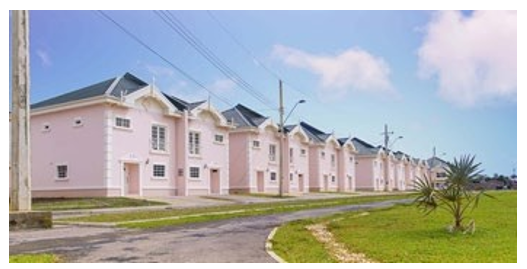
Figure 6: Showing the Gable Roof used at Brentwood Court Development from Caribbean housing limited, NigeriaSource:- (Caribbean housing limited, 2023) [12].
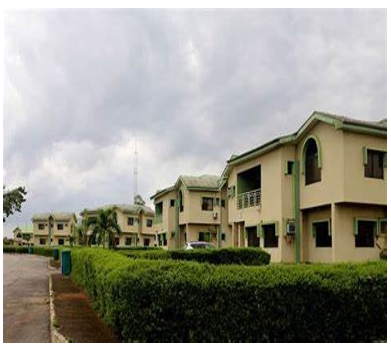
Figure 7: Showing the Gable Roof used at Covenant University Ota, Nigeria
Source:- (Covenant University, 2021) [13]
The Sustainability of Gable Roof Used in Tropical Climate
In 1987, the (WECD, 1987) documented a report that introduced the concept of “sustainability” [14]. It stated that sustainability development is growth that satisfies current needs without jeopardizing the capacity of future generations to satisfy their own” (World Commission on Environment and Development). According to the aforementioned, it may be inferred that sustainable development encompasses a significant portion of human existence, means of subsistence, and continuation on earth (Eziyi O. Ibem, 2011).
According to the United Nation Sustainability Goals, sustainability was defined as ‘an objective of society about the capacity of people to exist together on earth over an extended period of time. Professionals usually characterize sustainability as comprising three aspects (or pillars). These are environmental, economic, and social’ (Sustainability Development Goals, 2022) [15]. In view on these statement of result, Ibem and Azuh (2011) finalized that sustainability is in search with the solution to ensure that in every personal, basic social, economic and environmental items of the present generation are accessible without degrading the important of the posterity to meet their needs (Eziyi O. Ibem, 2011).
These goals which are 17 in number have influence on the gable pitch roof which is considered in tropical environment in Nigeria. Out of the 17 goals of the sustainability development goals, the following goals are used:- Goal 3; essential Health, goal 7; Renewable Energy, goal 11; Sustainability cities and communities, goal 13; Climate Action, goal 15; Life on Land.
From the list of sustainability mentioned above can be grouped into the following which should be considered as the sustainable reason why gable roof is considered in tropical Nigeria.
Essential for Health: In tropical climate, design for health is essential due to the climate of the country. Due to population growth and uneven infrastructure, the built environment has an impact on human physical and mental health. Access to healthcare, the reduction of disease outbreaks, and easily avoidable early mortality should all be taken into account for a sustainable future (Sustainability Development Goals, 2022) [15].
Design for Climate Adaptation: The natural ecosystem is powerful which the build environment exist in its numbers. As climate pattern changes in tropical climate, the role of buildings, settlements and cities changes which interface the environment, protecting the residence of communities. According to sustainability development goals explain ‘Design for Climate Adaptation’ refers to modern and inexpensive approaches to ecological design that improve the intelligence and self- sufficiency of buildings (Sustainability Development Goals, 2022) [15]. 4.3 Design for Rethinking Resources: This implies re- assessing all rounds of the cycles of production and with an eye towards sustainability. The design and shapes used in gable roof in everyday building has limit resources used. According to sustainability development goals, explained ‘Design for Rethinking Resources to be creative in approaches in practices resources which includes: The materials used: - the utilization of bio-based materials, waste recycling, and the enforcement of new materials make it possible to begin the production cycle in a sustainable manner. The use of methodologies, such as digital technology and computational design, crafts revival, and vernacular building approaches, fosters creativity and leads to innovative localized design solutions that boost local economies. Lastly, the predicted life span of a building: - this includes life span analysis, programmed decay, disassembly design, and re-evaluating the building’s overall design’s durability (Sustainability Development Goals, 2022) [15].
Limitation to Study
The study examined benefits, methods, and classification using the studies, in relevant to the research that lied on only open access publication and documented sources from specific database. Due to this, it does not reduce the benefits as the research which is the promotion of the use of gable roof in tropical climate.
Related to the research’s limitations, the document suggests in comparable searches to be carried out using a wider scope for the document studies to include ends access materials and a greater number of knowledgeable source bases as research sources. Researches utilizing primary data have to be carried out as well. The effectiveness of the gable roof procedures used in the building envelope can be examined through these kinds of studies. The study findings will aid pinpointing areas that requires improvement, supporting initiatives aimed at creating sustainable settings (Sholanke A. B, 2023).
Conclusion, Recommendation and Contribution to Knowledge
This paper examined the used of gable roof in tropical climate and discussed the impact of gable roof on the suitability due to the climate that affect the building which are design for health: this is the consideration for sustainable future which is access to healthcare and the deduction of the transmission of illness and avoidable early death; design for climate adaptation, which entails high-tech and low-teach approaches to environmental design that function to improve the intelligence and self- sufficiency of buildings; design for thinking resources, which entails re-evaluating every facet of cycles of production and consumption with sustainability in mind.
The benefits: height of the gable roof, the roof ventilation which improves air circulation, reflective finishes on the gable roof and better drainage. The classification: are three different roof pitches of the gable roof namely 15 degrees, 25degrees and 35 degrees are considered. The methods: There are different types of gable roof used in the tropics Nigeria, like Flat Roof, Pitched Roof, Shed Roofs or Lean-To Roofs, Gable Roofs and Hip Roofs. There are some few popular roof coverings that perform well in tropical Nigeria that can be used on the gable roof, they are; metal roofing, terracotta clay roof tiles, roof shingles, solar shingles and green roof.
In light of the findings, the contribution is a clear understanding on the reason why gable roof are used in tropical climate, the study also contribute on the necessity based on the challenges and a clear prospect on the classification of gable roof which can vary due to the design by the architect in tropical climate. Appraisal on the application of gable roof also contributes in the sustainable effect and the impact of the use of gable roof in tropical climate.
Acknowledgements
The management of CUCRID and Covenant University is appreciated by the authors for providing a favorable environment and their financial support in this research. The scholars whose research papers were consulted for the review are also acknowledged with gratitude by the authors. These intellectual resources were listed in the reference section that follows and properly cited in the work's body.
References
- Halwatura, R. U., & Jayasinghe, M. T. R. (2008). Thermal performance of insulated roof slabs in tropical climates. Energy and Buildings, 40(7), 1153-1160.
- Mallick, F. H. (1996). Thermal comfort and building design in the tropical climates. Energy and buildings, 23(3), 161- 167.
- Lim, J. Y. (1987). Air movement in traditional Malay house.p. 58.
- Tirachard, K. (2021). Best Roof Ideas For Hot Tropical Climates. Pexels: Architropics.
- Zingre, K. T., Wan, M. P., Tong, S., Li, H., Chang, V. W. C., Wong, S. K., ... & Lee, I. Y. L. (2015). Modeling of cool roof heat transfer in tropical climate. Renewable Energy, 75, 210-223.
- Hodo-Abalo, S., Banna, M., & Zeghmati, B. (2012). Performance analysis of a planted roof as a passive cooling technique in hot-humid tropics. Renewable Energy, 39(1), 140-148.
- Oluwatayo, A. A., & Pirisola, O. H. (2021, April). Impact of Passive Energy Strategies on Workers Productivity in Tropical Climate. In IOP Conference Series: Materials Science and Engineering (Vol. 1107, No. 1, p. 012210). IOP Publishing.
- Sholanke, A. B., Basorun, O. U., Babalola, O. D., & Edia,O. J. (2023). Review of maintenance strategies for achieving sustainable developments in tropical climates. Covenant Journal of Research in the Built Environment.
- LIp Kean, (2021). Effect of gable roof angles on natural ventilation for an isolated buildiJorng. Jordan Journal of Mechanical and Industrial Engineering, ISSN 1995-6665, 291-300.
- Mkhize, L. (2023). what's the ideal roof shape for thriving in a tropical climate. Retrieved 2022, from fieldguilded. com: fieldguilded.com
- Diversified, R. (2023). Diversified roofing.
- Caribbean housing limited, N. (2023). Brentwood court development from Caribbean housing limited, Nigeria.. Retrieved 2023, from www.chitt.com : www.chitt.com climate research, u. (2022). climate research unit.Covenant University, (2021).
- Covenant Unniversity. Retrieved 2021, from www.covenantuniversity.com
- WECD, W. C. (1987). sustainability.
- Sustainability Development Goals, (2022). Sustainability . united nation.
- Anuforom, A. C. (2007). Spatial distribution and temporal variability of Harmattan dust haze in sub-Sahel West Africa. Atmospheric Environment, 41(39), 9079-9090.
- Bell, P. A. (1981). Physiological, comfort, performance, and social effects of heat stress. Journal of Social Issues, 37(1), 71-94.
- Dalrymple, D. G. (1985). The development and adoption of high-yielding varieties of wheat and rice in developing countries. American Journal of Agricultural Economics, 67(5), 1067-1073.
- Ibem, E. O., & Azuh, D. E. (2011). Framework for evaluating the sustainability of public housing programmes in developing countries.
- Green, S. (2005). Systematic Review and Meta-Anaysis. Singapore Medical Journal, 270-274.
- Group, W. B. (2022). Climate Change Knowledge Portal For Development Practitioners and Policy Makers".
- Ibem, E. O., Ayo-Vaughan, E. A., Oluwunmi, A. O., & Alagbe, O. A. (2019, March). Residential satisfaction among low-income earners in government-subsidized housing estates in Ogun State, Nigeria. In Urban Forum (Vol. 30, pp. 75-96). Springer Netherlands.
- koppen climate, (2023). Nigeria climate. Nigeria: koppenclimate classification.
- Nigeria Meterological, A. (2022, January 25). Nigeria Meterological Agency.
- Nigerian Meteorological,A. (2023). Nigerian Meteorological Agency. Nigeria: Publications And Bulletins.
- Anthony, S., Ogheneyoma, P., Heritage, P., Ayoola, O., & Fiyinfoluwa, A. (2020). Daylight Penetration in Buildings: Issues in Tropical Climates. Solid State Technology, 276- 285.
- Tukur, A. I., Nabegu, A. B., Abba Umar, D. U., Olofin, E. A., & Sulaiman, W. N. A. (2018). Groundwater condition and management in Kano Region, northwestern Nigeria. Hydrology, 5(1), 16.
- Wikipedia. (2023). Climate of Nigeria. Retrieved from www.wikipedia.com: www.wikipidia.com
- Women Modernity, (2023). "Creative margins: three women in post-war French landscape architecture". In M.a. Women, "Creative margins: three women in post-war French landscape architecture" (pp. 129-147). Nigeria: Routledge, ISBN 978-1-315-73296-1.