



Research Article - (2024) Volume 2, Issue 2
Analyzing the Impact of Different Shading Devices on Energy Consumption and Thermal Comfort in Office Buildings Using Machine Learning and Energy Simulation in Three Different Climates of Iran
Received Date: Nov 08, 2024 / Accepted Date: Dec 05, 2024 / Published Date: Dec 12, 2024
Copyright: ©©2024 Mohammad Hassan Abedini. This is an open-access article distributed under the terms of the Creative Commons Attribution License, which permits unrestricted use, distribution, and reproduction in any medium, provided the original author and source are credited.
Citation: Abedini, M. H. (2024), Analyzing the Impact of Different Shading Devices on Energy Consumption and Thermal Comfort in Office Buildings Using Machine Learning and Energy Simulation in Three Different Climates of Iran. Trans Med OA, 2(2), 01-08.
Abstract
This study investigates the impact of three types of shading devices, including overhangs, louvers, and side fins, on energy consumption and thermal comfort in office buildings. The analysis utilizes climatic data from three cities—Yazd, Tehran, and Bandar Abbas—extracted from EPW files and simulated using the Honeybee and Ladybug tools. Additionally, the XGBoost machine learning model is employed to provide more accurate predictions of shading devices' effects on indoor temperature and energy consumption. Key climatic factors such as temperature, solar radiation, humidity, and wind speed are used as input variables for the model. The results indicate that overhangs in the hot and dry climate of Yazd significantly reduce energy consumption, while louvers demonstrate the highest efficiency in the hot and humid conditions of Bandar Abbas. This study highlights the importance of combining energy simulations with machine learning algorithms to optimize shading device design and improve thermal and lighting comfort.
Keywords
Energy Optimization, Passive Shading Devices, Machine Learning, Energy Simulation, XGBoost
Introduction
The Importance of Energy Optimization in Buildings the building sector accounts for more than 30% of global energy consumption, making it one of the largest contributors to energy demand and associated environmental impacts [1,2]. As urbanization continues to rise, particularly in developing countries and regions with hot climates, managing and optimizing energy use in buildings has become critical. Energy consumption in buildings not only results in higher operational costs but also contributes to increased greenhouse gas emissions, exacerbating climate change [3,4].
In regions with extreme climates, such as Iran, where temperatures can soar during the summer months, energy demands for cooling systems are substantial [3]. Passive energy-saving strategies, such as the use of shading devices, offer a viable solution for reducing energy consumption and enhancing thermal comfort [5]. Shading systems,including overhangs, louvers, and side fins, have been widely recognized for their ability to minimize solar radiation and reduce the reliance on mechanical cooling, thus contributing to energy efficiency [1-3].
Review of Previous Research
Extensive research has examined the impact of shading devices on energy consumption in buildings, with numerous studies highlighting their effectiveness in reducing the thermal load on cooling systems. For example, research on dynamic photovoltaic shading devices demonstrated the dual benefits of reducing energy consumption and improving daylighting in office buildings [3]. Similarly, studies utilizing machine learning techniques to estimate energy use have shown that shading devices can improve predictive accuracy while reducing cooling demands [2].
Other research has focused on adaptive façade technologies, revealing that these systems can mitigate the risk of overheating and enhance energy efficiency when used alongside traditional shading devices [1]. Moreover, studies evaluating the combined effect of shading devices, glazing systems, and building orientation have underscored the importance of integrating multiple passive design strategies for optimized energy performance [4]. Additional research has explored machine learning's application in energy optimization, showing how advanced algorithms like XGBoost can predict energy consumption more accurately in real-world building scenarios [5].
Advantages of Machine Learning in Energy Simulations
In recent years, machine learning has emerged as a powerful tool for optimizing energy consumption in buildings. Algorithms like XGBoost have gained popularity for their ability to handle complex and nonlinear datasets, making them ideal for energy simulations [2]. Machine learning is particularly valuable when analyzing input variables such as temperature, solar radiation, humidity, and wind speed, as these factors interact to influence building energy consumption.
Compared to traditional simulation methods, machine learning models can deliver more accurate and faster predictions by processing large datasets and uncovering patterns that are not immediately apparent [4]. This is particularly useful in optimizing the design and configuration of shading devices, as it allows for a more precise understanding of their impact on energy consumption and thermal comfort in different climatic conditions [3].
Importance and Innovation of the Present Study
The present study addresses the need for a more comprehensive analysis of shading devices by integrating traditional energy simulation tools, such as Honeybee and Ladybug, with advanced machine learning techniques like XGBoost. This combination enables a more detailed evaluation of shading devices' impact on energy consumption and thermal comfort in different climates. The study focuses on three major Iranian cities—Yazd, Tehran, and Bandar Abbas—each representing a distinct climate.
By processing climatic data such as temperature, solar radiation, humidity, and wind speed through machine learning models, the study aims to provide a more accurate and holistic assessment of shading devices. The integration of simulation tools and machine learning allows for a robust evaluation of the energy- saving potential of overhangs, louvers, and side fins across these different climates. The innovation of this research lies in its ability to compare multiple shading devices in various environments, offering valuable insights for architects and building designers looking to optimize energy efficiency [1].
Methodology
Data Collection and Preprocessing
The data used in this study consists of climatic information from three major cities in Iran—Yazd, Tehran, and Bandar Abbas— which represent distinct climatic zones: hot and dry, temperate, and hot and humid respectively. The climate data for these cities was obtained from EnergyPlus Weather (EPW) files, which include hourly records of key climatic variables: temperature, humidity, wind speed, and solar radiation. These variables are crucial in determining the thermal behavior of buildings and were used as input features for the machine learning model developed in this study.
The EPW files were processed using Python’s Pandas library. The columns corresponding to the following variables were extracted:
• Temperature (°C): Reflects the hourly ambient air temperature.
• Relative Humidity (%): Indicates the amount of moisture in the air.
• Wind Speed (m/s): Describes the average wind speed at the site.
• Solar Radiation (W/m²): Represents the incident solar energy on a surface.
After extracting the data, a continuous time index was generated to allow time series analysis. This time index facilitated the alignment of the climatic data with hourly predictions from the machine learning model. Additionally, the data for each city was combined into a single dataset to perform a comparative analysis of the performance of shading devices across the three different climates.
Shading Device Parameters
In this study, three types of shading devices—overhangs, side fins, and louvers—were analyzed to assess their impact on energy consumption and indoor thermal comfort in office buildings. The parameters for each shading device were added to the dataset as input features for the machine learning model. The parameters include:
• Overhang Depth (m): The distance that the overhang extends from the building facade.
• Side Fin Depth (m): The projection of the vertical side fins.
• Louver Parameters: The depth of the horizontal louvers, the number of fins, the spacing between the fins, and the distance of the louvers from the building's glass facade. Each shading device's parameters were randomly generated within realistic ranges based on typical architectural dimensions to simulate a variety of configurations. The XGBoost model received the following input variables:
• Climatic Variables:
o Temperature (°C)
o Solar Radiation (W/m²)
o Humidity (%) o Wind Speed (m/s)
• Shading Device Parameters:
o Overhang Depth
o Side Fin Depth
o Louver Depth
o Number of Louver Fins
o Spacing between Louver Fins
o Distance of Louvers from Glass
Hyperparameter Tuning
To ensure optimal performance, a GridSearchCV method was employed to tune the hyperparameters of the XGBoost model. The following hyperparameters were optimized
• Number of estimators: Controls the number of trees in the model.
• Learning rate: Determines the step size at each iteration.
• Maximum depth: Controls the maximum depth of each decision tree.
• Subsample: Specifies the fraction of observations to be randomly sampled for each tree.
• Colsample_bytree: Determines the fraction of features to be used for each tree.
The optimal set of hyperparameters was identified through cross- validation, and the final model was evaluated on a held-out test set. The model’s accuracy was assessed using the following metrics
• Mean Squared Error (MSE):
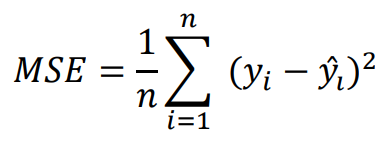
where y ‾ is the mean of the true values.
Thermal Comfort Index Calculation
In addition to predicting energy consumption, this study also calculated a Thermal Comfort Index to evaluate the effectiveness of shading devices in improving indoor comfort. The thermal comfort index was calculated based on the interaction between the shading device parameters and climatic factors such as humidity, wind speed, and solar radiation. The thermal comfort index for each shading device was computed using the following formulas:
• Overhang Thermal Comfort Index (TCI):
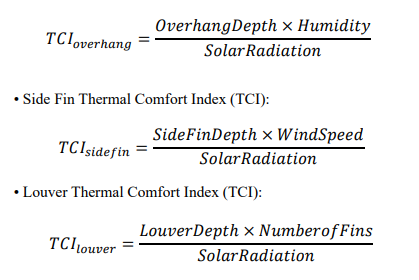
These indices provide an estimate of the extent to which each shading device enhances thermal comfort by reducing direct solar radiation and improving airflow. The thermal comfort indices were averaged across the entire dataset for each city to compare the performance of shading devices in different climatic conditions.
Data Analysis and Visualization
The results from both the energy simulation and machine learning models were visualized using a combination of bar charts and time-series plots. The feature importance scores from the XGBoost model were analyzed to determine which shading device parameters had the most significant impact on energy consumption. Additionally, time-series plots were generated to visualize the predicted indoor temperature and energy consumption for each city over time, showing how different shading devices perform under varying climatic conditions.
To better understand the interaction between climatic factors and shading devices, the predicted temperature and energyconsumption were plotted for each city, with particular focus on the hours of peak solar radiation. This analysis demonstrated how different shading devices can be tailored to the specific climatic needs of each region.
This comprehensive methodology showcases the integration of traditional energy simulation tools with advanced machine learning algorithms, providing a detailed analysis of the impact of shading devices on energy consumption and thermal comfort in diverse climates. The combination of Honeybee, Ladybug, and XGBoost allows for precise predictions that can inform architects and building designers in selecting the most efficient shading devices for their projects.
Results and Data Analysis
This section presents the findings from the XGBoost model and energy simulations carried out to assess the impact of different shading devices on energy consumption and thermal comfort.The analysis is based on the climate data from Yazd, Tehran, and Bandar Abbas, representing hot and dry, temperate, and hot and humid climates, respectively. The shading devices studiedinclude overhangs, side fins, and louvers, and their performance in improving thermal comfort and reducing energy consumption is visualized through multiple graphs and analyzed below. Impact of Shading Devices on Energy Consumption (Temperature)
The first graph highlights the relative impact of various shading device parameters—Overhang Depth, Side Fin Depth, Horizontal Louver Depth, and Vertical Louver Depth—on energy consumption,specifically on the indoor temperature of office buildings. The results show that overhangs have the greatest impact on reducing energy consumption, especially in climates like Yazd's hot and dryenvironment. Overhangs significantly block direct solar radiation during peak sunlight hours, effectively reducing the demand for air conditioning. Conversely, side fins had the lowest influence on energy consumption, which suggests that their contribution might be more marginal in certain climates.

The strong performance of overhangs, as shown in the chart, can be attributed to their ability to cover large surface areas and minimize direct solar exposure, especially during the hottest parts of the day. Louvers, both horizontal and vertical, perform well in the hot and humid climate of Bandar Abbas, where managing both solar radiation and natural ventilation is crucial for energy efficiency. On the other hand, side fins, while helpful in reducing early morning and late afternoon sun exposure, may not perform as well in reducing overall energy consumption in climates where the sun’s intensity is strongest at midday.
Impact of Shading Devices on Thermal Comfort
The second graph displays how different shading devices affect thermal comfort, which is measured by their ability to minimize indoor heat gain and improve air circulation. The results demonstrate that side fins have the most substantial effect on enhancing thermal comfort, particularly in climates where direct sunlight hits the building at lower angles, such as in the morning or late afternoon. In contrast, horizontal and vertical louvers provide a more moderate improvement in thermal comfort, while overhangs, though effective in reducing solar exposure, do not contribute as much to airflow improvement.
Side fins are most effective in climates like Tehran, where there is moderate sun exposure throughout the day, but significant direct sunlight during early morning and late evening hours. They help in creating shaded areas on building facades without completely blocking ventilation, enhancing both shading and airflow. Louvers also contribute to thermal comfort by allowing air to flow between fins while limiting solar penetration. Overhangs, despite their superior energy-saving performance, provide less thermal comfort improvement due to their limited effect on air circulation.
Temperature Prediction for Yazd (Hot and Dry Climate)
The third figure presents a time series plot of predicted indoor temperatures for Yazd, a hot and dry city. It demonstrates how the different shading devices perform throughout the day, especially during peak heat hours. Overhangs are shown to be the most effective in reducing indoor temperatures during the hottest parts of the day. The temperature increases sharply during midday but is significantly mitigated by shading devices like overhangs and horizontal louvers.
In Yazd's hot and dry climate, overhangs play a critical role in reducing solar gain during midday, when the sun is most intense. Horizontal louvers also contribute to controlling the internal temperature by diffusing sunlight. However, side fins appear to have minimal impact during midday, as they are more effective in the morning and evening. Overall, this chart indicates that careful selection of shading devices can drastically reduce cooling energy demands during the hottest parts of the day.
Temperature Prediction for Tehran (Temperate Climate)
This figure illustrates the predicted temperature variations in Tehran over the course of a typical day. Tehran’s temperate climate allows for a more balanced impact of shading devices. Both overhangs and side fins perform effectively in this environment, maintaining relatively steady indoor temperatures by reducing direct solar exposure during critical hours of the day.
In the temperate climate of Tehran, both overhangs and side fins are highly effective in keeping indoor temperatures within a comfortable range. The temperate nature of the climate means that the solar intensity is not as extreme as in Yazd, so a combination of shading and passive airflow techniques, such as side fins, provides optimal results. Louvers, although beneficial, contribute less to temperature reduction in this climate compared to the hot and dry or hot and humid regions.
Temperature Prediction for Bandar Abbas (Hot and Humid Climate)
The final figure shows the predicted temperature for Bandar Abbas, a city with a hot and humid climate. The performance of louvers is particularly noteworthy here, as they effectively manage both solar radiation and ventilation, helping to maintain more consistent indoor temperatures throughout the day. The predicted temperature variations show a significant reduction in peak temperatures, particularly during midday, due to the combined shading and ventilation effects of the louvers.
In Bandar Abbas, where humidity and high temperatures present a dual challenge, horizontal and vertical louvers provide the best results by allowing passive ventilation while reducing direct sunlight. The louvers allow for airflow while still preventing excessive solar gain, which is critical in a humid climate where cooling is often complicated by the lack of natural ventilation. Overhangs also perform well in reducing temperature, but the louvers’ ability to balance shading and airflow makes them the optimal choice for this environment.
Shading Device Parameters
The table below presents the parameters used for the shading devices in the XGBoost model. These parameters, including Overhang Depth, Side Fin Depth, and Louver Characteristics, were used to predict the impact on both energy consumption and thermal comfort. The values were randomly generated within a realistic range to simulate different design configurations.
|
Overhang Depth |
Side Fin Depth |
Horizontal Louver Depth |
Vertical Louver Depth |
Horizontal Louver Number of Fins |
Horizontal Louver Distance Between Fins |
Horizontal Louver Distance to Glass |
Vertical Louver Number of Fins |
Vertical Louver Distance Between Fins |
Vertical Louver Distance to Glass |
|
0.153017 |
0.761475 |
0.560854 |
0.325660 |
3 |
0.972495 |
0.612541 |
1 |
0.965182 |
0.055111 |
|
0.842231 |
0.072925 |
0.394983 |
0.228336 |
2 |
0.516921 |
0.944631 |
4 |
0.432893 |
0.807322 |
|
0.320752 |
0.126487 |
0.704665 |
0.538824 |
3 |
0.796836 |
0.748755 |
4 |
0.867273 |
0.651625 |
|
0.610842 |
0.505023 |
0.246948 |
0.939095 |
3 |
0.245899 |
0.214174 |
3 |
0.817105 |
0.872092 |
|
0.764462 |
0.557155 |
0.167007 |
0.705842 |
1 |
0.802699 |
0.711540 |
2 |
0.446771 |
0.672123 |
|
0.455612 |
0.351914 |
0.055406 |
0.941666 |
2 |
0.506874 |
0.596957 |
3 |
0.078969 |
0.213117 |
|
0.138041 |
0.784176 |
0.824827 |
0.924593 |
3 |
0.148372 |
0.473212 |
4 |
0.878011 |
0.861122 |
|
0.748592 |
0.952945 |
0.683257 |
0.851796 |
2 |
0.545579 |
0.255934 |
1 |
0.991349 |
0.797023 |
|
0.542044 |
0.647715 |
0.054803 |
0.681772 |
4 |
0.541389 |
0.341007 |
1 |
0.312364 |
0.584676 |
|
0.668763 |
0.993066 |
0.620067 |
0.686617 |
2 |
0.780015 |
0.985849 |
4 |
0.413784 |
0.715541 |
Table 1: Shading Device Parameters Used for Analysis
This table details the specific configurations used in the simulation, showing the variability in shading device depths and distances. The diversity in parameters allows for a comprehensive analysis of how different configurations affect energy consumption and thermal comfort in different climates.
Discussion
The results obtained from the analysis offer significant insights into the role of shading devices in optimizing energy consumption and improving thermal comfort in office buildings across different climates. By combining energy simulations with machine learning models like XGBoost, this study provides a detailed understanding of how various shading configurations impact indoor temperatures and energy demand [1,3].
Effectiveness of Overhangs in Hot and Dry Climates
The analysis shows that overhangs are the most effective shading device in hot and dry climates, particularly in Yazd. The feature importance chart and temperature prediction highlight that overhangs significantly reduce energy consumption by limiting direct solar radiation during peak sunlight hours. These findings are consistent with studies that demonstrate the efficiency of overhangs in arid climates by reducing solar gain and the cooling load required for indoor comfort [1,3].
The reduction in temperature due to overhangs aligns with previous research that emphasizes the importance of controlling solar radiation in desert-like environments, where high temperatures and direct sun exposure are the main contributors to energy demand [2]. Furthermore, studies show that overhangs can also help maintain daylighting quality in office buildings while reducing heat gain, a feature particularly beneficial in climates like Yazd [5]. The challenge, however, is balancing the shading effect with daylight access, which may require integrating overhangs with dynamic shading systems [2].
Role of Side Fins in Thermal Comfort Enhancement
The results reveal that side fins significantly enhance thermal comfort, especially in climates with varying sun angles throughout the day, such as in Tehran. Side fins block sunlight during morning and evening hours when the sun is lower in the sky, contributing to improved indoor comfort [4].
While side fins do not significantly reduce overall energy consumption compared to overhangs, their ability to enhance thermal comfort makes them ideal for climates with moderate sun exposure, such as Tehran. By providing shade while maintaining airflow along the building façade, side fins prevent excessive heat buildup, which directly contributes to better comfort conditions for occupants [5,2]. However, in extremely hot environments with high solar intensity and humidity, side fins might not be as effective. In such climates, integrating side fins with other shading devices, like louvers or overhangs, can provide a more balanced solution for energy efficiency and thermal comfort [3].
Performance of Louvers in Hot and Humid Climates
The horizontal and vertical louvers perform best in hot and humid climates, as demonstrated in Bandar Abbas. Louvers offer the dual advantage of providing shading while facilitating natural ventilation, a critical requirement in humid environments where airflow is necessary to reduce indoor heat and moisture accumulation [2].
Louvers control both solar radiation and airflow, which is crucial in regions like Bandar Abbas, where high humidity levels often negate the cooling effect of air conditioning systems alone. The natural ventilation provided by louvers helps maintain indoor temperatures while reducing reliance on mechanical cooling [1].
The performance of louvers can be further enhanced by optimizing their design, such as adjusting the number of fins, the distance between them, and their distance from the building’s façade [5].
Integration of Shading Devices with Building Design
The results from the XGBoost model indicate that no single shading device is universally effective across all climates. While overhangs are ideal for hot and dry climates like Yazd, side fins work best in temperate climates, and louvers offer the most benefit in hot and humid environments like Bandar Abbas. This underscores the importance of integrating climate-responsive design into architecture, where shading devices must be carefully chosen and configured based on specific environmental conditions [5].
Incorporating shading devices into the overall building design not only improves energy efficiency but also enhances occupant comfort and well-being. Studies suggest that shading devices should be part of a holistic design strategy that includes the building’s orientation, materials, and mechanical systems [4]. By leveraging both passive and active strategies, architects can achieve significant energy savings while maintaining indoor comfort.
Machine Learning for Predictive Energy Analysis
The use of XGBoost in this study provided a robust framework for predicting the performance of shading devices across different climates. By analyzing climatic variables such as temperature, solar radiation, wind speed, and humidity, the model was able to accurately predict energy consumption and thermal comfort outcomes based on shading device configurations[3].
The ability of XGBoost to model interactions between climatic factors and building design elements offers architects and engineers a powerful tool for optimizing energy efficiency. Compared to traditional simulation methods, machine learning models can provide more detailed insights into the impact of multiple variables simultaneously. This approach has been shown to outperform other methods in terms of accuracy and speed, particularly in large datasets with many features [2].
Recommendations for Future Research
While this study provides valuable insights into the performance of shading devices across different climates, future research could explore the integration of dynamic shading systems that adjust based on real-time climatic conditions. Dynamic systems, such as electrochromic windows or automated louvers, offer the potential for even greater energy savings by responding to changes in solar intensity, wind speed, and indoor temperatures. Future research should also explore the long-term performance of shading devices in reducing greenhouse gas emissions and operational costs for commercial buildings [1].
By incorporating life-cycle analysis into future research, building designers can better understand the environmental and economic benefits of different shading strategies over the building's lifespan.
Conclusion
In conclusion, the results of this study demonstrate that shading devices play a crucial role in optimizing energy consumption and enhancing thermal comfort in office buildings. Overhangs, side fins, and louvers each offer distinct benefits depending on the climate, and the integration of these devices into climate- responsive building design can lead to significant improvements in both energy efficiency and occupant well-being. The use of machine learning models like XGBoost offers a powerful tool for predicting and optimizing shading device performance, allowing for more informed design decisions. Future research should continue to explore the dynamic potential of shading devices and their role in sustainable building practices.
References
- Gondal, I. A., Syed Athar, M., & Khurram, M. (2021). Role of passive design and alternative energy in building energy optimization. Indoor and Built Environment, 30(2), 278-289.
- Shapi, M. K. M., Ramli, N. A., & Awalin, L. J. (2021). An Application of Machine Learning to Estimate and Evaluate the Energy Consumption in an Office Room. Developments in the Built Environment, Elsevier.
- Al-Shargabi, A. A., Almhafdy, A., Ibrahim, D. M., Alghieth, M., & Chiclana, F. (2021). Tuning deep neural networks for predicting energy consumption in arid climate based on buildings characteristics. Sustainability, 13(22), 12442.
- Ibrahim, D. M., Almhafdy, A., & others. (2021). Evaluating the Impact of Shading Devices, Glazing Systems, and Building Orientation on the Energy Consumption in Educational Spaces. Sustainability, MDPI.
- Ramli, N. A., Shapi, M. K. M., & Awalin, L. J. (2021). Reducing the Cooling Loads of Buildings Using Shading Devices: A Case Study in Darwin. Developments in the Built Environment, Elsevier.