

International Journal of Criminology and Criminal Law(IJCCL)
ISSN: 2996-3397 | DOI: 10.33140/IJCCL


Review Article - (2026) Volume 4, Issue 2
Analysis of a Northern Virginia Law Enforcement Academy Recruits Using Interview Skill Improvement Software

Received Date: Mar 30, 2026 / Accepted Date: May 06, 2026 / Published Date: May 14, 2026
Copyright: ©2026 Charles J. Oakley. This is an open-access article distributed under the terms of the Creative Commons Attribution License, which permits unrestricted use, distribution, and reproduction in any medium, provided the original author and source are credited.
Citation: Charles, J. O. (2026). Analysis of a Northern Virginia Law Enforcement Academy Recruits Using Interview Skill Improvement Software, Int J Criminol Criminal Law, 4(2), 01-07.
Abstract
This study assessed the impact of an artificial intelligence-based interview training tool on the communication and interviewing skills of law enforcement recruits at a large U.S. criminal justice academy. Utilizing a mixed-methods design and coding of 813 interview transcripts, the research examined changes in the use of de-escalation language, empathy, open- and closed-ended questioning, filler words, and jargon across repeated training attempts. Statistically significant gains were observed in de-escalation, empathy, and open-ended questioning, suggesting that AI-driven simulation can reinforce essential communication competencies in police recruits. However, no significant reduction was found in negative verbal patterns, indicating a need for blended training approaches. These findings highlight AI’s potential as a supplement to traditional instruction in developing the interpersonal skills critical to modern policing.
Keywords
Law Enforcement, Artificial Intelligence, Police Training, Communication Skills, Simulation-Based Training, De-escalation, Empathy, Open-Ended Questions, Mixed-Methods, Grounded Theory, Public Safety Education
Introduction
Analysis of a Northern Virginia Law Enforcement Academy Recruits Using Interview Skill Improvement Software
The effective training of law enforcement officers remains a persistent challenge for public safety agencies worldwide. While modern policing increasingly demands not only technical competence but also advanced interpersonal communication and de-escalation skills, traditional training models have struggled to keep pace with these evolving expectations. This is particularly evident in the realm of investigative interviewing, where evidence-based best practices emphasize the importance of rapport-building, open-ended inquiry, and emotional intelligence as crucial determinants of interview outcomes. Historically, law enforcement academies have relied on live role-play scenarios using staff or hired actors to simulate interviews [1,2]. While beneficial, this approach is resource-intensive, inconsistent in quality, and limited by logistical constraints, including scheduling, cost, and the variability of role player performance. Furthermore, these traditional methods can inadvertently introduce biases, both in the interaction itself and in the subsequent evaluation of recruit performance.
Recent advances in artificial intelligence (AI) offer an opportunity to reimagine and potentially democratize access to high-quality, individualized training for law enforcement recruits. AI-driven platforms can simulate realistic interview scenarios, provide immediate feedback, and enable recruits to practice essential skills in a low-risk environment, as frequently as desired. Despite the rapid growth of AI applications in other fields, empirical research on the integration and effectiveness of AI-based training in law enforcement remains limited. Few studies have systematically evaluated whether such tools can meaningfully improve the specific communication skills most critical to successful policing, namely, the use of de-escalatory language, empathetic engagement, and open-ended questioning. There is an urgent need for evidence-based assessments that move beyond anecdote and pilot studies to rigorously analyze the impact of AI on police recruit skill development over time.
The current study seeks to address this gap by evaluating the impact of Kaiden AI, an innovative, AI-powered interview simulation platform, as implemented at a large Northern Virginia Criminal Justice Academy. Leveraging a grounded mixed-methods design and a moderate-sized, longitudinal sample of actual recruit transcript data, this research aims to determine whether repeated, self-directed engagement with AI-driven scenarios can lead to measurable improvements in both positive and negative communication behaviors among law enforcement trainees. By focusing on both the development of best-practice skills and the reduction of counterproductive habits, this study contributes critical empirical evidence to the emerging conversation around technology-enhanced training in public safety, with important implications for academy curricula, resource allocation, and the future professionalization of law enforcement.
Study Setting
The criminal justice academy used in this study is a full-time sponsored academy located in Northern Virginia. The academy provides both basic and in-service training for police officers and deputy sheriffs and is accredited by the Virginia Department of Criminal Justice Services (DCJS). The academy recruit training encompasses a full-time cadre of law enforcement officers and provides approximately 1000 hours of basic recruit instructional training, exceeding the Virginia Legislative requirements. The training academy adopted Kaiden AI to supplement its existing curriculum in October 2024. The program enables recruits to participate in simulated interviews through a user interface, with each session recorded for subsequent analysis. The platform is designed to replicate real-world interview conditions while eliminating the need for in-person role players, thus minimizing scheduling issues and potential sources of unconscious bias.
Methodology
This study uses a grounded mixed-methods design, using raw recorded transcripts of users from the criminal justice academy recruit class between October 15, 2024, and April 03, 2025. The academy implemented AI training into its basic academy to allow the recruits to practice interview and interrogation skills without the time constraints associated with hiring actors or role players. The site provides access to specific scenarios using AI and allows the recruits to engage the system at will, providing each user a unique sign-on ID tracked across attempts. This provides a rich dataset where recruits can practice and repeat scenarios as often as needed. The transcripts of usage are captured in the AI system and can be studied in their raw, unadulterated format.
Various forms of data analysis were used to reduce the transcripts into workable qualitative data. The interview transcripts included speakers' stutters or verbal wanderings, allowing for a grounded theoretical approach to content analysis. Using Microsoft Word as the platform for this manuscript, the text was coded using NVivo 15, and then a constant comparative analysis approach was employed to identify recurring points and common themes [3].
Transcripts were manually reviewed and analyzed using the Qualitative Data Analysis Software NVivo 15. Using a systematic approach, data was analyzed using open, axial, and then selective coding using NVivo 15. Charmaz described grounded theory methods as methods that ''consist of systematic, yet flexible guidelines for collecting and analyzing qualitative data'' (p. 2). Therefore, the qualitative data supporting a grounded theory approach are consistent with best practices and are often used with grounded research [4,5].
As a process, open coding allows the development of broad concepts, which can then be grouped into aligned categories using axial coding; then, via selective coding, researchers can ''integrate categories of organized data from axial coding in cohesive and meaning-filled expressions'' [6]. A grounded theory-influenced progressive data coding process allows researchers to develop meaning and theories by applying a methodological, analytical, and repeatable approach. In addition to the coding, a summative content analysis approach was employed, utilizing NVivo 15 software to generate word frequency lists. The transcripts only include the participants' side of the interview to perform this analysis [7,8].
Sample
The total starting sample comprised 1543 transcripts, spanning from October 14, 2024, to April 4, 2025. The data was parsed, excluding non-English transcripts, resulting in 1377 transcripts. The data was then manually reduced, excluding users who had fewer than five total system usages, and further cleaned to include only the transcript scenarios that involved active interviews, excluding the available functions of supervisor briefings, Magistrate testimony, and Court Testimony. These ''briefings'' test incident recall to a greater extent and do not include actual interviews, but inform a ''supervisor, judge or magistrate '' of what occurred in the scenario, in which the recruit would only be repeating facts of the incident, and not using the active interview function being studied.
The intent for the reductions was to find improvements in interviews. Individuals who have only used the system five(5) or fewer times do not provide sufficient samples to analyze improvement. The manual reductions in the sample resulted in 980 usable transcripts for analysis. (SEE FIGURE 1) However, the study's goal was further parsed to measure the improvement of FCCJA recruits. The academy Administrator (a sworn police officer with over 15 years of experience) had used the system numerous times to test and evaluate it. The data was then parsed further to encompass only the targeted group, resulting in a final sample of 813 usable transcripts spread across 52 unique users. (SEE FIGURE 2)

Figure 1: Distribution With Admin
Note. Includes total users after parsing data. October 14, 2024, through April 4, 2025.
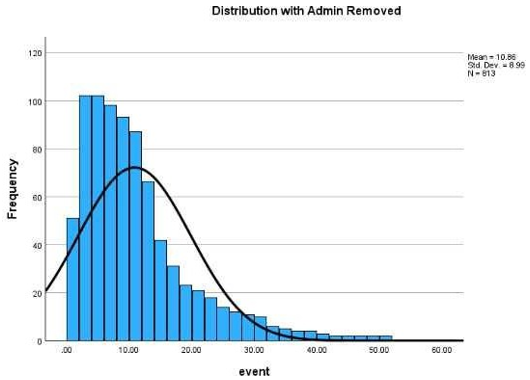
Figure 2: Distribution Academy Basic Recruit only
Note. The data has been cleaned with Admin removed. Only FCCJA recruits from October 14, 2024, through April 4, 2025.
Coding
To measure changes in interview skills across the usages, each user ID and attempt was compared to high-level words or phrases using Nvivo15. The coding for the study was divided into two general categories: one positive and one negative, with numerous subcategories.
While the following sub-categories are useful in certain circumstances and interview situations, for this study, they are categorized as variables that recruit officers should avoid. As such, it would be a categorical positive if this study showed that, through repeated exposure to computerized training simulations, the following variables exhibited minimal usage or a decline in usage across attempts [9,10].
Aggressive or confrontational language can escalate tensions, damage rapport, and reduce cooperation in interviews. Coding these terms monitors whether officers adopt more professional language, which should be a key indicator of skill improvement [11]. Escalatory language heightens tension and undermines cooperation, reflecting poor communication skills. Coding these terms tracks reductions, indicating better conflict management. Filler words are generally recognized as attempts to fill silence, thus indicating that there is tension or that the speaker is searching for their next thought [12,13].
Police jargon (e.g., ''perpetrator,'' ''transpired'') can hinder clear communication, especially with diverse or vulnerable interviewees. Coding jargon tracks whether officers adopt simpler, more accessible language, a key indicator of effective communication. Statements indicating another jurisdiction's responsibility (e.g., ''Contact the state police'') reflect procedural knowledge and communication clarity [14]. Coding these assesses how officers handle jurisdictional boundaries, with clear, professional referrals indicating better skills. While this would not be a defining variable, there were enough incidents where the system indicated that a crime scene or incident was outside the immediate jurisdiction, requiring the recruit to verify jurisdiction and develop a plan of action actively.
On the other side of the coding indicators, if the following variables showed an increase in usage over time, this would indicate growth in the recruits' interviewing skills. Greeting and engaging an individual in a strong, approachable manner is essential to building rapport and encouraging a conversational tone. Additionally, personalizing the interview is encouraged to build rapport during interviews [15]. Using greetings as a means to initiate an information-gathering interview, rather than an accusatorial interview interrogation approach, is often perceived as more productive and elicits a greater level of information and cooperation [1,16].
Formal introductions clarify the officer's role and authority, establishing professionalism and transparency. Coding these tracks adherence to procedural protocols, Greetings establish a positive tone and build initial rapport, critical for effective interviews. Coding these ensures officers consistently initiate interactions professionally. Empathetic language builds rapport, reduces tension, and encourages cooperation in interviews [15]. Coding these terms tracks whether officers improve their emotional intelligence and rapport-building skills. De-escalation language reduces conflict and maintains calm, critical for managing tense interview situations [2]. Coding these terms assesses officers' ability to de-escalate effectively [17].
Question structure is a crucial skill for effective interviews and interrogation in law enforcement. Open-ended questions are widely recognized in investigative interviewing research as crucial for eliciting detailed and accurate information from interviewees. They encourage narrative responses, which reduce bias and increase the yield of information compared to restrictive questions. Oxburgh et al. (2010) conducted a meta-analysis of investigative interviewing, finding that open-ended questions correlate with higher-quality witness statements, supporting their inclusion as a key indicator of skill improvement. Closed-ended questions (e.g., ''Did you see the suspect?'') are often less effective in investigative interviews because they limit responses and may introduce bias. However, closed questions are often used in a confirmatory manner. Coding these helps identify whether officers over-rely on restrictive questioning, a sign of poorer skills [18]. Finally, the category of ''furthering investigation'' was a catch-all that encompassed the recruits asking specific questions about the crime scene or the suspect, such as asking about the availability of videos, or witnesses, or suspect distinguishing characteristics.
Results and Discussion
The study revealed multiple statistically significant changes in the verbal behaviors of the law enforcement recruit sample.
|
|
Max |
Mean |
SD |
|
Aggressive Words |
2 |
.02 |
.167 |
|
Other Jurisdiction |
2 |
.05 |
.257 |
|
Closed-ended questions |
17 |
2.77 |
2.528 |
|
De-Escalation Words |
20 |
.96 |
2.122 |
|
Empathy Words |
10 |
.93 |
1.229 |
|
Escalation Words |
3 |
.02 |
.174 |
|
Filler Words |
14 |
1.38 |
1.973 |
|
Furthering investigation |
15 |
1.51 |
1.712 |
|
Greeting |
4 |
.74 |
.805 |
|
Jargon |
8 |
.34 |
.826 |
|
Open-ended Questions |
18 |
1.00 |
1.446 |
|
Professional Intro |
3 |
.66 |
.594 |
|
Note. N =813, Min =0 |
|||
Table 1: Variable Distribution Statistics
As an overall model, descriptive analysis of the coded communication variables revealed that variables such as ''closed-ended questions, furthering investigation, and filler words'' appeared most frequently in simulated interviews. Meanwhile, the use of de-escalation language, empathy words, and open-ended questions was somewhat less frequent, reflecting opportunities to strengthen these important rapport-building skills as recruits progress through training. (Table 1)
Notably, negative verbal behavior categories, such as ''aggressive words'' and ''escalation language,'' were quite rare, and formal elements like professional introductions, greetings, and jargon were used infrequently. Overall, these results offer a positive foundation while highlighting areas where additional emphasis on effective communication strategies could be especially beneficial for recruit development.
The mixed-model analysis demonstrated statistically significant improvements in three core communication variables: de-escalation words, empathy words, and open-ended questions (see Table 2). The fixed effects for these variables were significant at the p < .05 level, and the conditional R² values ranged from 0.188 to 0.256, indicating moderate explanatory power. These findings suggest that as recruits engaged in additional AI-based interview simulations, their use of these critical communication skills increased measurably over time.
Importantly, these results support the potential of structured, iterative AI-driven simulation to foster the development of verbal behaviors fundamental to effective policing, namely, de-escalation, empathy, and eliciting information through open-ended questioning. For example, the greater use of open-ended questions can lead to more comprehensive information gathering during police-citizen encounters. At the same time, increased expressions of empathy and de-escalation language help build rapport and resolve conflicts. By contrast, no statistically significant reduction was observed in less desirable verbal behaviors such as aggressive words, filler words, escalation language, and police jargon, suggesting that these habits may require longer interventions, more explicit feedback, or a blended learning approach that integrates AI-based repetition with instructor-led debriefing and reflective critique.
|
|
F(df1,df2) |
p-value |
Conditional R² |
Intercept Variance (Sig) |
Residual Variance |
|
De-escalation Words |
1.593 (50, 717.409) |
0.007 |
0.188 |
0.003 (S) |
0.029 |
|
Empathy Words |
1.659 (50, 718.873) |
0.004 |
0.217 |
0.004 (S) |
0.027 |
|
Open-endedQuestions |
1.518 (50, 710.488) |
0.014 |
0.256 |
0.003 (S) |
0.030 |
|
Note. S = significant, NS = not significant (for intercept variance); Fixed Effect significance p<.05 |
|||||
Table 2: Mixed Model Analysis Results for Communication Variables Across Training Attempts
Limitations
Several limitations should be acknowledged. This research was conducted at a single county criminal justice academy, which may limit generalizability to other training environments or law enforcement cultures. The sample size, while appropriate for qualitative coding, was limited to 52 recruits and may not reflect broader populations. Additionally, the relatively short duration of the intervention may have limited the potential for change in more deeply rooted verbal habits. The study relied on coded transcripts, which, although systematically analyzed, may not fully capture nonverbal communication or contextual influences on speech patterns. Finally, the absence of a control group or random assignment precludes definitive causal attribution. Future research should incorporate multi-site samples, extended intervention periods, and controlled designs to strengthen inferences about the long-term impacts of AI-assisted communication training.
Conclusion
In summary, this study provides compelling preliminary evidence that AI-based training tools can effectively enhance key communication skills in law enforcement recruits, particularly those related to rapport-building, conflict management, and information elicitation. Statistically significant gains in de-escalation, empathy, and open-ended questioning underscore the value of integrating AI into police training curricula. To maximize impact, future interventions should combine AI-driven practice with real-time instructor feedback and scenario-based debriefing. As artificial intelligence tools evolve, their capacity to deliver individualized feedback and adapt to learner needs will be critical to advancing both the quality of training and the effectiveness of police-community interactions [19,20].
References
- Brimbal, L., Meissner, C. A., Kleinman, S. M., Phillips,E. L., Atkinson, D. J., Dianiska, R. E., ... & Jones, M. S. (2021). Evaluating the benefits of a rapport-based approach to investigative interviews: A training study with law enforcement investigators. Law and Human Behavior, 45(1), 55.
- Oxburgh, G., & Ost, J. (2011). The use and efficacy of empathy in police interviews with suspects of sexual offences. Journal of Investigative Psychology and Offender Profiling, 8(2), 178-188.
- Glaser, B., & Strauss, A. (1967). Discovery of grounded theory: Strategies for qualitative research. Routledge.
- Charmaz, K. (2006). Constructing grounded theory: A practical guide through qualitative analysis. sage.
- Khandkar, S. H. (2009). Open coding. University of Calgary, 23(2009), 2009.
- Williams, M., & Moser, T. (2019). The art of coding and thematic exploration in qualitative research. International management review, 15(1), 45-55.
- L BERG, B. R. U. C. E. (2017). Qualitative research methods for the social sciences.
- Ryan, G. W., & Bernard, H. R. (2003). Techniques to identify themes. Field methods, 15(1), 85-109.
- Ericsson, S., Öman Ekervhén, L., Nyström, M., Stenlund, T., & Davis, P. (2024). “There is no script”: police teachers’ experiences of training investigative interviewing. Journal of Police and Criminal Psychology, 1-16.
- Molinaro, P. F., Fisher, R. P., Mosser, A. E., & Satin, G. E. (2019). Train-the-trainer: Methodology to learn the cognitive interview. Journal of Investigative Psychology and Offender Profiling, 16(1), 32-43.
- Bousfield, D., & Locher, M. A. (Eds.). (2008). Impoliteness in language: Studies on its interplay with power in theory and practice (Vol. 21). Walter de Gruyter.
- Worden, R. E., & Shepard, R. L. (1996). Demeanor, crime, and police behavior: A reexamination of the police services study data*. Criminology, 34(1), 83–105.
- Clark, H. H., & Tree, J. E. F. (2002). Using uh and um in spontaneous speaking. Cognition, 84(1), 73-111.
- Prabhakaran, V., Griffiths, C., Su, H., Verma, P., Morgan, N., Eberhardt, J. L., & Jurafsky, D. (2018). Detecting institutional dialog acts in police traffic stops. Transactions of the Association for Computational Linguistics, 6, 467-481.
- Dando, C., Wilcock, R., & Milne, R. (2008). The cognitive interview: Inexperienced police officers' perceptions of their witness/victim interviewing practices. Legal and Criminological Psychology, 13(1), 59-70.
- United Nations Department of Peace Operations. (2024). Manual on investigative interviewing for criminal investigation [Ref. DPO 2024.01 I OHCHR 2024 I UNODC 2024]. UN Department of Peace OPerations.
- Todak, N., & James, L. (2018). A systematic social observation study of police de-escalation tactics. Police Quarterly, 21(4), 509-543.
- Baker-Eck, B., & Bull, R. (2022). Effects of empathy and question types on suspects’ provision of information in investigative interviews. International Journal of Police Science & Management, 24(4), 406-416.
- Akca, D., Lariviere, C. D., & Eastwood, J. (2021). Assessing the efficacy of investigative interviewing training courses: A systematic review. International Journal of Police Science & Management, 23(1), 73-84.
- Winer, S., Ramos Salazar, L., Anderson, A. M., & Busch, M. (2023). Resolving conflict in interpersonal relationships using passive, aggressive, and assertive verbal statements. International Journal of Conflict Management, 35(2), 334-359.