



Research Article - (2022) Volume 7, Issue 3
Analysing the Status and Strategy Dimensions of the Sport Organizational Structure in the South Ethiopia Sport Commission Office
Received Date: May 19, 2022 / Accepted Date: Jun 03, 2022 / Published Date: Jul 11, 2022
Copyright: ©Samson Getu. This is an open-access article distributed under the terms of the Creative Commons Attribution License, which permits unrestricted use, distribution, and reproduction in any medium, provided the original author and source are credited.
Citation: Samson Getu. (2022). Analysing the Status and Strategy Dimensions of the Sport Organizational Structure in the South Ethiopia Sport Commission Office. Cardio Open, 7(3): 259-268.
Abstract
Background: The structure of an organization is significant because it determines how employees and volunteers interact in terms of job tasks, decision-making procedures, the need for collaboration, levels of responsibility, and reporting mechanisms. Specialization, standardization and centralization are three structural dimensions that have long been used to define organizational traits and arrangements.
Objective: To analyse the status and strategy dimension of the sport organizational structure in the south Ethiopia sport commission office.
Methods: An institutional based descriptive survey research approach was conducted at the south Ethiopia sport commission office. Data were collected by using a self-administered questionnaire. Study participants were allocated proportionally based on their profession by using a purposive sampling method. Data were entered and analysed by using SPSS version 20.0. Descriptive statistics frequency and percent were used to describe the analysis of variables in the study area.
Result: In this study, the status and strategy dimensions of the sport organizational structure in South Ethiopia sport commission office, like work specializations implemented were only (60.4%), departmentalization (62.3%), chain of command that there was no reporting trial between managers and employers (43.3%). The wide type of control was (64.2%), the status of centralization was (62.2%) and decentralization was only (24.5%).
Conclusion: According to the findings of the current study, the status and strategy dimension of the sport organizational structure in the South Ethiopia sports commission office is very low. Factors affecting departmentalization include work type, employer’s field of study, different task process and environmental risk. Factors affecting the span of control competencies of subordinate, nature of work, quality of planning, communication techniques, organizational structure, organizational culture, and complexity of organizations were independent predictors of strategic dimension in sport organizational structurePreparing and providing programmed continuously on the job, organizing seminars and up on hire training on strategic dimensions of sport organizational structure should be crucial. To enhance the span of control adminsterative personnel should practice direct control of supervisors and subordinates. In chain of command, administrative personnel and employers should follow reporting trials between the employers and upper managers.
Keywords
Organizational Structure, Strategy, Dimension, Sport Commission
Introduction
Conceptualization of organizational structure is the manifesta- tion of systematic thought. The organization is composed of el- ements, relations between elements and structure as a generality composing a unit. Structure is high combination of the relations between organizational elements forming existence philosophy of organizational activity. Systematic view of organization to structure shows that structure is composed of hard elements on oneside and soft elements on the other side [1]. National sport organizations might enhance their strategic capability. Findings established that greater board involvement in strategy advanced the board's ability to perform its strategic function.
In the present day dynamic and competitive environment, orga- nizations are constantly facing the issue of a suitable strategy so that they would avoid strategy collapse studied the relationship of organizational size and structure and found that the size of the organization affects the type of structure [2]. Cunningham & Rivera studied organizational structures in American college sections using the dimensions of concentration, complexity and standardization in order to classify the sections [3]. The emerg- ing results depicted the three dimensions of organizational struc- ture. From their findings, they also promoted the development of enable structure as the most effective in order American college sections to achieve their goals. Further studied and compared the differences between the dimensions of structural organizations in large and small regional sport commissions in the United States of America [4]. A sport organization is spatially differentiated when tasks are separated geographically. Formalization, the last dimension of structure, refers to the existence of mechanisms, such as rules and procedures that govern the operation of a sport organization. The majority of researchers use these dimensions in order to describe and understand the organizational structure. The most basic concept of organizational structure is job spe- cialization-the degree to which the overall task of the school is broken down and divided into smaller, component parts [5]. For example, a school may employ principals, school psychologists, social workers, counsellors, teachers, and many other support staff including secretaries, food service personnel, maintenance workers, bus drivers, and the like. This specialization of tasks provides an identity for the job and those performing it, which collectively adds back to the total. Departmentalization by func- tion groups together in a common organizational unit people performing similar or closely related activities. Functional de- partmentalization is one of the most widely adopted approaches for grouping school district activities because of its versatility. It offers a number of other advantages, because experts in that functional area can staff people who perform similar functions work together, each department [6].
The concept of decentralization, like the concept of delegation, has to do with the degree to which authority is dispersed or concentrated [7]. No organization is completely centralized or decentralized. Rather, these are extremes of a continuum, and school districts fall somewhere in between. The number of sub- ordinates who report directly to a given principal. There is a lim- it to the number of persons one principal can effectively super- vise. Care should be taken to keep the span of control, also called the span of management, within manageable limits. The critical factors in determining the appropriate span of control include the following similarity of functions, geographic proximity, Complexity of functions and level of motivation of subordinate personnel [6]. Moreover, complexity describes the way in which an organization is differentiated. Three types of differentiation are usually found in a sport organization: horizontal, vertical and spatial. Sport organizations are horizontally difsferentiated when work is broken down into narrow tasks, when profession- als or craft workers are employed and when the organization is departmentalized. Vertical differentiation refers to the number of levels in the organizational hierarchy.
Generally, sport organizations lack of strategic dimension and organizational structure compliance among sport offices has sur- plus consequences in our country in general and in the south Ethiopia sport commission specifically leading to a lack of or- ganizational efficiency and effectiveness. The increment of de- mands for more complicated organizational structures, which in turn have resulted in new, changed, and unknown circumstances for the people involved in sport organizations. There are also in- sufficient studies are found regarding to the sports organization- al structure in the South Ethiopia sport commission. Therefore, the main aim of this study is to analyse the status and strategy dimension of the sport organizational structure in the South Ethi- opia sport commission office.
Objectives
General objectives
To determine the status and strategy dimensions of sport orga- nizational structure in south Ethiopia sport commission office, 2019.
Specific objectives
To identify the status and strategy dimensions of sport organiza- tional structure in the South Ethiopia sport commission office, 2019.
Methodology
Study Area and Period
The study was carried out in the South Ethiopia sport commis- sion office in Hwassa city, southern Ethiopia. It is the capital city of the Southern Nations, Nationalities People Regional states. The South Ethiopia sport commission office provides service for 16 administrative, organizing, and managing zones in SNNPR, which is found in Hwassa city. This study conducted from Jan- uary 15 to June 15 2019.
Study Design
An institutional based descriptive survey research approach con- ducted at the South Ethiopia Sport Commission Office. Source Population All sport commission office workers and adminsterative person- nel.
Study Population
All purposively selected study participants were all sport com- mission office workers and administrative personnel.
Inclusion and Exclusion Criteria
Inclusion Criteria: All sport commission office workers and adminsterative personnel who were involved in sport office ser- vices during study period and had direct contact with sport re- lated work.
Exclusion Criteria: Workers who were on annual and maternity leave during data collection, those who could not respond to the questions due to illness and those working in cleaning; garden- ing and driving were excluded from the study.
Sample Size
The sample size was determined by using single population pro- portion of employers .Administrative personnel (n=4), supervi- sors (n=10), project leaders (n=6), secretaries (n=3), employers (N=20) commercial leaders (n=4) and competition and training leaders (n=6).The total study population was 53.
Sampling Procedures
The purposive sampling method was used to select study partici- pants. Sport office workers and administrative personnel catego- rized according to their profession and then samples taken based on an equal chance for all sport office workers appearing in the sample by using the purposive sampling method.
Data Collection Procedure
The questionnaire initially developed in English by reviewing available literature and guidelines. Three trained BSc. sport science professionals collected data and two supervisors were employed to follow up the data collection process. A pretested structured self-administered questionnaire adopted from differ- ent studies. In total, the data collection tool included open and close-ended questionnaires and socio demographic questions.
Data Quality Control
To assure data quality a detailed description of each question of questionnaire training provided for the data collectors and supervisors. Questionnaires prepared in English translated in to Amharic. The Amharic version was translated back into English by a researcher conversant in both languages. The two versions examined to identify any inconsistency in the wording.From the total sample size 10% of the samples were used for pretesting tools and checked for validity and reliability as well as for am- biguity of questions among data collectors and supervisors. The questionnaire was compatible with the Spearman brown coeffi- cient of 0.853. Daily close supervision and data collectors for completeness and accuracy of collected data were checked.
Results
Dependent Variables: Strategy dimensions of sport organiza- tional structure
Independent Variables: Work specialization, departmental- ization, chain of command, span of control and centralization/ decentralization.
Data Processing and Analysis
Data collected from the respondents were entered, cleaned and analysed by using SPSS version 20.0 software package for fur- ther statistical analysis. Determinants of strategy dimensions of sport organizational structure were explained by descriptive sta- tistics, such as: frequency distribution and percentages displayed by using figures and tables to describe study subjects.
Ethical Consideration
The ethical review committee of Wachemo University College of Natural and Computational Science approved the research topic and methodology. Permission to conduct the study was obtained from the South Ethiopia sport commission office. The research presents no more than minimal risk of harm to subjects. Thus, oral consent was obtained from all the respondents after explaining the purpose of the study, risk/discomfort, benefits to the subject, and confidentiality of records, right to refuse partic- ipation and terminate participation in the study at any time. In- formed verbal consent was obtained from the respondents after explaining the purpose of the study. Participants were assured of confidentiality with regard to all information acquired.
Table 1: Socio Demographic Characteristics South Ethiopia Sport Commission at Hwassa
|
No |
Sex of the respondents |
Frequency |
percentage |
|
1 |
Male |
36 |
67.9 |
|
2 |
Female |
17 |
32.1 |
|
|
Total |
53 |
100.0 |
|
Age of the respondents |
|||
|
1 |
30-39 |
16 |
30.2 |
|
2 |
40-49 |
10 |
18.9 |
|
3 |
50-59 |
18 |
34.0 |
|
4 |
60+ |
9 |
17.0 |
|
5 |
Total |
53 |
100.0 |
|
Educational status of the respondents |
|||
|
1 |
Diploma |
3 |
5.6 |
|
2 |
Degree |
30 |
56.6 |
|
3 |
Master’s degree |
14 |
26.4 |
|
4 |
PhD |
6 |
11.3 |
|
5 |
Total |
53 |
100.0 |
|
Work experience of the respondents |
|||
|
1 |
1st year(fresh) |
9 |
17 |
|
2 |
2-10 year |
9 |
17 |
|
3 |
11-20 year |
16 |
30.2 |
|
4 |
20 year |
19 |
35.8 |
|
5 |
Total |
53 |
100.0 |
|
Field of the study |
|||
|
1 |
Management |
14 |
26.4 |
|
2 |
Sport science |
20 |
37.7 |
|
3 |
Accounting |
6 |
11.3 |
|
4 |
Computer science |
6 |
11.3 |
|
5 |
Life science |
7 |
13.2 |
|
6 |
Total |
53 |
100.0 |
All sport commission office workers were selected (100%) participated in this study. According to this study, 36 (67.9) re- spondents were male, and 17 (32.1%) were female. The most frequent respondents were male. The age of the respondents 16 (30.2%) ranged from 30-39 years, 10 (18.9%) from 40-49 years, 18 (34.0%) from 50-59years and 9 (17.0%) ranging 60 years and older. The most frequent respondent age ranged from 50-59 years old. The respondents educational statues were three diplo- ma holders (5.6%), 30 degree holders (56.6%), 14 Master’s de- gree holders (26.4%) and, six PhD holders 6(11.3%). The most frequent respondents were degree holders. Respondents had one year of work experience, 9 (17%) ranged from 2-10 years, 16 (30.2%) ranged from 11-20 years, and 19 (35.8%) ranged from 20 and above years of working experience. Respondents in the field of the study who had 14 management degrees (26.4%), 20 sport science degrees (37.7%), 6 accounting degree (11.3%), 6 computer science degrees (11.3%), and 7 life science degrees (13.2%). The most frequent respondents had sport science de- gree Table 1.
Status of Strategic Dimension in South Ethiopia Sport Commission Office
Status of Strategic Dimension in South Ethiopia Sport Commission Office
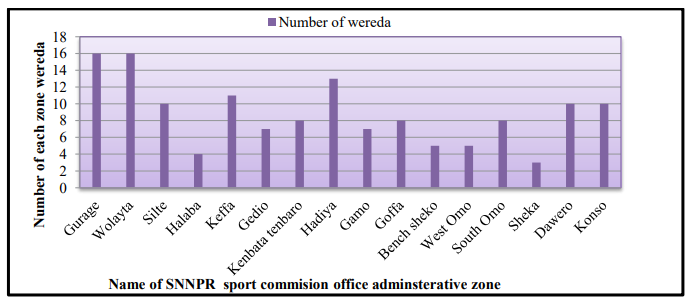
The Frequencies of administrative zones of SNNPR and south Ethiopian Sport Commission office organizes and manages in all administrative zones are presented in Figure 1 above.
Table 2: The Status of Work Specializations in the Southern Ethiopian Sport Commission Office.
|
|
Response |
Frequency |
Percent |
|
Is there work specialization in southern Ethiopia sport commission office? |
Yes |
32 |
60.4 |
According to this study, from the southern Ethiopian sport com- mission most respondents responded that 32 (60.4%) ‘‘Yes’’ that there is work specialization were practiced in the southern Ethi- opia sport commission office. Twenty-one (39.6%) respondents responded that ‘‘No’’ that there is practice of work specializa- tion. Table 2 explains that sports office employers have work specialization to manipulate various duties to meet specified objectives Table 2.
Table 3: The Advantages of Work Specialization
|
|
Response |
Frequency |
Percent |
|
What is the benefit of work specializations in your organi- zations? |
Improve production efficiency |
7 |
13.2 |
|
Increase economic efficiency |
7 |
13.2 |
|
|
It reduce work capacity |
17 |
32.1 |
|
|
To deciding job address |
16 |
30.2 |
|
|
Increase workers freedom |
6 |
11.3 |
|
|
Total |
53 |
100.0 |
Table 3 explains that respondents responded with the advantages of work specialization in the south Ethiopia sport commission office 7 (13.2%) responded that it improved production efficien- cy, 7 (13.2%) increased economic efficiency, 17 (32.1%) re- duced work capacity, 16 (30.2%) benefited for deciding job ad- dress and, six (11.3%) gave workers freedom. Mostly frequented respondents on the benefit of work specializations were those who reduce work the capacity of south Ethiopian sport offices in Table 3.
Table 4: The Status of Departmentalization in the Southern Ethiopian Sport Commission Office.
|
|
Response |
Frequency |
Percent |
|
Is there departmentalization in southern Ethiopia sport commission office? |
Yes |
33 |
62.3 |
|
No |
20 |
37.7 |
|
|
Total |
53 |
100.0 |
According to this study, from the southern Ethiopian sport com- mission office most respondents responded that 33 (62.3%) ‘‘Yes’’ that there is work departmentalization were practiced in southern Ethiopia sport commission office.Twenty (37.7%)respondents responded that ‘‘No’’ that means there is no work departmentalization in their sport commission office. According to the results, the sport commission office has a different work departmentalization Table 4.
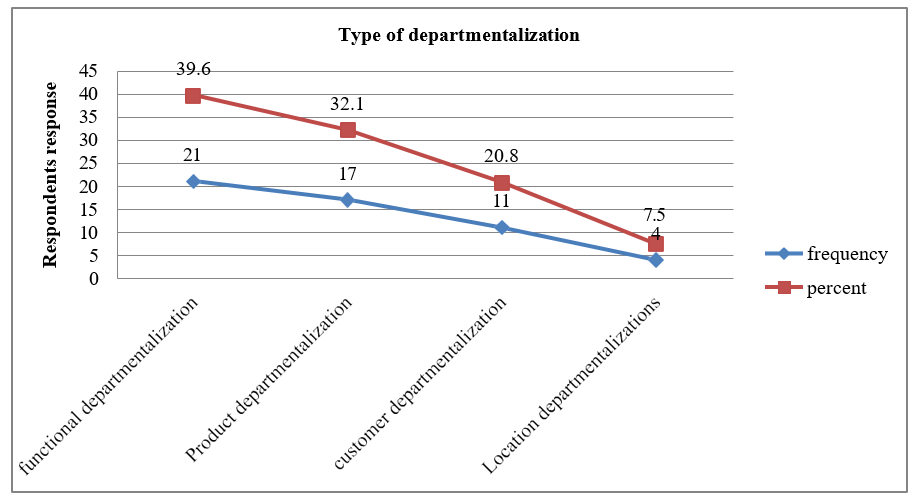
Figure 2: Types of departmentalization that applicable to the South Ethiopia Sport Commission Office
Figure 2 above explains that 21 (39.6%) functional departmen- talization, 17 (32.1%) product departmentalization, 11 (20.8%) customer departmentalization, 4 (7.5%) location departmental- ization were applicable in South Ethiopia sport commission of- fice respondents. The most frequented type of departmentaliza- tion was functional departmentalization in Figure 2
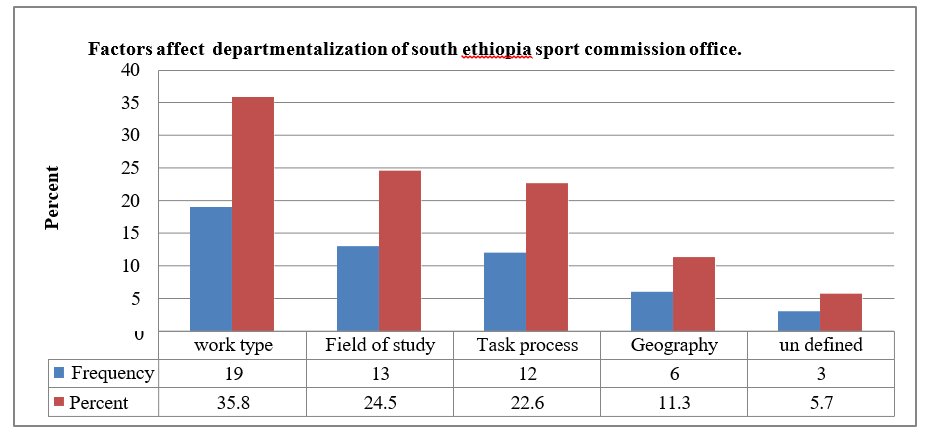
Figure 3: Factors affecting departmentalization of the South Ethiopian Sport Commission office
Frequency of factors that affect departmentalization of the Sport Commission office 19 (35.8%) work type,13 (24.5%) field of study of employers, 12 (22.6%) different task process, 6 (11.3%) environmental factors and 3 (5.7%) were undefined. In south Ethiopia sport, commission offices mostly frequented factors were the work type of employers and presented in Figure 3 above.
Table 5: The practice of chain of command in the South Ethiopia Sport Commission Office.
|
|
Response |
Frequency |
Percent |
|
In which mechanism chain of command practiced? |
Exists between the upper and lower levels managers |
7 |
13.2 |
|
Between the employees |
6 |
11.3 |
|
|
Reporting held only by upper managers |
17 |
32.1 |
|
|
No reporting trials |
23 |
43.4 |
|
|
Total |
53 |
100.0 |
Table 5 explains that in the practice of chain of command in the south Ethiopia sport commission office 7 (13.2%) exist be- tween the upper and lower levels managers, chain of command between the employers 6 (11.3%), chain of command by report- ing held only by upper managers 17 (32.1%) and there are no re- porting trials 23 (43.4%). The most practiced chain of command in the sport commission office was reporting held only by upper managers Table 5.
Table 6: Type of Span of control in South Ethiopia Sport Commission Office
|
|
|
Frequency |
Percent |
|
Which type of span of control used in your organization? |
Narrow span of control |
19 |
35.8 |
|
Wide span of control |
34 |
64.2 |
|
|
|
53 |
100.0 |
Table 6 explains that 19(35.8%) respondents responded with a narrow span of control, and 34(64.2%) responded with a wide span of control. The most frequent type of span of control is a wide span of control in south Ethiopia sport commission offices .Because the sports office controls the wide administrative zone Table 6.
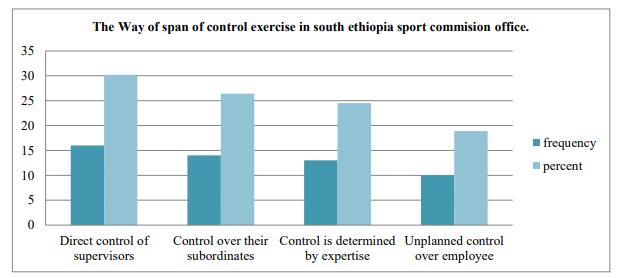
Figure 4: Method of exercising span of control in south Ethiopian sport commission office
The method of practicing span of control in the south Ethiopi- an sport commission office is presented in Figure 4 above. The most frequent practice method span of control was direct control of supervisors.
Table 7: Factors affecting the span of control in the south Ethiopia sport commission offices
|
Questions |
Response |
Frequency |
Percent |
|
What factors affecting span of control in south Ethiopia sport commission office? |
Competencies of subordinate |
13 |
24.5 |
|
Nature of work |
14 |
26.4 |
|
|
Quality of planning |
9 |
17.0 |
|
|
Communication techniques |
17 |
32.1 |
|
|
Total |
53 |
100.0 |
Table 7 explain that the factors affecting the span of control were 13 (24.5%) subordinate competencies 14 (26.4%) nature of work, 9 (17.0%) quality of planning and 17 (32.1%) com- munication techniques. Communication techniques are the most frequent factor affecting the span of control of the South Ethio- pia sport commission office Table 7.
Table 8: Degree of centralization/decentralization in the South Ethiopia Sport Commission Office
|
|
Response |
Frequency |
Percent |
|
What is the degree of Cen- tralization/decentralization in your organizations? |
It is highly centralized |
33 |
62.2 |
|
Little to be centralized |
7 |
13.2 |
|
|
It is decentralized |
13 |
24.5 |
|
|
|
53 |
100.0 |
Table 8 explains that the degree of centralization/decentralization in the sports commission office was 33 (62.2%) leaders power is highly centralized, 7 (13.2%) less centralized, and 13 (24.5%) as decentralized. The most frequent respondents responded that leaders used high-centralized power in the south Ethiopian sport commission office in Table 8s.
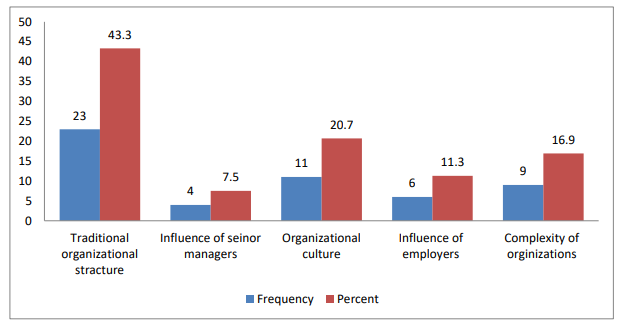
Figure 5: Factors affecting the degree of decentralization in the south Ethiopia sport commission office
Various factors affecting the degree of decentralization in south Ethiopia sport commission office where as follows: that 23 (43.3%) organizational structure, (7.5%) influence of senior managers, 11 (20.5%) influence of organizational culture, 6 (11.3%) influence of employers, and 9 (16.3%) complexity of organizations in Figure 5.
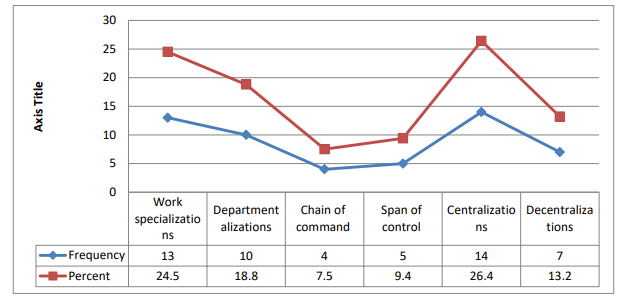
Figure 6: The status of the strategic dimension in the South Ethiopia sport commission office
The status and type of strategic dimension in south Ethiopia sport commission office. The practice of strategic dimensions explains 13 (24.5%) work specializations, 10 (18.8%) depart- mentalization, 4 (7.5%) chain of command, 5 (9.4%) centraliza- tions, and 7 (13.2%) decentralization. The most frequent strate- gic dimensions were work specializations, departmentalization and centralizations in Figure 6.
Discussion
The findings of this study revealed that the status of the strate- gic dimensions of the sport organizational structure in the South Ethiopia sports commission office was very low, especially the chain of command and span of control. There is no formal prac- tice of strategic dimensions in the sports commission office. According to this study, from the southern Ethiopian sport com- mission most respondents responded that 32 (60.4%) ‘‘Yes’’ that there is work specialization were practiced in southern Ethiopia sport commission office. Twenty-one (39.6%) respondents re- sponded that ‘‘No’’ that there is no practice of work specializa- tion. This finding was supported by the study that method of job specialization involves breaking down a task to its lowest level and designing jobs around each part [8]. This creates specializa- tion, expertise, and improved quality. Job specialization design in the workplace is frequently seen where a worker focuses on one specific task and ability during the entire work shift. Among the findings of this study was that majority of the staff of the sampled library were fully satisfied with their present area of specialization.
The status of strategic dimension departmentalization was only 33 (62.3%) practiced in the Southern Ethiopia sport commission office. The most common type of departmentalization practiced in the sport commission office was functional departmentaliza- tion. Supportive idea stated by Farahmand about functional de- partmentalization that efforts by functional departmentalization as important technology future expectancies to carry out orga- nizational empowerment [9]. In addition to this Pankiw & Page stated, that organizational structure refer to the department of the organization and the connections established within and be- tween departments [10].
Factors affecting departmentalization of south Ethiopia sport commission were 19 (35.8%) work type, 13 (24.5%) employer’s field of study, 2 (22.6%) different tasks process and 6 (11.3%) environmental factors. The findings indicate that the method of practicing chain of command in the south Ethiopia sport com- mission office that exists between the upper and lower levels managers was only 7 (13.2%), command between the employers was 6 (11.3%), reporting held only by upper managers was 17 (32.1%) and there were only 23 (43.4%) reporting trials. This re- sult was similar to the study by Employees are often discouraged from communicating with any higher-level managers other than their immediate superiors; that is, they are required to follow a “chain of command Kassing [11].
The type of span of control practiced in the South Ethiopia sport commission office was 19 (35.8%) with a narrow span of control and 34 (64.2%) with wide span of control. Wide span of control was mostly frequented because the sports commission office has large zonal administrations. The review in Oakland University by Bohte & Meier that wide spans of control increase employee discretion and often enhance employee morale and a narrow w span of control exists when a leader oversees few subordinates [12]. The method of practicing span of control was direct control of supervisors, control over subordinate, control is determined by expertise and unplanned control over employers. The most frequent method of span of control is direct control of supervi- sors. Factors affecting the span of control were subordinate com- petencies 13 (24.5%), nature of work were 14 (26.4%), quality of planning were 9 (17.0%), communication techniques were 17(32.1%). Due to many factors the span of control less frequent and practised. ‘‘because the size of the span influences several determinants that deviate from industry, enterprise size, type of organizational structure, performance of the organization’’.
The result indicate that the degree of centralization/decentral- ization in the sport commission office in which leaders power is highly centralized was 33 (62.2%), less centralized was 7 (13.2%), leaders power decentralized were 13 (24.5%), so lead- ership power was highly centralized. This results is similar with studied by Chen & Huang that centralization, and especially hi- erarchy also have a negative effect on knowledge sharing be- tween units in organizations because of the control embedded in centralized systems [13]. Factors affecting the degree of de- centralization in south Ethiopia sport commission office that tra- ditional organizational structure were 23 (43.3%), influence of senior managers were 4 (7.5%), organizational culture were 11 (20.5%), influence of employers were 6 (11.3%), and complex-ity of organizations were 9 (16.3%). In this case, organizational structure affects decentralization of leadership power. Decentral- ization was highly affected by organizational structure and less frequented. This result supported by similar studies those Jenni & Mauriel factors that influence the decentralizations affected by different factors [14]. Specifically, the relationships among a group's assessment Management, perceived level of influence on council decision-making, perceived level of support from other groups, and perceived level of program effectiveness.
Generally, the results indicate the status of the strategic dimen- sion in the South Ethiopia sport commission office. Work special- izations were 13 (24.5%), departmentalization was 10 (18.8%), chain of command was 4 (7.5%), span of control was 5 (9.4%) degree of centralization was 14 (26.4%) and decentralizations was 7 (13.2%). Work specializations, departmentalization and centralization were highly frequented and the chain of command and span of control was less practiced in the south Ethiopia sport commission office. This might be due to the structure of the sports office, leadership style, and organizational culture.
Conclusions and Recommendations
The Strategic dimensions of sport organizational structure re- quire special attention as a result of the risk posed by the pres- ence of the incorrect practice of strategic dimensions in sport commission offices which negatively impacts the goal attain- ment and effectiveness of sport commission offices. From our study, the overall status of the strategic dimension of sport or- ganizational structure considered very low. Factors affecting de- partmentalization include work type, employer’s field of study, different task processes and the environment. Factors affecting span of control competencies of subordinate, nature of work, quality of planning, communication techniques. Factors af- fecting the degree of decentralization traditional organizational structure, influence of senior managers, organizational culture, influence of employers, and complexity of organizations were independent predictors of strategic dimension in sport organiza- tional structure.
Preparing and providing programmed continuously on the job, organizing seminars and up on hire training on strategic dimen- sions of sport organizational structure should be crucial. The university should revise the sports management course curricu- lum and training should be a valuable and necessary intervention for the improvement of sports commission offices administrative personnel and employers towards the status of the strategic di- mension of the sports organizational structure.
Sport commission offices administrative personnel and em- ployers should pay attention to the strategic dimension of the process. The results indicate that the frequency of the chain of command and span of control was very low. To enhance the span of control administrative personnel should be practice direct control of supervisors and subordinates. In chain of command, administrative personnel and employers should follow reporting trials between the employers and upper managers. Suggestions for future research on the effect of determinants factors on the strategic dimension of sports organizations.
Abbreviations
SNNPR: South Nation Nationality People Region
Authors Contribution
Samson Getu was sole authorship of this paper drafted the study design, carried out data collection, data management, data anal- ysis, and interpretation, drafted the manuscript and agreed to employ data collectors and was accountable for all aspects of the work.
Data Availability
Datasets used and analysed during the current study are avail- able from the corresponding author on reasonable request.
Funding
The financial support was from Wachemo University
Acknowledgements
The researchers gratefully thank Wachemo and Hwassa Univer- sity. The authors would also like to south Ethiopia sport commis- sion office administrative personnel and employers. Finally, the authors highly acknowledge their study participants for provid- ing all necessary information and data collectors.
References
- Ahmady, G. A., Mehrpour, M., & Nikooravesh, A. (2016). Organizational structure. Procedia-Social and Behavioral Sciences, 230, 455-462.
- Amis, J., & Slack, T. (1996). The size-structure relationship in voluntary sport organizations. Journal of Sport Manage- ment, 10(1), 76-86.
- Cunningham, G. B., & Rivera, C. A. (2001). Structural de- signs within American intercollegiate athletic departments. The International Journal of organizational analysis.
- Bradish, C. L. (2003). An examination of the relationship between regional sport commissions and organizational structure. The Florida State University.
- Slack, T., & Parent, M. M. (2006). Understanding sport or- ganizations: The application of organization theory. Human Kinetics.
- Lunenburg, F. C. (2010). The Management Function of Principals. In National Forum of Educational Administra- tion & Supervision Journal, 27(4).
- Zajda, J., & Rust, V. (Eds.). (2010). Globalisation, policy and comparative research: Discourses of globalisation (Vol. 5). Springer Science & Business Media.
- Adeyoyin, S. O., Agbeze-Unazi, F., Oyewunmi, O. O., Ade- gun, A. I., & Ayodele, R. O. (2015). Effects of Job Special- ization and Departmentalization on Job Satisfaction among the Staff of a Nigerian University Library. Library Philoso- phy & Practice.
- Farahmand, N. F. H. (2016). Organizational Technology Management by Functional Departmentalization as Import- ant Technology Future Expectancies. International Journal of Advanced Scientific Research & Development, 3(3), 54- 72.
- Pankiw, T., & Page Jr, R. E. (2000). Response thresholds to sucrose predict foraging division of labor in honeybees. Behavioral ecology and sociobiology, 47(4), 265-267.
- Kassing, J. W. (2009). Breaking the chain of command: Making sense of employee circumvention. The Journal of Business Communication (1973), 46(3), 311-334.
- Bohte, J., & Meier, K. J. (2001). Structure and the perfor- mance of public organizations: Task difficulty and span of control. Public Organization Review, 1(3), 341-354.
- Chen, C. J., & Huang, J. W. (2007). How organizational climate and structure affect knowledge management-The social interaction perspective. International journal of infor- mation management, 27(2), 104-118.
- Jenni, R. W., & Mauriel, J. J. (1990). An Examination of the Factors Affecting Stakeholder's Assessment of School Decentralization.