

Advance in Environmental Waste Management & Recycling(AEWMR)
ISSN: 2641-1784 | DOI: 10.33140/AEWMR
Impact Factor: 0.9

Research Article - (2025) Volume 8, Issue 3
Adaptation Strategies of Rural Communities of Selected Niger Delta States to Oil Spill
Received Date: Oct 20, 2025 / Accepted Date: Nov 10, 2025 / Published Date: Nov 13, 2025
Copyright: ©2025 Jude Igbogho. This is an open-access article distributed under the terms of the Creative Commons Attribution License, which permits unrestricted use, distribution, and reproduction in any medium, provided the original author and source are credited.
Citation: Igbogho, J. (2025). Adaptation Strategies of Rural Communities of Selected Niger Delta States to Oil Spill. Adv Envi Man Rec, 8(3), 01-12.
Abstract
This study investigated the adaptation strategies of rural communities in selected Niger Delta States (Bayelsa, Delta, and Rivers) to the effects of oil spills. Using structured questionnaires and observation, data were collected from 392 respondents focusing on the socio-economic effects, causes, vulnerabilities, and adaptive responses. Descriptive analysis confirmed severe socio-economic devastation, including fatalities, pollution, and public health issues. Sabotage was identified as a major cause. The study found that women bear a disproportionate burden in terms of livelihood and health, often marginalized in spill-related matters. The underlying community vulnerability was linked to poverty, driven by a lack of education, healthcare, basic amenities, and an overdependence on farming and fishing.
Adaptation strategies primarily involve a shift to non-farming activities like trading, hunting, and unskilled labor. A critical response mechanism is coordinating community action to build social capacity and share knowledge. The use of the Oil Boom was noted as a popular method for spill control. Statistical analysis revealed significant perceptual differences across the three states concerning adaptive livelihood strategies, vulnerability factors, and community response capacity. The study recommends key policy actions to enhance resilience: adopting a multi-stakeholder mechanism for livelihood support; strengthening regulatory compliance; promoting alternative livelihoods; and developing comprehensive contingency plans for rapid spill containment and clean-up. These measures are vital for effective community-level response and recovery.
Introduction
Globally, the increasing demand for natural resources has signaled the loss of some indigenous populations and the habitats where these resources are extracted, suffering from the consequences of historic injustice Decolonization, dispossession of lands, territories, resources, oppression, discrimination, lack of control over their own ways of life (United Nations, 2009). As a consequence, natural resource-dependent communities have had to cope with the effects of the exploration of its resources.
According to Omorede (2014), Oil exploration and exploitation have over the last four decades impacted disastrously on the social, and the physical environment of the Niger Delta oil bearing communities massively threatening subsistent peasant agricultural economy and environment as well as the entire livelihood and basic survival of the people. For example, since the first oil spillage that took place in Bomu on the 9th July 1970, several other incidents have occurred in different parts of the Niger Delta region (Mobil Producing Nigeria 1998). Over 1,010 oil spillage incidents took place since 2014 in which about with 1 barrels or 17.5 million liters lost (Shell, 2021) [1].
These oil spills which have been disruptive and a threat to the host communities has made inhabitants of these communities to cope with spills and other forms of ecological damage caused by exploration and pipeline-related activities (Theriot 2011). Up until 1972, the response to these disruptions drew primarily on local capacities. Communities deployed largely ad hoc methods or drew on existing programs not intended for coping with hazards to respond to and recover from the full range of disruptions.
Thus, community adaptation in response to large oil spills that have caused severe environmental damage has demonstrated the importance of external links such as to government officials, law- yers, nongovernmental organizations, and volunteers to access as- sistance on compensation and restoration issues. Though commu- nities tend to self-organize immediately after the disaster before the external assistance arrives, subsequent issues of compensation and restoration, critical after large oil spills, are longer-term and require sustained external resources and information.
In recent years, the concepts of resilience, vulnerability and adap- tive capacity have been expanded and developed in what some authors refer to as the Human Dimensi9n of Global Environmental Change (HDGEC) knowledge domain (Janssen and Ostrom 2006; Janssen et a!. 2006; Forch, 2012). As research and the necessity for adaptation has moved on, the focus has shifted towards seeking a better understanding of adaptive capacities, especially on occa- sions of environmental shock (Fraser, et al 2005).
Robeledo, et al, (2012) stress the need to understand the strategies communities adopt in response to hazard in view of their vulnera- bilities and the ways they build capacities to withstand the impact of the shock. Such capacities may include poorly understood do- mains such as local knowledge and skills deployed in constructing responses to the challenges posed by the hazards (Liwenga, 2008).
It is against this background therefore that the study sought to examine the adaptation strategies of rural communities of the core Niger Delta States to oil spill.
Statement of the Problem
Developing Literatures have shown that the environment is the basis for the sustenance and survival of man (Emeribe, 2000: Thurlow, 2008) [2]. The people of the Niger Delta depend mostly on the environment for their livelihood and thus develop adaptive measures to changes in the environment (Ikelegbe & Onokerhoraye, 2017). Unfortunately, over the past years environmental impact which has endangered public health, imperiled drinking water, devastated natural resources, and disrupt the economy arising from Oil spillage have led to unprecedented economic deprivation in the region.
The region is highly vulnerable to the impacts of Oil spillage par- ticularly as it relates to agriculture and rural livelihoods. In the oil host communities of the Niger Delta, the main patterns of liveli- hood are mainly fishing, hunting and craft making (Emuedo, 2010) [3]. Although these impacts affect both men and women, however, individuals from these communities have developed strong adap- tive and resilient measures to cope with these hazards.
It is against this backdrop that there is a need to deplore these (vul- nerability, adaptation and resilience) approaches in an oil spill con- text to advance discussions on the everyday responses of hazard victims. The study explores this premise in relation to oil spill in order to examine the socially differentiated impacts of oil spill and hazard responses. Going further, combining these approaches is central for understanding the multifaceted factors that may impede resilience building everyday livelihood responses of the victims. Such understanding is necessary to ensure that the involvement of external interventions does not undermine the efforts put together by the local people in restructuring their livelihoods is not undermined.
All these underscores the need for this study so as to find a reason- able adaptation strategy and resilience towards the impact of Oil Spill. Furthermore, a holistic view of the contributing factors to Vulnerability will be desirable, in as much as Oil Spillage cannot be eradicated but the impact can be minimized. This is to serve as an early warning system, in order to avoid inadequate risk assess- ment which relates to spatial planning.
Objective of the Study
The Specific Objectives of the study are to:
1. identify the main effect of oil spill on livelihood sources
2. identify the factors contributing to community vulnerability and how these are deepened by oil spill.
3. examine the ways communities implement livelihood strategies as adaptive responses to the impact
4. examine the ways local people resist and respond to those factors that undermine their capacity to respond.
5. examine community resilience to Oil spill impact.
Hypotheses
The specific hypothesis for this study will include
HI: There is no significant variation in the way communities implement livelihood strategies as adaptive response to oil spill
Ho2: There is no significant variation in the factors contributing to community vulnerability and how they are deepened by Oil spillage
Ho3: There is no significant variation in the level of response by local people undermining the cause of Oil Spillage
Methodology
Research Design
The design to be adopted for use in this study shall be the cross- sectional research survey design (where the subjects of research were assessed at a single time). The cross-sectional design collects data to make inferences about a population of interest (universe) at one point in time. Cross-sectional surveys have been described as snapshots of the populations about which they gather data (Paul, 2008).
Population for the Study
The population for the study consists of individuals from local government areas that have been affected by Oil spills in Rivers, Bayelsa and Delta States. Furthermore, the National Population Commission data of 2006 which was 1,786,668 and projected to 2016 which is 2,453,160 using an annual population change of 3.2% was used this as seen in Table 1.
Sample and Sampling Techniques
Sampling Technique
|
S/N |
STATES |
LGA |
Communities |
2006 Population |
2016 Population |
Questionnaire Distribution |
|
1 |
Delta States |
i. Ndokwa East |
1.Okpai |
103,224 |
142,200 |
1.22 |
|
|
|
|
2. Beneku |
|
|
2.22 |
|
|
|
ii. Isoko South |
1. Uzere |
235,147 |
323,800 |
1.22 |
|
|
|
|
2. Olomoro |
|
|
2.22 |
|
|
|
iii. Ughelle South |
1. Oviri-Olomu |
212,638 |
292,800 |
1.22 |
|
|
|
|
2. Ekrejegbe |
|
|
2.22 |
|
2 |
Bayelsa State |
i. Yenagoa |
1. Akenfa |
352,285 |
470,800 |
1.22 |
|
|
|
|
2. Okolobiri |
|
|
2.22 |
|
|
|
ii. Ogbia |
1. Oloibiri |
179,606 |
240,000 |
1.22 |
|
|
|
|
2. Imiringi |
|
|
2.22 |
|
|
|
iii. Kolokuma |
1. Opokuma |
79,266 |
105,900 |
1.22 |
|
|
|
|
2. Kaiama |
|
|
2.22 |
|
3 |
Rivers State |
i. Ogba/Egbema/ |
1.Obagi |
249,232 |
350,280 |
1.22 |
|
|
|
Ndoni |
2.Erema |
|
|
2.22 |
|
|
|
ii. Oyigbo |
1. KomKom |
125,331 |
176.180 |
1.22 |
|
|
|
|
2. Afam |
|
|
2.22 |
|
|
|
iii. Etche |
1. Chokocho |
249,939 |
351,200 |
1.22 |
|
|
|
|
2. Umuechem |
|
|
2.26 |
|
|
TOTAL |
|
|
1,786,668 |
2,453,160 |
400 |
|
Source: Authors’ Fieldwork, 2021 |
||||||
Table 1: Questionnaire Distribution
Purposive sampling technique was used to elicit data for the study. In the first stage, three (3) local government areas were selected from each of the senatorial zones of the States under study, the second stage involved the stratification of the local government area into communities and two (2) communities from each of the senatorial district in the state were randomly selected, this gave rise to a total of 18 communities across the three seen in Table 3.1.
Sample Size Determination
|
S/N |
State/Communities |
2006 Population |
2016 Projected Population |
Sample Size |
|
1 |
Delta |
|
|
|
|
|
1. Okpai |
103,224 |
142,200 |
23 |
|
|
2. Beneku |
|
|
|
|
|
3. Uzere |
235,147 |
323,800 |
53 |
|
|
4. Olomoro |
|
|
|
|
|
5. Oviri-Olomu |
212,638 |
292,800 |
48 |
|
|
6. Ekrejegbe |
|
|
|
|
2 |
Bayelsa state |
|
|
|
|
|
1. Akenfa |
353,285 |
470,800 |
76 |
|
|
2. Okolobiri |
|
|
|
|
|
3. Oloibiri |
179,606 |
240,000 |
40 |
|
|
4. Imiringi |
|
|
|
|
|
5. Opukuma |
79,266 |
105,900 |
17 |
|
|
6. Kaima |
|
|
|
|
3 |
Rivers |
|
|
|
|
|
1. Obagi |
292,232 |
350 |
57 |
|
|
2. Erema |
|
|
|
|
|
3. Kom Kom |
125,331 |
176,180 |
29 |
|
|
4. Afam |
|
|
|
|
|
5. Chokocho |
249,939 |
351,200 |
57 |
|
|
7. Umuechem |
|
|
|
|
|
TOTAL |
1,786,668 |
2,453,160 |
400 |
Authors Fieldwork 2021
Table 2: Sample distribution Amongst Communities of Study
Finally, in carrying out this research work, the sample size was determined through the use of the TARO YAMANE sample size determination formula
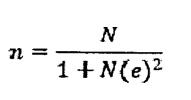
Where:
n= sample size
N= population size
E= error terms (5%)
Based on this, a total of 400 respondents constituted the sample size for the study.
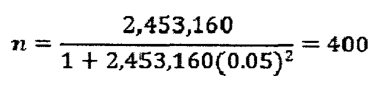
The Proportionate sampling techniques, was used in determining the number of questionnaire to be apportioned to each community (See table 2).
Nature/Sources of Data-Primary/Secondary
Data for this work was from both primary and secondary source. The primary data was obtained from the field specifically from structured questionnaire and field observations.
Methods of Data Collection Instrumentation
The instrument that was adopted for data collection for this study is the structured questionnaire and observation. The structured ques- tionnaire was designed to collect information on objectives one, two, three, four and five. Apart from the questionnaire the method of observation was also adopted, it helped in firsthand experience which allowed the researcher to be open to discovery and induc- tive, rather than guessing what the content is like. Observation was used to learn things that people may be unwilling to discuss in an interview. Furthermore, the data that used for the research were generated largely form field survey, field observation and inter- views. The purpose of this method or design was to acquire infor- mation form a sample population in order to make an inference on the entire population (sample frame) of the study area.
Validity/Reliability of Instrument
This instrument was validated by the thesis supervisors.
Method of Data Analysis
Different statistical techniques were used to analyze the data and to test the hypotheses postulated. The data obtained for each of the objectives was put together using Statistical package for Social Science (SPSS). The use of tables, descriptive analysis were employed in analyzing the data gotten from the objectives. The Hypotheses shall be analyzed using ANOVA. The Justification behind the use of ANOVA is that it will help in finding out whether the differences between groups of data are statistically significant. All statistical tests adopted for this study were performed at 5% (0.05) level of significance using the statistical package for social sciences (SPSS version 20).
Result and Discussion
The Main Effects of Oil Impacted Sites on Livelihood
|
Variables |
Frequency |
% |
|
YEARS LIVED IN THE COMMUNITY |
||
|
0-5 years |
13 |
3 |
|
6-10 years |
43 |
11 |
|
11-15 years |
247 |
63 |
|
15 and above |
89 |
23 |
|
TOTAL |
392 |
100 |
|
DO YOU HAVE OIL SPILLAGE IN THIS COMMUNITY |
||
|
Yes |
392 |
100 |
|
No |
- |
- |
|
TOTAL |
392 |
100 |
|
IF YES HOW OFTEN |
||
|
Frequent |
296 |
76 |
|
Less Frequent |
96 |
24 |
|
TOTAL |
392 |
100 |
|
IMPACT OF OIL ON YOUR COMMUNITY |
||
|
Generating Pollution |
56 |
14 |
|
Fuelling Climate Change |
216 |
63 |
|
Disrupting Wildlife |
9 |
2 |
|
Damaging Public Lands |
111 |
28 |
|
TOTAL |
392 |
100 |
|
DIRECT IMPACT OF OIL SPILLS ON THE ECONOMY |
||
|
Water Pollution |
84 |
21 |
|
Loss of Biodiversity |
43 |
11 |
|
Loss of Jobs |
67 |
17 |
|
Ecological Damage |
198 |
51 |
|
TOTAL |
392 |
100 |
|
INDIRECT IMPACT OF OIL SPILLS ON THE ECONOMY |
||
|
Violent Conflicts |
78 |
20 |
|
Frustration |
98 |
25 |
|
Agitation |
67 |
17 |
|
Depletion of Wildlife and Plant Species |
56 |
14 |
|
Economic Stagnation and Poverty |
93 |
24 |
|
Total |
392 |
100 |
|
Source: Researchers Fieldwork, 2023 |
||
Table 3: Effect of Oil Impacted Sites
On income distribution Table 3 above shows that a greater pro- portion 66% (259) noted that their estimated income was between N10000 - N20000, 11% (45) had an estimated income between N30000- N40000, 9% (34) respondents had an estimated income between N30000- N40,000 and the least 4% had an estimated in- come between N40,000-N50,000 and >N50,000 respectively.
The data collected with item 9-1 6 of the instruments which dwelt on effect of Oil Impacted sites on livelihood were used to answer research question 1. Data was analyzed using frequency and per- centage. Summary of the results was presented in table 4.8. To de- termine the main effect of Oil impacted sites on Livelihood, seven categories of questions were asked, they include how long they lived in the community, frequency of oil spills, Direct and indirect of oil spills.
On how long they have lived in this community. Data analysis in Table 4.8 shows that majority 63% (247) respondents have resided in the community understudy within 11-1 5years, 23% (89) re- spondents have lived above 15 years and above in the community, 11% (43) respondents have lived in the community within 6-l0y- ears and the least 3% (15) of the respondents have lived within 0-5years. A major implication of this result is that majority of the respondents have lived in the community for a long time and thus will have a greater sense of belonging and would desire a change in their community.
Furthermore, Data Analysis as seen in Table 3 indicating the oc- currence and frequency of Oil Spillage in the community reveals that all respondents understudy 100% (392) accepted that they have been issues of Oil Spillage in their respective community, also 76% (296) of the respondents noted that these spillage have been a frequent whereas 24% (96) respondents noted that it has been less frequent in their communities. On the Impact of Oil Spillage in the communities, Data analysis as seen in Table 3 reveals that majority 63% (216) respondents were of the opinion that one of the negative consequences of these spillage was that it has triggered climate change, 28% (111) of the respondents noted that Public lands have been destroyed, 14% (56) had opinion that it has caused water pollution and the least 2% (9) of the respondents had opinion that that it has disrupted wildlife in their respective communities.
Furthermore, on the Direct impact of Oil Spills on the economy, Majority 51% (198) respondents had the opinion that a major impact was Ecological damage to the environment, 21% (84) respondents had opinion that its impact has given rise to water Pollution, 17% (67) respondents noted that it has to led to loss of job while 11% (43) had opinion that it has resulted to Biodiversity loss.
On the Indirect impact of Oil Spills on the economy, Majority 25% (98) respondents noted that the issues of Oil spillage on the economy has resulted Frustration, 24% (93) of the respondents had the opinion that it has led economic stagnation and poverty, 20% (78) respondents are of the Opinion that it has led to Violent Conflict, 17% (67) respondents noted that it has led agitation, and the least 14% ( 56) respondents noted that it has led to the depletion of Further more on the effect of Oil impacted sites, As seen in Table 4.9 reveals that respondents had a high assertion that a major effect of Oil Impacted sites was the Destruction of farmlands, fishing settlement and environment, Increase in conflicts, anti- social vices, loss of cultural heritage, Poor soil fertility, low yield, poor quality of farm produce idleness, job disruptionlalteration and increased school dropout, loss of sea foods, fishes, animals, wildlife, loss of source of livelihood and increased poverty as it ranked 1St also they had opinion that loss of lives and properties including houses, farming/fishing nets and boats, Increase in water borne diseases, illness and high rate of transmissible infection and pollution of land and water sources were a major effect of the oil impacted sites as it ranked 2’ 3rd and 4th respectively.
|
Effects |
SA (4) |
A (3) |
SD (2) |
D (1) |
Total |
Mean |
Decision |
Rank |
|
Pollution of land and water sources |
298(1192) |
94(282) |
- |
- |
1474 |
3.7 |
Accept |
3rd |
|
Increased in water-borne diseases, illness and high rate of transmissible infection |
192(768) |
200(600) |
- |
- |
1368 |
3.4 |
Accept |
4th |
|
Loss of lives and properties including houses, farming/fishing nets and boats |
323(1292) |
69(207) |
- |
- |
1499 |
3.8 |
Accept |
2nd |
|
Destruction of farmlands, fishing settlement and environment |
392(1568) |
- |
- |
- |
1568 |
4 |
Accept |
1st |
|
Increase in conflicts, anti-social vices, Loss of cultural heritage, |
392(1568) |
- |
- |
- |
1568 |
4 |
Accept |
1st |
|
Poor soil fertility, low yield, poor quality of farm produce |
295(1180) |
97(291) |
- |
- |
1471 |
3.7 |
Accept |
1st |
|
Idleness, job disruptions/ alteration and increased school dropout |
392(1568) |
- |
- |
- |
1568 |
4 |
Accept |
1st |
|
Loss of sea foods, fishes, animals, wildlife, biodiversity and local forest resources |
392(1568) |
- |
- |
- |
1568 |
4 |
Accept |
1st |
|
Reduced economic activities, loss of sources of livelihood and increased poverty |
392(1568) |
- |
- |
- |
1568 |
4 |
Accept |
1st |
|
Source: Researchers Fieldwork, 2022 The Percentages in Parenthesis Are Response Frequencies SA=STRONGLY AGREE, A=AGREE, D=DISAGREE, SD=STRONGLY DISAGREE Likert scale =2.5 |
||||||||
Table 4: Effect of Oil Spill
Factors Contributing to Community Vulnerability and How These Are Deepened by Oil Spillage Environmental Hazards
|
Variables |
Frequency |
% |
|
Causes of Oil Spills in your area |
||
|
Blow Out |
- |
- |
|
Sabotage |
229 |
58 |
|
Corrosion |
65 |
17 |
|
Equipment Malfunction |
98 |
25 |
|
Natural Causes |
- |
- |
|
Others |
- |
- |
|
TOTAL |
392 |
100 |
|
Which groups are more Vulnerable to Oil Spills |
||
|
Male |
71 |
18 |
|
Female |
321 |
82 |
|
TOTAL |
392 |
100 |
|
Underlying Causes of Vulnerability |
||
|
Residing in areas close to Oil Pipeline |
98 |
25 |
|
Poverty |
178 |
45 |
|
Lack of alternate livelihood |
78 |
20 |
|
Weaker Social group |
38 |
9 |
|
TOTAL |
392 |
100 |
|
Factors relevant in Determining corporate environmental liabilities in connection with Oil and Gas Pollution |
||
|
Potential Factor faced by communities affected |
61 |
16 |
|
Potential Psychological trauma faced by the people impacted |
34 |
8 |
|
Potential loss of future income and means of livelihood |
98 |
25 |
|
Potential cost of relocating impacted victims |
199 |
51 |
|
TOTAL |
392 |
100 |
|
Source: Researchers Fieldwork, 2023 |
||
Table 5: Factors Contributing to Community Vulnerability
The data collected with item 12-19 of the instrument which dwelt on the factors contributing to community vulnerability and how these are deepened by oil spillage were used to answer research question 2. Data was analyzed using frequency and percentage. Summary of the results was presented in table 5.
To determine the factors contributing to community Vulnerability, several categories of question were asked. They include causes of Oil Spillage, groups vulnerable to flooding, underlying causes of Vulnerability and factors relevant in determining corporate environmental liabilities in connection with Oil and Gas Pollution.
On the causes of Oil spills, Data analysis as seen in Table 5 shows that majority 58% (229) of the respondents had opinion that sab- otage was a major cause of Oil spill in their area, 25% (98) of the respondents noted that equipment malfunction was a major cause of Oil spills whereas 17% (65) of the respondents had opinion that corrosion was a cause of Oil spills.
On groups more vulnerable to Oil Spills, Data indicated that majority 82% (321) of the respondents had opinion that women are mostly vulnerable to Oil Spills whereas 18% (71) of the respondents noted that men are mostly vulnerable.
Furthermore, on the Underlying causes of Vulnerability, Data anal- ysis as seen in Table 4.10 indicated that majority 45% (178) of the respondents had opinion that Poverty was a major underlying cause of vulnerability, 25% (98) of the respondents mentioned that they reside in area close to Oil Pipeline, 20% (78) of the respon- dents noted lack of alternative livelihood and the least 9% (38) of the respondents identified having a weak social group.
Lastly, on factors relevant in determining corporate environmental liabilities in connection with Oil and gas pollution, Data analysis as seen in Table 4.10 reveals that majority 51% (199) respondents noted Potential cost of relocating victims, 25% (98) respondents noted Potential loss of future income and means of livelihood, 16% (61) respondents noted Potential factor faced by communities affected and the least 8% (34) respondents noted Potential Psychological trauma faced by the people impacted.
|
Factors |
SA (4) |
A (3) |
SD (2) |
D (1) |
Total |
Mean |
Decision |
Rank |
|
Lack of capital, no external support and poor access to credit facilities |
298(1192) |
94(282) |
- |
- |
1474 |
3.7 |
Accept |
2nd |
|
Lack of access to education and healthcare services |
392(1568) |
- |
- |
- |
1568 |
4 |
Accept |
1st |
|
Lack of basic amenities like pipe borne water and electricity |
392(1568) |
- |
- |
- |
1568 |
4 |
Accept |
1st |
|
Lack of Productive farm- land, poor yield to fertile lands |
274(1096) |
118(354) |
- |
- |
1450 |
3.6 |
Accept |
3rd |
|
Residing near Oil Facilities eg pipeline, flow stations, well head |
392(1568) |
- |
- |
- |
1568 |
4 |
Accept |
1st |
|
Decline household income, poverty and unemployment |
392(1568) |
- |
- |
- |
1568) |
4 |
Accept |
1st |
|
Lack of alternative source of livelihood due to overdependence on natural resources based livelihood activities mostly farming and fishing |
392(1568) |
- |
- |
- |
1568 |
4 |
Accept |
1st |
|
Source: Researchers Fieldwork, 2022 The Percentages in Parenthesis Are Response Frequencies SA=STRONGLY AGREE, A=AGREE, D=DISAGREE, SD=STRONGLY DISAGREE Likert scale =2.5 |
||||||||
Table 6: Factors Contributing to Community Vulnerability
Furthermore on the factors contributing to community vulnerabil- ity, Data analysis as seen in Table 6 reveals that respondents had a high assertion lack of alternative source of livelihood due to over- dependence on natural resources based livelihood activities, most- ly farming and fishing, decline household income, poverty and un- employment, Residing near oil facilities e.g. pipelines flow station, lack of basic amenities like pipe borne water and electricity and lack of access to education and healthcare services were factors contributing to community vulnerability as it ranked 1st also they had opinion that lack of capital, no external support and poor ac- cess to credit facilities and lack of productive farmland, poor yield to fertile lands were major factors to community vulnerability as they ranked 2’ and 3’ respectively.
Hypothesis two: There is no significant variation in the factors contributing to community vulnerability and how they are deep- ened by Oil spillage.
The perceptions of respondents on the factors contributing to com- munity vulnerability and how they are deepened by Oil spillage were analyzed using Analysis of Variance (ANOVA) and present- ed in table 7.
|
Source of Variation |
Sum of Squares |
df |
Mean Square |
F |
Sig. |
|
Between Groups |
5.178 |
2 |
2.589 |
1561.464 |
.000 |
|
Within Groups |
.645 |
389 |
.002 |
|
|
|
Total |
5.823 |
391 |
|
|
|
Table 7: Summary of Analysis of Variance (Anova) On the Variation in The Factors Contributing to Community Vulnerability and How They Are Deepened by Oil Spillage
As presented in table 7, the result shows the f-ratio value of (1561.464) at 2 df 389 and at the 0.05 level of significance.
The probability level of significance P (.000) is less than 0.05. This means that there is a significant variation in the factors contrib- uting to community vulnerability and how they are deepened by Oil spillage in the study states of Niger Delta. Therefore, the null hypothesis of no significant variation in the factors contributing to community vulnerability and how they are deepened by Oil spill- age in the study states is rejected.
|
Variables |
Frequency |
% |
|
What are the coping strategies towards the impact of Oil Spills |
|
|
|
Securing of new unaffected area for development |
0 |
0 |
|
Relocation to different towns |
23 |
6 |
|
Engaging in Non-Farming activities |
76 |
19 |
|
Purchasing food crops from other towns |
293 |
75 |
|
TOTAL |
392 |
100 |
|
Source: Researchers Fieldwork, 2022 |
||
Table 8: Ways Community Implement Livelihood Strategies
The data collected with item 20-21 of the instrument which dwelt on the way’s community implement livelihood strategies as adap- tive responses to the impact were used to answer research question 3. Data was analyzed using frequency and percentage. Summary of the results was presented in table 8.
To identify the ways communities, implement livelihood strategies as adaptive response, one major question was asked and it was the nature of the coping strategies adopted towards the impact of oil spills.
As seen in Table 8 below, Data analysis below reveals that ma- jority 75% 293) of the respondents had opinion that they adopt- ed Purchasing food crops from other towns as a major coping strategy towards the impact of Oil spills, 19% (76) respondents noted engaging in Non-farming activities, and the least 6% (23) respondents noted securing new unaffected area for development had been a major coping strategy towards the impact of Oil spills.
|
Strategies |
SA (4) |
A (3) |
SD (2) |
D (1) |
Total |
Mean |
Decision |
Rank |
|
Look for alternative means like trading, hunting, engage in menial and unskilled labor activities, etc. to survive |
392(1568) |
- |
- |
- |
1568 |
4 |
Accept |
1st |
|
Borrowed money and other re- sources from meetings, clubs and cooperative societies to survive and/or invest |
289(1156) |
103(309) |
- |
- |
1465 |
3.7 |
Accept |
2nd |
|
No nothing/resigned to fate and/ or pray to God for help |
189((756) |
203(609) |
- |
- |
1365 |
3.4 |
Accept |
4th |
|
Reduce household spending/ food consumption and making use of food resources with lower quality |
201(804) |
191(573) |
- |
- |
1377 |
3.5 |
Accept |
3rd |
|
Relocate to unpolluted lands/ distant fishing settlements to continue farming/fishing |
199(796) |
193(579) |
- |
- |
1375 |
3.5 |
Accept |
3rd |
|
Depended on family members, relatives, neighbors, friends, community, government and NGOs for financial and material support as well as compensation from oil companies |
134(536) |
258(774) |
- |
- |
1310 |
3.3 |
Accept |
5th |
|
Source: Researchers Fieldwork, 2023 The percentages in parenthesis are response frequencies SA=STRONGLY AGREE, A=AGREE, D=DISAGREE, SD=STRONGLY DISAGREE Likert scale =2.5 |
||||||||
Table 9: Strategies Adopted by Household to Cope with Oil Spills
Furthermore, on the strategies adopted by household in their com- munity to cope with Oil spills, Data analysis using a liker scale approach as seen in Table 9 reveals that respondents had a high assertion as it ranked 1 St that they have begun looking for alter- native means like trading, hunting and engaging in menial and un- skilled labor activities to survive, they. also noted that they usually borrow money and other resources from meeting, clubs, coopera- tive society to survive or reinvest as this ranked 2’’. whereas some respondents noted that they have resorted to reducing household spending/food consumption and making use of food resources with lower quality, relocating to unpolluted land and relying on friends, community and NGOs for financial and material support as they all ranked 3 respectively. Lastly few of the respondents noted that they have resorted to their fate and have decided to pray to God for help as it ranked 4th.
Hypothesis One: There is no significant variation in the way com- munities implement livelihood strategies as adaptive response to oil impact in the study areas.
The perceptions of respondents on the way communities imple- ment livelihood strategies as adaptive response to oil impact in the study areas were analyzed using Analysis of Variance (ANOVA) and presented in table 10.
|
Source of Variation |
Sum of Squares |
df |
Mean Square |
F |
Sig. |
|
Between Groups |
40.951 |
2 |
20.476 |
871.159 |
.000 |
|
Within Groups |
9.143 |
389 |
.024 |
|
|
|
Total |
50.094 |
391 |
|
|
|
Table 10: Summary of Analysis of Variance (Anova) On the Variation in The Way Communities’ Implementation of Livelihood Strategies as Adaptive Response to Oil Impact in The Study Areas
Table 10 shows the f-ratio value (871.159) at 2 df 389 and at the 0.05 level of significance. The probability level of significance P (.000) is less than 0.05. This means that there is asignificant vari- ation in the way communities implement livelihood strategies as an adaptive response to oil impact in the study areas of Niger Del- ta. Therefore, the null hypothesis of no significant variation in the way communities implement livelihood strategies as adaptive re- sponse to oil impact in the study areas is rejected.
Way the Local People Resist and Respond to Those That Undermine Their Capacity to Respond?
|
Variables |
Frequency |
% |
|
Ways local People resist and respond to those factors that undermine their capacity |
||
|
Search and Rescue |
16 |
4 |
|
Setting up Relief Centers |
12 |
3 |
|
Identifying community needs |
43 |
11 |
|
Coordinating community actions |
321 |
82 |
|
TOTAL |
392 |
100 |
|
Source: Researchers Fieldwork, 2023 |
||
Table 11: Ways Local People Resist and Respond to Those Factors That Undermine Capacity
The data collected with item 22 of the instrument which dwelt on the ways local people resist and respond to those factors that undermine their capacity to respond was used to answer research question 4. Data was analyzed using frequency and percentage. Summary of the results was presented in table 11.
As seen in Table 4.16 below, Data analysis below reveals that ma- jority 82% (321) respondents had the opinion that a major way they respond in order to resist those factors that undermine their capacity was to coordinate community actions in the event of an oil spillage, 11% (43) respondents noted identifying the communi- ty needs during such events, 4% (16) respondents noted involving in search and rescue and the least 3% (12) respondents noted set- ting up relief centers.
Hypothesis three: There is no significant variation in the level of capacity response by local people undermining the cause of Oil Spillage.
|
Source of Variation |
Sum of Squares |
df |
Mean Square |
F |
Sig. |
|
Between Groups |
8.635 |
2 |
4.318 |
664.427 |
.000 |
|
Within Groups |
2.528 |
389 |
.006 |
|
|
|
Total |
11.163 |
391 |
|
|
|
Table 12: Summary of Analysis of Variance (Anova) On the Variation in The Level of Capacity Response by Local People Un- dermining the Cause of Oil Spillage
The respondents’ perceptions on the level of capacity response by local people undermining the cause of Oil Spillage were analyzed using Analysis of Variance (ANOVA) and presented in table 12.
Table 12, result shows the f-ratio value of (664.427) at 2 df 389 and at the 0.05 level of significance. The probability level of sig- nificance P (.000) is less than 0.05. This is an indication that, there is a significant variation on the level of capacity response by local people undermining the cause of Oil Spillage in the study states of Niger Delta. Therefore, the null hypothesis of no significant varia- tion on the level of capacity response by local people undermining the cause of Oil Spillage in the study states is rejected.
Discussion of Findings
The Findings of the study are based on the research question and the hypotheses guiding the Study Main effects of Oil impacted sites on livelihood. This study examined the main effect of Oil impact- ed sites on Livelihood. In this study, respondents were asked how long they have lived in the community, knowledge of Oil spillage in the community and its frequency, Impact which comprises of Direct and Indirect impact of Oil Spills on the economy.
Data anal- ysis on how long they have lived in the community revealed that majority of the respondents have resided in the community for a long period of time thus a major implication of this indicates that respondents will have access to support, belong to a supportive group and will have a deeper knowledge about the main impact of Oil Spills in their community. Because the residents have resided in the community for quite a long time they all had a good knowledge about the issues of spill- age in their communities as all respondents were able to recount past incidences of Oil Spillage in their community and noted that it has been a frequent occurrence. Furthermore, this frequent occur- rence of Oil Spills has become worrisome as it was observed that the government have seemingly paid lip service to the resolution of this avoidable and recurring challenge in these communities that contributes tangible resources to their state and the country’s economy Invariably, the problem appears to have come to stay. Apparently, these spills have triggered the Climate change crises leading to Direct and indirect impact which includes the disap- pearance of wildlife and fishes in rivers and creeks, the disappear- ance of fresh water, excessive heat and the shrinking of vegetation, particularly economic trees in the devastated communities. Fac- tors contributing to community vulnerability and how these are deepened by Oil spillage environmental hazards with regards to the factors contributing to community Vulnerability, Respondents identified the causes of Oil Spills in their communities, named the groups that are more vulnerable to Oil Spillage, identified the un- derlying causes of Vulnerability and examined the factors relevant in determining corporate environmental liabilities in connection with Oil and Gas Pollution.
On the causes of Oil Spills majority noted that Sabotage was the major cause of Oil spills, this result correlated with the findings of emeka (2020) who noted that the highest incidents of oil spills were caused by sabotage. The findings revealed that 201,025 bar- rels which amount to 3,299 incidents, which represent 73.54 per- cent of the total cases thus these accounts It is noteworthy to state that Sabotage is the deliberate destruction of pipelines used in con- veying crude oil in order to steal the products.
The Findings also noted that women suffer Oil spills in terms of Livelihood and health and are largely marginalized in Oil Spill matter and had the notion that Poverty was the underlying cause of their vulnerability which is as a result of lack of access to ed- ucation and healthcare services, lack of basic amenities like pipe borne water and lack of alternative source of livelihood due to overdependence on natural resource based livelihood activities mostly farming and fishing Lastly they noted that the Potential cost of relocating impacted victims was a major factor in determining corporate environmental liabilities in connection with Oil and gas pollution.
Ways the community implement livelihood strategies as adaptive responses to the impact Households plan strategically for facing risks associated with livelihood security. Choosing a particular set of coping strategies depends on a number of factors including the types of crisis households face and options available. Often, poor households risk future income generating capacity for maintaining current food consumption thus this accounts for why majority of the respondents had the assertion that a major way their community implement livelihood strategies is by purchasing food crops from other towns in the advent of an Ways local people resist and respond to those factors that undermine their capacity to respond A major way by which local people respond to factors that un- dermine their capacity to respond is by coordinating community action. Pertinent to state that community action is about putting communities at the heart of their local services, these actions will culminate in building community and social capacity and helping the community to share knowledge skills, and ideas.
Strategies for building community resilience toward Oil spills Since oil exploration from oceanic resources has become a must, and oil spills occur accidentally, the Majority of the respondents have noted that the use of the Oil boom is a straightforward and popular method of controlling oil spills. Equipment called con- tainment booms acts like a fence to prevent the oil from further spreading or floating away. Booms float on the water surface and have three parts namely a freeboard which is the part that rises above the water surface containing the oil and prevents it from splashing over the top when the spilled oil cannot be contained by using booms, the only option left is to accelerate the disintegration of oil. Dispersal agents, such as Corexit 9500, are chemicals that are sprayed upon the spill with the help of aircraft and boats, which aid the natural breakdown of oil components. They allow the oil to chemically bond with water by increasing the surface area of each molecule. This ensures that the slick does not travel over the water’s surface and is easier to degrade by microbes.
Conclusion
As discussed under various objectives, it is clear from the study that there have been low recovery of communities impacted by oil spillage in the Niger Delta. To a large extent, the study has es- tablished the socio-economic impact of flooding. It is also evident that there are varying degree as per the level of recovery across the states and likewise the potential factor that determines community recovery after an Oil Spillage have been identifies.
Recommendations
Therefore, we can approach some ways out or possible solutions in this chapter to highlight some policy considerations, practical orientation, as well as awareness building which, if implemented, could play an important role the adaptation and resilience of rural communities in Oil impacted sites.
The following considerations were recommended from this study:
I. Multi-stakeholder’s mechanism aimed at addressing issues of livelihood strategies should be adopted and relevant agencies involved in monitoring and detection should be strengthened in compliance with proper environmental standard so as to reduce the impact of Oil Spillage on livelihood.
II. Government should promote innovative approaches to coop- eration which can reduce the vulnerabilities of communities at risk.
III. Government should promote and encourage alternative source of livelihood as means to promote adaptive response.
IV. A well designed local, state, regional, and national contingen- cy plans which can assist response personnel in their efforts to contain and clean up oil spills by providing information that the response teams will need before, during, and after spill- soccur should be adopted.
V. Government should develop and exercise the plan that will provides opportunities for the response community to work together as a team and develop the interpersonal relationships that can mean so much to the smooth functioning of a re- sponse.
References
-
- Emeribe, A. C. (2000). Environment, solid waste management for sustainable development in Nigeria: Some new perspec- tives, policy and contending issues in Nigerian national de- velopment strategy. John Jacobs Classic Publishers, Enugu.
- Emuedo, C. O. (2010). Politics of conflict oilification and petro-violence in the Niger Delta. Global Journal of Social Sciences, 9(1), 73-81.
- Shell, N. (2014). Oil theft, sabotage and spills shell. Publi- cation of Shell Petroleum Development Company of Nigeria Limited, Nigeria.