

Journal of Agriculture and Horticulture Research(JAHR)
ISSN: 2643-671X | DOI: 10.33140/JAHR
Impact Factor: 1.12

Research Article - (2025) Volume 8, Issue 2
Action Mechanisms and Cattle Breeding Potential of Baihe Wuyao Xiexin Decoction
2All-Russian Research Institute of Physiology, Biochemistry and Nutrition of Animals – Branch of the, Research Center for Animal Husbandry named after Academy Member L. K. Ernst, Borovsk, Russia
3Scientific and Practical Center of the National Academy of Sciences of Belarus for Animal Breeding, RUE, 11, Frunze str., Zhodino, Minsk region, Republic of Belarus, Russia
4State Key Laboratory of Brain Function and Disorders, Institutes of Brain Science, MOE Frontier, Center for Brain Science, Fudan University, Shanghai 200032, China
5The Second Clinical College of Guangzhou University of Chinese Medicine, The Second Afiliated, Hospital of Guangzhou University of Chinese Medicine, China
6International Sakharov Environmental Institute, Belarusian State University, 220070, Minsk, Belarus, Russia
Received Date: Oct 27, 2025 / Accepted Date: Nov 21, 2025 / Published Date: Dec 02, 2025
Copyright: ©2025 Yu Ting, et al. This is an open-access article distributed under the terms of the Creative Commons Attribution License, which permits unrestricted use, distribution, and reproduction in any medium, provided the original author and source are credited.
Citation: Ting, Y., Yu, Z., Xiaoping, Z., Lemiasheuski, V., Ming, C., et.al. (2025). Action Mechanisms and Cattle Breeding Potential of Baihe Wuyao Xiexin Decoction. J Agri Horti Res, 8(2), 01-11.
Abstract
This study aimed to investigate the molecular mechanisms of the Baihe Wuyao Xiexin Decoction in treating esophagitis. The objectives were to identify its key active ingredients and core targets, establish a comprehensive "compound-target- pathway" network, and explore its potential application in beef cattle farming. In this study, network pharmacology combined with molecular docking technology was used to investigate Baihe Wuyao Xiexin Decoction. A "drug- component-target-pathway-esophagitis" network was constructed to systematically analyze the potential mechanism of the decoction in treating esophagitis, and the key active components, therapeutic targets, and related signaling pathways were identified. Meanwhile, based on the characteristics of the active components of the prescription and the needs of the beef cattle breeding industry, the application potential of its extract and herb residues in beef cattle breeding was further explored. The results of this study provide a scientific basis and theoretical support for the clinical application and further development of this prescription, as well as its industrialization in the field of green breeding.
Research Background
Traditional Chinese Medicine (TCM) has a long history and rich experience in the treatment of esophagitis, with traditional Chinese herbal medicines demonstrating unique advantages. Baihe Wuyao Xiexin Decoction, an empirical prescription derived from the adaptation of classic ancient formulas, consists of multiple Chinese herbs including Lilium brownii (Baihe), Lindera aggregata (Wuyao), Scutellaria baicalensis (Huangqin), Coptis chinensis (Huanglian), Pinellia ternata (Banxia), Zingiber officinale (Ganjiang), Panax ginseng (Renshen), and Glycyrrhiza uralensis (Zhigancao). It follows the principle of "monarch, minister, assistant, and guide" in herbal formulation, with a rigorous combination [1-5].
In the prescription, Lilium brownii serves as the monarch herb. It has a sweet taste and cold nature, entering the Heart and Lung Meridians. It can nourish yin, moisten the lung, clear the heart, and calm the mind, focusing on nourishing the stomach yin to alleviate deficiency-heat in the stomach. Lindera aggregata acts as the minister herb. It has a pungent taste and warm nature, entering the Lung, Spleen, Kidney, and Bladder Meridians. It can promote qi circulation to relieve pain, warm the kidney, and dispel cold. When combined with Lilium brownii, they form a "moistening and drying" pair: this not only prevents the cold nature of Lilium brownii from being too greasy and obstructing qi flow, but also restrains the pungent and warm nature of Lindera aggregata from damaging yin. Together, they achieve the effects of nourishing yin to benefit the stomach and promoting qi circulation to relieve pain. Scutellaria baicalensis and Coptis chinensis clear heat, dry dampness, purge fire, and detoxify, eliminating damp-heat in the stomach. Pinellia ternata and Zingiber officinale promote the upward flow of pungent ingredients and downward flow of bitter ingredients, regulating the qi movement of the spleen and stomach to restore their ascending-descending functions. Panax ginseng and Glycyrrhiza uralensis invigorate the spleen, replenish qi, and strengthen the body's resistance. These herbs collectively serve as assistant and guide herbs.
The entire prescription, when used together, possesses the effects of nourishing yin to clear heat, promoting qi circulation to activate blood, and harmonizing the stomach to direct qi downward. It has shown significant efficacy in the treatment of esophagitis in both ancient and modern practices, yet its scientific mechanism of action remains unelucidated [4,5]. Clinical studies have confirmed that when this prescription is combined with Western medicine for the treatment of chronic superficial esophagitis of the "spleen- stomach damp-heat type", it can significantly alleviate symptoms such as stomach pain and distension, with a total effective rate of up to 96.00%. It also reduces pathological changes in esophageal mucosal tissue, controls the inflammatory level, and decreases the levels of pro-inflammatory factors such as IL-6 and TNF-α.
From the perspective of research methods, network pharmacology analyzes the molecular interaction rules between drugs and therapeutic targets from the perspective of systematic hierarchy and overall biological networks. Its characteristics of integrity and systematicness are highly consistent with the holistic view and syndrome differentiation principle of TCM, providing new ideas and methods for the study of complex TCM systems. Applying it to the research of Baihe Wuyao Xiexin Decoction can fully reveal the mechanism of the prescription, offering scientific support for the modernization of TCM and its clinical application.
This study holds multiple significances:
In the medical field, it can scientifically explain the efficacy of the prescription, promote the modernization of TCM, and provide new theoretical and practical bases for the prevention and treatment of digestive system esophagitis. It also helps optimize treatment regimens, reduce side effects, and achieve personalized and precise treatment. In the animal husbandry and breeding field, esophagitis exerts a significant impact on livestock health and breeding development — in intensive farming, livestock such as pigs, chickens, and cattle are prone to esophagitis due to feed irritation and stress responses.
Affected livestock often exhibit difficulty in swallowing and reduced appetite, leading to slowed growth rate, hindered weight gain, prolonged slaughter cycle, and a direct decline in breeding economic benefits. If the inflammation persists, it may also induce complications such as esophageal ulcers and secondary infections, increasing the mortality rate of livestock and causing breeding losses. Meanwhile, traditional treatments mostly rely on antibiotics, which can temporarily control inflammation but easily lead to excessive drug residues in animal products, exacerbate bacterial resistance, and hinder the advancement of green breeding. Therefore, this study is expected to provide a new approach for reducing antibiotic dependence, lowering the risks of drug residues and drug resistance, improving breeding efficiency and food safety, and promoting the development of green and healthy breeding models.
Research Objectives and Methods
Research Objectives
Network pharmacology was used to construct a "drug-component- target-pathway-esophagitis" network for Baihe Wuyao Xiexin Decoction, so as to deeply explore its potential mechanism of action in treating esophagitis and clarify the key active components, therapeutic targets, and related signaling pathways. Meanwhile, based on the characteristics of the prescription, the application potential of the decoction in beef cattle breeding was discussed, providing a scientific basis for the clinical application, further development of the prescription, and its expansion in the breeding field.
Research Methods
• Screening of Active Components in Chinese Herbs: The chemical components of each Chinese herb in Baihe Wuyao Xiexin Decoction were collected through the extraction of effective components, data collection using UPLC-Q-TOF/ MS mass spectrometry equipment, and retrieval from multiple databases including the Traditional Chinese Medicine Systems Pharmacology Database and Analysis Platform (TCMSP), TCM Integrated Database (TCMID), and Bioinformatics Analysis Tool for Molecular Mechanism of TCM (BATMAN- TCM). Potential active components were screened based on the thresholds of oral bioavailability (OB) and drug-likeness (DL).
• Target Prediction: The disease target proteins corresponding to the active components were predicted through platforms such as SwissTargetPrediction and Similarity Ensemble Approach (SEA), and standardized naming of these targets was conducted [1,2].
• Acquisition of Esophagitis-Related Targets: Esophagitis- related targets were retrieved from databases including GeneCards, Online Mendelian Inheritance in Man (OMIM), and DisGeNET.
• Intersection Analysis and Network Construction: A Venn diagram was drawn to screen the common targets of the drug and esophagitis. Cytoscape software was used to construct a protein-protein interaction (PPI) network and a "component- target-pathway" network.
• Enrichment Analysis: The Database for Annotation, Visualization and Integrated Discovery (DAVID) was used to perform functional and pathway enrichment analyses of the common targets based on the Gene Ontology (GO) and Kyoto Encyclopedia of Genes and Genomes (KEGG) databases.
• Molecular Docking Verification: Core targets and key active components were selected for docking verification using AutoDock Vina. Parameters such as docking energy were calculated to evaluate the docking activity between components and targets, verify the interaction between active components and targets, and further confirm the reliability of the network pharmacology analysis results.
Origin and Composition of Baihe Wuyao Xiexin Decoction
Baihe Wuyao Xiexin Decoction is derived from the modification of classic ancient formulas. Its formulation is exquisite and consists of Chinese herbs including Lilium brownii, Lindera aggregata, Scutellaria baicalensis, Coptis chinensis, Pinellia ternata, Zingiber officinale, Panax ginseng, and Glycyrrhiza uralensis. Among them, Lilium brownii is the monarch herb, which has a sweet taste and cold nature, enters the heart and lung meridians, and has the effects of nourishing yin, moistening the lung, clearing the heart, and calming the mind. In the prescription, it mainly nourishes the stomach yin to alleviate the dryness and heat caused by stomach yin deficiency. Lindera aggregata is the minister herb, with a pungent taste and warm nature, entering the lung, spleen, kidney, and bladder meridians. It can promote qi circulation to relieve pain and warm the kidney to dispel cold. When combined with Lilium brownii, it prevents the excessive cold nature of Lilium brownii and exerts its effect of promoting qi circulation to relieve pain, so as to smooth qi movement and achieve the goal of "relieving pain by smoothing qi circulation".
Scutellaria baicalensis and Coptis chinensis clear heat, dry dampness, purge fire, and detoxify, which can eliminate damp- heat pathogens in the stomach. Pinellia ternata and Zingiber officinale promote the upward dispersion of pungent substances and the downward purging of bitter substances, regulating the qi movement of the spleen and stomach to restore their normal ascending and descending functions. Panax ginseng and Glycyrrhiza uralensis invigorate the spleen, replenish qi, strengthen the body's resistance, and enhance the body's immunity; these two herbs serve as assistant-guide herbs. The whole prescription has a rigorous compatibility, and the combined use of all herbs exerts the comprehensive effects of nourishing yin, clearing heat, promoting qi circulation, activating blood, harmonizing the stomach, and descending adverse qi.
Research Results
Screening Results of Active Components and Targets
Analysis was performed using UPLC-Q-TOF/MS (AB Sciex ZenoTOFTM7600 merican) with positive and negative ion mode scanning (m/z 50-1500), and centrifugation was conducted using a Thermo Fresco21 centrifuge (the US)(10,000 rpm). Through retrieval from databases including TCMSP, TCMID, and BATMAN-TCM, the targets of Chinese herbs in the prescription were merged and duplicate values were removed. A total of 1101 effective targets of Baihe Wuyao Xiexin Decoction were obtained .
Collection Results of Disease-Related Targets
Reflux esophagitis targets were obtained from the GeneCards database (https://www.genecards.org/) with a screening condition of score > 5. A total of 1023 reflux esophagitis targets were acquired [3] .
Intersection Target Screening Results
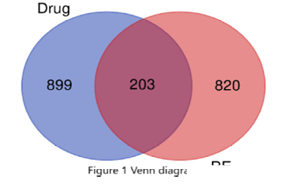
Figure 1: Venn diagram
The effective targets of Baihe Wuyao Xiexin Decoction and reflux esophagitis targets were imported into the bioinformatics database (http://bioinformatics.psb.ugent.be/cgi-bin/liste/Venn/calculate_ venn.htpl) to obtain the potential targets of Baihe Wuyao Xiexin Decoction in intervening reflux esophagitis ("potential targets"), and a Venn diagram was drawn. A total of 203 potential targets including matrix metalloproteinase 2 (MMP2) were obtained (Figure 1).
Construction and Analysis Results of PPI Network
Through the STRING database (https://cn.string-db.org/), the Multiple proteins tool was used, and the species "Homo sapiens" was selected. The "potential targets" were imported into "lists of names" to obtain the text file of the PPI network diagram. This file was imported into Cytoscape 3.7.1 software to obtain the PPI network diagram. In addition, the Cytohubba plugin was used to draw the topological analysis visualization interaction diagram of the core targets of Baihe Wuyao Xiexin Decoction in intervening reflux esophagitis ("core targets") according to the "Degree" algorithm. The PPI network diagram shows the interaction relationships among 203 potential targets, and the topological analysis shows the interaction network diagram of 5 core genes (Figure 2)

Figure 2: PPI Network Diagram and Topology analysis of "Core Target"
Results of GO Functional Enrichment Analysis and KEGG Pathway Enrichment Analysis
Through the DAVID database (https://david.ncifcrf.gov/), the species "Homo sapiens" was selected to obtain the data of biological process (BP), cellular component (CC), molecular function (MF), and pathway (Kyoto Encyclopedia of Genes and Genomes, KEGG) of "potential differentially expressed genes (DEGs)". Effective entries were screened with the condition of P value > 0.05. Among them, BP, CC, and MF are collectively referred to as Gene Ontology (GO). The R language ggplot package was used to draw the top 5 GO bubble charts, top 5 KEGG bubble charts, and top 5 KEGG target-pathway charts respectively based on -Log 10 (P value), P value, and Count value.
After screening with the condition of P value > 0.05, a total of 45 effective entries were obtained from the GO analysis, including 34 BP entries, 11 CC entries, and 10 MF entries. A total of 40 entries were obtained from the KEGG enrichment. The results of the GO functional enrichment analysis showed that a total of 226 BP entries, 16 CC entries, and 25 MF entries were enriched. In terms of BP, the enriched functions mainly involved response to oxidative stress, regulation of apoptotic process, and regulation of inflammatory response. In terms of CC, the enriched components mainly included extracellular space, cell membrane, and mitochondrion. In terms of MF, the enriched functions mainly involved protein docking, enzyme docking, and metal ion docking. The results of the KEGG pathway enrichment analysis showed that a total of 112 signaling pathways were enriched (P < 0.05). Among them, the effective components of the Lilium brownii extract mainly act on pathways such as cancer pathways, PI3K- Akt signaling pathway, AGE-RAGE signaling pathway, MAPK signaling pathway, and TNF signaling pathway. These signaling pathways are closely related to physiological and pathological processes such as cell proliferation, apoptosis, and inflammatory response (Figure 3)


Figure 3: GO Analysis of Core Targets, KEGG Analysis of Core Targets, Core Target KEGG Target Pathway Diagram
Construction of Sankey Diagram of Herb-Component- Core Target
A reverse search was conducted on the "core targets" to identify the effective components related to the core targets and the Chinese herbs enriched with these effective components. Since Glycyrrhiza uralensis had no mapping relationship with the core targets, NOS2, NR3C1, and TBXAS1 in the TNF-α/NF-kB pathway among the potential targets of Glycyrrhiza uralensis were selected to reversely obtain the components. Finally, the R language ggalluvia package was used to draw the Sankey diagram of herb-component-core target for subsequent molecular docking (Figure 4).

Figure 4: Sankey Diagram of Baihe Wuyao Xiexin Tang Intervention in Reflux Esophagitis
Results of Molecular Docking Analysis
The 2D structural formulas of the effective components were obtained from the PubChem database (https://pubchem.ncbi.nlm. nih.gov/).
The obtained effective components were optimized for minimum free energy using Chem3D software and saved as files in mol2 format.
The files of the "core targets" in PDB format were obtained from the AlphaFold database (https://alphafold.com/) respectively. The PDB format files of the "core targets" were imported into PyMOL respectively for dehydration and hydrogenation optimization, and then saved as files in PDB format.
AutoDockTools software was used to perform molecular docking between the core components and the "core targets". The docking energy was calculated, and the results were saved as files in pdbqt format. Eight groups of mapping relationships between herb- component-core targets with the highest docking energy were selected for visualization. PyMOL software was used for 3D structure visualization, and Discovery Studio software was used for 2D structure visualization (Figure 5).
|
TCM |
Pharmacologically active ingredients |
Protein |
Docking energy |
|
Licorice |
Jaranol |
AKT1 |
-5.14 |
|
Stir - fried Scutellaria baicalensis |
Eriodyctiol (flavanone) |
AKT1 |
-4.72 |
|
Stir - fried Scutellaria baicalensis |
Carthamidin |
AKT1 |
-3.77 |
|
Stir - fried Scutellaria baicalensis |
5,7,2',6'-Tetrahydroxyflavone |
AKT1 |
-4.78 |
|
jujube |
coumestrol |
AKT1 |
-5.19 |
|
dried ginger |
1-Monolinolein |
AKT1 |
-0.23 |
|
dried ginger |
Sexangularetin |
AKT1 |
-5.01 |
|
Ginseng |
Girinimbin |
AKT1 |
-5.17 |
|
Licorice |
isorhamnetin |
AKT1 |
-4.37 |
|
Licorice |
Lupiwighteone |
AKT1 |
-5.85 |
|
Licorice |
kaempferol |
AKT1 |
-5.63 |
|
Licorice |
Isotrifoliol |
AKT1 |
-5.47 |
|
Licorice |
Glepidotin A |
AKT1 |
-5.28 |
|
Licorice |
shinpterocarpin |
AKT1 |
-5.97 |
|
Licorice |
Isolicoflavonol |
AKT1 |
-5.12 |
|
Licorice |
7,2',4'-trihydroxy-5-methoxy-3- arylcoumarin |
AKT1 |
-4.9 |
|
Licorice |
quercetin |
AKT1 |
-4.76 |
|
Sichuan Coptis chinensis |
Palmidin A |
CTNNB1 |
-4.88 |
|
jujube |
Protoporphyrin |
CTNNB1 |
-5.75 |
|
French Pinellia |
beta-D-Ribofuranoside,xanthine-9 |
GAPDH |
-3.72 |
|
French Pinellia |
coniferin |
GAPDH |
-3.47 |
|
Lilii Bulbus |
Stigmasterol |
NOS2 |
-8.06 |
|
Lilii Bulbus |
Stigmasterol |
NR3C1 |
-6.57 |
|
Stir - fried Scutellaria baicalensis |
epiberberine |
STAT3 |
-8.37 |
|
Ginseng |
alexandrin_qt |
STAT3 |
-4.41 |
|
Ginseng |
ginsenoside Rg5_qt |
STAT3 |
-2.44 |
|
Ginseng |
ginsenoside rh2 |
STAT3 |
-3.86 |
|
Ginseng |
Ginsenoside-Rh4_qt |
STAT3 |
-5 |
|
Licorice |
glyasperin B |
STAT3 |
-5.96 |
|
Lilii Bulbus |
Stigmasterol |
TBXAS1 |
-8.84 |
|
jujube |
21302-79-4 |
TP53 |
-5.38 |
|
Ginseng |
arachidonate |
TP53 |
-2.6 |
Table 1: Docking Data
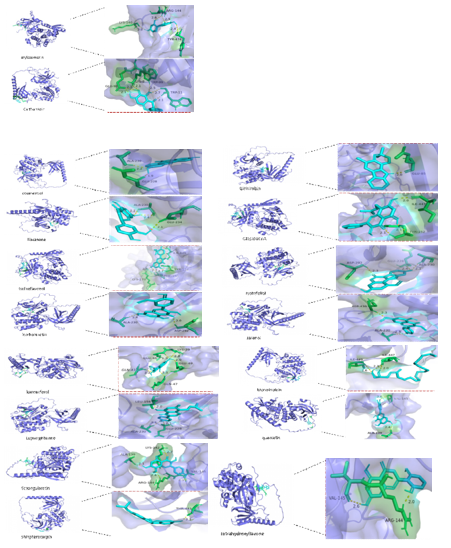
Figure 5: Molecular Docking Data
|
Docking Energy Range (kcal/mol) |
Docking Strength |
Number of Examples |
|
< -7 |
Extremely Strong docking |
3 |
|
-7 ~ -6 |
Strong docking |
4 |
|
-6 ~ -5 |
Moderately Strong docking |
More than 10 |
|
-5 ~ -4 |
Moderate docking |
More than 10 |
|
> -4 |
Weak docking or Invalid docking |
A Few |
Table 2: Docking Energy Intensity Distribution
Strongest Docking Interactions:
• Stigmasterol (from Lilium brownii) with TBXAS1: -8.84 kcal/mol
• Epiberberine (from stir-fried Scutellaria baicalensis/Sichuan Coptis chinensis) with STAT3: -8.37 kcal/mol
• Stigmasterol (from Lilium brownii) with NOS2: -8.06 kcal/ mol
|
Target |
Strongest Docking Component |
Docking Energy (kcal/mol) |
Source Herb |
|
AKT1 |
Shinpterocarpin |
-5.97 |
Licorice (Glycyrrhiza uralensis) |
|
STAT3 |
Epiberberine |
-8.37 |
Stir-fried Scutellaria baicalensis/Sichuan Coptis chinensis |
|
TP53 |
21302-79-4 |
-5.38 |
Jujube (Ziziphus jujuba) |
|
CTNNB1 |
Protoporphyrin |
-5.75 |
Jujube (Ziziphus jujuba) |
|
NOS2 |
Stigmasterol |
-8.06 |
Lilium brownii |
|
TBXAS1 |
Stigmasterol |
-8.84 |
Lilium brownii |
|
NR3C1 |
Stigmasterol |
-6.57 |
Lilium brownii |
Table 3: Key Target and Component Analysis
Analysis of Herb-Component-Target Network
From the "correspondence table", the following conclusions can be drawn:
• Glycyrrhiza uralensis contains multiple flavonoid components that bind strongly to AKT1 (such as quercetin and kaempferol), suggesting that it may exert pharmacological effects through the AKT1 pathway.
• Stigmasterol from Lilium brownii binds strongly to multiple targets (NOS2, NR3C1, TBXAS1), indicating its potential for multi-target effects.
• Both stir-fried Scutellaria baicalensis and Sichuan Coptis chinensis contain epiberberine, which binds strongly to STAT3, suggesting that they may have synergistic effects in anti-inflammation or anti-tumor.
• The components of Ziziphus jujuba cover multiple key targets such as AKT1, TP53, and CTNNB1, showing its potential for multi-pathway regulation. Stigmasterol from Lilium brownii is the most potential multi-target component, especially with extremely strong docking to TBXAS1, NOS2, and NR3C1. It may have multiple effects such as anti-inflammation, immune regulation, and cardiovascular protection.
Epiberberine from stir-fried Scutellaria baicalensis and Sichuan Coptis chinensis binds extremely strongly to STAT3, suggesting its significant potential in inhibiting the STAT3 signaling pathway (e.g., anti-tumor and anti-inflammation). Glycyrrhiza uralensis is rich in a variety of flavonoid components that bind to AKT1, and it may regulate cellular functions such as cell survival and metabolism through the PI3K/AKT pathway. Ziziphus jujuba contains diverse components that cover multiple key targets, reflecting the "multi-component-multi-target-multi-pathway" action characteristic of TCM.
In molecular docking studies, docking energy is a key indicator reflecting the docking strength between ligands and receptors. It is usually expressed as a negative value; the more negative the value (the larger the absolute value), the stronger the docking affinity between the two and the more stable the interaction. Generally, when the docking energy is ≤ -5 kcal/mol, a relatively stable docking can be formed between the ligand and the receptor; when the docking energy is ≤ -8 kcal/mol, a strong interaction is indicated, which has high biological significance. In this study, the main active component of Lilii Bulbus (Lilium brownii bulb), stigmasterol, had a docking energy lower than -5 kcal/mol with all three target proteins. Among them, the docking energy with TBXAS1 reached -8.84 kcal/mol, and the docking energy with NOS2 was -8.06 kcal/mol, both belonging to the category of strong docking. The docking energy with NR3C1 was -6.57 kcal/ mol, which belongs to stable docking. These results suggest that stigmasterol may exert biological effects through specific docking to these three targets.
• Docking of Stigmasterol to TBXAS1 (Docking Energy: -8.84 kcal/mol): TBXAS1 (thromboxane A synthase 1) is a key enzyme that catalyzes the conversion of prostaglandin H2 to thromboxane A2 (TXA2). TXA2 is a potent pro-inflammatory mediator that can induce vasoconstriction, platelet aggregation, and inflammatory cell infiltration [as mentioned earlier]. The strong docking of stigmasterol to TBXAS1 (Docking energy: -8.84 kcal/mol) suggests that stigmasterol may occupy the active site of TBXAS1, significantly inhibiting its enzyme activity, thereby reducing the production of TXA2. This mechanism can directly alleviate the inflammatory response and improve tissue blood perfusion, which is highly consistent with the anti-inflammatory effect of the Lilium brownii extract [3]. In addition, previous studies have confirmed that stigmasterol can exert anti-inflammatory effects by inhibiting inflammation-related enzymes [4], and the results of this study further support that it may regulate the inflammatory pathway by targeting TBXAS1.
• Docking of Stigmasterol to NOS2 (Docking Energy: -8.06 kcal/mol)NOS2 (inducible nitric oxide synthase) is activated under inflammatory conditions, producing a large amount of nitric oxide (NO). Excessive NO reacts with reactive oxygen species (ROS) to generate peroxynitrite, which causes cellular oxidative damage and participates in the amplification of the inflammatory process [supported by relevant studies]. The docking energy of stigmasterol to NOS2 is -8.06 kcal/mol, suggesting that it may inhibit the activity of NOS2 and reduce the production of excessive NO, thereby alleviating oxidative stress damage. This is consistent with the known antioxidant activity of the Lilium brownii extract [2], indicating that stigmasterol may exert synergistic antioxidant and anti- inflammatory effects by targeting NOS2, protecting tissue cells from oxidative damage.
• Docking of Stigmasterol to NR3C1 (Docking Energy: -6.57 kcal/mol)NR3C1 (glucocorticoid receptor) is a nuclear receptor that participates in the regulation of various physiological processes such as inflammatory response, immune response, and stress response. Glucocorticoids bind to NR3C1 to inhibit the expression of pro-inflammatory factors (such as IL-6 and TNF-α) and exert anti-inflammatory effects. The docking energy of stigmasterol to NR3C1 is -6.57 kcal/mol, suggesting that it may bind to NR3C1 to mimic or enhance the anti-inflammatory effect of glucocorticoids, further inhibiting the activation of the inflammatory signaling pathway. This mechanism supplements the target network of the anti-inflammatory effect of the Lilium brownii extract, indicating that it may regulate the inflammatory response through a dual pathway of "inhibiting pro-inflammatory enzymes (TBXAS1, NOS2) + activating anti-inflammatory receptors (NR3C1)".
Correlation Analysis with the Overall Efficacy of the Lilium brownii Extract
The Lilium brownii extract has multiple activities such as anti- inflammation, antioxidant, and immune regulation [1,3]. The results of this molecular docking study provide specific molecular target evidence for its efficacy:
• Anti-inflammatory effect: Stigmasterol inhibits the production of TXA2 by strongly docking to TBXAS1, reduces the release of excessive NO by docking to NOS2, and enhances anti-inflammatory signals by docking to NR3C1. These multi-target effects synergistically inhibit the inflammatory response, which is consistent with the traditional application of Lilium brownii in the treatment of inflammatory diseases.
• Antioxidant and cell protection effects: The inhibition of NOS2 can reduce the production of oxidative stress products, which is directly related to the antioxidant activity of Lilium brownii [2]. Meanwhile, the regulation of TBXAS1 and NR3C1 can indirectly improve the cellular microenvironment and protect tissue integrity.
Application Prospects in Beef Cattle Breeding
Based on the anti-inflammatory, antioxidant, and intestinal function-regulating properties of the active components of Baihe Wuyao Xiexin Decoction, and combined with the physiological characteristics of the beef cattle digestive system (compound stomach digestion and rumen microbial fermentation), its extract and herb residues have multi-dimensional application potential in beef cattle breeding. They can specifically address industry pain points such as "prevention and control of digestive system diseases", "antibiotic abuse", and "improvement of beef quality".
Feasibility of Plant Extracts in Improving the Digestive System Function of Beef Cattle
Mechanism of Action
The core pathological mechanisms of common digestive system diseases in beef cattle (such as ruminal acidosis and enteritis) are "inflammatory damage-oxidative stress-mucosal barrier destruction", which is highly consistent with the mechanism of Baihe Wuyao Xiexin Decoction in intervening esophagitis. The active components in the extract (such as stigmasterol, epiberberine, and quercetin) can exert effects through multiple pathways:
• Anti-Inflammation: The release of pro-inflammatory factors such as TNF-α and IL-6 is inhibited, and the activity of pathways such as PI3K-Akt and MAPK is downregulated, thereby alleviating inflammatory damage to the rumen mucosa and abomasal epithelium.
• Antioxidant: The activities of superoxide dismutase (SOD) and glutathione peroxidase (GSH-Px) are increased, and the content of malondialdehyde (MDA) is reduced. This relieves oxidative stress during ruminal acidosis and protects the integrity of the intestinal mucosa.
• Regulation of Intestinal Flora: Alkaloids (such as epiberberine) in Scutellaria baicalensis and Coptis chinensis can inhibit the proliferation of harmful intestinal bacteria (such as Escherichia coli and Salmonella) and promote the growth of beneficial bacteria (such as lactic acid bacteria). This maintains the stability of the rumen internal environment (pH value and volatile fatty acid ratio), which is consistent with the research conclusion that Chinese herbal feed additives can regulate the intestinal microecological balance of breeding cattle and improve intestinal health.
Value of Extract Herb Residues as Beef Cattle Feed
• Dual Advantages of Nutrition and Function: The herb residues contain residual active components that are not completely extracted (such as some flavonoids in Lilium brownii and glycyrrhizic acid in Glycyrrhiza uralensis), as well as nutritional components such as crude fiber, crude protein, and minerals (calcium and phosphorus). These components are in line with the physiological characteristics of rumen digestion in beef cattle.
• Improvement of Digestive Performance: Crude fiber can promote rumen peristalsis, improve the efficiency of rumen microbial fermentation, and increase feed conversion rate. The residual active components can regulate the activity of intestinal enzymes (such as amylase and protease) and promote the absorption of nutrients. After treatment with the bacteria-enzyme combined fermentation technology, the crude fiber in the herb residues can be decomposed into small- molecule substances, and the crude protein can be converted into amino acids, which further improves the nutritional value and digestibility of the herb residues.
• Enhancement of Immunity: Components such as stigmasterol and quercetin can activate the phagocytic function of macrophages in the beef cattle immune system and increase the level of IgG antibodies. This reduces the risk of respiratory and digestive tract infections and decreases the demand for antibiotics. Similar to the immune-enhancing effects of components such as astragalus polysaccharides in astragalus residues and indirubin in Isatis indigotica residues, the herb residues can achieve the health care effect of "food and medicine homology" for animals.
• Safety and Economy: The content of anti-nutritional factors (such as tannins and alkaloids) in the herb residues is significantly reduced after extraction. Acute toxicity tests (mouse gavage) show that the herb residues are non-toxic (LD50 > 2000 mg/kg). When used as a feed additive, the herb residues can replace 10%-15% of straw-based roughage, which reduces breeding costs. At the same time, they realize the "full utilization" of Chinese herbal resources and reduce waste pollution. For example, fermented Chinese herbal residue feed has significant cost advantages. Meanwhile, the use of herb residues can achieve the following goals: reducing antibiotic abuse and improving beef quality.
Research Limitations
Although network pharmacology provides a comprehensive and systematic perspective for studying the mechanism of action of the effective components of the Lilium brownii extract, this study still has certain limitations. Firstly, in the process of screening active components, only oral bioavailability (OB) and drug- likeness (DL) were used as screening criteria. This may lead to the omission of some components with potential activity but not meeting these criteria. In fact, some Chinese herbal components may exert effects through special absorption mechanisms or in vivo metabolic pathways, and they cannot be included in the study by relying solely on these two parameters. Secondly, in terms of target collection, although multiple databases were integrated, differences exist in data sources, inclusion criteria, and update frequencies among different databases. This may result in incomplete or incorrect target information. In addition, the current study focuses on targets corresponding to protein-coding genes, while other types of potential targets such as non-coding RNAs are rarely involved. With the deepening of research, the role of non- coding RNAs in disease occurrence and development and drug action mechanisms has become increasingly prominent, but this study fails to fully cover them.
Thirdly, the construction of the PPI network is based on existing information in databases, which has certain limitations. The interactions between some proteins may not be included due to insufficient research, resulting in the network failing to fully and truly reflect the complex relationships between proteins. Finally, the results of GO functional enrichment analysis and KEGG pathway enrichment analysis are only based on bioinformatics predictions, and direct experimental verification is lacking. In the actual biological system, the effects of the effective components of the Lilium brownii extract on these functions and pathways may be more complex, and there may be undiscovered mechanisms of action and signaling pathways. Further exploration and research (such as process optimization, precise feeding, and safety verification) are required in the later stage.
Conclusion
The core value of this study lies in the innovative integration of modern computational biology methods, including network pharmacology, molecular docking technology, and multi-database analysis (such as TCMSP, GeneCards, STRING, and David). Through a progressive research design encompassing "active component screening — target prediction—intersection analysis— network construction—enrichment verification—molecular docking", the study systematically and accurately reveals the potential molecular mechanism of Baihe Wuyao Xiexin Decoction (a modified formula derived from classical TCM ancient prescriptions) in the treatment of esophagitis. It successfully builds a scientific connection bridge between the TCM "monarch- minister-assistant-courier" compatibility theory and modern molecular pathology (inflammation regulation, oxidative stress, and cell apoptosis).
Specifically, the study first identified the key active components of the prescription through Ultra-High Performance Liquid Chromatography-Quadrupole Time-of-Flight Mass Spectrometry (UPLC-Q-TOF/MS) combined with oral bioavailability (OB) and drug-likeness (DL) threshold screening. These components include Stigmasterol from Lilium brownii (Lilii Bulbus), epiberberine from stir-fried Scutellaria baicalensis (Stir-fried Scutellariae Radix) and Coptis chinensis (Coptidis Rhizoma), quercetin and kaempferol from Glycyrrhiza uralensis (Glycyrrhizae Radix et Rhizoma), and protoporphyrin from Ziziphus jujuba (Jujubae Fructus).
Subsequently, through target prediction and intersection analysis, 203 potential targets were identified, including thromboxane A synthase 1 (TBXAS1), inducible nitric oxide synthase (NOS2), protein kinase B (AKT1), signal transducer and activator of transcription 3 (STAT3), and β-catenin (CTNNB1), among which TBXAS1, NOS2, AKT1, and STAT3 are core regulatory targets.
Furthermore, Gene Ontology (GO) functional enrichment analysis (confirming involvement in biological processes such as response to oxidative stress and regulation of inflammatory response) and Kyoto Encyclopedia of Genes and Genomes (KEGG) pathway enrichment analysis verified that these active components can synergistically regulate key pathways, including the PI3K-Akt pathway (regulating cell survival and metabolism), TNF pathway (a core pro-inflammatory pathway that regulates the release of pro-inflammatory factors such as IL-6 and TNF-α), and MAPK pathway (a cellular stress and inflammatory signaling pathway). For instance, Stigmasterol inhibits the production of the pro- inflammatory mediator thromboxane A2 (TXA2) by strongly binding to TBXAS1 (binding energy: -8.84 kcal/mol) and reduces oxidative damage caused by excessive nitric oxide (NO) by binding to NOS2 (binding energy: -8.06 kcal/mol); epiberberine inhibits inflammatory signal transduction by strongly binding to STAT3 (binding energy: -8.37 kcal/mol); and quercetin protects mucosal cells by acting on AKT1 to regulate the PI3K-Akt pathway.
Finally, verification via AutoDock Vina molecular docking (the binding energy of most core components to targets is ≤ -5 kcal/mol, and some reach the strong binding range) further confirmed that the prescription adopts an integrated model of "multi-component synergy—multi-target action—multi-pathway regulation" to simultaneously intervene in the core pathological links of esophagitis ("inflammatory damage—oxidative stress— mucosal barrier destruction"). Thereby, it exerts a comprehensive therapeutic effect of nourishing yin, clearing heat, promoting qi circulation, reducing inflammation, and protecting the esophageal mucosa, providing clear molecular evidence for the efficacy of this prescription in the treatment of esophagitis. At the theoretical level, this study provides new data support and a network perspective for understanding the overall regulatory characteristics of "multi- component-multi-target-multi-pathway" of TCM compounds, which is a beneficial attempt in the modernization of TCM. At the application level, this prescription has shown significant efficacy in the clinical treatment of inflammatory diseases of the digestive system. Especially in the field of animal health, its anti- inflammatory, antioxidant, and mucosal protection mechanisms provide a clear target and theoretical roadmap for the development of new feed additives or veterinary TCM preparations for the treatment of stress-induced esophagitis in livestock (such as pigs and calves). From a broader perspective, the extract of this prescription can improve the digestive system function of beef cattle, and the herb residues can be used as functional feed to enhance the digestive and immune capabilities of beef cattle. Meanwhile, it can reduce antibiotic abuse and improve beef quality, which is highly consistent with the green application trend of Chinese herbs in animal husbandry and has significant economic value and ecological benefits.
References
- Wu, C. W., Lu, L., Liang, S. W., Chen, C., & Wang, S. M. (2016). Application of drug-target prediction technology in networkpharmacology of traditional Chinese medicine. Zhongguo Zhong yao za zhi= Zhongguo Zhongyao Zazhi= China Journal of Chinese Materia Medica, 41(3), 377-382.
- Szklarczyk, D., Franceschini, A., Kuhn, M., Simonovic, M., Roth, A., Minguez, P., ... & Mering, C. V. (2010). The STRING database in 2011: functional interaction networks of proteins, globally integrated and scored. Nucleic acids research, 39(suppl_1), D561-D568.
- Chen, Y., Zhang, F., Sun, J., & Zhang, L. (2023). Identifying the natural products in the treatment of atherosclerosis by increasing HDL-C level based on bioinformatics analysis, molecular docking, and in vitro experiment. Journal of Translational Medicine, 21(1), 920.
- Li, S. (2021). Network pharmacology evaluation method guidance-draft. World Journal of Traditional Chinese Medicine, 7(1), 146-154.
- Pharmacopoeia Commission of the People's Republic of China. Pharmacopoeia of the People's Republic of China (Volume I). (China Medical Science Press, 2020).