

International Journal of Health Policy Planning(IJHPP)
ISSN: 2833-9320 | DOI: 10.33140/IJHPP
Impact Factor: 1.08


Research Article - (2025) Volume 4, Issue 1
A Retrospective Surveillance Data Analysis Study on the Epidemiology of Anthrax Cases Among Livestock from 2019 to 2023 in Halaba Zone, Central Ethiopia
2Senior Advisor, Intermediate Ethiopia Field Epidemiology Training, Ethiopia
3Department of Animal Health, Ministry of Agriculture Epidemiology Directorate, Ethiopia
Received Date: Dec 13, 2024 / Accepted Date: Jan 12, 2025 / Published Date: Jan 20, 2025
Copyright: ©Â©2025 JKedir Yusuf Musa, et al. This is an open-access article distributed under the terms of the Creative Commons Attribution License, which permits unrestricted use, distribution, and reproduction in any medium, provided the original author and source are credited.
Citation: Michael, Z. W., Hailemariam, Z., Musa, K. Y. (2025). A Retrospective Surveillance Data Analysis Study on the Epidemiology of Anthrax Cases Among Livestock from 2019 to 2023 in Halaba Zone, Central Ethiopia. Int J Health Policy Plann, 4(1), 01-10.
Abstract
Background: In Ethiopia, anthrax is the second most important zoonotic disease, next to rabies. The disease caused by gram- positive, non-motile bacteria known as bacillus anthracis. Data quantifying occurrence and distribution of animal anthrax in Halaba zone of Central Ethiopia region, Ethiopia, are limited. Thus, this study was conducted to describe the distribution of animal anthrax between 2019 and 2023 in Halaba zone.
Objective: To assess the magnitude and trend of anthrax in Halaba Zone from 2019-2023. Methods: A retrospective descriptive method of study was carried out. The trend and distributions of anthrax cases from 2019 to 2023 was analyzed by Animal, place and time and presented using graphs and tables.
Results: A total of 1199 cases of anthrax in animals and 375 animals that died due to anthrax were reported. The highest number of anthrax cases were reported in 2019 (n = 381), sharing 31.7% of the 5-year animal anthrax reported. However, the highest number of animal death due to anthrax (n = 118) was reported in 2019. The overall case fatality rate of anthrax was 31.2% (n = 375). The highest animal anthrax cases (n = 998; 83%) and deaths (n = 327; 87%) were recorded in Bovine. The highest cases of anthrax were registered in July (n = 378) and May (n = 197), while no anthrax case was reported during December. The highest and lowest number of animal death due to anthrax were reported during July (n = 119) and January (n = 4), respectively. The highest number of anthrax cases was reported in the long rainy season (n = 588; 49%) and short rainy season (n = 401; 33%) whereas the lowest was reported during the dry/hot season (n = 32; 3%).
Conclusion and Recommendation: The current study showed that a considerable number of animal anthrax cases and deaths occurred in the Halaba zone, with varying degrees among different species of susceptible animals, months/seasons, and districts. In this study, the highest number of cases of anthrax was registered in May, June and July months; that calls for the need for practicing prevention strategies including immunization programs before the peak season of anthrax outbreaks. As well, also serves as a baseline for further epidemiological studies for the development of sustainable programs for the control of animal anthrax disease in the study area.
Keywords
Animal, Anthrax, Halaba Zone, Retrospective Study and EthiopiaList Of Abbreviations
DOVAR: Disease Outbreak Vaccination Reporting System
FAO: Food and Agricultural Organization
GDP: Gross Domestic Product
MOA: Ministry of Agriculture
OIE: World Animal Health Organization
CSA: Central Statistics Agency
CFR: Case Fatality Rate
CE: Central Ethiopia
Introduction
The livestock sector globally is highly dynamic contributes 40% of the global value of agricultural output and support the livelihoods and food security of almost a billion people [1]. Beyond their direct role in generating food and income, livestock are a valuable asset, serving as a store of wealth, collateral for credit and an essential safety net during times of crisis [2]. Ethiopia is believed to have the largest livestock population in Africa. This livestock sector has been contributing a considerable portion to the economy of the country. The livestock population of Ethiopia is estimated to be 70 million cattle, 42.9 million sheep, 52.5 million goats, 8.1 million camels, 13.33 million equines, and 57 million chickens. Of the total livestock population of the county, 34.4% are males and 65.5% are females [3].
The country is mainly vulnerable to zoonotic diseases because its economy is primarily dependent on agriculture. About 80% of households directly contact domestic animals, creating an opportunity for infection and spread of disease. Zoonosis is any disease or condition naturally transmissible from vertebrate animals to humans and vice-versa. Anthrax is a potentially fatal naturally occurring infectious zoonotic disease of warm-blooded animals that primarily affects herbivorous mammals [4]. Anthrax is an acute zoonotic disease caused by Bacillus anthracis, a gram-positive, rod-shaped and non-motile bacterium. The name of the bacterium is derived from “anthrakis”, the Greek word for coal, because anthrax in humans causes black, coal-like lesions on the skin at the site of inoculation. B. anthracis produces a toxic complex comprising three factors: oedema factor, protective antigen and lethal factor. Together, these factors kill phagocytes, damage capillary walls and interfere with blood clotting, leading to oedema, shock and death. Protective antigen provides the mechanism for lethal factor to enter cells. Once outside the host and exposed to air, B. anthracis starts sporulation. Spores are extremely resistant to heat, cold, pH, desiccation, chemicals, irradiation and other adverse conditions, and can survive for years in soil, wool, and hair of infected animals [5,6].
It is most common zoonotic disease of human being, domestic and wild animals which are commonly infected by Anthrax through ingestion or inhalation of spores while grazing. Herbivores usually contract anthrax through ingestion and carnivores living in the same environment may become infected by consuming infected animals [7]. It has been estimated that 60% of all human diseases and around 75% of emerging infectious diseases are zoonotic diseases which are transmissible between animals (domestic and wildlife) and humans among which anthrax is a serious zoonotic disease that can affect most mammals and several species of birds [8]. Humans almost invariably contract the natural disease directly or indirectly from animals or animal products. In most countries, human anthrax occurs frequently and sporadically, mainly as an occupational hazard among veterinarians, agricultural workers and workers who process hides, hair, wool and bone products.
There are three forms of anthrax cutaneous, gastrointestinal and pulmonary (inhalational). The incubation period in humans is usually 1 to 7 days, but varies with the form of the disease [9]. In humans, cutaneous anthrax accounts for 95–99% of all recorded cases, while gastrointestinal and inhalation forms of anthrax are less common [10]. Anthrax continues to persist globally, with an estimated 20,000 to 100,000 incidence cases yearly, and it is highly affecting rural areas in developing nations like Ethiopia. In Ethiopia, human behavior plays a crucial role in the persistence of anthrax due to animals are an essential asset to society. There is a cultural practice of consuming raw (uncooked) meat in every corner of the country. Most community members share the same shelter with animals. Consequently, the death of an animal causes consumption of infected meat and use of animal products, which potentially lead to infections [4].
Anthrax is an important but neglected zoonosis in many parts of the world. It is a World Organization for Animal Health (WOAH)-listed and reportable disease. The disease is mainly endemic in developing countries. A compiled global occurrence dataset of human, livestock, and wildlife anthrax outbreaks report revealed that a global total of 63.8 million poor livestock keepers and 1.1 billion livestock live within regions at risk for the disease. In Ethiopia, anthrax is endemic, occurs in the dry season every year, and usually, occurs as an outbreak year after year. Anthrax is one of the top five important livestock diseases and the second top priority zoonotic disease, next to rabies, in Ethiopia. Anthrax remains a major problem for animals and public health in Ethiopia [11]. The most efficient ways of preventing and controlling anthrax infection in domestic herds are sustainable surveillance, annual vaccination of livestock, and proper carcass disposal management. The study analyzes Anthrax surveillance data from 2019-2023 in the Halaba zone to understand the epidemiology, burden, and case types, and proposes recommendations for public health action. Intermediate Ethiopia Field Epidemiology Training aims to enhance critical thinking skills in the veterinary and human health workforce, enhancing preparedness, early detection, and response to zoonotic diseases, Tran's boundary diseases, and emerging infectious diseases within an integrative one health approach.
Objective
General Objective
To assess the magnitude and trend of anthrax in Halaba zone from 2019-2023.
Specific Objectives
• To describe the magnitude of anthrax
• To assess trend and seasonality of anthrax in the zone
Materials and Methods
Description of Study Areas
The study was conducted from October 2024 to December 2024 in Kulito town and three woredas, Halaba Zone, Central Ethiopia Regional State. The Halaba zone, which has 84 kebeles, is situated in Central Ethiopia, 245 kilometers from Addis Ababa, the country's capital, and 85 kilometers from Hawassa town. The Halaba zone, which includes roughly 86% mid-land (Weinadega) and 14% lowland (Kola) zones, is characterized by a dry climate.
The study site is located between 1554 and 2149 meters above sea level. The research area's mean annual temperature ranges from 17 to 20 °C, with an average of 18 °C, and its mean annual rainfall ranges from 857 to 1085 mm. Zones includes one Kulito town administration and three weredas. The livestock population of the zone is Bovine 604,093, Poultry 740,862 Goats 389,150, Sheep 290,341 and Equines 79,740.

Figure 1: Map of Halaba Zone where the Studies were Conducted
Sample Size and Sampling Method
The sample size was determined by the number of all anthrax cases found in the archives reported data in Halaba Zone Agriculture Office and Sodo Regional Veterinary laboratory center, i.e., the number of anthrax cases reported in the district. For the line listing, the sample size of all anthrax cases recorded per year within each district was totally selected.
Study Design and Study Period
The study was carried out using a retrospective study design from data recorded for five years, from 2019 to 2023. Anthrax-susceptible animals, including all animals exposed to anthrax cases of both sexes and all age groups in the districts included in the study, were the study population. A Microsoft Excel worksheet was used to create a studied data recording sheet, from which data pertaining to animal anthrax cases and deaths by animal, location, and time in the study area was extracted.
Data Collection
Animal health Information system plays an important role in surveillance and provides information for economic assessment of diseases in addition to fulfilling international reporting needs. The passive surveillance system mainly depends on a paper-based system from woreda to the regional veterinary laboratory covering the respective woredas that laboratory is mandated to cover. The monthly disease outbreak reports received from woreda level are entered in a web-based Disease Outbreak and Vaccination Activity Reporting (DOVAR-II) system. This reporting system is designed to collect information of any kind regarding animal health related issues such as diseases occurrences or vaccination activities performed in the woreda, including anthrax. Currently the proportion of woredas reporting is around 50%, which is below the international standard of 80% in DOVARII Database, 2016 [6]. These studies used DOVAR report data from various districts (Woredas), Halaba Zone Agriculture Office, and Sodo Regional Veterinary Laboratory Center to gather pertinent information about the disease (Anthrax) and its occurrence periods/years, as well as the types of species affected by the disease over a five-year period.
Standard Case Definition
Standard case definition for animal anthrax includes recognition of clinical signs consistent with acute or per acute forms, Epidemiological links to known outbreaks or exposure to contaminated environments, Necropsy findings and laboratory conformations through cultural or molecular methods.
Clinical Description
Clinical manifestations vary from species to species, presumably reflecting differences in susceptibility. Sudden death in apparently healthy animals which may be accompanied by bloody discharges from natural orifices, rapid bloating of the carcass, incomplete rigor mortis and the absence of clotting of the blood are the common characteristics of anthrax in susceptible animals. In more resistant species, local signs such as swellings of the oral and pharyngeal region are seen. In wildlife, sudden death is the invariable sign, often (but not always) with bloody discharges from natural orifices, bloating, incomplete rigor mortis and the absence of clotting of the blood. Cutaneous anthrax accounts for > 95% of human cases worldwide. The lesions (eschars) are generally found on exposed regions of the body almost invariably accompanied by marked oedema extending some distance from the lesion [6].
Laboratory Diagnosis
The simplest, quickest and best on-site diagnostic method is examination of a polychrome methylene blue-stained blood smear for the capsulated bacilli supported, where possible, with confirmation by culture. Genetically-based confirmation by the Polymerase Chain Reaction (PCR) is highly accepted on a stand-alone basis for many types of specimen and is increasingly available worldwide through commercial kits. Retrospective diagnosis by Enzyme Linked Immunosorbent Assay (ELISA) in animals that have survived infection is possible, but specific antigen for this is expensive and the test is more a research tool than of practical day-to-day value in the field [6].
Sources of Anthrax Data
Anthrax-related animal cases and fatalities were gathered retrospectively from each district in the Halaba zone through archived data of a five-year period (2019–2023). Three weredas and one town administration provided the data, which were taken from databases of animal diseases monitored by passive surveillance. Farmers report illnesses and deaths in their animals using a system known as "passive animal disease surveillance," but the Veterinary Authority uses the information from these reports for surveillance purposes. Information was extracted from the database, including the season, monthly animal cases and deaths, the number of cases and fatalities in each area, and the species of animals that were ill and died. Anthrax is a notifiable disease, all cases and deaths associated with anthrax are mandatory to report to the Regional and National Veterinary Authority.
Data Management and Analysis
The Federal Agriculture Minister's Animal Health Department's Microsoft Access database contained the DOVAR II data. Errors and missing values were identified during data collection, and the data was cleaned for data analysis by visualizing and computing frequencies. Consistency was also determined during this period. Errors were fixed and data completeness was verified. Data analysis was done utilizing Microsoft Excel's pivot table feature.
The National Anthrax Surveillance Systems
National Strategy for the Prevention and Control of Anthrax planned from 2018-2030, therefore, is drafted by the Ministry of Health (through Ethiopian Public Health Institute (EPHI)), the Ministry of Livestock and Fisheries (through the Veterinary Public Health Directorate, Epidemiology Directorates, Disease Prevention and Control Directorate, National Animal Health Investigation and Diagnostic Center (NAHDIC) and National Veterinary Institute (NVI)), and Ministry of Culture and Tourism (through Ethiopian Wild Life Conservation Authority (EWCA)) and development partners. This strategic document plans to prevent and control anthrax in humans and animals in Ethiopia using a combination of the following strategic areas of focus: Strengthen Surveillance and Reporting system, improving Outbreak Investigation and response, Prevention and Control, strengthen Diagnostic laboratory capacity and Risk Communication.
The strategic plan has three phases:
Phase 1: Planning, Preparation and Assessment Phase (2 Years) (2017-2019).
Phase 2: Implementation Phase in Target Areas (4 Years) (2020-2023).
Phase 3: Implementation Phase in Expanded Areas (7 Years) (2024-2030).
These National strategies will be achieved by consolidating the efforts of strengthening public and animal health systems and enhancing their collaboration in areas of common interest such as surveillance, early detection, diagnosis, rapid response, education and research [6].
Establishing robust surveillance systems in high-risk areas is essential to monitor the spread of anthrax and identify outbreaks early. This process involves deploying advanced diagnostic tools and techniques to detect anthrax spores in the environment and animals before they cause human infections. Furthermore, developing integrated data platforms that enable real-time sharing of surveillance data among health agencies, veterinary services, and environmental monitoring organizations is crucial. Such integration allows for the prompt identification of emerging threats and coordinated response efforts. Additionally, providing training and capacity-building programs for health professionals, veterinarians, and environmental scientists is vital to enhance their ability to detect and respond to anthrax outbreaks [12].
Assessment Dissemination Plan
The result of this study will be disseminated and/or communicated through formal written report to Halaba zone Agricultural office animal health department. Also, this study will be disseminated to different scientific conference and publication. Also, it will be disseminated and presented for intermediate field epidemiology training 3rd cohort.
Ethical Clearance
Approval for retrieving and reporting the animal anthrax data reported between 2019 and 2023 was obtained from the archives of the three Weredas and Kulito town Agricultural office, Animal Health Department recorded outbreak report databases and additional information was gathered from the zonal and Sodo regional veterinary laboratory center monthly and annual report
Results
Animal Anthrax Case, Death and CFR by Years (2019-2023)
In the last five years (2019-2023) a total of 1199 animal anthrax cases and 375 that died due to anthrax in all age groups. The highest proportion of animal anthrax cases was reported in 2019 (n = 381; 31.7%), which share 31.7% of the 5 years of animal anthrax reports. Similarly, the highest proportion of animal death due to anthrax (n = 118; 31.4%) was reported in 2019. In contrast, the lowest proportion of animal anthrax cases (n = 104; 8.6%) and deaths (n = 22; 5.8%) were recorded in 2023, This might be due to good vaccination coverage and sound case management practice by the community and professionals, and/or underreporting of cases and deaths by the local veterinary office. In this study, the overall case fatality rate of anthrax was 31.2% (n = 375) with which the highest case fatality rate (40%) was recorded in 2022 followed by 2021 (32%) (n = 73), and 2019 (30.9%) (n = 118) as shown in Table 1.
|
Year |
No. of Cases (%) |
No. of Deaths (%) |
CFR (%) |
|
2019 |
381(31.7%) |
118(31.4%) |
30.9 |
|
2020 |
337(28.1%) |
102(27.2%) |
30.2 |
|
2021 |
228(19%) |
73(19.4%) |
32 |
|
2022 |
149(12.7%) |
60(16%) |
40 |
|
2023 |
104(8.6%) |
22(5.8%) |
21.2 |
|
Total |
1199 |
375 |
31.2 |
Table 1: Animal Anthrax Case, Death and CFR by Years (2019-2023)
The highest proportion of animal anthrax cases (n = 381; 31.7%) and death due to anthrax (n = 118; 31.4%) was reported in 2019. This might be due to limited vaccination coverage and low awareness and practices to manage the disease.
Animal Anthrax Case, Death and CFR by Month
According to the 5 years of recorded animal anthrax cases and deaths, the highest cases of anthrax were registered in July (n = 378) followed by May (n = 197). The lowest number of animal anthrax cases was reported during January and no anthrax case was reported in December during the 5 years. The highest number of animal death due to anthrax was reported during July (n = 119) followed by June (n = 58). In contrast, the lowest number of animal death due to anthrax was reported in January (n = 4) as illustrated in Figure 3. Besides, the seasonal distribution of anthrax indicated that the highest number of animal anthrax cases were reported during the Long rainy season (n = 588; 49%) followed by the short rainy season (n = 401; 33%). The lowest number of animal anthrax cases were recorded during the dry or Hot season (n = 32; 3%) as shown in Figure 2.
|
Season |
Total Number of Cases |
Total Number of Deaths |
|
Long rainy (June-August) |
588 |
181 |
|
short rainy(march-May) |
401 |
114 |
|
Early dry/cold (September -November) |
178 |
68 |
|
Dry/hot (December-February) |
32 |
12 |
|
Total |
1199 |
375 |
Table 2: Animal Anthrax Cases and Deaths by Seasons
The highest number of animal anthrax cases were reported during the Long rainy season (n = 588; 49%), this may be soil disturbance, which results in ease of exposure of animals to the spores of bacillus anthracis leading to high numbers of cases or probably to outbreaks.

Figures 2: Seasonal Distribution of Animal Anthrax Cases from 2019-2023
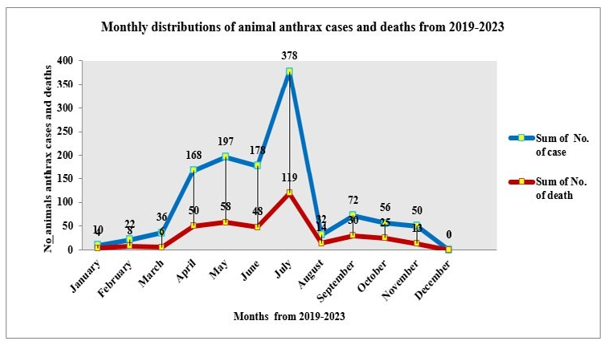
Figure 3: Monthly Distributions of Animal Anthrax Case and Death in Halaba Zone
The highest cases of anthrax were registered in July (n = 378) followed by May (n = 197). There may be soil disturbance which results in ease of exposure of animals to the spores of bacillus anthracis leading to high numbers of cases or probably to outbreaks.
Animal Anthrax Cases and Deaths by Species
Among animals, the highest animal anthrax cases were recorded in bovines (n = 998; 83%), followed by equine species (n = 163; 14%). The lowest animal anthrax cases were recorded in caprine (12%). Similarly, the highest number of animal deaths due to anthrax were recorded in bovines (n = 327; 87%) while the lowest was recorded (n = 7; 1.8%) in ovine. might be due to the grazing or browsing behavior of animals and animal owners’ health-seeking behavior and attitude toward their animals. Although 12 anthrax cases were recorded in caprine, death associated with anthrax had not been recorded as shown in table 2 this might be associated with the browsing behaviors of the goats which reduce the probability of getting the spore in the soil.
|
Animal Species |
Animal Anthrax Cases |
Animal Anthrax Deaths |
|
Bovine |
998(83%) |
327(87%) |
|
Caprine |
12(1%) |
0 |
|
Equine |
163(14%) |
41(10.9%) |
|
Ovine |
26(2.1%) |
7(1.8%) |
|
Grand Total |
1199 |
375 |
Table 3: Animal Anthrax Cases and Deaths by Species
Animal Anthrax Cases by Districts
All the animal anthrax cases were reported from 4 districts and the majority of the cases were from Weradijo wereda 961(80%), followed by Wera wereda 135(11%). From 2019 to 2023, animal anthrax case fatality rate (CFR) was seen (32.1%) in Weradijo wereda, (30.3%) in Wera wereda, (29.8%) in Kulito town and (22.2%) in Atote hulo wereda in Table 3. This might be Areas with alkaline, calcareous soils, warm climates, and intermittent flooding are the areas where outbreaks occur most frequently and also carcass and environmental management practices following animal anthrax cases and deaths because of this reasons number of case and death is high in this wereda.
|
Districts |
Animal Anthrax Cases |
Animal Anthrax Deaths |
CFR (%) |
|
Atote hulo |
36(3%) |
8(2.1%) |
22.2 |
|
Kulito town |
67(5.5%) |
20(5.3%) |
29.8 |
|
Wera |
135(11%) |
41(10%) |
30.3 |
|
Weradijo |
961(80%) |
306(81%) |
32.1 |
|
Grand Total |
1199 |
375 |
31.2 |
Table 4: Animal Anthrax Cases, Deaths and CFR by District
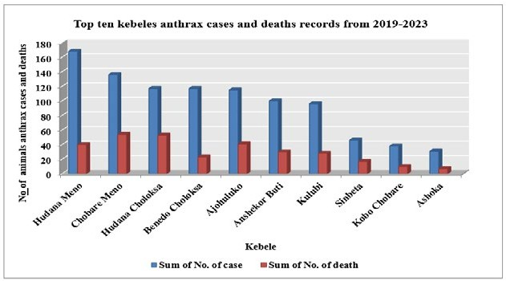
Figure 4: Top Ten kebeles Anthrax Cases and Deaths in Halaba Zone from 2019-2023

Figure 5: Anthrax Vaccine Coverage in Five Years (2019-2023).
Discussion
Anthrax has a great impact on human social life in that it causes wealth and also death of human beings (per-acute death of cattle), zoonotic importance to humans, and sometimes, ignorance of areas where carcasses were dropped. The current study revealed that from the year 2019 to 2023, a total of 1199 animal anthrax cases and 375 animal death associated with anthrax were reported in Halaba zone of Central Ethiopia Region, Ethiopia. In this study, the proportions of animal anthrax between 2019 and 2023 indicated that about 31.7% and 28.1% of animal anthrax cases were recorded in 2019 and 2020. This high proportion of anthrax cases in this period might be attributed to the occurrence of the longest-dry season limited vaccination coverage and low awareness and practices to manage the disease [13,14]. The lowest number of animal anthrax was recorded in 2023(8.6%). This might be due to good vaccination coverage and sound case management practice by the community and professionals, and/or underreporting of cases and deaths by the local veterinary office.
Even though it is known that anthrax affects multiple species, more than two-thirds of animal anthrax (83%) reports were recorded in bovines [15]. Furthermore, the reported anthrax cases were very among species. These differences might be due to the grazing or browsing behavior of animals and animal ownersâ?? health-seeking behavior and attitude toward their animals [16,17]. Only twelve anthrax cases were recorded in caprine for the 5 years. This might be associated with the browsing behaviors of the goats which reduce the probability of getting the spore in the soil. This result is in line with other reports where anthrax occurs in all vertebrates but most common in cattle and sheep and less frequent in goats [15]. Close grazing of tough, scratchy feed in dry times, which results in abrasions of the oral mucosa, and confined grazing on heavily contaminated areas around water holes are the risk factors for the occurrence of anthrax outbreaks [15].
In this study, variations in the proportion of cases and death associated with anthrax among districts in Halaba zone were reported. The highest number of anthrax cases were recorded in Weradijo wereda (961/1199), followed by Wera wereda (135/1199), whereas the lowest number of anthrax cases were reported in Atote hulo wereda (36/1199). The highest number of animal deaths due to anthrax were reported in Weradijo wereda (306/375) followed by Wera wereda (41/375). Case fatality rates were also assessed for each district and the highest (31.8%) was recorded in the Weradijo wereda. while the lowest number of animal deaths was recorded in Atote hulo wereda. Differences in the number of anthrax cases and deaths among districts might be due to varying climatic, soil, and temperature conditions [18,19]. As well as carcass and environmental management practices following animal anthrax cases and deaths [20, 21]. which will facilitate the clustering of anthrax in a specific place [22]. Although B. anthracis can be found worldwide, anthrax cases usually occur only in limited geographic regions. Outbreaks are most common in areas characterized by alkaline, calcium-rich soils, warm environments, and periodic episodes of flooding [15].
Variations in the proportions of animal anthrax cases among different months and seasons of the year were observed. The highest proportion of animal anthrax cases was reported in July (31.5%) followed by May (16.4%). These findings were in line with the nature of anthrax, most outbreaks occur during heavy rainfall following a period of prolonged drought, Whereas, the lowest proportion of animal anthrax cases were found in January (0.8%). It has been recognized that environmental and climatic drivers were important factors influencing the ecology of anthrax [19, 23]. The seasonal distribution in this study indicated that anthrax occurs in animals in both dry and cold seasons, however, the highest proportion of animal anthrax cases was reported during the long rainy season (49%) and the short rainy season (33%) whereas the lowest was recorded during the dry/hot season. During the dry season in the study areas, it was noted that the vegetation for grazing is depleted and becomes short, which leads the animals to close grazing to the ground. This significantly increases the chance of contracting B. anthracis. During long-dry seasons of the year, vegetation was scarce or short and during heavy rainy seasons, there may be soil disturbance [15,23] which results in ease of exposure of animals to the spores of B. anthracis leading to high numbers of cases or probably to outbreaks. In Ethiopia, a study reported that high numbers of anthrax were recorded during rainy seasons [24]. Furthermore, longer dry/hot seasons have the potential to induce stress on animals and hence animalsâ?? innate resistance to infections will be negatively affected. In such circumstances, low doses of B. anthracis spores will get the potential to initiate infection in animals [24,25]. The current study revealed that during the 5 years, there was no report of animal anthrax in December. However, a recent epidemiological investigation report indicated that the index case of anthrax that occurred in December was reported [21].
Challenge and Limitation
For this retrospective study, secondary data were obtained from the archives of the Three Wereda and Kulito town Office of Agriculture, Animal Health Department recorded outbreak report databases, and additional information was gathered from the zonal and Sodo regional veterinary laboratory center annual report. The record has faced the issue of having limited access to data reports from some kebeles of weredas. All cases and deaths associated with anthrax are required to be reported to the Zonal and Regional Veterinary Laboratory, but the animal owners may not report all animal deaths to the closest veterinary officials, substantially underreporting anthrax-related deaths in the regular passive surveillance system. Based on the preliminary diagnoses provided by animal health clinics and health posts, the number of cases was reported. However, since anthrax cases are easy to diagnose in endemic locations based on clinical indicators and there is no rule requiring experts to report illness outbreaks, this has no further bearing on my research findings and may not be crucial. Lastly, in spite of these drawbacks, my research findings remain trustworthy and legitimate.
Conclusion
The current study showed that a considerable number of animal anthrax cases and deaths occurred in the Halaba zone, with varying degrees among different species of susceptible animals, months/ seasons, and districts. In this study, the highest number of cases of anthrax was registered in May, June and July months; that calls for the need for practicing prevention strategies including immunization programs before the peak season of anthrax outbreaks. As well, also serves as a baseline for further epidemiological studies for the development of sustainable programs for the control of animal anthrax disease outbreaks in the study area.
Recommendation
• Regular surveillance and One Health Action will improve the surveillance of Anthrax depends on the integration of veterinary and human health surveillance and control program.
• Animals should be vaccinated with anthrax vaccine before the season of anthrax. I recommend strong routine cross-notification between the veterinary and human health surveillance systems should be part of any zoonotic disease prevention and control programs, and close collaboration between the two health sectors is particularly important during epidemiological investigations.
• All woredas and town administration should strength their surveillance system and early preparedness. Continuous data analysis and feedback to all stakeholders should be conducted on regular bases so as to improve quality surveillance data.
• Outbreak investigation in the area was based mainly on symptomatic diagnosis and history from farmers. Thus, veterinarians working to each disease.
• The district should provide regular training and supervision for animal health professionals on data collection, reporting, and analysis.
• Continuous data analysis and feedback to all stakeholders should be conducted on a regular basis to improve the quality of animal surveillance data.
• A retrospective study has shown that animal anthrax disease outbreaks occur in seasonal dependents. This initiates the need for the implementation of awareness creation among veterinarians and strategic disease prevention programs through vaccination, which should be considered before the anticipated season of outbreak for each disease.
• Enhancing the awareness of livestock owners about the impact of animal anthrax zoonotic importance.
• Zone should allocate sufficient resources and coordinate with other stakeholders to conduct a timely and comprehensive vaccination campaign
• Conduct Intensive follow-up studies to further identify the cause of outbreak occurrence and its related risk factors in the area.
• There shall be One Health office and professionals to undertake regular surveillance and response
Acknowledgment
First of all, I would like to thank the Almighty God for what he has done for me, second I would like to appreciate my senior Advisors for EFELTP Dr Zegeye Hailemariam for their continuous support, guidance and inputs in my outputs. Also, I would like to thank Halaba Zone Agriculture office Head Haji Nuriye, Deputy Head and Head of Animal Health Dr Alemu Kejamo and also Sodo Regional Veterinary Laboratory for their collaboration in providing data. The authors would like to acknowledge the MoA, the MoH, EFETP and AFENET-CDC (Africa Field Epidemiology Network-Centers for Disease Control and Prevention) for the provided financial support for this study as well as ISAVET training.
References
- Thornton, P. K. (2010). Livestock production: recent trends, future prospects. Philosophical Transactions of the Royal Society B: Biological Sciences, 365(1554), 2853-2867.
- Gebreegziabhare, B. (2010). An over view of the role of Ethiopian livestock in livelihood and Food safety. Ministry of Agriculture and Rural development of Ethiopia, 581-593.
- Yusuf, K., Jima, C. B., & Aseffa, M. S. (2024). Prevalence of Gastrointestinal Tract Parasites in Small Ruminants in and Around Jaja Town, Melka Belo Woreda of East Haraghe Zone, Oromia, Ethiopia. Journal of Research in Veterinary Sciences, 2(2), 51-66.
- Waraksa, S. S., Musa, K. Y., & Jima, C. B. (2024). Assessment of Knowledge, Attitudes and Practices towards Anthrax among Community Members and Professionals in Dugda Dawa District of West Guji Zone, Southern Ethiopia. Journal of Food Technology & Nutrition Sciences. SRC/JFTNS-230, 6(4), 2-15.
- Aiello SE. The Merck veterinary manual. Whitehouse Station. 1998.
- Federal Democratic Republic of Ethiopia. National Anthrax Prevention And Control Strategic Plan. Joint Ministry of Health, Ministry of Agriculture and Livestock Resources, Ministry of Culture and Tourism and Ministry of Environment, Forest and Climate Change Implementation Plan 2018-2030.
- Hudson, J. A., Daniel, R. M., & Morgan, H. W. (1989). Acidophilic and thermophilic Bacillus strains from geothermally heated antarctic soil. FEMS microbiology letters, 60(3), 279-282.
- Lista, F., Faggioni, G., Valjevac, S., Ciammaruconi, A., Vaissaire, J., Le Doujet, C., ... & Vergnaud, G. (2006). Genotyping of Bacillus anthracis strains based on automated capillary 25-loci multiple locus variable-number tandem repeats analysis. BMC microbiology, 6, 1-15.
- World Health Organization, International Office of Epizootics. Anthrax in humans and animals. World Health Organization; 2008.
- Kisaakye, E., Ario, A. R., Bainomugisha, K., Cossaboom, C. M., Lowe, D., Bulage, L., ... & Zhu, B. P. (2020). Outbreak of anthrax associated with handling and eating meat from a cow, Uganda, 2018. Emerging Infectious Diseases, 26(12), 2799.
- Seyoum, A. F., Bitew, A. B., & Negussie, H. (2022). A Retrospective Study on the epidemiology of anthrax among livestock from 2011 to 2020 in Awi Administrative Zone, Amhara Region, Northwest Ethiopia. Veterinary Medicine: Research and Reports, 313-321.
- Subedi, D., Pantha, S., Jyoti, S., Gautam, B., Kaphle, K., Yadav, R. K., ... & Dhakal, S. (2024). Anthrax in Humans, Animals, and the Environment and the One Health Strategies for Anthrax Control. Pathogens, 13(9), 773.
- Otieno, F. T., Gachohi, J., Gikuma-Njuru, P., Kariuki, P., Oyas, H., Canfield, S. A., ... & Bett, B. (2021). Modeling the spatial distribution of anthrax in southern Kenya. PLoS neglected tropical diseases, 15(3), e0009301.
- Gizaw, S., Desta, H., Alemu, B., Tegegne, A., & Wieland,B. (2020). Importance of livestock diseases identified using participatory epidemiology in the highlands of Ethiopia. Tropical Animal Health and Production, 52(4), 1745-1757.
- Constable, P. D., Hinchcliff, K. W., Done, S. H., & Grünberg,W. (2016). Veterinary medicine: a textbook of the diseases of cattle, horses, sheep, pigs and goats. Elsevier Health Sciences.
- Sahoo, K. C., Negi, S., Barla, D., Badaik, G., Sahoo, S., Bal, M., ... & Bhattacharya, D. (2020). The landscape of anthrax prevention and control: stakeholders’ perceptive in Odisha, India. International Journal of Environmental Research and Public Health, 17(9), 3094.
- Seid, K., Shiferaw, A. M., Yesuf, N. N., Derso, T., & Sisay,M. (2020). Livestock owners’ anthrax prevention practices and its associated factors in Sekota Zuria district, Northeast Ethiopia. BMC veterinary research, 16, 1-8.
- Taye, M., Zewdu, F., & Ayalew, D. (2013). Characterizing the climate system of Western Amhara, Ethiopia: a GIS approach. American Journal of Research Communication, 1(10), 319-355.
- Yousuf, M. A., Asfaw, S., Mengistu, S., & Husen, M. (2020). Spatial suitability modeling of zoonosis: implicated risk areas of B. anthracis and trends under climate change scenarios in Ethiopia. bioRxiv, 2020-11.
- Driciru, M., Rwego, I. B., Ndimuligo, S. A., Travis, D. A., Mwakapeje, E. R., Craft, M., ... & Pelican, K. (2020). Environmental determinants influencing anthrax distribution in Queen Elizabeth Protected Area, Western Uganda. PloS one, 15(8), e0237223.
- Ashenefe Wassie, B., Fantaw, S., Mekonene, Y., Teshale,A. M., Yitagesu, Y., Tsige, E., ... & Mor, S. M. (2022). First PCR Confirmed anthrax outbreaks in Ethiopia—Amhara region, 2018–2019. PLoS Neglected Tropical Diseases, 16(2), e0010181.
- Nderitu, L. M., Gachohi, J., Otieno, F., Mogoa, E. G., Muturi, M., Mwatondo, A., ... & Njenga, M. K. (2021). Spatial clustering of livestock Anthrax events associated with agro-ecological zones in Kenya, 1957–2017. BMC Infectious Diseases, 21, 1-10.
- Hampson, K., Lembo, T., Bessell, P., Auty, H., Packer, C., Halliday, J., ... & Cleaveland, S. (2011). Predictability of anthrax infection in the Serengeti, Tanzania. Journal of Applied Ecology, 48(6), 1333-1344.
- Misgie, F., Atnaf, A., & Surafel, K. (2015). A review on anthrax and its public health and economic importance. Acad J Anim Dis, 4(3), 196-204.
- Weiner, Z. P., & Glomski, I. J. (2012). Updating perspectives on the initiation of Bacillus anthracis growth and dissemination through its host. Infection and immunity, 80(5), 1626-1633.