

Journal of Textile Engineering and Fashion Technology(JTEFT)
ISSN: 2771-4357 | DOI: 10.33140/JTEFT

Research Article - (2025) Volume 7, Issue 1
A Primer on Window Fashions
Received Date: Oct 31, 2025 / Accepted Date: Nov 28, 2025 / Published Date: Dec 10, 2025
Copyright: ©2025 Sanjiv R Malkan. This is an open-access article distributed under the terms of the Creative Commons Attribution License, which permits unrestricted use, distribution, and reproduction in any medium, provided the original author and source are credited.
Citation: Malkan, S. R. (2025). A Primer on Window Fashions. J Textile Eng & Fash Tech, 7(1), 01-37.
Abstract
This paper serves as a practical guide to selecting window fashions for both residential and commercial applications. It outlines key considerations, including functionality, aesthetics, energy efficiency, light control, privacy, and durability. By comparing popular options—including blinds, shades, shutters, and draperies—the paper highlights their advantages, limitations, and ideal uses. It also addresses material choices, maintenance requirements, and cost factors to help readers make informed decisions. The objective is to equip homeowners, designers, and facility managers with the knowledge needed to match window treatments to their specific style, performance, and budget needs.
Keywords
Window Fashions, Window Coverings, Shades, Blinds, Shutters, Window, Energy Efficiency, U- Value, R-Value, Shgc, Thermal Insulation, Room Darkening, Light Filtering
Introduction
Window fashions are essential for home decor and functionality, providing aesthetic appeal and practical benefits. Whether you’re moving, renovating, or refreshing your space, understanding these options can help you choose the right solutions. Window fashions encompass a range of options, including blinds, shades, curtains, drapes, and shutters, each with distinct styles and functionalities. Therefore, it's essential to know the various terms used to describe window fashions, coverings, or treatments. In this article, we will define window fashions, explore the multiple types available, and offer guidance on selecting the best ones. A structured opening in a building's facade is called fenestration. When fenestration is equipped with an engineered frame and glazing, it is commonly referred to as a window, as illustrated in Figure 1. Windows play a crucial functional role in a building. They protect inhabitants from harsh external elements such as wind, snow, and dust, while also providing views of the outside and facilitating interaction with and experience of the outdoor environment and activities.
The primary advantage of a window is that it allows natural light to enter a home, brightening the lives of its occupants both psychologically and, to some extent, spiritually. However, the main disadvantage of a window is its inefficiency in managing the flow of energy in and out of a dwelling. Whenever a window is installed in a building facade, there is always a net energy loss through it. A window, in essence, is simply a frame with glazing, where "glazing" refers to a glass pane typically 0.25 inches thick. Usually, windows are white and rather dull. Additionally, bare windows are inefficient at managing energy flow, allowing extreme heat to enter in the summer and letting heat escape in the winter.
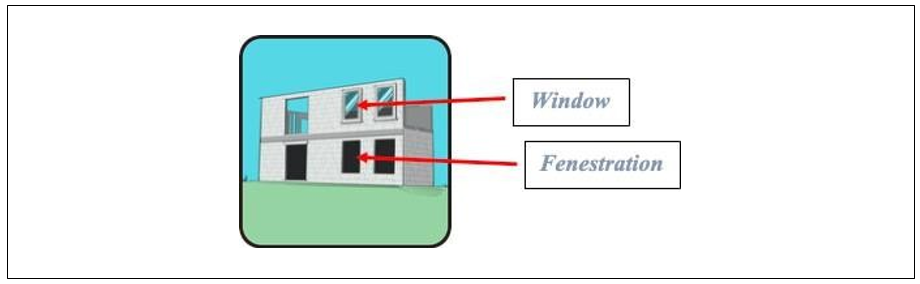
Figure 1: Opening in a Façade (Fenestration) & Installed Window in an Opening
To improve energy efficiency and enhance the appearance of windows from both the inside and outside of the home, we often add structural materials that fully or partially cover the windows. These materials can significantly improve both the look of the windows and their surroundings, giving a sense of completeness. They are commonly known as window coverings, window treatments, window attachments, or window fashions—terms that are often used interchangeably. For this article, we will use the term "Window Fashions" because it incorporates both the fashion and engineering aspects.
Types of Window Fashions
Window fashions can be categorized as Internal or External, as shown in Figure 2. Internal window fashions serve both decorative and functional purposes, while External window fashions serve only a functional purpose. When we refer to functional purpose, we mean that window fashions products help manage the energy flow through the window efficiently. On the other hand, the decorative purpose means that window fashion products enhance the beauty of the window and its surroundings.
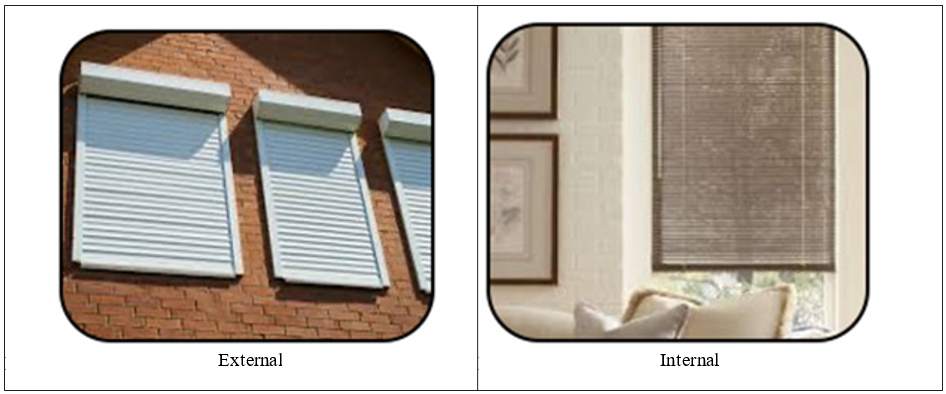
Figure 2: Example of External and Internal Window Fashions.
Here are the primary types of window fashions available in the market:
Cellular Shade: Cellular window fashions, also known as honeycomb shades, are a popular window fashion that combines style and energy efficiency [1]. Their unique structure features air pockets, or “cells,” that trap static (motionless) air to create insulation, helping to maintain indoor temperatures and reduce energy costs. Available in a variety of colors, fabrics, and opacities, cellular shades offer excellent light control and privacy while adding a sleek, modern look to any room. Cellular construction can be single- cell, multiple-cell, or cell-in-cell. They are a versatile option for homeowners seeking comfort, functionality, and aesthetic appeal. Non-branded cellular shades are very cost- effective. Table 1 lists the attributes of the cellular products.
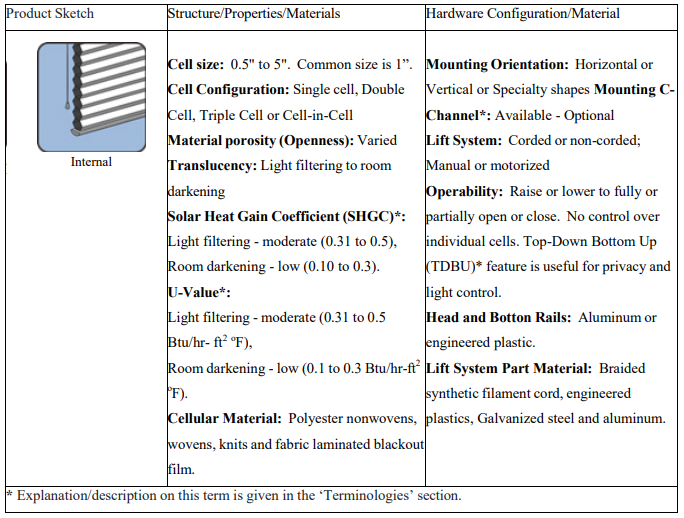
Table 1: Cellular Shade Product Attributes
Slat or Louver Shade: Slat or louver-type window fashions, commonly called Venetian or horizontal blinds, feature adjustable slats that can be tilted to control light and privacy. Made from materials such as wood, aluminum, fabric, or vinyl, these offer a clean, structured look and are highly versatile for a range of room styles. Their design allows for precise light filtering, making them ideal for spaces where both visibility and shade are essential. Durable and easy to maintain, slat shades are a practical and stylish choice for modern window coverings. This attachment is very cost-effective and widely used in residential and commercial spaces. Table 2 lists the attributes of the slat or louver products.
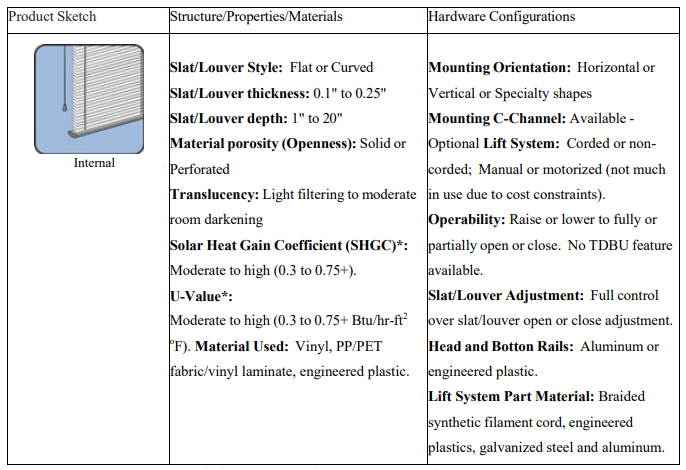
Table 2: Slat or Louver Shade Product Attributes
Sheer Shade: Sheer window shades are elegant treatments that blend the softness of fabric with the practicality of blinds. Constructed from lightweight, translucent materials (usually warp knits), they gently diffuse natural light while offering some privacy. There are three ways to create these shades: a) a single layer of sheer fabric without louvers; b) a single layer of sheer fabric with louvers on the back; c) two parallel layers of sheer fabric with a horizontal vane in between, allowing users to tilt the vanes for adjustable light control. C-type sheer shades are very popular. Ideal for living rooms, dining areas, or any space that seeks a soft, airy ambiance. Sheer shades add a touch of sophistication while maintaining a connection to the outdoors. Table 3 lists the attributes of the sheer/zebra shade products.
Zebra Shade, a type of sheer shade also known as dual or transitional shades, is a modern window fashion that combines alternating bands of sheer and opaque fabric in a single shade. By adjusting the alignment of these bands, users can easily control light, privacy, and visibility—transitioning smoothly from a soft filtered glow to full room shading. Because the fabric is sheer, zebra shades are classified as sheer window fashions, offering both functionality and a sleek, contemporary aesthetic. Their versatility makes them popular in both residential and commercial settings where style and light control are equally important. This type of sheer shade is very popular in Middle Eastern and Far Eastern countries.
Pleated Shade: Pleated window shades are a stylish and functional window treatment made from a single layer of fabric folded (pleated) into crisp, accordion-like pleats. These shades offer a sleek, streamlined appearance and are available in a wide variety of colors, patterns, and fabric options to suit any decor. While they provide moderate light control and privacy, pleated shades are especially valued for their lightweight design and easy operation. Ideal for those seeking an affordable yet attractive alternative to more complex window coverings, pleated shades add texture and elegance to any room. This window fashion is very popular in Far Eastern countries. Table 4 lists the attributes of the pleated shade products.
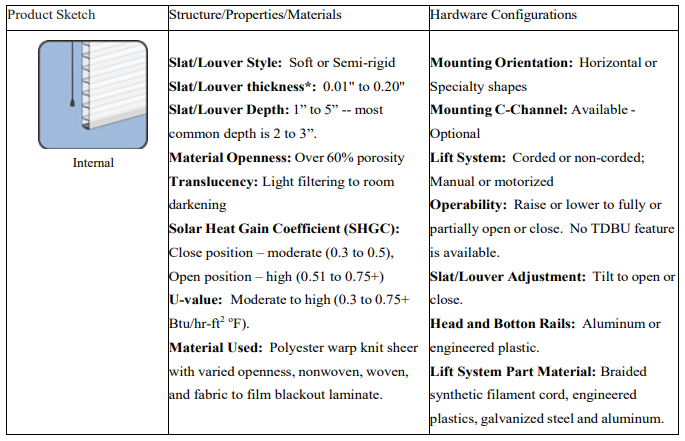
Table 3: Sheer/Zebra Shade Product Attributes
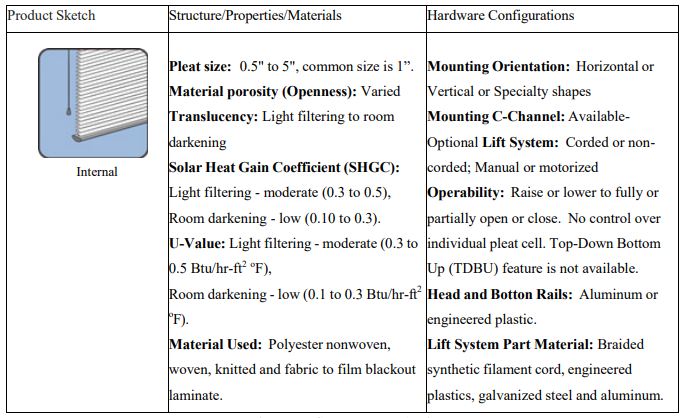
Table 4: Pleated Shade Product Attributes
Roman Shade: Roman-type window shades are elegant fabric window coverings that fold neatly into horizontal pleats when raised. Unlike other shades, Roman shades maintain a soft, tailored appearance whether open or closed, adding a touch of sophistication to any room. They are available in a variety of fabrics, colors, and patterns, offering options for light filtering, room darkening, or complete blackout. Roman shades blend the beauty of drapery with the functionality of shades, making them a popular choice for both traditional and modern interiors. Table 5 lists the attributes of the roman shade products.
Drape and Curtain: Drape-and-curtain window shades are classic and versatile window treatments made from flowing fabric panels that hang vertically from a rod or track. They come in a wide range of materials, colors, and patterns, offering endless design possibilities to suit any décor. These treatments can be used alone or layered with other window coverings to add insulation, control light, and enhance visual appeal. Whether sheer for a light, airy feel or heavy and lined for privacy and darkness, drapes and curtains provide both functional benefits and a timeless, elegant look to any space. Table 6 lists the attributes of the drape and curtain products.
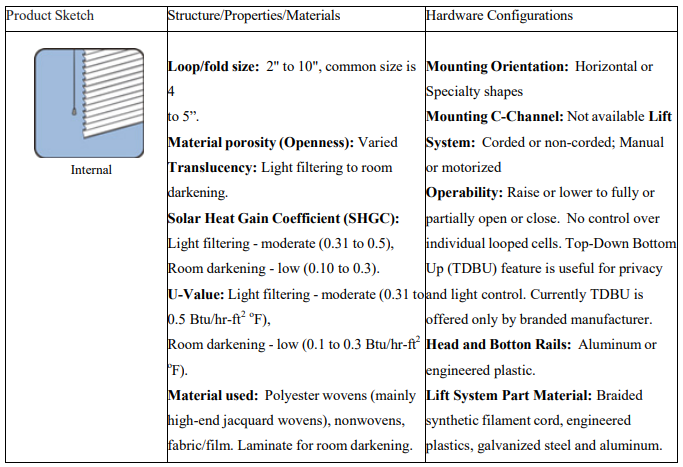
Table 5: Roman Shade Product Attributes
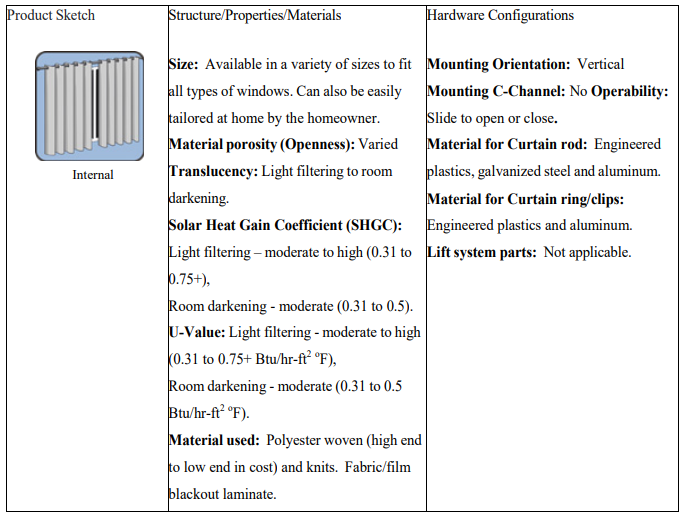
Table 6: Drape and Curtain Product Attributes
Fixed Awning: Fixed awning window shades are permanent, exterior-mounted coverings designed to provide shade and protection for windows. Made from durable materials such as metal, fabric, or polycarbonate, these awnings are angled to block direct sunlight, reducing indoor heat and glare while allowing natural ambient light to filter through. In addition to improving energy efficiency, fixed awnings enhance a building's exterior appearance and protect windows from rain and UV damage. Ideal for both residential and commercial settings, they provide a long- lasting, low-maintenance solution for controlling sunlight and weather. Table 7 lists the attributes of the fixed awning products.
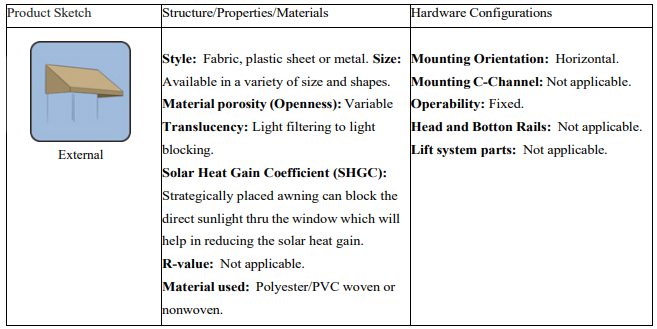
Table 7: Fixed Awning Product Attributes
Retractable Awning: Retractable awning window shades are adjustable, exterior-mounted coverings that provide flexible sun protection and shade for windows, patios, or decks. Unlike fixed awnings, these can be extended or retracted as needed, either manually or with a motorized system. Made from weather- resistant fabrics and sturdy frames, retractable awnings help reduce indoor heat, protect furniture from UV damage, and create comfortable outdoor spaces. Their versatility and convenience make them a popular choice for homeowners seeking both functionality and control over sunlight and shade throughout the day. Table 8 lists the attributes of the retractable awning products.
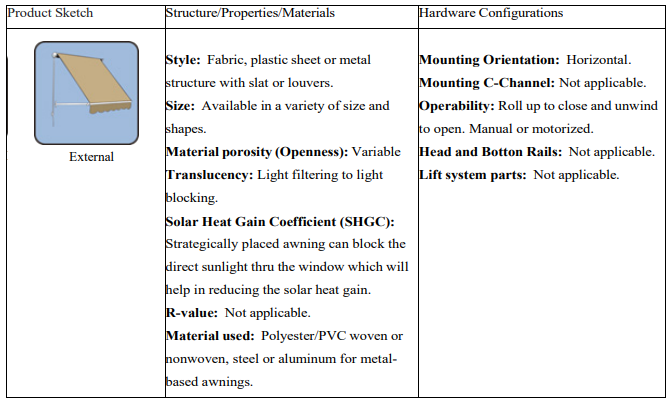
Table 8: Retractable Awning Product Attributes
Roller Shutter: Roller shutter-type window shades are durable, protective window coverings made from metal or sturdy plastic slats that roll up into a compact housing above the window. Commonly used for security, insulation, and light control, they are ideal for both residential and commercial applications. When closed, roller shutters provide excellent protection against weather, noise, and intrusion, while still allowing for ventilation when partially open. Operated manually or via a motorized system, these offer a practical and robust solution for enhancing safety and energy efficiency. Table 9 lists the attributes of the roller shutter products.
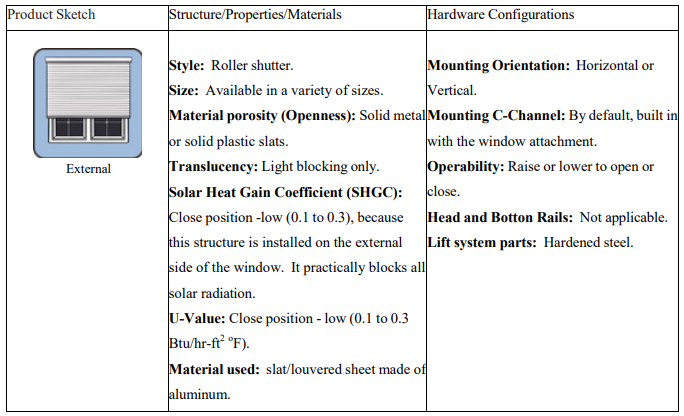
Table 9: Roller Shutter Product Attributes
Storm Window: A storm window, as a window attachment/ fashion, is a unique concept. It is not a window attachment/fashion product. Since it is removable after brief use, it is classified as a window attachment/fashion. A storm window is a type of window installed over a house window. As the name suggests, an exterior storm window (shade) is a heavy-duty covering designed to protect a house window from severe weather conditions such as high winds, hail, and flying debris (very effective during a hurricane).
A storm window is typically made from impact-resistant materials like metal, polycarbonate, or reinforced fabric. A storm window provides an added layer of security and insulation. Installed on the outside of a window, it helps reduce energy loss, noise, and potential storm damage. Ideal for homes in hurricane- prone or extreme weather regions. Exterior storm shades combine durability and protection while maintaining a clean, unobtrusive appearance when not in use.
The modern low-e storm window is designed to blend with the existing architecture. It is permanently mounted over the existing windows as a fixed or operable model, allowing your existing windows to remain operational. For example, a single-hung window is installed over an existing single-hung window. A modern storm window (shade) can be installed inside. This is very effective in reducing energy loss during the wintertime. Table 10 lists the attributes of the storm window products.
Shutter Shade: Shutter-style window shades, often called shutters, are sturdy and durable window fashions featuring adjustable louvers set within a solid frame. Usually made from wood, composite, or vinyl, they provide excellent light control, ventilation, and privacy. Shutters can be custom-made to fit various window shapes and come in styles such as plantation or café shutters, adding timeless charm and architectural appeal to a room. Their classic look and long-lasting functionality make them a popular choice for both traditional and modern interiors. Table 11 lists the attributes of the shutter shade products.
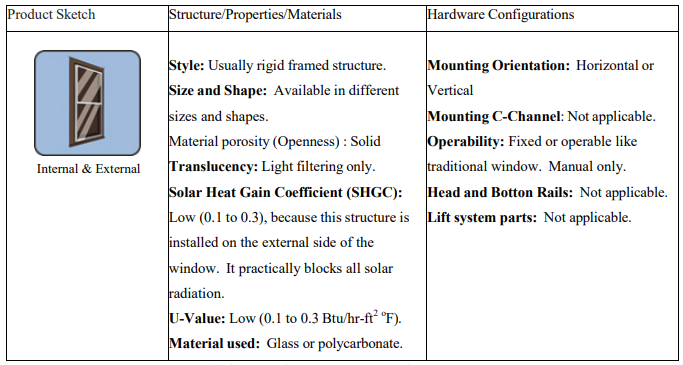
Table 10: Storm Window Product Attributes
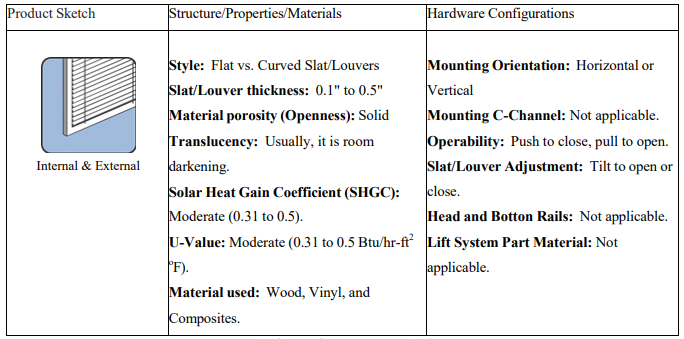
Table 11: Shuter Shade Product Attributes
Roller Shade: Roller-type window shades are a modern, straightforward window treatment consisting of a single sheet of fabric that rolls up into a tube when raised. Known for their clean lines and minimalistic design, roller shades are available in a wide range of materials, from sheer to blackout fabrics, offering semi-flexible options for light control and privacy. Easy to operate and maintain, they are ideal for both residential and commercial spaces. With customizable colors and patterns, roller shades offer a sleek, functional solution that complements both contemporary and traditional interiors. Table 12 lists the attributes of the roller shade products.
Flat Panel: Interior panel-type window shades are solid or fabric-covered panels designed to provide privacy, light control, and a clean, structured look within a room. Typically mounted on tracks or hinges, these panels slide or fold to open and close, making them ideal for covering large windows, patio doors, or room dividers. Available in a range of materials, including wood, fabric, and composite, they can be customized to complement various interior styles. Interior panel shades offer a modern alternative to traditional drapes, combining functionality with a sleek, minimalist aesthetic. Table 13 lists the attributes of flat- panel products.
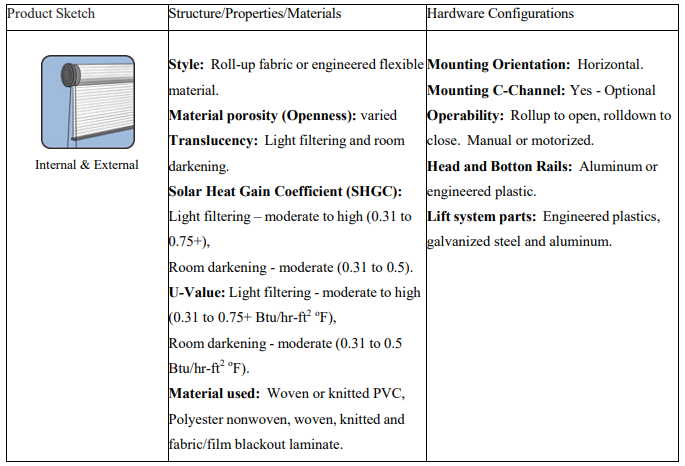
Table 12: Roller Shade Product Attributes
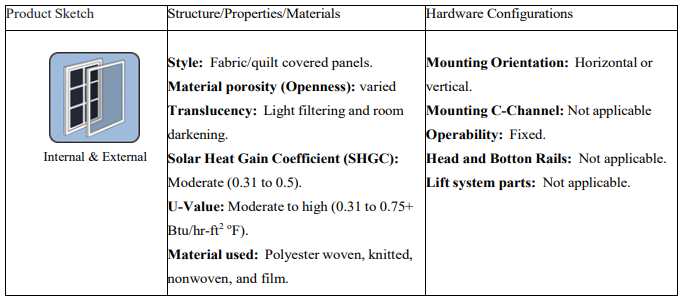
Table 13: Flat Panel Product Attributes
Applied Film
Energy-efficient window films can be used either internally or externally, depending on the specific type of film and the desired outcome. Exterior films are often preferred for their superior ability to reject solar heat, as they block sunlight before it enters the dwelling through the window glass. Interior films are also common, particularly for decorative or privacy purposes, and can also contribute to energy efficiency during the wintertime. Table 14 lists the attributes of applied film products.
Exterior Window Film: Installed on the exterior of glass, these films block solar heat before it enters the building through the window, reducing cooling energy consumption. They are ideal for maximizing solar energy rejection, particularly for double- pane or low-E glass.
Interior Window Film: Some are decorative, while others save energy by reducing glare, eye strain, and heat loss in winter. They are easier to install and provide more privacy than exterior films.
Choosing the Right Film: Select exterior films for heat gain reduction and interior films for glare reduction or privacy enhancement, based on your specific needs.
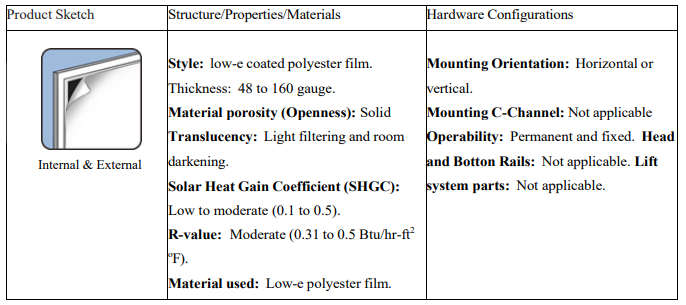
Table 14: Applied Film Product Attributes
Types of Materials used in Window Fashions
Window fashions are manufactured using a wide variety of materials, each chosen for its specific functional and aesthetic qualities. Each material is selected based on factors such as light control, insulation, durability, aesthetics, and ease of maintenance. Common materials include:
Fabric: A variety of fabrics is used mainly in cellular, roller, Roman, pleated, sheer, and drapery- style shades. Fabrics range from light-filtering sheers to room-darkening and blackout materials. It is worth noting that most fabrics are made from 100% polyester for enhanced UV stability and durability. Cotton, linen, and blended fiber fabrics are primarily used for drapery-style shades. Table 15 lists the critical fabric properties for window fashions.
There are four types of fabrics used in window fashions: wovens, knits, Nonwovens, and Fabric/film laminates.
• Woven fabrics are a popular choice in window fashions due to their durability, versatility, and timeless appeal. Created by interlacing yarns in various patterns, these fabrics can range from lightweight sheers to heavy, opaque textiles, offering options for both light filtering and privacy. Standard fibers include cotton, linen, polyester, and blends, which can be finished with textures, patterns, or decorative weaves to complement different interior styles. In window fashions such as drapes, Roman shades, and panels, high-end woven fabrics provide a refined look, excellent drape, and long-lasting performance, making them a staple in both residential and commercial settings.
• Knitted fabrics, though less common than woven fabrics in traditional window fashions, offer unique benefits in specific applications. Made by inter-looping or inter-lacing yarns, they provide excellent stability (Tricot knits), intricate design flexibility (Raschel knits), softness, and a smooth, uniform appearance. Warp-knitted textiles are often used in sheer shades, roller shades, stretch-fit coverings, and specialty draperies where flexibility and a sleek finish are desired. Raschel knitted fabrics are used primarily for high-end draperies. Knitted fabrics can be engineered for varying levels of opacity, from sheer to room-darkening, and are available in a wide range of colors and textures. Their lightweight nature and wrinkle resistance make knitted fabrics a practical choice for contemporary window fashion designs that strike a balance between style and functionality.
|
Type of fabric |
Basis weight |
Thickness |
Stiffness |
|
|
Basis weight is important in engineering the look and feel of the fabric and also to meet the overall weight- lifting limitations of the hardware lift system. |
The thickness of the fabric is vital for cellular, roller, and pleated shades. A thinner fabric not only facilitates easier processing but also enhances the overall aesthetic and feel of the shade. |
Appropriate stiffness is essential for maintaining the shape and appearance of the shade over time when placed in a window. Additionally, stiffness plays a crucial role in transforming flat fabric into a variety of shades. |
|
Wovens: |
|||
|
18 to 150 GSM |
5 to 20 mils |
pleated shades |
|
60 to 150 GSM |
6 to 20 mils |
|
|
100 to 200 GSM |
10 to 25 mils |
|
|
Knitted: |
|||
|
20 to 80 GSM |
5 to 15 mils |
pleated shades |
|
75 to 200 GSM |
10 to 25 mils |
|
|
Nonwovens: |
|||
|
40 to 80 GSM (40 or below GSM is for blackout laminate) |
5 to 15 mils |
|
|
35 to 60 GSM (40 or below GSM is for blackout laminate) |
8 to 12 mils |
|
|
40 to 80 GSM (40 or below GSM is for blackout laminate) |
10 to 20 mils |
|
|
40 to 85 GSM |
5 to 12 mils |
|
blown |
30 to 60 GSM |
5 to 10 mils |
|
Table 15: Critical Fabric Properties for Window Fashions
• Nonwoven fabrics are increasingly used in window fashions for their versatility, lightweight, and cost-effectiveness. Unlike woven or knitted textiles, nonwovens are formed by bonding fibers together through heat, chemicals, or mechanical processes, resulting in a smooth, uniform sheet. They are commonly found in cellular shades, roller shades, and specific laminated drapery linings, where they offer excellent light diffusion, thermal insulation, and dimensional stability. Nonwoven materials can be engineered to Figure particular performance features, such as UV resistance, moisture repellency, or sound absorption, making them a practical choice for both residential and commercial window treatments. Polyester spunbonded, polyester carded thermal bonded, polyester wet-laid, polyester spunlace, and specialty polyester melt-blown are predominantly used in window fashions.
• Fabric-to-Film blackout laminates are specialized materials used in window fashions to block light and provide complete privacy. These laminates are created by bonding a decorative fabric face to an opaque film backing, effectively combining the aesthetic appeal of textiles with the light-blocking performance of blackout technology. Commonly used in cellular shades, roller shades, Roman shades, and drapery linings, they provide excellent room-darkening capabilities while maintaining a soft, stylish appearance on the interior side. In addition to light control, fabric- to-film laminates can improve energy efficiency by reducing heat transfer, making them both a functional and attractive solution in modern window treatments.
Vinyl is widely used in window fashions due to its durability, ease of maintenance, and versatility. Made from polyvinyl chloride (PVC), it offers excellent resistance to moisture, UV rays, and fading, making it ideal for kitchens, bathrooms, and commercial spaces. Vinyl can be produced in a variety of finishes, from smooth, glossy finishes to textured surfaces that mimic fabric or natural materials.
Typical applications include roller shades, vertical blinds, and faux wood blinds, where vinyl offers a cost-effective, long-lasting solution. Its wipe-clean surface and wide range of colors and patterns make it both a practical and stylish choice in modern window treatments.
Aluminum is a popular material in window fashions for its strength, lightweight nature, and sleek, modern appearance. Highly resistant to rust, corrosion, and warping, aluminum performs well in a variety of environments, including high-humidity areas.
It is commonly used in horizontal mini blinds, vertical blinds, and certain specialty shutters, offering precise light control and privacy. Aluminum slats can be finished in a wide range of colors, textures, and gloss levels, and may include baked-on coatings for enhanced durability. Its combination of low maintenance, long lifespan, and contemporary style makes aluminum a practical and attractive choice in both residential and commercial window treatments.
Wood is a classic and timeless material used in window fashions, valued for its natural beauty, warmth, and durability. Commonly crafted from hardwoods such as basswood or oak, wooden blinds and shutters offer excellent light control, privacy, and insulation. They can be stained or painted to complement a variety of interior styles, from traditional to contemporary. In addition to their aesthetic appeal, wood window treatments are long-lasting and can be customized in slat sizes, finishes, and colors to suit specific design preferences. Their rich, organic texture makes them a premium choice for adding elegance and sophistication to any space.
Faux Wood and Composite materials are popular alternatives to natural wood in window fashions, offering the look and feel of real wood with enhanced durability and lower maintenance. Typically made from PVC, vinyl, or a blend of wood fibers and synthetic resins, these materials are resistant to moisture, warping, and fading, making them ideal for kitchens, bathrooms, and other high- humidity environments. Faux wood blinds and composite shutters mimic the grain and texture of genuine wood while providing a more budget-friendly option. Available in a wide range of finishes and colors, they combine aesthetic versatility with long- lasting performance, making them a practical and stylish choice for many interiors.
Fabric-to-Film Laminate material is widely used in window fashions to combine the visual appeal of textiles with the functional benefits of a specialized backing. This material is created by bonding a decorative fabric to an opaque or light-filtering film (usually 48- or 92-gauge polyester film), resulting in a composite that enhances light control, privacy, and durability. Commonly applied in cellular, pleated, roller, Roman shades, and panel track systems. Fabric-to-film laminates preserve the texture of the fabric while enhancing its strength, dimensional stability, and resistance to fraying. Depending on the film used, they can provide room- darkening or blackout capabilities, making them a versatile choice for both residential and commercial window treatments.
Polycarbonate and Acrylic Sheet materials are used in window fashions for their clarity, strength, and versatility. These rigid, lightweight plastics can be molded or cut to fit various applications, such as decorative panels, light-diffusing inserts, external or internal storm windows, and specialty shutters. Polycarbonate is prized for its exceptional impact resistance and durability, making it ideal for high-traffic or safety-conscious environments. At the same time, acrylic offers excellent optical clarity and UV resistance, helping to maintain its appearance over time. Both materials can be textured, tinted, or frosted to provide privacy and design flexibility, offering a modern, low- maintenance alternative to glass in contemporary window treatments.
Steel
is used in window fashions for its exceptional strength, durability, and structural support. These components are often found in headrails, brackets, and operating mechanisms. Steel provides stability and longevity to blinds, shades, and drapery systems. It can be stainless, galvanized, or coated with corrosion- resistant finishes to withstand moisture and wear, making it suitable for both residential and commercial applications. In some designs, steel is also incorporated into decorative elements, offering a sleek, modern aesthetic. Its combination of mechanical strength and adaptability ensures that steel remains a reliable choice for both functional and design-oriented aspects of window treatments.
Adhesives used in window fashions—including cellular shades, sheers, roller shades, blinds, shutters, and drapery hardware—use a variety of adhesives to bond fabrics, components, films, and structural elements. These adhesives are directly responsible for the product's long-term durability; therefore, they must be engineered to withstand heat, UV exposure, humidity, repeated operation, and long-term dimensional stability. Table 16 lists the adhesives used in window fashions manufacturing.
Beyond structural function, adhesives influence long-term performance by resisting UV exposure, humidity, and repeated movement. Their discreet, stable bonds allow designers to maintain smooth surfaces and slim profiles without sacrificing reliability. As materials and sustainability expectations evolve, advanced adhesives continue to play a central role in both the technical and design advancement of window fashion systems.
Window Fashions Manufacturing and Assembly
Manufacturing window fashion products requires a balance between precision engineering and design intent. Fabrics, film laminates, and hardware components are cut, bonded, and assembled using controlled processes—such as thermal lamination, calibrated adhesive application, and tolerance-specific framing— while maintaining the visual alignment, texture quality, and structural aesthetics that define the product’s interior design appeal.
|
Product Type |
Primary Adhesives Used |
Typical Applications / Notes |
|
|
|
|
|
Cellular (Honeycomb) Shades |
Polyester/Co-polyester hot melts; TPU/PES heat-seal films; PUR reactive adhesives; PSA tapes |
Fabric-to-fabric bonding for cells, header/rail attachment, side-tab bonding |
|
Slat or Louver Shades |
PSA tapes; PUR or epoxy structural adhesives |
Attaching end caps, valance clips, insulating films, bottom-rail components |
|
Sheers / Zebra Shades |
Polyester/Co-polyester hot melts; TPU/PES heat-seal films; PUR reactive adhesives |
Flexible fabric louvers to front and rear shear panels, header/rail attachment, valance fabric bonding to the substrate |
|
Pleated Shades |
Polyester/Co-polyester hot melts; TPU/PES heat-seal films; Solvent based PUR |
Fabric to film bonding, header/rail attachment, Pleat retention lines, stiffening, header bonding |
|
Roman Shades |
Hot melts; Water-based adhesives; PSA tapes; PUR adhesives |
Tack-bonding fabric loops, fabric- to-liner laminations, valance bonding, hem support |
|
Drapery Panels |
Water-based acrylic/PVA adhesives; Heat-seal films; Low- VOC textile coatings |
Liner bonding, blackout or dim- out coating, hems without stitching, stiffeners |
|
Fixed and Retractable Awnings |
None Required |
NA |
|
Roller shutter |
None Required |
NA |
|
Storm |
PUR structural adhesives; Epoxy; PVA wood glues; Acrylic adhesives |
Bonding frame components as needed |
|
Shutters (Wood, Composite or PVC) |
PUR structural adhesives; Epoxy; PVA wood glues; Acrylic adhesives |
Bonding stiles/rails, louvers, tilt mechanisms, solid composite assemblies |
|
Roller Shades (Fabric based) |
Acrylic PSA tapes; Water-based acrylic/PVA laminating adhesives; UV-cure adhesives; PUR adhesives |
Bonding fabric to roller tube, blackout/solar film laminations, hem bonding, light-seal attachment |
|
Flat Panel |
None Required |
NA |
|
Applied Film |
High clarity Acrylic PSA, Water- activated acrylic, Silicone PSA, Modified acrylic |
Most solar film, FIY solar film, solar safety films, exterior films for hot climates |
Table 16: List of Adhesives Used in Window Fashions Manufacturing
As discussed above, window fashions come in a range of products, each with distinct manufacturing and assembly requirements. As a result, the production process and final assembly of installable shades are complex and require a detailed, step-by-step approach. Since window sizes differ in homes and commercial spaces, most window fashion products are custom-made. The main exceptions are vinyl/aluminum, cellular blinds, and drapes, which are available in standard sizes at major retailers like Home Depot, Lowe’s, and Walmart. However, high-end cellular, vinyl shades, and drapes can still be custom-ordered from the manufacturer.
Because the majority of window fashion products are custom- fitted, automating their manufacturing and final assembly is challenging. As a result, these products require significant manual labor. Nevertheless, some steps in the production of specific window fashions can be automated to help lower labor costs. Table 17 lists the typical steps for manufacturing and assembling cellular and shutter window fashions.
During assembly, attention to detail ensures that functional elements—lift systems, rails, pleats, or vanes—operate smoothly and integrate seamlessly into the product’s visual composition. Technical validations of durability, uniformity, and adhesive integrity work in tandem with design considerations like color harmony and material transitions. This fusion of engineering rigor and design sensitivity allows modern window fashions to deliver performance, longevity, and a refined architectural presence.
Window Fashions Product Testing
Window fashions undergo rigorous product testing to ensure they meet the performance, safety, and long-term durability requirements of residential and commercial environments. Because window coverings serve multiple purposes—including privacy, daylight control, insulation, child safety, and aesthetic enhancement— each component must be evaluated against industry standards and real-world conditions. Testing often includes material strength, resistance to humidity, colorfastness, UV resistance, operating reliability, thermal performance, and compliance with indoor- air-quality and safety regulations. This process not only validates product quality but also helps manufacturers refine designs, improve energy efficiency, and ensure the products perform as intended across diverse climates and installation settings.
Although no standard test methods have been established for every window fashion product, manufacturers rely on general materials testing standards from organizations such as ASTM, ANSI/WCMA, ASE, ISO, DIN, NFPA, OSHA, FFA, 16 CFR Part 1610, NFRC, AERC, AATCC, and JIS. Most unlaminated and laminated fabrics and films are tested using these established standards. Often, manufacturers also use in-house test methods. Nearly all finished products are tested with proprietary methods, as each product configuration is unique, and it is impossible to have universal test methods for all.
All major manufacturers closely monitor testing to ensure consistent product quality. Testing is often costly and time-consuming. It is important to note that product testing is generally optional; manufacturers decide which products to test. However, adopting basic testing protocols for all products is ultimately in their best interest. Table 18 lists the tests that window fashion products may undergo. Comprehensive product testing ultimately reinforces the integrity, reliability, and safety of window- fashions solutions. As homeowners and designers increasingly seek products that balance beauty, functionality, and sustainability, testing data provides confidence that each product has been engineered and verified to perform consistently throughout its lifespan. Whether the priority is energy savings, UV protection, healthy indoor environments, or durability, manufacturers rely on testing to align with evolving standards and customer expectations. In this way, product testing is not merely a technical requirement— it is a commitment to quality and innovation that supports better living and working spaces.
|
Window Fashion Types |
Manufacturing Process Steps |
|
Cellular |
|
|
Shutters (Wood) |
Wood shutters are typically made from basswood, poplar, cedar, or paulownia.
B. Profiling and Shaping
C. Joinery
|
|
|
D. Assembly
E. Finishing
F Hardware and Packaging
|
|
|
|
||
|
Flat Fabric or Film Tests –Unlaminated and Film Laminated |
||
|
Test Name |
Test outcome |
|
|
Tensile Strength (ASTM, DIN, JIS) |
Measures the force required to break a fabric when pulled, ensuring window- shade textiles withstand everyday handling, lifting, and long-term tension. |
|
|
Thickness (ASTM, DIN, JIS) |
Measures the thickness of the fabric. Thickness determines both the processability limits and the final stacked height of the shade. |
|
|
Basis Weight (ASTM, DIN, JIS) |
Measures the weight of the fabric. Basis weight is very important for overall processability. The basis weight determines the maximum shade size, in square feet, that can be offered for a particular fabric. |
|
|
Dimensional Stability and Heat Shrinkage (AATCC 135) |
Assesses how fabrics change size after exposure to heat, humidity, or cleaning. It helps prevent curling or distortion of the fabric on roller tubes. |
|
|
Cantilever Stiffness (ASTM, DIN, JIS) |
Measured the stiffness of the fabrics. Stiffness is crucial for the processability of cellular shades, loop formation in roman shades, and the ease of opening and closing louvers in sheer shades. |
|
|
Air Permeability (ASTM D737) |
Determines how much air can pass through fabric when pressure is applied. This is especially important for cellular shades, where airflow affects insulation and energy efficiency. |
|
UV Exposure / Weathering (ASTM, SAE. DIN) |
Accelerated UV testing simulates long-term sun exposure and is used to assess color fading and fabric degradation. |
|
Temperature & Humidity Cycling (In- house test method) |
Products are subjected to hot, cold, and humid conditions to assess dimensional stability, adhesive reliability, and overall material resilience. |
|
Flammability (NFPA 701) |
Assesses flame spread and combustion behavior. This is mandatory for commercial settings such as hotels, offices, and public buildings. |
|
Tear Strength (ASTM, DIN, JIS) |
Assesses resistance to tearing caused by pulling or snagging, which is essential for thin fabrics used in cellular and pleated shades. |
|
Lamination Peel Strength (ASTM, DIN, JIS) |
Measures the adhesive strength between fabric layers or blackout coatings, ensuring coatings do not peel, bubble, or delaminate. |
|
Colorfastness to Visible Light and UV (AATCC, ASTM, SAE) |
Measures fading due to sunlight exposure, which is especially important for vinyl and fabric blinds. |
|
Abrasion Resistance (ASTM, DIN, JIS) |
Determines how resistant fabrics are to wear, rubbing, and repeated movement. |
|
Drapability & Hand Evaluation (Kawabata or in-house test method) |
Assesses how the fabric drapes, which is important for pleated, ripple fold, and decorative draperies. |
|
Salt Spray & Outdoor Weathering (ASTM, DIN, JIS) |
For exterior films: evaluates corrosion, UV damage, and exposure to moisture. |
|
Bubble, Blister & Haze Formation Tests (In-house test method) |
Assess optical quality after accelerated exposure to heat, humidity, and UV light to identify any installation or adhesive problems. |
|
|
|
|
Glued Fabric Panels or Blankets |
|
|
Cell Bond Strength / Delamination (ASTM, DIN, JIS or in-house test method) |
Assesses how effectively adhesive bonds secure fabric layers in all glued fabric panels (cellular, sheer, and Roman). Inadequate bonding may lead to cell sagging, delamination, or collapse. Testing is typically conducted under varied temperature and humidity conditions. |
|
UV Exposure / Weathering (ASTM, SAE, DIN, JIS L) |
Accelerated UV testing simulates prolonged sunlight exposure to assess color fading, fabric degradation, and adhesive yellowing |
|
Flammability (NFPA 701) |
Determines flame spread and burning characteristics. This is required for commercial installations such as hotels, offices, and public buildings. |
|
Temperature & Humidity Cycling (In- house test method) |
Six to eight cells, each three inches wide, are subjected to temperature and humidity cycling under the weight of the bottom rail. The objective is to assess the glue strength after exposure to temperature and humidity. All fabrics must meet the minimum glue strength requirement after this exposure. The degree of yellowing at the glue line is also evaluated. |
|
Completed Operational Shade and Individual Parts |
|
|
Pleat Retention Testing (In-house test method) |
Simulates heat and humidity exposure to confirm that pleats maintain sharp edges and do not relax or flatten over time. |
|
Temperature & Humidity Cycling (In- house test method) |
Cycles products through hot, cold, and humid conditions to evaluate dimensional stability, adhesive reliability, and material resilience. Warping and swelling for shutters products. |
|
Cord Safety (ANSI/WCMA A100.1) |
Tests window coverings for strangulation hazards. Includes tension testing, pull-force testing, and evaluation of cordless/child-safe designs. |
|
Mechanism Cycle Testing (In-house test method) |
Repeatedly raises and lowers shades to validate durability of clutches, springs, cords, chains, and tubes. |
|
Visible Light Transmittance (VLT) (NFRC, AERC, ASTM, DIN) |
Quantifies the amount of visible light that penetrates the film. Impacts daylighting and glare control. |
|
Solar Heat Gain Coefficient (SHGC) (NFRC, AERC, ASTM, DIN) |
Measures heat allowed into a building due to solar radiation. Lower SHGC = better heat blocking. |
|
Thermal Resistance (U or R-Value; NFRC, AERC) |
Evaluates the material‘s ability to resist heat transfer. Higher R-values indicate better insulation, critical for energy-efficient shades. |
|
Thermal Shock & Temperature Cycling (In-house test method) |
Ensures films tolerate hot glass–cold air transitions without cracking or lifting. |
|
Hinge Fatigue Testing for Shutters (In- house test method) |
Simulates thousands of open–close cycles to ensure shutter hinge hardware longevity. |
|
Impact Resistance (ASTM, DIN, JIS) |
Tests brittleness and ability of individual parts such as plastic gears, head and bottom rails end brackets, or slats to withstand knocks without cracking. |
|
Heat Deflection (ASTM, DIN) |
Determines the temperature at which vinyl or PVC begins to warp—critical for slats located near hot windows. |
|
Heat Blow-Out Test (In-house test method) |
Measures the distortion (bowing) of the shade under conditions that simulate it being hung in a window. |
Table 18: List of Tests that Window Fashion Products May Undergo
Window Fashions Product Cleaning
Cleaning protocols for window fashion products must be precisely aligned with the material architecture of each system, which may include engineered textiles, coated or metallized films, multilayer laminates, and adhesive-bonded assemblies. Because these substrates Figure distinct sensitivities—such as fiber/fabric distortion, fabric luster, pleat or fold retention, coating abrasion, or bond line weakening— cleaning procedures must be selected to maintain optical consistency, surface integrity, and dimensional stability without compromising the product’s designed visual characteristics. All types of window fashions differ in construction, appearance, and maintenance. As a result, no single cleaning method suits all of them. Sheer shades, for instance, are pretty fragile and require special care when cleaning stains from substances like wine or Indian spices. Professional cleaning processes, such as injection extraction, are often necessary for such stains. While some cleaning techniques are suitable for homeowners, more complex procedures should be handled by professional cleaning services. Table 19 outlines the cleaning methods available for window fashions.
|
Cleaning Method |
Description & Suitability for Window Fashions |
|
|
|
|
Dusting (DIY) |
Regularly remove surface dust with a microfiber cloth, soft duster, Swiffer-type tool, or feather duster. Suitable for all window fashions to help prevent particulate buildup. |
|
Vacuuming (low suction) (DIY) |
Use a handheld or hose vacuum with a soft brush attachment to gently remove deeper dust from window fashion surfaces. This will help maintain their loft and cleanliness without damaging the fabric or slats. Suitable for all window fashions. |
|
Compressed Air Blowing (DIY) |
Use low-pressure air to clear dust from product surfaces, headrails, or motorized mechanisms without making physical contact. This technique enables precise dust removal from hard-to- reach areas. Suitable for all window fashions. |
|
Spot Cleaning (Professional) |
Stains are treated locally using a mild detergent, upholstery cleaner, or a manufacturer- approved solution. These are applied with a damp cloth using controlled strokes to prevent water rings or fabric distortion. Cellular shades made with spunbond nonwoven materials, all shutters, roller shades, slat or louver shades, and awnings. |
|
Ultrasonic Cleaning (Professional) |
A professional deep-cleaning technique that uses high-frequency sound waves in a water bath to remove dirt from window fashion product surfaces. It is not recommended for delicate shades or those made with water-sensitive adhesives. Cellular shades with non- laminated spunbond nonwoven material, slat or louver shades, roller shades, and awnings. |
|
Injection/Extraction Cleaning (Professional) |
A commercial process in which a cleaning solution is injected into the fabric and then immediately extracted. This method is used for fabric shades (such as honeycomb or cellular shades) that require deep cleaning with controlled moisture and without soaking. Suitable for all fabric-based shades. Not recommended for shutters, storm windows, flat panels, or surfaces with applied films. |
|
Dry Cleaning (Professional) |
Dry-cleaning solvents or powders are used on delicate textiles, such as linen and silk, that cannot tolerate water. It is suitable and cost-effective only for high-end fabric shades, such as Roman shades, draperies and specialty textiles. |
|
Steam Cleaning (Professional) |
Apply low-moisture steam from a distance to lift dirt and refresh certain sturdy fabrics or synthetic materials. Do not use on adhesives, natural fibers, or heat-sensitive materials. All fabric-based shades, except those made with carded nonwovens or natural fibers. Not suitable for surfaces with applied films. |
|
Water Immersion / Bath Cleaning (DIY or Professional) |
Fully submerge durable products—in a mild cleaning solution. Rinse and dry thoroughly to avoid warping. Suitable only for shutters, storm windows, slat or louvered shades, roller shades made from vinyl-coated fabrics, drapes, and flat panels. Not suitable for high-end cellular shades, Roman shades, or sheer shades. |
|
Wipe-down Cleaning (DIY) |
Use a dry or damp microfiber cloth, or a dry or pre-moistened wipe, to clean window fashion product surfaces. This approach effectively removes oils and surface residues without abrasive materials. Suitable for rigid-surface window treatments such as shutters, roller shutters, roller shades made from vinyl-coated fabrics, storm windows, flat panels, and applied films. |
Table 19: Available Cleaning Methods for Window Fashions
Adherence to the correct cleaning methodology is essential for preserving operational performance, structural durability, and long-term aesthetic quality. As advanced substrates, functional coatings, and energy-modulating materials continue to evolve, manufacturer-specified protocols provide the most reliable framework for protecting mechanical tolerances, maintaining energy-efficiency properties, and ensuring that the product’s design intent remains fully expressed throughout its service life.
Window Fashions Product Certification Marks
Certification marks play a critical role in the window-fashions industry by verifying that products meet established standards for health, safety, environmental performance, and sustainability. Energy efficiency ratings are discussed in a separate section of this paper. These certifications help consumers, designers, and builders make informed choices while encouraging manufacturers to adopt cleaner, more sustainable practices. Table 20 lists window fashions product certification marks.
|
Certification Mark |
Scope / What It Tests |
Applies to Which Window- Fashions? |
Key Benefits |
|
|
|
|
|
|
GREENGUARD (UL Solutions) |
Low VOC emissions, indoor air quality |
Fabrics, shades, blinds, adhesives, composite materials |
Healthier indoor air; supports LEED/WELL standards |
|
GREENGUARD is a certification program for low-emitting products, ensuring materials and furniture meet strict standards for chemical emissions to improve indoor air quality. Managed by UL Solutions, the program requires rigorous third-party testing for thousands of chemicals to identify products with low volatile organic compound (VOC) emissions. It helps consumers and professionals choose healthier building materials, furniture, and interior products for homes, schools, and healthcare facilities. For more information, visit https://www.ul.com/services/ul- greenguard- certification. |
|||
|
OEKO-TEX® Standard 100 |
Harmful substances in textiles |
Drapery fabrics, sheers, woven/knitted shade |
Ensures fabric safety; avoids chemicals harmful |
|
|
|
fabrics |
to skin |
|
OEKO-TEX Standard 100 is an independent certification for textiles, verifying that they have been tested and are free from harmful substances, making them safe for human health. The certification applies not only to the final fabric but also to all components—such as threads, dyes, and zippers. It is a standardized system for textiles, with the strictest criteria applied to products like baby clothes. For more information, visit https://www.oeko- tex.com/en/our- standards/oeko-tex-standard-100/. |
|||
|
FSC® – Forest Stewardship Council |
Sustainable wood sourcing |
Wood blinds, shutters, wood hardware |
Supports responsible forest management; eco-friendly |
|
The Forest Stewardship Council (FSC) is an independent, non-profit, multi-stakeholder organization that promotes the responsible management of the world's forests through a voluntary certification system. It is considered the "gold standard" in forest certification and is supported by major environmental groups such as the WWF, Sierra Club, and Greenpeace. For further details, visit https://fsc.org/en. |
|||
|
Cradle to Cradle Certified® |
Material health, recyclability, sustainability |
Innovative shade materials, eco-textiles, hardware components |
Encourages circular design and reduced environmental impact |
|
Cradle to Cradle (C2C) certification is an international standard that confirms products are designed with sustainability, safety, and circularity in mind. It evaluates products in five categories: material health, material reuse, renewable energy and carbon management, water management, and social fairness. Products can be certified at one of |
|||
|
four levels—Bronze, Silver, Gold, or Platinum—depending on their performance in these areas. This certification is relatively hard to get since application and qualifying processes are lengthy, time consuming and expensive. For further details, visit https://c2ccertified.org/the-standard. |
|||
|
Formaldehyde-Free / Low- VOC Verified Claims |
Third-party tested for chemical safety |
Fabric finishes, composites, adhesives |
Enhances indoor health; reduces chemical exposure |
|
Formaldehyde-free and low-VOC claims are verified by third-party certifications that confirm a product has low chemical emissions and meets strict health and safety standards. Organizations such as UL Environment and SCS Global Services validate these claims by conducting audits and tests to ensure products do not contain harmful chemicals or exceed safe emission levels, which can impact indoor air quality. Key certifications include UL GREENGUARD Gold and those specifying formaldehyde emissions, such as California ATCM or the ANSI/HPVA standard. For more information, visit https://www.scsglobalservices.com/services/indoor-air- quality-certification. |
|||
Table 20: Window Fashions Certification Marks
Certification marks for window-fashion products support healthy indoor living, safety, performance, and sustainability. These labels provide credible, third-party verification that products meet established standards, adding value for homeowners, designers, and manufacturers. When purchasing window fashions, look for products displaying certification marks. Currently, only a few manufacturers have adopted these certifications. However, as the importance of indoor environmental quality grows, more window fashion products will likely carry them. It’s important to note that certification is voluntary, and manufacturers choose whether to pursue it. Obtaining certification marks can also be time- consuming and costly.
Window Fashions and Color Schemes: Consumer Preferences and Design Integration
Color in window fashions is both art and psychology—a design language that balances emotional appeal with architectural context. Color psychology and harmony are truly central to the success of window fashions. The most effective color schemes respect the home’s overall palette, accentuate natural light, and resonate with the homeowner’s personality and cultural preferences. For designers and manufacturers, understanding how color choices influence consumer purchase decisions is essential to creating aesthetically cohesive and commercially successful window fashion collections.
The Role of Color in Window Fashion Design
Color is the most immediate and emotionally resonant element in window fashion design. Unlike fabric texture or hardware finish, color defines the overall mood of a space and shapes the visual coherence between windows and walls. In interior design psychology, colors evoke distinct affective responses—warm tones such as reds, oranges, and yellows convey energy and warmth. In contrast, cool tones such as blues and greens evoke a sense of calm and balance. Window treatments, being vertical design elements that frame light, act as visual focal points where color strongly influences perception of spatial depth, brightness, and comfort. Table 21 lists color family schemes and its impact on emotions and design impact.
Consumer Behavior and Color Preference Trends
Lifestyle, regional climate, cultural associations, and current design trends influence consumer preferences for color in window fashions:
|
Color Family |
Representative Hues |
Emotional/Psychological Effect |
Best Used In |
Design Impact |
|
Neutral Colors |
Beige, Ivory, White, Gray, Taupe, Greige |
Balanced, timeless, and sophisticated; provides a sense of stability |
Any room type; transitional or minimalist interiors |
Serves as a versatile backdrop; coordinates easily with changing décor |
|
Cool Colors |
Blue, Green, Teal, Gray- blue, Lavender |
Calming, refreshing, and tranquil; reduces stress and promotes focus |
Bedrooms, offices, bathrooms |
Expands perceived space; enhances light and airiness |
|
Warm Colors |
Red, Orange, Yellow, Terracotta, Gold |
Energizing, inviting, and cozy; stimulates warmth and sociability |
Living rooms, dining areas, family spaces |
Creates a sense of intimacy and visual warmth; ideal for north-facing or cooler rooms |
|
Bold / Accent Colors |
Navy, Charcoal, Emerald, Burgundy, Black |
Dramatic, confident, and modern; draws attention to focal points |
Feature windows, modern urban spaces |
Provides contrast and luxury; effective in moderation |
|
Earth Tones |
Brown, Olive, Clay, Sand, Rust |
Grounding, natural, and organic; connects interior with nature |
Rustic, bohemian, or eco-conscious interiors with sustainability and well- being |
Adds texture and depth; pairs well with natural materials like wood or linen |
Table 21: Color Family Scheme and its Effect/Impact
Consumer research (e.g., Houzz Interior Design Trends Report, Sherwin-Williams Colormix Forecast) indicates that over 70% of homeowners choose neutral or muted colors for long-term installations like window coverings, reserving bold tones for changeable accessories.
Principles of Color Harmony for Window Fashions
Window color schemes should complement rather than compete with the surrounding architectural palette. Designers commonly use the color harmony models listed in Table 22.
|
Color Scheme Models |
Description |
Best Used When |
||||
|
Monochromatic |
Variations of one hue (e.g., light beige walls with darker taupe drapes). |
To create serenity, elegance, and visual continuity. |
||||
|
Analogous |
Neighboring colors on the color wheel (e.g., cream walls with gold and terracotta draperies). |
To evoke warmth and cohesive flow. |
||||
|
Complementary |
Opposite colors on the color wheel (e.g., soft blue walls with rust-orange or copper-toned shades). |
To achieve visual contrast and energy. |
||||
|
Split-Complementary |
A dominant hue with two secondary tones adjacent to its complement. |
To maintain vibrancy without harsh contrast. |
||||
|
Neutral Accents |
Base of whites, grays, or beiges with one subtle accent tone (e.g., ivory blinds with navy trims). |
Ideal for modern, mainmast, or Scandinavian interiors. |
||||
|
|
|
|
|
|
||
|
Monochromatic |
Analogous |
Complimentary |
Split Complimentary |
Neutral |
||
|
Examples of Color Schemes. |
||||||


Table 22: Color Harmony Models
Matching Window Fashion Colors with Interior Wall Colors
The harmony between wall colors and window coverings determines balance and perception of light. Some general guidelines:
• Light or White Walls: Pair with medium- to dark-colored window treatments (navy, charcoal, espresso, or textured neutrals) to create contrast and define depth.
• Dark or Saturated Walls: Balance with lighter window coverings (ivory, oatmeal, linen, or pale gray) to avoid visual heaviness and maintain luminosity.
• Warm-Toned Walls (e.g., beige, peach, coral): Complement with earth-based or golden neutrals for continuity; avoid stark cool tones that may feel disconnected.
• Cool-Toned Walls (e.g., gray, blue, green): Use warmer neutrals (cream, sand, or blush- beige) or deep jewel tones for a sophisticated look.
• Patterned or Textured Walls: Choose solid or subtly textured window fabrics to prevent visual clutter. In contemporary design, tone-on-tone schemes—where window coverings are one or two shades darker or lighter than wall paint— create a soft, cohesive aesthetic that elongates perceived space.
Emotional and Functional Considerations
Beyond aesthetics, color choice affects how a room feels and functions:
• Lighter Colors reflect more daylight and visually expand smaller rooms.
• Darker Colors provide greater privacy, light control, and visual grounding.
• Warm Palettes enhance comfort in colder regions.
• Cool Palettes provide relief and freshness in hot or sunlit environments. Window fashion manufacturers increasingly integrate colorfast, UV-resistant dyes to maintain vibrancy over time, especially for south- or west-facing windows.
 Emerging Trends Modern consumers seek customization and sustainability:
• Biophilic Color Palettes (forest greens, clay browns, sky blues) connect indoor spaces with nature.
• Two-tone or layered drapery combinations (sheer + blackout) add both visual dimension and flexibility.
• Smart Textiles now allow for eco-friendly dyeing techniques and color retention that align with sustainable design principles.
In the window fashion industry, color strategy serves as a decisive factor shaping consumer purchase behavior. Buyers instinctively respond to colors that align with their emotional expectations, lifestyle, and the overall aesthetic of their homes. While fabric quality and functionality remain essential, it is the visual harmony created by color that ultimately drives preference and brand differentiation. Successful window fashion brands leverage color psychology to evoke feelings of comfort, luxury, or modernity, using curated palettes that resonate with evolving interior design trends. By offering color schemes that complement diverse wall tones and interior moods, manufacturers and designers not only appeal to consumers’ sense of style but also influence their perception of value and satisfaction. Thus, thoughtful color integration transforms window fashions from mere functional coverings into expressive design statements central to the home environment.
Window Fashions and Energy Efficiency
Energy efficiency of a home or commercial building refers to how effectively the home/building uses energy to provide the desired level of comfort and functionality—such as heating, cooling, lighting, and appliance use—while minimizing energy waste. A highly energy-efficient home/building delivers the same or better performance (in terms of comfort, air quality, and usability) while using less energy, reducing utility costs and lowering its environmental impact. Energy efficiency in homes and commercial buildings depends not only on the type of window installed but also on the window fashions chosen to complement it. A window’s thermal performance is often measured by its U-value (rate of heat transfer), solar heat gain coefficient (SHGC), and visible transmittance (VT). While double-pane and low-emissivity (low-E) windows already enhance insulation and reduce unwanted heat transfer, the right window fashion can significantly improve thermal performance. For instance, cellular (honeycomb) shades provide excellent insulation by trapping air in their cells, effectively lowering the overall U-value of the window and installed shade. When paired with high- performance double-glazed windows, these shades can further reduce heating and cooling costs while maintaining indoor comfort. Even if the home or building has non-energy-efficient windows, installing the appropriate window fashions based on window orientation will enhance the overall thermal performance of the house or building. Table 23 gives the best-suited window fashions for the most popular window types for energy efficiency:
|
Window Type |
Best-Suited Window Fashions |
Energy Efficiency Benefit |
|
Single-Pane |
Cellular or insulated draperies or Shutters |
Adds insulation, reduces heat loss |
|
Double-Pane |
Cellular or solar, Roman or Shutters |
Enhances solar control, reduces glare |
|
Low-E Glass |
Sheer, layered draperies |
Balances daylight with insulation |
|
Sliding Glass Door |
Vertical cellular, lined draperies |
Improves thermal barrier, ease of operation |
|
Picture Window |
Layered draperies, blackout cellular or roller |
Reduces heat gain/loss, privacy |
Table 23: Window Types and Energy Efficiency Benefits
Different types of window fashions are better suited to different window types and orientations. South- facing windows in warm climates benefit from solar roller shades that reduce glare and filter light while preserving outside views, whereas north-facing windows in cooler climates may be better complemented by layered draperies to enhance insulation during winter months. Similarly, large sliding glass doors or picture windows often call for vertical cellular shades or lined drapery panels, which balance insulation with ease of operation. By aligning the right window covering with the inherent strengths and weaknesses of the underlying window type, homeowners and designers can maximize energy efficiency, improve daylighting, and reduce reliance on mechanical heating and cooling systems.
Window Fashions Energy Performance Rating
Until 2007, there was only a National Fenestration Rating Council (NFRC) energy performance rating system for windows. No official energy performance rating system was established for the window fashions. At the July 2007 NFRC meeting in Denver, I had the privilege of proposing to the NFRC the development of a performance rating system for window fashions, similar to the NFRC window performance rating system. After over 12 years of hard work, the window fashions manufacturers finally established the Window Fashions energy performance rating system, administered by the Attachment Energy Rating Council (AERC).
AERC is an independent, public interest, non-profit organization dedicated to rating, labeling, and certifying the energy performance of window fashion products [2]. For more information, visit their website at http://www.aercenergyrating.org. It is important to note that AERC ratings/certifications are voluntary—a window fashion manufacturer chooses whether to obtain them. Securing these ratings is generally an expensive and time-consuming process. The rating systems of both NFRC and AERC focus solely on energy performance, without assessing product durability or longevity. Energy performance ratings indicate how effectively a product saves energy during both winter and summer, specifically targeting reductions in heating costs in winter and cooling costs in summer. Both systems evaluate four key metrics:
• U-factor measures a window or shade's insulation ability [2,3].
• Solar Heat Gain Coefficient (SHGC) indicates the amount of heat gain through the window or shade.
• Visual Transmittance (VT) measures how well a product is designed to let light into your home, such as daylight.
• Air Leakage measures how much air a product allows to pass through. Products with lower air leakage may result in fewer drafts and help reduce energy costs.
As illustrated in Figure 3, the NFRC label displays the actual U-factor, SHGC, VT, and Air Leakage numbers for certified windows. Conversely, the AERC label for window fashion products presents these ratings differently and is behavioral and climate-based. Unlike static performance metrics like NFRC window ratings, AERC ratings incorporate modeled occupant behavior—specifically how homeowners typically raise or lower shades in different seasons, which can affect energy use. This approach has yielded two ratings, namely the Cool Climate and Warm Climate Ratings, as shown in Figure 4. Explanation of these two ratings is as follows:
• Cool Climate Rating: Indicates how well the product performs in winter, helping to reduce heating costs. Each category, such as cellular shades, has a maximum Cool Climate Rating.
• Warm Climate Rating: Indicates how well the product performs in summer, helping reduce cooling costs. Each category, including cellular shades, has a maximum Warm Climate Rating.
The closer a product's energy rating is to its maximum rating, the greater the potential for energy savings. When purchasing a cellular shade, it's crucial to compare products within the same category to avoid misleading conclusions about energy performance. For example, do not compare a cellular shade to a Roman shade.
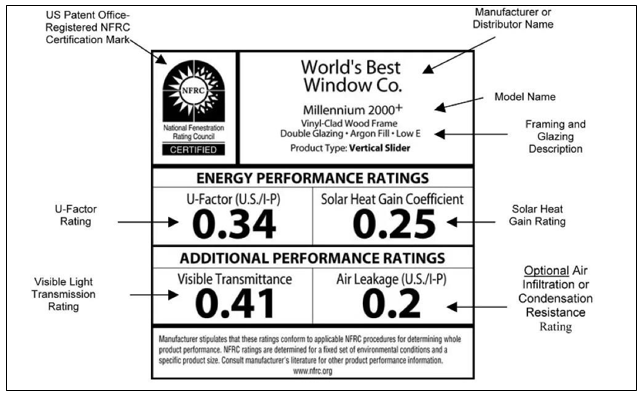
Figure 3: An Example of NFRC Window Product Energy Performance Label.
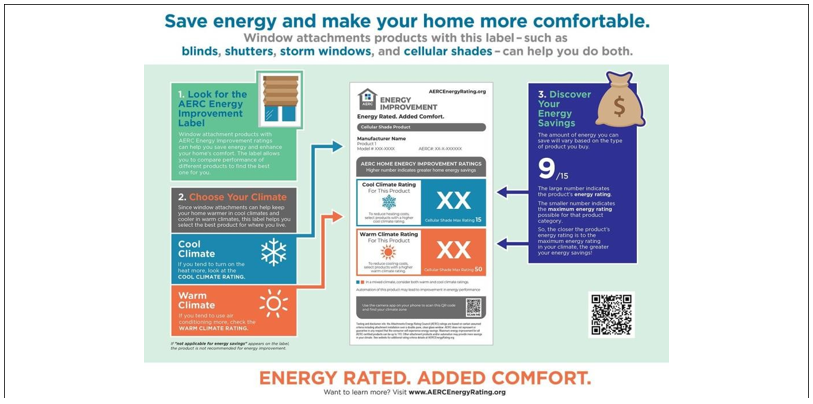
Figure 4: An Example of AERC Window Shade Product Energy Performance Label.
Window Fashions Automation and Energy Savings
Automation in window fashions is rapidly emerging as a leading trend in both residential and commercial design, driven by advancements in micro-motorization, smart home technology (such as Google Home, Apple Home, and Alexa), and energy-efficiency goals mandated by consumers and government authorities [3]. Automated window fashions offer convenient operation through remote controls, wall switches, smartphone apps, or integrated smart home systems [2]. This allows users to easily adjust light and privacy levels throughout the day. In residential settings, the convenience of automation is complemented by improved safety, as it eliminates hazardous cords that pose risks to children and pets. In commercial environments, automation enhances light management across large spaces, reduces manual labor, and ensures consistent performance throughout the building. Many commercial buildings use external fixed awnings and internal motorized shades for daylighting and energy efficiency.
Beyond convenience, automation significantly contributes to energy efficiency. By programming window fashions to open and close at optimal times based on geographic location and window orientation, both homeowners and commercial facility managers can effectively regulate indoor temperatures. This helps block heat gain in the summer, maximize daylight in the winter (for passive heating), and minimize reliance on artificial lighting and HVAC systems. Additionally, many automated systems can be paired with sensors that respond to sunlight, temperature, or occupancy, enabling real-time adjustments that improve comfort and reduce energy costs. As building codes and sustainability standards, such as LEED certification, increasingly emphasize energy performance, automated window fashions are becoming a crucial element of integrated energy management strategies, combining aesthetic appeal with tangible functional benefits. Almost all window fashion styles, as discussed above, offer an automation option to consumers during the purchase process. Automation is an optional feature, so consumers will have to pay extra for this feature. However, convenience in daily window fashion operations and energy savings can outweigh the additional cost.
AERC recognized this automation trend in the window fashion products. To quantify the benefits of automation in energy savings, AERC can now rate window fashion products with automation. A separate Cool Climate Rating and Warm Climate Rating with automation are mentioned on the label, as shown in Figure 5.
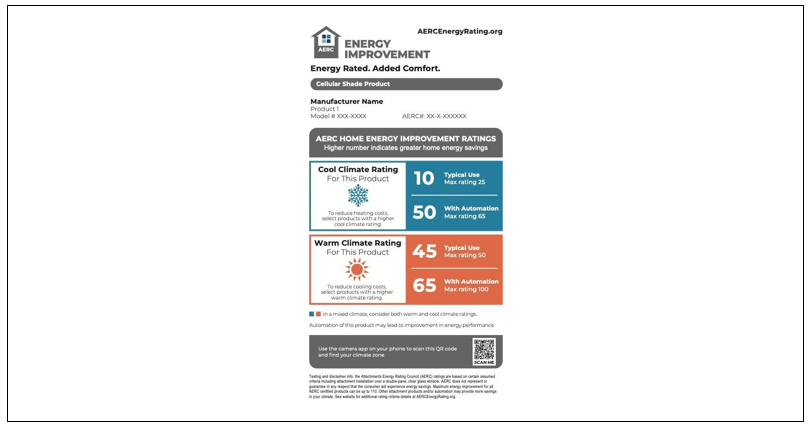
Figure 5: AERC label for a Window Fashion Product with Automation
How to Choose the Right Window Coverings for Residential or Commercial Use
Choosing the right window treatments can be overwhelming since no two types are exactly alike [2]. However, by familiarizing yourself with the various materials, styles, and functionalities available, as discussed above, you can select window coverings that best suit your home and lifestyle.
Residential Use: In homes, window coverings serve multiple purposes: they provide privacy, control natural light, and add character to a room. For instance, cellular shades are often installed in bedrooms because they combine light-blocking options with insulation, keeping the space both dark and comfortable. In living rooms, woven wood shades add warmth and texture, complementing natural interior designs. Homeowners looking for ultimate convenience often turn to motorized roller shades that can be controlled by smartphone apps or voice assistants, offering both style and modern functionality.
Commercial Use: Commercial spaces, on the other hand, demand coverings that emphasize durability, performance, and compliance. In office settings, solar roller shades are widely used to reduce glare on computer screens, improving employee comfort while maintaining outward views. Healthcare facilities often select vinyl-coated antimicrobial fabrics that are easy to clean, meeting safety standards without sacrificing design. In high-rise buildings, automated shading systems connected to the building’s energy management system adjust throughout the day to minimize cooling costs and maximize natural daylight. Table 24 gives the key criteria in choosing the right window fashions:
|
Criteria |
Residential Use |
Commercial Use |
|
Primary Focus |
Comfort, style, privacy, and light control suited to each room’s function. |
Functionality, durability, and professional appearance. |
|
Light Control |
Flexible options like layered treatments (sheers + drapes) for varying light needs. |
Glare reduction and even light distribution (solar shades, vertical blinds, solar films). |
|
Privacy Needs |
Blackout or room-darkening shades in bedrooms; light-filtering options in living spaces. |
Privacy films, blinds, or shades for meeting rooms and offices without sacrificing daylight. |
|
Energy Efficiency |
Insulating shades, thermal draperies, or cellular shades to reduce energy costs. |
Solar screen shades or double-layer blinds to manage heat gain and glare. |
|
Material Choice |
Polyester, Cotton, linen, blends, or decorative fabrics for comfort and aesthetics. |
Vinyl, aluminum, treated fabrics with flame- retardant and easy-clean properties. |
|
Style & Aesthetics |
Wide variety of colors, textures, and patterns to match décor. |
Neutral, corporate-friendly tones for uniformity across workspaces. |
|
Maintenance |
Easy-to-clean fabrics, occasional washing or professional cleaning. |
Low-maintenance, wipe-clean surfaces for high-traffic or multi-user environments. |
|
Technology |
Optional motorization for convenience and child safety. |
Motorization or automated controls for efficiency and integration with building systems. |
|
Budget Approach |
Flexible—mix high-end custom pieces in focal rooms with budget-friendly options elsewhere. |
Prioritize long-term value and durability; bulk orders for uniform appearance. |
Table 24: Key Criteria in Choosing the Right Window Fashions
Whether for residential or commercial use, the right window covering is more than a finishing touch— it is a tool for enhancing comfort, efficiency, and ambiance. For example, a homeowner may invest in blackout shades for a media room, while a corporate office may prioritize automated roller shades to reduce glare and achieve energy savings. By carefully weighing design preferences, functional requirements, and technological options, decision- makers can choose solutions that meet both immediate needs and long-term goals.
The following are recommended steps to be taken to select the right window fashion for the window:
Determine which climate zone you live in by referring to the AERC Climate Zones map given in Figure 6. The AERC website helps determine the correct climate zone based on your zip code. You can explore the zip code tool on the AERC website.
Then assess the facing direction of the window(s) for which you want the window fashions. Understand the sun path over your house in summer and winter, as shown in Figure 7.
Refer to Table 2 for recommended types of window fashions based on the room, and to Table 3 for recommendations based on window direction.
Recommended window fashions are available at local big box stores or on commerce websites. However, if you prefer personalized service and wish to explore various design options, consider contacting window fashion dealers or designers in your area. You can search online to find them. These local dealers typically visit your home to show you a wide range of design possibilities.
Purchase or order the recommended window treatments from the designated retailer.
If you purchase window fashions from a big-box store or commercial websites, you will need to install them yourself or hire a handyman. However, if you order window fashions from a local dealer, the dealer will most likely handle the installation.
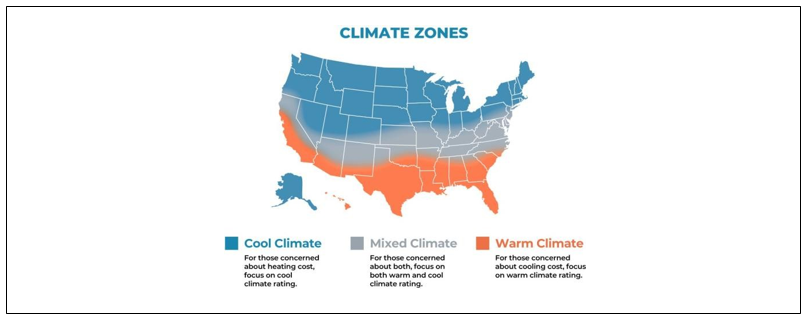
Figure 6: AERC Climate Zones Map
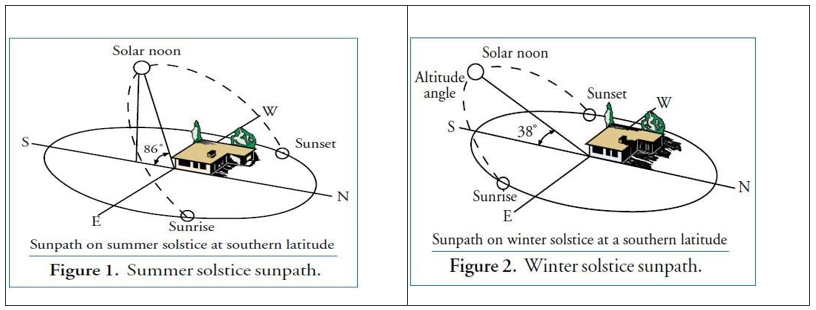
Figure 7: Sun Path Over a House in Summer and Winter.
|
Room |
Recommended Window Fashion Types |
Purpose & Rationale |
|
Living Room |
Roman shades, sheer draperies, or layered panels with valances |
Emphasize elegance and natural light; layering provides both privacy and softness. |
|
Loft / Open Space |
Solar roller shades or motorized blinds |
Maintain a minimalist aesthetic; provide glare reduction and UV protection while preserving view. |
|
Master Bedroom |
Blackout drapes, honeycomb (cellular) shades, or layered curtains |
Ensure privacy and darkness for rest; energy-efficient cellular shades enhance insulation. |
|
Kids’ Bedroom |
Cordless Roman shades, roller shades with fabric prints, or blackout curtains |
Safety (cordless), fun aesthetics, and sleep-friendly blackout control. |
|
Guest Bedroom |
Linen curtains or light-filtering roller shades |
Provide comfort and hospitality with soft, neutral tones that suit any décor. |
|
Bathroom |
Faux wood blinds, vinyl shutters, or moisture-resistant roller shades |
Handle humidity and water exposure; allow privacy while letting light in. |
|
Kitchen |
Café curtains, woven wood shades, or solar shades |
Balance ventilation, light, and style; materials should be easy to clean and heat- resistant. |
|
Dining Room |
Pleated drapes, Roman shades, or woven bamboo shades |
Create ambiance and texture; choose fabrics that complement dining décor. |
|
Home Theater / Media Room |
Motorized blackout roller shades, cellular or layered blackout draperies |
Eliminate glare and light spill; automation enhances convenience during viewing. |
|
Home Office |
Light-filtering cellular shades or solar roller shades |
Minimize glare on screens; preserve natural daylight and productivity. |
|
Entryway / Foyer |
Decorative sheer curtains or stained-glass panels |
Introduce natural light while maintaining privacy and architectural appeal. |
Table 25: Suggested Window Fashions by Room (Irrespective of Window Facing Direction)
Each room’s window fashion should align with its function, privacy needs, and natural light exposure [5]. Modern homeowners often combine aesthetic layering (e.g., sheer + blackout) with smart controls to enhance convenience and design continuity across spaces.
|
Window Orientation |
Sunlight Characteristics |
Recommended Window Fashion Types |
Material & Fabric Suggestions |
Design Rationale |
|
North |
Receives soft, cool, and consistent light throughout the day; minimal glare. |
Sheer draperies, Roman shades, or light-filtering roller shades |
Linen, cotton voile, or polyester blends |
Maximizes daylight while maintaining privacy; ideal for calm, even illumination. |
|
North-East |
Gentle morning sunlight, cool tones, and minimal heat. |
Layered treatments— sheers with light drapes |
Light linen or textured semi-sheer fabric |
Enhances serene, uplifting morning ambiance; suitable for meditation, study, or breakfast areas. |
|
East |
Bright morning light, often direct and crisp. |
Solar roller shades, Roman blinds, or adjustable Venetian blinds |
Light-filtering fabrics with UV protection |
Controls glare while preserving brightness; promotes an energizing start to the day. |
|
South-East |
Strong morning- to- midday sunlight, moderate heat gain. |
Dual-layer roller shades or sheer curtains with blackout options |
Heat-resistant polyester or solar screen fabrics |
Balances light control and thermal comfort; maintains brightness without overheating interiors. |
|
South |
Intense daylight for most of the day; high UV exposure and heat. |
Cellular (honeycomb) shades, plantation shutters, or lined draperies |
UV-resistant fabrics, faux wood, or thermal- lined textiles |
Enhances insulation, prevents fading of furnishings, and regulates indoor temperature efficiently. |
|
South-West |
Harsh afternoon sun, high glare, and significant heat gain. |
Solar screen shades, blackout roller blinds, or layered drapes |
Dual-weave solar fabrics or dark-lined curtains |
Controls heat and glare effectively; ideal for living or family rooms exposed to strong evening sun. |
|
West |
Strong low-angle afternoon sun, often intense and warm in tone. |
Roman shades with thermal lining, wooden blinds, or motorized roller shades |
Thick cotton or composite wood materials |
Reduces glare and heat while complementing the warm tones of sunset light. |
|
North-West |
Soft evening light, variable warmth depending on latitude. |
Light draperies, woven wood shades, or sheer panels |
Bamboo, linen, or neutral-toned cotton |
Provides a relaxed atmosphere with diffused glow; suitable for casual or transitional spaces. |
|
Design Insight
the day. |
||||
Table 26: Suggest Window Fashion Product Based on Outside of the Window Facing Direction.
The selection of window fashions based on directional orientation harmonizes aesthetic design with functional performance. Each cardinal and intercardinal direction presents unique patterns of sunlight, temperature, and glare—factors that influence both comfort and energy efficiency within interior spaces. By aligning fabric type, opacity, and layering strategy with the natural behavior of light, homeowners can achieve optimal illumination control, thermal balance, and visual comfort throughout the day. This thoughtful integration of design and environmental awareness ultimately transforms window treatments from decorative elements into instruments of spatial harmony and sustainable living. Table 26 lists two case studies on selecting the appropriate window fashions:
|
Case Study: Automated Shades in an Office Retrofit Commercial Application A mid-sized marketing firm in Denver upgraded its conference rooms and open workspaces with automated solar roller shades. The system was integrated with daylight sensors, adjusting shade positions based on the sun’s angle. Results: -Reduced glare complaints by 40%
|
|
Case Study: Blackout Cellular Shades in a Family Home |
|
Residential Application A family in Austin installed blackout cellular shades in the bedrooms and light-filtering versions in the living room. Results:
|
Table 27: Case Studies on Window Fashions
Window Fashions Manufacturer
When I first entered this industry, there were only a few manufacturers and retail outlets worldwide. Now, with at least ten manufacturers and hundreds of global sales outlets, competition has increased significantly, helping to keep prices affordable for consumers. Nowadays, most window fashion manufacturers engage in toll manufacturing for various e-commerce outlets, making it difficult to identify the actual manufacturers. Nevertheless, Table 27 provides a short list of window fashion manufacturers:
|
Name of the Manufacturer |
Website and Sales Outlets |
Products |
|
North America: |
|
|
|
Blindster |
https://www.blindster.com/ Sales: Ecommerce site |
All types of window fashions. |
|
BTX Solutions |
Sales: Provides motorization solutions to window fashions manufacturer |
Drapes, Roller shades, Romand shades, Exterior screens, and Skylights |
|
BumbleBee |
https://www.bumblebeeblinds.com/ Sales: Local franchised dealerships |
All types of window fashions. |
|
Draper at Home |
https://www.draperathome.com Sales: Local franchised dealerships |
Manual and automated roller shades. |
|
Enlightened Style |
https://www.enlightenedstyle.com/gallery/ Sales: Local franchised dealerships |
All types of window fashions. |
|
Hunter Douglas |
https://www.hunterdouglas.com Sales: Local franchised dealerships |
All types of window fashions. |
|
Insolroll |
https://insolroll.com Sales: Local franchised dealerships |
Manual and motorized roller shades. |
|
Lafayette Interior Fashions |
https://www.lafvb.com Sales: Local franchised dealerships |
All types of window fashions. |
|
Levelor |
https://www.levolor.com Sales: Local franchised dealerships |
All types of window fashions. |
|
Leviosa Shades |
https://leviosashades.com, E-commerce site. |
Motorized roller shades. |
|
Lutron |
https://www.lutron.com/us/en/window- treatments Sales: Local franchised dealerships |
Drapes, Cellular, Roller and Roman shades. Specialized in custom motorized controls. |
|
Norman Window Fashions |
https://normanusa.com Sales: Local franchised dealerships |
All types of window fashions. |
|
Phase II |
https://www.phaseii.com Sales: Local franchised dealerships |
Blinds, shades and Draperies only. |
|
Pro Design |
https://www.prodesignllc.net Sales: Ecommerce site |
Shades and Draperies only. |
|
Skandia Window Fashions |
https://www.skandiawf.com Sales: Local franchised dealerships |
All types of window fashions. |
|
Spring Window Fashions (Bali & Graber) |
https://www.springswindowfashions.com Sales: Local franchised dealerships |
All types of window fashions. |
|
Sunesta |
https://sunesta.com Sales: Local franchised dealerships |
Roller shades and Retractable awnings only. |
|
BT Group |
https://btgroup.it/en/ Sales: Local franchised dealerships |
Awnings, Canopy, and Pergolas |
|
Hella Sonner GmbH |
https://www.hella.info/en/window- facade/ interior-blinds Sales: Local franchised dealerships |
Interior blinds, Roller shutters, and Vertical Awnings |
|
Hunter Douglas Netherlands |
https://www.hunterdouglas.com Sales: Local franchised dealerships |
All types of window fashions. |
|
Silent Gliss |
https://www.silentglissglobal.com/englb/ Sales: Local franchised dealerships |
Drapes, Roller Blind, Roman Shades, Pleated blind, Venetian blind, and Skylight shading |
|
Velux Group |
https://www.velux.com Sales: Local franchised dealerships |
Interior blinds and Exterior sunscreens |
|
Asia and Asia Pacific: |
|
|
|
Nien Made Enterprise |
https://www.nienmade.com/Collections. aspx Sales: Local franchised dealerships |
Drapes, Cellular shades, Binds, Roller shades, and Roman shades |
|
Rollease Acmeda |
Provides automated shade solutions to Window Fashions Manufacturer |
Table 28: List of Window Fashions Manufacturer
Window Fashions Innovation
Since the formal introduction of cellular shades in the late 1980s, window fashions have advanced significantly. The innovation of shade automation has transformed product offerings, increased marketability, and enabled consumers to adapt to new options. However, advancements in fabric technology have lagged behind and must progress further to sustain this momentum. The continued development and adoption of novel cross-disciplinary materials— such as USB-enabled fabrics, bio-based polymers for light control, spectrum-selective opacity, nanotechnologies, reversible adhesives for easy interchange, and enhanced insulation—are crucial for designing and delivering next-generation window fashions [4].
Window Fashions Market
The window fashions market is valued at $38 billion and is expected to reach $70 billion by 2032 at a CAGR of 8.1% [6]. The main drivers of this phenomenal growth are as follows:
Wide Range of Designs, Patterns, and Materials
Window fashion manufacturers now offer an extensive range of options, from traditional blinds and drapes to innovative fabrics, textured materials, custom patterns, and custom printing of images or designs, especially on cellular shades. This diversity enables consumers to personalize their spaces and coordinate their window coverings with their overall décor themes, whether contemporary, minimalist, or classic. The growing emphasis on interior design and home improvement has made window fashions not only functional but also a style statement, further fueling demand.
Energy-efficient window fashions for Residential and Commercial Consumers
Rising energy costs and environmental awareness have made energy-efficient window coverings increasingly attractive. Products such as cellular shades, thermal drapes, and layered blinds can significantly reduce heat loss in winter and heat gain in summer, lowering utility bills and contributing to sustainable building practices. For commercial buildings, energy-efficient window fashions also support compliance with green building standards and certifications.
Automation and Smart System Integration
Smart homes and commercial building automation systems are driving demand for motorized and automated window coverings. Consumers value the convenience of controlling blinds or shades with a remote, smartphone app (Google, Apple, and Amazon), or voice assistant. In offices and extensive facilities, automation enables synchronized control of natural light, glare reduction, and energy optimization. This integration elevates window fashions from decorative elements to essential components of modern smart living.
Growth of E-Commerce Sales Channels
The expansion of e-commerce has transformed how consumers shop for window coverings. Online platforms provide access to a diverse range of products, customization tools, and virtual visualization technologies, enabling buyers to preview designs in their own spaces. E-commerce also intensifies competition among manufacturers and retailers, driving lower prices, broader availability, and faster adoption of new designs and technologies worldwide. The window fashions market is being transformed by innovation in design, sustainability, and smart technology. With energy-efficient materials, automated solutions, and expanded e-commerce access, window coverings are shifting from simple functional products to essential elements of modern living and commercial design.
Terminologies Used in Window Fashions
AERC stands for the Attachment Energy Rating Council. AERC is an independent, public interest, non-profit organization dedicated to rating, labeling, and certifying the energy performance of residential and commercial Window Fashion products.
Automation/Motorization is the use of electric motors, smart-home integration, or remote control to raise. Lower or tilt the window fashions.
Blackout window fashions are designed to completely block incoming light, providing maximum privacy and darkness in a room. They are ideal for bedrooms, nurseries, home theaters, or any space where complete light control is essential for comfort and functionality.
C-channel for window fashion is a U- or C-shaped metal or plastic track installed along the sides of a window frame to guide and secure the edges of a shade. This design minimizes light gaps, improves privacy, and enhances the overall performance of light- blocking or blackout window treatments.
Cassette – A sleek headrail cover, often fabric-wrapped, that conceals the roller tube of shades.
Cellular/Honeycomb Shades – Shades made with air pockets that trap heat, improving insulation and energy efficiency.
Dual Shades – A system with two fabrics (e.g., a light- filtering and a blackout) that can be alternated for flexible light control.
Drapery/Drapes – Fabric panels that hang vertically from rods or tracks, providing aesthetic design and privacy.
Fabric-to-Film Laminate – A layered construction combining fabric with blackout or reflective film for light-blocking or energy efficiency.
Fascia – A flat cover that conceals the headrail or roller shade hardware, typically used in commercial settings.
Faux Wood – Synthetic material (usually PVC or composite) designed to mimic the appearance of natural wood, with added durability.
Headrail – The top part of a blind or shade that houses the operating mechanism.
Light-filtering window fashions are designed to gently diffuse natural light, creating a soft, even glow in a room while maintaining a level of privacy. They reduce glare and harsh shadows without completely blocking daylight, making them ideal for spaces where balanced illumination and comfort are desired.
Louvers – Wide, angled slats used in shutters to allow airflow and light control.
NFRC stands for the National Fenestration Rating Council. NFRC is an independent, public interest, non-profit organization dedicated to rating, labeling, and certifying the energy performance of residential and commercial Windows.
Nonwoven Fabric – Material made from bonded fibers (not woven/knitted), commonly used in shades for durability and non-uniform opacity.
Opacity – The degree to which a fabric blocks light; categories include sheer, semi-sheer, light filtering, room darkening, and blackout.
Pleats – Evenly folded fabric used in pleated or cellular (honeycomb) shades.
Room-darkening window fashions are designed to significantly reduce the amount of incoming light, creating a dim and comfortable environment without achieving complete blackout. They are ideal for bedrooms, media rooms, or spaces where enhanced privacy and glare control are desired while still allowing a small amount of filtered light.
Sheer – Lightweight, semi-transparent fabric panels that diffuse light softly.
Slats – The horizontal or vertical pieces (commonly wood, faux wood, vinyl, or aluminum) that tilt to control light and privacy in blinds.
Solar Heat Gain Coefficient (SHGC) is a rating that measures the amount of solar heat that passes through a window shade (tested with a double-pane window), as depicted in Figures 8 and 9. It is a number between 0 and 1, with lower numbers indicating less solar heat transmission. The typical SHGC ranges are as follows: Low (0.1 to 0.3), Moderate (0.31 to 0.5), High (0.51 to 0.75+). The SHGC measures a window fashion’s energy efficiency, and it is crucial to consider when shopping for new window fashions. In hot climate zones like Texas, it's best to use window shades with very low solar heat transmission. In cool climate zones such as Montana, window shades with very high solar heat transmission are more suitable.
Solar Shades – Roller shades made from screen-like fabrics designed to reduce glare and block UV rays while preserving outdoor views.
Top-Down Bottom-Up (TDBU) refers to the operation of shades, especially cellular shades. "Top- down" refers to the shade being opened or lowered from the top, as shown in Figure 8. "Bottom- up" refers to the shade being opened or lifted from the bottom, as shown in Figure 8. This is the most versatile operation for shades, as it provides the user with considerable control over light and privacy.
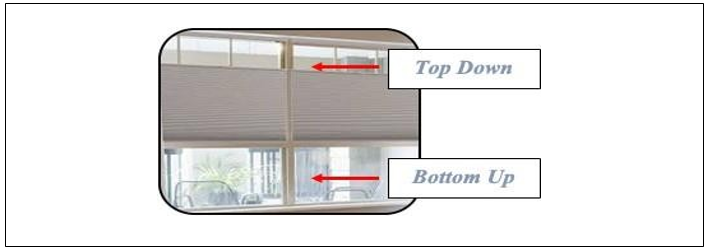
Figure 8: Top Down Boom Up (TDBU) Window Shade.
U-Value or R-Value measures the rate of heat transfer through a building element, such as a window shade, as depicted in Figures 9 and 10. It quantifies a building material’s insulating effectiveness. The lower the U-value, the better the material’s insulating properties. It simply means less heat is lost in the winter and less heat enters in the summer. The typical U-value ranges are as follows: Low (0.1 to 0.3 Btu/hr-ft2 °F), Moderate (0.31 to 0.5 Btu/hr-ft2 °F), High (0.51 to 0.75+ Btu/hr-ft2°F). The lower the U-value, the better the product's energy performance. However, this does not resonate with consumers, who typically associate higher numbers with better products. Therefore, the R-value was proposed by building insulation dealers. R-value is simply the inverse of U-value, which is higher. Hence, in commerce, R-value is referenced instead of U-value. From a testing perspective, the U-value of a product is calculated, and the inverse of the U-value is usually reported. It is worth noting that the R-value is predominantly used to designate the energy performance of batt insulation. NFRC does not endorse R-value and only reports the U-value on the NFRC certification label.
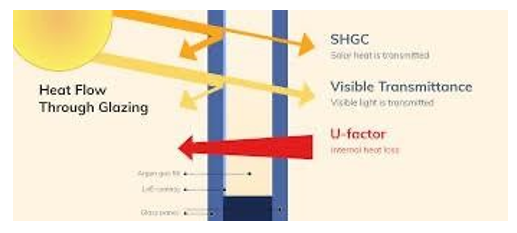
Figure 9: Heat Flow Through a Double-Pane Window Depicting SHGC and U-factor
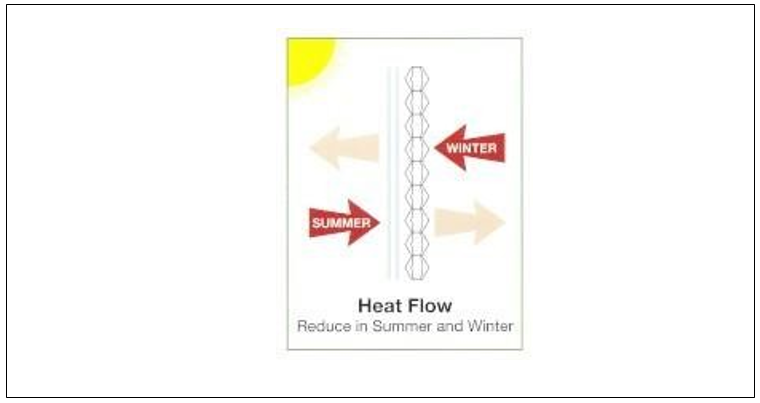
Figure 10: Heat Flow through a Double-Pane Window and A Cellular Shade Depicting Reduced Heat Gain in Summer and Heat Loss in Winter
Visual Transmittance (VT) is the fraction of visible light that passes through a window covering, and it is crucial in determining energy performance ratings.
Valance is a decorative top treatment that covers the headrail or hardware of blinds or shades/shades for a polished, elegant look.
Woven Wood Shades – Shades made from natural materials like bamboo, reeds, or grasses for a textured, organic look.
Closing Remarks
The window fashions industry is evolving rapidly, shaped by the intersection of design innovation, sustainability, and technology. Consumers today expect more than just functional coverings; they seek products that enhance energy efficiency, integrate seamlessly with smart home systems, and reflect their personal style. At the same time, the rise of e-commerce has broadened access and empowered impromptu buying and customization, allowing buyers to explore an unprecedented variety of options. With growing demand for eco-friendly materials, automated solutions, and aesthetic versatility, the window fashions market is positioned for sustained global growth. The international growth rate is expected to be sustained at a compound annual growth rate (CAGR) of 8.1%. Ultimately, window fashions are no longer an afterthought in design—they are becoming a central element in striking a balance between comfort, efficiency, and visual appeal in residential and commercial spaces.
References
- First draft of Window Fashion Attachment Rating Proposal pre- sented at the August 26, 2009, NFRC meeting.
- AERC: http:/www.aercenergyrating.org.
- NFRC: http:/www.nfrc.org.
- SHGC & U-factor: https://www.automatedshadeinc.com/in- dex.asp.html
- BuildingOrientation:https://www.nachi.org/buildingorienta- tionoptimum%20energy.htm#:~:text=The%20Sun’s%20True%20 Position,the%20southeast%20and%20southwest%2C%20respec- tivy.
- Window Fashions Market Data: 1.%09https:/www.maximize- marketresearch.com/market-%20report/window-coverings-mar- ket/198949/