

Annals of Civil Engineering and Management(ACEM)
ISSN: 3065-9779 | DOI: 10.33140/ACEM


Review Article - (2026) Volume 3, Issue 2
A Kinetic-Style Framework for Urban Traffic Flow and Infrastructure Quality Integration Using a Standardized Grade Point Average (sGPA) System

Received Date: Apr 13, 2026 / Accepted Date: May 13, 2026 / Published Date: May 22, 2026
Copyright: ©2026 Paul T E Cusack. This is an open-access article distributed under the terms of the Creative Commons Attribution License, which permits unrestricted use, distribution, and reproduction in any medium, provided the original author and source are credited.
Citation: Cusack, P. T. E. (2026). A Kinetic-Style Framework for Urban Traffic Flow and Infrastructure Quality Integration Using a Standardized Grade Point Average (sGPA) System, Ann Civ Eng Manag, 3(2), 01-02.
Abstract
This paper proposes a unified analytical framework linking traffic flow theory and pavement condition assessment through a standardized Grade Point Average (sGPA) system. A kinetic-style formulation is introduced in which traffic flow energy is expressed as a function of density and velocity, analogous to classical kinetic energy. The model integrates this formulation with a pavement condition transformation based on the ASTM D6433 Pavement Condition Index (PCI), mapped onto a 4.3-scale grading system. The resulting framework enables combined analysis of infrastructure quality and mobility efficiency within a unified scalar structure. Applications are discussed for urban systems such as Saint John, where heterogeneous infrastructure conditions significantly influence network performance.
Introduction
Urban transportation systems are governed by interactions between infrastructure quality, traffic flow, and spatial structure. Classical traffic theory defines fundamental relationships among speed, density, and flow; however, these are typically analyzed independently of pavement condition or urban asset quality.
This paper develops a unified framework that connects:
• Traffic flow mechanics
• Pavement condition evaluation
• Standardized infrastructure grading into a single analytical system.
The objective is to construct a scalar urban performance index that integrates engineering and economic interpretations.
Background
Pavement Condition Measurement
Pavement condition is commonly evaluated using the ASTM D6433 Pavement Condition Index, which assigns values from 0 to 100 based on observed surface distress.
However, PCI lacks:
• Intuitive interpretation for non-engineers
• Direct integration into flow models
• Comparability across cities
Traffic Flow Fundamentals
The fundamental relationship is:
q = kv
Where:
• q = flow (veh/hour)
• k = density (veh/km)
• v = speed (km/h)
This identity is widely accepted as the basis of macroscopic traffic flow theory.
Methodology
Traffic Kinetic-Style Formulation
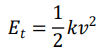
A macroscopic energy-like traffic function is defined as:
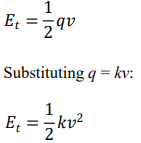
This expression is structurally analogous to classical kinetic energy:
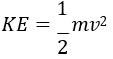
where density plays the role of mass.
Interpretation
The term Et represents a traffic kinetic intensity, increasing with both density and speed. It provides a scalar measure of mobility potential within a roadway segment.
Pavement-to-GPA Transformation
Pavement condition is converted into a standardized grading system:

where sGPA ∈ [0,4.3], using a piecewise linear mapping from PCI intervals.
City-Level Aggregation
Citywide infrastructure quality is defined as:
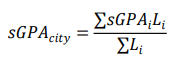
where:
Li = lane-kilometres of segment i
Integrated Urban Performance Function
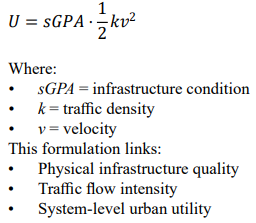
Application Concept: Saint John Case
In mid-sized port-industrial cities such as Saint John, infrastructure conditions vary significantly across:
• Historic urban core
• Industrial corridors
• Suburban expansion zones
The model allows computation of:
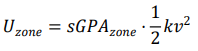
This enables:
• Spatial performance mapping
• Congestion-cost attribution
• Infrastructure prioritization
Discussion
The proposed framework contributes three key innovations:
• Unified scalar structure: Combines pavement condition and traffic flow into a single metric
• Kinetic analogy: Traffic performance is expressed in a form analogous to physical energy systems.
• Policy interpretability: sGPA provides a transparent grading system analogous to academic performance scales.
The framework is particularly useful for municipal asset management, where decision-makers require intuitive but rigorous performance indicators.
Limitations
• The kinetic analogy is conceptual and not physical energy
• Calibration of PCI-to-sGPA mapping may vary by jurisdiction
• Density and speed data resolution affects model stability
• Further empirical validation is required
Conclusion
This paper introduces a unified framework integrating traffic flow theory and pavement condition assessment using a standardized Grade Point Average (sGPA) system. A kinetic-style formulation is developed in which traffic flow intensity is expressed as:
This is combined with infrastructure grading derived from PCI to produce a composite urban performance function. The resulting model provides a scalable tool for transportation analysis, urban economics, and infrastructure planning [1-6].
References
- ASTM International. (2023). ASTM D6433-23: Standard Practice for Roads and Parking Lots Pavement Condition Index Surveys.
- Shahin, M. Y. (1994). Pavement management for airports, roads, and parking lots.
- Sayers, M. W., & Karamihas, S. M. (1998). The Little Book of Profiling. University of Michigan.
- FHWA. (2020). Pavement Management Roadmap. Federal Highway Administration.
- Aschauer, D. A. (1989). Is public expenditure productive? Journal of monetary economics, 23(2), 177-200.
- Glaeser, E. L. (2011). Triumph of the City. Penguin Press.