

International Journal of Media and Networks(IJMN)
ISSN: 2995-3286 | DOI: 10.33140/IJMN
Impact Factor: 1.02


Research Article - (2023) Volume 1, Issue 1
A Global Social Media Analysis of the Accuracy and Specific Characteristics of Information Shared about Family Planning and Contraception
2Alrashed Private Hospital, Turkey
3Federal Medical Centre Yola, Turkey
4EU Business School, Turkey
Received Date: Sep 28, 2023 / Accepted Date: Oct 20, 2023 / Published Date: Oct 31, 2023
Copyright: ©Â©2023 Gulifeiya Abuduxike, et al. This is an open-access article distributed under the terms of the Creative Commons Attribution License, which permits unrestricted use, distribution, and reproduction in any medium, provided the original author and source are credited.
Citation: Abuduxike, G., Qawaf, M., Edwin, C. O., Salaheldin, S. J. (2023). A Global Social Media Analysis of the Accuracy and Specific Characteristics of Information Shared about Family Planning and Contraception. Int J Med Net, 1(1), 40-49.
Abstract
Background: Social media platforms have become important sources of health information. An assessment of the use-generated contents to reduce misinformation has becoming an imperative responsibility of health professionals. We aimed to evaluate the accuracy of the shared information related to family planning, and contraception, and other characteristics on four major social media sites based on WHO guidelines.
Study design: A web-based content analysis using a cross-sectional study design.
Methods: We have evaluated the information on four popular social media, including Facebook, YouTube, Twitter, and Instagram. Information was evaluated as "accurate" if it was consistent with the standard guidelines.
Results: Out of 486 posts, 77.4% were evaluated as "accurate". Information characteristics, including being shared on Facebook (OR = 27.7, 95% CI: 7.41–104.14) and YouTube (OR = 15.9, 95% CI: 2.7-93.2), being shared by public accounts (OR = 1.7, 95% CI: 1.1–2.7), and for educational purposes (OR = 4.2, 95% CI: 2.6–6.5), were significantly associated with the content's accuracy. A significant proportion of inaccurate information was shared by health professionals.
Discussion and Conclusion: There are notable proportions of misinformation, and some were shared by healthcare providers. The findings highlighted the importance of consistent evaluation and monitoring of the information shared on social media based on the latest evidence. Healthcare providers should leverage the advantages of social media to disseminate up-to-date, evidence-based contraceptive information to their patients, meanwhile helping them to correct myths and misinformation on family planning.
Keywords
Family Planing, Contraception, Social Media, Content Analysis, Accuracy
Highlights
• The provision of adequate family planning services plays an important role in preventing unintended pregnancies and unsafe abortions.
• Social media platforms have become one of the most important sources of information related to family planning methods and reproductive health issues.
• A significant proportion of inaccurate information on social media was shared by health professionals on various official websites.
• Shared information related to family planning methods on social media should be monitored and evaluated based on the latest evidence and standard guidelines.
Introduction
The health consequences of unintended pregnancies pose important public health threats worldwide. It was estimated that annually,111 million unintended pregnancies occur, which leads to 35 million unsafe abortions, 12 million miscarriages, and 299,000 maternal deaths globally [1-6]. Unintended pregnancies are the consequences of non-use of contraception, contraceptive failure due to inconsistent and incorrect use of contraceptives, contraceptive discontinuation, and an unmet need for contraceptives in most of the developing regions [1,3,5,6]. Sully et al. reported that If family planning services were provided according to recommended standards, unintended pregnancies, unsafe abortions, and maternal deaths would drop by 68%, 72%, and 62%, respectively [6].
Social media (SM) was defined as "a group of Internet-based applications that build on the ideological and technological foundations of Web 2.0 and that allow the creation and exchange of user-generated content." 7–10 To date, over five billion people use the internet worldwide, of whom 4.65 billion are active SM users [7-10]. Among others, Facebook, Twitter, YouTube, and Instagram are the most popular SM platforms with billions of users, of whom the majority are adolescents and younger adults [8,9,11-13]. The internet, particularly various social media, has become one of the most important sources of sexual health information, including family planning, contraceptives, and sexually transmitted diseases [11,12,14-21]. For instance, a Facebook survey conducted in Belgium among more than a thousand adolescents revealed that the internet was one of the main information sources, as 51.7% of the females and 31.1% of the males searched for contraceptive and sexual health information [12].
These SM platforms have been playing a larger role in disseminating health information as they are considered easily accessible, interactive, and cheaper compared to traditional media [7,14,18,22-24]. However, health information shared on SM, including those related to FP and contraception, is user- generated content without any critical assessment or standard evaluation. Thus, the lack of reliability, inaccuracy, and poor quality of health information are some of the concerns with using SM [13,15-17,22,23].
Understanding the content of the shared information regarding FP methods is essential to ensuring that health care consumers are exposed to adequate information about contraception's effectiveness, side effects, safety, and other characteristics. This information, particularly shared negative experiences about contraception and side effects, plays an important role in one’s decision [13,15,18-20,25]. Particularly, the emergence of the COVID-19 pandemic had negatively affected the utilization of FP services due to the lockdown, quarantine measures, and widespread misinformation [26-28]. To our knowledge, very few studies have evaluated the content of shared information on YouTube videos related to intrauterine devices (IUDs) and implants, and reported that about 26%–34% of the videos posted inaccurate information [21,29,30]. In the study, we attempted to analyze the accuracy and other characteristics of the shared information on four major SM platforms, including Facebook, Twitter, Instagram, and YouTube, pertaining to FP methods according to the standard guidelines by the World Health Organization (WHO) [31-33].
Methods And Materials
Study Design and Duration
We conducted a web-based content analysis using a cross- sectional study design to evaluate the accuracy of the shared information related to FP and contraception on selected social media networks from July to August 2020. The search took place between August 10 and 14, 2020.
Data Collection Procedures
Facebook, Twitter, Instagram, and YouTube were the four so- cial media platforms included as sources of information. Key search terms such as "family planning", "contraceptives", "oral contraceptive pills", "hormonal contraceptives", "non-hormonal contraceptives", "natural family planning", "traditional fami- ly planning", and "modern contraceptive", "intrauterine device (IUD)", "contraceptive pills", "hormonal implants", "contracep- tive rings", "sterilization", etc. were used to obtain information from Facebook and YouTube. For Instagram and Twitter, similar key search terms with hashtags were used, such as #hormonal- birthcontrol, #nonhormonalbirthcontrol, #familyplanning, #ab- stinence, #contraception, #contraceptivering, #calendarmethod, #withdrawalmethod, #mucusmethod, #vaginalsponge, #cervi- calcap, #cyclebeads, #deposhot, #emergencycontraceptivepil, #traditionalcontraceptives, #sterlization.
Search results were screened based on two criteria: 1) should be in the English language; 2) directly related to FP and contraception. The search history and cookies were cleared out every day after selecting enough posts from each SM platform. The first 30 posts were selected by relevance through everyday searches, and a standard instrument was used to extract information. The screenshots of the posts were saved daily to a specific password- protected folder in order to avoid duplications and make it easy to retrace if there was any inconsistency or misclassification.
Data Collection Tools
A data collection form was constructed according to the information that needed to be recorded. The form consisted of 24 items in two sections. The first section had 11 items related to the characteristics of the shared information, including the types of SM, types of information shared, number of times that the information was shared over time, number of likes, sources of the information shared, types of public accounts. If the account is private, the occupation of the person who shared; the purpose of the shared information; the gender of the person who shared information; and the region that the information was shared from.
The second section consisted of 13 items that were related to the content of the shared information. The items were about the topics of shared information; types of contraceptive methods; types of modern and traditional methods; types of information mentioned regarding contraceptives. The following items were regarding the specific side effects, complications, advantages, and disadvantages mentioned in the shared information.
The main outcome variable was the accuracy of the shared information, which was evaluated based on the WHO guidelines, including "Medical eligibility criteria for contraceptive use, 5th edition 2015”, "Selected Practice Recommendations for Contraceptive Use: Third Edition 2016”,32 and "Family planning: A global handbook for providers (2018 update).33 The information was considered "accurate" if it was consistent with the above guidelines. Moreover, researchers also assessed if the shared information mentioned was based on any standard guidelines [31].
Data Analysis
The data were analyzed using IBM SPSS (Statistical Package for the Social Sciences) version 25 (SPSS Inc., Chicago, IL, USA). Descriptive statistics, including frequency, percentage, mean, and standard deviation (SD), were used to describe the characteristics and content of the shared information. Chi-square analysis was done to examine if there was significant difference between subgroups of characteristics and contents with the accuracy of the shared information. Exposure variables having a p<0.05 level of significance in bivariate analysis were entered to construct the final model of multivariable logistic regression analysis. Odds ratios (OR) and confidence intervals (CI) were presented with the p-value set at 0.05.
Results
As a result of the initial search, 600 posts were yielded from four SM sites. Of these, we excluded a total of 113 posts, as 45 were duplicates and 68 were without sufficient information to evaluate. Of the total of 487 posts related to FP and contraception, Instagram and YouTube had the highest amount of posts with 150 (30.8%) each, followed by Facebook (28.7%) and Twitter (9.7%). A higher proportion of information was shared as videos (40.4%), using personal accounts (59.3%), and for educational purposes (74.3%). Among these personal accounts, celebrities and bloggers (31.1%) and non-health professionals (22.1%) shared the majority of the information, followed by obstetricians and gynecologists (14.9%), other health professionals (13.8%), and GPs (13.6%). The majority of the posts (87.1%) had less than 500 "likes", whereas 11.3% of the posts had 500–10,000 "likes". Among all posts, 77.4% of them were evaluated as correct information according to the guidelines. Significantly higher proportions of accurate information were shared on Facebook and YouTube by public accounts, and for educational purposes (p<.05) (Table 1).
|
|
Accuracy of the shared information |
Total |
x2 |
P |
||||
|
Accurate |
Not accurate |
|||||||
|
n |
% |
n |
% |
n |
% |
|||
|
Overall |
377 |
77.4 |
110 |
22.6 |
487 |
100 |
110.99 |
0.000 |
|
Types of social media |
||||||||
|
|
129 |
34.2 |
11 |
10.0 |
140 |
28.7 |
||
|
|
77 |
20.4 |
73 |
66.4 |
150 |
30.8 |
||
|
|
31 |
8.2 |
16 |
14.5 |
47 |
9.7 |
||
|
YouTube |
140 |
37.2 |
10 |
9.1 |
150 |
30.8 |
||
|
Types of shared information |
|
|
||||||
|
Video |
181 |
48.0 |
16 |
14.6 |
197 |
40.4 |
45.09 |
0.000 |
|
Infographics |
105 |
27.9 |
38 |
34.5 |
143 |
29.4 |
||
|
Text /Article |
91 |
24.1 |
56 |
50.9 |
147 |
30.2 |
||
|
Source of shared information |
||||||||
|
Public account |
154 |
40.8 |
31 |
28.1 |
185 |
38.1 |
15.95 |
0.001 |
|
Personal account |
216 |
57.3 |
73 |
66.4 |
289 |
59.3 |
||
|
Business account |
3 |
0.8 |
6 |
5.5 |
9 |
1.8 |
||
|
Not clear |
4 |
1.1 |
- |
- |
4 |
0.8 |
||
|
Number of “Likes” |
||||||||
|
<500 |
330 |
87.5 |
94 |
85.5 |
424 |
87.1 |
3.65 |
0.302 |
|
500 – 10,000 |
42 |
11.2 |
13 |
11.8 |
55 |
11.3 |
||
|
10,000 – 50,000 |
5 |
1.3 |
2 |
1.8 |
7 |
1.4 |
||
|
>50,000 |
- |
- |
1 |
0.9 |
1 |
0.2 |
||
|
Occupation of personal accounts (n=289) |
||||||||
|
Obstetrics & Gynecology |
38 |
17.6 |
5 |
6.8 |
43 |
14.9 |
14.05 |
0.015 |
|
Family physician/GP |
30 |
13.9 |
9 |
12.3 |
39 |
13.6 |
||
|
Mid-wife/Nurse |
11 |
5.1 |
2 |
2.8 |
13 |
4.5 |
||
|
Health professional |
23 |
10.6 |
17 |
23.3 |
40 |
13.8 |
|
|
|
Non-health professional |
43 |
19.9 |
21 |
28.8 |
64 |
22.1 |
||
|
Celebrities /bloggers |
71 |
32.9 |
19 |
26.0 |
90 |
31.1 |
||
|
Purpose of shared information |
||||||||
|
Education |
306 |
81.2 |
56 |
50.9 |
362 |
74.3 |
45.37 |
0.000 |
|
Advertisement |
30 |
8.0 |
29 |
26.4 |
59 |
12.1 |
||
|
Personal experience |
41 |
10.8 |
24 |
21.8 |
65 |
13.4 |
||
|
Others |
- |
- |
1 |
0.9 |
1 |
0.2 |
||
|
p< 0.05; GP: General practitioner |
||||||||
Table 1 Characteristics of the Shared Information with Relation to the Accuracy of the Information (N=487)
As Table 2 presents, 80.5% of shared posts were related to contraceptive methods, and the majority of these posts (79.7%) were about modern contraceptives. A significantly higher proportion of posts related to contraceptives was shown to be accurate compared to general FP information (p =.002). Information related to traditional methods was prone to being more inaccurate compared to others (p =.000). Moreover, only 13.8% of the posts referred to standard guidelines, and a significantly higher proportion of these posts was accurate compared to the posts without any guidelines mentioned (p=. 011).
|
|
Accuracy of the information |
Total |
x2 |
P |
||||
|
Accurate |
Not accurate |
|||||||
|
n |
% |
n |
% |
n |
% |
|||
|
Overall |
377 |
77.4 |
110 |
22.6 |
487 |
100 |
|
|
|
Topics of shared information |
||||||||
|
General FP info |
3 |
0.8 |
5 |
4.5 |
8 |
1.6 |
18.45 |
0.002 |
|
FP & contraceptives |
49 |
13.0 |
11 |
10.0 |
60 |
12.3 |
||
|
Contraceptive methods |
307 |
81.4 |
85 |
77.3 |
392 |
80.5 |
||
|
Abortion |
- |
- |
1 |
0.9 |
1 |
0.2 |
||
|
Emergency Contraception |
18 |
4.8 |
6 |
5.5 |
24 |
4.9 |
||
|
Others |
- |
- |
2 |
1.8 |
2 |
0.4 |
||
|
Types of contraceptive methods mentioned |
||||||||
|
Modern methods |
303 |
80.4 |
85 |
77.3 |
388 |
79.7 |
30.20 |
0.000 |
|
Traditional methods |
19 |
5.0 |
14 |
12.7 |
33 |
6.8 |
||
|
Both |
54 |
14.3 |
5 |
4.5 |
59 |
12.1 |
||
|
Not clear |
1 |
0.3 |
6 |
5.5 |
7 |
1.4 |
||
|
Any standard guideline mentioned in shared information |
||||||||
|
Yes |
60 |
15.9 |
7 |
6.4 |
67 |
13.8 |
6.55 |
0.011 |
|
No |
317 |
84.1 |
103 |
93.6 |
420 |
86.2 |
||
|
p< 0.05; |
||||||||
Table 2: Specific Contents of the Shared Information with Relation to the Accuracy of the Information (N=487)
Of all, 52.4% of them were shared by females. More than half of the information was shared from the Americas (43.3%) and European regions (10.1%) (Figure 1D). The results of the multiple response analysis presented the proportion of accurately shared information related to the specific contents and types of contraceptives (Figure 1). Related to the specific contents of contraceptives, 54.1% of the accurate information was about the side effects, followed by contraceptives advantages (51.5%), disadvantages (35.7%), and complications (33.1%) (Figure 1A).
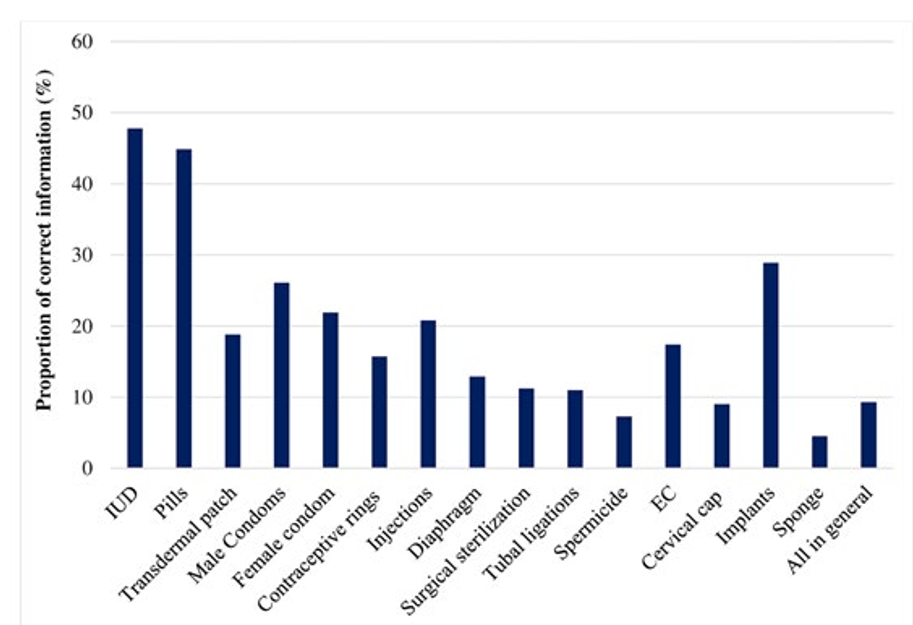
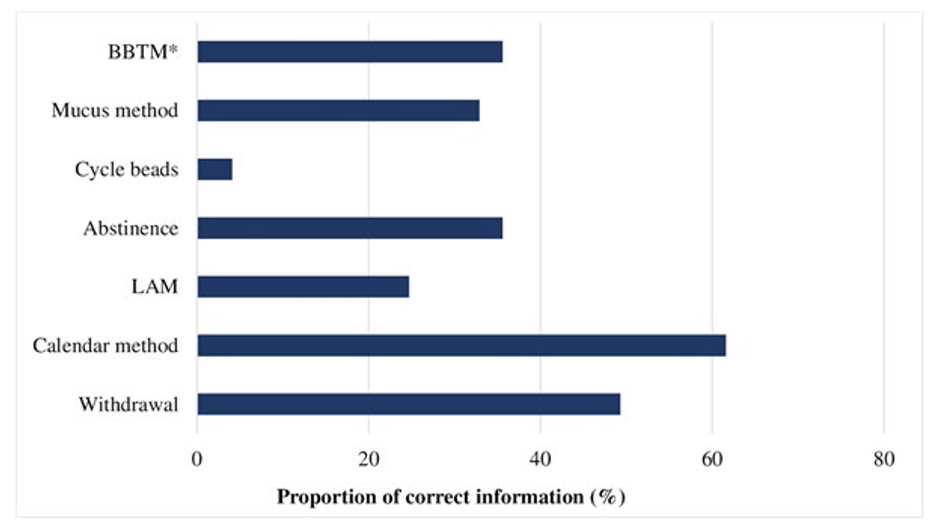
Among the types of modern contraceptives, less than half of the shared information was correct regarding IUDs (47.8%) and pills (44.9%), followed by hormonal implants (28.9%), male condoms (26.1%), and injections (20.8%) (Figure 1B). Of 73 posts related to the traditional methods, a higher proportion of accurate information was shared about the calendar method (61.6%) and withdrawal (49.3%), followed by the Basel body temperature method (BBTM) (35.6%), mucus method (32.9%), and LAM (24.7%) (Figure 1C). Furthermore, mid-cycle bleeding or spotting and irregular periods were the most frequently appearing and correctly described side effects, with 50.2% and 45.4%, respectively.

A.Accuracy of Shared Information on Specific Contents Related to Contraceptives
B.Accuracy of Shared Information on Specific Types of Modern Contraceptives
C.Accuracy of Shared Information on Specific Traditional Methods
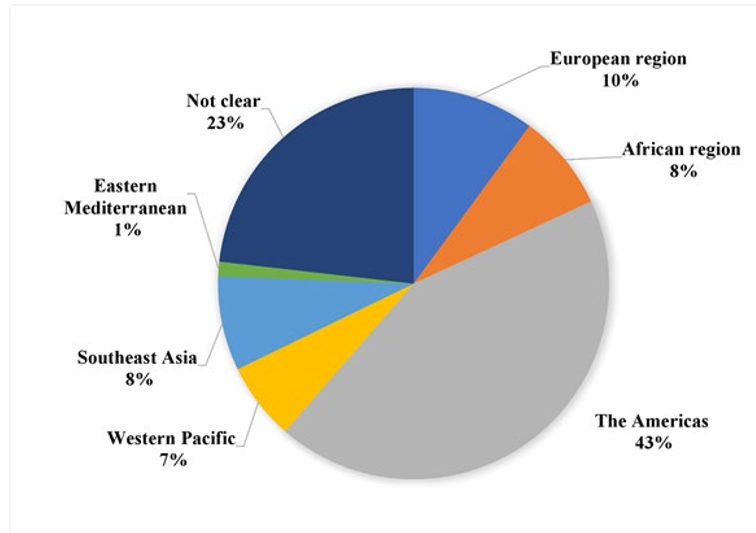
D.Distribution of the Shared Posts by the WHO Regions
Figure 1: Multiple responses analysis on information related to contraceptives mentioned in the posts (A, B, C). (A). Proportion of correct information among all shared posts related to contraceptives (n=375). (B). Proportion of correct information among all shared posts related to specific modern methods (n=365). (C) Proportion of correct information among all shared posts related to specific traditional methods (n=73). (D) Proportion of the posts shared from each WHO regions (n=487).
The results of the multivariable logistic regression analysis are presented in Table 3. The most important factors associated with the accuracy of the shared information were: being shared by Facebook (OR = 27.7, 95% CI: 7.41–104.14), being shared by YouTube (OR = 15.9, 95% CI: 2.7-93.2), being shared by public accounts (OR = 1.7, 95% CI: 1.1–2.7), being shared for educational purposes (OR = 4.2, 95% CI: 2.6–6.5), being related to both traditional and modern methods (OR = 18.9, 95% CI: 2.1–166.8), and whether any guideline was mentioned in the educational purpose (OR = 4.2, 95% 2.6–6.5). Moreover, being shared for the purpose of business or advertisement was shown to be reversely associated with the accuracy of the information, as the information shared from business accounts was 83% less likely to be correct compared to the information shared from personal accounts (OR = 0.17, 95% CI = 0.04-0.69) (p<.05).
|
Factors |
Accuracy of the shared information |
||
|
p value |
Exp(B) |
95% CI |
|
|
Type of social media |
|||
|
|
Ref |
|
|
|
|
0.000* |
27.68 |
7.405 -104.136 |
|
|
0.772 |
0.790 |
0.160 - 3.898 |
|
YouTube |
0.002* |
15.987 |
2.742 – 93.223 |
|
Type of shared Information |
|||
|
Text /Article |
Ref |
|
|
|
Video (with link/text) |
0.113 |
3.515 |
1.411 - 75.480 |
|
Infographics (text & picture) |
0.838 |
1.113 |
0.399 - 3.101 |
|
Source of shared information |
|||
|
Personal account |
Ref |
|
|
|
Public account |
0.030* |
1.679 |
1.051 - 2.682 |
|
Business account |
0.014* |
0.169 |
0.041 - 0.693 |
|
Profession of personal accounts |
|||
|
Non health professional |
Ref |
|
|
|
Obstetrics & Gynecology |
0.272 |
2.080 |
0.563 - 7.688 |
|
Family physician/GP |
0.326 |
0.531 |
0.150 -1.879 |
|
Mid-wife/Nurse |
0.426 |
2.276 |
0.300 -17.257 |
|
Health professional |
0.320 |
0.557 |
0.175 -1.765 |
|
Celebrities /bloggers |
0.108 |
0.400 |
0.563 -1.221 |
|
Purpose of shared information |
|||
|
Personal experience |
Ref |
|
|
|
Education |
0.000* |
4.156 |
2.639 - 6.546 |
|
Topics of FP & contraceptive information shared |
|||
|
General FP info |
Ref |
|
|
|
FP & contraceptives |
0.019* |
31.441 |
1.750 - 564.801 |
|
Contraceptive methods |
0.000* |
139.348 |
9.143 - 2123.884 |
|
Emergency contraception |
0.001* |
294.378 |
11.354 - 7632.298 |
|
Types of contraceptive methods mentioned |
|||
|
Traditional methods |
Ref |
|
|
|
Modern methods |
0.380 |
0.626 |
0.220 – 1.781 |
|
Both methods |
0.008* |
18.936 |
2.149 - 166.840 |
|
Not clear |
|
|
|
|
Any standard guideline mentioned in shared information (yes vs no) |
0.005* |
5.846 |
1.706 |
|
*p < 0.05 |
|||
Table 3: Social Media Accounts and Content Characteristics in Relation with the Information Accuracy - Logistic Regression Analysis
Discussion
The present study is one of its kind in terms of the scope of SM included and the evaluation method used to provide important insights regarding the accuracy of shared information related to FP and contraception. The accuracy and reliability of the shared information related to family planning methods on SM play a crucial role in people’s decision-making process, utilization, and continuation of contraceptive methods, particularly among adolescents and youths living in developing regions. 20,21,29,30,34 A few qualitative research results have revealed that shared information on social media, particularly rumors, myths, and negative experiences related to the side effects, safety, and efficacy of certain methods, have played a significant role in deciding which contraceptive method to use, as personal experiences were perceived to be more important than professional medical advice [20,21,29,30,34].Thus, it is crucial to understand the types of SM networks and the specific characteristics of the shared information to tackle the misinformation.
The findings revealed a relatively positive snapshot, as the majority (77.4%) out of 487 evaluated posts from four SMs shared accurate information about FP and contraception, which was in line with standard guidelines. This was a noteworthy finding that, to the best of our knowledge, has not been previously reported. There were two studies that evaluated the accuracy of information related to specific contraceptives on YouTube videos and reported similar results, where the majority of the contents shared were medically accurate, although they only evaluated information on YouTube using different methods [21,30]. Our results indicated that the information posted on YouTube and Facebook was more likely to be accurate compared to Instagram and Twitter. There are no other studies on this specific topic to compare these results with. However, a study by Sajadi and Goldman (2011) evaluated the first 30 search results related to incontinence from each SM network and reported that 40% of them were identified as medically informative. The contents were not evaluated for their accuracy and quality [35].
The present study found that information characteristics such as being shared by public and personal accounts and being shared for educational purposes were significantly associated with being accurate compared to those shared by business accounts and those considered personal experiences. Although among personal accounts, a significantly higher proportion of information shared by obstetricians and gynecologists, GPs, and other health professionals tends to be accurate compared to non- health professionals, celebrities and bloggers, However, a certain proportion of the information shared by health professionals was incorrect, particularly those shared by non-specialized health professionals (Table 1). Our analysis also revealed that the occupation of the person who shared information was not a determining factor for information accuracy.
This finding was consistent with the results of two studies that analyzed the contents of YouTube videos related to contraceptive implants and IUDs, which reported that the majority of the shared information by patients was their experiences or testimonies [36,37]. Also, the misinformation shared were 26% and 33.9% in two studies, respectively [36,37]. As IUD (47.8%) was one of the most accurately mentioned contraceptives in our study, followed by pills (44.9%) and implants (28.9%). The accuracy of the shared information about specific characteristics of contraceptives such as disadvantages and complications was less than 40%, while side effects (54.1%) and advantages (51.5%) were shared with relatively higher accuracy (Figures 1A and B). Even though such a direct comparison will not be appropriate as we included four SM networks and used different methods to evaluate the accuracy of the contents.
In contrast to our study, several studies focused on evaluating online information or websites with specific contraceptive information, mostly related to IUDs, ECs, and long-acting reversible contraceptives (LARC) [15,29,38,39]. For instance, Madden et al. (2016) evaluated 105 US-based internet websites of health-related organizations for information about the IUD and reported that half of these web sites have at least one inaccurate piece of information about the IUD related to its risks, advantages, disadvantages, contraindications, and mechanism of action [39]. Another study conducted two decades ago also reported that more than half of the 115 reviewed IUD-specific websites shared inaccurate and outdated information, and more than one-fifth of the websites shared false information about IUDs [38]. Two studies about online information on various websites regarding EC and LARC15 have reported similar results: shared information was low on credibility and reliability, and the majority (77%) did not follow standard guidelines regarding LARC for adolescents [29,15].
The fact that nowadays, all organizations with websites tend to have at least one social media account to share the same information from their websites. These results highlighted that there is a significant amount of misleading information or misinformation on web sites and SM networks, although it is shared by reputable organizations or health professionals.
It is worth noting that a higher proportion of information related to traditional methods was inaccurate compared to that related to modern methods. Furthermore, that shared information, which included both traditional and modern contraceptives, was 19 times more likely to be accurate compared to that shared information related to only traditional methods. Among these traditional contraceptives, the most accurately shared information was about the calendar method (61.6%), while the least accurately mentioned method was cycle beads (4.1%) (Figure 1C). It is very important to pay attention to and monitor this information related to traditional methods, as many women found them practical due to their characteristics such as being cheaper, culturally more acceptable, easy to use without the assistance of health professionals, and with fewer side effects [33,40]. However, these traditional methods have higher failure rates in typical use and do not prevent STIs [3]. So, if used incorrectly, it would significantly increase the risks of unintended pregnancy and other negative health consequences, particularly in resource-limited regions [40].
Moreover, the shared information that mentioned standard guidelines was about six times more likely to be accurate compared to those that did not. Such findings emphasized the importance of the role of health providers in reviewing and referring to the guidelines consistently for recommending up-to- date information through SM or websites, as the negative health consequences would be rampant for the general population.
Limitations and Strengths
There are several strengths and limitations to be noted. Our study covered the four most popular SM networks and evaluated the accuracy of shared contents on this specific topic based on standard guidelines. However, the results should be interpreted with caution due to the cross-sectional nature of the study, the fast- changing dynamics of contents on SM, and the lack of standard tools to measure the quality of the videos or the readability of the text information. Nevertheless, the study provides important insights on the level of content accuracy of the FP and contraception information on the most popular SM networks and their characteristics. It is imperative to acknowledge that not all information shared by health care providers are accurate and should be consistently monitored, and updated based on the latest evidence. Furthermore, health care professionals should support the process of informed, evidence-based contraceptive decision-making by sharing reliable and accurate sources to their patients and the general population.
Conclusion
Our findings suggest that the majority of the shared information on four SM sites related to FP and contraceptives was accurate, whereas YouTube and Facebook were the two most popular SM sites with more accurate information. The imperative highlight was how consistent the amount of misinformation shared on websites and social media has been over the years, and a notable proportion of misinformation was shared by healthcare professionals. Future studies should focus on the reasons for this persistent problem using mixed method approaches and also find effective solutions to aid health professionals in evaluating the shared information based on evidence. Public health advocates of FP services and various health professionals should be aware of the quality information on various SM networks to ensure its accuracy prior to recommending to their patients and the general population.
Acknowledgement
The authors are grateful to Dr. Å?üküfe Hajiyev for her positive contribution and hard work during the data collection and data entry.
Conflict of Interest Statement
No potential conflict of interest was reported by the author(s).
Funding
This research did not receive any specific grant from funding agencies in the public, commercial, or not-for-profit sectors.
Ethical Statement
The institutional review board approval was not required as there were no human subjects involved in the study. All the information evaluated was publicly available and freely accessible.
References
- Bellizzi, S., Mannava, P., Nagai, M., & Sobel, H. L. (2020). Reasons for discontinuation of contraception among women with a current unintended pregnancy in 36 low and middle- income countries. Contraception, 101(1), 26-33.
- Bearak, J., Popinchalk, A., Ganatra, B., Moller, A. B., Tunçalp, Ö., Beavin, C., ... & Alkema, L. (2020). Unintended pregnancy and abortion by income, region, and the legal status of abortion: estimates from a comprehensive model for 1990–2019. The Lancet Global Health, 8(9), e1152-e1161.
- Tsui, A. O., McDonald-Mosley, R., & Burke, A. E. (2010). Family planning and the burden of unintended pregnancies. Epidemiologic reviews, 32(1), 152-174.
- Ganatra, B., Gerdts, C., Rossier, C., Johnson, B. R., Tunçalp, Ö., Assifi, A., ... & Alkema, L. (2017). Global, regional, and subregional classification of abortions by safety, 2010–14: estimates from a Bayesian hierarchical model. The Lancet, 390(10110), 2372-2381.
- Gipson, J. D., Koenig, M. A., & Hindin, M. J. (2008). The effects of unintended pregnancy on infant, child, and parental health: a review of the literature. Studies in family planning, 39(1), 18-38.
- Sully, E. A., Biddlecom, A., Darroch, J. E., Riley, T.,Ashford, L. S., Lince-Deroche, N., ... & Murro, R. (2020). Adding it up: investing in sexual and reproductive health 2019.
- Kaplan, A. M., & Haenlein, M. (2010). Users of the world, unite! The challenges and opportunities of Social Media. Business horizons, 53(1), 59-68.
- Walsh, L., Hyett, N., Juniper, N., Li, C., Rodier, S., & Hill, S. (2021). The use of social media as a tool for stakeholder engagement in health service design and quality improvement: A scoping review. Digital health, 7, 2055207621996870.
- Statista. Internet users in the world 2022 | Statista.
- Obar, J. A., & Wildman, S. S. (2015). Social media definition and the governance challenge-an introduction to the special issue. Obar, JA and Wildman, S.(2015). Social media definition and the governance challenge: An introduction to the special issue. Telecommunications policy, 39(9), 745- 750.
- Jacobs, J., Marino, M., Edelman, A., Jensen, J., & Darney,B. (2017). Mass media exposure and modern contraceptive use among married West African adolescents. The European Journal of Contraception & Reproductive Health Care, 22(6), 439-449.
- Denis, L., Storms, M., Peremans, L., Van Royen, K., & Verhoeven, V. (2016). Contraception: a questionnaire on knowledge and attitude of adolescents, distributed on Facebook. International journal of adolescent medicine and health, 28(4), 407-412.
- Foran, T. (2019). Contraception and the media: lessons past, present and future. The European Journal of Contraception & Reproductive Health Care, 24(1), 80-82.
- Siddiqui, S., & Singh, T. (2016). Social media its impact with positive and negative aspects. International journal of computer applications technology and research, 5(2), 71-75.
- Harris, K., Byrd, K., Engel, M., Weeks, K., & Ahlers- Schmidt, C. R. (2016). Internet-based information on long- acting reversible contraception for adolescents. Journal of primary care & community health, 7(2), 76-80.
- Agrawal, S., Irwin, C., & Dhillon-Smith, R. K. (2021). An evaluation of the quality of online information on emergency contraception. The European Journal of Contraception & Reproductive Health Care, 26(4), 343-348.
- Gold, J., Pedrana, A. E., Sacks-Davis, R., Hellard, M. E., Chang, S., Howard, S., ... & Stoove, M. A. (2011). A systematic examination of the use of online social networking sites for sexual health promotion. BMC public health, 11, 1-9.
- Stevens, R., Gilliard-Matthews, S., Dunaev, J., Todhunter- Reid, A., Brawner, B., & Stewart, J. (2017). Social media use and sexual risk reduction behavior among minority youth: Seeking safe sex information. Nursing research, 66(5), 368.
- Jones, R. K., & Biddlecom, A. E. (2011). The more things change…: the relative importance of the internet as a source of contraceptive information for teens. Sexuality Research and Social Policy, 8, 27-37.
- Yee, L., & Simon, M. (2010). The role of the social network in contraceptive decision-making among young, African American and Latina women. Journal of Adolescent Health, 47(4), 374-380.
- Paul, J., Boraas, C. M., Duvet, M., & Chang, J. C. (2017). YouTube and the single-rod contraceptive implant: a content analysis. Journal of Family Planning and Reproductive Health Care, 43(3), 195-200.
- Wu, P., & Feng, R. (2021). Social Media and Health: Emerging Trends and Future Directions for Research on Young Adults. International Journal of Environmental Research and Public Health, 18(15), 8141.
- Lau, A. Y., Gabarron, E., Fernandez-Luque, L., & Armayones, M. (2012). Social media in health—what are the safety concerns for health consumers?. Health Information Management Journal, 41(2), 30-35.
- Wilson, P., & Risk, A. (2002). How to find the good and avoid the bad or ugly: a short guide to tools for rating quality of health information on the internetCommentary: On the way to quality. Bmj, 324(7337), 598-602.
- Scott, K., Ummer, O., Shinde, A., Sharma, M., Yadav, S., Jairath, A., ... & LeFevre, A. E. (2021). Another voice in the crowd: the challenge of changing family planning and child feeding practices through mHealth messaging in rural central India. BMJ Global Health, 6(Suppl 5), e005868.
- WHO/UNFPA. Impact of COVID-19 on Family Planning : What we know one year into the pandemic. United Nations Population Fund (2021).
- Lindberg, L. D., Bell, D. L., & Kantor, L. M. (2020). The sexual and reproductive health of adolescents and young adults during the COVIDâ?19 pandemic. Perspectives on sexual and reproductive health, 52(2), 75.
- Steenland, M. W., Geiger, C. K., Chen, L., Rokicki, S., Gourevitch, R. A., Sinaiko, A. D., & Cohen, J. L. (2021). Declines in contraceptive visits in the United States during the COVID-19 pandemic. Contraception, 104(6), 593-599.
- Broussard, K., & Becker, A. (2021). Self-removal of long- acting reversible contraception: A content analysis of YouTube videos. Contraception, 104(6), 654-658.
- Nguyen, B. T., & Allen, A. J. (2018). Social media and the intrauterine device: a YouTube content analysis. BMJ Sexual & Reproductive Health, 44(1), 28-32.
- Trussell, J. (2011). Medical eligibility criteria for contraceptive use.
- World Health Organization. (2016). World Health Statistics 2016 [OP]: Monitoring Health for the Sustainable Development Goals (SDGs). World Health Organization.
- World Health Organization. (2018). Department of Reproductive Health and Research (WHO/RHR) and Johns Hopkins Bloomberg School of Public Health. Center for Communication Programs (CCP), Knowledge for Health Project. Family Planning: A Global Handbook for Providers..
- Toffolutti, V., Ma, H., Menichelli, G., Berlot, E., Mencarini, L., & Aassve, A. (2020). How the internet increases modern contraception uptake: evidence from eight sub-Saharan African countries. BMJ Global Health, 5(11), e002616.
- Sajadi, K. P., & Goldman, H. B. (2011). Social networks lack useful content for incontinence. Urology, 78(4), 764- 767.
- Paul, J., Boraas, C. M., Duvet, M., & Chang, J. C. (2017). YouTube and the single-rod contraceptive implant: a content analysis. Journal of Family Planning and Reproductive Health Care, 43(3), 195-200.
- Nguyen, B. T., & Allen, A. J. (2018). Social media and the intrauterine device: a YouTube content analysis. BMJ Sexual & Reproductive Health, 44(1), 28-32.
- Weiss, E., & Moore, K. (2003). An assessment of the quality of information available on the internet about the IUD and the potential impact on contraceptive choices. Contraception, 68(5), 359-364.
- Madden, T., Cortez, S., Kuzemchak, M., Kaphingst, K. A., & Politi, M. C. (2016). Accuracy of information about the intrauterine device on the Internet. American journal of obstetrics and gynecology, 214(4), 499-e1.
- Meherali, S., Ali, A., Khaliq, A., & Lassi, Z. S. (2021). Prevalence and determinants of contraception use in Pakistan: trend analysis from the Pakistan Demographic and Health Surveys (PDHS) dataset from 1990 to 2018. F1000Research, 10.