

World Journal of Radiology and Imaging(WJRI)
ISSN: 2835-2440 | DOI: 10.33140/WJRI


Research Article - (2022) Volume 1, Issue 1
A girl from Pakistan with atypical autism: Expert opinion and a therapeutic recommendation
Received Date: Oct 13, 2022 / Accepted Date: Oct 26, 2022 / Published Date: Nov 07, 2022
Copyright: ©Copyright: ©2022 Aamir Jalal Al-Mosawi. This is an open-access article distributed under the terms of the Creative Commons Attribution License, which permits unrestricted use, distribution, and reproduction in any medium, provided the original author and source are credited
Citation: Al-Mosawi, A, J. (2022). A girl from Pakistan with atypical autism: Expert opinion and a therapeutic recommendation. World J Radiolo Img 1(1), 38-41.
Abstract
Background: Autism disorders which are also known pervasive developmental disorders as are very complex and heterogeneous group of chronic disorders that marked by early impairment in socialization, communication, and behavior. Atypical autism associated with severe mental retardation is more likely to be associated with significant hyperactivity and behavioral abnormalities, and thus this association intensifies the therapeutic challenge of autism disorders.
Patients and methods: The case of a girl with atypical autism disorder associated with cognitive impairment is described, and expert opinion is presented.
Results: Early during October, 2022, the mother of 4 years and 10 months girl consulted us about the possible therapies for her girl who had the two major diagnostic features of autism (Poor response to own name and very poor eye contact. The girl was not interacting with anyone, and her speech was not developed. She also had repetitive movements mostly in the form of moving back and forth walk and some tapping of fingers with each other. Her motor development was acceptable, but she had poor understanding of commands and poor adaptive behaviors. The girl in this paper received the diagnosis of atypical autism with mental retardation, and was initially treated based on our extensive published experiences with treatment of autism disorders associated with cognitive impairment.
Conclusion: The current expert opinion suggests treatment of children with atypical autism associated with mental retardation represents a therapeutic challenge and demands the judicious uses of several therapies including intramuscular cerebrolysin, piracetam, neuroleptics, The addition of baclofen has been suggested in the treatment of atypical associated with marked hyperactivity
Keywords
Atypical Autism, Mental Retardation, Expert Opinion.
Introduction
Autism disorders which are also known pervasive developmen- tal disorders as are very complex and heterogeneous group of chronic disorders that marked by early impairment in socializa- tion, communication, and behavior. Autism disorders were first recognized by Grunya Efimovna Sukhareva (Figure-1A), a So- viet pediatric psychiatrist in 1925, and she called these disorders autistic psychopathy.
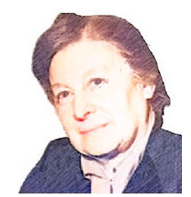
Figure-1A: Grunya Efimovna Sukhareva, a Soviet pediatric psychiatrist
The characteristic and diagnostic manifestations of autism disor- ders result from impairments in social interaction and communi- cation. The impaired social interaction causes the two major di- agnostic features of autism which are the lack of eye contact, and the lack of appropriate responsiveness to own name. Difficulties in using and understanding language are an important feature of autism disorders. Repetitive body movements or behavior patterns including hand flapping, foot tapping, and spinning are commonly associated with autism disorders.
The Autistic disorder which is called classical autism was first described by Leo Kanner (Figure-1B) in 1943. The diagnostic feature of this type is normal or high intelligence.
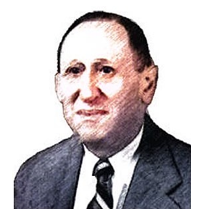
Figure-1B: Leo Kanner
Children with Autism disorder who have subnormal intelligence, but without significant mental retardation are considered to have typical autism. The absence of significant mental retardation in such children is suggested by having acceptable adaptive be- haviors including eating with spoon, bowel control and going to bathroom. In children with typical autism disorder, the serious lack of communication skills per se is expected to prevent or delay the acquisition of developmental mile stones. Asperger syndrome was first described by Grunya Efimovna Sukhareva, and later by Hans Asperger (Figure-1C) in 1944 [1- 8].
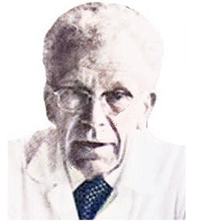
Figure-1C: Hans Asperger
Patients and Methods
Patients and methods: The case of a girl with atypical autism disorder associated with cognitive impairment is described, and expert opinion is presented.
Results
Early during October, 2022, the mother of a 4-year and 10 months girl consulted us about the possible therapies for her girl, who had the two major diagnostic features of autism (Poor response to own name and very poor eye contact).
The mother described her daughter as not interacting with any- one and was living in her own world. Most of the time, the girl was not responding to name or turning toward who is saying her and had very poor eye contact (Figure-2A).

Figure-2A: The father was saying her name repeatedly, but she was not responding and not turning toward him to look at him.
Her speech was not developed and she was not saying any words, but she was very rarely repeating words said by parents. She also had repetitive movements mostly in the form of mov- ing back and forth and some tapping of fingers with each other. Her motor development was acceptable as shown by her ability to ride a bicycle (Figure- 2B). However, she had poor under- standing of commands and poor adaptive behaviors as it was not much possible to train her for toilet and feeding with spoon. She could only eat banana and apple on her own and was unable to unwrap biscuits or candies
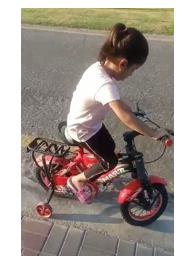
Figure-2B: The girl's motor development was acceptable as shown by her ability to ride a bicycle
She could not copy a line or a circle, but has recently started holding a pencil but without looking towards the drawing paper (Figure-2C).
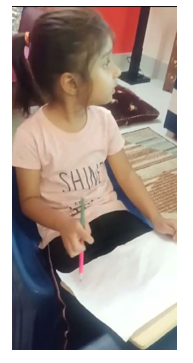
Figure-2C: The girl could not copy a line or a circle, but has recently started holding a pencil but without looking towards the drawing paper
In addition, she generally lacks the understanding or identifica- tion of danger. Brain MRI, EEG and hearing test were are all normal.
The girl in this paper received the diagnosis of atypical autism with mental retardation, and was initially treated based on our extensive published experiences with treatment of autism disor- ders and cognitive impairment [9-17].
The initial 2-month recommended therapies included courses of intramuscular cerebrolysin, oral piracetam, and oral risperidone:
1. Intramuscular cerebrolysin: 3 ml given every third day during the day, preferably in the morning (20 doses over two months).
2. Oral piracetam 800 mg given in the morning daily before breakfast for two months.
3. Oral risperidone 0.5 mg once at night and can be increased to 1 mg if hyperactivity persists.
Discussions
Atypical autism associated with mental retardation is more like- ly to be associated with significant hyperactivity and behavioral abnormalities, and thus this association intensifies the therapeu- tic challenge of autism disorders [1-8]. This girl in this paper was initially treated based on our extensive published experienc- es with treatment of autism disorders associated with mental re- tardation [9-17]. Treatment included intramuscular cerebrolysin, piracetam, and risperidone, an atypical neuroleptic.
Cerebrolysin, a safe parenteral mixture of aminoacids which has been used with a benefit in a variety of childhood neuropsychi- atric disorders, is the only medical therapy that is known to be associated with significant improvement and even cure of the major autistic features (Poor response to name and poor eye con- tact which indicate impaired communication) [9-15]. Piracetam beneficial effects on impaired cerebral functions in- clude improving neuronal and cognitive functions, increasing cerebral blood flow and oxygen consumption, improving neu- rotransmitters function and brain neurotransmission. Piracetam is not associated with important side effect nor has acute toxicity at the therapeutic doses. Piracetam has been used with important benefits in the treatment of cerebral palsy and other childhood neuro-psychiatric disorders [18, 19].
Parenteral piracetam has been used safely and with a benefit in a variety of childhood neuropsychiatric disorders, and it is one of the most important medications that have been used with benefit in mental and developmental retardation of various types and etiologies [17, 20-25].
McCracken et al (2002) reported a placebo controlled, dou- ble-blind study of the use of risperidone in the treatment of 101 children (82 boys and 19 girls) aged 5 to 17 years, having autism disorder associated with severe tantrums, aggression, or self-in- jurious behavior. The study found that risperidone was beneficial for the treatment of tantrums, aggression, or self-injurious be- havior in children, and was well tolerated [26].
The available research evidence suggests that baclofen, a selec- tive agonist for GABAB receptors can contribute to the impaired function of the GABAergic system in autism disorders and its use with risperidone has been suggested [27].
Conclusion
The current expert opinion suggests treatment of children with atypical autism associated with mental retardation represents a therapeutic challenge and demands the judicious uses of several therapies including intramuscular cerebrolysin, piracetam, neu- roleptics, The addition of baclofen has been suggested in the treatment of atypical associated with marked hyperactivity.
Acknowledgement
Some if the figures in this paper were included in previous au- thor's publications, but the author has their copyrights. The au- thor would like to express his gratitude for the parents who will- ingly accepted publishing the photos of their child.
Conflict of interest
None.
References
- Al-Mosawi AJ. Asperger syndrome and regressive au- tism.1st ed., Saarbrücken; LAP Lambert Academic Publish- ing: 2018 (ISBN: 978-613-9-82643-8).
- Al-Mosawi AJ. A new therapeutic approach for pervasive developmental disorders. 1st ed., Saarbrücken; LAP Lam- bert Academic Publishing: 2018 (ISBN: 978-3-659-86602-9).
- Al-Mosawi AJ. Pediatric psychiatry: An accredited training course. 1st ed., Saarbrücken; LAP Lambert Academic Pub- lishing: 2018 (ISBN: 978-613-9-86510-9
- Al-Mosawi AJ. The pattern of pervasive developmental dis- orders in Iraqi children.1st ed., Saarbrücken; LAP Lambert Academic Publishing: 2019 (ISBN: 978-3-330-05029-7).
- Al-Mosawi AJ. Autism disorders in Iraq. Scholars' Press: 2021 (ISBN-13: 978-613-8-94973-2, ISBN-10:6138949730).
- Al-Mosawi AJ. Autism disorders: Cure is possible. 1st ed., Saarbrücken; LAP Lambert Academic Publishing, Saar- brücken; Germany, 2020 (ISBN-13:978-620-2-66617-6, ISBN-10: 620266617X).
- Al-Mosawi AJ. An introduction to child psychiatry: A train- ing course. Scholars’ Press: 2021(ISBN-13: 978-613-8- 94954-1, ISBN-10: 6138949544).
- Al-Mosawi AJ. Case Studies in pediatric psychiatry: An ap- proach to deep learning and experience acquisition. SunK- rist Journal of Psychiatry and Mental Health 2020 August 21; 1(1): 1 21[1004]. Doi: 10.46940/sjpmh. 01.1004
- Al-Mosawi AJ. The use of cerebrolysin and citicoline in autism and Asperger syndrome. Journal of Bio Innovation (e-ISSN 2277-8330) 2019 January; 8(1): 99-108.
- Al-Mosawi AJ. Pervasive developmental disorders in Iraqi children. Journal of Psychiatry Research Reviews & Re- ports 2019 Sep 11; 1(1): 1-8. Doi: 10.5281/zenodo. 4007395
- Al-Mosawi AJ. Clinical uses of Cerebrolysin in Pediatric Neuropsychiatry. Science World Journal of Pharmaceutical Sciences 2020 February 5; 1(1): 1-4. Doi: 10.5281/ zeno- do.3878485
- Al-Mosawi AJ. Our experience with childhood pervasive developmental disorders (Autism and Asperger Syndrome): Cure is Possible. EC Clinical and Medical Case Reports March 03, 2020; 3(4): 01-08. Doi: 10.5281/zenodo.3892198
- Al-Mosawi AJ. Cure of autistic disorders: Mission impos-sible is possible in an illustrated pioneering experience. Archives of Health Science (ISSN 2641-7456); 4(1):1-26. 4(1):1-26. Doi: 10.31829/2641-7456/ahs2020-4 (1)-113
- Al-Mosawi AJ. Atypical Autism Associated with Ele- vated Gonadotrophin and Precious Puberty: A Very Rare Association or a New Clinical Syndrome? Biomedical Journal of Scientific & Technical Research (ISSN: 2574-1241) 2021 Jan, 21; 33(2): 256 86-25689. Doi: 10.26717/ BJSTR.2021.33.005377
- Al-Mosawi AJ. A novel therapeutic approach for treating Rett syndrome. EC Clinical and medical case reports 2021 March 01; 4(3): 1-9. Doi: 10.5281/zenodo.45686 52
- Al-Mosawi AJ. Pervasive developmental disorders in Iraqi children. Journal of Psychiatry Research Reviews & Re- ports 2019 Sep 11; 1(1): 1-8. Doi: 10.5281/zenodo. 4007395
- Al-Mosawi AJ. The etiology of mental retardation in Iraqi children. SunKrist Journal of Neonatology and Pediat- rics.2019 June 21; 1(1):1-9. Article No: sjnp-v1-1001. Doi10. 46940/sjnp.01.1001
- Al-Mosawi AJ. Recent uses of piracetam in pediatric neu- rology. SunKrist Neurology, Neurosurgery and Stroke Jour- nal 2020; 2 (1): 1002 (1-5).Doi:10.46940/ snnsj.02.1002
- Al-Mosawi AJ. Goldberg Shprintzen Syndrome: A Novel Therapeutic Approach. EC clinical and medical case reports 2020 October 31; 3 (11): 115-123. Doi: 10.5281/ zeno- do.4289104
- Al-Mosawi AJ. The use of piracetam and cerebrolysin in the treatment of agenesis of corpus callosum with colpoceph- aly. EC clinical and medical case reports Jan 2020; 3(1): 01-05. Doi: 10.5281/ zenodo.3892231
- Al-Mosawi AJ. A Unique experience with mental and de- velopmental retardation: Innovative Medical therapies for idiopathic mental retardation. EC Clinical and Medical Case Reports April 13, 2020; 3(5): 42-54. Doi: 10.5281/ze- nodo.3892214
- Al-Mosawi AJ. Recent Uses of Piracetam in Pediatric Neu- rology. SunKrist Neurology, Neurosurgery and Stroke Jour- nal May 2020; 2 (1): 1002 (1-5).Doi:10.46940/snnsj.02.1002
- Al-Mosawi AJ. The treatment of a child with birth asphyxia induced brain atrophy, adrenal hemorrhage, and bi-lateral hyperoxaluric nephrocalcinosis: A challenging case and a unique experience. Open Access Journal of Biogeneric Sci- ence and Research (ISSN: 2692-1081) June 29, 2020; 2(2):1-6. Doi: 10.5281/zenodo.5069460
- Al-Mosawi AJ. Treatment of a boy with idiopathic mental retardation: From uneducable to educable. SunKrist Clin- ical and Medical Case Reports Journal 2020 August 17; 2(1):1-6. Scmcrj-v2-1007.Doi: 10.5281/zenodo.3992208
- McCracken JT, McGough J, Shah B, Cronin P, Hong D, Aman MG, et al. Risperidone in children with autism and serious behavioral problems. N Engl J Med. 2002 Aug 1; 347 (5):314-21. Doi: 10.1056/NEJMoa013171
- Mahdavinasab SM, Saghazadeh A, Motamed-Gorji N, Vaseghi S, Mohammadi MR, Alichani R, Akhondzadeh S. Baclofen as an adjuvant therapy for autism: a randomized, double-blind, placebo-controlled trial. Eur Child Adolesc Psychiatry 2019 Dec; 28 (12): 1619-1628. Doi: 10.1007/ s00787-019-01333-5