

Journal of Educational & Psychological Research(JEPR)
ISSN: 2690-0726 | DOI: 10.33140/JEPR
Impact Factor: 1.4

Research Article - (2025) Volume 7, Issue 2
A Discussion and Conclusion of the Research Study: Future Schooling and Futures Thinking: Teachers and School Leaders’ Perspectives on Emerging Forms of Learning and Skills Education
Received Date: May 13, 2025 / Accepted Date: Apr 21, 2025 / Published Date: May 30, 2025
Copyright: ©2025 Peter Carey. This is an open-access article distributed under the terms of the Creative Commons Attribution License, which permits unrestricted use, distribution, and reproduction in any medium, provided the original author and source are credited.
Citation: Carey, P. (2025). A Discussion and Conclusion of the Research Study: Future Schooling and Futures Thinking: Teachers and School Leaders’ Perspectives on Emerging Forms of Learning and Skills Education. J Edu Psyc Res, 7(2), 01-37.
Abstract
This study examined how futures thinking is construed and evidenced in the Australian education system via leadership views, school policies, decision-making processes, and practices, and how educators view the emerging forms of learning best suited to meet the future needs of students. Futures thinking is a method of reflection on the changes that may occur in future years and the possibilities for dealing with those changes. The study investigated the status of Australian schools’ strategic aims, and understandings of the processes needed for sustainable change into the future through the lens of futures thinking, and the present constraints to and possibilities for the emerging forms of learning and scenarios for future schooling in Australian schools. The study was designed in two strands: 1) scenarios for future schooling and futures thinking, which examined participant responses to the Organisation for Economic Co-operation and Development (OECD) ‘schooling for tomorrow’ concepts and HolonIQ scenarios, a private think tank focusing on the future of education in relationship to current practices and leadership aspirations in Australian schools, and 2) the emerging forms of learning and futures skills, which focused on pedagogical approaches and the future skills required by students to meet the opportunities for and challenges of the future. The findings confirm a real desire for change by school leaders, their recognition of the value of futures thinking, the use of scenarios as a mechanism for considering change and future possibilities, and their willingness to lead movement away from content-based curriculum to a personalised skills-based pedagogy in schools. The findings show futures thinking helps foresee change, grasp opportunities, and deal with threats.
Keywords
Futures Thinking, Future Skills, Personalisation of Education, Learning and Teaching, Education, Scenario Analysis, Emerging Forms of Learning, Disruptive Technologies, Future Schooling
Introduction and the Purpose of the Study
This article presents a discussion and future research possibilities to answer the research questions in the Scenarios of Future Schooling, Future Thinking, and the Emerging Forms of Learning, Future Skills strands of this study. The main aim of the study ‘Future Schooling and Futures Thinking: School Leaders’ Perspectives on Emerging Forms of Learning and Skills Education’ was to explore how futures thinking was valued by system and school leaders, and how they considered its potential contribution to the sustainability of schooling and its impact when confronting and managing future change. The study aimed to investigate and articulate how system and school leaders and other professional educators (curriculum consultants, academics, and researchers) considered and approached development in the future by providing a picture of the status of local schools’ strategic aims and an understanding of the processes needed for sustainable change.
The overall objective of the current research was to explore what the participants understood by and construed of the potential of a futures thinking approach across the Australian education systems, its theoretical contribution, and potential policy recommendations. The research question had minor changes made during the study to better reflect the inclusiveness of the two research strands. The research question stated: How is futures thinking construed and evidenced in the Australian education system (via leadership views, school policies, decision-making processes, and practices) and how do educators view the emerging forms of learning, future skills best suited to meet the future needs of students? This complex question was explored by teasing out the problem through the two strands. Strand One explored: scenarios of future schooling, futures thinking; and Strand Two examined: emerging forms of learning, future skills in the 21st century. What follows are the subsidiary questions framing each of the two strands:
The Scenarios of Future Schooling subsidiary questions:
• RQ1: How will participants respond to the scenarios as constructed in the OCED six Schooling for Tomorrow scenarios for the future of schooling and the HolonIQ five scenarios for the Future of Learning and Talent?
• RQ2: What does the participant responses suggest concerning participants’ perceptions, knowledge and values relating to future schooling?
• RQ3: What does the participant responses suggest for policy development and change in Australian schools? The Emerging Forms of Learning, Future Skills subsidiary questions:
• RQ4: What are the Forces of Change, their implications, and challenges for the future of work and education as perceived by Western Australian school educators?
• RQ5: What might learning and teaching look like in the schools of the future?
• RQ6: How are Western Australian schools preparing students for future environments?
Discussion of the Findings: Strand One and Two
Questions Answered: Hypotheses Supported by the Literature: Strand One The responses provided by the System and School Leaders Participants and Panel of Experts answered the three subsidiary research questions of this study. The participants’ responses were grouped into categorises and then used to generate six emerging themes, as shown in Table 1. A descriptive summary describing the participants responses is supported by the literature and is now presented [1]
|
Research Questions RQ1 – RQ3
|
Themes Agreed by all by the Participants: System and school leaders (n=55) and the Panel of Experts (n=7). |
Categories Agreed by all by the Participants: System and school leaders (n=55) and the Panel of Experts (n=7). |
Literature |
Strand One Recommendations Relating to RQ1 - RQ3 Recommendations supported by 100% of the Participants – System and school leaders (n=55) and the Expert Panel (n=7). |
|
RQ1: How will participants respond to the scenarios as constructed in the OCED six Schooling for Tomorrow scenarios for the future of schooling and the HolonIQ five scenarios for the Future of Learning and Talent?
|
Theme 1: A desire for change. Theme 2: Towards a personalised skills-based curriculum and a whole child approach for a sustainable future.
|
A need to change the status quo.
‘The school’ provides a place of community and belonging.
Scenario analysis, a tool to help decision-makers consider plausible futures.
Movement away from crowded content-driven curriculum to embrace future skills.
Online learning seen to have real benefits but does not provide a holistic value.
A Whole-Child Approach |
[2-13]
[14-17]
[18-23]
[24-31]
[32-35]
[36-43] |
Recommendations:
|
|
RQ2: What does the participant responses suggest concerning participants’ perceptions, knowledge and values relating to future schooling?
|
Theme: 3 Value seen in futures thinking and using scenario analysis tools for ways of addressing and helping to shape the future of education, and providing suggestions for policy development and system change.
Theme: 4 The need for futures thinking professional development for leaders and teachers and futures studies for students. |
The need to be future focussed- creating a futures thinking mindset.
The value of futures thinking and scenario analysis tools - a way of addressing and shaping the future of education.
Futures thinking limited at both system and school level and misunderstood.
The Need for Futures Thinking Professional Development and Futures Studies |
[44-55]
[7,56-68]
[56,57,59-64,67-75]
[8,76-82]
|
|
|
RQ3: What does the participant responses suggest for policy development and change in Australian schools?
|
Theme: 5 The value of scenario analysis as tool for growth, improvement, and change.
|
Scenarios provide aspects that genuinely grow equity, excellence and student and staff health and well-being.
Scenarios provide ideas and pictures of possible futures
|
[4,6,8,9,62,83-95]
[58,96-106]
|
|
|
|
Theme: 6 Implications of post COVID-19 pandemic on education. |
Impact of post COVID-19 pandemic on education which collied with the study. |
[30,107-113]
|
Research Question One (RQ1) Answered: Theme 1 and 2
For Theme 1 and 2, all participants highlighted a need to change the status quo. ‘The School’ was seen to provide a place of community and belonging, and the participants argued for a movement away from a crowded content-driven curriculum to embrace a personalised skills-based curriculum with emphasis on the whole child approach. Although online learning was seen to have real benefits, they pointed out that it did not provide ‘holistic value’. These points are now discussed with reference to the literature.
A Need to Change the Status Quo
All the SSL1, SSL2&3, and EP Participants agreed with a movement away from the current education system ‘maintaining the status quo’ and towards the OECD ‘re-schooling’ and ‘de- schooling’ scenarios. When exploring the HolonIQ scenarios, all the participants suggested a movement away from the ‘education as usual’ scenario with slow incremental changes until 2030, then major change likely with suggested changes to the ‘regional rising" or "peer-to-peer" scenarios [4]. EP Participants even suggested that there would be a combination of all scenarios including: ‘global giants’ and ‘robo revolution’, with a complete movement to a ‘robo revolution’ by 2070.
The review of the literature confirmed the need for change, and numerous studies and reports have been produced by experts who have interrogated data and surveyed employers, teachers, and students regarding the types of educational systems necessary to support learning in the future [2,3,5,7,11-13]. All 55 participating System and School Leaders suggested a preferred futures movement away from ‘maintaining the status quo’ of the OECD scenarios, a ‘robust bureaucratic school systems’, which was Scenario One of the six scenario models [6].
The SSL1, SSL2&3, and EP Participants in Strand One and Leadership and Teacher Participants in Strand Two indicated that school systems were interested in exploring more flexible approaches to schooling [refer to section NOTE p. 27]. The OECD pointed out that there was a need for policy reflection and action on what schooling and learning might look like in the future [7]. Scott explained that educators recognised that the instruction or lecture style model of teaching was ineffective for teaching student competencies and 21st-century skills, yet widespread use of this model continues [10,114]. Given what occurred during the global COVID-19 pandemic, continuing with Scenario One would be difficult to justify, and there are many challenges, such as: self- interest, school sector/system(s) as drivers of government policy, being tied to State and Federal funding, and the requirements of State Schooling Authorities.
An alternative approach was to decentralise the financing of education to allow decisions to be made by those closest to the action. The Gonski review proposed the adoption of decentralisation through the Principle of Subsidiarity [115,116]. The Principle of Subsidiarity, as explained in the Gonski Review, refers to the level of government deemed most suitable or qualified to oversee and provide certain services. Gonski et al. stated that, “the level of government closest to the communities receiving those services should provide those services, and, if possible, fund and regulate them” (p.181) [115]. According to the Gonski Review, present structures that retain authority over funds redistribution once it is received from governments reflect subsidiarity [115]. The participating System and School Leaders and educators advocated for a significant overhaul of funding, training, structures, connectivity, collaboration, and connection between governments, as well as industry and the community. They suggested that they must be proactive about change or students will be disadvantaged and, ultimately, so will the country - its economy and society. This is consistent with the Gonski review.
Most of the participants in Strand One (SSL1, SSL2&3, and EP Participants) and Strand Two (Leadership and Teacher Participants) argued that the curriculum was overcrowded, content-driven, and preoccupied with standards and rankings. They indicated that politics remained a powerful player in Australian education and was a key factor in informing education policy. The SSL1, SSL2&3, and EP Participants suggested that any move towards a complete reshaping of the provision of education was difficult to see in the very near future; a continued 'tinkering' at the edges was likely to prevail, such is the conservative nature, they believed, of those reviewing education. The participants suggested that the government, media, and the current obsession with standards, content-based curriculum, standards and rankings, and administrators with political affiliations all helped to ‘maintain the status quo’, with some SSL1, SSL2&3, and EP Participants suggesting that this vested interest was resisting change.
There was a shift from content-driven education to one that fully embraces ‘general capabilities’ [25,26]. There was also a move away from more standardised, traditional methods of delivering education, such as alternative pathways, different forms of assessment, and flexible, future-focused delivery. The participants believed that the development of a common vision and shared values around what ‘education’ means, and the ultimate outcome of ‘schooling’ was imperative. SSL1 and SSL2&3 Participants indicated that they knew of the need for transformation, yet a generation of Australian students have graduated with less than what they need to thrive in an uncertain world. To develop and appreciate the broad range of skills that young people need for a successful future, the Mitchell Report recommended that Australian schools decentralise from the ATAR [117]. This report outlined four key reforms: building young people's capabilities, valuing vocational education, navigating employment, and reforming the VET in schools policy. It emphasised supporting educators, shifting community perceptions, improving career exploration, and reforming the VET in schools policy to better meet young people's needs and prepare them for a changing workforce.
SSL1, SSL2&3, and EP Participants indicated that educators needed to find platforms to engage more constructively with change, rather than simply highlighting what was not working. Ninety-eight percent of the SSL2&3 and EP Participants suggested that immediate dialogue, considered change, the redirection of education funds to appropriate areas in education, dynamic leadership as well as the need to be open-minded, futures thinking, and future-fit were all needed. The SSL1, SSL2&3, and EP Participants agreed that all of the scenarios provided aspects and elements that could be included in moving to a future for learning and teaching that would genuinely grow equity, excellence, and well-being for all. According to these participants, the curriculum was crowded and too content-driven, rather than fostering transferable skills. Furthermore, they agreed that the assessment model was outdated and did not promote the outcomes that students needed to be future-ready.
Finally, SSL1, SSL2&3, and EP Participants stated that, while technology was available, it was not necessarily accessible and may create greater inequity. They pointed out that, primarily, the scenarios suggested that education was changing regardless of government policies and standardisation tools. Leaders, educators, students, and parents were exploring and accepting new ways of learning and teaching, recognising that current structures were no longer fit for the intended purpose. The participants explained that it is no longer tenable to claim that all students learn in a strictly structured environment, at the same time, in the same location, and in the same manner. To do so in a tightly structured environment was no longer plausible [118]. Carol Tomlinson talked about how differentiating education considers the fact that students have a range of learning preferences and demands, which may include varied learning contexts. This viewpoint supported the notion that not all students benefit from a highly-structured setting since different students have different learning styles and needs, and flexibility and adaptation are frequently required to meet those needs. Supporting the idea that a more flexible approach can better meet individual learning needs, Pritchard argued that students benefit from diverse and adaptable learning environments [119]. She argued that rigid structures may not accommodate the varied ways students engage with and understand material. Furthermore, Kolb’s work on experiential learning highlights that learning was a process that involved active engagement and reflection [120]. Hattie and Zierer spoke about how accommodating students' varied demands was essential to good teaching [121]. They contended that adaptable tactics that consider various learning styles and demands were more effective than strict, one-size-fits-all approaches. This viewpoint was consistent with the idea that not every student does well in a rigidly planned classroom. The authors of this updated book stressed the significance of tailoring teaching strategies to the requirements of diverse learners, arguing that a rigidly-planned setting may not adequately address the range of ways in which students engage with the subject and process information [122].
All EP Participants agreed that aspects of all scenarios could suit individual students at various points on their learning journey. They indicated that an approach allowing educators to create a flexible model, and that allowed students to have a truly personalised education, was needed and would be ideal. Furthermore, they suggested that students needed the freedom to think outside of the parameters that the current model of education prioritises, and it was necessary to build educators’ confidence in being highly- skilled professionals who are best placed to identify the needs of students in their classrooms.
The SSL2&3 and EP Participants said that there were many warnings for politicians and policy makers to be found in the OECD, HolonIQ and Sanborn et. al., scenarios [4,6,8,9]. They believed that there were ideas in the scenarios that differed quite radically from the current situation. The SSL2&3 and EP Participants said that the scenarios indicated that they needed to be looking ahead at trends in community and society, be willing to try new approaches, and that they needed to develop systems, processes, and mindsets that were agile, flexible, open, and responsive. Furthermore, they explained that there was a need to be prepared for and expect change, and to be ready to embrace new opportunities as they arose. At the same time, they needed to be clear about values and what matters most, ensuring that decisions and policies are based on these.
‘The School’, a Place of Community and Belonging
‘The school’ was still seen as providing a place of community and belonging, yet all SSL2&3 Participants acknowledged problems associated with inequality, particularly in low socio-economic schools, teacher shortage, and teacher and student wellbeing. This was acknowledged by most participants in Strand One and Two of the research study. The OECD's report offered extensive data and analysis on a range of educational challenges, such as socioeconomic inequality, teacher shortages, and concerns pertaining to the well-being of both teachers and students [15]. The wide range of issues that the participants acknowledged was reflected in the OECD's findings. In addition, the UNESCO report looked at several current issues in education, such as differences in low socioeconomic backgrounds, teacher shortages, and the effects on the wellbeing of both teachers and students [17]. It offered a contemporary summary of these problems and looked at the connections between educational challenges, inequality, technology, and other variables. The UNESCO report, like the research participants in this study, identified issues related to inequality, teacher shortages, and the wellness of both teachers and students, with a focus on low socioeconomic schools.
Scenarios Analysis, a Tool to Help Decision-makers Consider Plausible Futures
All of the Strand One participants saw scenario analysis/ planning as a very effective tool to help decision-makers consider plausible futures. Cordova-Pozo and Rouwette saw scenario analysis as a widely-used approach for addressing uncertainty in strategic decision making [58]. However, it has challenges such as conceptual confusion, methodological chaos, and lack of evidence on its effectiveness. Recent literature suggested that these challenges have been partially met, with a proposed definition of a scenario capturing novel definitions [96-99].
Cordova-Pozo and Rouwette’s paper contributed to scenario analysis literature by providing clarity on implementing scenario planning, choosing between process designs and measuring effectiveness [58]. Lempert too proposed a particular conceptualisation of scenarios that aimed to address many of the challenges faced when using scenarios to inform contentious policy debates [102].
Scenario analysis, Brown and Castellazzi claimed, has revealed a particular sensitivity to change in marginal agricultural areas, with either top-down or bottom-up causes having varying effects that could lead to different outcomes being possible [100]. Scenario analysis for regional decision-making on sustainable multifunctional land uses has proven valuable. Rawluk et al. indicated that scenarios led people to think outside their area of comfort, and fostered reflection, discussion, and consideration for how to bridge value differences [103]. In addition, they claimed that scenario planning might be an effective method for examining and comparing various natural disaster management strategies.
Furthermore, Wright et al. stated that scenarios, a methodology for futures and foresight research, were often not aligned with policymakers' needs [123]. They developed a new type of tool, called a policy scenario, which has been used to address this issue. Their paper provided a detailed description of how to construct policy scenarios, focusing on key characteristics such as policy requirements, plausibility, probability, credibility, expertise, objectivity, and legitimacy.
Movement Away from the Existing Crowded Content-driven Curriculum
SSL1, SSL2&3, and EP Participants in Strand One and the Leadership and Teacher Participants in Strand Two argued for a movement away from the existing crowded, content- driven curriculum to embrace future skills and an end to ATAR (Australian Tertiary Admission Rank) based assessment. Dunne & O'Rourke, as with the participants in this current study, argued that educational change was necessary, and that existing systems of assessment, like the ATAR and content-heavy curriculum, should be abandoned [24]. They stated that doing this would help students to be more equipped to meet the evolving needs of the workforce in the future. Like SSL1, SSL2&3, and EP Participants, they called for an emphasis on future-oriented skills and alternative approaches to assessment.
Lucas also discussed the need for structural reforms in education, such as a move away from outdated, content-focused curricula, and traditional assessments like ATAR [124]. In their article, they underscored the significance of cultivating future-ready skills and modernising assessment processes to better suit the requirements of today's students and the workforce of the future. Whilst the SSL1, SSL2&3, and EP Participants agreed that online/hybrid learning seemed to have real benefits, it did not provide ‘holistic value’. A holistic approach to education - one that considered students' learning, social, and emotional needs - was essential, particularly during times of crisis, according to the OCED policy brief [30]. Due to the COVID-19 pandemic-related school closings, students from various backgrounds who were more vulnerable may not have received the assistance and additional resources they required, and the gap between those students, who faced additional hurdles and those who did not, may have deepened.
Online Learning Seen to Have Real Benefits but Does not Provide Holistic Value
The literature supports the argument from the SSL2&3 and EP Participants who indicated that online learning was seen to have real benefits, but that it did not provide ‘holistic value’. According to Salta et al., an analysis of their study showed that students' emotional involvement levels in an online learning environment were statistically significantly lower than in a traditional face-to- face learning environment [34].
Tate and Warschauer argued that there were differences in learning outcomes between online and face-to-face learning, with these differences being amplified for learners who are from low-income and or minority groups [35]. They asserted that data from K–12 research showed disparities in student attendance, academic achievement, and access to online courses. However, according to Dhawan, virtual schooling may be thought of as an educational tool that helps make learning and teaching more creative and student-centred [32].
Photopoulos et al. reported that learning and teaching changed entirely for both teachers and students in the absence of the face-to- face component [33]. According to them, students felt frustrated by how difficult it was to maintain fulfilling social interactions when they were away, and students who preferred face-to-face teaching concentrated on learning outcomes and acknowledged the issue of ‘zoom fatigue’ even though they expressed gratitude for not having to commute. Furthermore, Photopoulos et al. suggested that students expressed their interest in maintaining and strengthening face-to-face teaching relationships with their teachers and peers [33]. They emphasised the need of face-to-face connections for learning, socialisation, and psychological well-being, and had a collectivist approach to education rather than one that prioritised meeting each student's unique requirements.
Research Question Two (RQ2) Answered: Themes 3 and 4
In Theme 3 and 4, all participants supported the need to be future- focussed and in creating a futures thinking mindset. The participants saw futures thinking as a way of addressing and shaping the future of education, and they saw great value in futures thinking and using scenario analysis tools. However, the data demonstrated that the concept of futures thinking was misunderstood and limited at both the system and school level, and, though futures thinking and scenario analysis was valued, there was a need for futures professional development in these areas. These are now discussed.
The Need to be Futured Focused- Creating a Future Focused Mindset
The SSL2&3 and EP Participants emphasised the need for a future- focused education system that nurtured students into independent thinkers, socially responsible citizens, and caring, empathetic individuals [50,51,55]. They emphasised the importance of a high-quality education system that empowered students, promoted equitable learning opportunities, and involved communities in the learning process [52,54]. They also highlighted the necessity of a future education system that would support new types of learning required to address challenging global issues and that would accommodate all intellectual capacities as well as degrees of personal, social, and mental development [48].
Despite the slow progress towards a future focus approach, the participants acknowledged that schools were market-driven and influenced by bureaucracy, politics, and the economy [47]. They emphasised the need for a future education system that prepared students to be citizens, fostering creativity, communication skills, critical thinking, problem-solving, and responses to change [49].
The values driving the education of tomorrow must be subject to developing an axiological scale along the way. The future education system must guide students' progress, ensuring that digital technology does not eclipse humanity [46]. They stressed the importance of human interactions for children's socio- emotional wellbeing and emphasised the need for progressive and careful change in the system. The participants emphasised the importance of adaptability, flexibility, and resilience in the ways of learning and the skills taught to students, allowing them to develop their capacity to respond to change and boost their thinking and creativity beyond the classroom [44,45].
The Value of Futures Thinking and Scenario Analysis.
Futures thinking and scenario analysis were seen as offering different ways of addressing and helping shape the future of education, providing suggestions for policy development and systemic change, importantly the need to be future-focused. All participants agreed that there was great value in using futures thinking and the scenario analysis tools to provide ideas and pictures of possible futures. Schreiber referred to the importance and value of futures thinking and illustrated how systematic futures thinking can inform decision-makers concerning the innovation challenges and opportunities emerging over medium and longer-term (5 - 15 years) time horizons of social and technology environments [65]. This was consistent with the findings from the Panel of Experts and System and School Leaders in Strand One of the study.
The study's findings are consistent with the literature on futures thinking. Building new futures for education is one of six strategic objectives designated for the OECD's educational activity by senior policymakers in its member nations, according to the OCED (nd), to fulfil its mandate to support members and partners in delivering high-quality, lifelong learning for everyone. Furthermore, futures thinking assists people to think about significant change over the next 10, 15, or more years [58]. Futures thinking is crucial to education as it aids educators in understanding the primary forces affecting change in educational systems, schools, and communities [7]. Many decisions about education are made in the short term to address pressing problems or enhance present procedures, and SSL2&3 and EP Participants concurred [66]. Futures thinking identifies potential outcomes that may result from current choices, behaviours, and problems. The ideal future is a scenario that considers all potential future outcomes to make the best decisions possible for all concerned stakeholders [62].
The OECD pointed out that, when compared to other policy areas like energy, the environment, transportation, and pensions, futures thinking in education was still comparatively underdeveloped [125]. Scenarios have a long history and well-established reputation in helping organisations generate strategic foresight, and the proposed scenarios methodology, as a scholarly form of inquiry, is one way in which people can generate ‘interesting research’ - research that is innovative and develops theory while being both usable and rigorous [56,59,61,63,67,68].
SSL2&3 and EP Participants suggested that “by allowing educators to anticipate possible future influences on education, scenario planning can help them become more resilient in the face of change”. Van de Heijden was supportive and provided compelling evidence of how scenario planning helped organisations - including educational institutions - anticipate shifts and uncertainties in the future. He pointed out that by planning for a variety of potential future events, this strategy could aid educators and leaders in developing more resilience and adaptability. Importantly, Iversen declared that futures thinking, and scenario analysis were mechanisms for systematic change [60]. Supporting this was Schwartz's description of how these tools assist organisations, particularly educational institutions, in anticipating changes and problems [75]. As a result, they served as instruments for promoting strategic adaptation and systematic change.
Futures Thinking Limited and Misunderstood.
Disciplines are becoming more and more influenced by methods that are future- focused. The terms ‘foresight’, ‘futurism’, ‘futurology’, ‘anticipation studies’, and ‘futures thinking’, as well as the techniques and strategies employed are sometimes used interchangeably to refer to the discipline of thinking systematically about the future. When talking about this, people prefer to use the phrase ‘futures thinking’ [126]. Numerous scholars have expounded upon the terminology and techniques employed in futures studies and futures thinking [127,128]. The following summarises each of these more recent sources' claims regarding the preference for ‘futures thinking’.
Dator listed the words used in the field and described how they differ and how they are similar [71]. He explained that the preference for ‘futures thinking’ in modern discourse stems from its more planned and integrative approach to handling complexity and ambiguity. ‘Futures thinking’ is favoured, according to Myers and Myers, as it suggests a proactive and systemic approach for foreseeing and influencing future possibilities [72].
Furthermore, as noted by Ramírez and Rajput, ‘futures thinking’ encapsulates the spirit of foreseeing and planning for future developments in an all-encompassing and holistic way [73]. In addition, Schultz highlighted the increasing inclination towards ‘futures thinking’ due to its more comprehensive and all- encompassing methodology, which encompasses a systematic investigation of potential futures and proactive strategies [74]. In summary, these sources explain why ‘futures thinking’ has become the accepted phrase and agree that terminology linked to futures studies can be used interchangeably. They emphasised that ‘futures thinking’ provided an all-encompassing method for investigating and making plans for future possible scenarios.
The current perception of futures thinking as being limited at the school and system level has been attributed to numerous significant factors, according to Australian System and School Leaders. These restrictions were commonly talked about in relation to the challenges in incorporating futures thinking into educational practice and policy [57,64,69,70]. These authors provided a thorough understanding of the reasons behind the perceived limitations of the use of futures thinking in the Australian educational context.
The ACER paper addressed the perception of futures thinking and the difficulties in implementing it in Australian educational contexts. For example, not all educators and leaders may have access to the specialised expertise and training needed to implement futures thinking effectively. The shortage of professional development opportunities in this domain may further constrain the efficacious application of futures thinking. Future research into professional growth into specialised skills, training, and tools into scenario analysis and futures thinking has been suggested by this study.
The publication from the Australian Government's Department of Education lists several challenges that Australian educational systems must overcome [70]: (1) Implementing futures thinking requires time, training, and resources - all of which could be scarce - to put futures thinking into practice; and (2) it can be difficult for systems and institutions to invest in future-oriented strategies due to competing goals and financial constraints. Brown and Wilson provided insights into the perspectives of Australian system and school leaders on the limitations of futures thinking in educational settings [57]. They explained that, inside educational systems, there can be opposition to altering long-standing procedures and frameworks. This opposition could result from a fear of abandoning tried-and-true techniques or from doubts about the efficacy of novel ideas.
Schultz and Dator discussed possible policy and structural barriers identified by experts and system and school leaders [64]. They argued that some system and school leaders may not be receptive to embracing future-focused thinking to investigate future educational policies and structures. They also suggested that system leaders may encounter bureaucratic or policy-related obstacles that make it difficult to incorporate futures-thinking approaches into the system. Similar limitations and reasons indicated in the literature were highlighted by the participants in this study. Futures thinking at school and systems levels was seen as currently limited by the SSL1, SSL2&3, and EP Participants. They communicated a lack of awareness, understanding and misinterpretation of the concept futures thinking. Many of the participants lacked a thorough understanding of futures thinking, its benefits, and how to use it in practice. This lack of understanding may prevent existing educational systems from adopting and integrating a ‘futures thinking framework’. Another limitation they sighted was short- term focus. There is often a strong emphasis on immediate results and short-term goals in education systems, which can overshadow the long-term perspective that futures thinking requires. This short-term focus can hinder the adoption of strategies that are oriented towards future possibilities. They mentioned curriculum limitations as well: the flexibility required to incorporate futures thinking may be limited by the standardisation of testing and the rigidity of current curricula. They also maintained that curricula mandated by the Federal Government imposed restrictions that made it difficult to implement progressive teaching methods.
The Need for Futures Thinking and Futures Studies Professional Development
The Strand One participants saw great value in and expressed a need for futures thinking professional development for system and school leaders and teachers in schools and for futures studies for studies in schools. One of the three recommendations of the study, supported by all the participants, stated that, “education systems include the opportunity for professional development in futures thinking for schools to lead the decision-making in planning for the future with the goals of promoting equity and excellence and to guide all of our students to become successful learners and confident and creative individuals”.
In the literature, educators may find examples of support frameworks created and programs available on futures thinking and futures studies, but more needs to be researched in the context of education in Australia. A growing interest in futures thinking in education is shown in the OECD Scenarios on the Futures of Schooling, to which numerous academics and educators have contributed their own scenarios and resources to spark discussion [8,76]. Policymakers and futures leaders across the UK government incorporate long-term thinking as well as external insights into policy and strategy with the aid of the publication A Brief Guide to Futures Thinking and Foresight [77]. This guide was written to acquaint leaders and policymakers with the concepts and advantages of futures thinking, as well as how to commence, build capabilities, and utilise networks and resources for horizon scanning and futures work across government. According to De Spiegeleire et al., the Hague Centre for Strategic Studies (HCSS) was employed by the Dutch government's ‘Strategic Monitor’, which aimed to project futures thinking in the fields of foreign, security, and defence policy [129].
A conceptual framework was created by Jones et al. to assist educators in preparing lessons and students in considering their futures within the framework of socioscientific concerns [38]. A knowledge of the existing state of affairs, analysis of relevant trends, identification of causes, investigation of potential and likely futures, and selection of preferred futures are among the framework's essential elements. The framework may help educators create captivating science curricula that foster critical thinking abilities, according to their research.
Varpanen et al. explained that teaching teachers about futures thinking appeared to broaden their perspective and encourage them to consider longer-term and social challenges [81]. Future teacher training and research will undoubtedly benefit greatly from the development of this skill in conjunction with current viewpoints in the field of professional agency. The approach to human learning that Pouru-Mikkola and Wilenius presented is holistic, with the goal of fostering the growth of each person's cognitive, motivational, and action-oriented capacities for interacting with the future [79]. The foundation of their research was a review and analysis of theories related to future literacy, transformational learning, and education. In order to empower students to make decisions and become engaged citizens who tackle socioscientific issues, science educators emphasised the significance of cultivating systems thinking and futures thinking [80]. Their research sought to determine the extent to which various activities, intended to promote futures thinking were successful, as well as the degree of futures thinking-related aspects that a group of pre-service elementary teachers had developed. The participants' capacity for future prediction and self-awareness as change agents increased. They claimed that implementing these tactics in scientific education could help create citizens who are able to comprehend systems and take appropriate action. Vidergor introduced a new framework for teaching-learning utilising a novel transdisciplinary subject named 'Futures Studies' and a novel literacy called 'future- thinking literacy' taught in a learning environment named LIFTS (Learning in Futures Thinking Societies) [82]. He found that the futures studies subject and futures-thinking literacy were effective in developing scientific, creative, and futures thinking.
Finally, in discussing the need for futures thinking and futures studies professional development in teacher agency needs to be mentioned and drawn on in a futures studies perspective. Theoretically, the futures-studies approach aligns with the ecological model of teacher agency and recognises the importance of teachers' agency in educational transformation, as highlighted by concerns over ‘top-down’ school reforms [81]. On the other hand, studies concerning teachers' future orientations were usually restricted to short-term plans rather than long-term perspectives on education. Teachers used a futures-studies approach to address this by explicitly focusing on teachers' long-term goals for their profession. Teachers argued that a useful methodological framework for examining these long-term concepts was provided by the futures-thinking approach, which was already well- established in the field of futures studies. In this work, the teachers first showed that the futures studies approach and the ecological model of teacher agency were theoretically compatible. The teachers then went on to explain the operation of future narratives and pointed out the advantages they offer.
Ultimately, Varpanen et al. demonstrated in their research that the essential thesis was that teachers were important, not just for their commitment to the change, but also because they were innovative thinkers who give it form and substance [81]. According to their research, the stories provided a comprehensive picture of teachers' longer-term perspectives on education, including moments when they considered how education fitted into larger societal trends.
According to Varpanen et al., this innovative method can offer resources for teacher agency research as well as the real-world advancement of teacher education, tackling futures long-term problems with education and policy [81].
Research Question Three (RQ3) Answered: Theme 5
In Theme 5 all participants acknowledged problems associated with inequality, teacher shortage and resourcing, and student and staff health and wellbeing. It was clear from the participants’ responses what they suggested for policy development and change in Australian schools. They saw scenarios providing aspects that genuinely grow equity, excellence, and student and staff health and well-being. Scenarios too were seen as helping decision- makers consider plausible futures and provide ideas and pictures of possible futures. They saw that changes to curriculum and assessment were needed: a movement away from the existing crowded, content-driven curriculum to embrace future skills and an end to ATAR. They saw that change needed to provide a holistic approach, the development of the ‘whole-child’ in education.
Scenarios Provide Aspects that Genuinely Grow Equity, Excellence and Student and Staff Health and Well-being
The SSL1 and SSL2&3 participants pointed out that scenarios suggested that educators need to be looking ahead at trends in community and society, and be willing to try new approaches, and that there was a need to develop systems, processes, and mindsets that are agile, flexible, open, and responsive. However, Richter et al. revealed that scenarios were being frequently used to increase awareness of the uncertainties associated with the future and their effects on individuals engaged at numerous levels is still under- researched [62]. They would therefore like to emphasise the need for careful development of future scenarios, adaptation of each scenario to its target audience, and evaluation of psychological and behavioural effects of future scenarios, to determine exactly what aspects of scenarios most efficiently promote understanding and action, and under which circumstances. Ultimately, Richter et al. suggested that people, their views, their local stories, and challenges as well as their agency were at the forefront of equitable and sustainable growth [62].
SSL1, SSL2&3 and EP Participants argued that scenarios and the ideas outlined in the six OECD Schools for Tomorrow and OECD Back to the Future scenarios, and the HolonIQ and Sanborn et. al. scenarios all recognised that there is a need to think differently about education as an enterprise and as a way of building societies that are just, socially responsible, and focused on the great global challenges that the world faces [4,6,8,9]. Ainscow agreed, indicating that the challenges facing education systems around the world, was that of finding ways to include all children in schools, intimating that there was evidence of an increased interest in the idea of making education more inclusive and equitable [83]. However, he claimed that educators, policymakers, and stakeholders remained confused as to the actions needed in order to move policy and practice forward.
The SSL1, SSL2&3, and EP Participants pointed out that education was changing regardless of government policies and standardisation tools. Haleem et al. explained that the United Nations aimed to ensure inclusive and equitable quality education for all and that digital technologies have emerged as an essential tool to achieve this goal. They explained that technologies have shown a powerful impact on the education system [88].
In addition, the education article published by UNESCO highlighted the high levels of direct and indirect discrimination in education, along with the challenges that impede individuals and vulnerable groups from attaining equal opportunities and secure learning environments [92]. Today, in light of the interdependence of rights and the demands of the lifelong learning perspective, inclusive education, and equity, the right to education cannot be the exclusive province of the government and its departments responsible for education [84]. Instead, it will require intersectoral and interinstitutional collaboration and solidarity [92].
SSL2 and SSL3 Participants suggested that all aspects of the OECD scenarios would suit individual students at various points on their learning journey; a model that was flexible, allowing students to have a truly personalised education, would be ideal [6]. Gunawardena et al. stated that personalised learning was touted to provide opportunities for learners to achieve their full potential while developing a love of learning [130]. However, they acknowledged that there are still issues with the feasibility of implementing personalised learning, but their research, like Snyder's, indicated that the complexity theory assisted teachers in assessing their own viewpoints and developing their ability to handle the complexity of personalised learning [94].
Significantly, these same participants said that politicians ought to listen more intently to the opinions of educational leaders. The participants contended that the OECD, HolonIQ, and Sanborn et al. scenarios contained several wake-up calls for politicians and policymakers; they believed that some of the ideas in the scenarios were somewhat different from the state of affairs at the moment [4,6,8,9]. In the past, parents, politicians, and educators have clashed, according to Gold et al. [85]. The study by Gollust et al. offered a sobering perspective on the possibility of policymakers and researchers forming relationships [86]. Establishing connection with this larger group of stakeholders is essential to bridging the enduring gaps that have long dogged research and policy. Fostering an engaged and trustworthy community is crucial for improving general health and well-being, ensuring equal access to resources, and fostering an engaged and productive community [89].
The SSL2, SSL3, and the EP Participants advocated for a significant overhaul of funding, training, structures, connectivity, collaboration, and connection between governments, as well as industry and the community, and claimed that school leaders, teachers, students, and parents were currently exploring and accepting new ways of teaching and learning, with a recognition that current structures are no longer fit for purpose. They explained that expectations that all students will learn in the same way, in the same place, and at the same time, and do so in a tightly-structured environment, is no longer plausible. The scenarios all recognised the need to think differently about education as an enterprise and as a way of building societies that are just, socially responsible, and focused on the great global challenges that the world faces. Sage believed that we must now prepare students for uncertainty and higher-level employment - helping them think and communicate instead of retaining and recalling facts for passing exams [93]. Wolk stated that we are educating students for an outdated world [95]. He found scant evidence that the school was preparing students to think critically, read deeply, participate in civic life, or meet the many challenges of the 21st century. Furthermore, Merheb argued that an outdated education system limits innovation and technological growth, whereas Greenberg indicated that our public education system discourages curiosity and encourages depression and anxiety, and stifles creativity and can lead to serious harm to a student’s mental and emotional health [87,90].
Furthermore, Poldervaart pointed out that an educational system based on course education, creates endless possibilities for personalisation of the curriculum, offering a maximum of flexibility to the student, to find a strong fit with their intrinsic motivation and professional ambitions [91].
Scenarios Provide Ideas and Pictures of Possible Futures
Participants in SSL2 and SSL3 indicated that scenarios offered a broad range of options that decision-makers might consider for the future course of education and that each of these suggestions had value. They clarified that, by using scenarios, they were able to study and visualise a future reality. Paige et al. stated that one way to gain insight into an uncertain future was to construct scenarios [21]. This technique has been used since the 1970s to bring issues of environment and development, areas with strong science content, to the attention of both scientists and policymakers. In addition, Wright and Cairns described the logical bases of a range of scenario methods and provided detailed 'road maps' on how to implement them - together with practical examples of their application [23].
Combining ideas, they might dissect reality, reassemble it, and guide actions toward creating a better future. The literature provides many example of using scenarios to visualise a future reality. Ahmad offered a compelling illustration of how a scenario- based approach could help reimagine how higher education might function and better prepare students for the workforce of the future [18]. His research shed light on how colleges can better improve employability by preparing their students for the workforce of the future. In order to create a workable model of desirable and feasible futures in the context of ongoing and rapid technological disruption, he incorporated components of previous scenario planning approaches into his research. Although future education stakeholders may find more desirable outcomes from collaborative styles like human-machine cooperation, smart virtual active learning campuses, and living knowledge learning environments, the more likely and realistic scenario is one based on ongoing disruptive technologies. In the near future, automation, artificial intelligence, and the introduction of 5G network technologies will transform the workplace and promote personalisation and customisation in the delivery of higher education. Universities will have to accept these changes and adapt. SSL2, SSL3, and EP Participants pointed out that the scenarios offered a variety of shortcomings of the current education model, as well as its rigidity, inequality, and lack of readiness for sudden change, which highlighted the value of futures thinking.
Futures thinking and scenario analysis offers a robust framework for extending thought and creativity during this period of introspection and dedication to revitalisation [20]. Through the analysis of multiple scenario instances, Smedt et al. identified elements of best practices and principles for strengthening innovation systems using future scenarios [22].
Participants in SSL2&3 emphasised that these conceptual visions of the future could put the current system to the test in order to maximise learners' and the education system's ability for adaptation and resilience. SSL2&3 and EP Participants asserted that the scenarios revealed the tremendous impact of present actions in building tomorrow, which demands immediate analysis of teaching and learning methods to meet future needs must stop focusing on the past and models of standardisation. SSL2&3 Participants also recognised that there is not necessarily a multiple purpose solution, and that attempting to solve shortcomings individually will only lead to a failure to change. Instead, several approaches are needed to meet the challenges of tomorrow. SSL2&3 Participants suggested that responsive and flexible structures were needed to address emerging priorities and needs. They indicated that opening spaces for student participation and policy planning should be generated by listening to the voices of the protagonists. They stated that eLearning design is agile and defined by the cooperative development of the learner and the educator and guided by clear objectives for the learner. Further, they pointed out that this makes it possible to correctly identify the strengths of the system that need to be maintained. SSL2&3 Participants agreed that images provided by the scenarios offered new perspectives. The SSL2&3 Participants stated that the starting point for a rich dialogue and debate among policymakers would help them to identify the values that underpin their decisions, the expected outcomes, and then identify their parameters for action. While not a definitive answer, the scenarios could provide them with a range of options from which to select the most favourable option. Fergnani explained that futures personas can be used in a scenario planning exercise to increase the clarity of scenarios in the mind of scenario planners [19]. His paper formally introduced the future persona, a futures method to let scenarios come to life. Fergnani indicated that future personas, with their narratives and graphical illustrations, were found to be particularly useful to convey scenarios to a target audience [19]. One SSL2&3 Participant suggested that a failure to change an approach and continue to rework previous models, rather than encouraging creativity, ingenuity, and reinvention could reach a tipping point, where what is taught in the classroom differs from the reality that students experience at the end of their education. As a result, they could see the collapse of education systems as they know it, forcing policymakers to reinvent themselves from scratch. This is why an authentic, innovative, systematic, and progressive change is needed, which successfully combines technological tools, but without losing the human element in teaching.
Theme 6: The Impact of the Post COVID-19 Pandemic on the Study
SSL1, SSL2&3, and EP Participants in Strand One and the Leadership and the Teacher Participants in Strand Two agreed with many of the implications echoed by participants amidst the COVID-19 pandemic. The following list of bullet points summarises the implications the participants identified:
• A belief that changes to schooling was possible because of changes made during COVID-19,
• The realisation of the value of teachers by parents and the community and a need to improve support for teachers, and
• The need to be more equitable, which is consistent with the literature with the OECD reports education inequalities persist, with gender, socio-economic status, family background, or 'where you live' still shapes access to learning [111].
The OECD policy responses to COVID-19 included students from low-income and single-parent families, immigrants, refugees, members of ethnic minorities, and First Nations peoples [30]. It also included students who had special education needs and who did not have access to physical learning opportunities, social and emotional support offered in schools, and additional services (e.g., the provision of school meals). They run the danger of falling farther behind and isolating themselves when the school is closed. The OECD indicated that it included students with diverse gender identities and sexual orientations [30]. They risk falling further behind and becoming isolated with school doors closed. If governments do not take enough steps to promote educational equality and inclusion, students with special needs are likely to suffer the most in terms of educational outcomes and the assistance offered by schools [30,107-109,111-113,131]. Further implications identified by the participants included:
• SSL1, SSL2&3, and EP Participants agreed that education can no longer continue with the ‘status quo’.
• A need to look to the future (be future-focussed) and explore how technologies can assist.
• Highlighted the need for personalisation of education and equity.
• The importance of building student resilience.
Questions Answered: Hypotheses Supported by the Literature: Strand Two
A discussion of the Leadership and Teachers Participants responses to the three subsidiary questions from Schools A, B and C are now discussed. The participant responses are consistent across the
|
Research Questions
|
Key Points Agreed by all Strand Two Leadership (n=10) and Teacher Participants (n=10) |
Literature |
Strand Two Recommendations Related to RQ 4-6 |
|
RQ 4: What are the forces of change, their implications, and challenges for the future?
|
Emerging Technologies e.g., AI, Chabots, Facial Recognition, VR, AR, and MR. Possibility of robotic, holographic& cyborg teachers, Chabots …)
Changing Nature of Education and Work
Geo-political Landscapes, Social and Environment Factors, Rising Income Inequality and Anthropocene
Student and Staff Well-being
Teacher burnout, teacher shortage, lack of resources and funding arrangements.
The Whole-Child - a Holistic Approach |
[115,132]
[133-141]
[142-147]
[148-152]
[6,142,143,145-147,153]
[36-43] |
In Strand Two the researcher made several recommendations to the three WA schools using Concerns-Based Adoption Model (CBAM):
|
|
RQ 5: What might learning and teaching look like in the schools of the future |
Stages not Ages: From traditional classroom arrangements, to using ‘individual learning plans,’ ‘personalised learning’ initiatives and ‘differentiated teaching’.
Skills-based Learning vs Content-based Leading
Flexible school arrangements: Virtual & Hybrid learning (choose what, when, and/or how they want to complete coursework.
Empowering student voice and agency
Personalisation of learning experiences
Fostering future readiness
Developing 21s- century skills and competencies
Embracing student-centred and learner-driven approaches
Acknowledging the realities of the Anthropocene era
Future schooling scenarios enabled by the impact of the ‘forces of change’
Adopting a futures-focused, future thinking mindset |
[116,118-120,122,154]
[25,26,117]
[155-160]
[161,162]
[163-167]
[168-171]
[7,14,26,171-174]
[175-178]
[179-181]
[8,173,182-186]
[187-190] |
|
|
RQ 6: How are WA schools preparing students for future environments?
|
Creating flexible learning spaces
Foundation in literacy and numeracy, technology use and real-world experiences Highly-skilled teachers with diverse experiences, connections to industry and life skills |
[191-195]
[192,196-200]
[171,173,191,201-204] |
Table 2: Research Questions, Key Points, Literature and Recommendations
RQ4: What are the Forces of Change, Their Implications, and Challenges for the Future?
In responses to research question 4, the Leadership and Teacher Participants from Schools A, B, and C agreed on many of the challenges and implications of the forces of change for the future. Key issues agreed by all three schools and the Leadership and Teacher Participants are now discussed.
Emerging Technologies - Insuficient Guidelines, Professional Development, and Resources
All Leadership and Teacher Participants felt that, although artificial intelligence (AI) and data analytics have grown more and more popular, there were still insufficient guidelines regarding their application and effects on the well-being and learning outcomes of students. The participants argued that this was essential, and guidelines and further research needed to be done. A thorough examination of the social and economic effects of AI may be found in the OECD Artificial Intelligence Report [205]. It covered a wide range of topics, such as the potential benefits AI offers to society and the economy, as well as the difficulties posed by ethical issues, labour markets, and inequality. A policy establishing uniform guidelines for artificial intelligence was also proposed by the European Commission in the AI Act [206]. Additionally, Davenport and Ronanki investigated how organisations can use AI productively and ethically [207]. The authors also offered helpful advice on how businesses could adjust to the new AI regulations, with a particular emphasis on talent management, technology adoption, and ethical issues. Müller also addressed the moral ramifications of robotics and artificial intelligence [208]. Important subjects covered included the ethical standing of AI systems, the moral dilemmas associated with AI decision-making, and the effects of AI on social norms and human rights. To guarantee that AI development and application are in line with wider society norms and principles, the Brookings Institution suggested policy proposals for resolving ethical challenges [209-212].
The Changing Nature of Work and Education
The Strand One participants unanimously agreed that over the past three decades, the nature of work and education has changed dramatically pointing out that a young person’s world has changed radically over the last three decades with a widening gap between the skills that formal education aims to impart on students and the skills they actually need to forge their own futures. According to Wyn, schooling is simply no longer fit-for-purpose, with many of the fundamental tenets upon which post-war education was based have been called into question by the changes in the lives of young people [213]. Globalisation, socioeconomic developments, and technology advancements all have a significant impact on the evolving nature of work and education. As Siegrist and Li pointed out, the shift from industrial to service-oriented economies has resulted in a more unstable job market where skilled workers prosper while low-skilled workers encounter difficulties [214].
Clott explained that there is a shift in how people view work, with new frameworks that go beyond the conventional ideas of labour being mere toil [135,136]. In parallel, Lomba examined past interactions between work and education, emphasising the need for education systems to change to keep up with the needs of a knowledge-based economy [139]. Ziebacz indicated that uncertainties have shaped the changes in education that are occurring now, necessitating the development of creative teaching strategies in order to adapt [215]. Hernández-Torres et al. concluded by highlighting the post COVID-19 pandemic effects, which hastened the shift to digital education and made equity and access in learning settings even more difficult [137]. When taken as a whole, these variables show how work and education interact dynamically, requiring ongoing adaptation and change.
In response to technology improvements and shifting employment opportunities, Manyika et al. and the World Economic Forum advocated for skill enhancement and adaptation. These two organisations further investigated the future of work [140,141]. When taken as a whole, these findings highlight how crucial it is to implement thoughtful employment legislation and reforms in education in order to develop a resilient workforce that can successfully negotiate the intricacies of contemporary work environments [216].
Student and Staff Well-being
The need to build staff and student resilience and to support their health and wellbeing was agreed by the System and School Leaders and the Expert Panel in Strand One, and the Leadership and Teacher Participants in Strand Two. All of these participants agreed that there was a need to build staff and student resilience and to support staff and student health and wellbeing. The COVID 19 pandemic crisis amplified the pre-existing mental health problems of students and staff, and recognition of the opportunities in schools to address these [217]. In education, the well-being of students and staff is a complex matter that includes their psychological well-being, personal development, and the school environment as a whole. Studies have shown that psychological distress is becoming more common among students, which means that mental health care and positive aspects of well-being like self-actualisation and personal growth need to be prioritised [149]. In addition, the health of staff is equally important since it affects both productivity and retention. Colleague support and organisational resources are important elements in this regard [150,151]. The necessity for supportive structures that address the particular difficulties experienced by various groups, especially vulnerable student populations, was highlighted by the duality of well-being, which can be both fragile and robust [148,152]. In the end, encouraging a holistic approach to health and well-being can enhance the educational experience for both students and staff, promoting a vibrant educational community.
Addressing Inequity Across Socio-Economic Divides
All of the Leadership and Teacher participants agreed that inequity across socio-economic divides and the reliability of technology was an issue in other schools. They claimed that evaluating the reliability of technology in classrooms and resolving inequality across socioeconomic divides were significant challenges in today's schools. These disparities frequently show up in the form of inadequate access to high-quality instruction, resources for learning, extracurricular activities, and technology in the classroom. The participants listed the following difficulties that schools face: (1) support systems because students from disadvantaged backgrounds may also face challenges outside of the classroom, such as less parental support due to economic pressures, which can affect their academic performance; (2) resource allocation: schools in affluent areas often have better funding and resources compared to those in low-income areas, which could lead to disparities in facilities, classroom sizes, and teacher quality; and (3) access to technology: students from lower socioeconomic backgrounds may lack access to necessary technology like computers and high-speed Internet, which can hinder their ability to complete assignments and engage with digital learning tools. The Leadership and Teacher Participants (17 of 20) concurred that to address these issues, low-income schools require more financing as well as grants and initiatives related to technology [218]. Initiatives like laptop lending programs and subsidised Internet access could help close the digital divide, as could efforts to provide technology and Internet access to students who need it [219]. According to the Leadership and Teacher participants (18 of 20), using emerging technologies effectively required time, professional development, and training. Insufficient training and professional development can lead to misuse or underuse of even the best technologies. An overview of current trends and recommended methods in professional development for successful technology integration in the classroom was provided by Hanover Research and Hennessy et al. [220,221].
The participants (16 of 20) also mentioned issues with hardware, software, and network breakdowns as ways that unreliability in technology could interfere with learning [222]. They emphasised that, to improve learning rather than detract from it, technology must be seamlessly incorporated into the curriculum. These participants suggested that inadequate integration could result in ineffective use and that infrastructure investments made in schools can have an impact on how well educational technology was used [223]. Likewise, Carstens et al. noted innovative techniques and instruments to measure how technology affects student learning, stressing the significance of ongoing evaluation and feedback [224]. Conversely, recent legislative initiatives to reduce educational inequities and their success in doing so were mentioned [225].
Developing Environmentally Friendly and Socially Responsible Pedagogies
In School A, B and C, 8 of 10 of the Leadership and Teacher Participants agreed that there was a need to intervene in what is taught and how, arguing that it required a process of developing environmentally friendly and socially responsible pedagogies that are more relevant to the future.
Literature in the areas of social responsibility, education, and sustainability supports this theory. Here is an explanation with sources to back up this viewpoint. According to available research, traditional teaching approaches might not adequately address the urgent social and environmental problems facing the modern world. A rising understanding that education must change to better prepare students for future difficulties was reflected in the need for the development of ‘environmentally friendly and socially responsible pedagogies’ [226]. He endorsed the idea of modifying teaching methods for continued applicability by talking about how educational systems must adopt sustainability principles and create pedagogies that address social and environmental challenges. Kollmuss and Agyeman investigated the psychological and practical barriers to pro-environmental behaviour and discussed the implications for educational practices aimed at fostering environmental responsibility [227]. Wals and Benages-Albert focused on contemporary theories and practices in environmental education, advocating for pedagogies that are both critical and future-oriented [228].
A desire to match educational methods and content to the needs of a world that is changing quickly is indicated by the emphasis on relevance to the future [229]. This involves imparting to students’ social responsibility and sustainability-related knowledge and skills, which are becoming more and more important for them to succeed in life and make meaningful contributions to society [230].
O'Brien and Sygna highlighted the need for pedagogical innovations and they explained how education might be designed to develop abilities that are essential for addressing climate change and other sustainability challenges [231]. examines several methods for incorporating sustainability into education, such as creating pedagogies that are appropriate for the future's social and environmental concerns. Miller and Kimmel examined several strategies for incorporating sustainability into the classroom, such as creating pedagogies that are pertinent to upcoming environmental and social challenges [232]. This dialogue lays the groundwork for comprehending the reasons behind and potential changes to learning processes that may be necessary to better equip students for future social and environmental issues.
Teacher Burnout, Teacher Shortage and Lack of Resources
The OECD stated that conventional policy solutions would not be able to address the dire worldwide teacher shortage crisis [6]. They said it would be caused by an increasingly aging profession, exacerbated worse by low teacher morale and increased opportunities for attractive graduate jobs. Because of the size of the teaching workforce, increasing relative attractiveness is expensive and takes a long time before it can be seen in overall numbers. They highlighted the possibility of quite divergent outcomes: at one extreme, a cycle of conflict and cutbacks; at the other, emergency measures that spark dramatic innovation and social change. Research has shown that people in a high-performance job can cope with stress if they have support and autonomy, a model known as ‘decision latitude’[153].
All of the Leadership Participants (Strand Two), acknowledged that, although teacher shortage was not a problem in their schools, teacher meltdown and the need for improved teacher support and training in Australian schools was an issue. Likewise, the Teacher Participants (Strand Two), argued that teacher meltdown and shortages, and the need for improved teacher support and training and the opportunities for teachers to become recognised and rewarded as experts was a concern. Teacher meltdown was not an issue of concern for them in their schools, yet they wanted to know more about teacher meltdown and how it might impact on their school in the near future and the changes they might need to make to their teaching routine.
The literature supports the participants’ concerns. Insufficient training opportunities in comparison to their established colleagues and a lack of assistance for first-time teachers are mentioned by Podolsky et al. [143]. They explained that, in addition to the salary gap with other professional graduates, teachers frequently cite unfavourable working conditions- such as the lack of support of their principal, student behaviour, growing work demands, and lack of time for professional learning and time to collaborate with colleagues as the main reasons for leaving. Rajendran et al. discovered a positive correlation between psychological fatigue and the demands of the profession, such as workload and student misbehaviour, as well as the personal impact of work-family conflict [145]. In their study of the teacher shortage, Lonsdale and Ingvarson concentrated on the approaches used by various educational jurisdictions to address the issue of teacher supply and how to eventually make teaching an appealing career [142]. A summary table provided by them included an overview of the actions taken to overcome the teacher shortage. In many states, there is a teacher shortage because of high burnout rates. According to earlier studies, student motivation and academic achievement were impacted by teacher shortages and burnout [146,147]. It is critical to understand how the post COVID-19 pandemic obstacles may have impacted teacher burnout given the difficulties educators are now encountering.
RQ5: What Might Learning and Teaching Look Like in The Schools of the Future?
The Leadership and Teacher Participants from Schools A, B, and C shared similar ideas on what teaching and learning might look like in the schools of the future when answering research question
5. The key elements agreed upon by the leadership and the participating teachers from School A, B, and C, are now discussed and supported by the literature.
Changing Roles of Teachers in Response to Changes in Learning Environments
Leadership and Teacher Participants (16 of 20) indicated that the role of teachers is evolving in response to changes in learning environments. They argued that, traditionally, teachers have been seen primarily as content deliverers, feedback providers, and assessors. However, as educational settings become more flexible or less-structured, teachers may need to adopt additional roles, such as facilitators, mentors, or counsellors [233]. The participants claimed that there was the potential for increased counselling and managing disappointment, anxiety, and failure. They indicated that this may become the focal point of the role of the teacher. Collie and Martin highlighted the evolving roles of teachers in providing effective feedback, which can overlap with mentoring and counselling roles [234].
A review of recent research on teacher education, emphasised the evolving roles of teachers as they adapt to new learning environments and pedagogical demands [235]. The literature, Darling-Hammond and Bransford and Darling-Hammond provides insights into the skills and roles required for teachers in modern educational contexts, including the transition from traditional content delivery to more holistic support roles [236,237]. The personalisation of education is reshaping the role of teachers, highlighting the increased need for teachers to act as facilitators, mentors, and counsellors [238]. Educational leadership and teaching roles are adapting to new learning environments emphasising the shift from traditional teaching methods to more facilitative and supportive roles [238,239].
Flexible school arrangements: Virtual & Hybrid learning (choose what, when, and/or how they want to complete coursework.
Students who have flexible learning arrangements, especially when it comes to virtual and hybrid learning, have more control over what, when, and how they do their schoolwork. This strategy is reinforced by the tenets of HyFlex design, which prioritise student autonomy and availability of a variety of learning environments, creating a feeling of belonging within the virtual classroom [159]. Students can have personalised learning experiences with a degree of control over their learning pathways, pace, and sequencing thanks to hybrid learning, which blends computer-mediated and face-to-face instruction [160]. In addition, the significance of flexible learning environments is highlighted as they allow teachers to adapt their teaching strategies while facilitating a range of learning activities, which improves student achievement [158]. Collaborative design methods are critical to supporting these flexible arrangements as schools continue to negotiate the challenges of hybrid learning environments [155-157].
A Whole-Child Holistic Approach Goes Beyond Promoting Academic Success
The necessity for a whole-child approach to education that emphasises the big picture was recognised by all of the Leadership Participants. They indicated that, "a school that adopts the whole- child approach acknowledges that supporting students' happiness and well-being goes beyond promoting academic success”. The publication, the National Association for the Education of Young Children discussed the whole child approach within the context of early childhood education, focusing on the comprehensive support of children’s development [39]. Nolde investigated how preschool and kindergarten teachers might incorporate developmentally- appropriate techniques that promote whole-child development [41]. Noddings work on care ethics in education supports the idea of focusing on the whole child and emphasised the importance of caring relationships in education [40]. According to Jones and Bouffard, integrating social and emotional learning into educational strategies supports the whole-child approach and promotes comprehensive student development [38]. Gordon and Browne argued for a whole-child approach which they claimed has implications for supporting all aspects of a child's development [37]. Wang and Degol showed how school climate, which is an integral part of the whole-child approach, affected various student outcomes, including well-being and academic performance, whereas Berk provided comprehensive coverage of child development theories and practices, including holistic approaches to education that emphasise the whole child [36,43]. The meta-analysis reviews of O’Donnell and Kirkner supported the effectiveness of social and emotional learning programs, which they claimed were integral to the whole-child approach and contribute to both academic success and student well-being [42].
These references from the literature provide a strong basis for supporting the statements from the school participants regarding the whole-child holistic approach in education. Furthermore, the literature helps to substantiate the importance of the whole-child approach and its broader impact on students’ happiness and well- being, providing a well-rounded view of current literature on the subject.
RQ6: How are WA Schools Preparing Students for Future Environments?
The Leadership and Teacher Participants from Schools A, B, and C shared similar opinions about how WA schools are educating students for future environments in their replies to research question 6. The following are the main points that the Leadership, and the Teacher Participants from the three schools agreed upon and supported by the literature.
Creating Flexible Learning Spaces
Leadership and Teacher Participants in Schools A, B, and C agreed and indicated that they found it increasingly difficult to adequately prepare students for future environments as they are bound by federal, state, and territory-based curriculum and structures that do not promote change. They also suggested there were limitations because of standardised curricula, the rigidity of educational systems, and the lack of adaptability in preparing students for rapidly evolving future environments.
These participants indicated that schools were now creating future environments such as: flexible learning spaces (physical and digital), online, flipped, and hybrid learning environments. The literature supports the participants’ point of view citing a range of perspectives on the limitations of traditional educational systems and the need for more flexible, forward-thinking approaches to curriculum and teaching. Hargreaves and Fullan highlighted how traditional educational structures and standards often constrain teachers' ability to adapt their practices to better prepare students for future demands [193]. Schleicher too claimed that outdated educational systems and rigid curricula hinder the development of skills necessary for future success, emphasising the need for reform to better prepare students for global challenges [240]. Fullan suggested that rigid educational policies and standardised systems can limit innovation and adaptability in schools, which impacts how well students are prepared for future challenges [192].
In addition, Darling-Hammond highlighted how existing educational structures and curricula can perpetuate inequities and fail to equip students with the skills needed for a dynamic and interconnected world [191]. Robinson argued that conventional education systems and curricula can stifle creativity and adaptability, thereby failing to prepare students adequately for an uncertain future [194].
Foundation in Literacy and Numeracy, Technology Use and Real- world Experiences
All of the Leadership and Teacher Participants believed that providing students with a solid foundation in literacy and numeracy and giving students the opportunity to utilise relevant technology and actively participate in real-world opportunities was essential in assisting them to become successful, happy, active, and engaged citizens. The literature underscores the significance of a multi-faceted educational approach that combines foundational literacy and numeracy with modern educational practices such as technology integration and real-world learning opportunities. Myers and Adams-Budde highlighted the essential role that early literacy and numeracy play in academic success, establishing a foundation upon which further learning builds [199]. Selwyn and Hattie and Yates explored how technology can enhance the learning experience by providing interactive and personalised educational tools, although they also cautioned about potential challenges and the need for effective implementation [197,200]. The value of real-world learning was emphasised by Brown and Adler, who argued that engaging students in practical, real-world tasks increases motivation and helps students connect classroom learning with real-life applications [196]. Lastly, a study of how incorporating these elements into the curriculum could improve how students learn and perform was presented by Fullan and Marzano [198,201]. The literature backs up the participants' assertion that a good educational environment that equips students to be successful and involved citizens is created through a blend of technology, real-world learning experiences, and foundation skills in literacy and numeracy.
Highly Skilled Teachers with Diverse Experiences Industry Connections & Life Skills
All Leadership Participants in Schools A, B, and C concurred and explained that highly-skilled teachers were needed to providediverse experiences that were connected to industry and teaching valuable life skills. These skills, they claimed, included organisation, time management, coping with emotions, critical thinking, creativity, problem solving, communication, and cultural diversity, which they argued were essential for students to participate fully in life, learning, and work in the future. They indicated that this shift was slow as most schools retain ‘what is known to work’ rather than moving toward the future. All Teacher Participants suggested that many schools do not have the means (teaching capacity) or funding to facilitate the kind of innovation required for a truly rich innovative, technology rich integrated programs. The importance of skilled teachers, industry connections, and the development of life skills in education is supported in the literature [171,191,203].
Darling-Hammond argued that skilled teachers and diverse teaching experiences were important in promoting equity and preparing students for future challenges [191]. The skills that students will need for the future, such as critical thinking, creativity, and communication, were highlighted in the OECD Report, The Future of Education and Skills: Education 2030 [173]. It emphasised the necessity for teachers to give students relevant experiences that link to industry. Wagner outlined why the new survival skills that our students require are not taught in ‘even the best schools’, as well as what can be done about it [204]. He discussed the 21st century skills, including collaboration, critical thinking, creativity, and communication and problem solving, that students must possess and the inadequacies of conventional models of learning to teach those skills. Fullan focused on the innovations required in teaching and learning processes, as well as the challenges schools face in implementing these changes, whereas Guskey and Sparks reviewed how effective professional development for teachers can lead to improvements in student learning and suggested that such initiatives were necessary to cultivate essential skills [201,202].
Strand Two Findings – A Proposal for Future Use
The findings of Strand Two showed where the Leadership and Teacher Participants of the three schools were positioned across the seven stages of concern and provided school leaders a view of the teachers’ interests or areas of concerns so that they may be addressed. Additional information regarding the research behind a new initiative or program, as well as how-to support and coaching that may be required, were examples of possible follow-up measures. This was proposed as Cycle 3, using an action research methodology and recommended to the schools for future Participatory Action Research (PAR).
How the Data Collected Can be Used and Administered in the Future?
The data may be analysed by the school leaders to guide their decisions to support individual or groups of teachers. Typically, data is reviewed at the administrative level to establish the issues raised by teachers, a method that preserves confidentiality and allows school leaders' actions to have a greater impact. The Stages of Concern Questionnaire is often undertaken at the beginning of a school year or the introduction to a new program or initiative, but no more than twice a year [241]. Interviews and open-ended comments can be utilised more regularly in a formative manner to obtain more precise input on specific issues or areas of concern.
A team of academics at the University of Texas at Austin's Research and Development Centre for Teacher Education established the Stages of Concern as part of the Concerns-Based Adoption Model (CBAM) in the 1970s and 1980s. Researchers have examined CBAM for reliability and validity since its conception, and it was upgraded by George et al. which assured its dependability [241]. CBAM continues to be used in a variety of classroom, workplace, and research contexts today. Leaders, evaluators, and researchers frequently utilise the tool to better understand, monitor, and manage the difficult process of implementing new and innovative practices. The Concerns-Based Adoption Model (CBAM) has been used to support the implementation of curriculum reform and innovations [242-247]. The Concerns-Based Adoption Model (CBAM), a theoretical framework for change facilitation, helps researchers, school leaders, and teachers understand, oversee, and manage the complex process of educational transformation [247,248].
The goal of the Concerns-Based Adoption Model (CBAM) questionnaire was to find out what concerns teachers, who are using or considering adopting certain programs, practices, or new initiatives, have if they are adopted by the school. The items were created from a list of emerging technologies that are now being investigated or deployed in Australian schools. As a result, some of the items on the CBAM questionnaire may appear to be irrelevant or of little value to certain teachers at this time. In the CBAM questionnaire, teachers were asked what stage of concern they have about several ‘forces of change’ and whether these would impact their school, teaching, and student learning in the future. They had to choose a level from 1 to 7 shown in the Table, Chapter 3, Section 3.10.2. adapted from the Stages of Concern Model [241]. In this research strand, the three schools were informed by the questionnaires in cycle one and two and their ‘stages of concern’.
Through the use of a questionnaire, the Stages of Concern approach could help the school leaders determine the attitudes and views of the teachers toward a new program or effort. With this information, leaders may respond to the particular concerns of individuals. The component is predicated on a fundamental insight: addressing the concerns of those tasked with implementing a new program is essential to its success. This is the start of the professional learning journey for educational change and innovation. It is worth noting that, if a school was going to personalise and individualise its professional learning for teachers. the data collected using the Concerns-Based Adoption Model (CBAM) would give a facilitator a lot of information with which to work. If teachers are at low levels or stages of concern the first step would be to ‘raise awareness’. The professional learning facilitator should think of the training plan as a direct response to the level or stages of concern. For example, a level 6 teacher needs to be provided with ‘opportunities to work with other teachers and lead small groups’ while someone at level 2 needs sessions with basic definitions and ‘how-to’ practice.
Discussion of the Findings the ‘Stages of Concern’ Questionnaire.
Whilst Teacher Participants of Schools A, B, and C expressed varying ‘stages of concern’ over the forces of change, it is true to say that they were eager to work with their colleagues on projects, programs, or practices and to discuss how these could improve student learning and what impact they might have on their teaching. Chapter 5, Tables 5.22, 5.23, and 5.24, included information about these forces of change and their stages of concern. The questionnaire undertaken by the Teacher Participants in the three schools provided the Leadership Participants with an acceptable mechanism for them to use to allow the teachers to have a voice, make suggested changes, introduce reform, examine, and explore new emerging technologies and innovative practice or programs. For example, the Teacher Participants indicated to the Leadership Participants ‘I am concerned about virtual schooling, the time it might take to implement and how it might impact on the students learning’ … ‘we are eager to share ideas on big data collection and learning analysis’ and … ‘I am eager to share ideas on the personalisation of learning with my colleagues’.
This approach using the Concerns-Based Adoption Model (CBAM) provided the school with a way to foster a connected learning community culture: a place where teachers could be themselves, explore themselves and/or share with their colleagues, whilst at the same time, fostering a community of learning.
Implications of the Findings
The findings suggest that the Australian education system can change, and an understanding of the value and use of futures thinking, and scenario analysis can make this systematic change possible. The findings support the notion, evidenced in the literature, that applying futures-thinking methods in educational systems would lead to an interpretation of and adaptation to changes [249]. According to Inayatullah, futures thinking was an exercise that drives or motivates people to challenge the status quo and to improve [250]. To do this, participants must break down reality and restructure it by considering the influence of some value factors in the present; for example, the use of Information and ICTs as part of emerging forms of teaching, considering their high utility in providing continuity to the learning process during the COVID-19 pandemic.
In addition, Scearce and Fulton explained that the critical question to ask in the OECD and HolonIQ scenarios was ‘what if’, from which people begin to create hypothetical situations according to the factors considered fundamental or have the most significant weight for this to occur [4,6,251]. Then, futures thinking allows people to estimate the consequences of the scenario, the positive or negative repercussions for the collective, and determine whether we are prepared to face this type of change [252]. This study asked participants to consider the value of futures thinking and scenario analysis and ask the ‘what if’. As Inayatullah stated, the practice of futures thinking and scenario analysis inspires people to question the status quo, to act as a catalysis for education transformation and reform education, to improve student outcomes, and prepare students for the future of life, learning, and work [250].
Wiebe et al. believed that futures thinking could help develop one’s capacity to understand the uncertainty of tomorrow, give people the tools to have various responses to possible changes, and may even help give more weight to certain factors in shaping the future [105]. The process would be ideal once several scenarios have been envisaged and the most favourable one in that area was chosen. The findings also show that policy makers should view a shift toward the intrinsic worth of education, in addition to its instrumental purpose, as the best path toward building inclusive educational systems and more informed and equitable society [253]. Furthermore, the findings suggest that education can equip learners with agency and a sense of purpose, and the competencies they need, to shape their own lives and contribute to the lives of others [7].
Post COVID-19 Pandemic
In an unexpected manner, the impact of the COVID-19 pandemic altered lives in Australia and all around the world. Millions of students’ educational experiences were changed due to emergency, remote teaching, with many receiving their first exposure to distance learning and virtual learning materials. After COVID-19, educators expressed a definite need for change. By introducing students to hybrid or remote learning and elevating virtual learning resources to a global centre stage, learning has been revolutionised for millions of students [254]. Educators stated a clear need for reform following COVID-19. Who will assume control? The demand for progressive schooling that constantly adapts to global dynamics and changing social and working environments is greater than ever [123,255-258].
COVID-19 was widespread in Australia during this study’s research period and had considerable impact on the Australian education sector. In Strand One of the study, the eDelphi method was used to collect data from participants and for that reason the impact of COVID-19 was not noticeable. System and School Leaders were able to contribute through online questionnaires and video conferencing, and the same could be said of Strand Two. Where the impact occurred was with the re-opening of the Western Australian borders in 2022. Although the data from Strand Two had been collected and analysed by this stage, it became obvious that participants were struggling with COVID-19 infections or overworked with extra duties. Participants were covering other teachers’ workloads who were sick. However, the researcher kept in mind that acknowledgment of a study's limitations is an opportunity to make suggestions for further research. Aguinis and Edwards and Brutus et al. suggested that if you do connect your study's limitations to suggestions for further research, be sure to explain the ways in which these unanswered questions may become more focused because of your study [259,260]. It is the researcher’s hope this will happen later in the future as part of a new study.
Limited Research into Futures Thinking in Australia in the Education Context
A literature review is a crucial component of any research project as it aids in determining the breadth of previous work in the field of study. Findings from the literature review serve as the researcher's starting point for developing the study goals. In this study, which began in 2019, the researcher concentrated on the most current literature available in futures thinking in the education area, limited as it was, to develop the research questions. As futures thinking was a relatively new phenomenon in an education context, the researcher had difficulty locating academic papers addressing the study’s research questions, in investigating how futures thinking was construed by the System and School Leaders and other professional educators in Australia. Kristóf and Nováky explained that, based on current research trends and up-to-date expectations, futures thinking was likely to develop, and future research directions were accordingly expected to entail socio-technological transitions, post-climate-change goals, social collapses, the future of energy, the application of corporate foresight tools to different fields, the underpinning of entrepreneurial innovation, the future of AI, systemic foresight, applied foresight, and foresight onsite [261]. However, they argued that it could be found, from the development history of the discipline, that the demand for futures thinking and futures studies are notably higher in periods when risks, uncertainties, and crises amplify, and when interrelationships shaping the future of individuals, communities, societies, economies, regions, and the world are volatile and complex. As this is currently the case, the strengthening and broadening of the discipline can be expected in the near future [261]. In addition, Kristóf and Nováky claimed that futures thinking and futures studies have often been criticised for lacking a conceptual framework, a foresight process [261]. However, in the last decade, a number of frameworks that were inclusive of strong theory and practice have been developed. These include Voros’ generic foresight process framework and the Six Pillars approach, which is derivative of Dator’s Manoa school [262,263].
Research on futures thinking in K–12 independent schools and the relationship between futures thinking and educational leadership is somewhat scarce, according to Clodfelter and Tapp [264]. Nevertheless, they indicated that insightful concepts for the future could be found in academic literature from a variety of fields, including environmental science, in which urgent issues like climate change are addressed, transportation, nursing, and even real estate [265-267]. In addition, Clodfelter and Tapp and Gidley & Hampson noted that, although research on futures thinking has not fully permeated the field of education, there is enough evidence to support additional investigation with the aim of building more independently run schools [264,268].
Burns suggested that futures thinking was a crucial part of managing educational systems in a period of growing uncertainty [76]. Building upon the four OECD Scenarios for Schooling, Tracey Burns and her co-author Marc Fuster's work established a connection between complexity and systems-thinking in education and foresight and futures thinking [8]. Furthermore, Burns stated that we need to integrate long-term strategic thinking into education and strengthen futures thinking [76]. We can better prepare and act today by utilising the ideas produced by engaged discussion with a wide range of stakeholders. With other academics and practitioners offering their own scenarios and resources to further the conversation, the OECD Scenarios on the Futures of Schooling are a part of a wave of increased interest in futures thinking in education [8]. Rousell and Sinclair indicated that the most prominent political initiative in this field was the UNESCO International Commission on the Futures of Education, which will be joined in the upcoming years by a number of additional projects [269]. I hope that this trend will continue and that genuine futures thinking in education is going to require a concentrated focus on foresight and planning for the future.
Scenario Tools Will Take Time for Educators to Become Accustomed to Using
Futures thinking is not without its restrictions. Many methods and tools have been created to assist in futures thinking. The futures industry employs more than 30 different tools and methods, including back casting, assumption testing, the futures wheel, scenarios, and horizon scanning [270]. Looking at the futures tools, it is clear that it will take time and effort to learn to do futures work. It will take educational leaders and teachers time to become familiar with the different futures tools and techniques available, as well as the more creative and exploratory way of thinking. Futures thinking may be limited in those areas of decision-making where there is certainty about the direction, nature, and speed of change. To evaluate assumptions and widen the scope of thinking in respect to uncertainty, futures tools and strategies have been developed. It is clear from looking at the futures tools that learning to undertake futures work will require time and effort. The various new tools and strategies that are accessible, as well as the more creative and exploratory way of thinking, will take time for system and school leaders and teachers to become accustomed to using. Futures thinking may be constrained in decision-making contexts when the direction, nature, and pace of change are known with certainty. Futures thinking may therefore be of little use. In accordance with Price and Murnan, acknowledging a study's shortcomings presents a chance to offer ideas for more research [271]. Furthermore, Brutus et al. state that if you draw a link between the limits of your study and recommendations for additional research, be sure to include a description of how your study might contribute to solving unresolved issues [260]. One will be able to demonstrate the study's flaws while maintaining the high calibre and integrity of the research by offering alternatives for any future research [272].
How the Study Contributes to the Existing Body of Knowledge
The study has contributed to the existing body of knowledge and is highlighted in Table 3.
|
Contributions to the Existing Body of Knowledge |
|
|
1 |
How futures thinking is construed in the Australian Education System |
|
2 |
The participants perceptions of the current education system |
|
3 |
The value of scenario analysis tools and futures thinking to guide systematic change |
|
4 |
The Leadership and Teacher Participants perception of emerging forms of learning and future skills. |
|
5 |
The contribution to the literature, the Seven Pillars of Future schooling |
Table 3: Contributions to the Existing Body of Knowledge
This is the first time that a study of this nature has been conducted in Australia on the value of futures thinking, and scenario analysis as perceived by Australian educators in strategic planning, policy making and systematic change. Futures thinking and scenario analysis were seen by the SSL1, SSL2&3, and EP Participants as offering different ways of addressing and helping shape the future of education, providing suggestions for policy development and system change. All of the participants agreed that there was great value in using futures thinking and the scenario analysis tools to provide real ideas and pictures of possible futures. Futures thinking, at a school and system level, was seen as currently limited by leaders and the expert panel. The Participating System and School leaders and Panel of Experts in the study acknowledged that the current education system needs to change, and all the participants agreed with a movement away from the current bureaucratic system of ‘maintaining the status quo’. This is consistent with the literature and further adds to the body of knowledge [273- 278]. Having explored the literature on the aims of education, emerging forms of learning and future skills several change agents have been uncovered. The study’s review of literature exposes ‘agents of change’ which the researcher has called the ‘seven pillar concept’. These seem to have emerged as a fundamental impetus for reinventing education. The ‘seven pillars concept’ is supported by the literature, with educators claiming that education in this century must focus on building a multidisciplinary approach to the future of learning. These change agents are impacting the future of education in different ways and transforming education as we know it and no one pillar should be seen as more important than the other. The changes are patchy and have been adopted and progressed in some schools and not others. The change agents have all contributed intentionally or unintentionally to systematic change which is seen to be necessary to meet the future needs of the students living in a rapidly changing world. What is clear from the literature is that many academics and educators have advocated their value and their importance for these change agents and their contribution in bringing about change to the nature and aims of the Australian education system. The seven pillars of future schooling, which are seen to be important for reimagining education, were chosen by the researcher in accordance with themes that were found in the literature.
Figure 1 illustrates the seven pillars concept of future education suggested by the researcher evidenced in the review of literature.

Figure 1: Seven Pillars of Future Schooling
Following, is a summary of the seven pillars of the future of schooling:
Pillar 1: Empowering Student Voice and Agency
This involves giving students and teachers ownership and leadership in learning and teaching. Research has shown that empowering students to have a voice and agency in their learning leads to increased motivation, engagement, and academic achievement [279-281]. In recent years, education policy has recognised the importance of student voice and agency and has emphasised the need for teachers to promote these qualities in their classrooms [7,276]. Students who have agency in their own learning are more likely to feel ownership and investment in their education, which can lead to better outcomes [282]. One way to support student voice and agency is by using student-led conferences, where students take an active role in discussing their learning progress with teachers and parents [280].
Pillar 2: Personalisation of Learning
The individualisation of student learning with the ‘whole child’ in mind and the personalisation of learning has gained increasing attention in education policy and practice due to its potential to improve student engagement, motivation, and achievement [118,283-287]. This approach is supported by research that suggests that personalised learning can lead to improved student outcomes [287]. Personalisation involves tailoring learning experiences to meet individual student needs, interests, and abilities [118]. This can be done using technology, such as adaptive learning software, or using differentiated instruction, where teachers tailor instruction to meet the needs of individual students [118].
Pillar 3: Future Readiness - Developing 21st Century Skills and Competencies
It has been argued that the future of learning will be multidisciplinary and focused on skills and competencies. Future ready students will develop 21st century knowledge, skills and capabilities set [7]. The concept of future readiness is becoming increasingly important in education policy and practice [288,289]. Future readiness refers to the ability of individuals to adapt and thrive in a rapidly changing world [7,289]. Education policy and practice recognise the need to develop future-ready students who are equipped with the skills, knowledge, and dispositions to succeed in the future [290,291]. There has been an emphasis on the development of 21st-century skills, including critical thinking, creativity, communication, collaboration, problem-solving, and digital literacy, in response to these changes [185,292]. The fundamental tenet is that students who will enter adulthood in the 21st century need to be taught skills that are distinct from those acquired by students in the 20th, and that the skills they acquire should be in line with the unique demands that will be placed on them in a complex, competitive, knowledge- based, information-age, technology-driven economy, and society.
Pillar 4: From Teacher-centred to Student-centred to Learner- driven
There has been a shift in education policy and practice from teacher-centred to student-centred and learner-driven approaches to education [290,293,294]. Student-centred and learner-driven approaches emphasise student agency, self-directed learning, and the development of critical thinking and problem-solving skills. Research has shown that a learner-driven approach can improve student motivation, engagement, and academic success and lead to improved student outcomes [295]. A learner-driven approach involves putting the learner at the centre of the educational experience and giving them agency and control over their own learning [293]. This approach emphasises the importance of self- directed learning, where learners take ownership of their own learning and are responsible for setting their own learning goals.
Pillar 5: Anthropocene Reality
The Anthropocene reality has brought calls from educators to focus on crafting socially- and environmentally-just pedagogies and to tackle the challenges of the future to help students develop the capability to thrive through change and become change agents themselves [296]. These educators emphasised a reimagining of education to deepen awareness of the capabilities and values of life by addressing the connections between the Anthropocene and pedagogy throughout a broad pedagogical spectrum that is both formal and informal. The Anthropocene era is characterised by significant environmental challenges, and education policy and practice have recognised the importance of addressing these challenges in education. Environmental education and sustainability have gained increasing attention in education policy, and there has been a call for educators to incorporate these themes into their teaching practices [229].
Pillar 6: Future Schooling Scenarios
Future schooling scenarios have been enabled by the impact of the ‘forces of change’ and progressive pedagogy that continually adjusts to global dynamics [7,297]. The impact of technological advances, globalisation, and economic changes has led to a call for education to adapt and prepare students for future challenges [88,183]. Although appeals for reform have come from inside education systems themselves, many researchers contend that schools have not changed as quickly as is necessary to keep up with a changing world [298-302]. Among the difficulties is the traditional nature of instruction and the entrenched interests, such as economic interests, that now profit from the current curricula and educational systems [299,302-304]. The disconnect between policymakers and teacher practitioners also inhibits change [305]. The innovative Schooling for Tomorrow scenarios served as inspiration and together with the updated scenarios of future schooling presented, offer several paths into the future rather than just one [6,8]. Educators may assist in identifying the opportunities and problems that these futures may present for learning and education in general by using these scenarios. Educators may put these concepts to work by taking immediate action to better prepare students for the future. These scenarios have been written for all individuals who wish to think about the future that have n’o happened yet in order to contribute to creating the future that will be, whether they be parents, students, educators, researchers, or policymakers. A system that has been resistive to change can be given impetus for strategic transformation by developing several preferred futures for compulsory education [298,299,301,302,306].
Pillar 7: Futures Focused - Creating a Futures Thinking Mindset in an Education Context
Futures-focused education emphasises the development of future- oriented thinking, which involves considering the potential impact of present actions on future outcomes [307]. This approach to education is becoming increasingly important in the context of the rapidly changing world, and there has been an emphasis on the development of futures-focused pedagogy and curriculum [185].
The Agents of Change Reimaging Education
Then, what or who should act as the agents or enablers of the developments that usher in change? Australia today still maintains the status quo, a 19th century bureaucratic style school system, which System and School Leaders have indicated would be maintained with incremental changes until radical change in 2030 [308]. Australia’s bureaucratic school system is pressured towards uniformity, and resistance to radical change [309]. Schools are incredibly diverse entities that are connected by intricate administrative frameworks and, despite regular complaints, significant change is opposed to in political and media commentary that examines the impact of neoliberal policies on education in Australia [201,310,311]. This includes the promotion of choice and competition. The researcher notes that there has been significant resistance to these policies, particularly among teachers and education professionals who are concerned about the impact on educational equity and quality. Vale et al. analysed the debate surrounding the proposed changes to the Australian Curriculum, with a focus on the teaching of history [312]. The author argued that the debate reflected broader political and cultural tensions in Australian society, including the role of conservative media outlets in shaping public opinion. Many people worry that alternatives will not meet important duties like parenting and socialisation, coupled with objectives like promoting equality of opportunity and cognitive understanding [313,314]. While student evaluations are important components of accountability and the curriculum and credentials are important policy areas, it is still unclear how far these factors advance students’ learning capacity. According to Muganga and Ssenkusu, individual classroom and teacher- centred models remain [315]. Even though teacher-centred tasks remain dominant, Wright reported that some students had experience with student-centred tasks [316]. Change in education is happening and this is evident in schools today and written about in the literature. Education is fundamental in preparing Australian students to engage in collaborative, problem-solving scenarios and authentic, real-world challenges that are highly complex and provide the students with the opportunities to reflect on their ideas, develop their analytical skills, critical- and creative- thinking capacities, and demonstrate initiative. In particular, the ability to evaluate new perspectives and build new capacities is crucial. These qualities often align with the real-world soft skills needed by today’s knowledge-based or creative economy, such as creativity, invention, cooperation, and problem solving [317-319]. Considering this, the key questions are: How does one teach to develop these knowledges, skills, and capabilities? and How best do students learn?
In conclusion, the seven pillars of schooling proposed by the researcher align with current academic literature on education policy and learning and teaching practices [14,161,166,170,177, 181,184,189,320]. These pillars are recognised as fundamental to reinventing education and preparing students for success in a rapidly changing world. Overall, the seven pillars of education provide a useful framework for thinking about how education can be reimagined and transformed to meet the needs of the 21st century. By empowering students, personalising learning, and embracing a learner-driven approach, schools can help students develop the skills and knowledge necessary to navigate an uncertain and rapidly changing world. Of course, there are optimists who believe that improvements, at least to the curriculum, are feasible. The possibility that successful curriculum creation may be a top- down process including the state and federal governments, or even international organisations like the OECD, is an optimistic viewpoint, albeit it is only implied in the current discussion. This was seen in the underlying push for the national curriculum, which is complemented by national testing programs meant to assure equity and standards. Although it was probably never the objective to impose a world-wide curriculum, it is also inherent in the PISA international endeavour. However, it has had such an impact, at least to the point where most participating nations aspire to perform well on PISA assessments and as a result make sure their curriculum meets the test’s requirements.
The main source of progress in both environments would be the standards set and the desire to meet and exceed them. The opposing viewpoint asserts that schools themselves, including school administration and teachers, must and can lead reform [7]. When educators were given credit for their work, Hargreaves and Fullan noted that they should be treated with respect, allowed to learn from their colleagues, and given the opportunity to make choices as a team [193]. This is in line with the more general theory that idea ownership is necessary for a concept to be implemented successfully. Therefore, it may be wise to loosen institutional and centralised control over the curriculum and give professional educators literal control for the education of the next generation. This would include having faith in the discipline and professionalism of the instructors, so halting the growth of mistrust as explained by Bormann and John [321]. Australia’s educational problems cannot be resolved by using the same reasoning that led to them in the first place. Instead, radical new ideas should be adopted [322]. They contended that, if teachers and students were given more control and authority over teaching and learning in the classroom, they could accomplish much more and perform much better. They also argued that future educational policies should be based on the premise that students are much more capable of taking charge of their own education than teachers currently give them credit for. In addition, Sahlberg and Walker contended that educators and institutions of higher learning are being held back by the idea that “they are not competent of determining and planning how learning and teaching should be optimally organised for the benefit of all students” (p. 310) [322]. Those who adhere to this viewpoint should not be shocked if students become disinterested in learning or quit school because of their inability to connect what is being taught in the classroom to their everyday life. Success will go to those individuals and nations who are open to change, quick to adapt, and slow to oppose it. To assist nations in meeting this problem is the responsibility of educators and policymakers.
Theoretical Contribution: Strand One and Two
The researcher set out to understand what the SSL1, SSL2&3, and EP Participants responses suggested about their perceptions, knowledge, and values related to future education and what it suggested for policy development and change in Australian schools. The participants’ feedback highlighted the need to open up the approach to education into the future. SSL1, SSL2&3, and EP Participants understood this experience and recognised the usefulness and significance of employing methods of approaching and preparing for tomorrow. All of the participants were aware of their leadership role and the need for them to apply future scenario analysis to drive systemic change in Australian education, especially in light of the post COVID-19 pandemic landscape that demanded more flexible and resilient ways of teaching students in the face of unexpected change. The opportunity to examine future uncertainties through the OCED, HolonIQ, and Sanborn et al.’s scenarios, made SSL2&3 and EP Participants aware of the need to encourage changes to the education system based on the perceived demands of tomorrow examined in these possible scenarios [4,6,9]. In addition, the results highlighted the importance of strategic planning for creating educational policies that manage to adjust to the current dynamics and foster adequate learner progression. The applicability of futures thinking in education sought to open participants' minds to be more receptive to the idea of new ways of teaching outside the school, with a personalised approach to learners, to leave behind old parameters, and to finally stop repeating them over and over again in the plans designed by policymakers. The experience aimed precisely to make them understand how the present actions would have a significant impact on the future, that if the method was not changed, better results would not be achieved, and there is even the possibility of a complete collapse of the system, leading to the need to reformulate it from scratch. The study offered new perspectives for the development of informed policy towards a progressive advancement of forms of education that include digital technologies, that conceives education outside a rigid framework of time and place, that focuses on fostering communication, collaboration, critical thinking, creativity, adaptability, empathy, and solidarity skills of the citizens being educated.
SSL1, SSL2&3, and EP Participants suggested that participation in the research study was a valuable method for assessing and moving towards the most desirable scenario. However, this required addressing the ills that the system suffers from and that they recognised, such as inequity, rigidity, teaching based on learners mechanically repeating what their educator instructs them, and little community participation or real-life experiences. Strand Two Leadership and Teacher Participants had similar views. The participants wanted to see a future education system that was personalised, technology-enabled, and supported by professional development. An education system that was flexible, agile, based on ‘stage not age’ with a holistic whole-child approach, and a focus on skills (critical thinking, collaborative learning, communication, cultural understanding, and social action) rather than the present crowded content curriculum with standardised assessment. Their perceptions are supported by the literature.
Comparison of the Findings Between Strand One and Two
Strands One and Two are intimately linked, providing macro and micro perspectives.
The macro examined:
• what will schooling look like in the future?
• will the notion of 'the school' still exist as we know it?
• what is the value of scenario analysis and futures thinking in aiding educational change into the future to equip students to live and work successfully in the 21st century?
The micro explored:
• what are the perceived 'forces of change' impacting education?
• what will learning and teaching look like in the future?
• what skills will be required of students in the future?
Strand One explored the big picture, future schooling scenarios, and the value of futures thinking and scenario analysis as a way of supporting Australian educational change into the future to equip students to live and work successfully in the 21st century. The macro examined what was holding education back or preventing change in the Australian education system, and what scenarios educators must create to explain the problems, their impacts, and possible remedies to bring about the change needed to fulfil the demands of future students. Strand Two examined educational pedagogy, the perceived ‘forces of change’, their impact and challenges on education, and the educators' perspectives on future skills and new forms of learning that are most suited to fulfil students' future needs. Here the micro refers to the instructional methods as well as the knowledge and skills necessary for students to participate confidently in a world that is unpredictable and changing rapidly to fulfill their future life, learning, and employment needs. Strand One with the SSL1, SSL2&3, and EP Participants and Strand Two with the Leadership and Teacher Participants revealed a number of similar key points and uncovered a few different focus areas. The similarities are summarised in Table 3 and the different focus areas in Table 4.
|
Strand One and Two Similarities |
|
|
|
|
|
|
|
|
Table 4: Strand One and Two Similarities
Participants in both strands concurred that traditional educational systems are finding it difficult to impart the knowledge, skills, and values necessary to build a greener, better, and safer future for all students due to the pace of technological innovation, unprecedented changes in the workplace, the onset of the climate emergency, and a widespread loss of trust between people and institutions. Strand One and Strand Two also had different focus areas. These are summarised in Table 5.
|
Strand One and Two Focus Areas |
|
In Strand One participants saw: |
|
|
student resilience was seen as essential and needed. |
|
In Strand Two, participants emphasised: |
|
|
Table 5: Strand One and Two Different Focus Areas
Key Points Articulated by the Leadership and Teacher Participants
Key Points articulated by the Leadership and Teacher Participants are presented in Table 6.
|
Key Points Articulated by the Leadership and Teacher Participants |
|
|
|
|
|
|
continuous training of staff and students in emerging technologies and how best to use them to enhance student learning to achieve educational objectives. |
|
|
Table 6: Key Points Articulated by the Leadership and Teacher Participants
The schools Leadership and Teacher Participants also were able to explain how they were preparing their students for future environments and what they thought learning and teaching might look like in schools of the future. There are also striking similarities between the participating schools, shown in Table 7.
|
Key Points Articulated by the Leadership and Teacher Participants How they are preparing students for future environments - what learning & teaching might look like in schools of the future |
|
|
|
|
|
|
|
Table 7: How Leadership and Teachers Participants are Preparing Students to be Future Ready
Limitations of the Research
An acknowledgment of a study's limitations is an opportunity to make suggestions for further research. Price and Murnan and Dimitrios and Fountouki asserted that it was preferable to recognise and accept the limits of one’s research than to have them brought up by academics and other professional educators [271,323]. A study's design or methodological flaws or other shortcomings are those that may affect or influence how the results of the research were interpreted. Study limitations are restrictions on generalising from the results, further describing applications to practice, and/ or related to the usefulness of findings that are the result of the ways in which the researcher initially chose to design the study, the procedures used to establish internal and external validity, or the result of unexpected difficulties that arose during the study. We all have biases, whether we are aware of them or not [260]. Although bias is generally considered undesirable, it can occasionally be beneficial, especially if it demonstrates your dependence on data that solely supports your premises.
Recommendations: Future Research - Future Practice
This section contains recommendations for future research and future practice (see Figure 2). It also provides the recommendations made by the participants in Strand One.
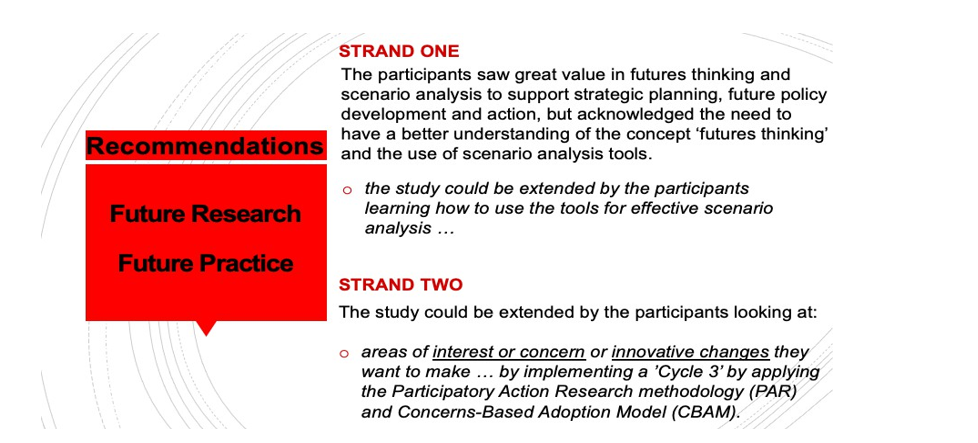
Figure 2: Recommendations: Future Research - Future Practice
Follow-up Studies: Given the Findings and How the Study Could be Extended
The study could be extended in several ways. First, it is hoped that participants of Strand One would extend their involvement in scenario analysis by learning how to use the tools effectively analysis to support, strategic planning, future policy development and guide action. Fauré et. al mapped tools and methods that were used to assist in scenario analysis [324]. It would be useful to explore how to assess future scenarios, categorised according to Börjeson et al.’s predictive, explorative, and normative scenarios. Recommendations are made in this Chapter in Section 6.8.2 [325].
It is hoped that the Leadership and Teacher Participants in Strand Two will action areas of interest, innovative changes they highlighted, and address areas of agreed concern by implementing a Cycle 3 using action research methodology [326]. To understand and improve the activities they engage in and the circumstances they find themselves in, researchers and participants engage in collective, self-reflective enquiry as its core component. It is suggested to apply the principles of Participatory Action Research (PAR) and the Concerns-Based Adoption Model (CBAM) methodology.
Recommendations: School Systems, Schools, Teachers, and Government
This section of the research elaborates the agreed recommendations of the SSL2&3 Participants and EP Participants in Strand One. In addition, it provides the several recommendations the researcher has made to the three WA schools using the Concerns-Based Adoption Model (CBAM).
Strand One
The SSL2&3 Participants and EP Participants in the study have supported the following written recommendations:
1. As a starting point, the Australian education community be encouraged to work together to generate their own version of the OECD or HolonIQ scenarios of future schooling, to develop understandings of the local circumstances that will resonate with the community, particularly with the widening equity gap across education in Australia.
2. System and school leaders include futures thinking in respect to education and educational change as a pre-requisite to development of policy and strategy given that change is constant, and increasingly more rapid due to technology developments and data science influencing analytical models.
3. Education systems include the opportunity for professional development in futures thinking for schools to lead the decision-making in planning for the future with the goals of promoting equity and excellence and to guide all of our students to ‘become successful learners and confident and creative individuals.
Strand Two
In Strand Two the researcher made several recommendations to the three WA schools using Concerns-Based Adoption Model (CBAM):
1. that the Concerns-Based Adoption Model (CBAM) be used to analyse, explain, evaluate, and monitor the application of a new item, program, practise, or innovation in a school.
2. that the Concerns-Based Adoption Model (CBAM) be used to track how a school is adopting specific reform efforts and changes, and to learn how school leaders and teachers could make sense of the reform initiative(s).
3. that school leaders may wish to collect data using the Concerns-Based Adoption Model (CBAM) to identify what changes to make or what forms of assistance they need, such as extra resources, teacher professional development, or student instructions.
Conclusion
The relevance of scenario analysis and futures thinking has been examined in this article, along with the significance of considering possible futures in conversations regarding the future of education. Not much will change if educators do not fully understand the obstacles to change or the passive roles that stakeholders play. There are several institutional factors, customs, and vested interests that are opposed to even small reforms in education. It goes without saying that not all changes are desirable, and many of the reasons for inertia may be valid. Unfortunately, possibilities for the future are regrettably not included in the conversation about education. The debate over outcomes for learning and their role in helping us focus attention to the past, present, and, most importantly, near and far futures is the most significant problem in education today.
Education addresses current and historical connections. It is about the person and how they interact with society. The most important issue in education is the dispute over learning outcomes and how they aid in our ability to pay attention to the past, present, and most importantly near and far futures. Education in the 21st century, according to educators, must be centred on developing a multidisciplinary approach to the future of learning and on skills and competences. Experts concur that learning facts alone is no longer sufficient; instead, people must learn how to apply the facts to combine complicated knowledge and use it to address the complex issues facing society. Countries, like Finland, concentrate on teaching students’ skills rather than memorising an ever- increasing amount of information as their primary educational goals [327,328]. According to Lonka, et al., a student develops a toolbox of abilities through a multidisciplinary approach, including problem-solving, critical thinking, communication and writing, analytical and research techniques, teamwork, and much more that are easily adaptable to different job settings [329]. According to Leadbeater, education should give students the knowledge and skills they will need to succeed in society [330]. The knowledge and skills will enable them to influence an uncertain future and lead more successful lives, both individually and collectively. Considering society's projected future, one's ability to learn and adapt will be more important than one's current level of knowledge [331]. Experts from across the world concur that students should be lifelong learners who can create, interact, contribute, and invent [332]. This dissertation concludes with Chapter 7, a brief discussion of the methods the researcher used to ensure academic rigour throughout the study and how the research findings and research project outcomes, have and will continue to be disseminated.
NOTE: for ease of discussion and to protect participant confidentiality
Demographics of Strand One Participants:
• eDelphi Round 1 System and School Leader Participants (n=22) are referred to as ‘SSL1 Participants’.
• Delphi Round 2 and 3 System and School Leader Participants (n=55) are referred to as ‘SSL2 & 3 Participants’.
• The Panel of Experts (n=7) is referred to as ‘EP Participants’.
Demographics of Strand Two Participants:
Throughout Strand Two to maintain confidentiality, participants were identified as either Leadership Participants or Teacher Participants. Members of the leadership team were called Leadership Participants and chosen teachers, Teacher Participants. Table 11 shows the total number of participants from the three schools who completed two online questionnaires in Stage1/Cycle 1. There were also 10 Teacher Participants who completed two questionnaires in Stage 2/Cycle 2 within those three schools.
|
Schools |
Leadership Participants |
Teacher Participants |
|
School A |
3 (LPA1, LPA2, LPA3) |
3 (TPA1, TPA2, TPA3) |
|
School B |
4 (LPB1, LPB2, LPB3, LPB4) |
3 (TPB1, TPB2, TPB3) |
|
School C |
3 (LPC1, LPC2, LPC3) |
4 (TPC1, TPC2, TPC3, TPC4) |
|
Total |
10 |
10 |
References
- Moser, A., & Korstjens, I. (2017). Series: Practical guidance to qualitative research. Part 3: Sampling, data collection and analysis. European Journal of General Practice, 24(1), 9–18.
- Braga, C. (2020). Translating competencies to empowered action. The Brookings Institution.
- Foundation for Young Australians (FYA). (2018, June). The new work order report series.
- HolonIQ (2020). Five scenarios for the future of learning and talent, Education in 2030.
- Nesta, (2017). The future of skills: Employment in 2030.
- OECD. (2001). What schools for the future? Schooling for tomorrow. OECD Publishing.
- OECD. (2020). The future of education and skills: Education 2030. OECD Publishing.
- OECD. (2020). Back to the future of education: Four OECD scenarios for schooling, educational research and innovation. OECD Publishing.
- Sanborn, R., Santos, A., Whittington, A. & Caruthers, J. T. (2005). The future of education: four scenarios. ResearchGate, 39, 21-23.
- Scott, C. L. (2023). The Futures of Learning 3: What Kind of Pedagogies for the 21st Century? International Journal for Business Education, 164(1).
- Winthrop, R., & McGivney, R. (2016). Skills for a changing world: Advancing quality learning for vibrant societies. The Brookings Institution.
- World Bank. (2018). Learning to realise education’s promise. World Development Report 2018.
- World Economic Forum. (2018). The future of jobs report 2018.
- Darling-Hammond, L., Flook, L., Cook-Harvey, C., Barron, B., & Osher, D. (2020). Implications for educational practice of the science of learning and development. Applied Developmental Science, 24(2), 97-140.
- OECD. (2022). Education at a glance 2022: OECD Indicators. OECD Publishing.
- Perso, T. F. (2012). Cultural responsiveness and school education: With particular focus on Australia’s First Peoples; A review & synthesis of the literature. Menzies School of Health Research, Centre for Child Development and Education, Darwin Northern Territory.
- UNESCO. (2023). Global education monitoring report 2023: Technology and education – A Tool for equity or a divide? UNESCO.
- Ahmad, T. (2020). Scenario based approach to re-imagining future of higher education which prepares students for the future of work. Higher Education, Skills and Work-Based Learning, 10(1), 217-238.
- Fergnani, A. (2019). The future persona: a futures method to let your scenarios come to life. Foresight, 21(4), 445-466.
- OECD. (2021). OECD Skills Outlook 2021: Learning for Life.OECD Publishing.
- Paige, K., & Lloyd, D. (2016). Use of future scenarios as a pedagogical approach for science teacher education. Research in Science Education, 46, 263-285.
- De Smedt, P., Borch, K., & Fuller, T. (2013). Future scenarios to inspire innovation. Technological Forecasting and Social Change, 80(3), 432-443.
- Wright, G., & Cairns, G. (2011). Scenario thinking: Practical approaches to the future. Springer.
- Dunne, J., & O'Rourke, M. (2022). Rethinking Assessment: From ATAR to Future Skills. Routledge.
- Fullan, M., & Duckworth, S. (2015). 21st Century Skills: 6 Cs of Education.
- Fullan, M., & Scott. G. (2014). New pedagogies for deep learning whitepaper: Education PLUS the world will be led by people you can count on, including you! CollaborativeImpact SPC, Seattle, Washington.
- Henebery, B. (2019). Growing number of students unprepared for work – study. The Educator.
- Jeyaraj, J. S. (2021). Content to Competency: A Paradigm Shift in English Language Curriculum (June 22).
- Lamb, S., Huo, S., Walstab, A., Wade, A., Maire, Q., Doecke, E., Jackson, J., & Endekov, Z. (2020). Educational opportunity in Australia 2020: Who succeeds and who misses out. Centre for International Research on Education Systems, Victoria University, for the Mitchell Institute: Melbourne.
- OECD. (2020). OECD policy responses to coronavirus (COVID-19): Combatting COVID-19’s effect on children, tackling coronavirus (COVID 19): Contributing to a global effort. OECD Publishing.
- Priestley, M., Biesta, G. J. J., & Robinson, S. (2013). Teachers as agents of change: Teacher agency and emerging models of curriculum. In M. Priestley, & G. J. J. Biesta (Eds.). Reinventing the curriculum: New trends in curriculum policy and practice (pp.187-206). BloomsburyAcademic.
- Dhawan, S. (2020). Online learning: A panacea in the time of COVID-19 crisis. Journal of Educational Technology Systems, 49(1), 5-22.
- Photopoulos, P., Tsonos, C., Stavrakas, I., & Triantis, D. (2023). Remote and in-person learning: Utility versus social experience. SN Computer Science, 4(2), 116.
- Salta, K., Paschalidou, K., Tsetseri, M., & Koulougliotis,D. (2022). Shift from a traditional to a distance learning environment during the COVID-19 pandemic: University students' engagement and interactions. Science and Education, 31(1), 93-122.
- Tate, T., & Warschauer, M. (2022). Equity in online learning.Educational Psychologist, 57(3), 192-206.
- Berk, L. E. (2024). Child development (10th ed.). Pearson.
- Gordon, N., & Browne, K. W. (2019). Beginnings & beyond: Foundations in early childhood education (10th ed.). Cengage Learning.
- Jones, S. M., & Bouffard, S. M. (2012). Social and emotional learning in schools: From programs to strategies. Social Policy Report, 26(4), 1-33.
- National Association for the Education of Young Children (NAEYC). (2019). The whole child: Developmentally appropriate practice in early childhood programs. NAEYC.
- Noddings, N. (2017). Care Ethics and Education. In N. Aloni, & L. Weintrob (Eds.), Beyond Bystanders. Moral Development and Citizenship Education. Sense Publishers.
- Nolde, A. (2023). How can early childhood teachers implement developmentally appropriate practices that support whole- child development in preschool and kindergarten programs? (Thesis, Concordia University, St. Paul).
- O’Donnell, J., & Kirkner, S. L. (2014). The impact of social and emotional learning programs on academic achievement: A meta-analysis. Review of Educational Research, 84(1), 90- 129.
- Wang, M. T., & Degol, J. (2016). School Climate: a Review of the Construct, Measurement, and Impact on Student Outcomes. Educational Psychological Review, 28, 315–352.
- Anthoney, J., Stead, R., & Turney, K. (2017). Making connections and building resilience: Developing workshops with undergraduates. Knowledge Management & E-Learning, 9(3), 404.
- Dohaney, J., de Róiste, M., Salmon, R. A., & Sutherland,K. (2020). Benefits, barriers, and incentives for improved resilience to disruption in university teaching. International Journal of Disaster Risk Reduction, 50, 101691.
- Holland, J., Holland, J. (2014). Implications of Shifting Technology in Education. Techtrends Tech Trends, 58, 16–25.
- Lubienski, C., & Ndimande, B. S. (2017). The politics of market mechanisms in education. In Privatization and the Education of Marginalized Children (pp. 3-16). Routledge.
- Luna Scott, C. (2015). The futures of learning 3: what kind of pedagogies for the 21st century?.
- Malik, R. S. (2018). Educational challenges in 21st century and sustainable development. Journal of Sustainable Development Education and Research, 2(1), 9-20.
- Milligan, A., Rusholme, S., Davidson, L., Wilson, F., & Potter,K. (2021). Contributing to change? Responding to future- focused issues through education outside the classroom. Teaching and Learning Research Initiative, August.
- Ng, D., Wong, C.P. & Liu, S (2020). Future-ready Learners: Learning, Lifework, Living, and Habits of Practices. (NIE Working Paper Series No. 20). Singapore: National Institute of Education.
- OECD. (2023). Equity and Inclusion in Education: Finding Strength through Diversity. OECD Publishing.
- Prince, E. S. (2019). 7 Skills for the Future: Adaptability, Critical Thinking, Empathy, Integrity, Optimism, Being Proactive, Resilience. Pearson UK.
- Tatto, M. T. (2024). Empowering Teachers for Sustainable and Equitable Education: Program Philosophy, Theoretical Bases, and Pedagogy. In I (pp. 3-32). Routledge.
- Yuill Proctor, T. (2022). Connected classes: a case study of one high school's journey from a traditional to a future- focused curriculum. Submitted in partial fulfilment of the requirements for the degree of Doctor of Education University of Canterbury, June.
- Bradfield, R., Cairns, G., & Wright, G. (2015). Teaching scenario analysis - An action learning pedagogy. Technological Forecasting and Social Change.
- Brown, M. C., & Wilson, D. R. (2024). Futures thinking and educational leadership: Insights from Australian experts. Routledge.
- Cordova-Pozo, K., & Rouwette, Etiënne A. J. A. (2023). Types of scenario planning and their effectiveness: A review of reviews. Futures, 149(103153).
- Derbyshire, J. & Wright, G. (2017). Augmenting the intuitive logics scenario planning method for a more comprehensive analysis of causation. International Journal of Forecasting, 33(1), 254-266.
- Iversen, J. S. (2006). Futures thinking methodologies and options for education. Centre for Educational Research and Innovation, Schooling for Tomorrow: Think Scenarios,Rethink Education, 107-122.
- Ramirez, R., Mukherjee, M., Vezzoli, S., & Kramer, A. (2015). Scenarios as a scholarly methodology to produce “interesting research”. Futures, 71, 70-87.
- Richter, I., Gabe-Thomas, E., Queirós, A. M., Sheppard, S., & Pahl, S. (2023). Advancing the potential impact of future scenarios by integrating psychological principles. Environmental Science & Policy, 140, 68-79.
- Ringland, G. (2010). The role of scenarios in strategic foresight. Technological Forecasting and Social Change, 77,1493-1498.
- Schultz, W., & Dator, J. (Eds.). (2021). Education futures: New approaches and perspectives. Routledge.
- Schreiber, D. A. (2019). Introduction to futures thinking in organizations. In D. A. Schreiber, & Z. L. Berge (Eds.), Futures thinking and organizational policy. Palgrave Macmillan.
- Schwartz, P. (2012). The art of the long view: Planning for the future in an uncertain world. Kindle Edition.
- Spaniol, M., & Rowland, N. (2019). Defining scenario. Futures and Foresight Science, 1(1),1-13. John Wiley & Sons Ltd.
- Varum, C., & Melo, C. (2010). Directions in scenario planning literature – A review of the past decades. Futures, 42, 355-369.
- Australian Council for Educational Research. (2022). The future of education: The role of futures thinking in policy and practice. ACER.
- Australian Government Department of Education. (2023). Transforming education systems: Challenges and innovations. Australian Government Publishing Service.
- Dator, J. (2022). Futures Thinking: A Practical Guide to Managing Uncertainty. Springer.
- Myers, M. M., & Myers M. M. (2023). Introduction to futures studies and the methodology of the future. Palgrave Macmillan.
- Ramírez, R., & Rajput, A. (2021). Anticipation: The Epistemology of Futures. Routledge.
- Schultz, W. (2021). The future of futures: Theoretical perspectives on the future of futures. Routledge.
- Schwartz, P. (1997). Art of the long view: planning for the future in an uncertain world. John Wiley & Sons.
- Burns, T. (2022). What schools for tomorrow? Futures thinking and leading for uncertainty. CSE Leading Education Series, 1-19.
- Government Office for Science. (2022). A brief guide to futures thinking and foresight: Tips, advice, and guidance to help civil servants embed long-term thinking and external insight into policy making. Foresight Projects, 1-12, London.
- Jones, A., Buntting, C., Hipkins., R. Conner, L., & McKim,A. (2012). Developing Students’ Futures Thinking in Science Education. Research Science Education, 42, 687–708.
- Pouru-Mikkola, L., & Wilenius, M. (2021). Building individual futures capacity through transformative futures learning. Futures, 132, 102804.
- Uskola, A., & Puig, B. (2023). Development of systems and futures thinking skills by primary pre-service teachers for addressing epidemics. Research Science Education, 53, 741- 757.
- Varpanen, J., Laherto, A., Hilppö, J., & Ukkonen-Mikkola,T. (2022). Teacher agency and futures thinking. Education Sciences, 12(3), 177.
- Vidergor, H. E. (2023). Teaching futures thinking literacy and futures studies in schools. Futures, 146.
- Ainscow, M. (2020). Promoting inclusion and equity in education: lessons from international experiences. Nordic Journal of Studies in Educational Policy, 6(1), 7–16.
- Dudgeon, C. (2024). The right to education in Australia. Centre for Law and Social Justice. Newcastle,NSW.
- Gold, E., Henig, J. R., & Simon, E. (2011). Calling the shots in public education: Parents, politicians, and educators clash. Dissent, 58(4), 34-39.
- Gollust, S. E., Seymour, J. W., Pany, M. J., Goss, A., Meisel,Z. F., & Grande, D. (2017). Mutual distrust: Perspectives from researchers and policy makers on the research to policy gap in 2013 and recommendations for the future. Inquiry: A Journal of Medical Care Organisation, Provision, and Financing, 54.
- Greenberg, M. B. (2020). How our public education system discourages curiosity and encourages depression and anxiety. Senior Projects, Spring. 249.
- Haleem, A., Javaid, M., Qadri, M. A., & Suman, R. (2022). Understanding the role of digital technologies in education, A Review Sustainable Operations and Computers, 3, 275-285.
- Lansing, A. E., Romero, N. J., Siantz, E., Silva, V., Center, K., Casteel, D., & Gilmer, T. (2023). Building trust: Leadership reflections on community empowerment and engagement in a large urban initiative. BMC Public Health, 23(1), 1252.
- Merheb, M. (2024). The impact of outdated and inadequate education system on the economy. Master’s Thesis, Jagiellonian University Repository.
- Poldervaart, S. (2019). Why the Dutch educational system is outdated, and how it could be improved.
- UNESCO. (2024). Bringing into focus the future of the right to education, Education 2030, Policy-oriented Research Paper as Part of the Initiative on the Evolving Right to Education.
- Sage, R. (2022). Is School an outdated system. Alternatives to Traditional classrooms. How World events are changing Education, 36-45.
- Snyder, S. (2013). The simple, the complicated, and the complex: Educational reform through the lens of complexity theory. OECD Education Working Papers, No. 96, OECD Publishing.
- Wolk, S. (2017). Educating students for an outdated world.Phi Delta Kappan, 99(2), 46-52.
- Aldabbagh, I., & Allawzi, S. (2019). Amer, M., Daim, T. U., & Jetter, A. (2013). A review of scenario planning. Technology Roadmapping, 46 (), pp. 177-232.
- Amer, M., Daim, T. U., & Jetter, A. (2013). A review of scenario planning. Futures, 46, 23-40.
- Araújo, W. J., & Casimiro, A. H. T. (2023). Prospective scenarios: Systematic review at lisa, emerald, scopus and web of science. RDBCI: Revista Digital de Biblioteconomia e Ciência da Informação, 18, e020003.
- Bradfield, R. Wright, G. Burt, G. Cairns, G., & Van Der Heijden. K. (2005). The origins and evolution of scenario techniques in long range business planning. Futures, 37 (8), 795-812.
- Brown, I., & Castellazzi, M. (2014). Scenario analysis for regional decision-making on sustainable multifunctional land uses. Regional Environmental Change, 14, 1357-1371.
- Lacroix, D., Laurent, L., de Menthière, N., Schmitt, B., Béthinger, A., David, B., ... & Du Châtelet, J. P. (2019). Multiple visions of the future and major environmental scenarios. Technological forecasting and social change, 144, 93-102.
- Lempert, R. (2013). Scenarios that illuminate vulnerabilities and robust responses. Climatic change, 117, 627-646.
- Rawluk, A., Ford, R. M., & Williams, K. J. (2018). Value- based scenario planning: Exploring multifaceted values in natural disaster planning and management. Ecology & Society, 23(4).
- Schuck, S., Aubusson, P., Buchanan, J., & Russell, T. (2012). Beginning teaching: Stories from the classroom. Springer Science & Business Media.
- Wiebe, K., Zurek, M., Lord, S., Brzezina, N., Gabrielyan, G., Libertini, J., ... & Westhoek, H. (2018). Scenario development and foresight analysis: exploring options to inform choices. Annual Review of Environment and Resources, 43(1), 545- 570.
- Wright, D., Stahl, B., & Hatzakis, T. (2020). Policy scenarios as an instrument for policymakers. Technological Forecasting and Social Change, 154, 119972.
- Cerna, L. (2019). Refugee education: Integration models and practices in OECD countries.
- Cerna, L., Andersson, H., Bannon, M., & Borgonovi, F. (2019). Strength through diversity’s Spotlight Report for Sweden.
- Gouëdard, P., Pont, B., & Viennet, R. (2020). Educationresponses to COVID-19: Implementing a way forward.
- UNESCO. (2020). How many students are at risk of not returning to school?.
- Organisation for Economic Co-operation and Development. (2020). Learning remotely when schools close: How well are students and schools prepared? Insights from PISA. OECD Publishing.
- OECD. (2020). Trends shaping education 2020 spotlight 21: Coronavirus special edition: Back to school, trends shaping education. OECD Publishing.
- OECD. (2020). The impact of COVID-19 on student equity and inclusion: Supporting vulnerable students during school closures and school re-openings. OECD Publishing.
- Schrage, S. (2018). Massive study finds lectures still dominateSTEM education. Fac. Focus, 1-13.
- Gonski, D. (2012). Review of funding for schooling. Department of Education, Employment and Workplace Relations (Australia).
- Di Gregorio, E. (2023). Imagining “national” funding in the Australian federation: the Gonski review and the schooling resource standard. Education Policy Analysis Archives, 31.
- Torii, K., & O’Connell, M. (2017). Preparing young people for the future of work: Policy roundtable report.
- Tomlinson, C. A. (2014). The differentiated classroom:Responding to the needs of all learners. Ascd.
- Robert, E. S. (2020). Educational psychology: Theory and practice. PRENTICE HALL.
- Kolb, D. A. (2014). Experiential learning: Experience as the source of learning and development. FT press.
- Hattie, J., & Zierer, K. (2017). 10 mindframes for visible learning: Teaching for success. Routledge.
- Hattie, J., & Yates, G. C. R. (2021). Visible learning: Feedback. Routledge.
- Wright, P., Fejzo, A., & Carvalho, T. (2022). Progressive pedagogies made visible: Implications for equitable mathematics teaching. The Curriculum Journal, 33(1), 25-41.
- Lucas, B. (2021). Rethinking assessment in education: The case for change. Victoria: Book publishing and rights Co. LLC.
- OECD. (2012). Equity and quality in education: Supporting disadvantaged students and school. OECD Publishing.
- Prosser, Z., & Basra, D. S. (2018). Futures Thinking: A mind- set, not a method. Embedding futures thinking within design practices. Touchpoint: The Journal of Service Design, 10(2).
- Collman, N. (2018). Beyond the next big thing: Designing for the future human. Nile Webinar.
- Rushkoff, D. (2018). Why futurists suck. Futurefest, 7 July, London.
- De Spiegeleire, S., van Duijne, F., & Chivot, E. (2016). Towards Foresight 3.0: The HCSS Metafore Approach—A Multilingual Approach for Exploring Global Foresights. Anticipating Future Innovation Pathways Through Large Data Analysis, 99-117.
- Gunawardena, M., Bishop, P., & Aviruppola, K. (2024). Personalized learning: The simple, the complicated, the complex and the chaotic. Teaching and Teacher Education, 139, 104429.
- IEP-UNESCO. (2020). Prepare for school reopening, IIEP- UNESCO’s COVID19 Response Briefs.
- Cowling, M. A., & Moro, C. (2019). Holographic teachers were supposed to be part of our future. What happened? The Conversation.
- Burns, R. (2020). Adult Learner at Work: The challenges oflifelong education in the new millenium. Routledge.
- Brooks, R., Fuller, A., & Waters, J. (Eds.). (2012). Changing spaces of education: New perspectives on the nature of learning. Routledge.
- Clott, C. (2020). 5 The Changing Nature of Work. The Cambridge handbook of the changing nature of work, 101.
- Fenwick, T. (2006). Work, learning, and education in the knowledge economy: A working-class perspective.
- Hernández-Torres, R., Martínez Lozano, M., Torres, I., Rosario-Hernández, E., Ramos-Pibernus, A., Soto, A., ... & Rivera-Segarra, E. (2023). The impact of the Covid-19 pandemic and previous natural disasters on the mental health of healthcare workers in Puerto Rico. PLOS Global Public Health, 3(5), e0001784.
- Johannes, S. & Li, J. (2024). The changing nature of work andemployment in modern societies. Psychosocial Occupational Health: An Interdisciplinary Textbook (Oxford, 2024; online edition, Oxford Academic, 22 February.
- Lomba, E. R. (2021). The Historical Structures of Training for Work in the Capitalist System. Cantareira Magazine, 34.
- Manyika, J., Lund, S., Chui, M., Bughin, J., Woetzel, J., Batra, P., ... & Sanghvi, S. (2017). Jobs lost, jobs gained: What the future of work will mean for jobs, skills, and wages.
- World Economic Forum. (2021). The Fourth Industrial Revolution, by Klaus Schwab. January.
- Lonsdale, M., & Ingvarson, L. (2003). Initiatives to address teacher shortage.
- Podolsky, A., Kini, T., Bishop, J., & Darling-Hammond, L. (2016). Solving the teacher shortage: How to attract and retain excellent educators. Learning Policy Institute.
- Pressley, T. (2021). Factors contributing to teacher burnout during COVID-19. Educational Researcher, 50(5), 325-327.
- Rajendran, N., Watt, H. M., & Richardson, P. W. (2020). Teacher burnout and turnover intent. The Australian Educational Researcher, 47(3), 477-500.
- Shen, B., McCaughtry, N., Martin, J., Garn, A., Kulik, N., & Fahlman, M. (2015). The relationship between teacher burnout and student motivation. British Journal of Educational Psychology, 85(4), 519-532.
- Sutcher, L., Darling-Hammond, L., & Carver-Thomas, D. (2019). Understanding teacher shortages: An analysis of teacher supply and demand in the United States. Education policy analysis archives, 27(35).
- Augustus, J., Goodall, D., & Williams, B. (2023). Does the role of personal academic tutor have an impact on staff wellbeing?. Research in Post-Compulsory Education, 28(4), 693-719.
- Baik, C., & Larcombe, W. (2023). Student wellbeing and students’ experiences in higher education. In Research Handbook on the Student Experience in Higher Education (pp. 74-88). Edward Elgar Publishing.
- Douglas, V., Pattison, N., Warren, K., & Karanika-Murray, M. (2025). Wellbeing in the higher education sector: A qualitative study of staff perceptions in UK universities. Journal of Workplace Behavioral Health, 40(2), 135-158.
- Mbabazi, A. (2024). Well-Being among Academic Staff in Higher Education Institutions: A Review of Organization Support Theory (OST) and Job Demand Resources Theories (JDRs). Interdisciplinary Journal of Education, 7(1), 101-115.
- Strukova, A., & Polivanova, K. (2023). Well-Being in Education: Modern Theories, Historical Context, Empirical Studies. Sovremennaya zarubezhnaya psikhologiya= Journal of Modern Foreign Psychology, 12(3), 137-148.
- Zavala, S. K., French, M. T., Zarkin, G. A., & Omachonu, V. K. (2002). Decision latitude and workload demand: implications for full and partial absenteeism. Journal of public health policy, 23, 344-361.
- Masters, G. (2005) Continuity and growth: Key considerations in educational improvement and accountability. IARTV Seminar Series paper No. 141, February.
- Beatty, B. J. (2019). Bibliography of Hybrid-Flexible Literature (using various terms). Hybrid-Flexible Course Design: Implementing student-directed hybrid classes. EdTech Books.
- Cochrane, T., Birt, J. R., Cowie, N., Deneen, C., Goldacre, P., Narayan, V., ... & Worthington, T. (2020, December). A collaborative design model to support hybrid learning environments during COVID-19. In ASCILITE 2020: 37th International Conference on Innovation, Practice and Research in the Use of Educational Technologies in Tertiary Education (pp. 84-89). Australasian Society for Computers in Learning in Tertiary Education.
- Colasante, M., Bevacqua, J., & Muir, S. (2020). Flexible hybrid format in university curricula to offer students in- subject choice of study mode: An educational design research project. Journal of University Teaching and Learning Practice, 17(3), 1-19.
- Goodyear, P. (2022). Flexible Learning Spaces. Routledge.
- Jacka, L., & Lindsay, J. (2022, January). Flexible learning and the virtual campus. In Proceedings of the 39th International Conference on Innovation, Practice and Research in the Use of Educational Technologies in Tertiary Education (ASCILITE 2022). Australasian Society for Computers in Learning in Tertiary Education (ASCILITE).
- O'Byrne, W. I., & Pytash, K. E. (2015). Hybrid and blended learning: Modifying pedagogy across path, pace, time, and place. Journal of Adolescent & Adult Literacy, 59(2), 137-140.
- Fleming, D. (2017). Student voice: An emerging discourse in Irish education policy. International Electronic Journal of Elementary Education, 8(2), 223–242.
- Rudduck, J. (2007). Student voice, student engagement, and school reform. In International handbook of student experience in elementary and secondary school (pp. 587- 610). Dordrecht: Springer Netherlands.
- Cook-Sather, A., & Matthews, K. E. (2023). Practising student voice in university teaching and learning: Three anchoring principles. Journal of University Teaching and Learning Practice, 20(6), 1-11.
- Hattie, J. (2008). Visible learning: A synthesis of over 800 meta-analyses relating to achievement. routledge.
- Kirschner, P. A., Sweller, J., & Clark, R. E. (2006). Why minimal guidance during instruction does not work: An analysis of the failure of constructivist, discovery, problem- based, experiential, and inquiry-based teaching. Educational psychologist, 41(2), 75-86.
- Personalisation in Google News. (2016). In S. Casteleyn,P. Dolog, and C. Pautasso (Eds.), Current Trends in Web Engineering. 2016 International Conference on Wind Engineering. Lecture Notes in Computer Science, vol 9881. Springer.
- Taylor, R. D., Oberle, E., Durlak, J. A., & Weissberg, R. P. (2017). Promoting positive youth development through school-based social and emotional learning interventions: A meta-analysis of follow-up effects. Child development, 88(4), 1156-1171.
- Fadel, C., Bialick, M., & Trilling, B. (2015). Four-dimensionaleducation.
- Hamilton, C. (2017). The Anthropocene as rupture. The Anthropocene Review, 4(1), 3-8.
- Larson, L. C., & Miller, T. N. (2011). 21st century skills: Prepare students for the future. Kappa Delta Pi Record, 47(3), 121-123.
- Voogt, J., & Roblin, N. P. (2012). A comparative analysis of international frameworks for 21st century competences: Implications for national curriculum policies. Journal of curriculum studies, 44(3), 299-321.
- Dede, C. (2010). Comparing frameworks for 21st century skills. 21st century skills: Rethinking how students learn, 20(2010), 51-76.
- OECD. (2018). The future of education and skills: Education 2030. OECD Publishing.
- Partnership for 21st Century Learning. (2019). Framework for 21st century learning. The Partnership for 21st Century Skills.
- Hattie, J. (2012). Visible learning for teachers: Maximizing impact on learning. Routledge.
- McCombs, B. L., & Miller, L. (2007). Learner-centered classrooms and schools: Foundations of effective pedagogy. John Wiley & Sons.
- Weimer, M. (2013). Learner-centered teaching: Five key changes to practice. John Wiley & Sons.
- Wiggins, G., & McTighe, J. (2005). Understanding by design (2e). Alexandria, VA: Association for Supervision and Curriculum Development (ASCD).
- Crutzen, P. J., & Brauch, H. G. (2016). Paul J. Crutzen: a pioneer on atmospheric chemistry and climate change in the Anthropocene (p. 248). Springer Nature.
- Lewis, S. L., & Maslin, M. A. (2015). Defining theanthropocene. Nature, 519(7542), 171-180.
- Zalasiewicz, J., Waters, C. N., Wolfe, A. P., Barnosky, A. D., Cearreta, A., Edgeworth, M., ... & Williams, M. (2017). Making the case for a formal Anthropocene Epoch: an analysis of ongoing critiques.
- Freestone, R. (2012). Futures thinking in planning education and research. Journal for Education in the Built Environment, 7(1), 8-38.
- Moravec, J. W. (2013). Knowmad society: The “new” work and education. On the horizon, 21(2), 79-83.
- Msila, V. (2015). Teacher readiness and information and communications technology (ICT) use in classrooms: A South African case study. Creative Education, 6(18), 1973-1981.
- OECD. (2015). Students, computers, and learning: Making the connection, PISA. OECD Publishing.
- Coopers, P. W. (2018). Workforce of the future: The competing forces shaping 2030. PwC’s global People and Organisation practice.
- Bolstad, R. (2011). Taking a" future focus" in education- what does it mean?. Wellington: New Zealand Council for Educational Research.
- Thompson Coon, R., Vataja, K., & Parkkonen, P. (2024). Fusing foresight and futures thinking for a new transformative evaluation paradigm. New Directions for Evaluation, 2024(182), 91-101.
- Dias, S. (2022). Preparing Future Faculty: Developing Inclusive, Future-Focused Educators and an Adaptive Program. In The Palgrave Handbook of Academic Professional Development Centers (pp. 511-525). Cham: Springer International Publishing.
- Wamsler, C., Schäpke, N., Fraude, C., Stasiak, D., Bruhn, T., Lawrence, M., ... & Mundaca, L. (2020). Enabling new mindsets and transformative skills for negotiating and activating climate action: Lessons from UNFCCC conferences of the parties. Environmental science & policy, 112, 227-235.
- Darling-Hammond, L. (2015). The flat world and education: How America's commitment to equity will determine our future. Teachers College Press.
- Fullan, M. (2014). Three keys to maximizing impact.
- Hargreaves, A., & Fullan, M. (2015). Professional capital: Transforming teaching in every school. Teachers College Press.
- Robinson, K., & Aronica, L. (2016). Creative schools: The grassroots revolution that's transforming education. Penguin books.
- Schleicher, A. (2018). World class: How to build a 21st- century school system. OECD Publishing.
- Brown, J. S., & Adler, R. P. (2008). Minds on fire: Open education, the long tail, and learning 2.0. EDUCA USE Review, 43 (1), 16-32. Retrieved February 23, 2008.
- Hattie, J., & Yates, G. C. (2013). Visible learning and the science of how we learn. Routledge.
- Marzano, R. J. (2007). The art and science of teaching: Acomprehensive framework for effective instruction. Ascd.
- Myers, J., & Adams-Budde, M. (2017). Teaching literacy in the digital age: Inspiration for all levels and literacies: Edited by Mark Gura. International Society for Technology in Education, Eugene, OR, 2014, 236 pp. ISBN 978-1-56484-339-5 (pbk). ISBN 978-1-56484-482-8 (eBook).https://doi. org/10.1007/s11159-017-9649-y.
- Selwyn, N. (2021). Education and technology: Key issues and debates. Bloomsbury Publishing.
- Fullan, M. (2016). The new meaning of educational change. Teachers college press.
- Guskey, T. R., & Sparks, D. (2004). Linking professional development to improvements in student learning. Research linking teacher preparation and student performance, 12(11).
- Schunk, D. H., & Zimmerman, B. (Eds.). (2011). Handbook of self-regulation of learning and performance. Taylor & Francis.
- Wagner, T. (2008). The global achievement gap: Why even our best schools don’t teach the new survival skills our children need—and what we can do about it. Basic Books.
- OECD. (2019). Artificial intelligence in society. OECDPublishing.
- European Commission. (2021). Proposal for a regulation laying down harmonised rules on artificial intelligence (Artificial Intelligence Act).
- Davenport, T. H., & Ronanki, R. (2018). Artificial intelligence for the real world. Harvard business review, 96(1), 108-116.
- Müller, V. C. (Ed.). (2020). Ethics of artificial intelligence androbotics. Stanford Encyclopedia of Philosophy.
- Bessen, J. (2019). Automation and jobs: When technology boosts employment. Economic Policy, 34(100), 589-626.
- Bessen, J., & Righi, C. (2019). Shocking technology: whathappens when firms make large IT investments?.
- Bessen, J., Goos, M., Salomons, A., & Van den Berge, W. (2023). Automatic reaction-what happens to workers at firms that automate?. The Review of Economics and Statistics, (Feb. 6, 2023).
- WEST PhD, J. J., & Bautista PhD, A. (2022). Global perspectives on teacher professional development: Navigating the pandemic. International Journal for Research in Education, 46(2), 1-27.
- Wyn, J. (2009). Touching the future: Building skills for life and work.
- Siegrist, J., & Li, J. (2016). Associations of extrinsic and intrinsic components of work stress with health: a systematic review of evidence on the effort-reward imbalance model. International journal of environmental research and public health, 13(4), 432.
- Ziebacz, I. (2023). Shifting paradigms towards supporting individuals with disabilities: A psycho-cybernetic approach to social work. International Journal of Special Education, 38(3), 70-81.
- Lopez Garcia, I., Maestas, N., & Mullen, K. J. (2020). The changing nature of work. Ann Arbor, MI. University of Michigan Retirement and Disability Research Centre. (MRDRC) Working Paper; MRDRC WP 2020-415.
- Norwich, B., Moore, D., Stentiford, L., & Hall, D. (2022). A critical consideration of ‘mental health and wellbeing’in education: Thinking about school aims in terms of wellbeing. British Educational Research Journal, 48(4), 803-820.
- Rideout, V., & Katz, V. S. (2016). Opportunity for all? Technology and learning in lower-income families. In Joan Ganz Cooney center at sesame workshop. Joan Ganz Cooney Center at Sesame Workshop. 1900 Broadway, New York, NY 10023.
- Real, B. (2021). Bridging Digital Divides during COVID-19: Findings from the 2020-2021 Connecticut state library digital inclusion survey. Public Library Quarterly, 40(4), 283-309.
- Hanover Research. (2014). Professional development for technology integration, June.
- Hennessy, S., D'Angelo, S., McIntyre, N., Koomar, S., Kreimeia, A., Cao, L., ... & Zubairi, A. (2022). Technology use for teacher professional development in low-and middle- income countries: A systematic review. Computers and Education Open, 3, 100080.
- Bauer, J., & Kenton, J. (2005). Toward technology integration in the schools: Why it isn’t happening. Journal of technology and teacher education, 13(4), 519-546.
- Lim, C. P., Zhao, Y., Tondeur, J., Chai, C. S., & Tsai, C.C. (2013). Bridging the gap: Technology trends and use of technology in schools. Journal of Educational Technology & Society, 16(2), 59-68.
- Carstens, K. J., Mallon, J. M., Bataineh, M., & Al-Bataineh,(2021). Effects of Technology on Student Learning. Turkish Online Journal of Educational Technology-TOJET, 20(1), 105-113.
- Franck, E., & Nicaise, I. (2017). Equity funding of schools:what do we learn from the literature about its effectiveness?.
- Sterling, S. (2017). The role of education in creating a sustainable future: A new vision for education. In Education for sustainable development: A systemic approach (pp.13-25). Routledge.
- Kollmuss, A., & Agyeman, J. (2002). Mind the gap: why do people act environmentally and what are the barriers to pro- environmental behavior?. Environmental education research, 8(3), 239-260.
- Wals, A. E. J., & Benages-Albert, J. (Eds.). (2019). Critical environmental and science education: Theory, practice, and policy. Routledge.
- United Nations Educational, Scientific and Cultural Organization (UNESCO). (2017). Education for sustainable development goals: Learning objectives.
- Tilbury, D. (2011). Education for sustainable development: An expert review of processes and learning.
- O’Brien, K., & Sygna, L. (2022). Climate change and education: Developing competencies for a sustainable future. Routledge.
- Miller, J. D., & Kimmel, S. (2020). Engaging with sustainability: Education for a sustainable future. Cambridge University Press.
- OECD. (2019). Chapter 3. The changing landscape of teaching. In TALIS 2018 Results (Volume I): Teachers and School Leaders as Lifelong Learners. OECD Publishing.
- Collie, R. J., & Martin, A. J. (2016). Adaptability: An important capacity for effective teachers. Educational Practice and Theory, 38(1), 27-39.
- Cochran-Smith, M., Cannady, M., McEachern, K. P., Mitchell, K., Piazza, P., Power, C., & Ryan, A. (2012). Teachers’ education and outcomes: Mapping the research terrain. Teachers College Record, 114(10), 1-49.
- Darling-Hammond, L., & Bransford, J. (Eds.). (2007). Preparing teachers for a changing world: What teachers should learn and be able to do. John Wiley & Sons.
- Darling-Hammond, L. (2023). Response to how teacher education matters. Journal of Teacher Education, 74(2), 157- 159.
- Bingham, C., & Biesta, G. (2022). The role of the teacher in the age of personalization. Journal of Educational Policy, 37(1), 78-95.
- Harris, A., & Jones, M. (2023). Leading futures: What schoolsneed to know about 21st-century learning. Routledge.
- Schleicher, A. (2018). Educating learners for their future, not our past. ECNU Review of Education, 1(1), 58-75.
- George, A. A., Hall, G. E., Stiegelbauer, S. M., & Litke,(2008). Stages of concern questionnaire. Austin, TX: Southwest Educational Development Laboratory.
- Ahl, L. M., Helenius, O., Aguilar, M. S., Jankvist, U. T.,Misfeldt, M., & Prytz, J. (2023). Implementation researchin mathematics education: A systematic mapping review. Implementation and Replication Studies in Mathematics Education, 3(2), 135-199.
- Bui, U. P., Tran, L. T. M., Do, N. T. B., & Nguyen, L. D.D. (2023, November). Current Situation and Policies Recommendation for Carbon Border Adjustment Mechanism (CBAM) in Developing Countries. In The Vietnam-EU Economic and Trade Forum (pp. 243-264). Singapore: Springer Nature Singapore.
- Byrne, C., & Prendergast, M. (2020). Investigating the concerns of secondary school teachers towards curriculum reform. Journal of Curriculum Studies, 52(2), 286-306.
- Hassan, S. P. (2020). Views and Concerns of Vocational Educators about the Adoption of the Reformed Vocational Curriculum: A Case Study Using Concerns-Based Adoption Model (Doctoral dissertation, The British University in Dubai).
- Puteh, S. N., Salam, K. A. A., & Jusoff, K. (2011). Using CBAM to evaluate teachers’ concerns in science literacy for human capital development at the preschool. World Applied Sciences Journal, 14, 81-87.
- Trapani, B., & Annunziato, A. (2018). Using the Concerns Based Adoption Model (CBAM) to Accelerate Understanding by Design Implementation. Journal of instructional pedagogies, 21.
- Powers, G. (2021). Leading Teachers and Managing Change: Guidance for School Administrators (Doctoral dissertation, Johns Hopkins University).
- Buehring, J. H., & Liedtka, J. (2018). Embracing systematic futures thinking at the intersection of Strategic Planning, Foresight and Design. Journal of innovation management, 6(3), 134-152.
- Inayatullah, S. (2019). Causal layered analysis a four-level approach to alternative futures relevance and use in foresight. Futuribles, 12(3), 123-135.
- Scearce, D. (2004). What if? The art of scenario thinking for nonprofits. Global Business Network.
- Upham, P., Carney, S., & Klapper, R. (2014). Scaffolding, software and scenarios: Applying Bruner's learning theory to energy scenario development with the public. Technological Forecasting and Social Change, 81, 131-142.
- Kromydas, T. (2017). Rethinking higher education and its relationship with social inequalities: past knowledge, present state and future potential. Palgrave communications, 3(1), 1-12.
- Hehir, E., Zeller, M., Luckhurst, J., & Chandler, T. (2021). Developing student connectedness under remote learning using digital resources: A systematic review. Education and Information Technologies, 26(5), 6531-6548.
- Webber, G., & Miller, D. (2016). Progressive pedagogies and teacher education: A review of the literature. McGill journal of education, 51(3), 1061-1079.
- Kozul-Wright, R. (2020). Recovering better from COVID-19 will need a rethink of multilateralism. Development (Society for International Development), 63(2-4), 157-161.
- Wright, P. (2020). Visible and socially-just pedagogy: Implications for mathematics teacher education. Journal of Curriculum Studies, 52(6), 733-751.
- Wright, P., Fejzo, A., & Carvalho, T. (2022). Challenging inequity in mathematics education by making pedagogy more visible to learners. International Journal of Mathematical Education in Science and Technology, 53(2), 444-466.
- Aguinis, H., & Edwards, J. R. (2014). Methodological wishes for the next decade and how to make wishes come true. Journal of Management Studies, 51(1), 143-174.
- Brutus, S., Aguinis, H., & Wassmer, U. (2013). Self-reported limitations and future directions in scholarly reports: Analysis and recommendations. Journal of management, 39(1), 48-75.
- Kristóf, T., & Nováky, E. (2023). The story of futures studies: An interdisciplinary field rooted in social sciences. Social Sciences, 12(3), 192.
- Voros, J. (2003). A generic foresight process framework.foresight, 5(3), 10-21.
- Dator, J., & Dator, J. (2019). Alternative futures at the Manoa School. Jim Dator: A Noticer in Time: Selected work, 1967- 2018, 37-54.
- Clodfelter, J., & Tapp, W. (2022). Vision for Tomorrow: Futures Thinking Among Independent School Leaders (Doctoral dissertation, Vanderbilt University. Peabody College).
- Coulter, L., Serrao-Neumann, S., & Coiacetto, E. (2019). Climate change adaptation narratives: Linking climate knowledge and future thinking. Futures, 111, 57-70.
- Freed, P. E., & McLaughlin, D. E. (2011). Futures thinking: preparing nurses to think for tomorrow. Nursing education perspectives, 32(3), 173-178.
- Toivonen, S. (2021). Advancing futures thinking in the real estate field. Journal of European Real Estate Research, 14(1), 150-166.
- Gidley, J. M., & Hampson, G. P. (2005). The evolution of futures in school education. Futures, 37(4), 255-271.
- Rousell, D., & Sinclair, M. P. (2024). Desiring-futures in education policy: assemblage theory, artificial intelligence, and UNESCO’s futures of education. Educational Review, 1-24.
- Delaney, K. (2014). Innovation tool kit: A practical guide:Introduction to horizon scanning in the public sector.
- Price, J. H., & Murnan, J. (2004). Research limitations and the necessity of reporting them. American journal of health education, 35(2), 66-67.
- Ioannidis, J. P. (2007). Limitations are not properly acknowledged in the scientific literature. Journal of clinical epidemiology, 60(4), 324-329.
- Jónasson, J. T. (2016). Educational change, inertia and potential futures: Why is it difficult to change the content of education?. European Journal of Futures Research, 4, 1-14.
- OECD. (2014). TALIS 2013 results: An international perspective on teaching and learning. OECD Publishing.
- Reimers, F. M., & Chung, C. K. (2016). Teaching and learning for the twenty-first century. Harvard Educational Publishing Group.
- UNESCO. (2015). Rethinking education. Towards a globalcommon good? UNESCO.
- Waks, L. J. (2007). The concept of fundamental educational change. Educational theory, 57(3), 277-295.
- Young, M., Lambert, D., Roberts, C., & Roberts, M. (2014). Knowledge and the future school: Curriculum and social justice. Bloomsbury Publishing.
- Cook-Sather, A., Bovill, C., & Felten, P. (2014). Engaging students as partners in learning and teaching: A guide for faculty. John Wiley & Sons.
- Rudduck, J., & Flutter, J. (2004). How to improve your school: Giving pupils a voice. Continuum.
- Tzika, V., Kaldi, S., Vassilaki, E., & Govaris, C. (2020). Student voice in teaching writing. In Education beyond crisis (pp. 32-47). Brill.
- Kirk, M. (2025). Student voice and agency for transformative change in matters that matter: Impactful inquiry in primary science. The Australian Educational Researcher, 52(1), 411- 430.
- Kem, D. (2022). Personalised and adaptive learning: Emerging learning platforms in the era of digital and smart learning. International Journal of Social Science and Human Research, 5(2), 385-391.
- Li, K. C., & Wong, B. T. M. (2020). Features and trends of personalised learning: A review of journal publications from 2001 to 2018. Interactive Learning Environments, 29(2), 182-195.
- Major, L., Francis, G. A., & Tsapali, M. (2021). The effectiveness of technology-supported personalised learning in low-and middle-income countries: A meta-analysis. British Journal of Educational Technology, 52(5), 1935-1964.
- Molenaar, I. (2022). Towards hybrid human-AI learningtechnologies. European Journal of Education, 57(4), 632-645.
- Pane, J. F., Steiner, E. D., Baird, M. D., & Hamilton, L.S. (2015). Continued Progress: Promising Evidence onPersonalized Learning. Rand Corporation.
- Ab Jalil, H., Ismail, I. A., Ma’rof, A. M., Lim, C. L., Hassan, N., & Che Nawi, N. R. (2022). Predicting learners’ agility and readiness for future learning ecosystem. Education Sciences, 12(10), 680.
- Ng, D. F. S., Wong, C. P., & Liu, S. (2020). Future-ready learners: Learning, Lifework, living and habits of practices. NIE Working Paper Series No. 20. National Institute of Education.
- Agaoglu, O., & Demlr, M. (2020). The integration of 21st century skills into education: an evaluation based on an activity example. Journal of Gifted Education and Creativity, 7(3), 105-114.
- Hidi, S., & Renninger, K. A. (2006). The four-phase model of interest development. Educational psychologist, 41(2), 111-127.
- González-Pérez, L. I., & Ramírez-Montoya, M. S. (2022). Components of Education 4.0 in 21st century skills frameworks: systematic review. Sustainability, 14(3), 1493.
- Hase, S., & Kenyon, C. (2013). From andragogy to heutagogy.Ultibase.
- Kennedy, T. J., & Sundberg, C. W. (2020). 21st century skills. Science education in theory and practice: An introductory guide to learning theory, 479-496.
- Hilton, M. L., & Pellegrino, J. W. (Eds.). (2012). Education for life and work: Developing transferable knowledge and skills in the 21st century. National Academies Press.
- Paulsen, M., & Hawke, S. M. (Eds.). (2022). Pedagogy in the Anthropocene: Re-wilding education for a new earth. Springer Nature.
- Tippett, T. P., & Lee, J. J. (2019). Looking Back to Move Forward: Understanding Progressive Education in the 21st Century. Journal of Applied Learning in Higher Education, 8, 79-98.
- Abbott, J. (2010). Over-schooled but undereducated: How the crisis in education is jeopardising our adolescents. A&C Black.
- Amsler, S., & Facer, K. (2017). Contesting anticipatory regimes in education: exploring alternative educational orientations to the future. Futures, 94, 6-14.
- Brown, C. G. (2012). A systematic review of the relationship between self-efficacy and burnout in teachers. Educational and Child Psychology, 29(4), 47-63.
- Robinson, K., & Aronica, L. (2015). Creative schools: the grassroots revolution that's transforming education. Viking.
- Trilling, B., & Fadel, C. (2009). 21st century skills: Learning for life in our times. John Wiley & Sons.
- Hargreaves, A. P., & Shirley, D. L. (Eds.). (2009). The fourth way: The inspiring future for educational change. Corwin Press.
- Law, W. W. (2014). Understanding China’s curriculum reform for the 21st century. Journal of Curriculum Studies, 46(3), 332-360.
- Hinnant-Crawford, B. (2016). Education Policy Influence Efficacy: Teacher Beliefs in Their Ability to Change Education Policy. International Journal of Teacher Leadership, 7(2), 1-27.
- Brown, J. S. (2013). Learning in and for the 21st century. CJ Koh Professorial Lecture Series, (4), 1-30.
- Biesta, G. (2010). Good education in an age of measurement: Ethics, politics, democracy. Routledge.
- Carey, P. (2024). Scenarios of future schooling and futures thinking from the perspectives of educational and schools' leaders perspectives. Authorea Preprints.
- Gobby, B. (2018). The tyranny of conformity: The Australian education system’s resistance to reform. Education Research and Perspectives, 45(2), 165-185.
- Scott, R. A., Leinhardt, J. E., & Durbin, D. L. (2009). The complexity of school systems. In R. A. Scott, & S. Kosslyn (Eds.), Handbook of Complexity Research, (pp. 543-562). Lawrence Erlbaum Associates.
- McGregor, G. (2017). Counter-narratives that challenge neo-liberal discourses of schooling ‘disengagement’: Youth professionals informing the work of teachers. British Journal of Sociology of Education, 38(4), 551-565.
- Vale, C., Averill, R., Hall, J., Forgasz, H. J., & Leder, G.(2020). Equity, social justice, and ethics. In J. Wray, C. Attard,J. Anderson, J. Bobis, H. McMaster, & K. Cartwright (Eds.), Research in mathematics education in Australasia 2016-2019, (pp.177-208). Springer.
- Brighouse, H., & Swift, A. (2014). Family values: The ethics of parent-child relationships. Princeton University Press.
- Lubienski, C. A., & Lubienski, S. T. (2013). The public school advantage: Why public schools outperform private schools. Stanford Social Innovation Review.
- Muganga, L., & Ssenkusu, P. (2019). Teacher-centered vs. student-centered: An examination of student teachers’ perceptions about pedagogical practices at Uganda’s Makerere University. Cultural and Pedagogical Inquiry, 11(2), 16-40.
- Wright, G. B. (2011). Student-centered learning in higher education. International journal of teaching and learning in higher education, 23(1), 92-97.
- Caeiro-Rodríguez, M., Manso-Vázquez, M., Mikic-Fonte, F. A., Llamas-Nistal, M., Fernández-Iglesias, M. J., Tsalapatas, H., ... & Sørensen, L. T. (2021). Teaching soft skills in engineering education: An European perspective. IEEE Access, 9, 29222-29242.
- Marin-Zapata, S. I., Román-Calderón, J. P., Robledo-Ardila, C., & Jaramillo-Serna, M. A. (2022). Soft skills, do we know what we are talking about?. Review of Managerial Science, 16(4), 969-1000.
- Sawyer, R. K. (2008). Optimising learning: Implications of learning sciences research. CERI: Centre for Educational Research and Innovation. OECD Publications.
- Carey, P. (2023). Futures thinking and Its potential contribution to strategic planning and policy and decision-making when confronting and managing change.
- Bormann, I., & John, R. (2014). Trust in the education system– thoughts on a fragile bridge into the future. European Journal of Futures Research, 2(1), 35.
- Sahlberg, P., & Walker, T. D. (2021). In teachers we trust: The Finnish way to world-class schools. WW Norton & Company.
- Theofanidis, D., & Fountouki, A. (2018). Limitations and delimitations in the research process. Perioperative Nursing- Quarterly scientific, online oficial journal of GORNA, 7(3 September-December 2018), 155-163.
- Fauré, E., Arushanyan, Y., Ekener, E., Miliutenko, S., & Finnveden, G. (2017). Methods for assessing future scenarios from a sustainability perspective. European Journal of Futures Research, 5, 1-20.
- Börjeson, L., Höjer, M., Dreborg, K. H., Ekvall, T., & Finnveden, G. (2006). Scenario types and techniques: towards a user's guide. Futures, 38(7), 723-739.
- Pain, R., Whitman, G., Milledge, D., & Lune Rivers Trust. (2011). Participatory action research toolkit: An introduction to using PAR as an approach to learning. Research and Action. Durham University.
- Obschonka, M., Hakkarainen, K., Lonka, K., & Salmela-Aro,K. (2017). Entrepreneurship as a twenty-first century skill: entrepreneurial alertness and intention in the transition to adulthood. Small business economics, 48, 487-501.
- Ranta, M., Kruskopf, M., Kortesalmi, M., Kalmi, P., & Lonka,K. (2022). Entrepreneurship as a neglected pitfall in future Finnish teachers’ readiness to teach 21st century competencies and financial literacy: Expectancies, values, and capability. Education Sciences, 12(7), 463.
- Lonka, K., Makkonen, J., Berg, M., Talvio, M., Maksniemi, E., Kruskopf, M., ... & Westling, S. K. (2018). Phenomenal learning from Finland. Edita.
- Leadbeater, C. (2017). Student Agency: Learning to make adifference. Seminar Series Paper #269. Centre for Strategic Education.
- OECD. (2008). 21st century learning: Research, innovation, and policy directions from recent OECD Analyses. OECD Publishing.
- OECD. (2017). Future of work and skills. Paper presented at the 2nd meeting of the G20 employment working group. 15- 17 February, Hamburg, Germany.