



Review Article - (2020) Volume 5, Issue 2
A Clinical Report on the Relationships Between Metabolism and Obesity, Type 2 Diabetes, Cardiovascular Risk by Using the GH-Method: Math-Physical Medicine
Received Date: Apr 07, 2020 / Accepted Date: Apr 13, 2020 / Published Date: May 05, 2020
Copyright: ©Gerald C Hsu, et al. This is an open-access article distributed under the terms of the Creative Commons Attribution License, which permits unrestricted use, distribution, and reproduction in any medium, provided the original author and source are credited.
Abstract
By using the GH-Method: math-physical medicine and big data on one particular patient (the author), this clinical paper describes the relationship between his metabolic state and medical conditions, including obesity, type 2 diabetes (T2D), and cardiovascular risk.
Introduction
By using the GH-Method: math-physical medicine and big data on one particular patient (the author), this clinical paper describes the relationship between his metabolic state and medical conditions, including obesity, type 2 diabetes (T2D), and cardiovascular risk
Results

Table 1: Chronic diseases, including obesity, T2D, hyperlipidemia, hypertension show significant improvements when metabolism improved
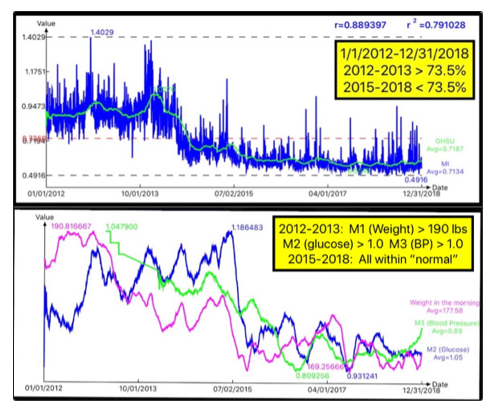
Figure 2: Relationship between Metabolism, including MI, GHSU and chronic diseases
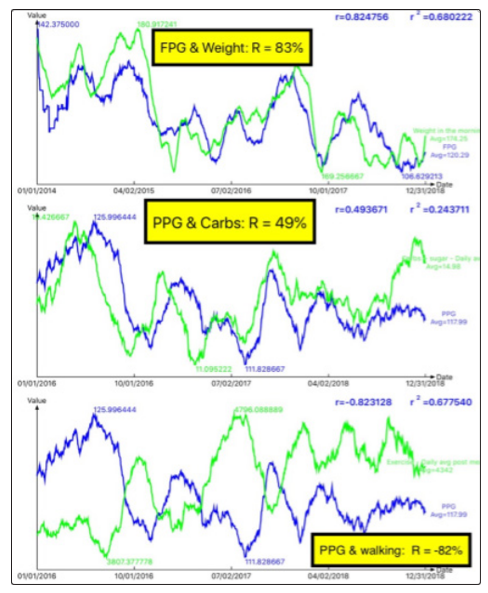
Figure 3: Relationship between T2D and weight, food, and exercise
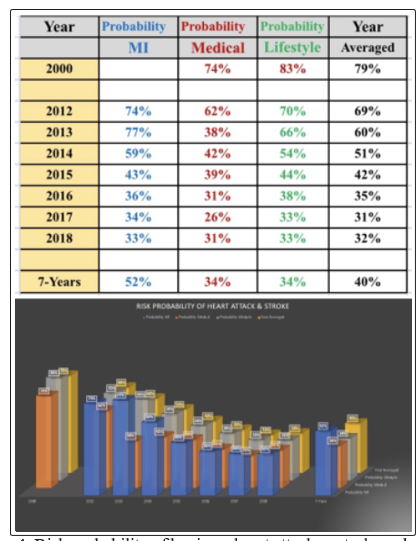
Figure 4: Risk probability of having a heart attack or stroke reducing significantly
Method
The obese patient was diagnosed with T2D, hyperlipidemia, and hypertension over 25 years ago and suffered five cardiac episodes from 1994 to 2006. For this study, approximately 1.5M detailed metabolic conditions and lifestyle data (1/1/2012 - 12/31/2018) were collected and processed; advanced mathematics, physics concepts, engineering modeling, and artificial intelligence (AI) were utilized rather than following the traditional biology and chemistry approach as research tools. The author defined two new terms: Metabolism Index (MI) and General Health Status Unit (GHSU) to evaluate his overall metabolism and associated chronic diseases.
Here are the Steps to his Research Process:
1. Observing physical phenomena and metabolic changes, collecting relevant data using software.
2. Applying appropriate engineering modeling and deriving various inter-relationship mathematical equations for predictions, along with applying statistics tools for variance and sensitivity studies.
3. Using machine learning and AI to predict important metabolic changes.
Conclusion
This math-physical medicine approach has quantitatively proven the close relationship between metabolic changes due to lifestyle improvement and effective chronic disease control.
References
- Hsu Gerald C (2018) Using Math-Physical Medicine to Control T2D via Metabolism Monitoring and Glucose Predictions. Journal of Endocrinology and Diabetes 1: 1-6.
- Hsu Gerald C (2018) Using Math-Physical Medicine to Analyze Metabolism and Improve Health Conditions. Video presented at the meeting of the 3rd International Conference on Endocrinology and Metabolic Syndrome.
- Hsu Gerald C (2018) Using Signal Processing Techniques to Predict PPG for T2D. International Journal of Diabetes & Metabolic Disorders 3: 1-3.
- Hsu Gerald C (2018) Using Math-Physical Medicine and Artificial Intelligence Technology to Manage Lifestyle and Control Metabolic Conditions of T2D. International Journal of Diabetes & Its Complications 2: 1-7.
- Hsu Gerald C (2018) A Clinic Case of Using Math-Physical Medicine to Study the Probability of Having a Heart Attack or Stroke Based on Combination of Metabolic Conditions, Lifestyle, and Metabolism Index. Journal of Clinical Review & Case Report 3: 1-2.